How to Grow and Care for Bromeliad Plants Indoors
Learn how to keep tank bromeliads colorful indoors—where to place them, when to fill the cup, how to split pups, and what to do after flowering.
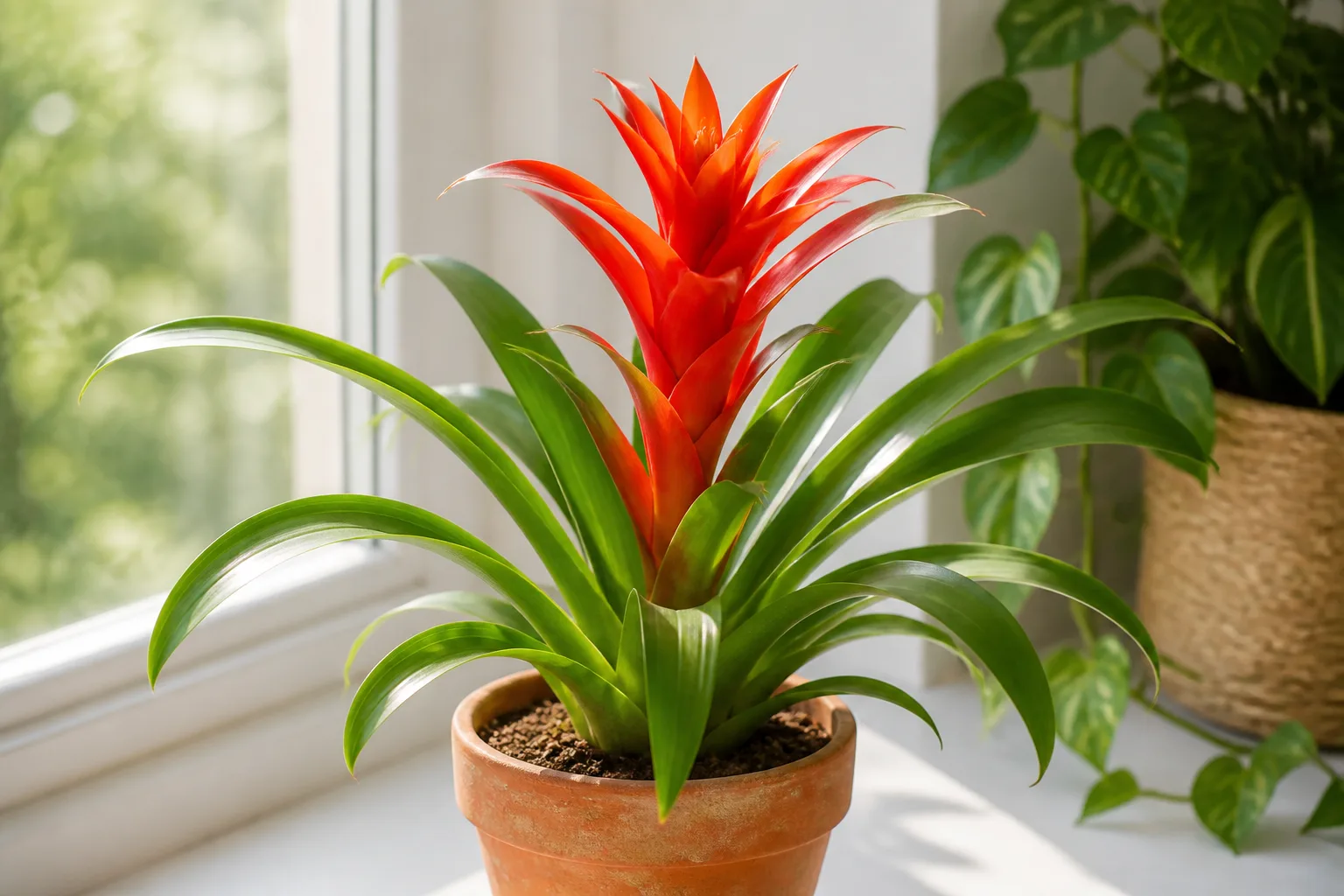
A bromeliad on a windowsill looks like someone parked a tropical flower arrangement in a pot and forgot to take it home. The bracts stay vivid for weeks or months, the leaves form a sculptural rosette, and the whole plant asks for less daily fuss than many flowering houseplants. That gift-shop polish hides a different biology than a typical leafy philodendron or fern. Bromeliads in the Bromeliaceae family—cousins of the pineapple—often drink through their leaves, many hold water in a central tank formed by overlapping leaf bases, and most bloom once per rosette before slowly fading while pups (offsets) take over. Match care to that structure and you can keep bromeliads cycling indoors for years. Treat them like thirsty tropical foliage that wants heavy soil and constant root moisture, and you get mushy bases, bleached leaves, and a pot you quietly discard after the bracts brown.
The most common indoor types—Guzmania, Neoregelia, and Vriesea—were bred for color under greenhouse light. University of Wisconsin–Madison Extension notes that bromeliads tolerate a wide temperature band but thrive when days run 70–90°F and nights drop 10–15°F cooler, because many use a water-efficient photosynthesis pathway that benefits from that day-night swing. (Wisconsin Extension) UF/IFAS Gardening Solutions adds that light level directly changes leaf shape and color—too little light yields long thin green leaves; too much produces short, pale, thick leaves. (UF/IFAS) Your first job is not memorizing a generic watering day—it is identifying which bromeliad you have and whether it is a tank type, a terrestrial rosette, or an epiphytic air plant.
Bromeliad Quick Reference
Use this table as a sanity check before you change light, water, or pot size. If your plant looks off, compare symptoms to the troubleshooting sections rather than adding more water by default.
| Factor | Indoor target | Notes |
|---|---|---|
| Light | Bright indirect for most tank types; lower for soft-leaved types | Leaf texture predicts tolerance |
| Water (tank) | Fresh water in central cup; flush weekly | Do not leave stagnant water indefinitely |
| Water (soil) | Moist when top 2 in. dry; never soggy | Small root systems rot fast |
| Soil / mount | Orchid-type bark mix; no garden soil | Roots anchor more than they feed |
| Temperature | 60–85°F typical room range | 10°F day-night swing helps growth |
| Humidity | 40–60% comfortable; higher in dry heat | Bathroom placement can help |
| Fertilizer | Quarter-strength acidic liquid in growing season | Skip on mature bloomers entering flower |
| Bloom | Once per rosette; bracts last months | Mother plant declines after bloom |
| Propagation | Pups at 1/3 parent size | Can leave attached for a clump |
| Pets | Many popular genera non-toxic | Verify your species on ASPCA |
| Outdoor zones | USDA 10–11 for most | Move pots outside in frost-free summers |
For air-plant bromeliads in the Tillandsia genus, see the dedicated Tillandsia plant hub for soak-and-dry schedules, mounting, and bloom expectations that differ from potted tank types.
What Makes Bromeliads Different From Other Houseplants
Bromeliads are monocots with rosette architecture. Roughly half the species in nature grow in soil; the rest are epiphytes that cling to bark or rock and absorb moisture through specialized leaf scales. Indoors you will mostly meet tank bromeliads sold in pots—the rosette forms a reservoir that catches and holds water—and terrestrial types like Cryptanthus (earth stars) that stay flat to the soil and do not hold a cup. Wisconsin Extension explains that epiphytes use roots primarily for anchorage, while water and nutrient uptake shift to the leaves. (Wisconsin Extension) That is why drowning the root zone while ignoring leaf hydration fails, and why a bromeliad can look fine in a small pot that would starve a fern.
The showy “flower” on a gift bromeliad is usually bracts—modified leaves—surrounding small true flowers. Bracts can stay colorful for two to four months on many Guzmania hybrids, longer on some Vriesea. Wisconsin Extension emphasizes that inflorescences vary from barely visible center blooms (Neoregelia) to sword-shaped spikes (Vriesea). Color and form depend on genus, not on how much fertilizer you pour on.
Tank Bromeliads vs Terrestrial vs Air Plants
Tank bromeliads (Guzmania, Vriesea, Aechmea, Neoregelia, many Billbergia) form a central cup. Indoors, you water both the cup and the potting mix, but the balance shifts with light and heat. In a bright warm room, keeping some fresh water in the cup mimics rainforest tanks. In a cool dim office, a constantly full cup can stagnate—better to moisten soil and refresh the cup weekly rather than let water sit unchanged for weeks.
Terrestrial types (Cryptanthus, Dyckia) behave more like succulents in flat rosettes. They want evenly moist—not wet—mix and no standing water in the crown. Dyckia tolerates drought and wants very bright light; Cryptanthus suits terrarium-level humidity.
Air plants (Tillandsia) skip soil entirely. UF/IFAS describes them as drawing moisture from the air through trichomes and often growing mounted. (UF/IFAS Air Plants) They need soaking or heavy misting on a schedule tied to leaf type—xeric gray species dry faster than green mesic types. Do not mount a Tillandsia in a closed terrarium with a tank Guzmania and expect one watering rule to fit both.
The Monocarpic Bloom Cycle (Why Your Plant Dies After Flowering)
Each bromeliad rosette blooms once, then enters a slow decline. That is normal—not a sign you failed. While the bracts fade, the mother plant usually produces one to several pups from the base. Pups mature over one to three years before they bloom on their own. Wisconsin Extension recommends separating pups when they reach about one-third the size of the parent, though you can also leave them attached to build a multi-rosette clump in one pot. (Wisconsin Extension)
If you bought a plant already in full bract color, you are near the end of that rosette’s display cycle. Your goal shifts from “keep it blooming forever” to supporting pups and starting the next generation. Removing the spent flower stalk after bracts brown keeps energy directed to offsets.
Best Indoor Bromeliad Types for Beginners
More than 2,500 species and thousands of hybrids exist. Indoor growers rarely need that catalog—pick types matched to your light and patience for post-bloom care.
Guzmania and Vriesea (Gift-Shop Bloomers)
Guzmania hybrids are the scarlet-star look most people picture: glossy green leaves and a torch of red, orange, yellow, or pink bracts. Wisconsin Extension notes they come from shadier habitats than many bromeliads and tolerate lower indoor light better than spiny Aechmea. (Wisconsin Extension) They are ideal east-window plants with bright indirect light.
Vriesea adds feather-shaped bracts—V. splendens and hybrids like ‘Fireworks’ are common. They adapt to a wide indoor range and make strong houseplants when given bright indirect light and regular cup flushing. Spikes last months; foliage is often banded or variegated even out of bloom.
Neoregelia (Foliage-First Color)
Neoregelia is grown for center color—many hybrids blush pink, red, or purple in the cup as they mature, with tiny blue or white flowers hidden at the waterline. ASPCA lists Neoregelia as non-toxic to dogs and cats, which makes it a practical choice in pet households—still discourage chewing, but ingestion is not the emergency it would be with true lilies. (ASPCA)
These types want stronger light than Guzmania to develop the best leaf color. Cooler nights also intensify pigmentation. If your Neoregelia stays solid green, move it closer to a bright window (with gradual acclimation) before you fertilize harder.
Tillandsia and Other Epiphytes
Tillandsia—Spanish moss included—is the largest bromeliad genus and the one most often sold without soil. Gray, fuzzy-leaved species need more humidity and more frequent soaking than stiff tank types; they dehydrate in dry forced-air heat. The Tillandsia care hub covers light tiers, soak timing, and post-bloom pup care in detail.
Aechmea and Billbergia appear in specialty collections: urn-shaped rosettes with spiny leaf margins (Aechmea) or narrow tubes with pendant inflorescences (Billbergia). Both want bright light and good air movement. Ananas comosus ‘Champaca’—ornamental pineapple—adds spiky novelty with a miniature fruit on the spike; it needs space and strong light.
Cryptanthus (earth stars) suit terrariums and mixed dish gardens with steady humidity. Dyckia behaves like a spiny succulent and tolerates neglect but not dark corners.
Light Requirements for Colorful Leaves and Bracts
Bromeliads need bright, diffused light for most of the day—UF/IFAS recommends spots with bright light but not direct sun for general indoor culture, including covered porches. (UF/IFAS) Wisconsin Extension quantifies optimal growth around 2,000–4,000 foot-candles for many species, with higher light requiring matching humidity and airflow to prevent scorch. (Wisconsin Extension)
Use leaf texture as a light gauge:
- Soft, flexible, spineless leaves (Guzmania, many Vriesea) → lower light tolerance; east or shaded west window.
- Stiff, hard, spiny leaves (Aechmea, Neoregelia, Dyckia) → brighter indirect light; some morning direct sun possible after acclimation.
Symptoms: Yellowing or bleached patches often mean too much direct sun. Dark green, elongated, floppy leaves mean too little light—the plant is stretching. Move gradually over two to three weeks when upgrading light; a sudden jump to a south window can burn leaves in days.
Fluorescent or LED grow lights work when hung about 8 inches above the rosette for 12–16 hours daily if a window is too dim. Match light increases with slightly higher humidity or more frequent cup flushing.
Watering Tank Bromeliads and Potting Mix
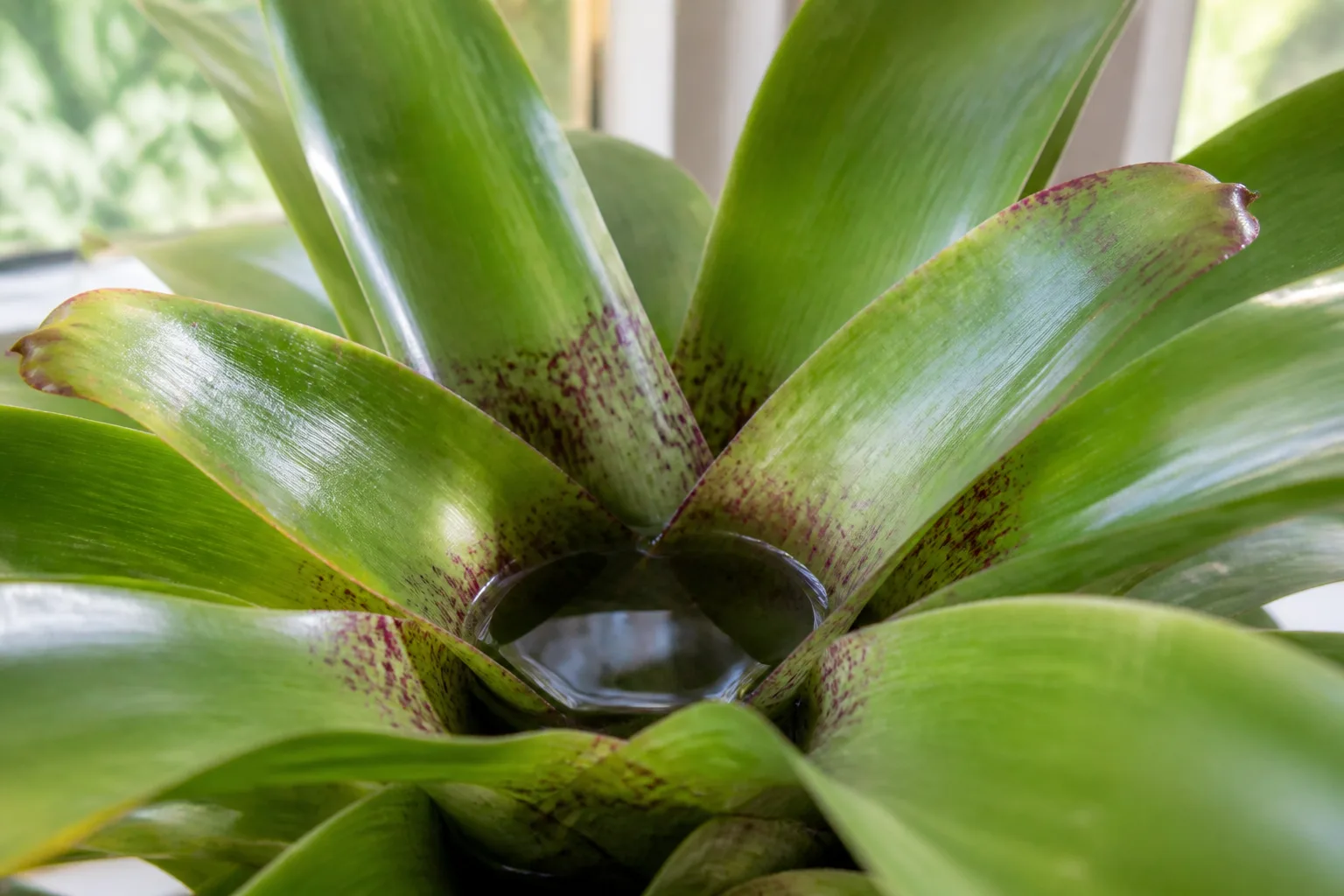
Watering is the step where indoor bromeliads fail most often—usually from rot at the base or salt crust in the cup, not from drought.
For tank types in pots:
- Central cup: Add fresh water until the cup is partly full in bright warm conditions. In cooler dim rooms, keep only a shallow amount or water the soil more and refresh the cup weekly.
- Soil: When the top 2 inches of mix feel dry, water until a little runs from the drainage hole. Empty saucers so roots never sit in runoff.
- Flush the cup weekly with fresh water to rinse mineral and organic buildup. Tilt the pot to dump old water before refilling.
UF/IFAS stresses that bromeliads absorb through leaves and cups and do not like wet feet—saturated root zones cause rot even when the rosette looks fine. (UF/IFAS)
Epiphytic mounts (Tillandsia, some display Neoregelia) need higher humidity and more frequent misting or soaking than potted tank plants. Mounted plants dry faster—check daily in winter heating season.
Tap Water, Mineral Buildup, and When to Skip the Central Cup
Wisconsin Extension notes that most tap water works for bromeliads, but softened water is harmful because sodium accumulates in leaves. Hard water leaves white spots on glossy foliage and crust in the cup—flush weekly to prevent leaf-tip dieback from concentrated minerals. (Wisconsin Extension)
Rainwater or distilled water helps sensitive miniatures and plants with white crust, but very pure water can leach nutrients from leaves—Wisconsin Extension suggests adding a tiny amount of fertilizer to distilled water if you use it long term. (Wisconsin Extension)
When to skip keeping the cup constantly full:
- Dim north-facing room in winter
- Plant recently repotted into wet mix
- Signs of crown or base rot (musty smell, black tissue at center)
In those cases, keep soil lightly moist and refresh the cup briefly once a week instead of maintaining a permanent reservoir.
Soil, Potting Mix, and Mounting Options
Bromeliad roots anchor more than they feed. Wisconsin Extension recommends acidic, fast-draining mixes—orchid bark with coarse perlite and humus is a reliable base. Avoid garden soil; it stays wet and compacts. (Wisconsin Extension) UF/IFAS suggests one part peat, one part bark, one part coarse sand as a workable blend. (UF/IFAS)
Pot size: Use the smallest pot that keeps the plant stable. Oversized pots stay wet and encourage rot. If a top-heavy bloom makes a small pot wobble, double-pot—place the nursery pot inside a heavier decorative container for ballast rather than repotting into deep mix.
Clay vs plastic: Porous clay dries faster (good if you overwater); plastic retains moisture (better in dry air-conditioned rooms). Either works if drainage holes exist.
Mounting: Cork, driftwood, or nontoxic boards suit epiphytes. Wrap roots with sphagnum in dry climates. Mounted bromeliads need daily misting or frequent cup/top watering and humidity above typical desk-level air.
Temperature, Humidity, and Air Circulation
Most houseplant bromeliads tolerate 60–85°F daytime room temperatures. Brief dips toward 50°F at night are acceptable for many types; sustained below 40°F damages tropical hybrids. Wisconsin Extension notes some outdoor bromeliads survive light frost, but indoor gift hybrids are not cold-hardy—keep them away from drafty single-pane windows in winter. (Wisconsin Extension)
Humidity around 40–60% suits most homes. Steamy bathrooms with frosted windows can be ideal if light is still bright enough—mold in the cup is the trade-off to watch. Dry forced-air heat calls for a humidifier, pebble tray under nearby plants, or grouping pots— not misting alone on stiff-leaved types, which can leave spots without raising humidity meaningfully.
Air movement matters at high light and high heat to prevent hot-spot scorch. Avoid blasting heat registers directly on rosettes; leaf tips brown when dry air combines with strong airflow.
Fertilizer Without Burning the Bracts
Bromeliads are light feeders. During active spring and summer growth, use acidic water-soluble fertilizer diluted to one-quarter to one-eighth strength. Wisconsin Extension recommends drenching the potting mix, foliage, and central tank together. (Wisconsin Extension)
Skip fertilizer when:
- The plant is in full bract color and you want to preserve color intensity—overfeeding can push leggy growth and fade bracts
- Winter rest period in cool dim rooms
- The plant is recovering from rot or recent pup separation
Slow-release pellets can go in mix for some types, but excess nitrogen washes color from Neoregelia hybrids and produces misshapen rosettes. When in doubt, underfeed.
Getting Bromeliads to Bloom (And What Happens After)
A pup typically blooms one to three years after it roots on its own. You cannot make the same rosette bloom twice—plan around pups, not perpetual flowers on one crown.
Natural bloom triggers include maturity, bright light, and warm days with cooler nights. If a plant refuses to spike despite good care, it may simply be too young.
Ethylene forcing (apple-in-bag method): Research and nursery practice use ethylene gas to induce flowering in some bromeliads. At home, drain the central cup, place the plant in a clear plastic bag with a ripe apple for 7–10 days, and seal loosely away from direct sun. The apple releases ethylene as it ripens. After removal, return the plant to normal care and wait several weeks for a spike. This works best on mature, healthy plants—not stressed recent imports. Drain the cup first so trapped humidity does not rot the crown.
After bracts fade, cut the spent spike at the base if it browns. Keep watering the declining mother lightly while pups enlarge. Do not discard the pot when the center looks tired if firm offsets are growing—those pups are the next bloom cycle.
Propagating Bromeliad Pups
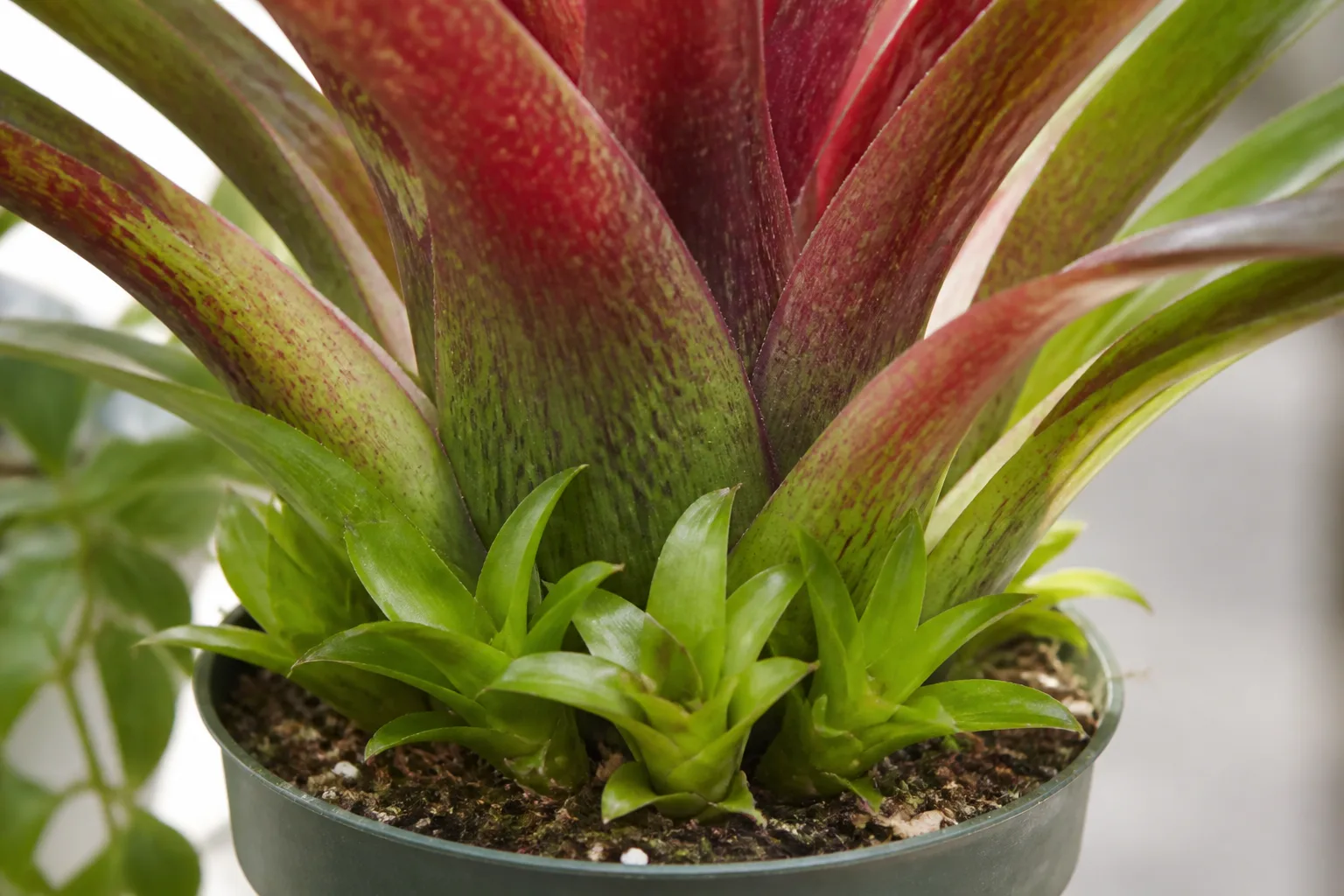
Pups appear at the base while the mother still has green tissue. Wait until a pup is one-third the parent’s height (or has several of its own roots visible) before separating.
To divide:
- Sterilize a sharp knife or shears.
- Cut the pup away with a small piece of base tissue if possible.
- Pot in the same fast-draining mix in a small pot.
- Place in bright indirect light with higher humidity—a loose clear bag for a week can help, opened daily.
- Keep mix barely moist until new root tug resistance appears—overwatering fresh pups causes the most failures.
You may leave pups attached to form a clump; the look is naturalistic and reduces transplant shock. Repot the whole clump only when the container is unstable or mix has degraded.
Common Pests and Problems
Bromeliads are relatively pest-free indoors. Mealybugs, aphids, and scale appear on stressed plants. First response: isolate, spray leaf crevices with diluted insecticidal soap, dab scale with rubbing alcohol on a cotton swab, and improve airflow. Repeat weekly until clear.
Base or crown rot: Mushy black tissue at the center or a musty cup smell means overwatering, poor drainage, or stagnant cup water. Remove affected tissue with a sterile blade if limited; discard severely rotted rosettes but save clean pups. Repot into fresh mix in a smaller pot and keep the cup shallow until new growth firms up.
Leaf tip dieback: Often salt buildup from hard tap water or fertilizer—flush cups weekly and leach the pot occasionally.
Wrong light: See Light section—adjust placement before changing water habits.
Copper Poisoning and Metal Containers
Bromeliads are sensitive to copper and some metals. Symptoms include sudden leaf decay starting at tips or base when the plant contacts copper-treated fungicide on nearby plants, copper fungicide spray drift, or treated lumber in mounts. Remove the source, flush the cup and soil with fresh water, and move the plant. Do not use copper or unlined metal containers as permanent pots—salt and metal ions concentrate in the tank. Plastic, glazed ceramic, or terra-cotta with drainage holes are safer.
If you grow bromeliads outdoors in frost-free climates, UF/IFAS notes that mosquito larvae can breed in outdoor cups—flush regularly or use Bti (Bacillus thuringiensis israelensis) granules labeled for mosquito control in standing water. (UF/IFAS) That is rarely an issue indoors but matters on summer patios.
Conclusion
Indoor bromeliad care comes down to reading the rosette: soft leaves and a gift-shop Guzmania want bright indirect light and a refreshed central cup; stiff Neoregelia wants more intensity to color up; Tillandsia wants soak cycles on the air plant hub, not soggy soil. Keep roots in small, fast-draining pots, flush minerals from the tank, and accept that each rosette blooms once—your long-term success is measured in pups, not perpetual flowers on the same crown. When bracts finally brown, you should already have the next generation rooting at the base, ready for another year of tropical color without starting over from the garden center.