Corn Plant Care Guide: How to Grow *Dracaena fragrans*
Learn corn plant care for *Dracaena fragrans*: choose filtered light, water by soil moisture, prevent brown tips and root rot, prune, propagate, and protect pets.
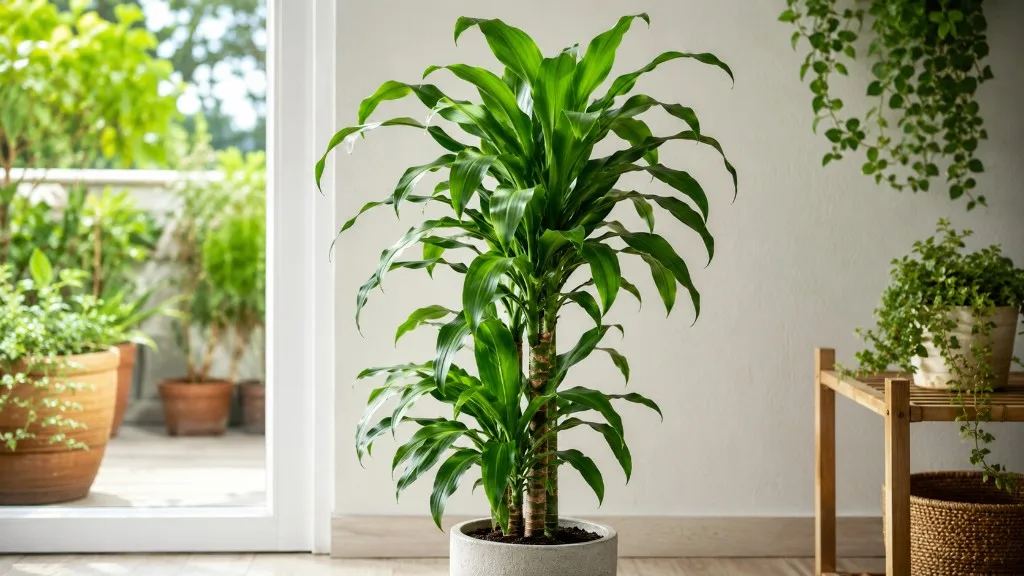
The corn plant, Dracaena fragrans, is the tall, cane-forming houseplant with strap-like leaves arranged in rosettes at the top of each stem. It is not related to sweet corn, but it earns its common name from the shape of its foliage. Indoors, it is usually a slow-growing floor plant that reaches roughly 4 to 6 feet, though an older specimen can become taller if its light, root space, and growing season allow it.
Corn plant care is simple when you manage one relationship: more light means faster water use, while low light makes wet soil linger. Give the plant filtered light, an airy mix in a draining pot, and a watering routine based on the root zone rather than the calendar. That approach prevents the most common chain reaction—dim placement, slow drying, repeated watering, and eventually root damage.
What makes a corn plant different
This tropical African evergreen stores structure and new growth in woody-looking canes. A nursery pot may contain one cane or several canes cut to different heights, each capable of producing a leafy crown. As the plant matures, the oldest leaves at the bottom yellow and release, leaving more of the cane visible. That bare stem is often normal architecture, not evidence that the plant is dying.
Current extension and botanical references treat Dracaena fragrans as a slow-growing member of the asparagus family, Asparagaceae. NC State Extension notes that the plant was also sold under older names such as Dracaena deremensis and Dracaena massangeana, which explains why labels and older care notes can disagree. The NC State plant profile is a useful baseline for the species, its filtered-light preference, propagation, and common problems.
The plant’s tolerance is real but limited. It can remain presentable in moderate or lower light, yet growth slows, new leaves may become narrower, and the mix can stay wet for a long time. It also tolerates a little dryness better than a soggy root zone, but repeated severe drought creates brown tips and leaf drop. “Easy” means forgiving when the environment is stable—not immune to a poor placement.
Set up the right light and location
Place a corn plant in bright, filtered light or bright indirect light. An east-facing window is often easy to use; near a strong south- or west-facing window, filter direct rays with a sheer curtain or set the plant back from the glass. The goal is a bright room with soft shadows, not a dark corner and not hours of hot afternoon sun landing on the leaves.
Direct sun can bleach or scorch foliage, especially when a plant moves suddenly from a dim nursery or office into a bright window. If you summer the plant outdoors, choose a sheltered position in bright shade and acclimate it over several days. UF/IFAS describes corn plant as shade-tolerant but warns that overwatering can cause root rot, while the Missouri Botanical Garden profile recommends bright indirect light protected from prolonged direct sun.
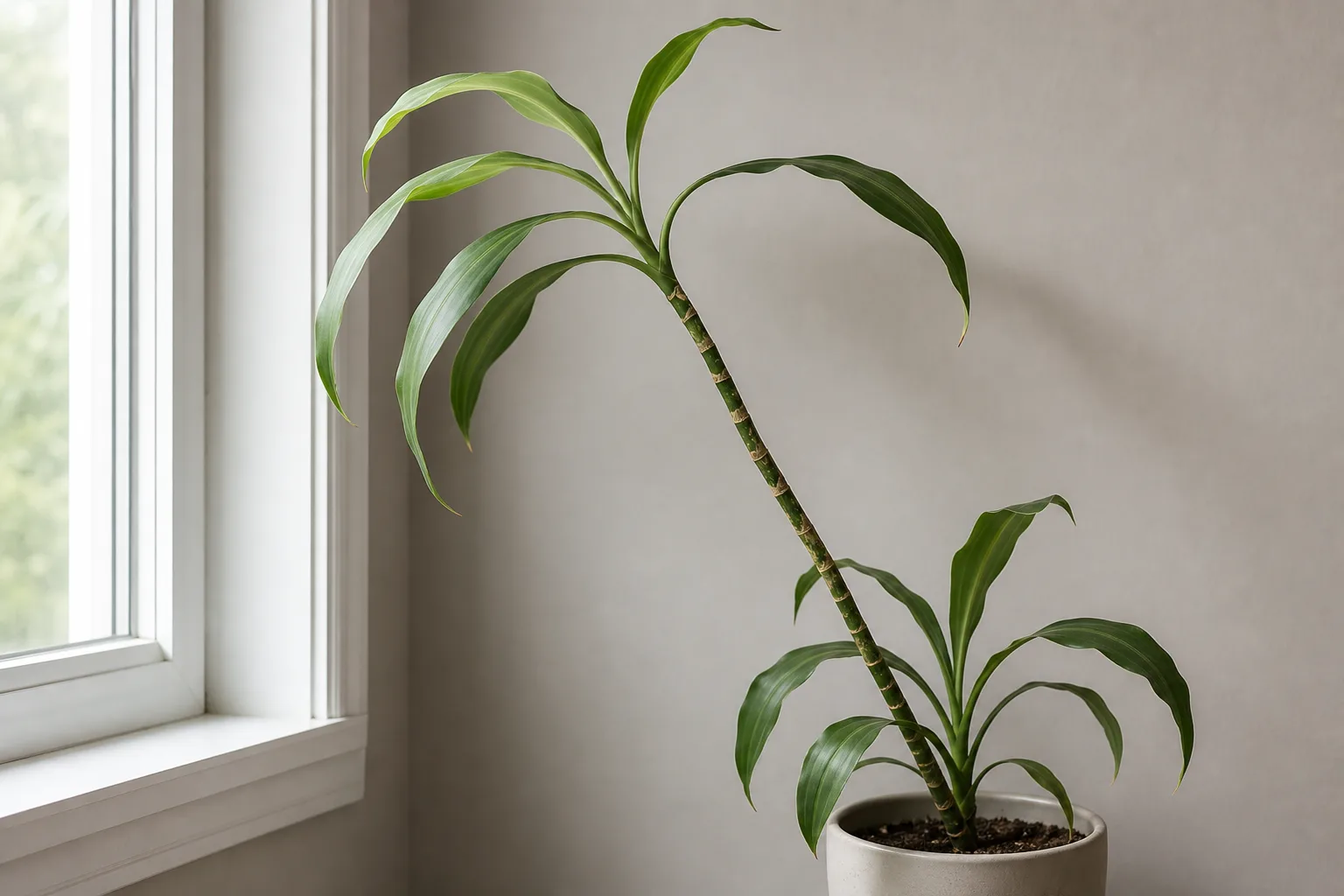
If your room has no useful window, a full-spectrum grow light on a timer is more reliable than hoping ordinary ceiling light will be enough. Start with the fixture’s recommended distance, then watch new growth. Move the plant closer if it leans strongly, loses variegation, or produces unusually narrow leaves; move the light farther away if new foliage bleaches or develops dry patches.
How to tell if light is too low or too harsh
Low light usually appears gradually. The crown may lean toward the brightest side, the distance between leaves increases, new growth looks weaker or narrower, and the pot remains damp much longer than it did in its previous location. A naturally slow plant can still be healthy, so judge the whole pattern rather than treating slow growth alone as a crisis.
Too much direct light creates pale, tan, or crispy patches on the window-facing leaves. Move the plant back or add a curtain, but do not cut off every marked leaf immediately. Dead areas will not recover, yet the green tissue still contributes energy while the plant produces new leaves.
Water by the soil, not the calendar
Water when the upper part of the potting mix has dried and the container feels noticeably lighter, then water thoroughly until a little runs from the drainage hole. Empty the saucer or cachepot after drainage finishes. This wets the whole root ball while preventing the pot from becoming a reservoir.
There is no dependable “every seven days” schedule for corn plant care. A large plant in bright summer light may use water much faster than a small plant in a cool, dim room. Pot material, root density, soil texture, airflow, and indoor heating all change the interval. The RHS dracaena growing guide recommends year-round warmth, indirect light, and protection from fluoride in tap water; it also lists both overwatering and underwatering among causes of brown leaf tips.
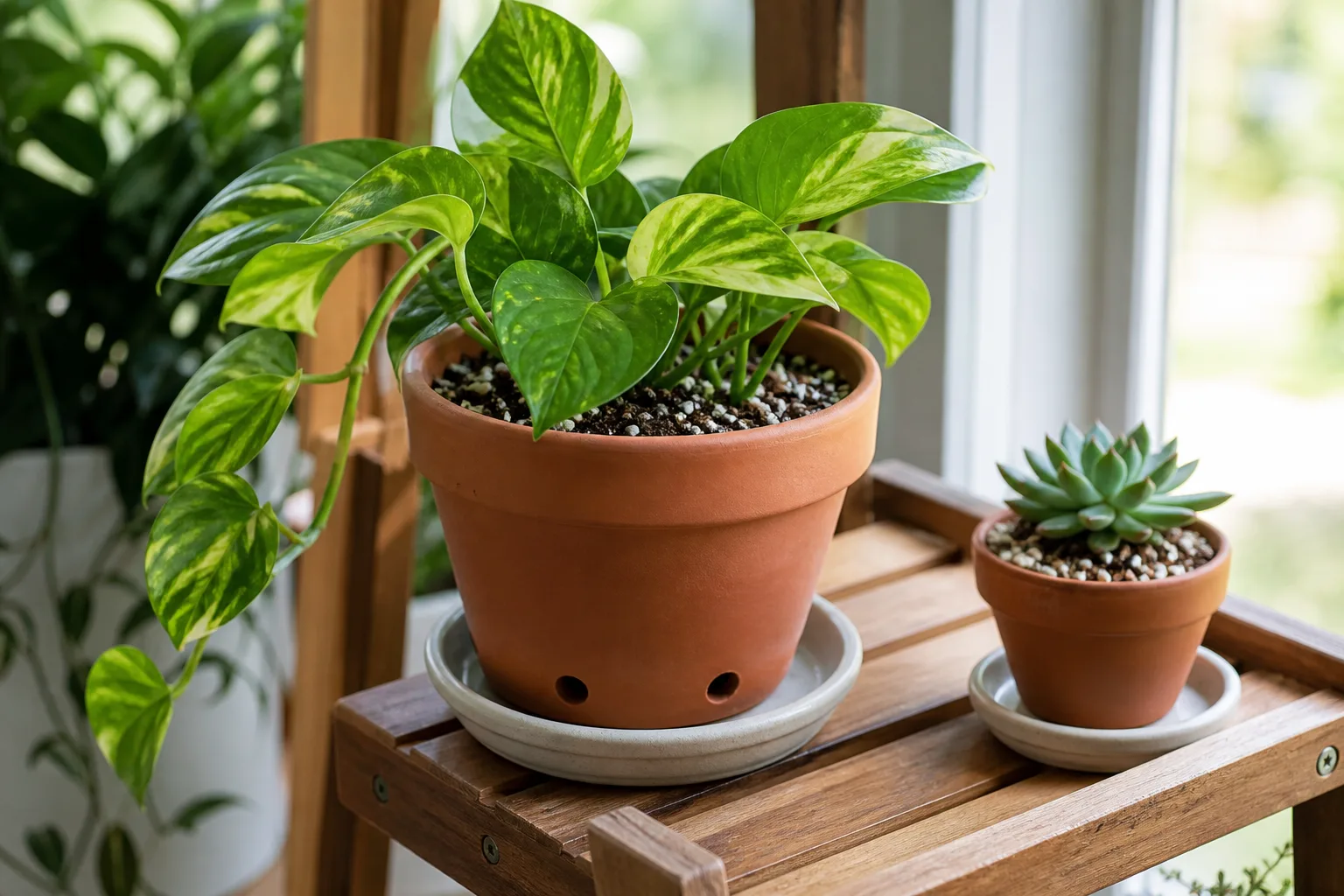
Avoid both extremes. A constantly saturated mix pushes air out of the root zone and encourages root rot, while letting the plant become bone-dry repeatedly can leave roots unable to rehydrate the mix evenly. If the surface is dry but the center remains wet, wait; if water runs straight down the sides of a severely dry, shrunken root ball, water in two slow passes a few minutes apart.
Water quality becomes relevant when the plant is otherwise well placed but develops persistent brown tips. Dracaenas can be sensitive to fluoride and accumulated salts. Rainwater or a suitable filtered source may help in areas where tap water causes recurring damage. Letting tap water stand can reduce some chlorine, but it does not remove fluoride, and softened water may add sodium; neither is a universal solution.
A reliable three-signal watering check
Use three observations together:
- Check the depth. Push a finger or wooden skewer about 2 inches into the mix. The surface can look dry while the root zone is still wet.
- Check the weight. Lift the pot after a full watering and again as it dries. The change in weight becomes a useful reference for that specific container.
- Check recent conditions. Extend the interval after cloudy weather, a move to lower light, cool temperatures, or root pruning. Check sooner after a brighter placement, warm weather, or a flush of new growth.
When all three signals point to drying, water slowly across the surface until the root ball is wet throughout. If the pot is too heavy to lift, use the skewer and the drainage speed as secondary checks, then record the date only as a note—not as the reason to water next time.
Choose soil, pot, and repotting timing
Use a quality indoor potting mix that holds some moisture but stays airy after watering. A mix based on peat-free compost, coco coir, or peat can work when it is amended with a stable chunky component such as fine bark or perlite. Avoid garden soil in a container; it compacts easily, drains inconsistently, and can carry pests.
The pot needs an open drainage hole. A decorative container without a hole can serve as a cachepot, but the plant should remain in a draining inner pot that you can lift out to empty runoff. Do not put a layer of gravel in the bottom of a sealed pot and assume it creates drainage; it simply moves the saturated zone higher around the roots.
Repot when the roots give you a reason: roots circle densely, emerge from drainage holes, the plant tips because it is top-heavy, water runs through unusually quickly, or old mix has collapsed and no longer wets evenly. Move up only one pot size, usually about 2 inches wider for a small-to-medium plant. The University of Minnesota Extension’s winter houseplant guidance also cautions that oversized containers hold extra moisture and increase root-rot risk.
Do not repot just because the plant has grown slowly or because a certain number of months has passed. Slow growth is normal for Dracaena fragrans. If the mix drains, roots have room, and the plant is stable, refreshing the upper layer in spring is less disruptive than moving the entire root ball.
Keep temperature and humidity steady
Corn plants prefer warm, stable indoor conditions. A comfortable room around 60 to 80°F is appropriate, and avoiding prolonged exposure below about 50°F is prudent. Keep the pot away from cold drafts, frequently opened exterior doors, air-conditioning outlets, radiators, and heating vents. A cold plant in wet soil is especially vulnerable because water use slows while the root zone remains saturated.
Average household humidity is usually workable, but heated winter air can worsen crisp tips. Use a hygrometer if you are unsure whether the room is genuinely dry. A humidifier changes the room’s humidity more reliably than misting; grouping plants can help modestly, but do not crowd leaves so tightly that airflow disappears. The plant does not need to sit in a bathroom unless that room also has enough light.
If you move the plant outdoors for summer, wait until nights are reliably warm. Start it in bright shade, then increase exposure gradually over a week or two. Reverse the process before cool nights return. In tropical climates it can grow outdoors year-round in a sheltered site, but in cooler regions it is best treated as a container plant that comes indoors before cold damage.
Fertilize lightly during active growth
Feed a healthy, actively growing plant in spring and summer with a balanced houseplant fertilizer diluted according to the label. Monthly or every six to eight weeks is usually sufficient for a slow-growing indoor specimen. Reduce or stop feeding in fall and winter when light and growth decline.
Water the soil before fertilizing if it is dry, and never use fertilizer as a rescue treatment for yellow leaves, drooping, or poor light. A stressed root system cannot be pushed into health with extra nutrients. Pause feeding after root pruning or repotting until new growth shows that the plant has recovered.
White crust on the soil surface or pot rim can signal accumulated fertilizer salts or mineral-rich water. If the pot drains well, run plenty of suitable water through the mix and let it drain completely; repeat occasionally rather than adding more fertilizer. If the mix is compacted or roots are declining, repotting into fresh, airy material is safer than repeated flushing.
Prune tall canes and propagate the cuttings
Pruning is useful when a cane has outgrown the room, the crown is too high, or you want new shoots lower on the stem. Use clean, sharp shears and cut a firm cane straight across at the height where you want branching to begin. Dormant buds below the cut may activate, but the number and timing of new shoots vary with light, warmth, plant vigor, and cultivar.
The leafy top can become a new plant. Keep the cuttings and parent plant in bright indirect light, not direct sun, while they recover. Do not repeatedly cut a cane that feels soft, smells foul, or is hollow; investigate rot first and retain only firm tissue.
Remove fully dead or yellow leaves close to the cane with clean scissors. A single oldest leaf yellowing at the bottom is usually normal aging. A sudden wave of yellowing across the plant is a root, moisture, temperature, light, or pest signal and deserves diagnosis before pruning.
Root a leafy top cutting in water or mix
For a top cutting, cut just below the leafy crown and keep enough firm stem to insert into water or mix. Remove leaves that would sit below the waterline or soil surface. Track the original top and bottom; a cane section planted upside down is unlikely to grow correctly.
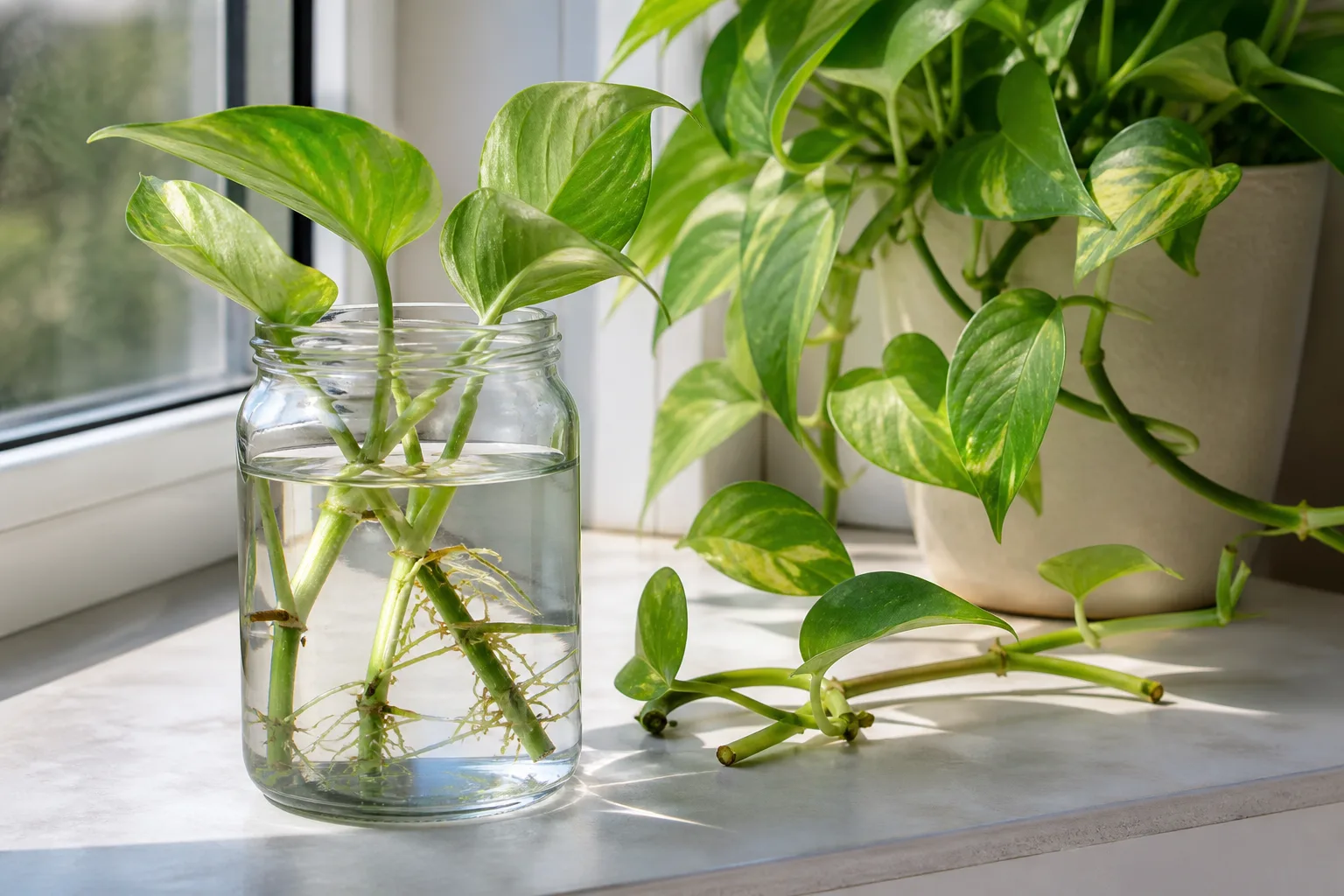
Water rooting is easy to monitor. Submerge only the bare stem, place the jar in bright indirect light, and change the water when it becomes cloudy or at least weekly. Pot the cutting into a small draining container once several roots are established, rather than waiting for a tangled mass of water roots.
Soil rooting avoids the transition from water roots to soil roots. Insert the correct end into lightly moist, airy mix, support the cutting upright, and keep it warm. The mix should not remain saturated. Warmth or bottom heat can help, but a cold windowsill plus wet soil is more dangerous than a lack of rooting hormone.
UF/IFAS lists tip cuttings as a propagation method for corn plant, while the RHS profile for Dracaena fragrans also describes rooting semi-ripe cuttings and leafless stem sections with warmth. Expect patience rather than instant top growth; a firm cutting can be rooting below the surface before it pushes a new leaf.
Common corn plant varieties
The cultivar changes the plant’s appearance and eventual scale more than its basic care:
- ‘Massangeana’: The familiar corn plant with a broad yellow-green stripe down the center of each leaf.
- ‘Lindenii’: A form with yellow margins rather than one central stripe.
- ‘Lemon Lime’: Bright lime and green striping that shows best in useful, indirect light.
- ‘Janet Craig’: A compact, dark-green form with shorter, denser leaves.
- ‘Compacta’: A smaller, tighter-growing form useful where a full-size cane plant would be too tall.
Variegated plants usually show stronger color in brighter indirect light, but moving them into harsh direct sun is not the answer. The BBC Gardeners’ World guide notes the range of forms and gives a practical indoor height of about 2 meters for the species, while compact cultivars stay much smaller. Choose the cultivar for the room’s ceiling height and light before you choose a pot.
Solve brown tips, yellow leaves, and drooping
Brown tips are a symptom, not a diagnosis. Common contributors include low humidity, repeated drought, water-quality minerals, fertilizer salts, direct sun, hot or cold drafts, and roots that are damaged enough to stop supplying water. Correcting the cause prevents new damage; old brown tissue will not turn green again.
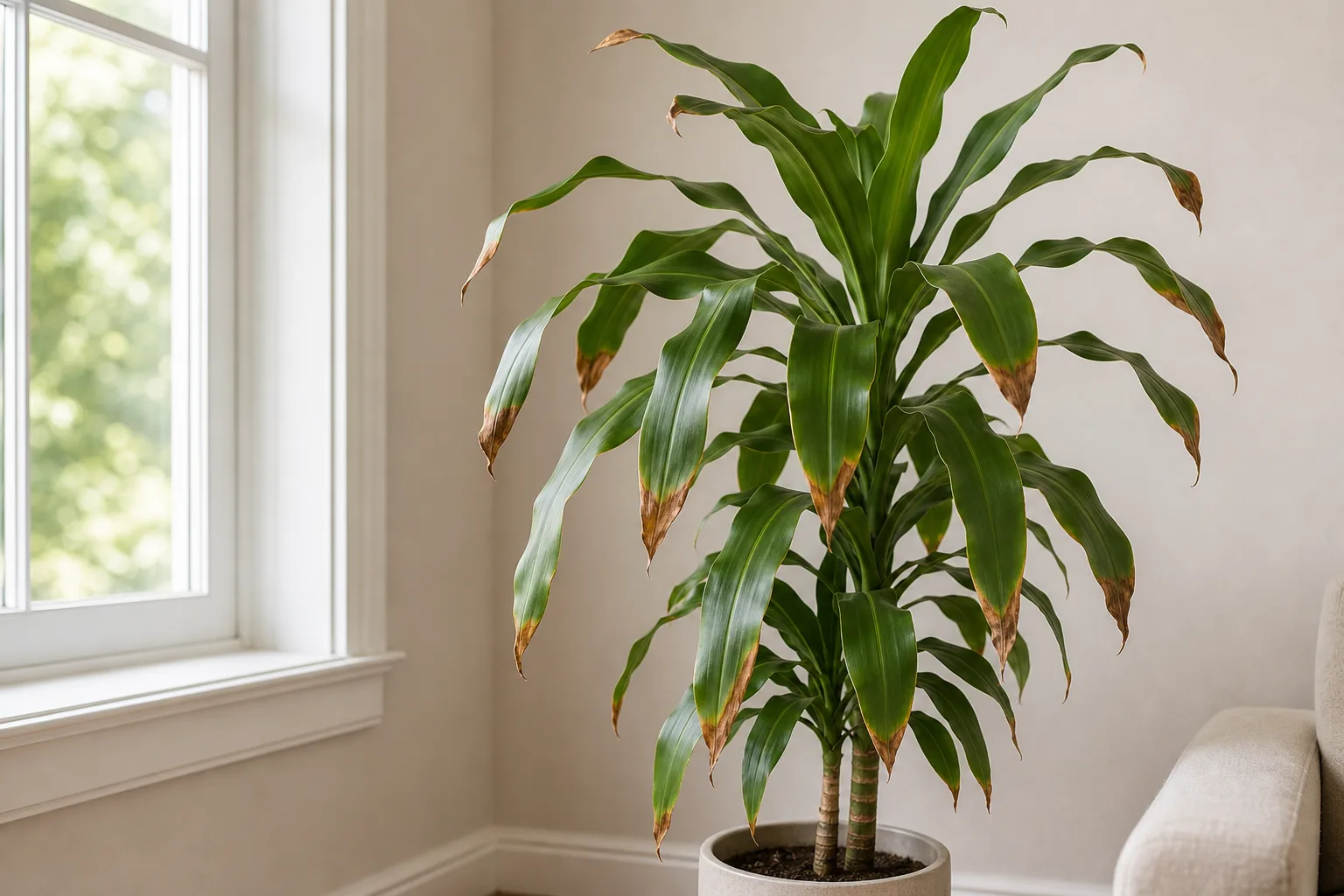
Yellowing also needs a pattern check. One oldest lower leaf turning yellow while the crown stays firm and green is normal aging. Several yellow leaves with wet soil, a sour smell, or a soft cane point toward excess moisture and root decline. Pale new growth with a pot that stays wet for weeks often means low light is slowing both growth and drying.
Drooping can mean the mix is dry, but it can also mean roots are rotting and no longer moving water. Check the soil and the cane before watering again. A sudden collapse after a cold draft or heat spike calls for temperature correction; a gradual decline in a heavy, wet pot calls for a root inspection.
Symptom patterns that point to the cause
| What you see | What to check first | First response |
|---|---|---|
| Dry brown tips with firm roots and normally drying mix | Water quality, salt crust, dry air, missed waterings | Pause fertilizer, improve the room’s humidity if genuinely low, and use a suitable lower-mineral water source |
| Yellow leaves plus wet mix or a soft base | Drainage, pot size, root condition | Stop watering, unpot, remove rotten roots, and repot in fresh airy mix |
| Tan or bleached patches on the window-facing side | Direct sun and heat against glass | Filter or reduce the light gradually; leave green tissue intact |
| Limp leaves with dry mix and a firm cane | Underwatering or a severely shrunken root ball | Rehydrate slowly and thoroughly, then resume checking before each watering |
| Limp leaves with wet mix and a soft or dark cane | Root or stem rot | Do not water again; inspect roots and cut back to firm tissue if salvageable |
| One lower leaf yellowing while the crown is healthy | Normal leaf aging | Remove it when mostly yellow and keep the routine steady |
| Narrow, pale new leaves and strong leaning | Insufficient light | Move gradually to brighter indirect light and lengthen the watering interval as drying changes |
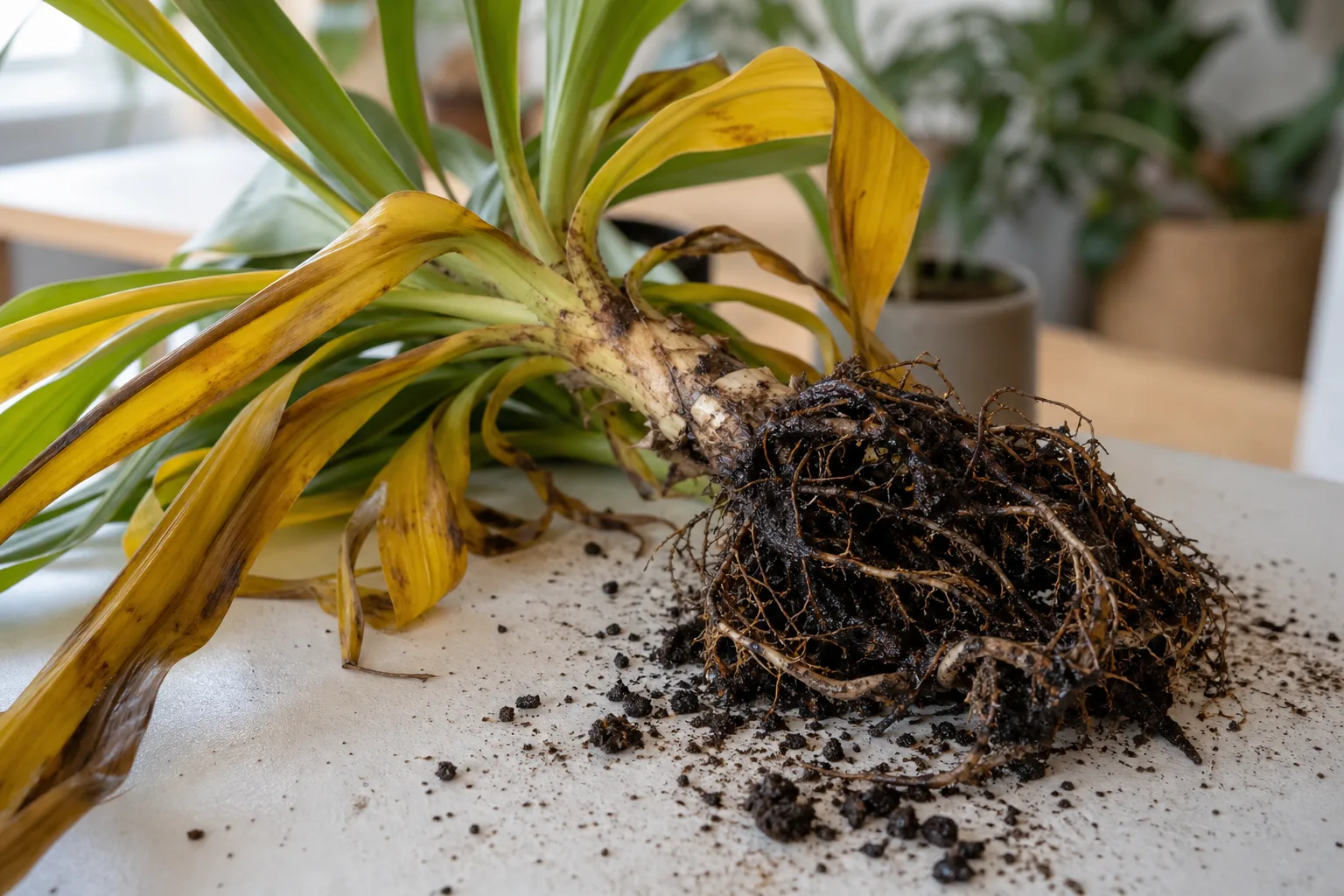
For suspected root rot, remove the plant from its pot and inspect the roots. Healthy roots are firm; rotten roots are often dark, soft, or easily stripped. Cut away only the damaged parts with a clean blade, discard saturated old mix, and repot the remaining healthy tissue in a clean draining pot with fresh mix. If the cane itself is soft or foul-smelling, take a firm cutting above the damage rather than assuming the entire plant can recover.
Make one major change at a time when the situation is stable. Moving the plant, repotting, fertilizing, pruning, and spraying all at once makes it impossible to tell what helped. Root or stem rot is the exception: act promptly because delay allows a localized problem to move into firm tissue.
Check for pests before treating
Inspect leaf undersides, crown crevices, cane joints, and the soil surface whenever you water. Spider mites cause fine stippling and sometimes webbing. Mealybugs look like white cottony clusters. Scale appears as attached bumps on leaves or stems, while thrips can leave silvery scarring, black specks, or distorted new growth. NC State and UF/IFAS both identify sap-sucking pests among common dracaena concerns.
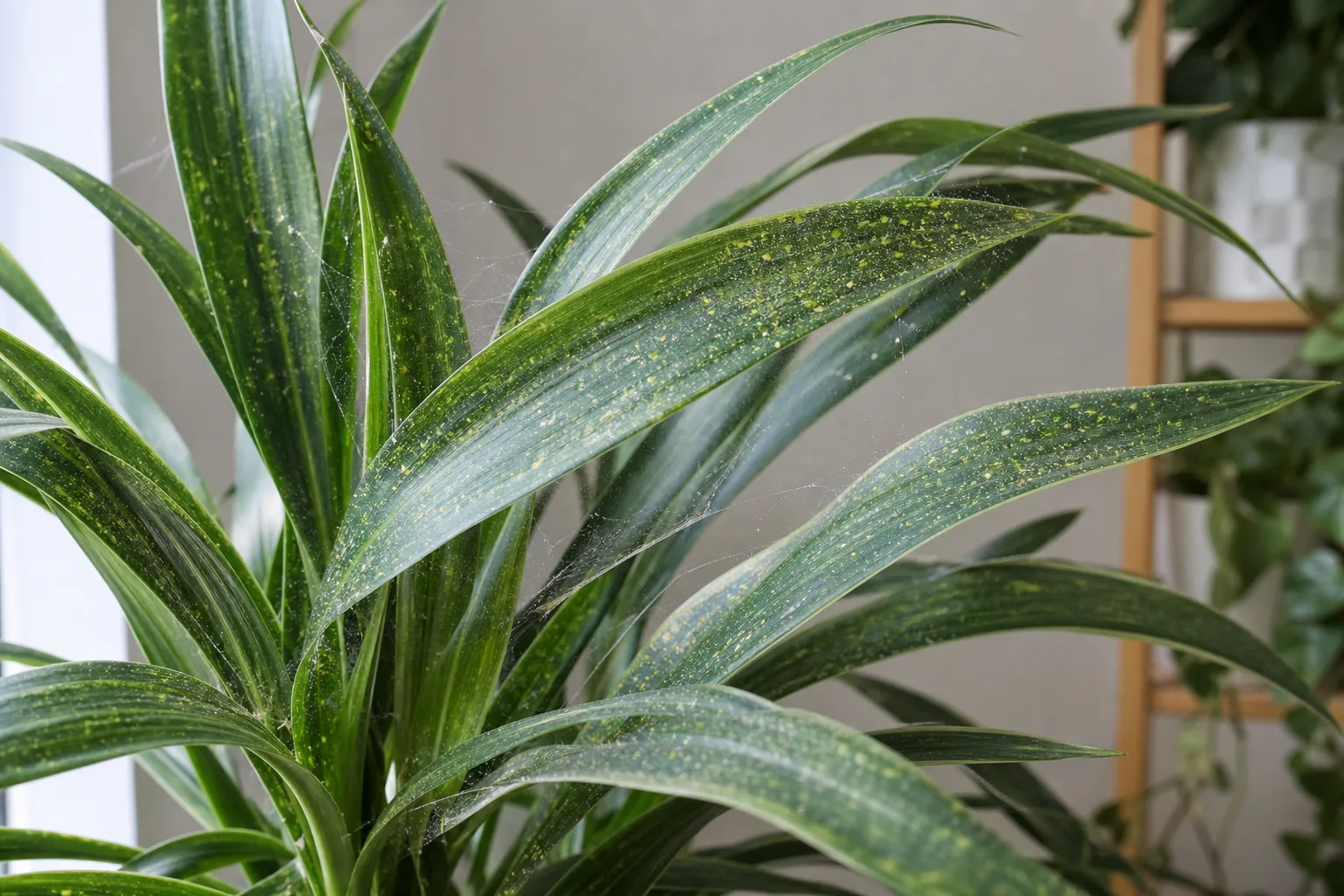
Isolate a plant with pests. For a light infestation, wipe or rinse the foliage and remove visible insects, then repeat the inspection because one cleaning rarely reaches eggs or hidden adults. If you use horticultural soap or another treatment, choose one labeled for indoor ornamentals and the target pest, test a small area, and follow its directions. Avoid strong homemade mixtures that can burn dracaena foliage.
Keep the leaves clean with a soft damp cloth. Clean foliage is easier to inspect and receives more light; leaf-shine products are unnecessary. The University of Minnesota Extension’s indoor-plant guidance also emphasizes drainage, avoiding standing water, watering the soil rather than the leaves, and early pest detection.
Understand flowers and normal lower-leaf aging
Mature corn plants can produce clusters of small, pale, strongly fragrant flowers on a tall stalk. The flowers are often most noticeable at night, but indoor blooming is uncommon and not scheduled by fertilizer. A plant may need years of maturity and consistently good conditions before it flowers, and some indoor specimens never do.
If a flower stalk appears, enjoy it and remove it after flowering if it becomes awkward. The fragrance can be intense in a small room, so moving the plant may be reasonable, but avoid placing it into direct sun or a cold draft just to showcase the bloom.
Lower leaves naturally age out as the cane becomes taller. Remove a leaf when it is mostly yellow and releases easily, but do not strip green leaves simply because the cane is visible. A sudden loss of leaves is different: check moisture, roots, temperature, light, and pests before assuming it is normal.
Keep corn plants away from cats and dogs
Corn plants are toxic to cats and dogs if chewed. The ASPCA Dracaena entry identifies saponins as the toxic principle and lists signs such as vomiting, depression, loss of appetite, excessive salivation, and dilated pupils in cats.
Place the plant where pets cannot reach the leaves, fallen foliage, or pruning scraps. A high shelf is not automatically safe for a determined cat, and a floor plant may be accessible to a puppy even if the leaves seem out of reach. If ingestion is suspected, remove access and contact a veterinarian or animal poison-control service promptly; do not induce vomiting unless a veterinary professional tells you to.
Conclusion
The most reliable corn plant care routine is restrained and observant: give Dracaena fragrans bright filtered light, let the upper mix dry before watering deeply, drain the pot completely, and protect the roots from oversized containers and standing water. Keep the plant warm, feed only during active growth, and use filtered or rainwater when mineral-related tip burn is a recurring problem.
When leaves change, read the pattern before reaching for fertilizer. Check the soil, pot weight, root firmness, light, drafts, water quality, and pests in that order. Prune a firm cane when you need a shorter or fuller plant, root the healthy top as a cutting, and keep every part away from cats and dogs. With stable conditions, a corn plant can remain an architectural, long-lived houseplant even though its growth is deliberately slow.



