22 Perennial Flower Garden Design Ideas
Plan a perennial flower garden layout with 22 design ideas—height layering, bloom sequencing, color blocking, shade beds, and maintenance habits that keep borders beautiful year after year.
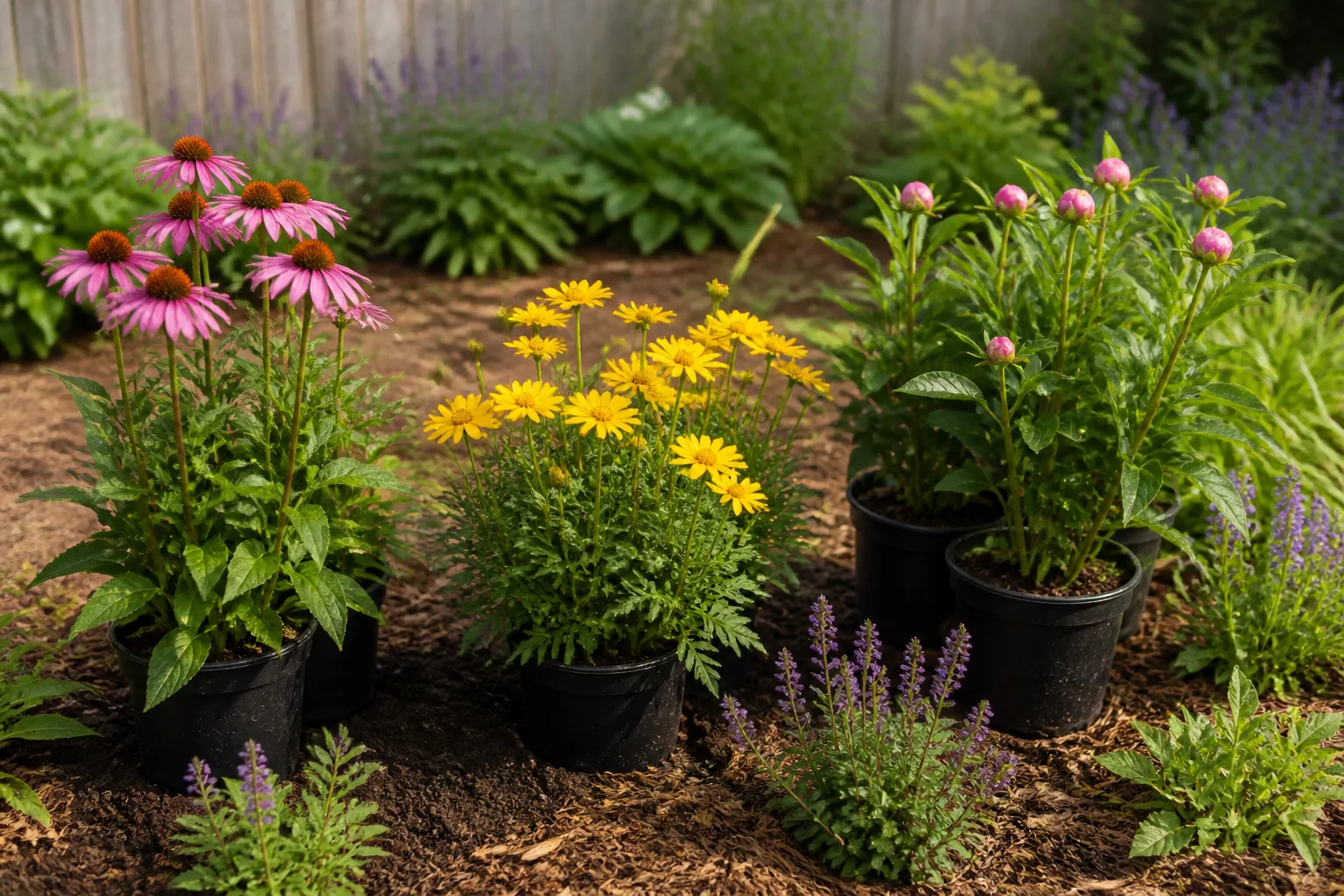
A perennial flower garden looks effortless when it is not. The beds that stop traffic in July were planned in winter—light mapped, heights sketched, bloom gaps filled before the first cart rolled out of the nursery. Perennial flower garden layout is less about collecting pretty plants and more about sequencing structure, color, and calendar so something always looks intentional.
These twenty-two design ideas cover the full arc: site assessment, layering tricks, color strategy, shade and sun templates, late-season planning, and the maintenance habits that keep a layout from dissolving into a weedy tangle by year four. Use them as a checklist while you plan—not as a mandate to install all twenty-two at once.
Start With Your Site Before You Pick a Single Plant
The fastest way to waste money on perennials is to shop before you know your USDA hardiness zone, sun hours, and drainage. A plant that thrives in a neighbor’s yard may fry in your reflected heat or rot in your clay pocket. The USDA Plant Hardiness Zone Map tells you winter survival; your own observations tell you whether “full sun” on the tag means six hours or ten.
Walk the bed at 9 a.m., noon, and 4 p.m. on a clear day. Note where roof overhangs, fences, and trees cast shade. Dig a test hole after rain—if water pools for hours, you need raised soil or moisture-loving species, not drought-tolerant lavender. Match plants to reality first; aesthetics second.
Light, Soil, and Spacing Basics
Border beds viewed from one side usually place tall plants in back, medium in middle, short in front. Island beds viewed from all sides put the tallest specimens in the center. Either way, plan for mature width, not the four-inch pot you carry home.
The RHS perennial planting guide recommends arranging container-grown plants on the soil surface before digging so you can adjust spacing. As a starting rule, space clumps at roughly half to two-thirds of their mature spread—tight enough to knit together, loose enough that crowns are not fighting by year three. Aim for at least 30 cm (12 in) of workable soil depth for herbaceous perennials; deeper beds (45–60 cm / 18–24 in) suit shrubs, peonies, and improved drainage on compacted sites.
Apply 5–7 cm (2–3 in) of compost mulch after planting, keeping mulch off crowns to prevent rot. Clear perennial weeds before you plant—bindweed and creeping buttercup buried under new perennials become a multi-year war.
Five Planning Decisions Every Perennial Bed Needs
Before any of the twenty-two ideas below, run through five decisions that prevent the usual failures:
Zones and hardiness. If a plant is not hardy in your zone, treat it as an annual or overwinter it in a protected spot—do not build the whole design around it.
Mature size. Read height and spread on the label. That dwarf catmint becomes a 60 cm (2 ft) mound; that “compact” Joe Pye weed may still hit 150 cm (5 ft).
Bloom time and duration. List each candidate by month. Gaps in June or September are design problems, not bad luck.
Color and foliage change. Some leaves turn gold or burgundy in fall; some flowers shift hue as they age. Plan for the whole season, not the catalog photo.
Cultural match. Group plants with similar light, moisture, and soil needs. Mixing astilbe (moist shade) with lavender (dry sun) in one bed guarantees one side loses.
University of Minnesota Extension’s flower garden design overview frames this as repeating form, texture, and color in odd-numbered groups—three or five drifts read as designed; one-of-each reads as accidental.
Step Back and Design the Whole View
Idea #1: Get the big picture. Weeding puts your nose six inches from foliage; design requires the view from the kitchen window or patio. Step back and ask whether heights balance, colors repeat, and evergreens anchor the corners when flowers pause.
Include trees and large shrubs already on the property—they are part of the composition. A burgundy Japanese maple can echo heuchera foliage across the bed; a blue spruce cools down warm peach leaves beside it. Photograph the bed from your main viewing angle and sketch layers on tracing paper before you dig.

Layer Spring Bulbs Under Summer Fillers
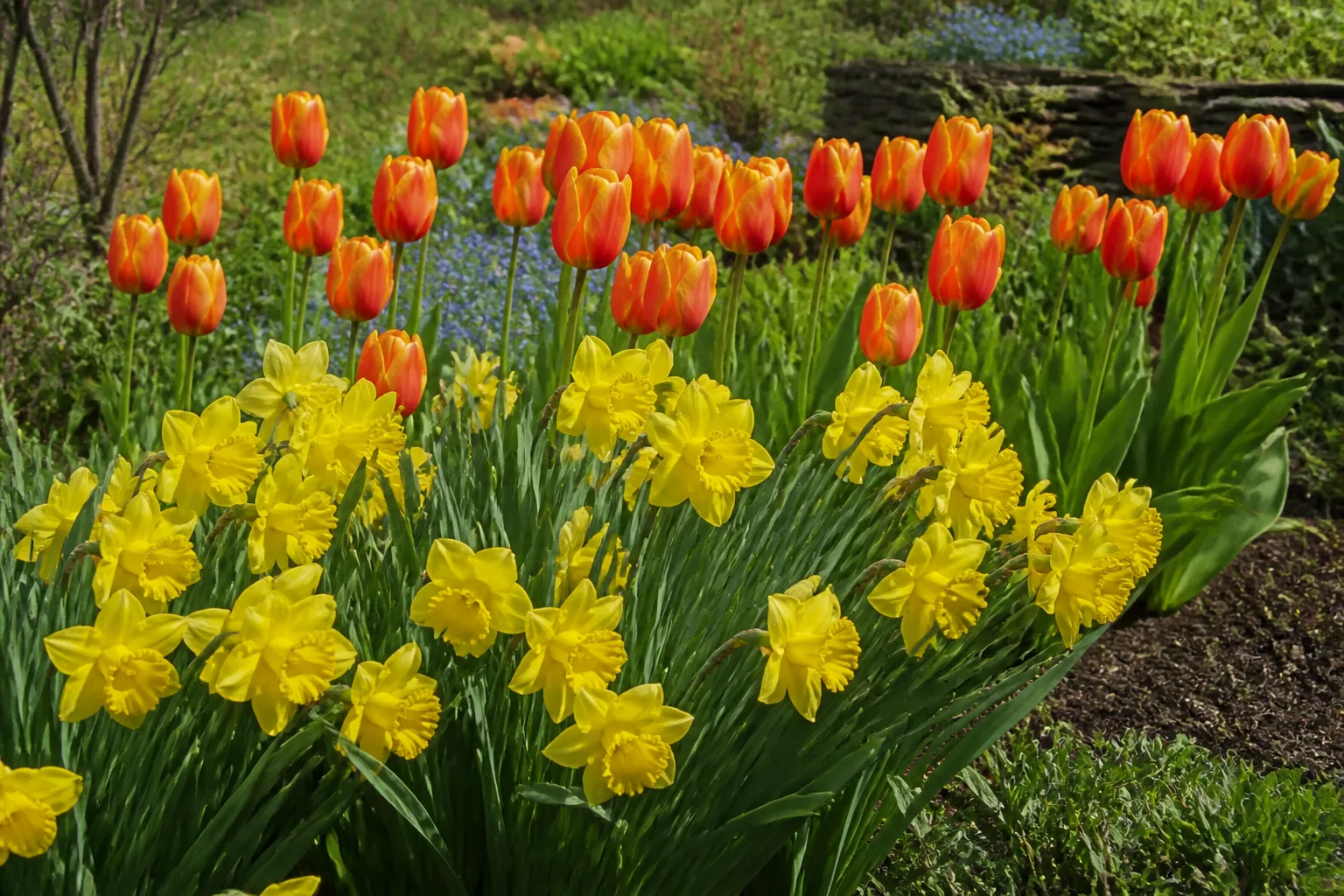
Idea #2: Plant bulbs for early spring color. Crocuses, daffodils, hyacinths, species tulips, and alliums occupy the calendar before most perennials wake. Tuck them among hostas, daylilies, and ferns whose expanding foliage hides yellowing bulb leaves by late spring.
This is vertical and temporal layering—same square footage, different seasons. Mark bulb locations with photos or stakes so you do not slice them when dividing summer plants. For fall planting depth and critter-resistant picks, see our guide to bulbs you can plant in August.
Arrange by Height With Smart Front-Row Exceptions
Idea #3: Arrange plants by height—usually. Tall goes back (or center on islands), medium in the middle, short in front so every plant gets light and the border reads clearly.
Exceptions matter. Airily transparent plants—alliums, verbena, tall salvias, coral bells on wiry stems—can sit forward without blocking the view behind them. A 120 cm (4 ft) allium globe floating in front of a 90 cm (3 ft) bush reads as intentional; a solid block of tall rudbeckia in front does not.
Stake or cage floppy tall perennials—delphinium, aster, foxglove—early in the season. Tomato cages or grow-through grids beat emergency twine after a rainstorm.
Build Color Patterns That Lead the Eye
Idea #4: Create visual patterns with color. Repeat a hue in three places along the bed so the eye travels instead of stopping at one clump. Purple heuchera foliage echoed in a Japanese maple and again in geranium ‘Rozanne’ ties disparate shapes into one story.
Idea #5: Experiment with contrasting colors. Complementary pairs—purple with yellow, orange with blue, red with green—pop when you want drama. Use them in small doses near paths where you see them daily; an entire bed of screaming contrast fatigues quickly.
Idea #6: Balance warm and cool palettes. Cool blues, lavenders, and silvers calm a bed; warm reds, oranges, and golds advance toward the viewer. Mix both for depth, or split zones—cool shade on one side, warm sun on the other—for variety without chaos.
Mix Shapes and Textures for All-Season Interest
Idea #7: Strive for interesting shapes and textures. Round hosta leaves against feathery astilbe and sword-shaped iris foliage keep a bed readable even on a cloudy day in June. Texture changes through the season—fresh spring crinkle, summer gloss, autumn fade—so note each plant’s arc.
Pair bold leaves ( Rodgersia, bergenia) with fine leaves ( threadleaf coreopsis, ferns). Avoid placing two heavy textures shoulder to shoulder without a airy buffer between them.
Try Color Blocking for Seasonal Drama
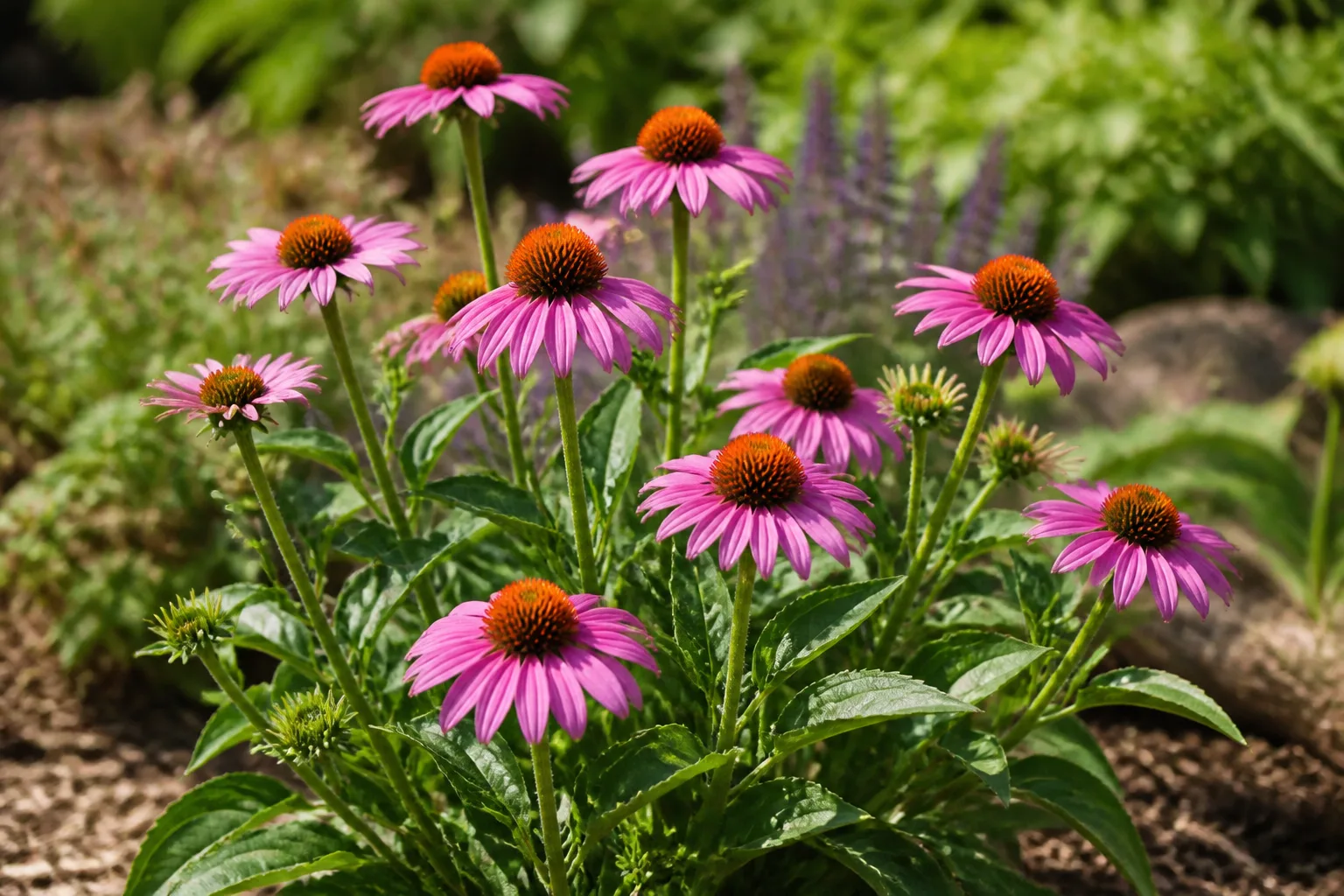
Idea #8: Try color blocking. Instead of one of everything, plant a drift of one long-blooming species—echinacea, dianthus, salvia, or hardy geranium—for a seasonal show-stopper patch. Three sweeps of the same purple coneflower cultivar look designed; three different purple flowers look muddled unless you repeat them elsewhere.
Underplant with later performers—chrysanthemums, autumn anemones, or ornamental kale in cold zones—so the block does not go blank when the first act exits. Color blocking trades biodiversity for impact; pollinators still visit large drifts of native coneflower or black-eyed Susan.
Design With Foliage When Blooms Pause
Idea #9: Design with foliage. Many perennials flower four to six weeks; foliage carries the bed the rest of the year. Heuchera comes in lime, plum, and silver; hosta and brunnera light shade; artemisia and lamium silver sunny edges; oakleaf hydrangea turns burgundy in fall.
Build at least one-third of the bed around leaves, not petals. Our low-maintenance garden border ideas guide expands foliage-led templates for busy yards.
Make Shade Beds Bloom, Not Just Survive
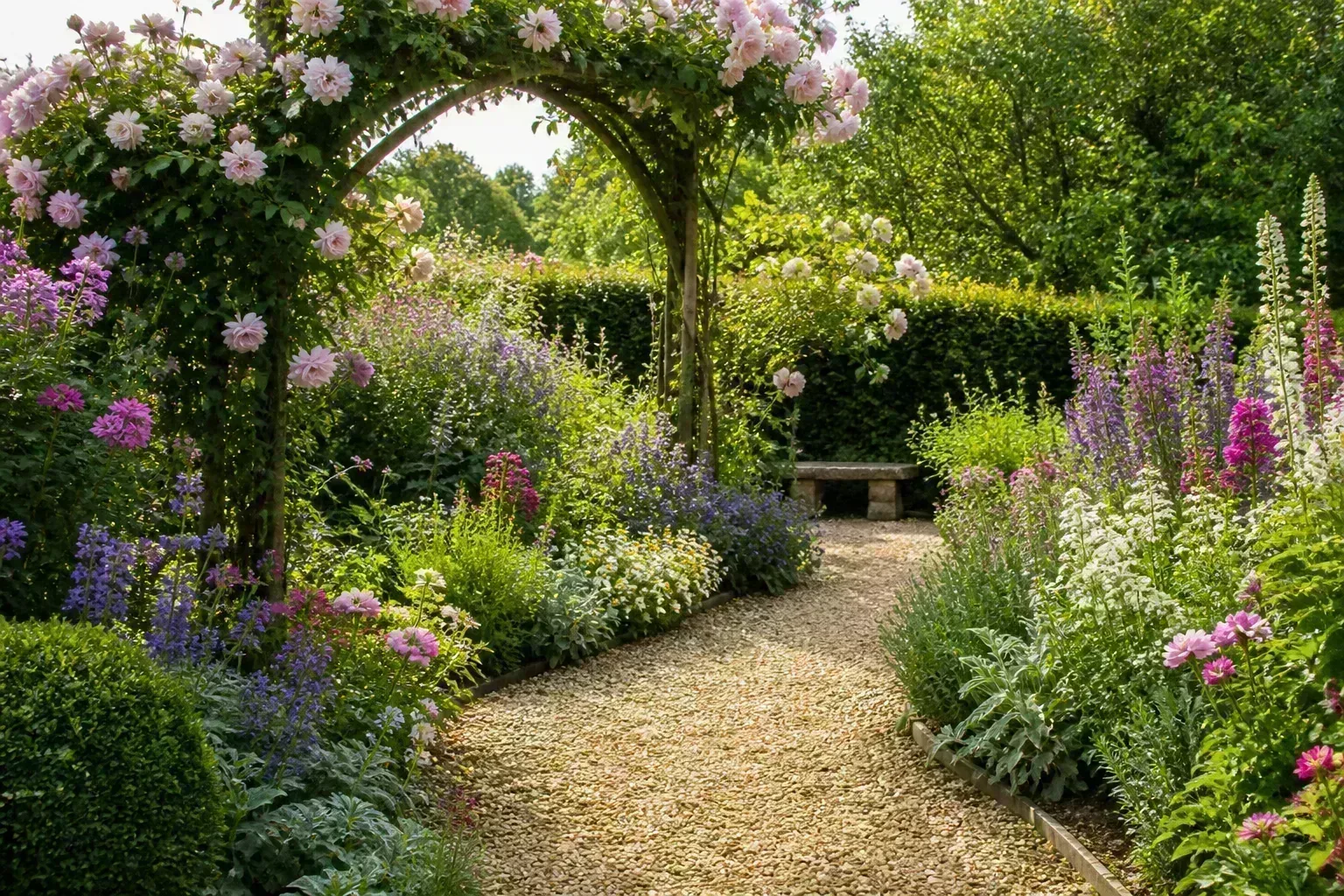
Idea #10: Create colorful shade beds. Shade is not synonym for “all hosta.” Bleeding heart (Lamprocapnos spectabilis), astilbe, heuchera, primrose, Japanese painted fern, and Geranium ‘Rozanne’ bloom in part shade. Foxglove and allium tolerate bright dappled edges.
Match moisture within shade: moisture-loving astilbe and ligularia together; dry shade gets epimedium, hellebore, and tough geraniums. Do not force sun perennials into deep shade and compensate with water—they need photons, not just hose time.
Stagger Bloom Times Across Three Seasons
Idea #11: Time your blooms right. List plants by month—May columbine, June peony, July coneflower, August rudbeckia, September anemone, October aster. Gaps show on paper before they show in the garden.
Idea #12: Choose long-lasting blooms. Echinacea purpurea, Rudbeckia fulgida ‘Goldsturm’, Nepeta, and Geranium ‘Rozanne’ carry weeks of color—anchor the calendar with them, then tuck short-blooming stars (poppies, irises) between.
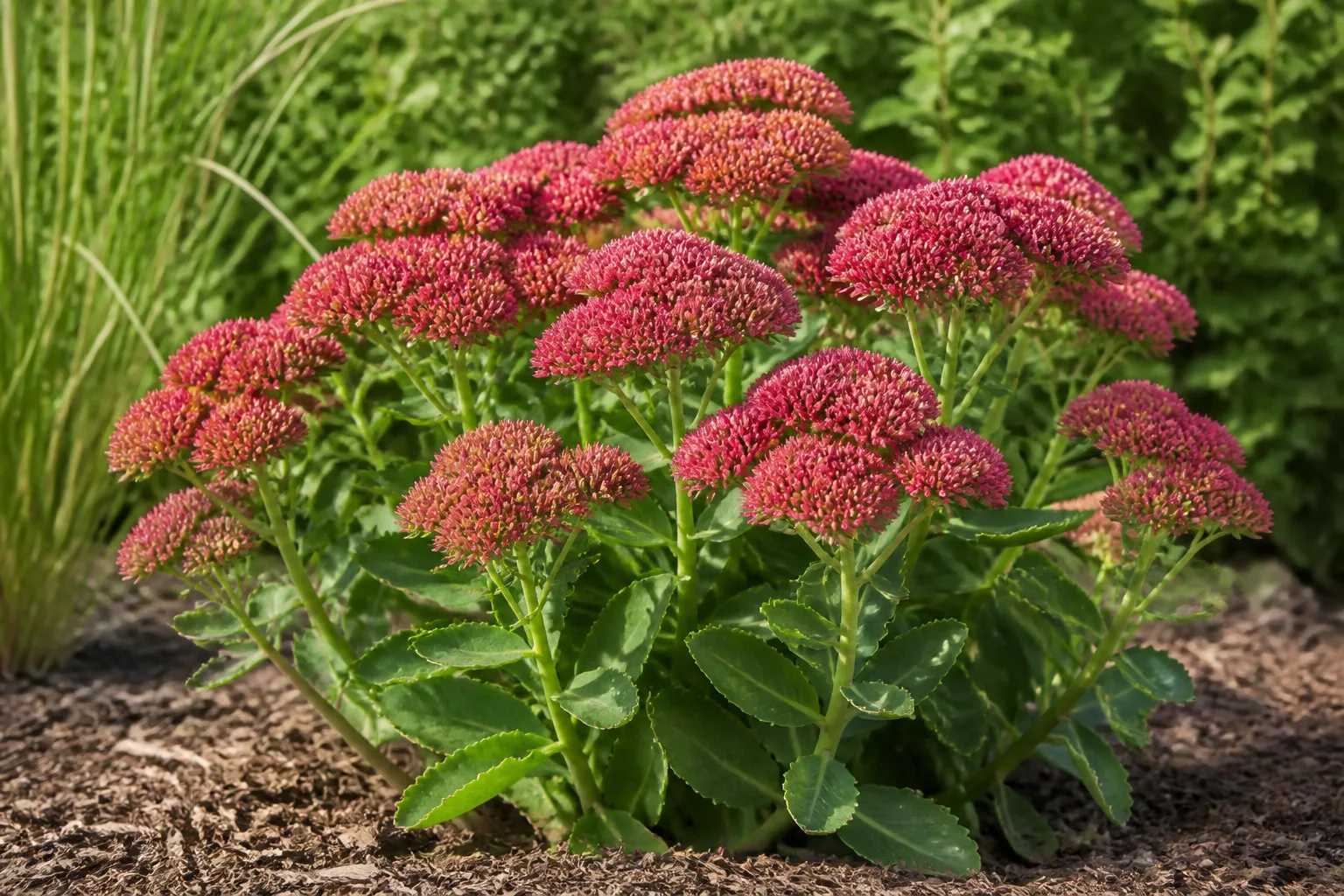
Idea #13: Go for late-season blooms. Autumn anemones, monkshood, sedum, asters, and hardy chrysanthemums rescue beds that go quiet in August. The RHS perennial borders guide lists robust performers by month—use it as a shopping sanity check.
Star one plant per act. If peonies are your June pride, keep competing June booms minimal nearby unless you want an all-pink crescendo. Succession planting is choreography, not competition.
Use Groundcovers Without Losing Your Border
Idea #14: Plant flowering groundcovers. Creeping phlox, sweet woodruff, epimedium, creeping sedum, and plumbago fill gaps under shrubs and soften edges. Match spread to ambition: creeping jenny and vinca can overrun slower neighbors—fine under a tree where little else grows, risky in a mixed border of delicate treasures.
Leave breathing room around crowns the first two years; groundcovers knit faster than you expect.
Contrast Warm and Cool Palettes
Idea #15: Balance warm and cool colors (worth repeating because it solves half of “something feels off” beds). Cool recedes; warm advances. Place warm colors where you want the eye to land—path end, bench view—and cool colors along distant edges to deepen the space.
Plan Late Season Color and Winter Structure
Idea #16: Plant for autumn color. Fothergilla, amsonia, Japanese maple, ninebark, and oakleaf hydrangea foliage often outshine autumn flowers. Pair with sedum and asters so the bed does not depend on a single October mum.
Idea #17: Add winter interest. Evergreen structure—boxwood, inkberry, conifers—and ornamental grasses left standing catch snow and screen views from windows. Seedheads on coneflower and rudbeckia feed finches if you skip late fall cleanup.
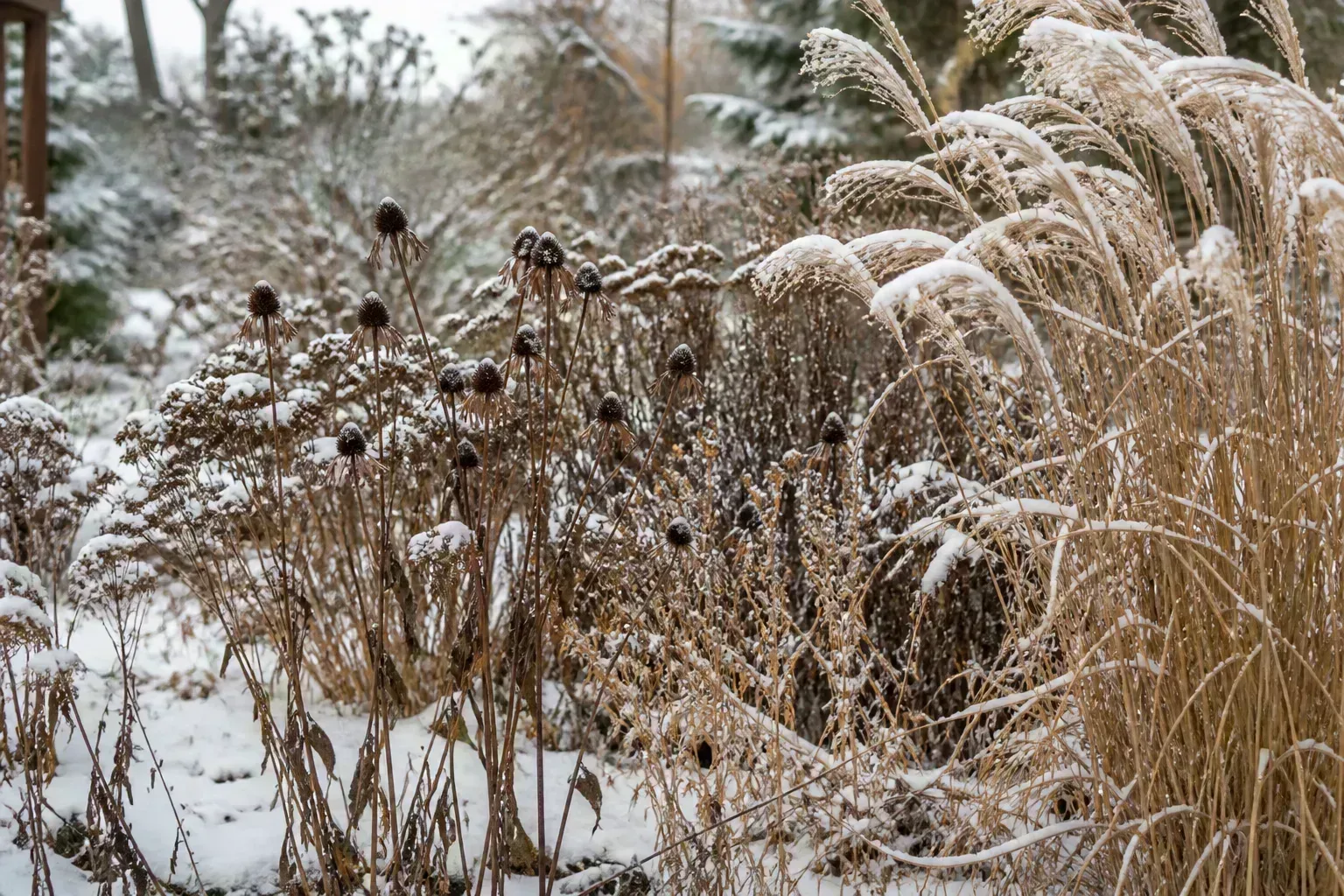
Idea #18: Leave selective skeletons. Tall sedum, allium seed globes, and perennials with strong stems can stay until early spring cutback—then remove before new growth emerges.
Containers, Shrubs, and Frost-Hardy Accents
Idea #19: Plant in containers within the border. Large frost-proof pots raise height, let you swap seasonal color, and solve awkward corners. Match pot glaze to your palette or choose neutral terracotta so flowers lead.
Idea #20: Add flowering shrubs as backbone—rhododendron and azalea in spring, weigela and hydrangea in summer, rose of Sharon into fall. Shrubs stabilize design while perennials rotate through the middle layer.
Idea #21: Incorporate frost-hardy color. Late mums and perennial snapdragons often survive light frost; plant them where you see them from the door in November.
Idea #22: Plant annuals that behave like perennials. Zinnias, cosmos, and cornflowers self-sow or reseed when winters are mild enough. Collect seed in fall if you want control; let volunteers appear in gaps if you like surprise. They fill holes while young perennials mature—cheap insurance against bare soil.
Maintenance Habits That Keep the Design Working
Layout is not finish-line work. Deadhead when you want more blooms on repeat-flowering plants—daylilies, salvia, some hydrangeas—not because every spent petal is a moral failure. Stop deadheading by late summer on plants you want to self-seed or feed birds.
Divide when centers die out or bloom declines: hostas and daylilies every three to five years; irises on a similar clock; artemisia ‘Silver Mound’ more often. Replant divisions immediately in autumn or spring when soil is workable, as the RHS recommends.
Choose easy-to-divide workhorses when you want the bed to expand for free—hosta, daylily, geranium, and coneflower multiply into gifts for neighbors and new drifts for your own yard.
Fertilize lightly. A spring compost top-dress beats heavy synthetic feeds that flop soft growth. Water new plants through the first full season; established perennials in matched conditions need less intervention—see our easy-care drought-tolerant perennials guide for dry-border watering rules.
Move mistakes. Perennials are forgiving furniture. If a plant sulks, transplant it in cool weather. If it thrives too aggressively, edge it back or pass divisions along. The garden teaches—observe more than you edit in year one, then adjust with intention.
For cottage-garden density and informal repetition, compare notes with our cottage garden ideas guide. For spring planting timing, see perennial flowers to plant this spring.
Conclusion
Twenty-two perennial flower garden design ideas boil down to one workflow: read your site, plan height and bloom on paper, layer bulbs and foliage for gaps, then maintain with division and honest editing. The layouts that look magical in photos share boring secrets—correct spacing, repeated color, and plants grouped by need rather than nursery display order.
Start with one bed and one season of bloom if the list feels long. Nail spring bulbs under summer hostas, or a single color-blocked coneflower drift, before you tackle shrubs and winter grass architecture. Perennial gardening rewards patience: each year the bed fills in, the calendar smooths out, and you spend less time fixing mistakes and more time enjoying the view you stepped back to see.


