Cottage Garden Ideas: Design, Plants, and Layout
Cottage garden ideas for layout, paths, edible borders, and classic flowers—plus plant picks, maintenance reality, and zone-aware planning tips.

A cottage garden should feel like you stumbled into a story—roses leaning over a path, herbs spilling from a stone bed, bees working through foxgloves—but the look is not accidental. The romantic chaos comes from structure underneath: paths that guide your eye, vertical accents that lift the planting, and a plant palette that repeats instead of random one-offs. Start with those bones and the dreamy escape follows.
What a cottage garden actually is
A cottage garden is a dense, informal planting style rooted in the small yards around rural cottages, where flowers, herbs, vegetables, fruit, and shrubs shared one productive space. Unlike a manicured estate garden, the goal is abundance and lived-in charm: plants jostle together, self-seeders pop up in surprising spots, and the border between “ornamental” and “useful” is deliberately blurry.
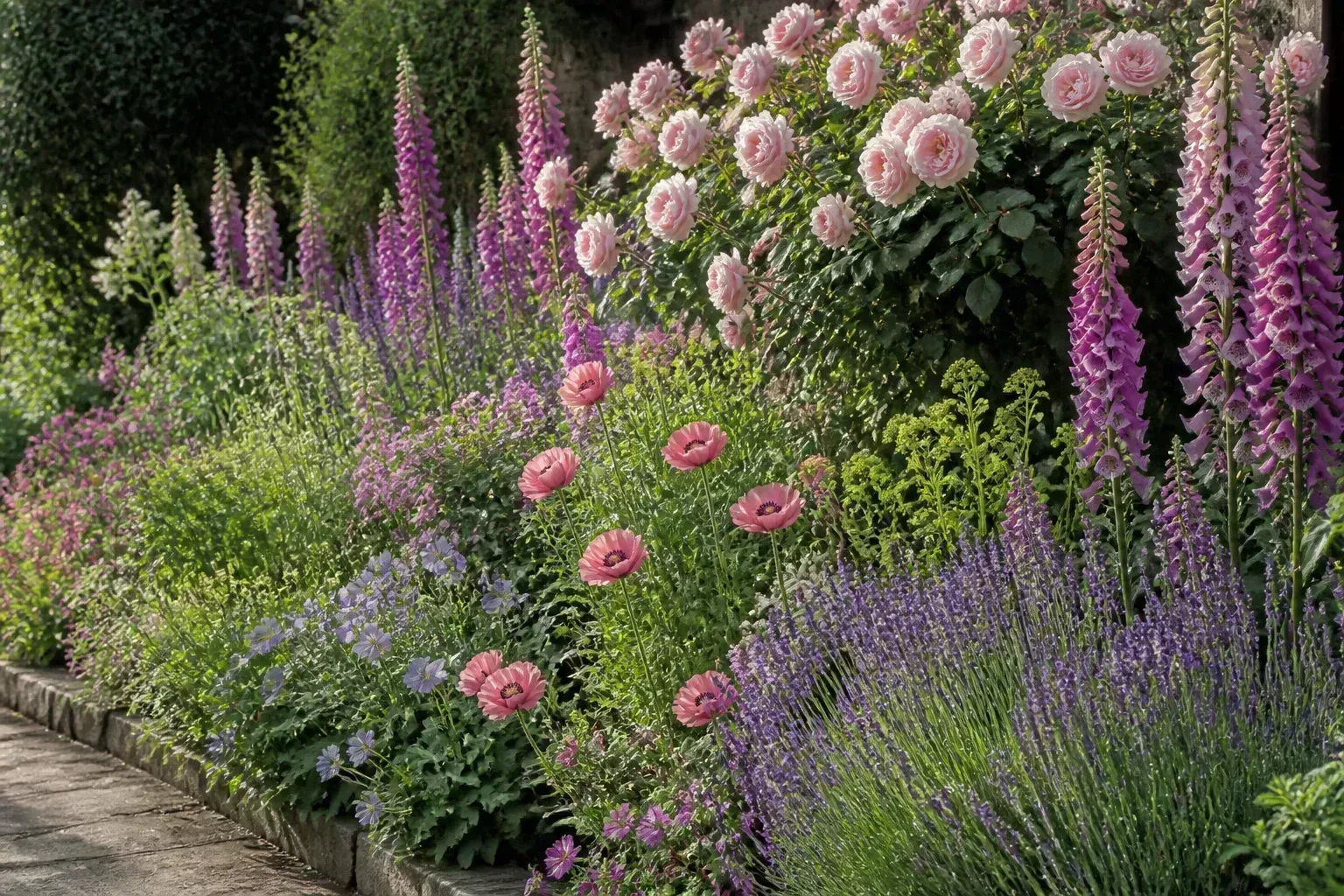
The RHS cottage garden plants guide describes the aesthetic as “voluptuous planting and haphazard self-seeding”—not neglect, but a designed looseness. You are aiming for layers of height, repeated color notes, and scent at key moments (mock orange in early summer, lavender along a path, roses at the doorway).
That does not mean every plant can go anywhere. Cottage gardens fail when people skip drainage checks and buy lavender for clay, or plant delphiniums in blasting wind. The style is forgiving visually, not botanically.
Cottage garden vs English garden vs formal landscape
These terms overlap in photos but mean different things in practice.
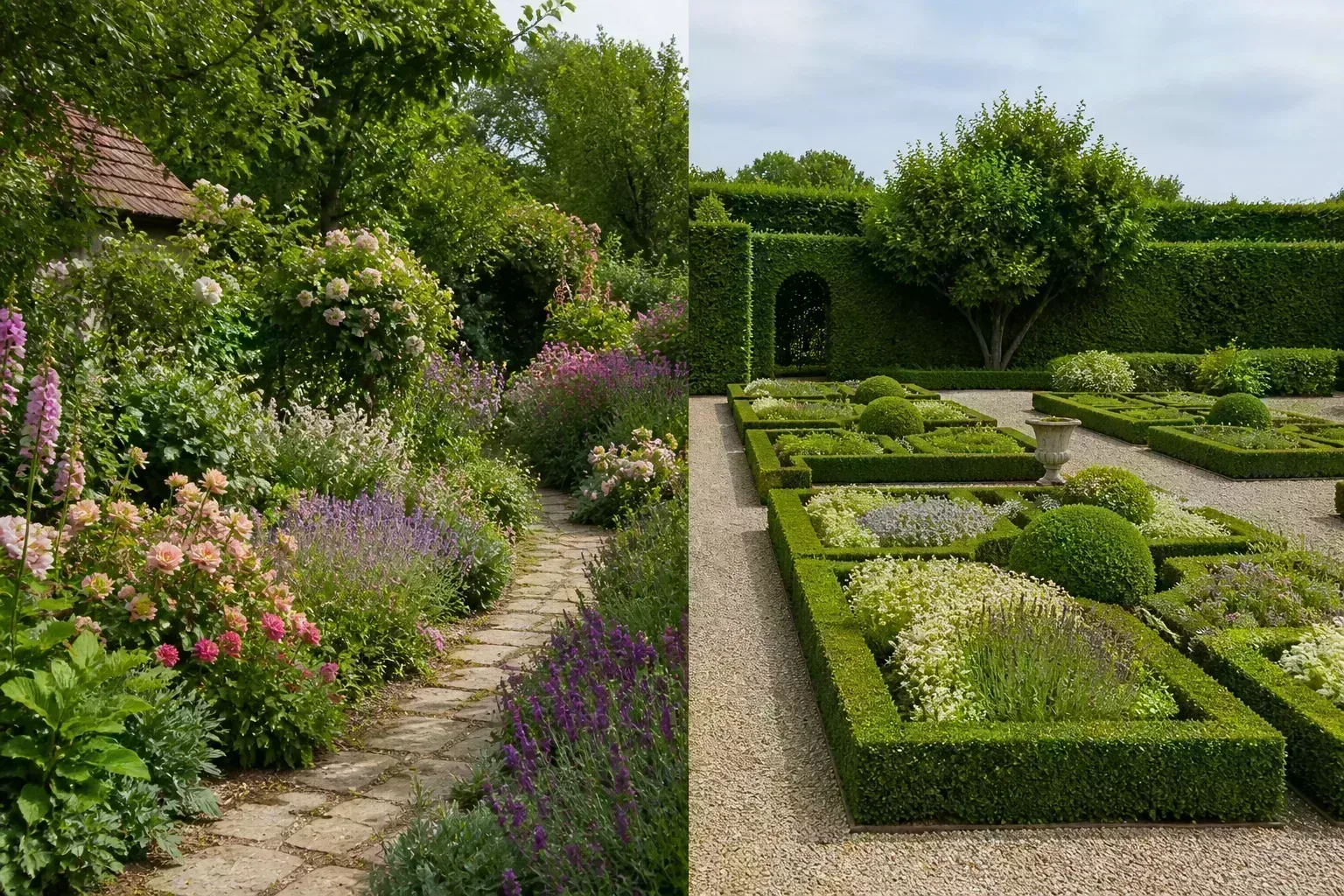
Formal English gardens (think grand manor grounds) rely on geometry: clipped hedges, symmetrical beds, gravel parterres, and clear sight lines. Color is often restrained. Maintenance is visible—hedges need shearing, edges need crisping.
Cottage gardens are English in origin but opposite in temperament: soft edges, mixed planting, and personal quirks (a wheelbarrow planter, a painted gate, statues that make you smile). Flower beds look full and slightly unruly; hardscape is rustic rather than monumental.
Modern “English garden” inspiration in magazines often blends both: trimmed boxwood bones with blowsy perennial middles. That hybrid works beautifully if you accept two maintenance speeds—annual hedge work plus seasonal perennial editing.
If you want low shearing and no straight lines, lean cottage. If you want symmetry and winter structure from evergreen hedges, borrow formal bones and keep the planting loose inside them.
Plan your cottage garden before you buy plants
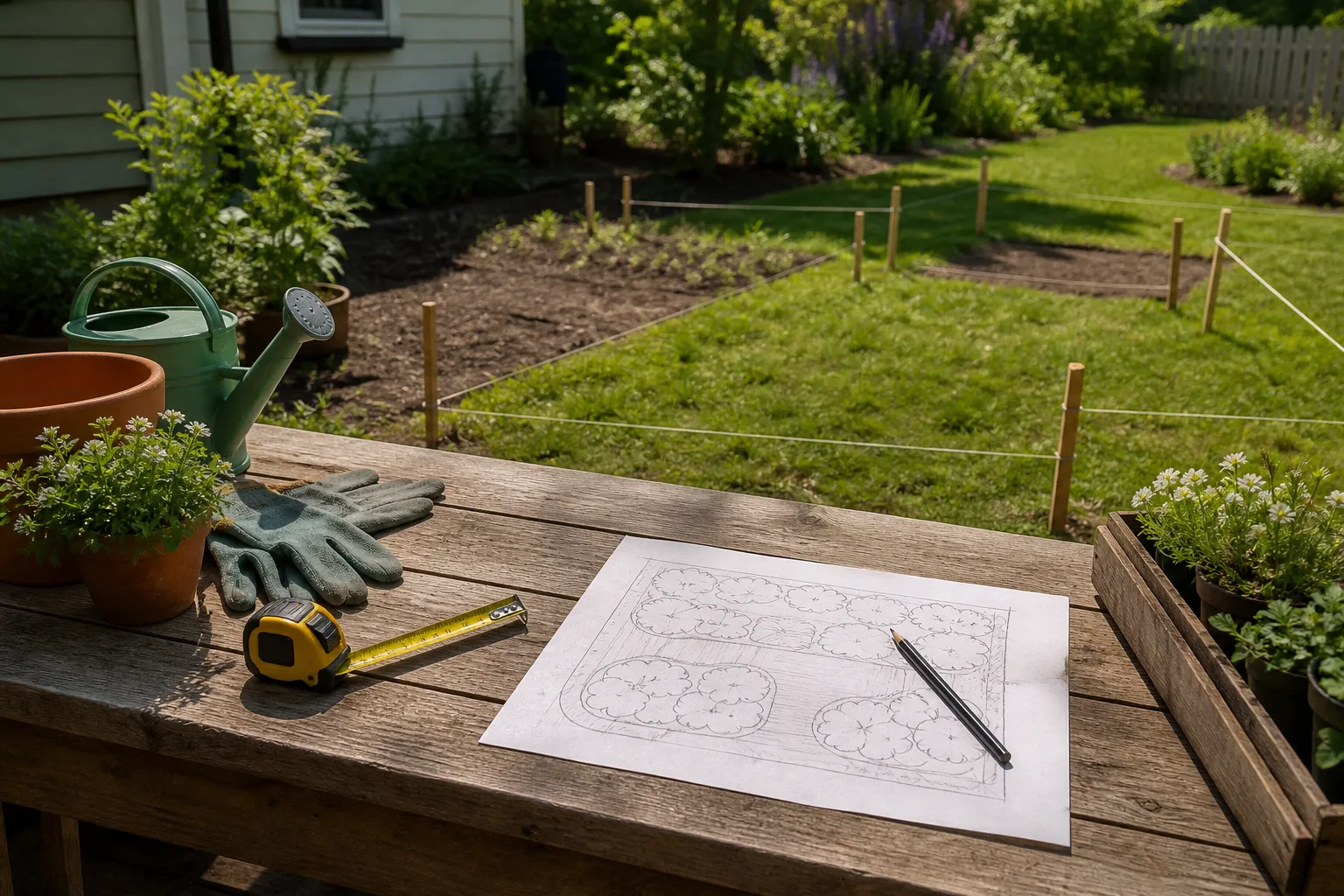
The fastest way to waste money on a cottage garden is to treat it like a shopping list of pretty flowers. Walk the yard first. Mark where you already sit, where the hose reaches, and which views matter from the kitchen window or patio.
Draw three zones on paper: arrival (what you see from the street or back door), path network (how you move through the space), and destination (bench, dining spot, greenhouse, or cutting table). Plants fill those zones; they do not create them.
Site audit checklist
Spend one sunny afternoon and one overcast morning on these checks before you order soil or stone.
Light: Label areas as full sun (six or more hours of direct light), part shade, or deep shade under trees and eaves. Sun lovers like lavender, delphinium, and most roses need the bright zones. Foxgloves and many hardy geraniums tolerate more shade than people expect, but bloom counts drop without adequate light.
Soil and drainage: Dig a hole after rain. Water that sits for hours signals clay or compaction—fix grading or choose wet-tolerant plants before you install gravel paths on top of soggy soil. Dust-dry soil a day later means drought stress unless you mulch and irrigate through the first establishment year.
Wind: Tall delphiniums, hollyhocks, and peonies flop in constant wind corridors. Plan staking, shorter cultivars, or windbreak shrubs on the windy side.
Traffic: Dogs, kids, and delivery paths need hardscape or tough groundcovers—not delicate edging plants at the corners.
Safety: Foxgloves (Digitalis) are classic cottage plants but toxic if eaten. If toddlers or curious pets use the yard, place them toward the back of borders or choose non-toxic alternatives in the front path zone.
Layout and structure decisions that create the look
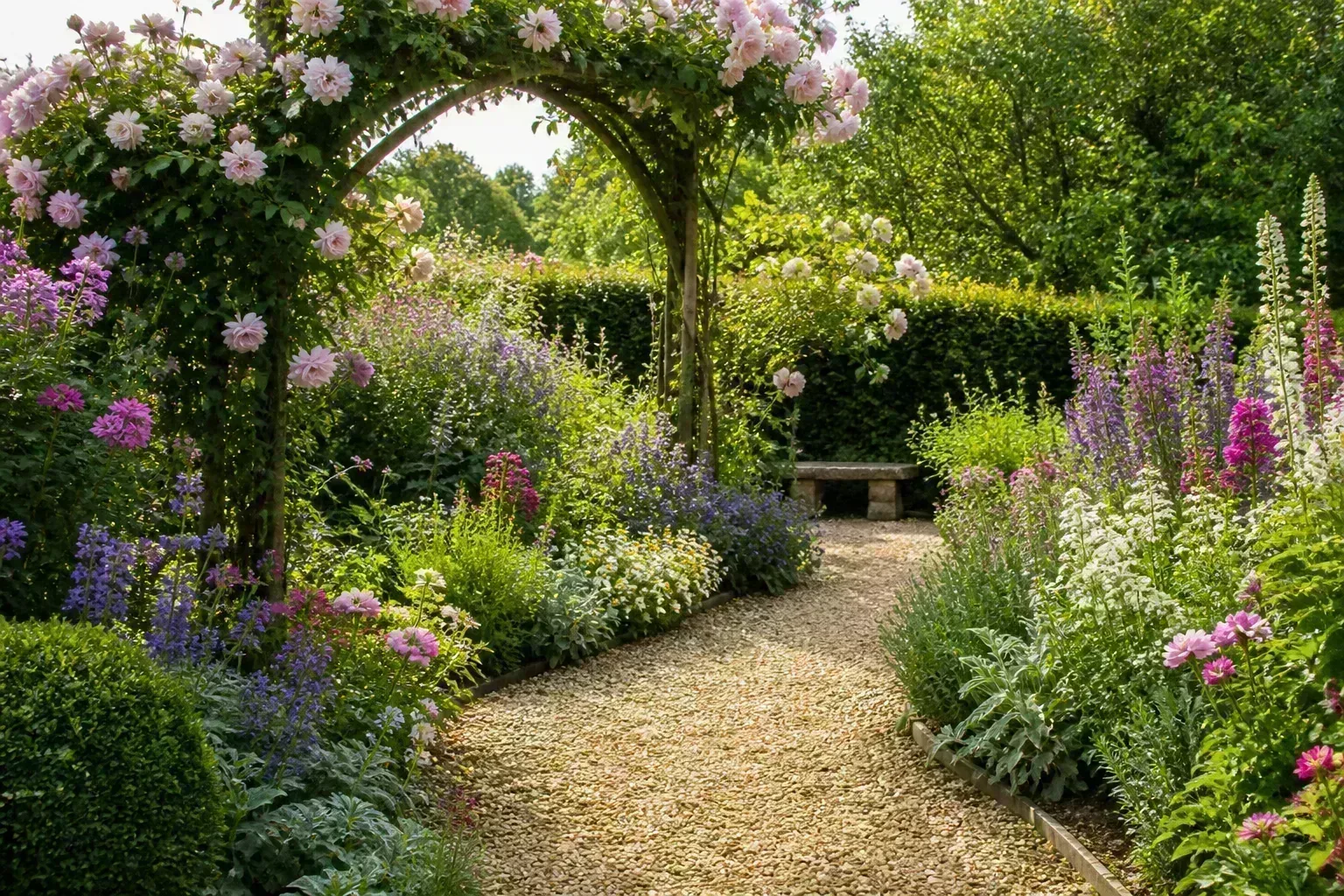
Cottage gardens read romantic because the layout repeats a few moves: a path that curves, a vertical accent every twenty feet or so, and planting pockets that are deeper than they are wide.
Start with one strong path from the door or gate into the garden. Curves slow you down and hide what is around the bend—classic “secret garden” psychology. A secondary path to a bench or vegetable zone can branch off once the main line is established.
Depth beats width for borders. A 60–120 cm (2–4 ft) strip along a fence looks like a ribbon; a 1.5–2 m (5–6 ft) bed lets you stack tall plants at the back, medium shrubs and perennials in the middle, and low foamers at the front without constant pruning.
Repeat plants in drifts rather than one-of-each collecting. Three to five foxgloves clustered together photograph better and pollinators find them faster than singletons scattered everywhere.
Leave negative space for hardscape: a circle of pea gravel for a table, a strip of path between beds, or a low stone bench backed by roses. Without pauses, maximalist planting becomes visual noise.
Choose backbone plants for height, scent, and winter bones
Backbone plants are the ones that still matter when annuals finish and perennials die back. In cottage style they are often shrubs or climbers with strong seasonal peaks.
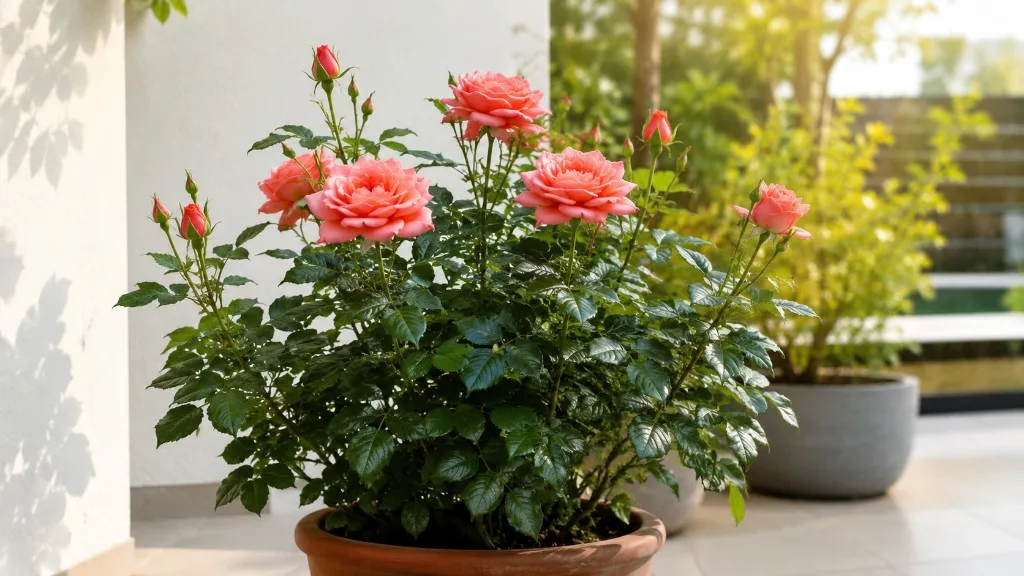
Roses are the signature vertical and scent plant. The RHS cottage plant guide notes that old-fashioned roses may bloom once heavily, while repeat-flowering climbers like Rosa ‘Madame Alfred Carrière’ extend the show. Use shrub roses for hedging height, climbers on arches and walls, and groundcover roses to knit under taller perennials.
Mock orange (Philadelphus) delivers clouds of early-summer flowers and heavy fragrance for a few weeks—excellent near a seating area. Medium cultivars like ‘Belle Étoile’ fit mixed borders without swallowing the bed.
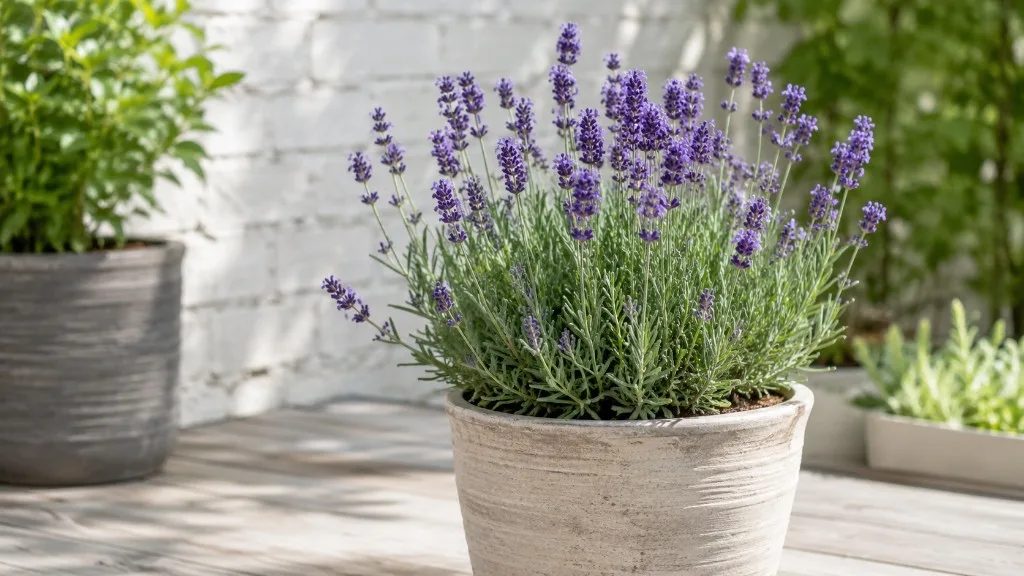
Lavender works as a low hedge along paths where drainage is sharp and sun is strong. Lavandula angustifolia ‘Hidcote’ stays around 60 cm (2 ft); taller lavandins bloom later. Brush against lavender when you walk—that scent is half the cottage experience.
Ornamental grasses and spireas add texture between flowering peaks. Maiden grass and snowmound spirea (both used in RHS Rosemoor’s cottage plantings) give winter movement and spring flower without demanding constant deadheading.
Install backbone plants first. Perennials and annuals weave around them for years.
Layer flowering perennials for the cottage garden palette
This is where the “dreamy escape” color comes from. Cottage perennials are often tall, vertical, or billowy—designed to overlap in time rather than bloom all at once.
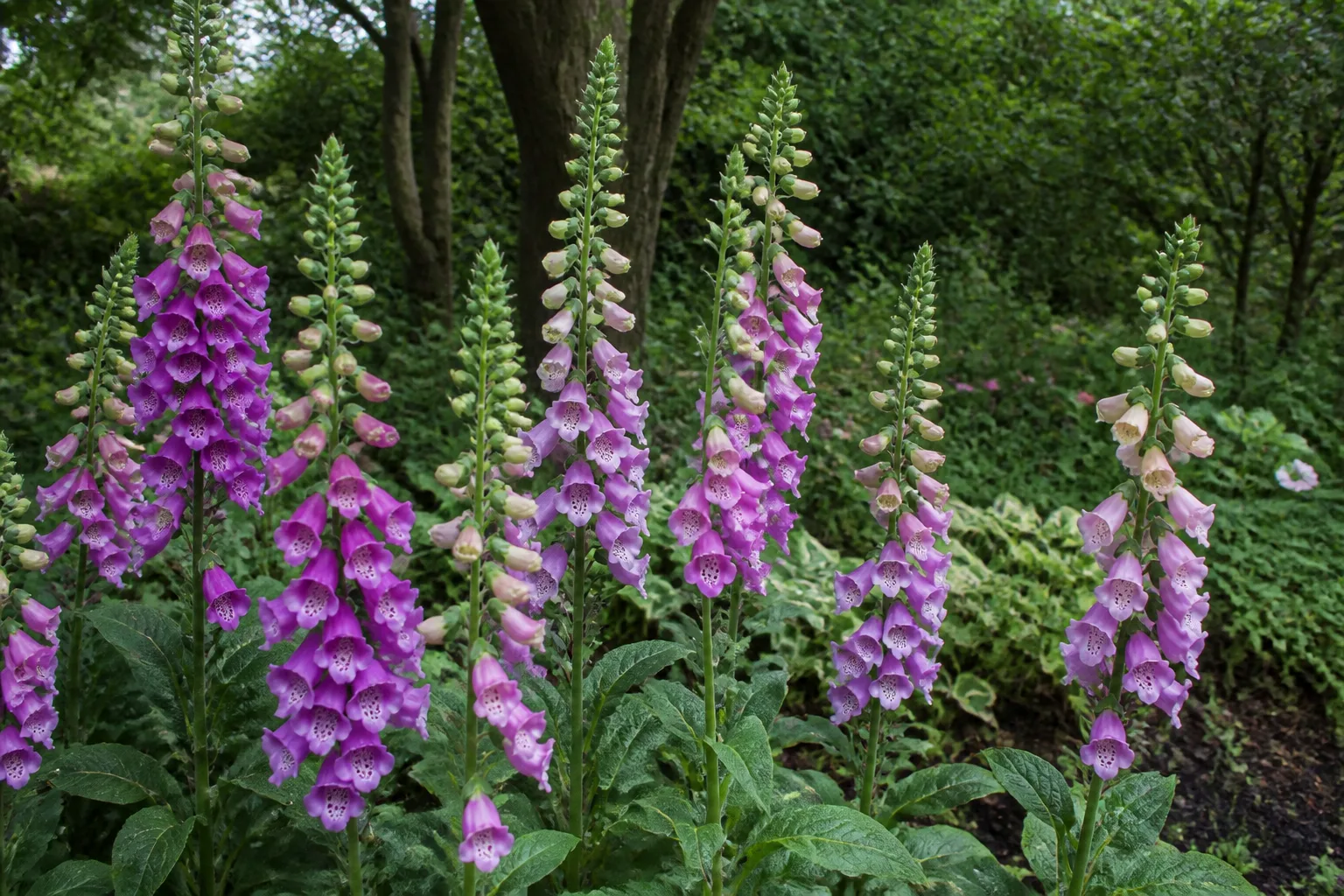
Foxgloves (Digitalis purpurea) are biennials or short-lived perennials with spires in early to mid-summer. The RHS recommends raising them from seed annually and pairing them with “foamers” at their feet—hardy geraniums (Geranium ‘Brookside’), lady’s mantle, or erigeron that softens the base.
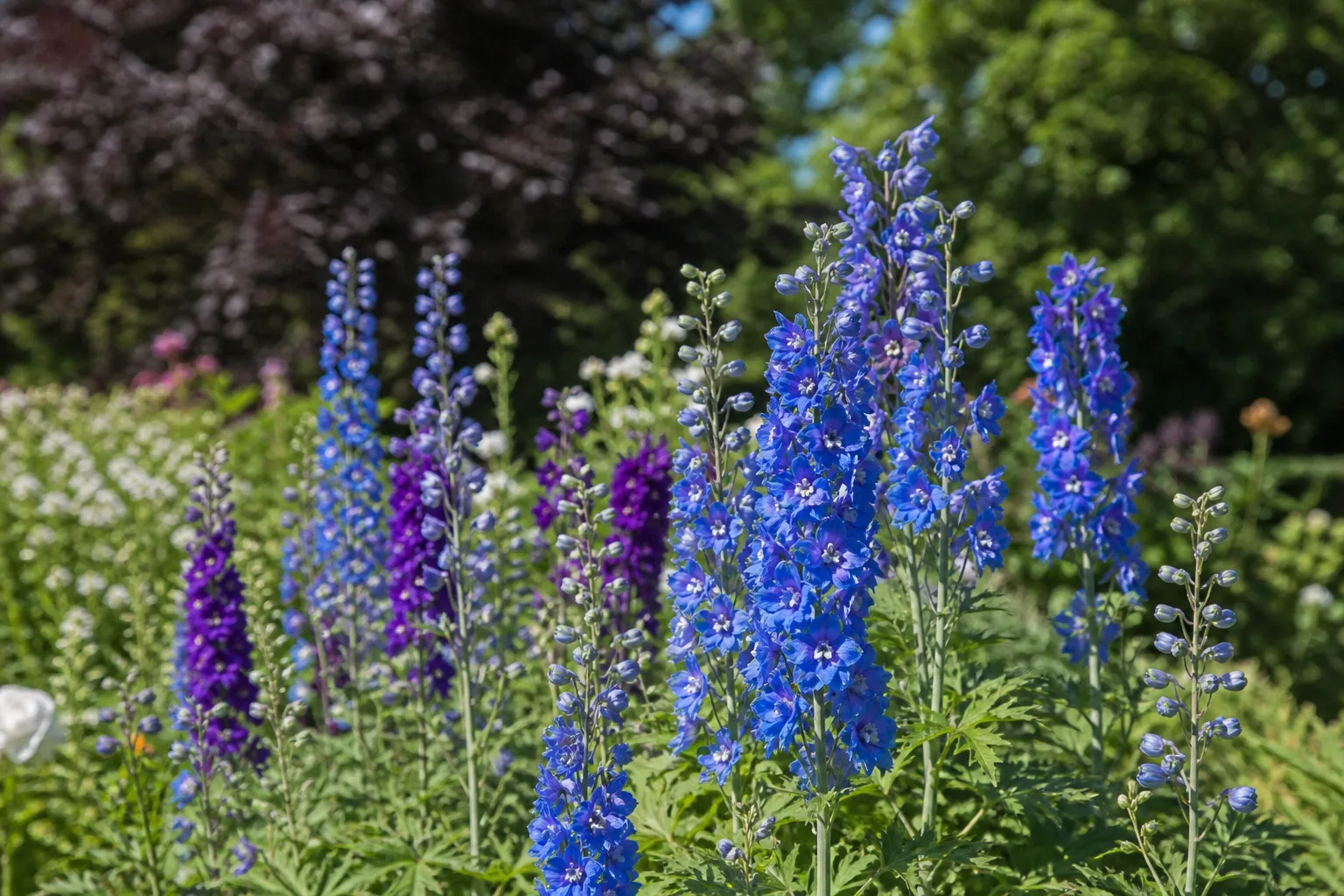
Delphiniums bring mid-summer spikes in blue, purple, and pink. They need sun, shelter from wind, staking, and slug protection when young. Cut back and feed after the first flush for a smaller late-summer repeat on many cultivars.
Peonies, hollyhocks, and campanulas fill the mid-layer. Peonies are long-lived but hate being moved; hollyhocks are dramatic but short-lived—plan to replace them every few years.
Self-seeders—aquilegia, poppies, sweet William, erigeron—create the “haphazard” magic. Allow some seedlings; edit ruthlessly when they crowd paths.
Color rules: No color is off limits. Cohesion comes from repeating two or three hues through the season (for example white + purple + soft yellow) rather from matching every bloom. Contrast pairs—orange daylilies with purple alliums—work when you plant in masses, not singles.
Mix edible and ornamental plants like a potager
Cottage gardens were productive first, pretty second. The modern potager—an ornamental kitchen garden—formalizes that idea: vegetables chosen for leaf color and form as much as flavor.
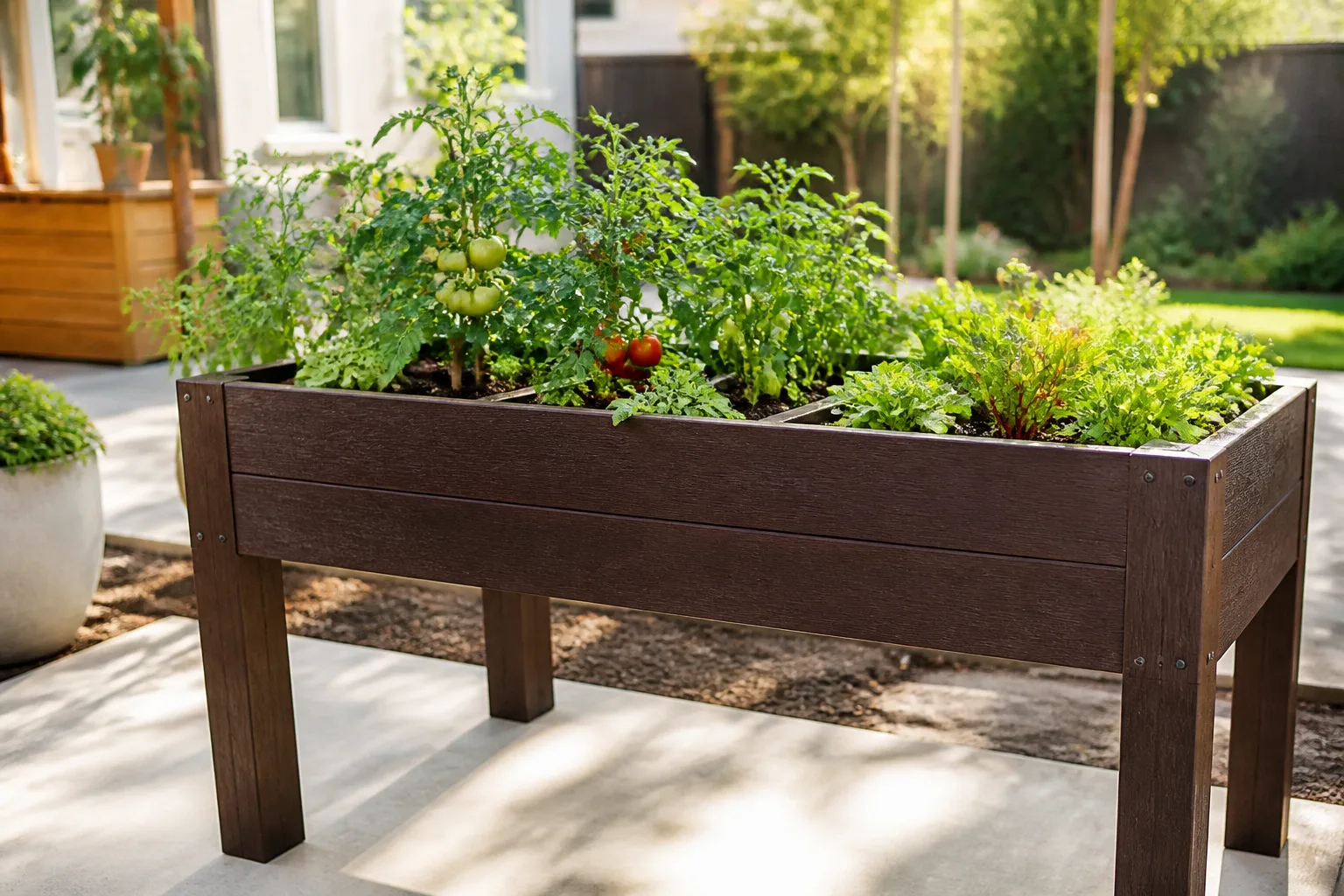
RHS Garden Rosemoor’s Potager and Cottage Garden demonstrates the blend: kale ‘Nero di Toscana’, chard ‘Bright Lights’, purple-podded peas, and runner beans trained on arches alongside flowers and herbs. Woven willow hurdles edge beds; grape vines climb wrought-iron arches. Edible flowers—nasturtium, calendula, borage—add garnish and pollinator value.
Practical rules for home yards:
Group vegetables in visible drifts instead of hiding them behind ornamentals if you want the cottage look. Rainbow chard along a path is as decorative as any perennial.
Fence the vegetable core if rabbits, deer, or dogs are issues. A picket or wire fence becomes a design feature when painted and planted with climbers on the outside.
Herbs are bridge plants. Thyme, sage, rosemary, chives, and basil move seamlessly between ornamental borders and kitchen beds. Lavender doubles as a culinary and landscape hedge where hardy.
Stone or timber raised beds warm soil early in spring and define the edible zone. Leave walking space between beds for harvest and hose dragging—romance fades fast if you cannot reach the beans.
Build paths that invite wandering
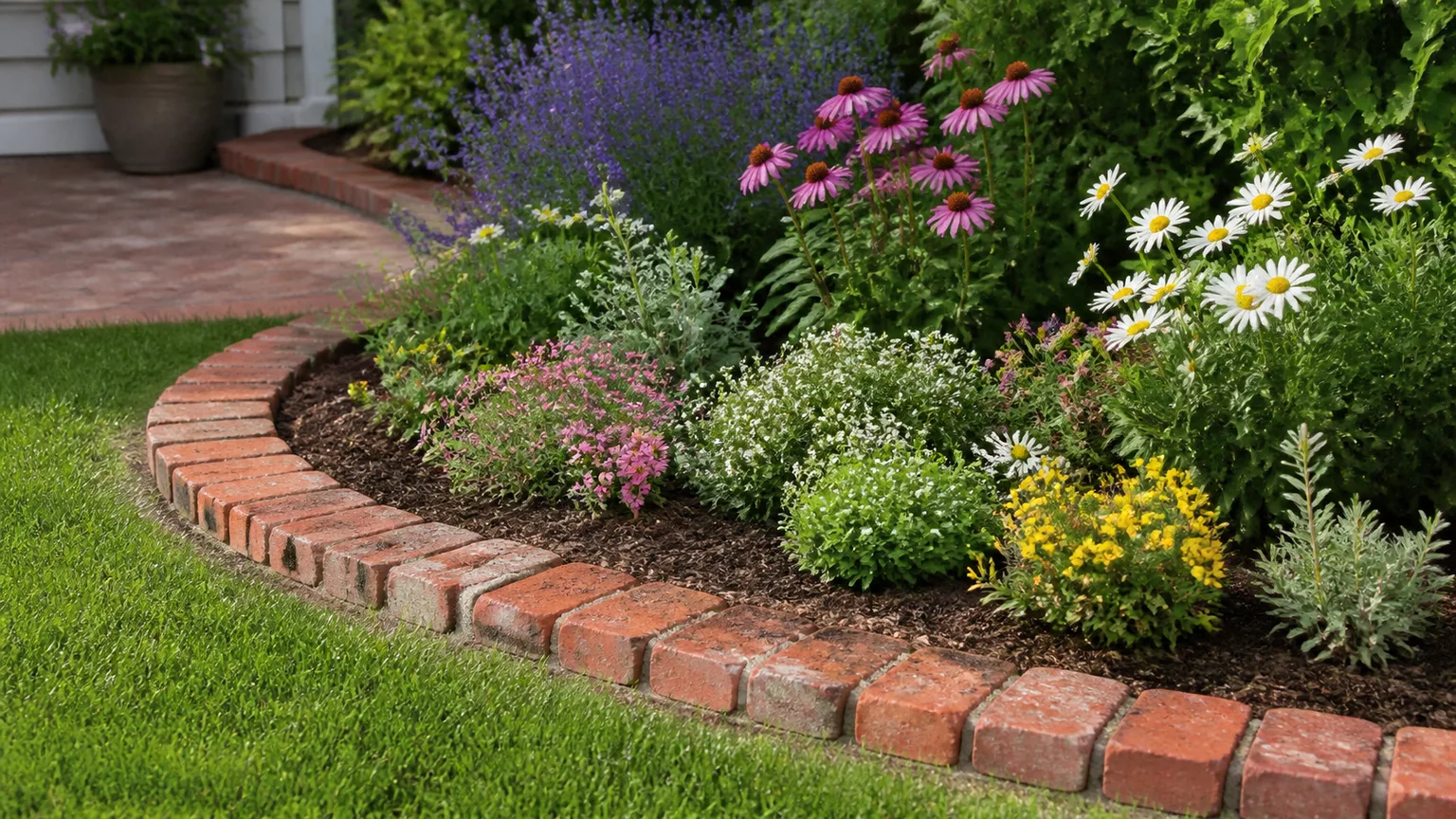
Paths are not filler—they are how you experience sequence: crocus by the gate, roses at the turn, bench at the end.
Pea gravel is inexpensive, drains well, and sounds right underfoot. Lay landscape fabric or a compacted base, edge with steel or brick to stop migration, and expect to rake occasionally. Gravel softens the cottage look but is less comfortable for bare feet and wheeled chairs than pavers.
Paver or flagstone walkways cost more but define permanent routes and reduce gravel in socks. Lay stones with low-growing thyme or moss between joints for the aged English effect.
Mulch paths work in woodland edges and shade gardens where stone feels too formal. Refresh mulch yearly; they are the lowest-cost option but the highest maintenance for neatness.
Whatever material you choose, width matters: 90 cm (3 ft) minimum for two people side by side; 120 cm (4 ft) feels generous around a dining area.
Add vertical structure with trellises and climbers
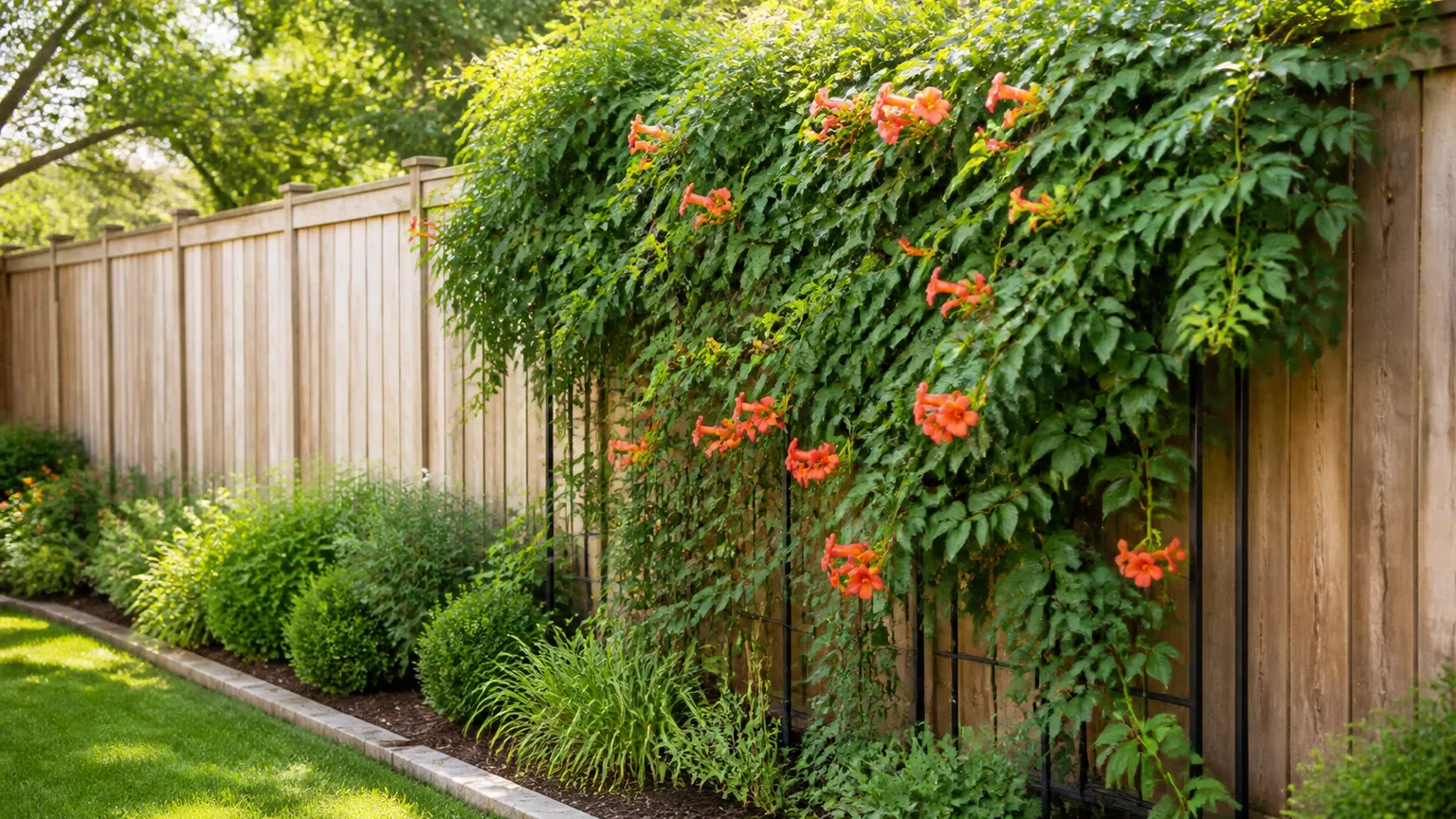
Cottage gardens use height to create enclosure without walls. Vertical elements make small yards feel larger by drawing the eye up.
Trellises and arches support peas, climbing roses, clematis, and sweet peas. Place an arch where the path turns so you walk through fragrance, not beside a flat screen.
Wisteria and climbing hydrangea on pergolas deliver drama but need strong structures and annual pruning—wisteria especially can overpower small supports.
Espalier—training a fruit tree or rose flat against a wall—adds formal discipline inside cottage looseness. Wisconsin Extension’s espalier overview notes it works on apples, pears, and ornamentals when you commit to seasonal tying and pruning.
Vines on fences soften boundaries and extend bloom vertically: clematis through mock orange, runner beans on a vegetable fence, or grape vines on Rosemoor-style iron arches.
Match vigor to structure. A lightweight bamboo trellis is fine for sweet peas; wisteria needs 4×4 posts and heavy hardware.
Create seating and private gathering spots
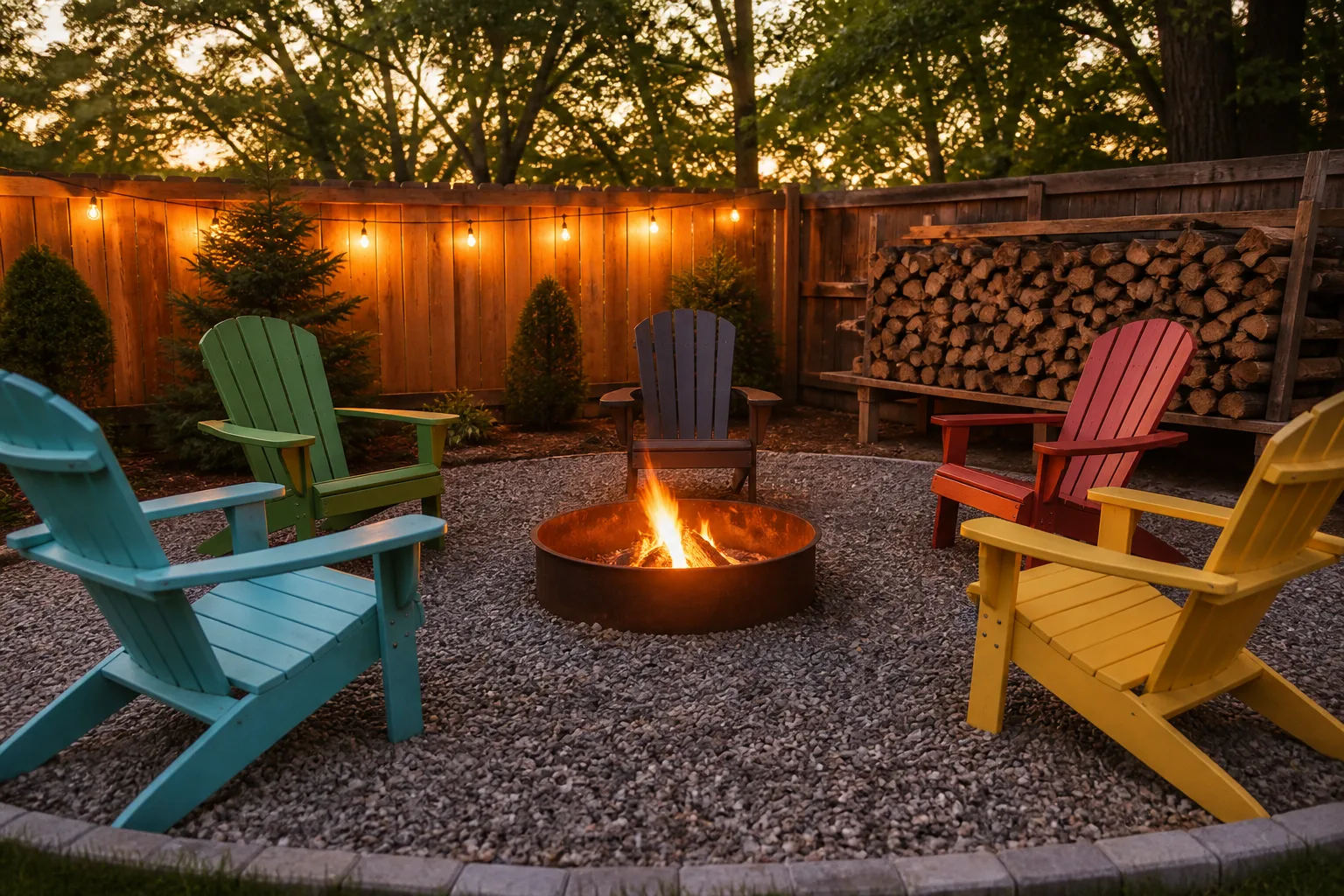
Cottage gardens are meant to be lived in, not only viewed. If there is no place to sit, you will not notice the mock orange scent or the evening light on foxgloves.
Place seating where something good happens: under a wisteria pergola, facing a fountain or bird bath, or tucked beside a herb bed where you can brush lavender when you stand up.
Mix materials—stone bench, painted wood chair with cushions, or a hammock between two sturdy posts. Uniform furniture sets can look too catalog-perfect; one quirky bench fits the style better.
Private dining areas work when bordered by tall planting or privacy shrubs on the neighbor side. A patio umbrella or sail extends usable hours in summer sun.
String lights extend ambiance into evening without structural cost. Use outdoor-rated fixtures and GFCI outlets—romance should not trip breakers.
Edging, raised beds, and rustic hardscape ideas
Hardscape carries the “cottage” story as much as flowers do.
Woven willow or hazel hurdles edge beds with a handcrafted look, as at Rosemoor’s potager. They last several seasons in wet climates if set properly; replace or repair when they sag.
Stone raised beds absorb sun and warm roots—helpful for Mediterranean herbs and early vegetables. Dry-stacked local stone looks authentic; mortared walls last longer on slopes.
Brick or reclaimed paver edging keeps gravel and mulch out of lawn. Curved edges feel cottage; straight lines read more formal—choose based on the hybrid style you want.
Fountains and bird baths add sound and movement. A simple bird bath on a pedestal creates height in flat beds and supports pollinators if kept clean and filled.
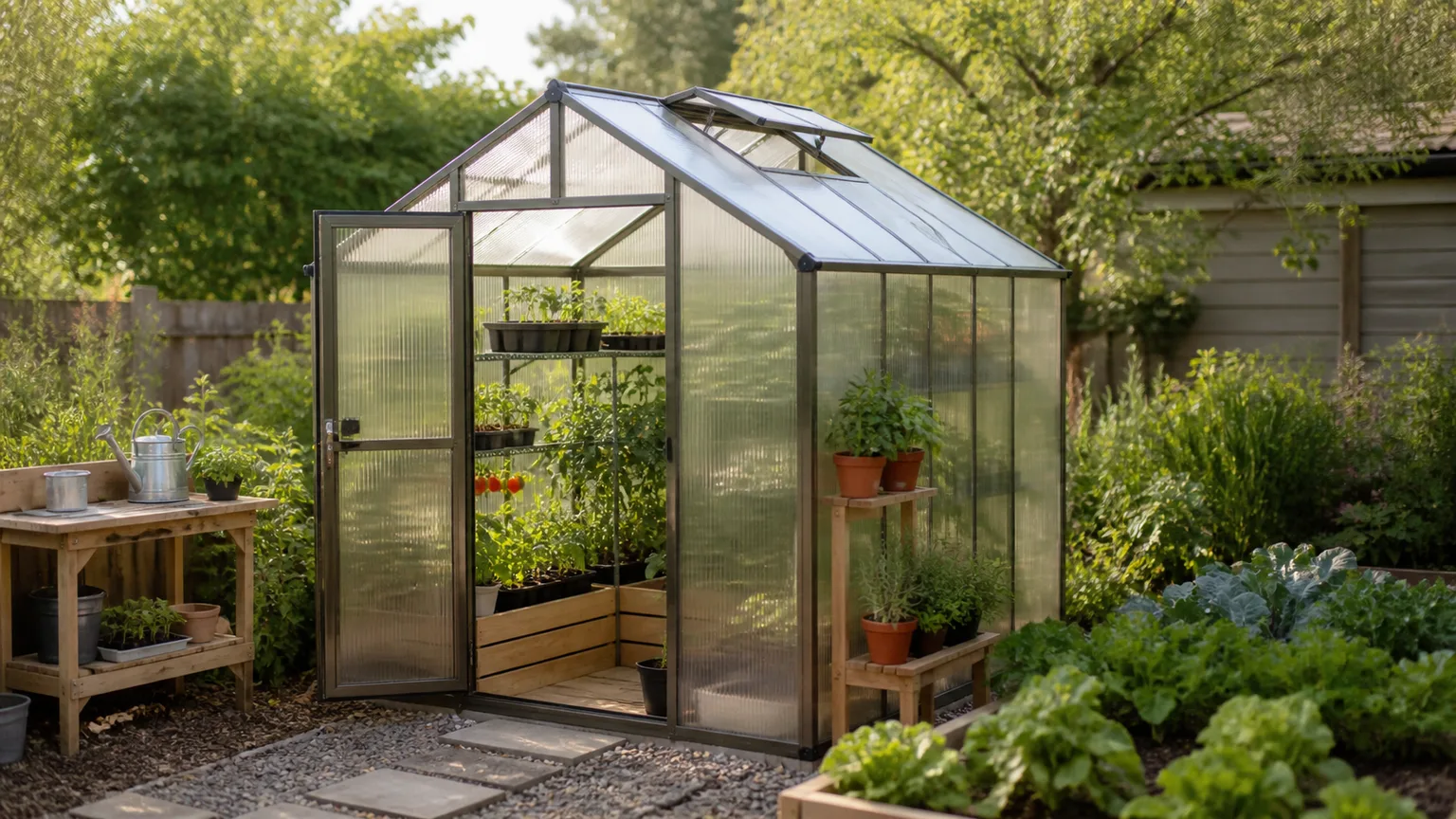
Greenhouses and potting sheds—even small lean-to structures—give you a workspace for seed starting and rainy-day tending. A white-painted greenhouse becomes a bright focal point among deep greens.
Repurposed objects—wheelbarrow planters, vintage ladders for potted displays, wood pallet picnic tables—fit the budget cottage look when structurally safe. Sand rough wood, avoid treated lumber for edible beds, and drill drainage holes in anything that holds soil.
Garden gates mark transitions. A simple wooden gate at the path entrance signals “garden starts here” even without a full fence.
Pollinators, wildlife, and seasonal color

Abundant cottage planting naturally feeds pollinators if you include open-faced flowers and avoid double forms that hide nectar.
Plant pollinator anchors: coneflowers, asters, zinnias, sunflowers, milkweed (where appropriate for your region), and single dahlias. Herbs left to bloom—oregano, thyme, chives—are underrated nectar sources.
Bird baths and seed heads extend wildlife value into fall. Leave some spent echinacea and rudbeckia if you tolerate a messier winter look—or cut half and leave half.
Seasonal decoration keeps the garden present in off months: spring pots of tulips and crocus by the door, summer pelargoniums in terracotta, fall ornamental kale and dried hydrangea, winter evergreen pots with redtwig dogwood cuttings. Cottage gardens are not only June.
Privacy shrubs—viburnum, lilac, ninebark, or fast-growing hedges where legal—frame the cozy enclosure without a tall fence wall. Plant them on the neighbor sight line, not across your best flower view.
Budget-friendly cottage garden ideas
Romance does not require a landscape invoice.
Tier 1 — structure on the cheap: hand-cut soil edges, mulch paths, one arch made from cattle panel or saplings, a gravel pad for a bistro table, and seeds for foxgloves, poppies, and sweet peas.
Tier 2 — fill planting fast: divisions from friends (hostas, daylilies, geraniums), bare-root roses in early spring, and young lavender plugs along a path you prepared with sand and gravel for drainage.
Tier 3 — instant impact: mature shrub roses, stonework raised beds, paver paths, and a small greenhouse. Pay for what saves years of waiting—usually vertical structure and evergreens.
DIY aged terracotta: lime wash on standard pots mimics decades in a courtyard. Pallet furniture works for picnic tables when sanded and sealed. Repurposed ladders display pots without buying tiered plant stands.
The cheapest failure is replacing dead plants every year because they never matched your sun or soil. Spend the first season improving soil with compost and observing what thrives before scaling up.
Maintenance reality check
Cottage gardens are not low maintenance. They are forgiving visually when you miss a weekend—weeding shows less in a full bed than in minimal modern plantings—but they still need time.
Expect seasonal peaks: spring staking and slug patrol, early-summer deadheading and harvest, late-summer cutting back spent delphiniums and feeding for rebloom, fall division of crowded geraniums, winter structural pruning on roses and shrubs.
A realistic budget for a medium backyard cottage garden in active bloom season is 4–8 hours per month once established, plus a heavier 12–20 hour spring push. Potagers with vegetables add weekly harvest and watering.
Mulch borders 5–7 cm (2–3 in) deep after spring cleanup to suppress weeds. Leave self-seeders you want; pull those that block paths within a week so they do not set seed.
If you only have two hours a month, shrink the bed area, favor shrubs and grasses over thirsty annuals, and keep lawn outside the romantic zone so you are not fighting grass in the planting.
Cottage garden ideas by sun, shade, and climate
Full-sun cottage (6+ hours): lavender hedges, delphiniums, roses, alliums, sunflowers, vegetable potager, gravel paths, espaliered fruit on south walls.
Part-shade cottage: foxgloves, geraniums, astilbe, ferns as texture, white hydrangeas, spring bulbs under deciduous trees, wood-chip paths, seating in the brightest pocket.
Hot/dry climates: shift from English classics to Mediterranean cottage—lavender, rosemary, salvia, agastache, gravel mulch, fewer delphiniums, more structural stone and shade sails.
Cold climates: focus on hardy shrubs, spring bulbs (tulips, crocus, daffodils), peonies, and repeat-flowering shrub roses; protect marginally hardy lavender in wet snow zones with sharp drainage.
Small yards: one arch, one deep border, one seating spot, and vertical climbers maximize impact. Skip wide lawn; every square foot goes to planting or path.
Match the fantasy to your climate and the garden stays dreamy instead of demoralizing.
Conclusion
A cottage garden that feels like an escape is built in layers: paths that wander, backbone shrubs and climbers for height, perennial drifts for color, and a productive potager corner that proves the beauty is useful. Audit your sun, soil, and maintenance budget before you chase Instagram photos. Install structure first—edges, arches, seating—then plant abundantly with repetition and self-seeders you are willing to edit. Whether you add a greenhouse, a gravel path, or a wheelbarrow of pansies by the gate, the goal is the same: a yard that rewards slow walks, evening sitting, and the small surprise of a seedling where you did not plant one last year.