Low-Maintenance Garden Border Ideas for Any Yard
Low-maintenance garden border ideas for sun, shade, and dry yards—plus edging, spacing, and plant picks that stay neat with less weekly work.
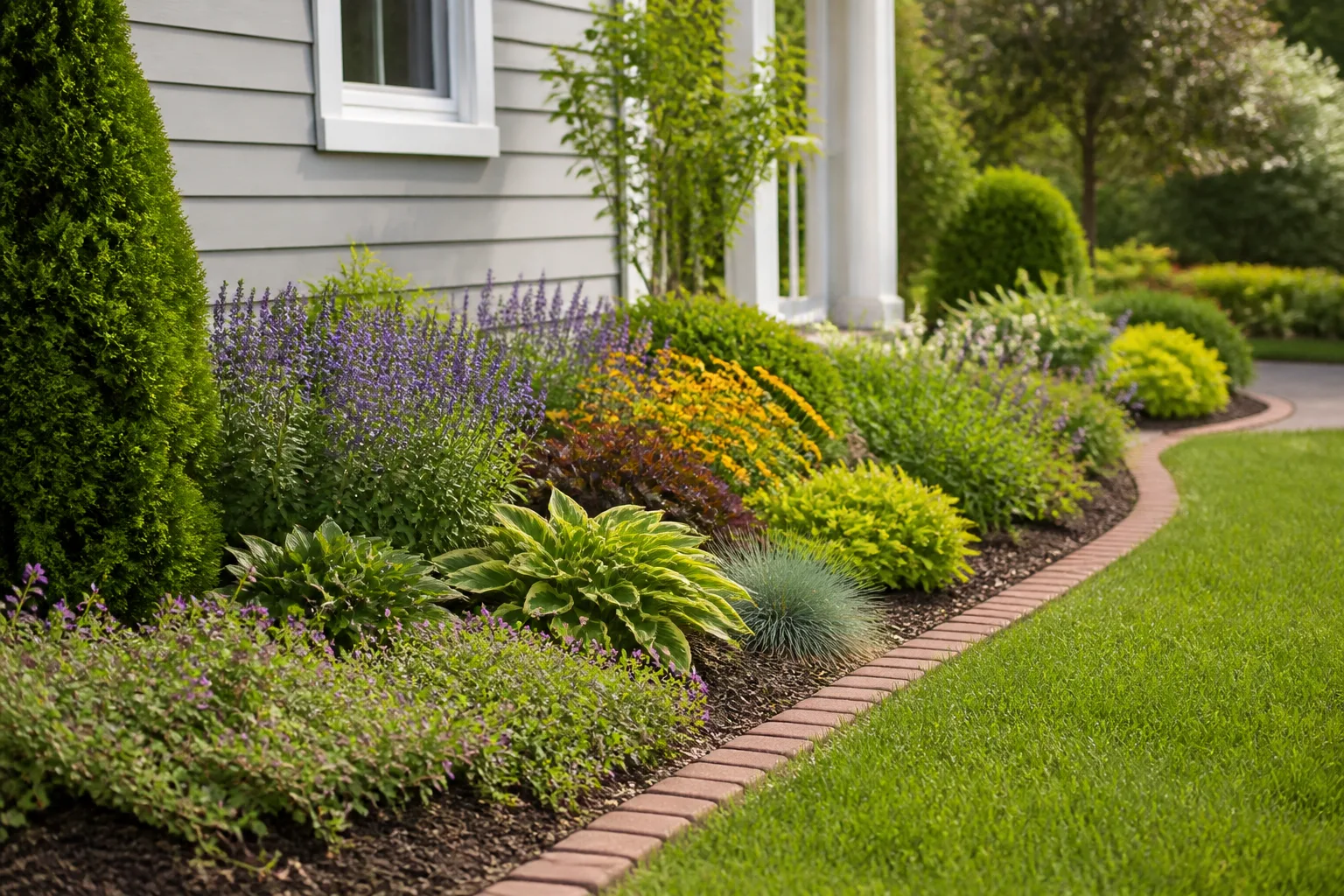
The border along your walkway, driveway, or patio is the part of the garden everyone sees first. It is also where maintenance mistakes show up fastest: floppy plants blocking the path, grass creeping into the bed, or a jumble of colors that needs constant deadheading to look intentional.
Low maintenance does not mean zero work. It means choosing plants, edging, and spacing that match your sun, soil, and how often you actually want to be out there with pruners or a hose. The twelve ideas below are organized around that reality—so you can pick a style that fits your yard, not just a photo you saved last winter.
What makes a garden border low maintenance
A border stays easy when three systems work together: plants that thrive without staking or frequent division, an edge that keeps lawn and mulch in their lanes, and spacing that lets plants knit together without overcrowding in year three.
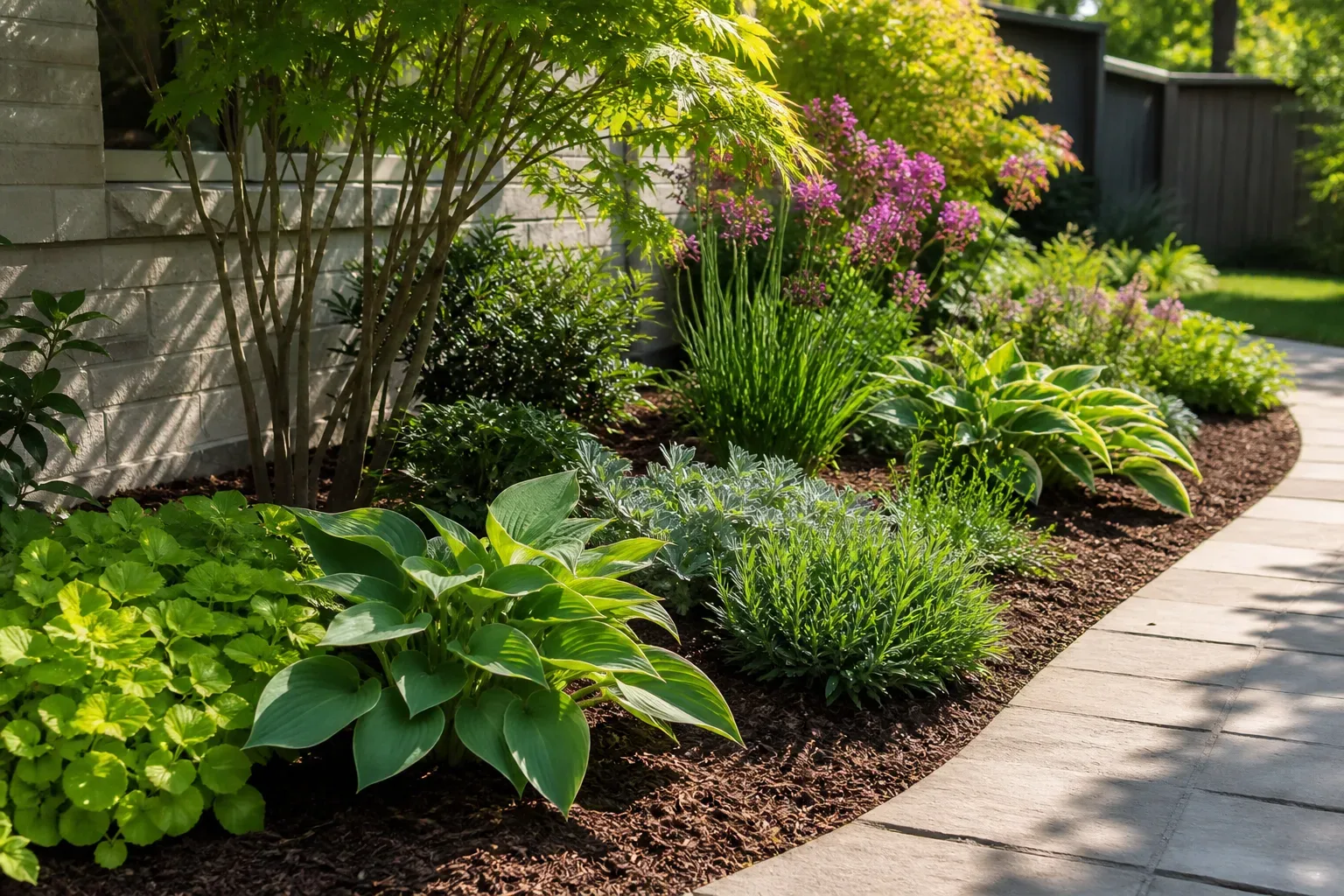
The RHS border planning guide frames this as right plant, right place—matching soil drainage, pH, aspect, and exposure before you fall in love with a flower color. That single step prevents more rework than any “tough plant” list.
Right plant, right place checklist
Walk the site on a sunny afternoon and again on a cloudy morning. Note where foot traffic brushes stems, where downspouts dump water, and whether the bed faces south (hot and bright) or north (cool and shaded). South- and west-facing borders suit sun lovers; east- and north-facing beds need shade-tolerant foliage plants.
Dig a test hole after rain. If water sits for hours, fix drainage or choose wet-soil plants before you shop. If the soil is dusty six inches down within a day, plan drought-tolerant species and drip irrigation for the first year. Penn State Extension’s native landscaping overview reinforces a useful filter: plants adapted to your conditions need fewer inputs and support local pollinators—both wins for a front border you do not want to babysit.
Finally, be honest about grooming tolerance. Some stunning plants need deadheading, division, or annual replacement. A low-maintenance border favors self-supporting shapes, long bloom seasons without constant picking, and evergreen or semi-evergreen structure so winter does not look like an empty trench.
Set the edge so the planting stays defined
Planting comes second. Edging is what keeps a border from becoming a weedy blur into the lawn. Without a physical or maintained edge, you will spend more time string-trimming than enjoying the flowers.
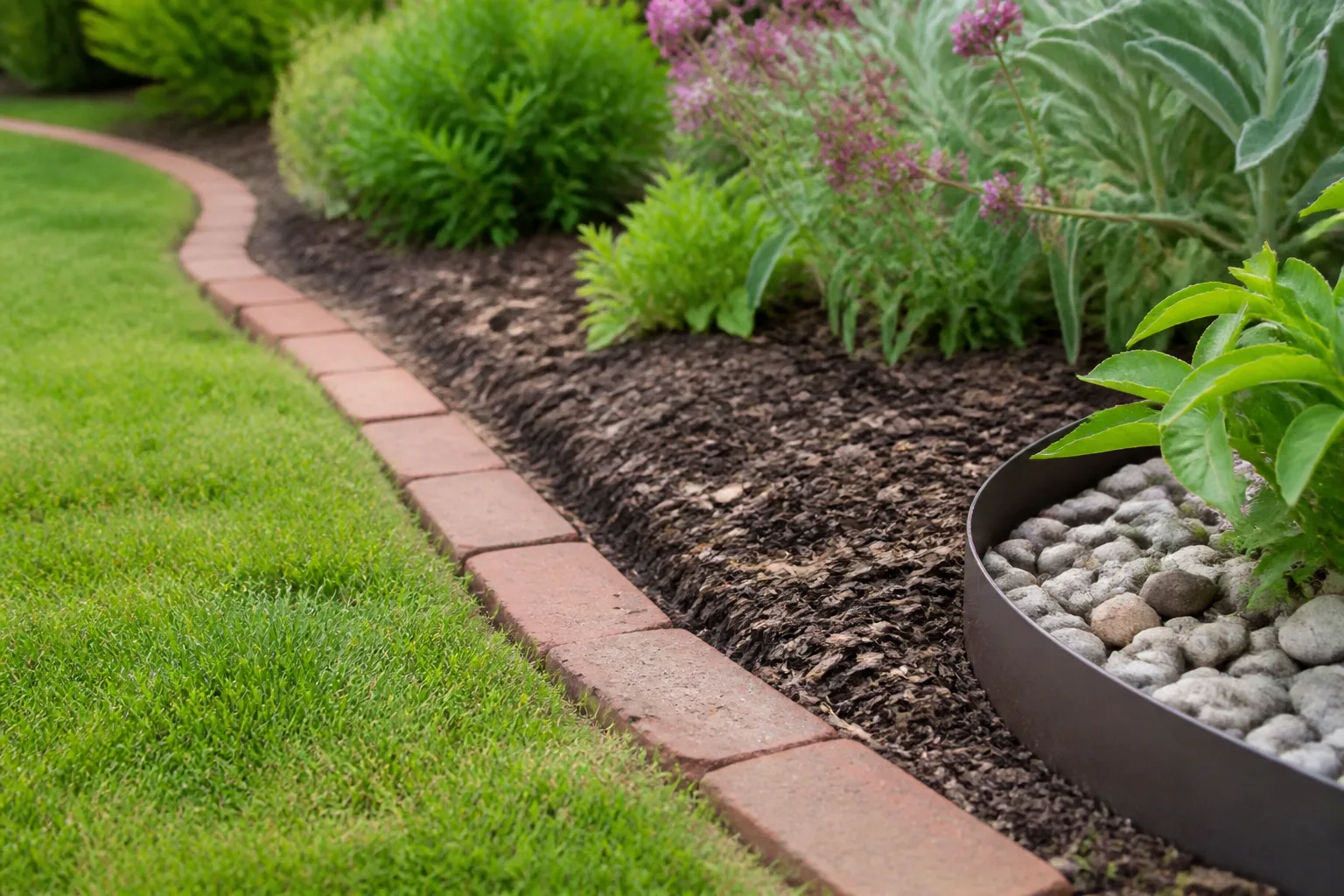
A clean edge also holds mulch in place. The RHS perennial border advice recommends a 5–7 cm (2–3 in) mulch layer after planting, kept clear of plant crowns to avoid rot. That mulch layer only works if the edge stops it from spilling onto turf.
Low-effort edging options that reduce trimming
Mulch lip with a hand-cut trench is the cheapest edge: slope soil slightly toward the bed, cut a shallow vertical trench along the lawn side, and refresh it once or twice a season. It is not permanent, but it pairs well with groundcover fronts.
Recycled brick or stone sets a visual line and slows grass rhizomes. Set material slightly below the mower blade height if the border touches lawn. Our brick edging ideas guide walks through curves and mowing-friendly heights.
Steel or aluminum landscape edging costs more upfront but saves hours of re-cutting. It is especially useful along driveways where soil erodes. Living edges—creeping thyme, dwarf mondo grass, or low sedum—can replace mulch at the very front, but only where foot traffic is light and the path is wide enough.
If grass is already invading, strip a 30 cm (12 in) sod band and install edging before you plant. Fighting turf inside a new bed is the fastest way to turn a low-maintenance plan into a weekly chore.
Twelve border styles that need less weekly work
Use these as templates, not prescriptions. Mix one structural idea (hedge, gravel, color block) with plants that match your hardiness zone and light.
Color-block drifts for instant impact
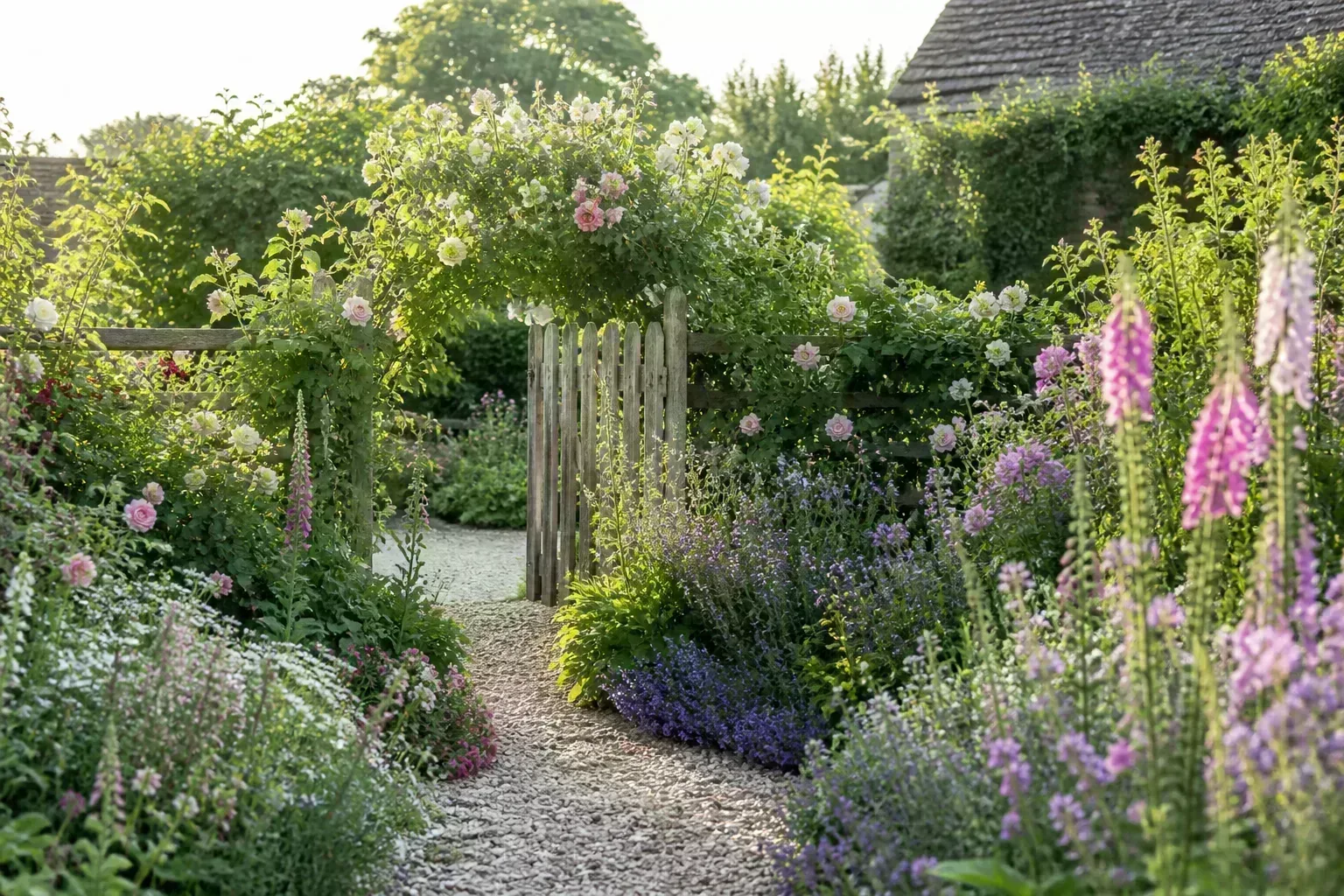
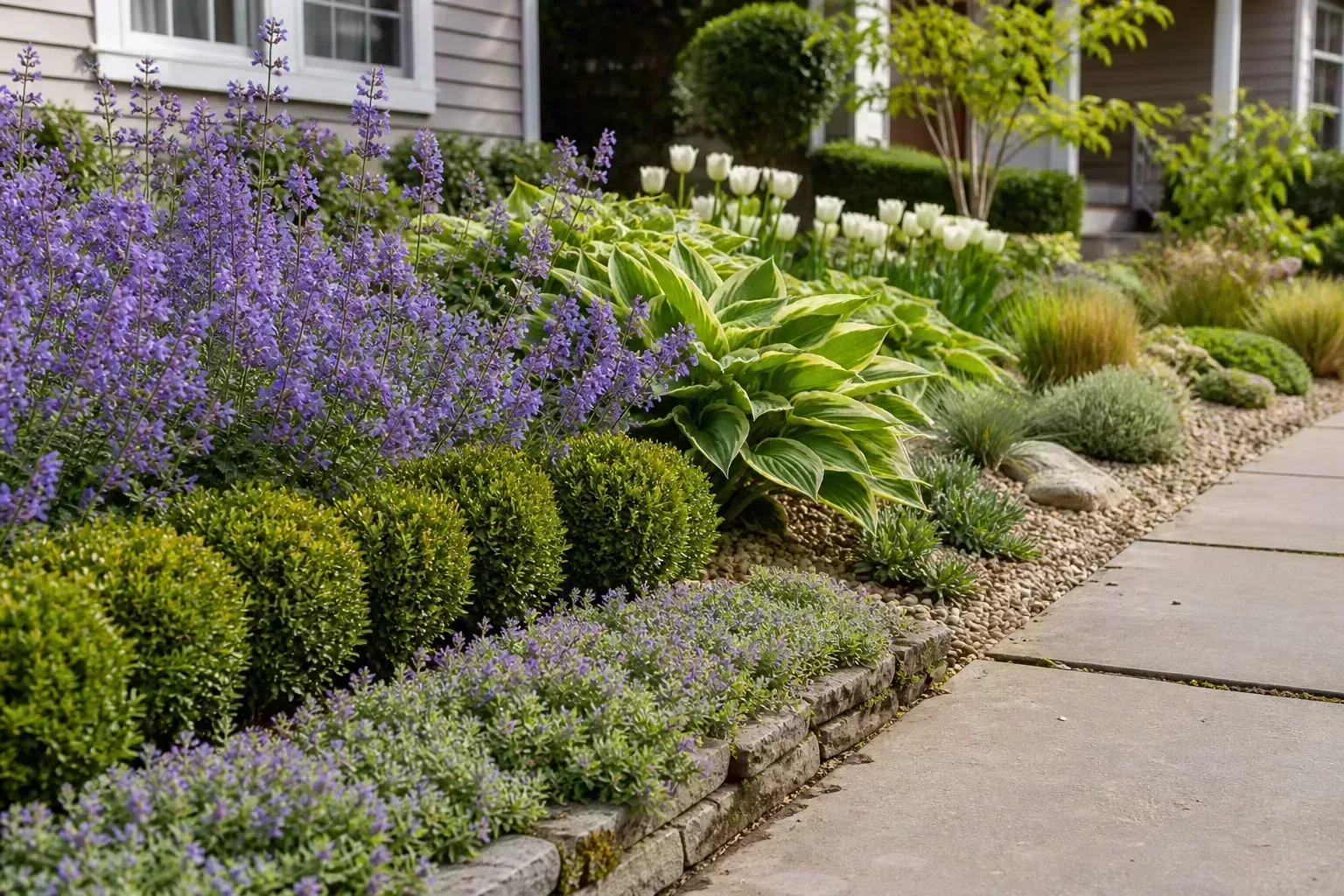
Color blocking means planting one species in a bold patch instead of mixing one of everything. Three sweeps of ajuga, catmint, or salvia read as designed even when individual flowers are small.
Keep blocks odd-numbered—three or five clumps—and repeat the same plant in two places along the bed so the eye connects the border. Pair a violet-blue front drift with a taller neutral grass or shrub behind it so the block does not float without context.
For spring-only color, add forget-me-nots or creeping phlox as a temporary underlayer, knowing they may self-seed. Pull extras in May if seedlings crowd paths; that two-minute task beats shearing a messy mix all summer.
Spring bulbs with summer perennials behind them
Bulbs give you early impact in a narrow front strip where little else is awake. Plant daffodils, species tulips, and alliums along the front, then set hostas, daylilies, or ferns slightly back so their foliage hides dying bulb leaves in late spring.
This is the classic “layered border” trick: bulbs occupy the same square footage as summer plants, but on different calendars. See our bulbs you can plant in August guide for fall planting depth and critter-resistant varieties.
Choose bulbs with neat foliage—large hybrid tulips can look tatty before they yellow. Species tulips and camassia often behave better in naturalistic fronts. Mark planting spots with photos so you do not slice bulbs when adding summer divisions later.
Foliage-led fronts for year-round color
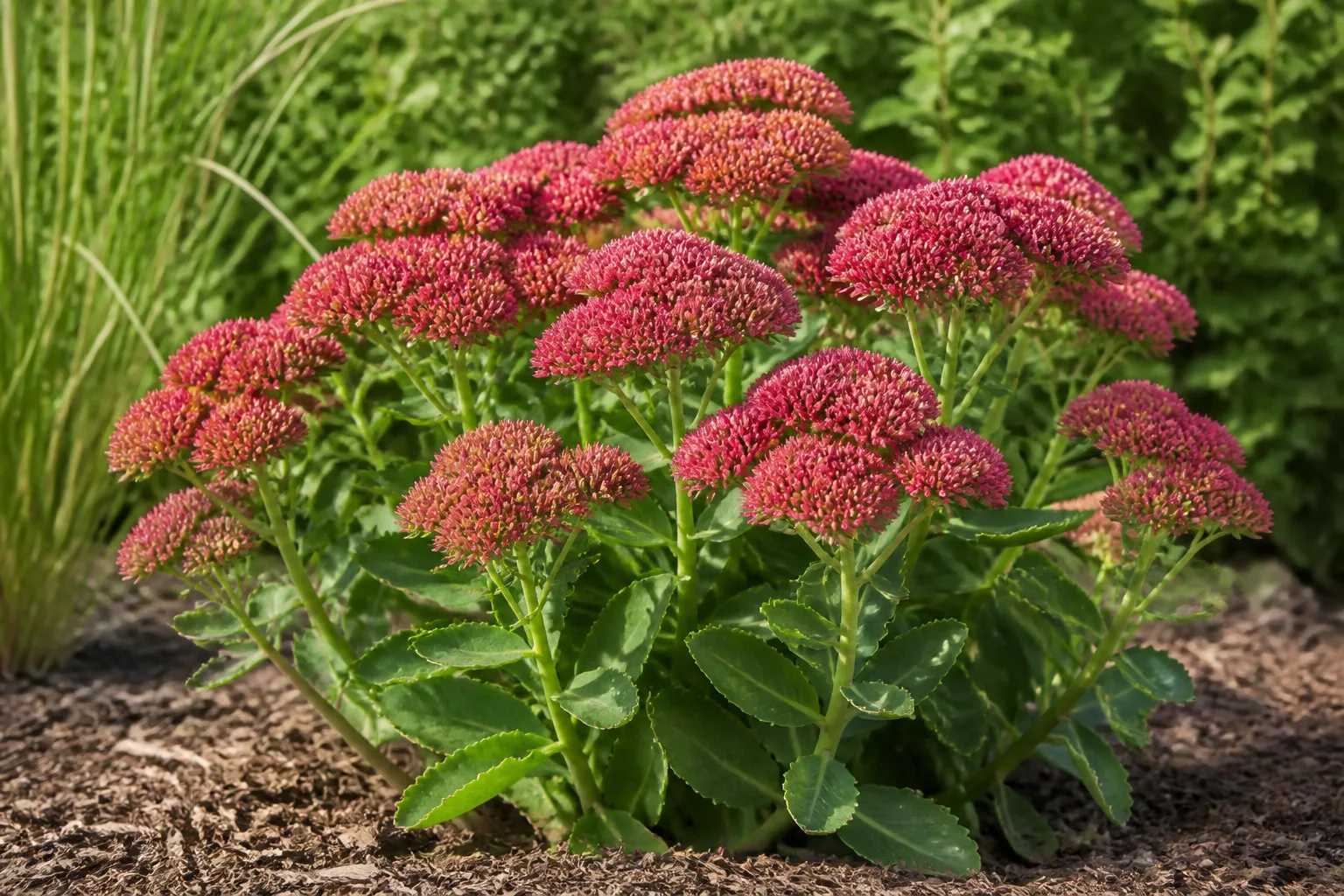
Flowers are optional when leaves carry the show. Heuchera, euphorbia, artemisia, sedum, and coleus (treated as annuals in frost) build a border that looks intentional from April through October without a deadheading schedule.
Silver and chartreuse foliage makes neighboring flowers pop; burgundy heuchera anchors shade edges. Combine at least two foliage textures—wide hosta leaves against fine fern fronds, for example—so the bed does not read as a flat green mat.
In hot climates, prioritize heat-tolerant coral bells and succulent sedums over moisture-hungry coleus unless you have irrigation. Foliage borders still need water the first year; they are low maintenance after establishment, not drought-proof on planting day.
Shade borders with a groundcover backbone
Shade borders fail when they rely on bare mulch between sparse plants. Start with a groundcover backbone—ajuga, lamium, wild ginger, or wild strawberry in cool climates—that fills gaps and suppresses weeds once established.
Layer height with hostas, ferns, and pulmonaria for spring bloom. Our wild strawberry groundcover guide and shade yard ideas go deeper on dry shade versus moist shade picks.
Avoid planting aggressive spreaders next to lawn without edging. In dry shade under maples, expect slower fill-in and plan extra mulch the first two seasons.
Mediterranean herb lines for hot, dry sites
Sandy, well-drained soil and full sun suit a perfumed herb border: lavender, thyme, rosemary, oregano, and sage. Plant in groups of three or five, with gravel mulch to reflect heat and keep crowns dry.
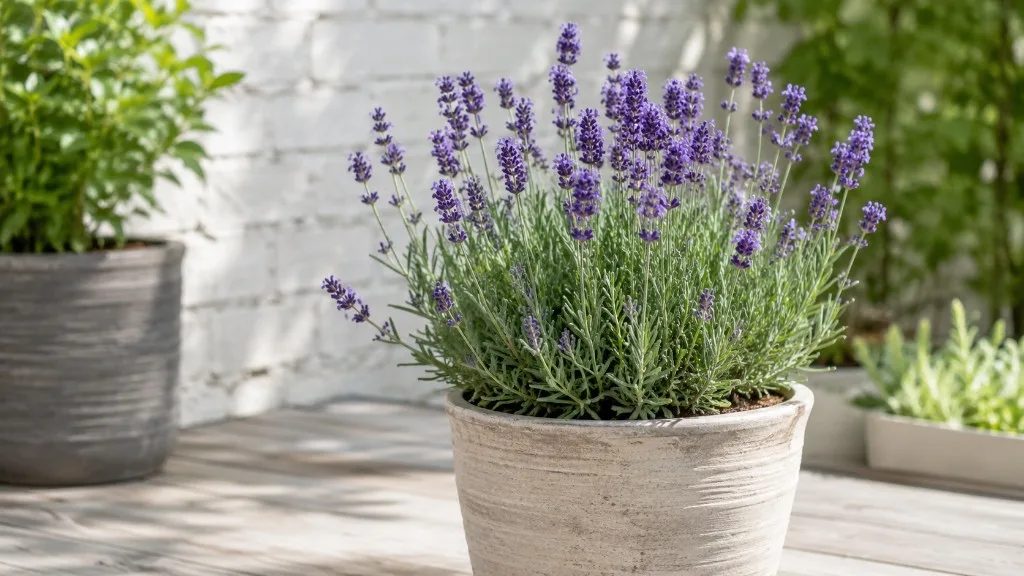
This style shines in USDA zones roughly 7–9 (varies by species). In humid summers, lavender and rosemary struggle without excellent drainage and air movement—swap in nepeta or sedum instead of forcing Mediterranean plants into clay.
Keep herbs slightly proud of the path so stems do not get crushed. A light shear after bloom keeps thyme and lavender compact; that is once-a-year grooming, not weekly trimming.
Airy height at the front of the border
Convention says short plants in front—but see-through verticals break the rule without blocking views. Alliums, agapanthus, gaura, verbena bonariensis, and tall skinny grasses offer height with open stems.
The test is transparency: can you see the mid-border plants through the front spikes? If not, move the tall element back or choose a thinner cultivar.
Cosmos and annual verbena fill the same role for one season. Self-seeding is a feature only if you welcome volunteers; otherwise deadhead before seed set in late summer.
Low clipped hedges for crisp lines
A low boxwood or yew hedge along the path gives year-round structure and frames looser perennials behind it. Dwarf boxwood cultivars stay under 60 cm (2 ft) with one late-spring clip.
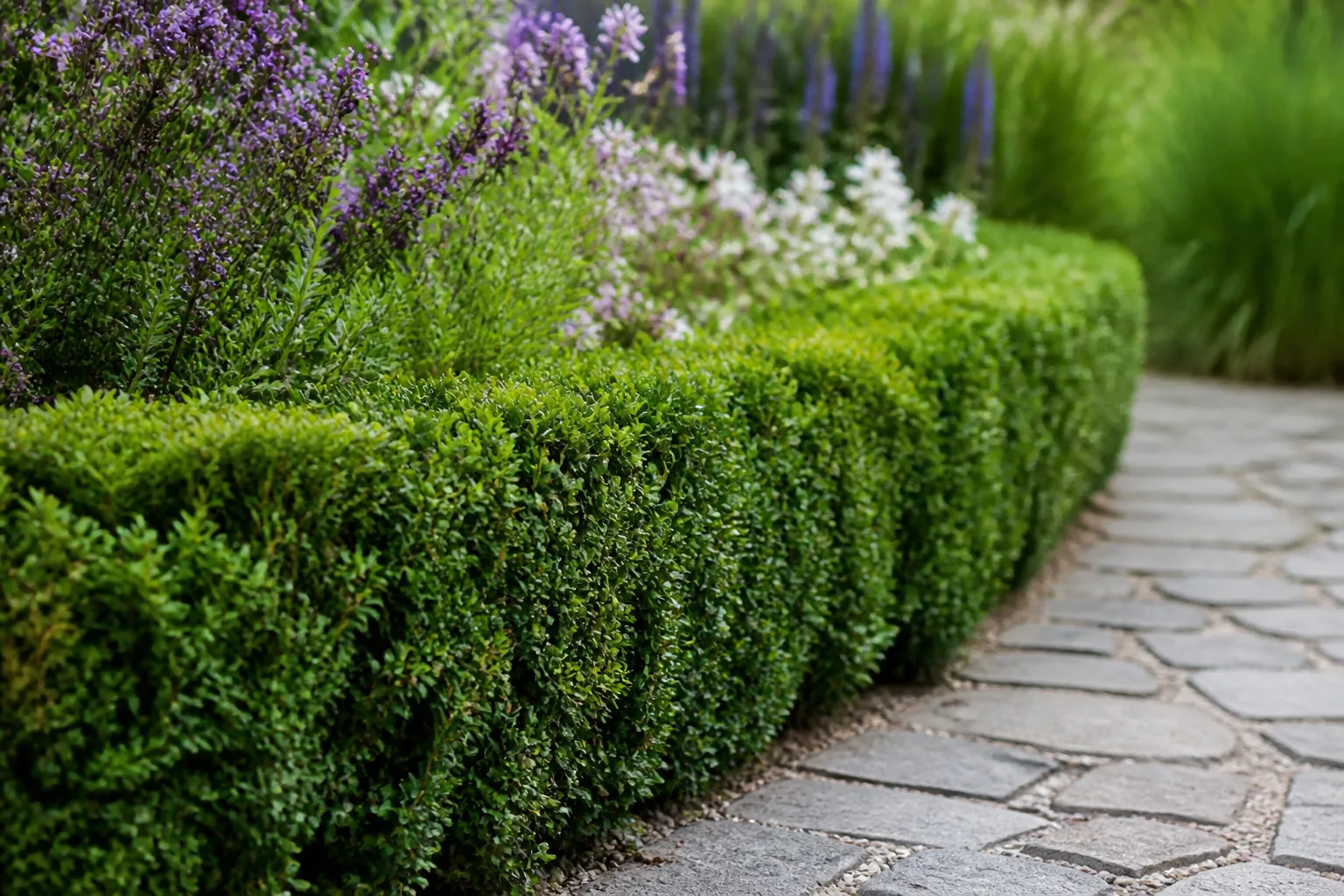
In boxwood blight regions, substitute inkberry holly or dwarf Japanese holly for similar form without the disease risk. Creeping juniper works on sunny slopes where mowing is awkward.
Hedges are low maintenance only if you keep them intentionally small. Planting a shrub that wants to be 2 m wide and hacking it monthly is the opposite of easy.
Late-season color with hardy mums and asters
Autumn borders often look tired when summer annuals quit. Garden mums (Chrysanthemum hybrids labeled hardy in your zone), asters, sedum ‘Autumn Joy’, and goldenrod cultivars extend color into October without replanting the whole bed.
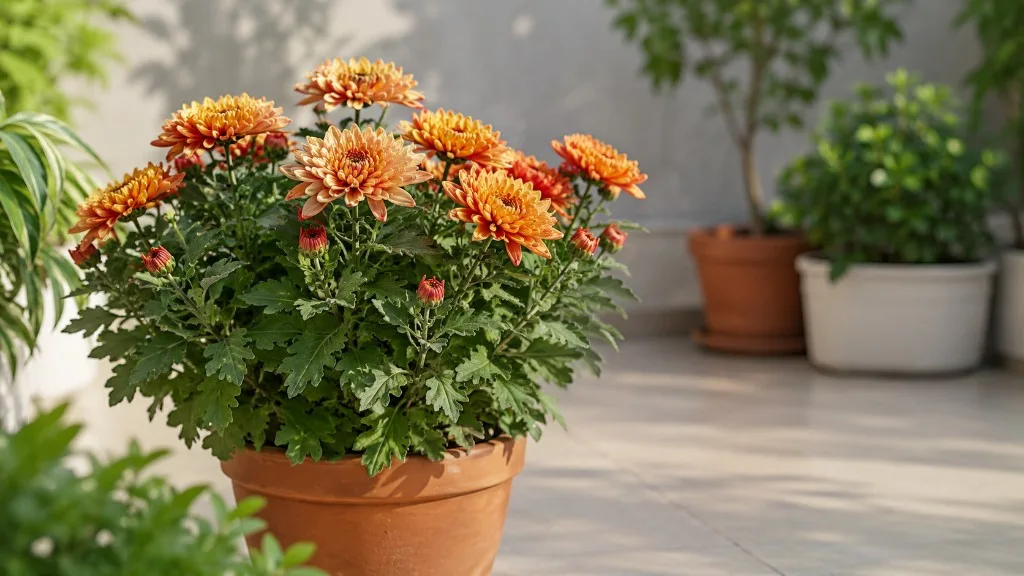
Order hardy mums in spring from a local nursery so roots establish before bloom pressure in fall. Pair yellow mums with purple asters for high contrast at the front, or use a single color repeat for a calmer scheme.
Cut back tops after frost once; leave roots to return. In zone-pushing climates, mulch crowns lightly after the ground freezes.
Drought-tolerant gravel borders
In arid and Mediterranean climates, a gravel mulch border with sedum, euphorbia, yarrow, Russian sage, and ornamental grasses survives irregular rainfall once roots reach down. Gravel reflects heat and reduces evaporation compared with bare soil.
Install weed fabric only if you accept long-term soil biology trade-offs; many gardeners prefer thick gravel over cardboard-degradable layers plus hand-weeding in year one. Our drought-tolerant plants for July heat lists species that keep foliage attractive under stress.
Remember: drought tolerance is not the same as low maintenance. Some ornamental grasses look great dry but need division every few years; plan replacements for short-lived species rather than fighting decline.
Creeping spillers over stone or brick
Low sedum, dianthus ‘Firewitch’, creeping thyme, and thread-leaf coreopsis soften hard edges when they spill over brick or stone. The effect looks romantic with one spring shear and occasional deadheading on reblooming dianthus.
Keep spillers out of main foot paths unless you enjoy brushing past wet foliage. Pair with permanent edging so stems do not root into lawn.
Thyme living edges handle light foot traffic and smell excellent on the way to the door—swap mulch for plants in narrow strips at least 45 cm (18 in) wide.
Dwarf perennials for narrow front borders
When the bed is only 30–45 cm (12–18 in) deep, choose dwarf cultivars: miniature irises, compact daylilies, sedum cauticola, dwarf asters, and low-growing ornamental grasses. Full-size perennials will flop into the path within two seasons.
Repeat the same dwarf in groups of three along the strip. Miniature bulbs—crocus, snowdrops—add early season without height chaos.
Narrow borders along foundations still need root competition planning. Dry shade under eaves may need irrigated containers rather than thirsty perennials in the ground.
All-green texture borders without relying on flowers
A green-on-green border uses hosta, ferns, hakone grass, boxwood balls, and variegated euonymus for shape contrast. Flowers become a bonus, not the plan.
This style suits formal entries and shady side yards where bloom time is short. Variegation, puckered leaves, and upright vs weeping forms create interest without a color wheel.
Green borders are among the lowest deadheading workloads. They still need slug monitoring in wet shade and division when hostas meet in the middle—usually every five to seven years, not every weekend.
Spacing and grouping rules that prevent rework
Overplanting is the hidden maintenance tax. The RHS suggests roughly five herbaceous perennials per square metre (about eleven square feet), or fewer if you are mixing shrubs. Measure bed length × depth, calculate area, and buy to that number instead of filling the cart on impulse.
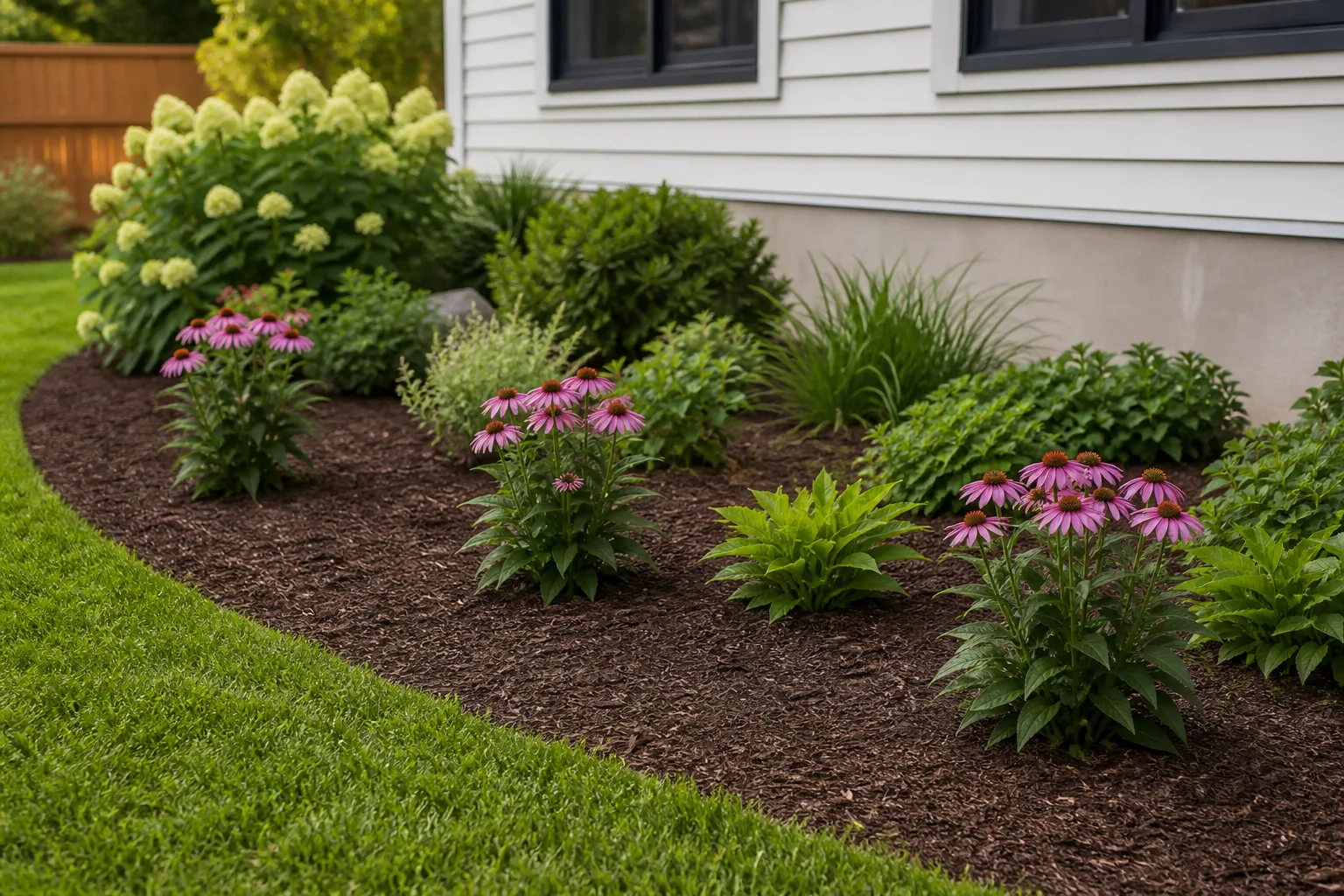
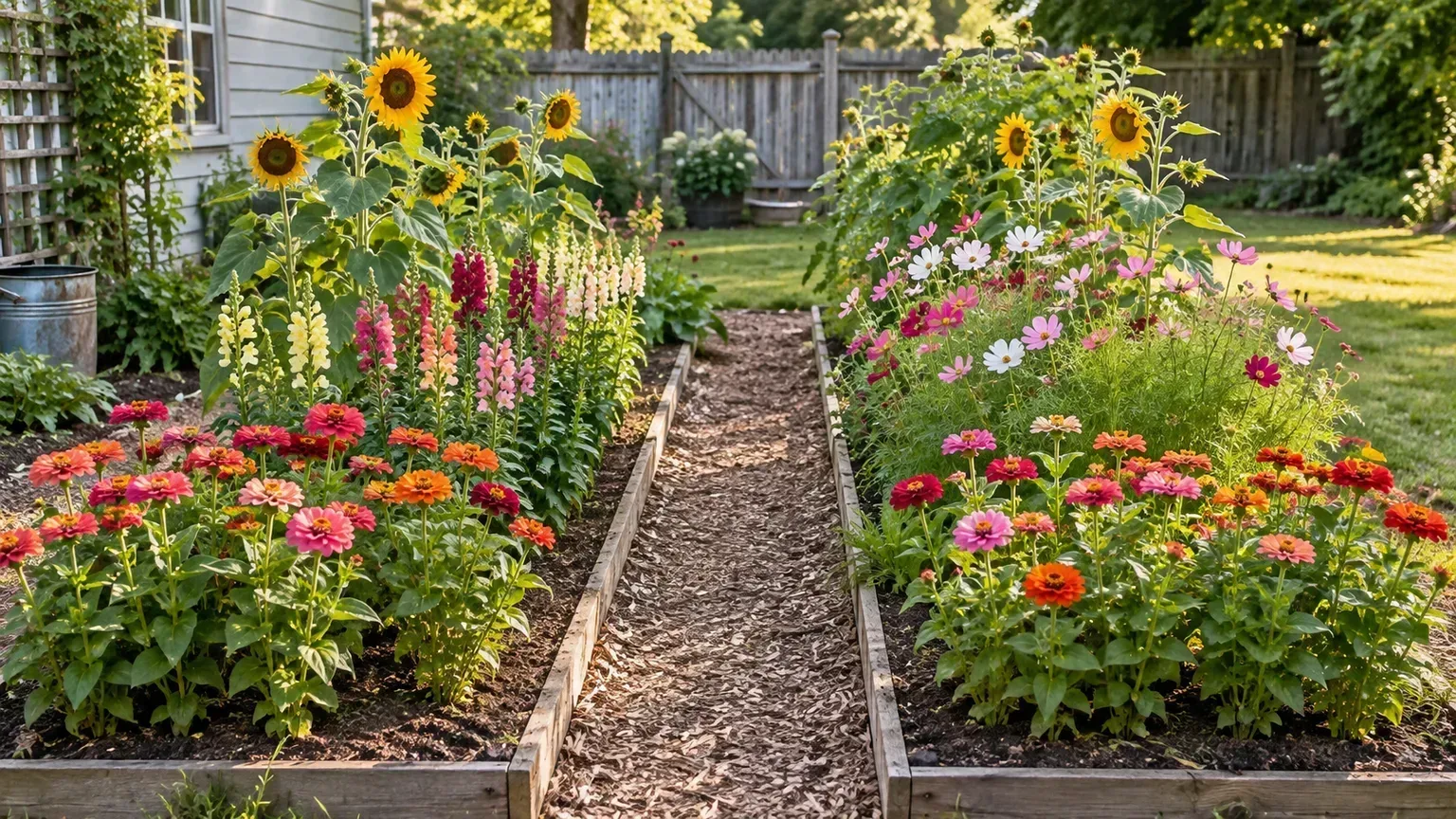
Plant in odd-numbered groups of the same cultivar, then repeat the group downstream for rhythm. Place evergreens and large shrubs first as bones; fill with perennials; tuck bulbs last.
Leave room for mature spread. A sedum that reaches 45 cm wide needs at least that much clearance from the path. Crowded borders mean more division, more disease, and more staking—exactly what you are trying to avoid.
For the cheapest start, divide existing clumps from friends or your own garden, and edge with on-site stone before buying specialty steel. Seeds work for easy annuals and some perennials but add a year of waiting; plugs and pots are the balanced choice for front borders you see daily.
First-year care is heavier than year five: water deeply once or twice a week until roots establish, refresh mulch, and hand-pull weeds while plants are small. After that, a low-maintenance border might need a spring cutback, one hedge clip, and a mulch top-up—plus occasional division when something outgrows its slot.
Conclusion
The best low-maintenance garden border is the one that matches how your yard actually grows: sun or shade, wet or dry, high traffic or view-only. Pick one edging method, one structural trick (hedge, gravel, color block, or foliage front), and plants that fit those conditions without weekly staking or deadheading.
Start with soil and light notes this week, install edging before mass planting, and favor repeated groups over one-of-each mixing. The twelve ideas above are templates—you might combine spring bulbs with a thyme spill edge, or a boxwood frame with an all-green shade interior. Get the framework right and the border will look designed long before it looks “finished,” and that is when maintenance finally drops to a level you can live with.