7 Drought-Tolerant Plants for July Heat
Choose seven drought-tolerant plants for July heat, matched to sun, soil, and climate, with first-year watering rules and honest limits for each pick.
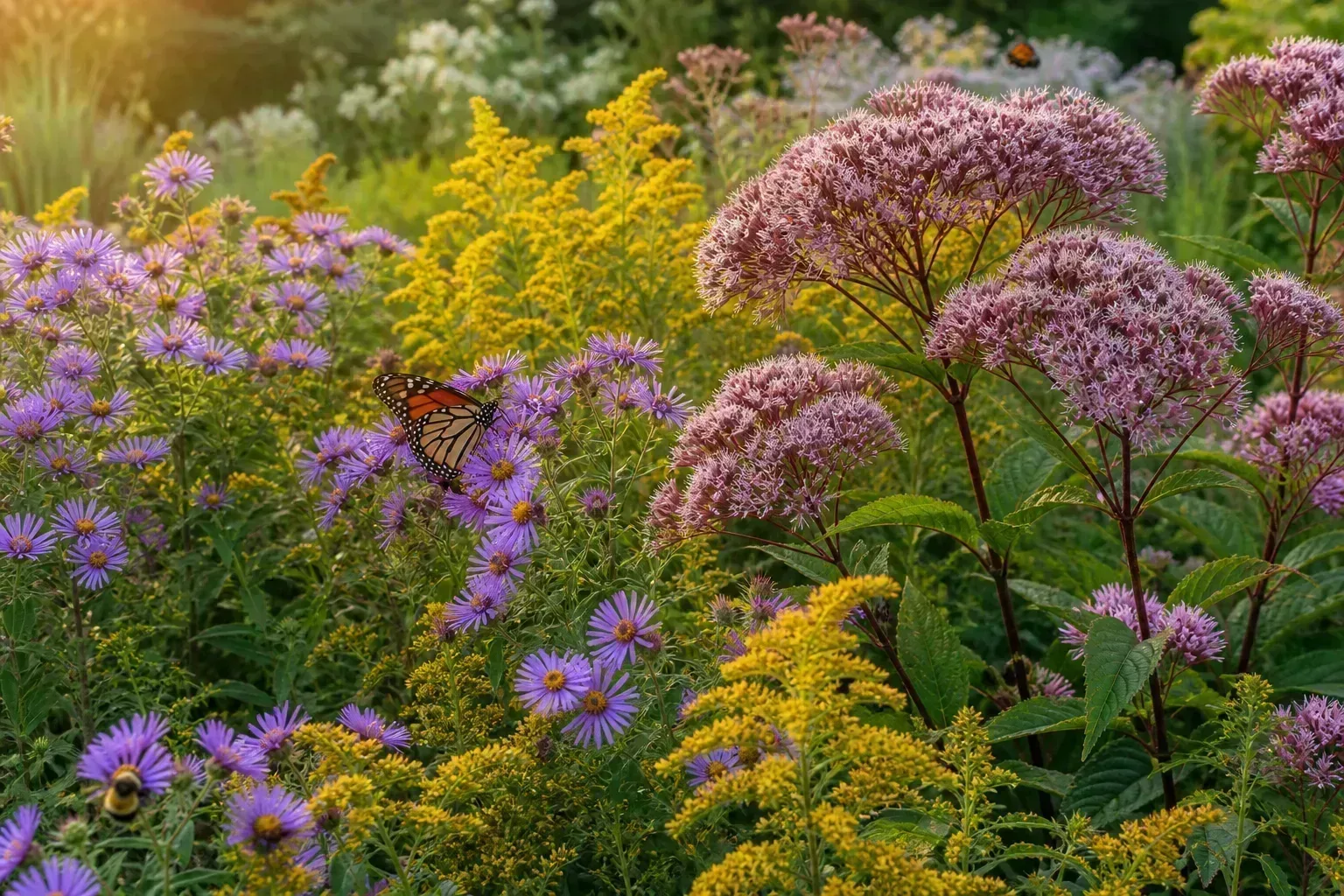
Drought tolerance is not a superpower a plant carries home from the nursery. It is the result of a suitable species, suitable site, and roots that have had time to grow beyond the original pot. Treat a brand-new transplant like an established xeriscape plant and even a tough perennial can wilt, scorch, or die in July.
The seven plants below cover different garden conditions rather than pretending one list fits every climate. Lantana is a strong choice for long, hot seasons; catmint and Russian sage suit many temperate dry borders; stonecrop handles lean soil; yarrow and butterfly weed add pollinator value; and purple coneflower gives a broad range of gardeners a dependable summer anchor. Use the climate notes as part of the list, not as fine print.
What “Drought Tolerant” Really Means in a July Garden
A drought-tolerant plant can keep functioning through a period of below-normal rainfall once it is established in the conditions it prefers. It may have fleshy leaves, narrow or silvery foliage, a deep root system, or a naturally conservative growth habit. It can still wilt during a heat wave, and it can still die in waterlogged soil.
The Royal Horticultural Society’s drought-resistant gardening guidance makes the important point that plant choice is only one part of the system. Shade levels, soil type, wind, reflected heat, and the timing of planting all change how much water a plant needs. A plant that thrives in a sunny gravel bed may fail beside a downspout, even if both locations are labeled “full sun.”
That is why “low water” is a more useful promise than “no water.” Established plants usually need less irrigation than lawns or shallow-rooted annuals, but extended heat and drought can still justify a deep soak. The goal is to reduce routine watering without turning plant stress into a test of toughness.
Quick-Match Guide: Choose by Climate, Sun, and Soil
Use this shortlist before buying:
| Your site | Start with | Watch for |
|---|---|---|
| Hot summer, mild winter, full sun | Lantana, stonecrop, Russian sage | Lantana is treated as an annual in cold climates; stonecrop needs drainage |
| Temperate full-sun border | Catmint, yarrow, coneflower | Yarrow can spread; coneflower dislikes standing water |
| Native pollinator planting | Butterfly weed, coneflower, yarrow | Native does not mean no first-year watering |
| Sandy or rocky soil | Stonecrop, Russian sage, butterfly weed | Do not add water-holding amendments indiscriminately |
| Heavy clay | Coneflower, butterfly weed, some yarrow cultivars | Improve drainage; wet winter soil is more dangerous than dry summer soil |
| Hot, humid region | Lantana, coneflower, butterfly weed | Airflow and drainage matter; not every silver-leaved plant likes humidity |
The regional principle is not just a technicality. Fine Gardening’s drought-tolerant plant selections include different plants for different parts of the country, while its regional shrub guidance emphasizes choosing plants that match the climate rather than shopping from a universal list. If a local extension office or nursery consistently recommends a different native for your county, give that advice more weight than a national roundup.
The Establishment-Watering Rule
Water newly planted specimens thoroughly at the root ball, then monitor the surrounding soil instead of following a rigid calendar. In ordinary summer weather, a new perennial often needs a deep watering every few days at first, then less often as roots move outward; during a heat wave or in fast-draining sand, check more frequently. The surface can look dry while the root ball is still damp, so push a finger or a moisture probe into the soil a few inches from the crown.
The practical target is consistent moisture—not a constantly wet bed—through the first growing season. Water slowly enough that it soaks into the root zone instead of running off. Savvy Gardening’s guidance on drought-tolerant flowers also stresses that new drought-resistant plants need regular water until established, even when mature plants can handle dry periods.
What Changes When You Plant in July
July planting is possible, but it raises the margin for error. The nursery root ball may dry out before it has connected with the surrounding soil, leaves lose water faster in heat, and a plant that is already flowering may be spending energy above ground while roots are recovering below ground.
If you must plant now, do it in the evening or on a cloudy day, soak the root ball before planting, water the hole and surrounding soil, and add a thin mulch layer without touching the crown. Skip heavy fertilizer. Give the plant temporary protection from the harshest afternoon sun if it shows heat stress, but do not place a full-sun plant in permanent shade and then judge its performance from that compromise.
1. Lantana for Long Color in Hot Climates
Lantana (Lantana camara) is the list’s best choice when the main goal is a long run of bright flower clusters through hot weather. Yellow, orange, pink, red, and multicolor cultivars create a strong patio or front-border display, and the flowers attract butterflies. NC State Extension’s Plant Toolbox profile lists lantana for full sun, summer and fall bloom, and USDA hardiness zones 7a through 11b.
The climate boundary matters. In zones colder than its hardiness range, lantana is commonly grown as a warm-season annual rather than a returning perennial. That is not a failure; it is the honest way to use a heat-loving plant where winter kills it. In warm regions, select a cultivar suited to your space because lantana can become a broad, woody-looking plant rather than a tidy little bedding annual.
Give lantana excellent light and soil that drains after irrigation. Water it regularly while the root system is developing, then let the surface dry somewhat between deep waterings. If the plant is in a pot, expect more frequent checks than in the ground: containers have less soil volume and heat up faster.
Choose lantana if: you garden in a long, hot season and want color with pollinator activity. Skip it if: your site has wet winter soil, you need a reliably hardy perennial in a cold zone, or local guidance flags the species as invasive in your area.
2. Catmint for a Cool-Toned, Dry Border
Catmint (Nepeta racemosa and related hybrids) softens a hot border with gray-green foliage and lavender-blue flower spikes. It is particularly useful along a path, over a low wall, or at the front of a bed where its loose habit can spill without hiding shorter neighbors. NC State Extension’s catmint profile describes it as a full-sun plant that tolerates dry conditions and attracts pollinators.
Catmint is tougher once rooted than it is in a small nursery pot. Water new plants deeply when the soil begins to dry, and shear the first flush after flowering if you want a denser mound and another round of bloom. Do not keep the crown constantly damp in an attempt to protect it from heat; poor drainage can undo the benefit of its dry-site adaptation.
The common-name confusion is worth clearing up: catmint is not simply ornamental catnip, although some cats may rub on it. Choose a named cultivar when you want a predictable height and more controlled spread. Fine-textured foliage and blue flowers make a useful contrast beside stonecrop, butterfly weed, or a coarse-leaved coneflower.
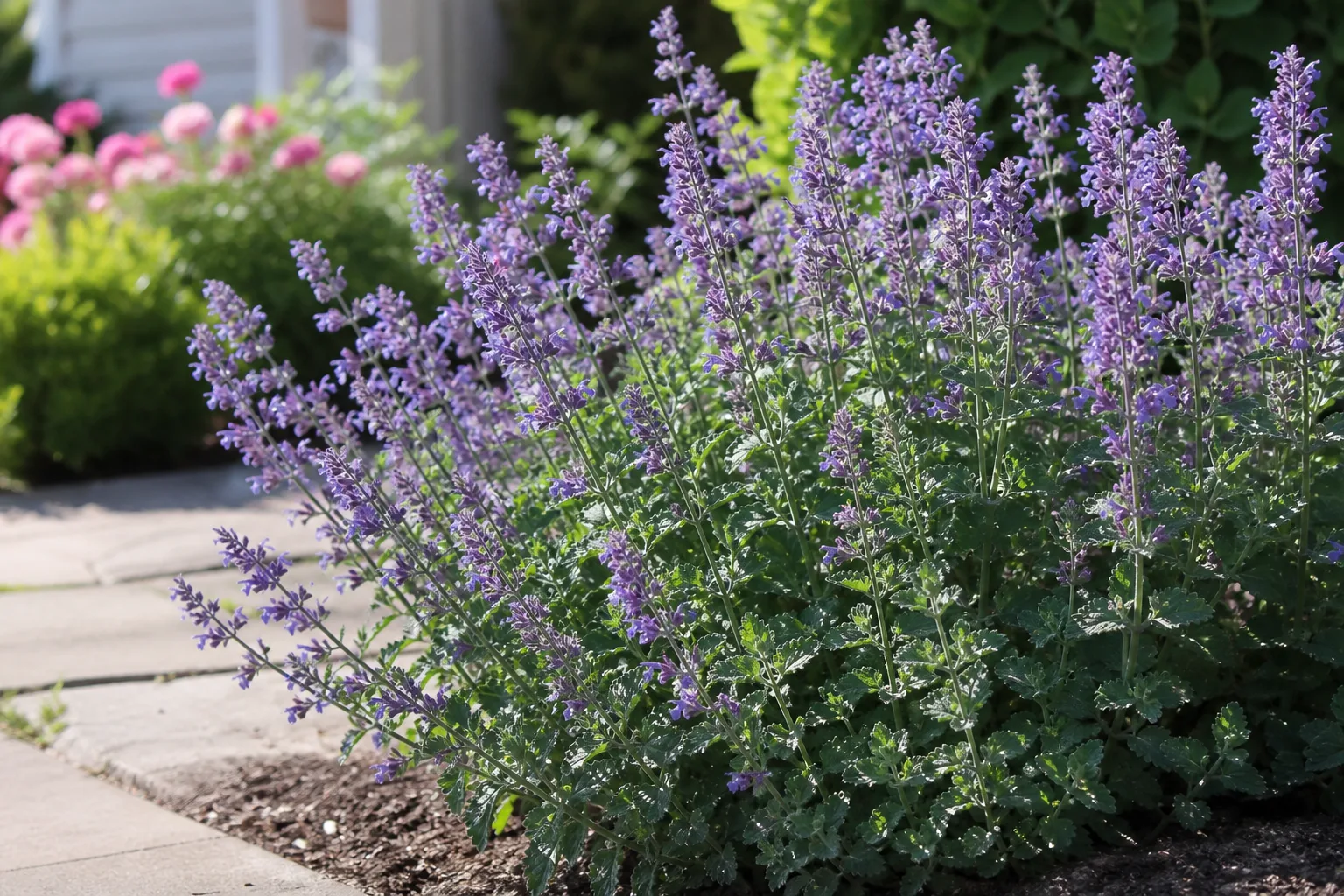
Choose catmint if: you want a long-blooming edging plant for full sun and reasonably lean soil. Skip it if: the only available site is heavy shade or a low pocket that stays wet after rain.
3. Russian Sage for Silvery Foliage and Late-Summer Bloom
Russian sage (Salvia yangii, formerly widely sold under Perovskia atriplicifolia) brings airy purple-blue flower panicles and aromatic, silvery foliage to a dry border. It is a good visual counterpoint to bold coneflower and succulent-leaved stonecrop because its stems create height without a dense wall of leaves.
NC State Extension lists Russian sage for full sun, good drainage, occasional dryness, and zones 5a through 9b. It also notes resistance to drought, poor soil, deer, rabbits, and salt. Those traits make it useful on a hot slope or beside paving, but they do not make it suitable for a poorly drained bed.
Plant Russian sage where air can move through the stems and rain does not collect around the crown. Water during establishment, then shift toward deep, infrequent watering rather than frequent sips. In late winter or early spring, cut back old stems according to the cultivar’s instructions; pruning too early in a cold, wet season can expose new growth to unnecessary damage.
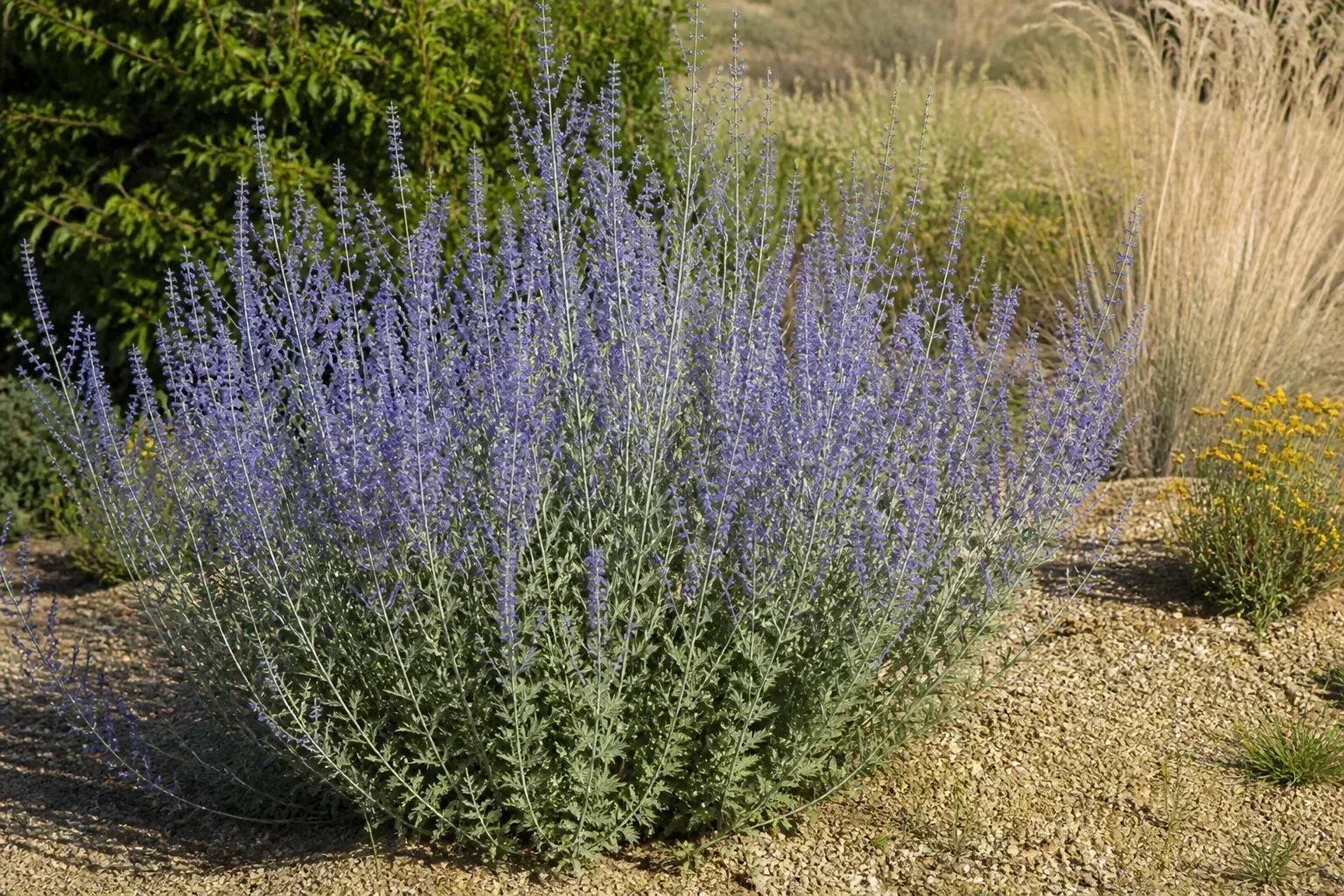
Choose Russian sage if: you need height, silver foliage, and a long summer-to-fall flower window in a dry, sunny site. Skip it if: you want a compact container plant or your soil stays saturated in winter.
4. Stonecrop for the Driest, Sunniest Spots
Showy stonecrop, often sold as sedum or Hylotelephium spectabile, stores water in thick leaves and makes a strong low-input choice for a sunny border. Its flat flower clusters open later in the season, so it contributes structure before bloom and nectar when many early-summer flowers are fading. The fleshy foliage also gives a dry garden a different texture from fine-leaved sages and catmint.
According to NC State Extension, stonecrop performs in full sun and well-drained soil and is suited to drought-tolerant gardens. The “well-drained” part is the non-negotiable one. Succulent leaves do not mean the roots can sit in water; winter wet and poor drainage can cause rot even if the plant survives a hot July.
Use a soak-and-dry rhythm after establishment: water thoroughly when the soil has dried through the root zone, then wait rather than adding a daily splash. A plant in a raised bed or gritty soil may need more attention during an exceptional heat wave, while one in heavy clay may need less water but more drainage work.
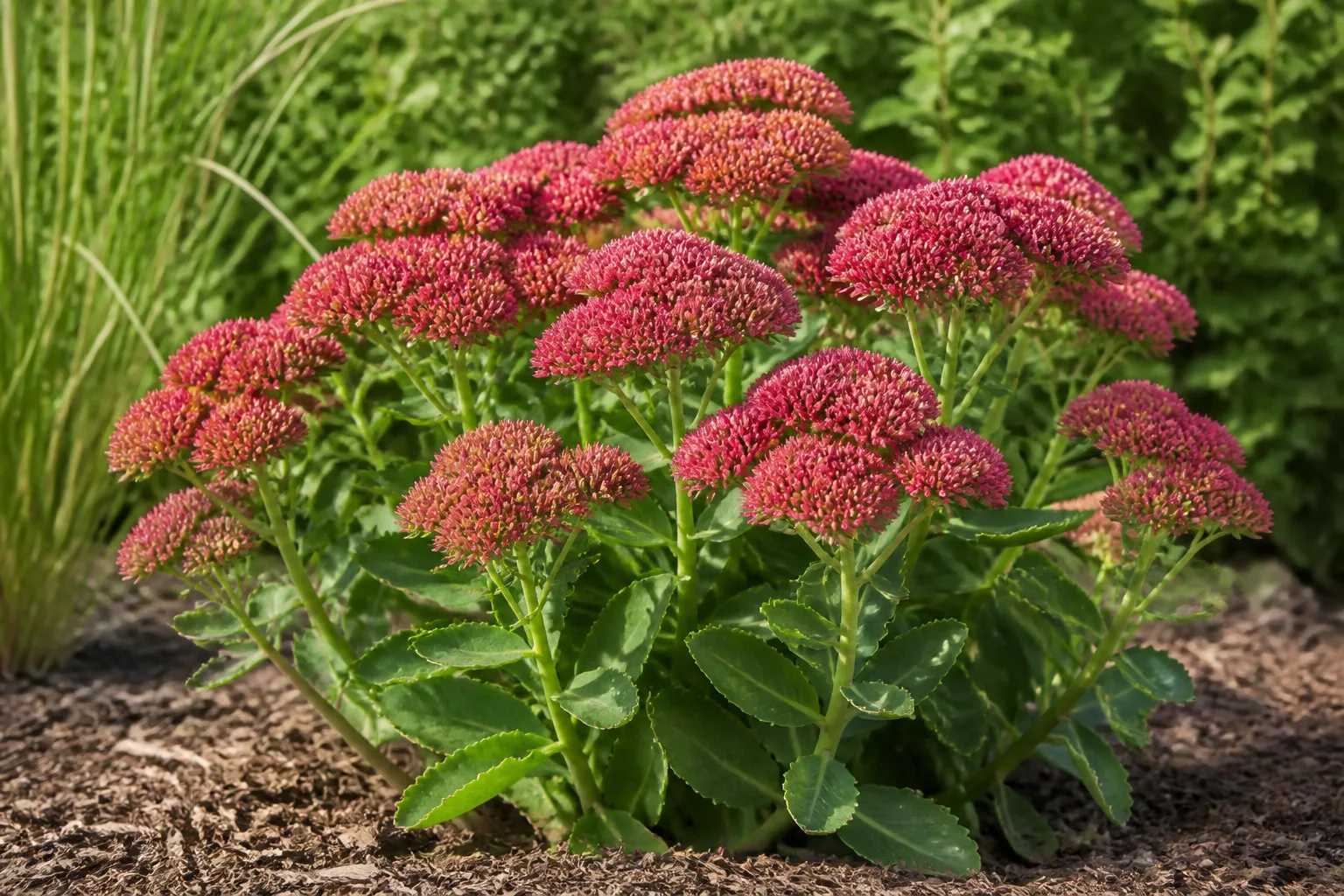
Choose stonecrop if: you have a bright, dry border, rock garden, or raised bed and want succulent texture. Skip it if: water pools after rain or the planting bed is shaded for most of the day.
5. Yarrow for a Tough Pollinator-Friendly Filler
Yarrow (Achillea millefolium) fills the middle of a dry border with ferny foliage and flat flower clusters. White is common, but cultivated forms also bloom yellow, pink, red, or terracotta. The horizontal flower shape gives butterflies and other insects a landing platform, while the stems add a useful filler between upright plants.
NC State Extension identifies common yarrow as drought tolerant and warns that it spreads aggressively and can develop root rot in soil that stays too wet. That combination tells you exactly where it belongs: a sunny slope, meadow edge, or informal bed where expansion is welcome, not a tiny formal border where every plant must stay inside its original footprint.
Deadhead if you want to extend bloom and reduce self-seeding. Divide crowded clumps when they lose vigor, and choose a named cultivar if you want a more predictable habit. Yarrow is not the right plant to use as a “set it and forget it” groundcover in a tightly designed space. Also read the plant label and local extension guidance if pets regularly chew garden plants; NC State flags yarrow as a problem plant for dogs and cats.
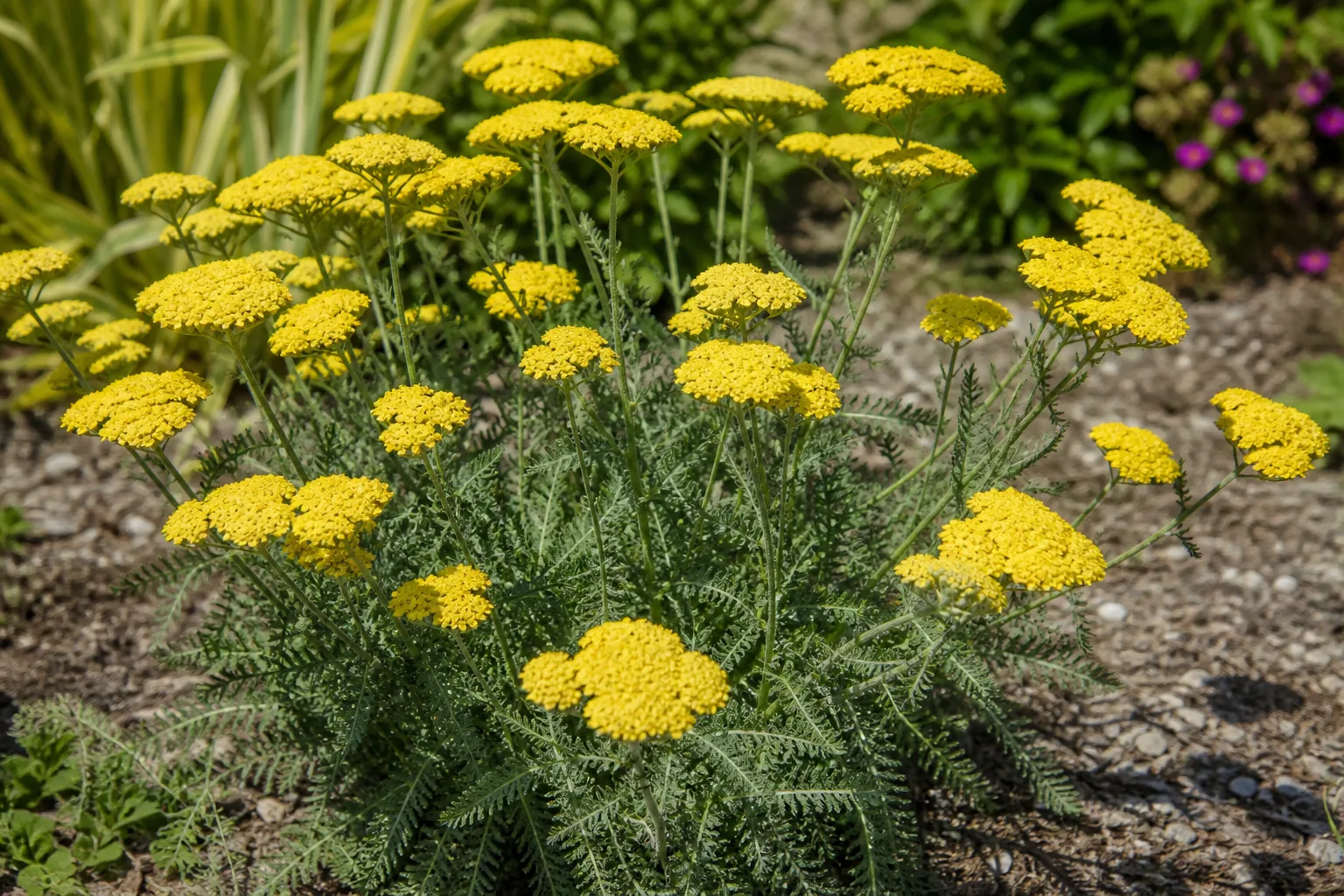
Choose yarrow if: you need a durable filler for a sunny, dry, informal planting. Skip it if: you dislike self-seeding, have a very small bed, or need a plant for soggy soil.
6. Butterfly Weed for a Native, Low-Water Accent
Butterfly weed (Asclepias tuberosa) is a North American native perennial with upright stems and vivid orange to yellow-orange flower clusters. It is less lush-looking than a thirsty bedding plant, which is part of its appeal: the narrow leaves and deep-rooted habit suit a sunny, well-drained border where a plant must handle dry spells without constant irrigation.
NC State Extension’s profile lists butterfly weed for zones 3a through 9b, full sun to partial shade, low maintenance, and summer bloom. It is also a nectar source and a larval host for monarch and other caterpillars. Expect the plant to establish patiently; a newly planted specimen may put more energy into roots than flowers during its first season.
Avoid moving an established butterfly weed unnecessarily because its deep root makes transplanting more difficult than lifting a shallow-rooted perennial. Plant it where the soil drains well, water the first season, and leave the stems standing into winter if you want seed and structure. Do not spray caterpillars simply because the leaves look chewed; leaf loss is part of the plant’s wildlife value.
Choose butterfly weed if: you want a native, pollinator-centered orange accent for a sunny dry bed. Skip it if: your site is shaded, waterlogged, or you need an instant, dense mound with no patience for establishment.
7. Purple Coneflower for Reliable Summer Flowers
Purple coneflower (Echinacea purpurea) is one of the most broadly useful choices here: a sturdy central perennial with pink-purple rays, a raised cone, and a long summer flowering window. It works in a pollinator border, meadow-style planting, or mixed bed where you want a plant that looks intentional without requiring daily grooming.
NC State Extension lists coneflower as a full-sun plant with good drought tolerance once established. Savvy Gardening’s dry-flower guide likewise includes purple coneflower among long-blooming, resilient choices and notes that even drought-tolerant perennials need water while they establish.
Give coneflower six or more hours of light and soil that drains freely. It can cope with periods of dryness, but a hot plant in compacted clay may wilt because roots cannot get enough oxygen or expand into the soil. Leave some spent cones standing for birds and winter structure, or deadhead only the flowers you want to refresh.
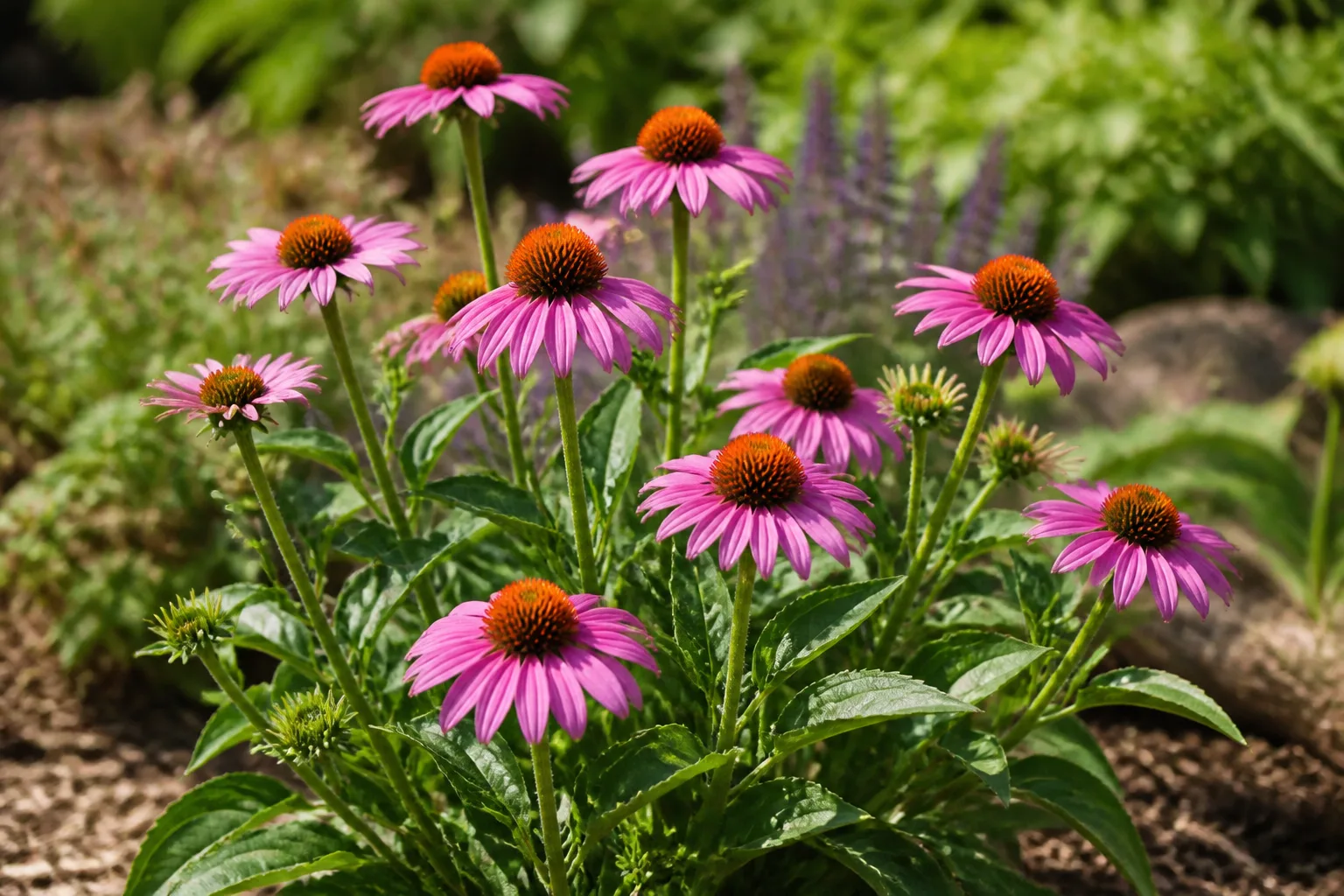
Choose coneflower if: you want a dependable, wildlife-friendly summer anchor for a broad range of temperate gardens. Skip it if: the planting site stays wet, receives deep shade, or you are choosing a cultivar without checking its mature size and performance in your region.
How to Water Drought-Tolerant Plants Through July
Watering less often is not the same as watering less carefully. In a new bed, direct water to the soil around the root ball and the surrounding root zone. A sprinkler that wets the leaves for five minutes may look busy while barely changing the moisture at the roots.
Use this sequence for new plants:
- Check soil moisture a few inches down, not just the surface.
- Water slowly at the base until the planting area is thoroughly moist.
- Wait long enough for the surface to begin drying before watering again, unless the plant is actively wilting and the root zone is dry.
- Increase the interval as roots expand and new growth remains firm through ordinary heat.
- During an exceptional heat wave, check containers and recently planted specimens daily, but do not turn an established stonecrop bed into a swamp.
Morning is usually the easiest time to water because it gives foliage and soil time to dry, but the root-zone target matters more than a perfect clock time. Drip irrigation or a soaker hose can help, especially in a long border. Savvy Gardening’s water-wise garden advice also emphasizes mulch, rain capture where legal, and choosing plants that match the local climate instead of trying to keep every part of a yard equally green.
Wilting is a clue, not a diagnosis. If the root-zone soil is dry and leaves stay limp into evening, water stress is likely. If soil is damp and the stem base is soft, improve drainage rather than adding water. If only the afternoon-facing side looks tired but the plant recovers overnight, temporary heat response may be normal.
Soil, Mulch, and Placement Determine Success
Most drought-tolerant plants want drainage first, not a special bag of “desert soil.” Sandy soil loses water quickly, while clay can hold water and restrict roots. Add organic matter to improve the structure of many garden soils, but do not bury a dry-site perennial in a rich, water-retentive pocket that stays wet after storms.
Match the mulch to the plant and the climate. Shredded bark or composted organic mulch reduces evaporation and suppresses weeds in many mixed perennial beds. Keep it a few inches away from stems and crowns. The RHS recommends organic matter for soil improvement and a surface mulch to reduce water loss, while its drought-prone planting guidance also recognizes gravel and grit as useful in Mediterranean-style gardens.
When Gravel Mulch Is the Better Choice
Gravel mulch makes sense around plants such as stonecrop and Russian sage when the bed is genuinely hot, sunny, and free-draining. It reflects heat, keeps crowns drier, and suits a gravel-garden look. It is not automatically better for every perennial: dark stone can increase reflected heat, gravel is harder to amend later, and a hot stone surface can stress a plant that prefers cooler soil.
If the bed is in a humid region, start with a modest organic mulch or a thin, breathable layer and observe how quickly soil dries. If the site is beside a foundation, under an eave, or on a slope, solve the water pattern before choosing mulch. No surface material can compensate for runoff, a leaking downspout, or a compacted planting hole.
Common Mistakes That Make Tough Plants Fail
Treating the label as a first-year care plan. “Drought tolerant” describes the plant’s potential after establishment. It does not cancel the need to water a new root ball during July.
Planting a full-sun plant in reflected heat without checking the leaves. A south-facing wall, paving, or dark gravel can create a hotter microclimate than the weather station suggests. Give tender transplants time to adjust and use a temporary screen if necessary.
Watering shallowly every day. Frequent surface sprinkles encourage shallow roots and can keep crowns wet. Water deeply enough to reach the root zone, then let the surface dry according to the plant and soil.
Ignoring winter wet. Many plants that laugh at July heat fail in cold, saturated soil. Raise the bed, redirect runoff, or choose a plant that tolerates seasonal wet and dry conditions.
Overfeeding for faster growth. Excess nitrogen can create lush, soft growth that needs more water and flops under heat. Establish the plant first; feed only when a soil test or plant-specific guidance indicates a need.
Choosing a spreader for a tidy pocket. Yarrow can roam by rhizomes and seed. Catmint widens into a clump. Read mature width, not just the pot size, and leave room for the plant you are buying.
Removing every seedhead. Deadheading can keep a border tidy and extend some blooms, but seedheads also provide winter structure and food for birds. Decide whether your priority is repeat flowers, a formal look, or wildlife value before reaching for pruners.
How to Build a Low-Water July Planting Plan
Start with one anchor and one texture plant rather than buying seven of everything. A temperate full-sun bed could pair purple coneflower with catmint, stonecrop, and a contained yarrow cultivar. A native-focused bed could use butterfly weed and coneflower, then fill the gaps with locally appropriate native grasses or asters. A warm-climate border could put lantana near the front and Russian sage or stonecrop farther back where drainage is sharp.
Repeat plants in groups of three or five when space allows. Repetition makes a low-water border look designed, while varied bloom shapes keep it from becoming a wall of identical color. Put shorter plants where you can see them, reserve taller Russian sage for the middle or back, and give each plant enough room for airflow at maturity.
Finally, plan the first summer before you plant. Run a hose or drip line to the bed, decide where mulch will go, and mark the root zones of new specimens. Once the roots are established, the payoff is not a yard that never needs water; it is a yard where one thoughtful deep soak can carry plants much farther than a daily sprinkler habit.
Conclusion
The best drought-tolerant plant for July is the one that matches your yard’s climate and drainage—not the one with the most impressive claim on a plant tag. Lantana brings heat-season color in warm regions, catmint and Russian sage lend long bloom and texture to dry borders, stonecrop handles lean soil, yarrow fills space, butterfly weed supports native wildlife, and coneflower gives the broadest all-purpose summer performance.
Give every new plant a real establishment period, water the root zone deeply, improve drainage before adding more water, and choose mulch according to the site. Do that, and a water-wise garden can stay colorful through July without asking you to patrol it with a hose every evening.



