Companion Plants for Watermelons: Full Guide
Pair watermelons with marigolds, radishes, beans, and pollinator flowers—plus spacing numbers, a bed plan, and crops to keep apart.
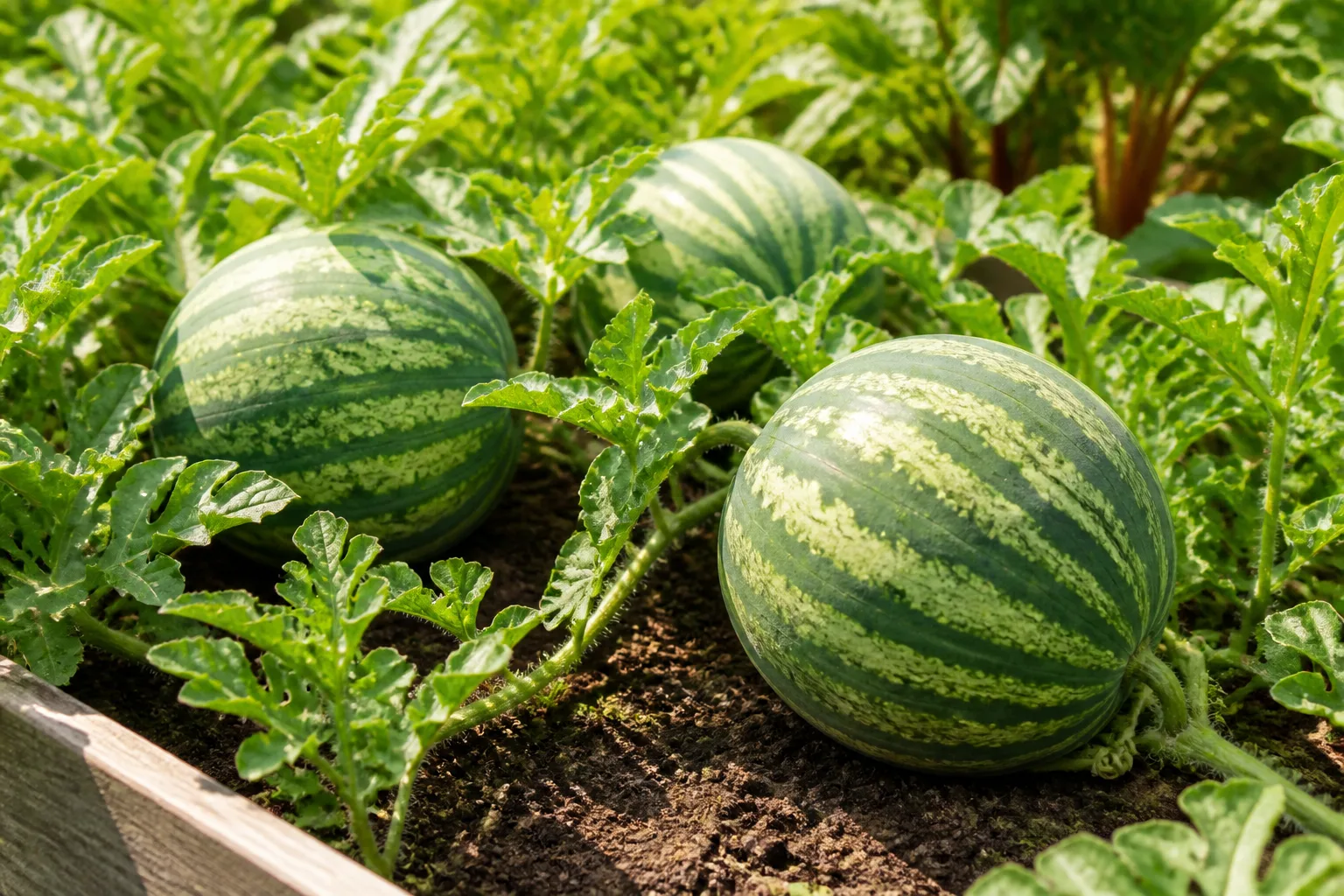
Watermelon vines look harmless at transplant size, then swallow a bed by July—10 to 12 feet of running stems whether you grow a compact Sugar Baby or a full-size Crimson Sweet, according to Oklahoma State Extension watermelon production guidance. Companion plants for watermelons earn their row space when they share that warm-season culture, fill a different root or light layer, or solve a problem you actually have: cucumber beetles spreading bacterial wilt, melon aphids on new growth, or empty female flowers on seedless varieties.
These neighbors—marigolds, nasturtiums, radishes, garlic, dill, bush beans, corn, borage, and lavender—are the strongest all-around pairings for home melon patches. None replaces crop rotation, row cover on young vines, or twice-weekly scouting. Used with a layout plan, they make a melon bed more productive and easier to manage than melons planted alone in bare soil.
What companion planting can—and cannot—do for watermelons
Companion planting means growing two or more species close enough that at least one benefits—through efficient spacing, pest confusion, predator attraction, light shade on soil, or compatible root zones. The RHS companion planting overview is clear that benefits are real in some pairings but not guaranteed for every crop in every garden. Treat neighbors as cultural partners first and pest shields second.
For watermelons specifically, companions help most when they (1) tolerate full sun and warm, even moisture, (2) do not compete for the same shallow root band melons use in the first six weeks, and (3) address a problem on your site—beetles, aphids, weak pollination, or wasted space between hills. For the broader evidence picture, see our guide on whether companion planting actually works.
Match culture before you match pest charts
Before you scatter seeds from a chart, sort candidates into moisture and heat zones:
Warm, thirsty block: watermelons, corn, bush beans, basil, dill, cilantro, marigolds, nasturtiums. Melons want 1–2 inches of water per week on most soils—more in heat waves—and resent drought during bloom and fruit sizing.
Dry Mediterranean edge (keep separate or pot): rosemary, sage, lavender in sharp-draining corners. Lavender can sit on a north bed edge if you water it lightly and melons on drip; do not soak both on the same schedule. Our herb companion plants guide explains why drought herbs and melons clash in the same root zone.
Heavy shade casters: pole beans on south-facing trellises, tall sunflowers, indeterminate tomatoes. Keep them north or east of melons so fruiting zones keep midday and afternoon sun.
Runners that invade beds: mint, tansy. Grow in containers beside the patch, not in the vine row.
If water needs or shade patterns clash, separate by row, raised-bed zone, or container even when a list pairs both plants as companions.
Space, sun, and bed layout first
Companion lists fail when gardeners ignore scale. Watermelon is a full-sun crop—six or more hours of direct light daily—with separate male and female flowers on each plant. Sticky pollen moves mostly on bee bodies, not wind. Anything that steals afternoon sun or compresses airflow sets you up for fewer fruits and more foliar disease, which UGA Extension disease management guidance links to dense, wet canopies in vegetable beds.
How far watermelon vines really spread
Plan for 10–12 feet of spread per hill regardless of fruit size. Vines root along the stem as they run, so a “small” icebox melon still wanders. OK State notes in-row spacing from 3 feet on irrigated ground to 6–10 feet on dry land, with rows 6–18 feet apart depending on equipment and irrigation. Home gardeners often use 4×8 or 4×12 raised beds with one or two hills and companions only on margins and early-season inter-rows.
Melons also exude allelopathic compounds that can slow seed germination nearby—useful as a living mulch under tall okra or corn once vines are established, but harmful if you direct-sow lettuce into a running patch.
Spacing rules that keep companions from smothering melons
Use these distances from the center of each melon hill (adjust for your variety’s spread):
- Basil, dill, cilantro, garlic, chives: 8–18 inches on row ends or between hills before vines touch
- Radishes: sow with melon seeds; harvest in 25–30 days before vines run
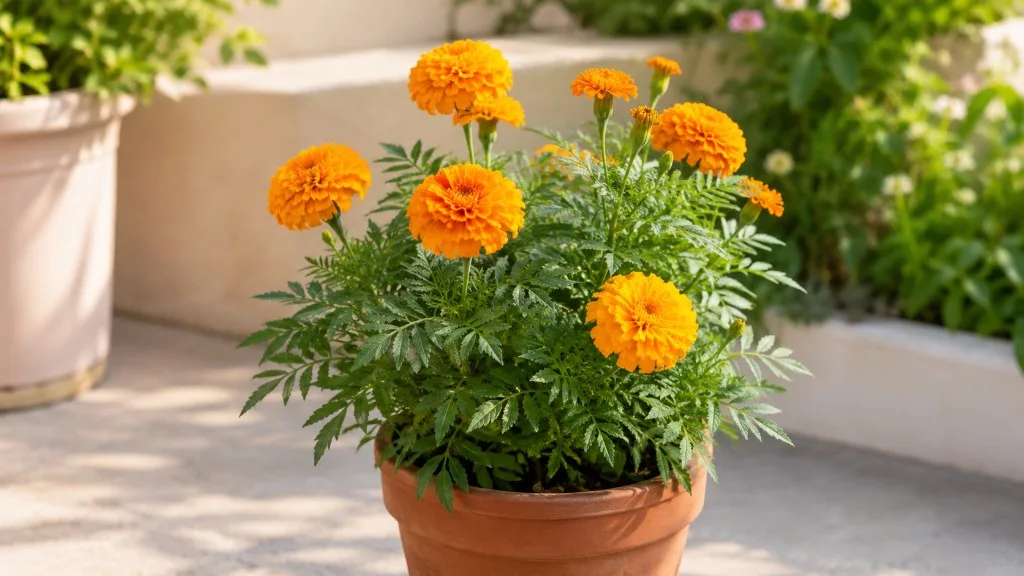
- French marigolds: 6–12 inches on path-side borders; 12–18 inches if vines will pass over the edge
- Nasturtiums (trap crop): 18–24 inches on south or west margin, or in a pot at the corner
- Bush beans: 12–18 inches; harvest before vines overlap
- Pole beans + corn trellis: north edge of bed only; trellis north–south so beans get sun without shading melons
- Pollinator flowers (borage, lavender, snapdragons): bed ends or dedicated 12-inch strip; keep below 18 inches tall inside the melon zone
Crowded companions hold moisture on leaves longer and invite powdery mildew on both crops. Airflow matters as much as companion lore.
Best companion plants for pest pressure
The two headline pests on melons are cucumber beetles (striped and spotted species that feed on leaves and transmit bacterial wilt) and melon or cotton aphids (Aphis gossypii). OK State recommends treating seedling beetle damage seriously—complete defoliation is possible on young plants—and scouting aphids weekly because populations explode fast.
Companion tactics split into masking scents, attracting predators, and trap cropping. Penn State Extension research on herbs as vegetable partners shows aromatic herbs often mask target crops’ volatile chemicals rather than repel pests outright—still useful when mixed through a bed.
Alliums and aromatic herbs for melon aphids
Garlic, chives, and onions fit narrow gaps at row ends. Their sulfur-scented foliage may confuse aphids searching by smell; green onions tuck into 4-inch gaps without competing for the deep melon root zone once vines run.
Dill and catnip attract ladybugs, lacewings, and parasitic wasps—especially when dill is allowed to flower. Plant dill between hills early; harvest leaves before umbels shade young melons, or leave one flowering plant on the north end.
Mint repels aphids in many gardens but spreads aggressively. Keep spearmint or peppermint in a pot on the bed corner, or in a buried root barrier—never let runners merge with melon stems. The convenience bonus: mint in watermelon salad is excellent; invasive roots in your patch are not.
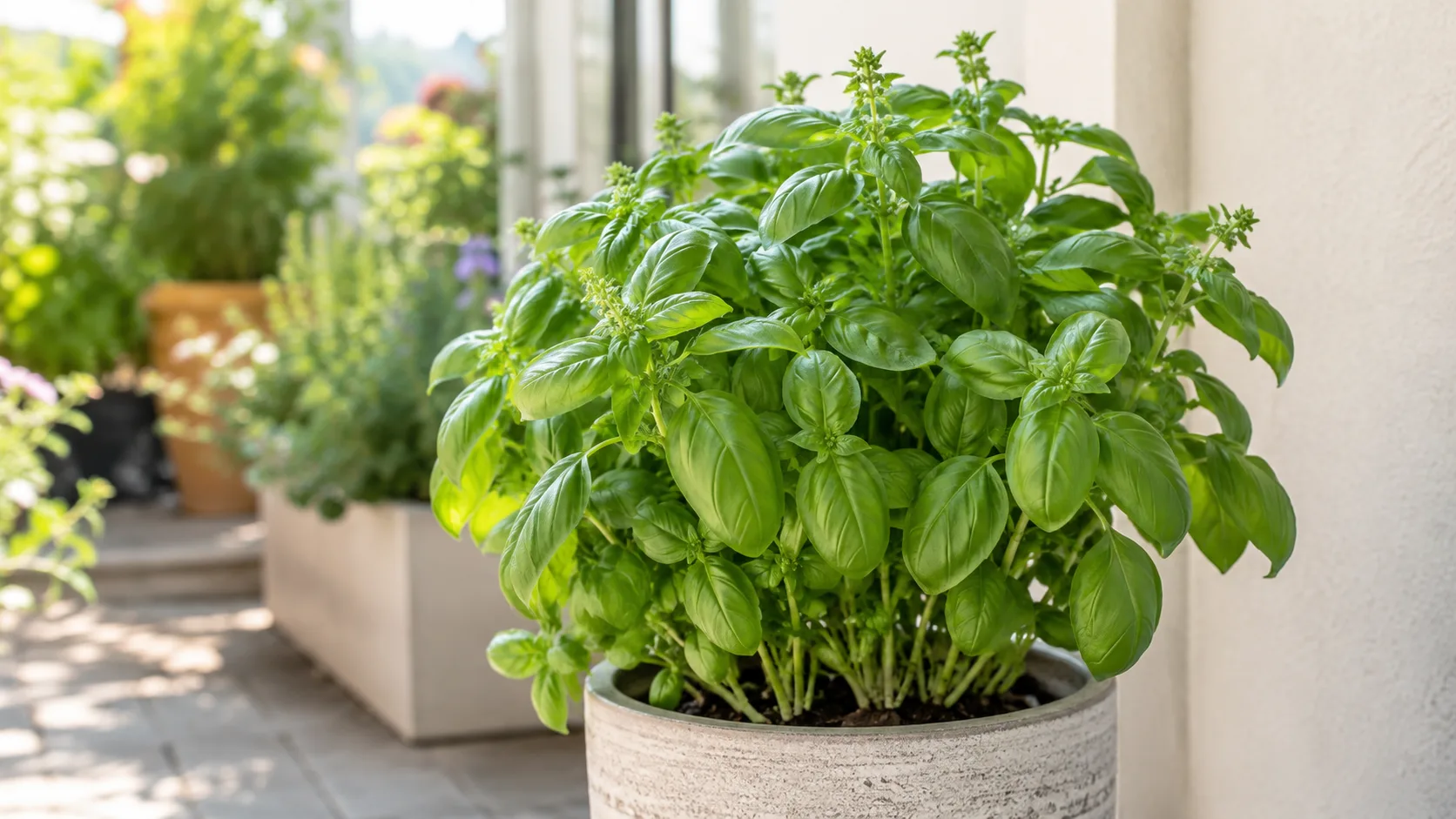
Basil masks nightshade-family volatiles and may reduce thrips pressure on nearby crops, per Penn State’s tomato–basil work—a reasonable parallel for mixed cucurbit beds. Plant basil on borders, not under developing fruit where humidity builds.
Marigolds, nasturtiums, and radishes for cucumber beetles
These three do different jobs—do not treat them as interchangeable beetle shields.
French marigolds (Tagetes patula): low, scented blooms along paths. The RHS links their volatiles, including limonene, to reduced whitefly and thrips on some mixed plantings—and notes that polycultures alone sometimes lower pest counts compared with monocultures. For root-knot nematodes, marigolds must grow as a dense pre-crop in the same soil for at least two months before melons—not as a single accent plant.
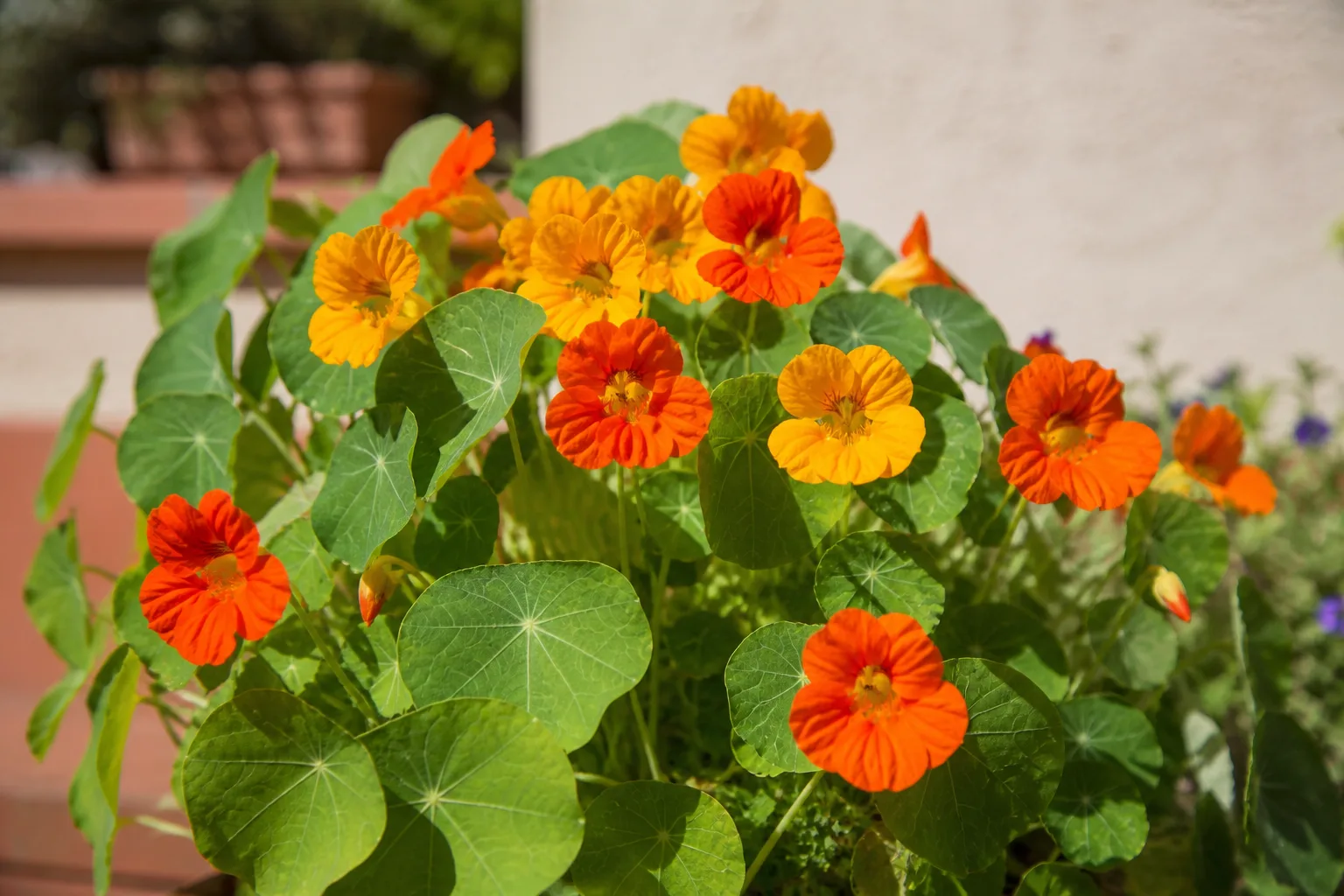
Nasturtiums: best as a trap crop on the south or west margin. Aphids and some caterpillars cluster on nasturtium leaves first; remove infested leaves or whole trap plants before pests walk to melons. Mounding varieties stay smaller than trailing types.
Radishes: sow the same day as melons. Early Scarlet Globe and similar fast types mature in 25–30 days—harvest before melon vines need their space. Succession-sow small batches through June as a beetle and aphid distraction while vines are still short.
Corn and broccoli appear on many charts as beetle companions; corn shares beetle pressure, so pair it only with radish/nasturtium/marigold borders and scouting—not as a lone defense. Broccoli at row ends as a trap crop works if you accept sacrificing the brassica to flea beetles and aphids; do not cram heads into the melon root zone.
Pollinator companions and seedless melon requirements
Melons depend on insects. Male flowers usually open first; female flowers show a tiny ovary behind the petals. Each flower is receptive only on the day it opens. OK State advises checking bee activity in the morning—if you see fewer than one bee per ten flowers, bring in hives or improve flowering habitat.
Seedless (triploid) watermelons need diploid pollinizer plants in the same field. OK State recommends interplanting a seeded variety every third plant in the row (or every third hill) so pollen reaches seedless female blooms. Pollinator flowers do not replace that genetic requirement—they supplement bee visits to both seedless and pollinizer plants.
Flowers that keep bees visiting through bloom season
Choose continuous or staggered bloom so bees do not vanish between melon flushes:
- Borage: nectar-rich blue flowers; self-seeds—deadhead if you fear spread
- Lavender: dry-edge plant on the north margin; attracts bees without tall shade
- Snapdragons: 12–15 inches tall; keep on ends away from running vines
- Marigolds and calendula: low, long-blooming borders
- Wildflower strip: a 12–18 inch band beside the bed supports native bees alongside honeybees
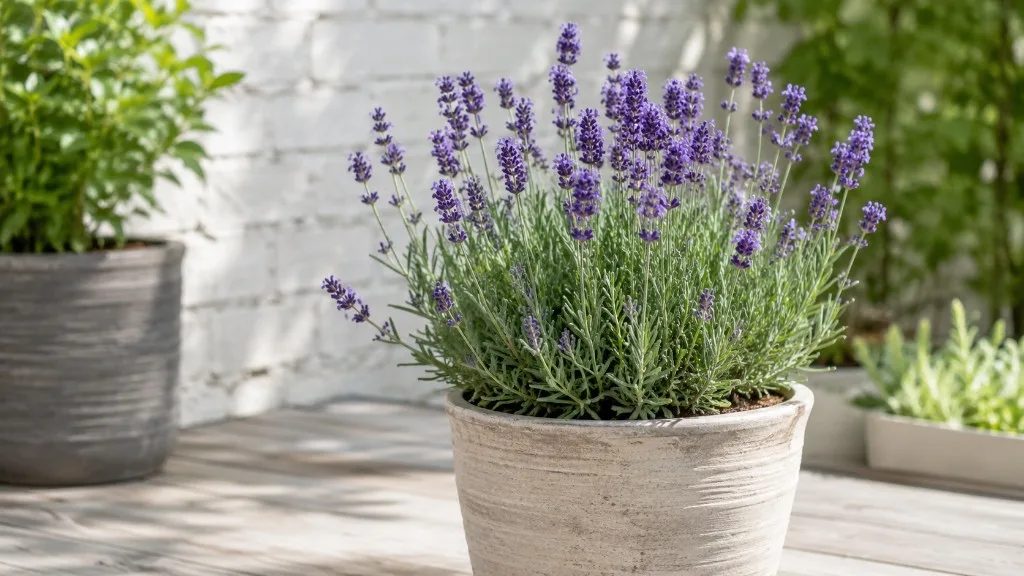
HGTV’s companion planting editorial notes that cosmos, sunflowers, and mint-family herbs also feed sweat bees and other pollinators—place tall sunflowers north of melons only. Keep flowering herbs below vine height inside the patch so you do not create shade on female flowers during the critical two-week bloom window.
Avoid letting companion flowers get crushed by melon vines; stake or containerize tall bloomers on the north edge before vines run.
Nitrogen-fixing neighbors and the Three Sisters approach
Bush beans and peas fix atmospheric nitrogen through root nodules, leaving a modest boost as roots decay—helpful for hungry melons, but not a substitute for compost or sidedressing. OK State suggests 50 lb/acre preplant N plus sidedress on sandy soils; home gardeners should still work 2–4 inches of compost into hills and feed if vines pale during fruit set.
The Three Sisters polyculture—corn, beans, and squash or melon—uses corn (or sunflowers) as a trellis, beans for nitrogen, and spreading cucurbits as ground cover. The RHS Three Sisters feature notes the system is an efficient use of space even when total yield per crop does not beat separate plots.
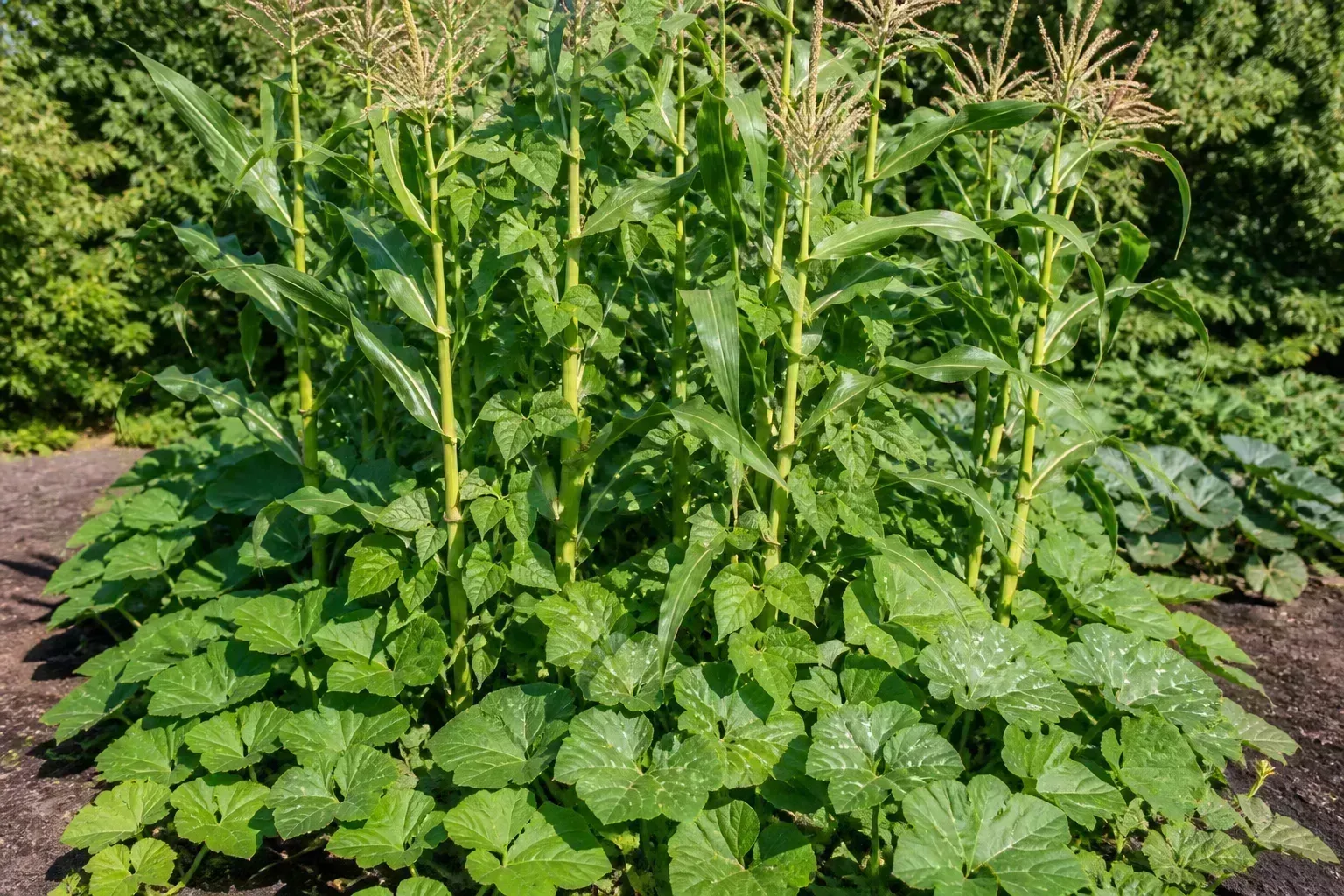
Where beans and corn belong—and where they do not
Bush beans: sow 2–3 weeks before melons outgrow the inter-row, or plant in gaps 12–18 inches from hills; harvest before vines overlap.
Pole beans: trellis on the north or east side of the bed so bean foliage does not steal afternoon sun from melons. Corn stalks or sturdy sunflowers (single-stem types) work as living trellises—water at the base to limit mildew on both crops.
Do not let bean trellises shade the melon zone from the south or west. If shade is already a problem, skip pole beans and use bush beans only, or plant beans in an adjacent row outside the 10-foot vine radius.
Cover crops and trap crops worth adding
Advanced gardeners extend companion benefits into the season before melons:
Hairy vetch turned under as mulch before planting may reduce Fusarium wilt, anthracnose, and gummy stem blight pressure and improve soil organic matter, according to HGTV’s watermelon companion editorial citing university research—plus anecdotal higher sugar content in fruit after vetch. Terminate vetch before hard seed set and leave residue as surface mulch if you no longer-till.
Blue Hubbard squash as a trap crop elsewhere in the garden lures squash bugs and cucumber beetles away from melons—then you must destroy eggs and adults on the trap plant (soapy water bucket), or pests migrate back.
Winter wheat or rye as a preceding cover suppresses weeds and holds moisture; melons follow after incorporation or strip-till.
These are rotation and trap tools, not same-day interplants—but they belong in a complete watermelon companion strategy competitors skip.
Worst companion plants for watermelons
Bad neighbors share pests, steal sun, or crowd shallow melon roots at the wrong growth stage.
Cucurbits, potatoes, and crowded nightshades
Avoid planting melons beside other cucurbits in the same season:
- Cucumbers
- Summer squash and zucchini
- Pumpkins and winter squash
- Other melons (unless you need specific pollination pairs)
All attract cucumber beetles and share bacterial wilt, powdery mildew, and anthracnose pathways. Our companion plants for cucumbers guide covers similar beetle logic—stacking cucurbits multiplies scouting work without doubling harvest.
Potatoes and heavy aster/sunflower-family plantings (including ornamental sunflowers too close to the patch) can concentrate aphids that also hit melons. Roses near the vegetable bed pose the same risk.
Tomatoes and peppers are not aphid-identical to melons, but indeterminate tomatoes and sprawling peppers create space and airflow problems in mixed plantings: dense foliage, shared blight risk in wet years, and shade on melon hills. If you must combine them, put tomatoes north on cages with 24-inch minimum spacing and treat the melon zone as the sun priority—not the other way around.
Fennel allelopathy can stunt neighbors; keep it in a dedicated pot or far bed edge.
Do not return melons to the same soil within three years of other cucurbits, per OK State rotation guidance. Large gardens group cucurbits in one rotating block; small yards should track beds in a notebook and skip at least one season between vine crops in the same raised bed when three years is impossible.
Sample bed plan and planting sequence
Use this 4×12 foot full-sun bed (long axis east–west) as a template—adjust for your variety’s spread:
North edge (12 ft): single row corn or three sunflowers for pole beans; plant bush beans in front once corn is 6 inches tall.
Center (two hills): melons at 4 ft and 8 ft along the bed center; sow radish + lettuce between hills the same day; harvest both before vines meet.
South margin (12 ft): nasturtiums (trap), French marigolds every 12 inches, borage at the east corner.
East and west ends: garlic or chives (prior fall garlic) and dill; lavender in a dry corner pot.
Pollinizers: if growing seedless melons, replace one hill with a diploid pollinizer (marked variety from seed packet) every third plant in-row.
Week 0: soil test; compost; optional hairy vetch residue on surface.
Week 2 (soil 70°F+): direct-sow melons, radishes, marigolds, nasturtiums; transplant basil ends.
Week 4: beans; scout beetles daily; row cover on seedlings if beetle counts are high.
Week 6–8: female flowers open—watch bee counts mornings; add borage if blooms lag.
Week 10+: remove row cover; handpick squash bug eggs on trap crops; keep irrigating through fruit sizing; reduce water near maturity to protect sugar.
For common culture mistakes that companions cannot fix, see our watermelon growing mistakes guide.
Crop rotation every three years
Companion flowers in year one do not forgive cucurbit fatigue in year two. Watermelons, cucumbers, squash, and pumpkins share Fusarium, anthracnose, and nematode risks when stacked in the same soil. OK State recommends three years between vine crops on the same ground; experienced growers prefer longer.
Rotation pairs well with marigold or hairy vetch pre-crops in the off years. Track each bed’s history—sketch plans save more melons than any single companion species.
Conclusion
Companion plants for watermelons work when they respect full sun, real vine spread, and the pests and pollinators your patch actually has. Lead with layout and rotation, then add marigolds, nasturtiums, and radishes for beetles and aphids; garlic, dill, and basil for aromatic masking and predators; borage and lavender for bee traffic; and bush beans or a north-side Three Sisters trellis for nitrogen and space efficiency—while keeping other cucurbits, cramped potatoes, and invasive mint out of the melon row.
Pick two or three companions that match your bottleneck (pollination, beetles, or early-season weed cover), measure spacing in feet—not vibes—and scout weekly. A well-planned polyculture beats a long list of unplaced “friends” every time.



