38 Modern Backyard Ideas for Sleek Outdoor Style
From concrete patios to horizontal fencing and xeriscape slopes, these 38 modern backyard ideas show how to plan zones, materials, and plants for a sleek yard.
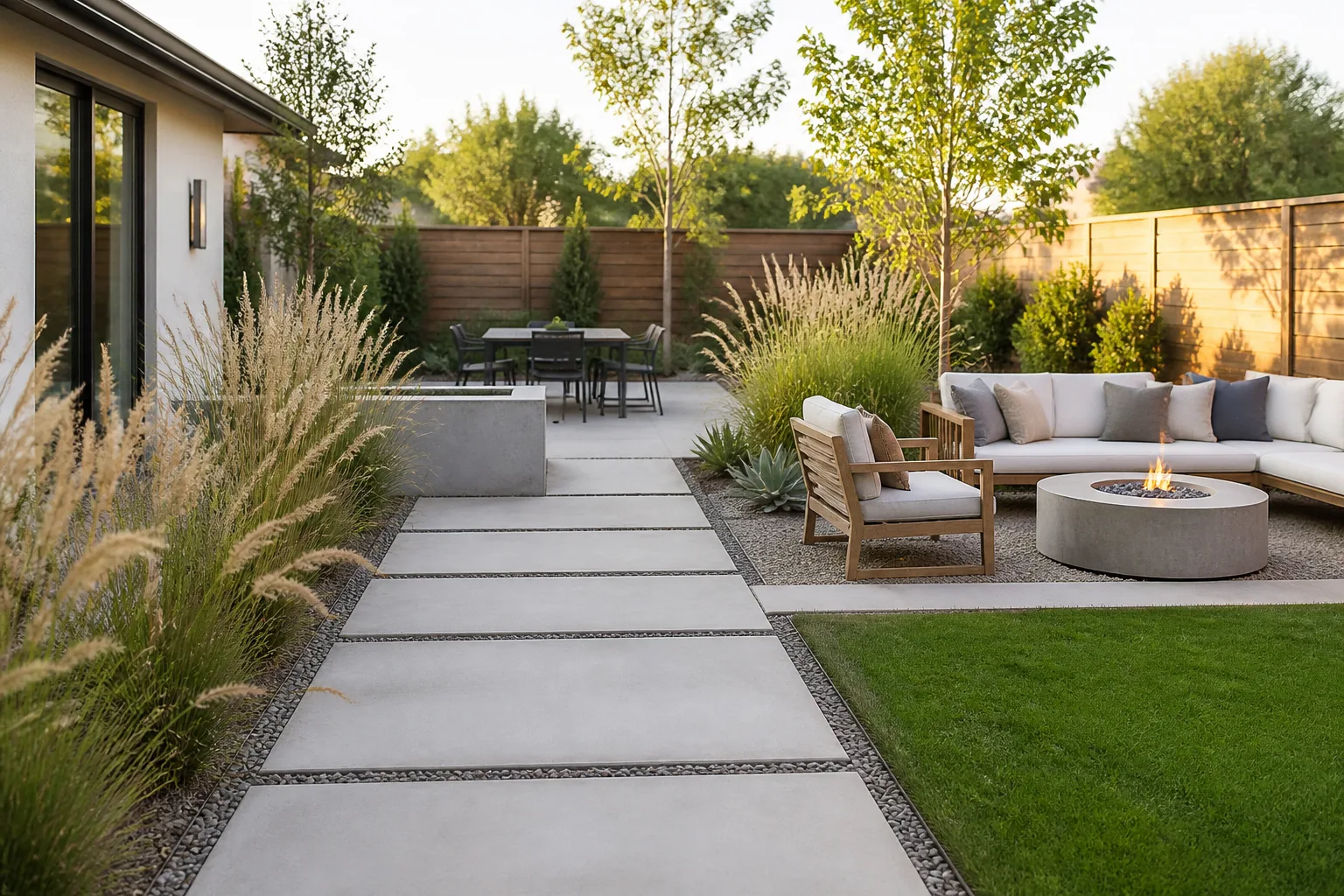
A modern backyard is not a shopping list of gray furniture. It is a yard where clean lines, repeated forms, open circulation, and a tight color story make the space feel intentional from the house door to the back fence. UF/IFAS modern landscape guidance describes the look as uncluttered edges, sculptural plants, mostly green foliage with one or two accent colors, geometric hardscape, and open space between elements (UF/IFAS modern design). The ideas below follow that logic—but grouped by what you actually build, in an order that prevents expensive mistakes.
What Counts as a Modern Backyard (and What to Plan First)
Modern outdoor design favors symmetry, repetition, and edited plant palettes—not cottage-style abundance. You will see straight paths, rectangular pavers, horizontal fence lines, low furniture, and plants chosen for form (grass plumes, agave rosettes, clipped spheres) rather than mixed flower borders. That does not mean sterile. Warm wood, textured textiles, and one bold color can keep the space livable.
Before copying a photo, map your site the way extension educators recommend: note sun and shade through the day, how water drains away from the house, who uses the yard, and how much maintenance time or budget you truly have (UF/IFAS planning tips). Check your USDA hardiness zone so sculptural plants survive winter. Modern hardscape fails fastest when installed on soggy soil or when furniture blocks the only dry path after rain.
Match Your House Architecture and Microclimate
Complement your home’s roof lines, window rhythm, and exterior materials instead of fighting them. A midcentury flat roof pairs naturally with horizontal fencing and low seating; a traditional brick home may need warmer wood and earth tones so the yard does not look like a furniture showroom dropped on grass. Microclimate matters too: a concrete-heavy plan that works in coastal fog can bake in humid summer sun unless you add shade, porous joints, or canopy.
Build Order: Drainage, Hardscape, Privacy, Then Decor
- Fix drainage and slopes so water moves away from foundations and seating areas stay usable.
- Install primary hardscape—main patio, paths, retaining edges—before large planters or furniture.
- Solve privacy where sightlines bother you; screens and fence refinishes are cheaper before pergolas and built-ins.
- Place seating zones with real clearances for chairs, grill paths, and fire features.
- Add planting in repeated groups, then lighting, then small decor.
Skipping this order is why many “modern” makeovers end with beautiful sofas nobody sits on because the only flat spot floods or faces the neighbor’s windows.
Hardscape and Paving Ideas
Hardscape sets the geometry. In a modern yard, paving is part of the composition—not just a surface under furniture.
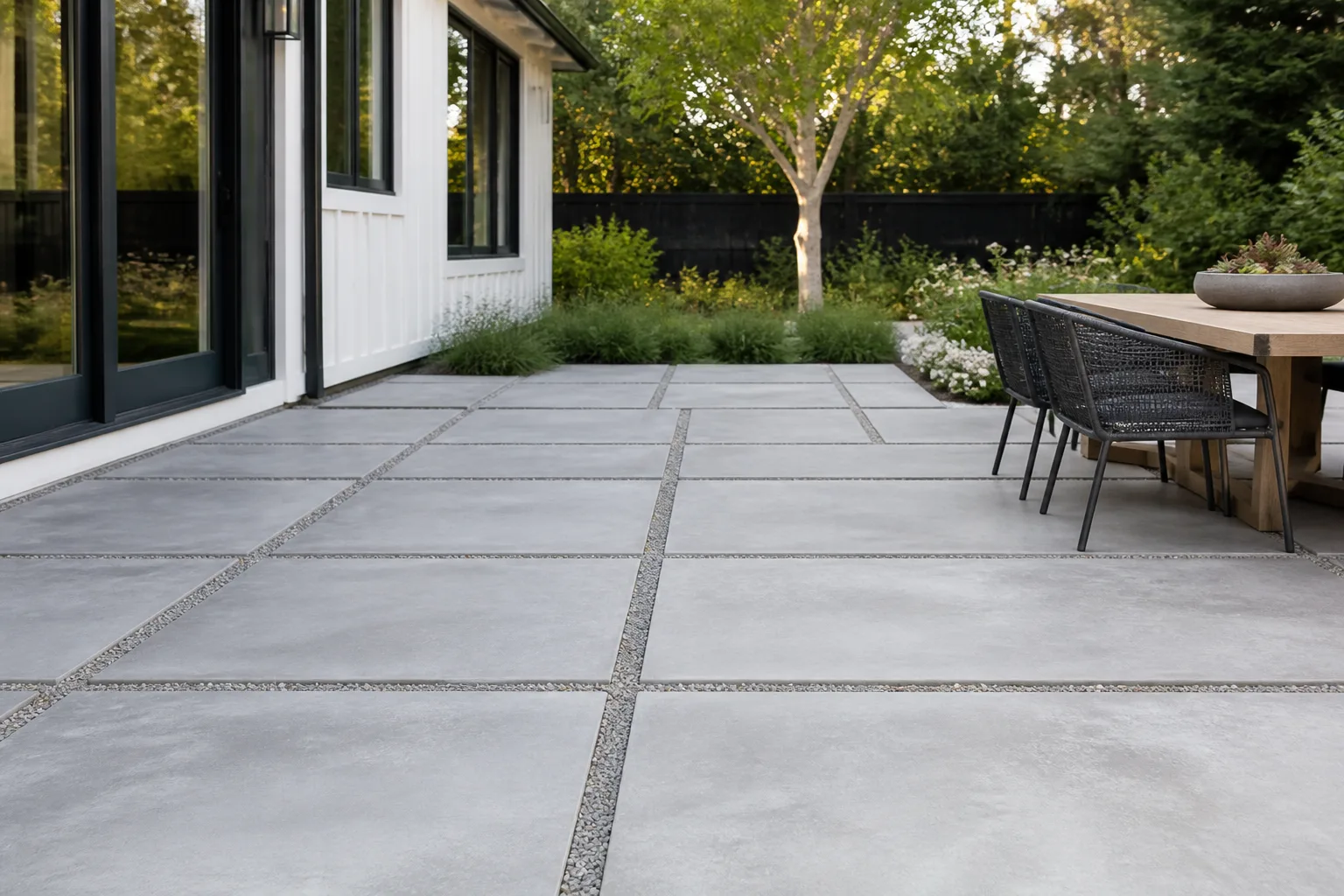
1. Lay a Concrete Patio With Gravel Gaps
Large concrete slabs with consistent joints read cleaner than a patchwork of small tiles. UF/IFAS cautions that solid concrete and rock can amplify heat in hot climates; leaving gaps between slabs and using permeable pavers helps air and water move (UF/IFAS modern design). Fill joints with fine gravel for drainage and a crisp grid effect.
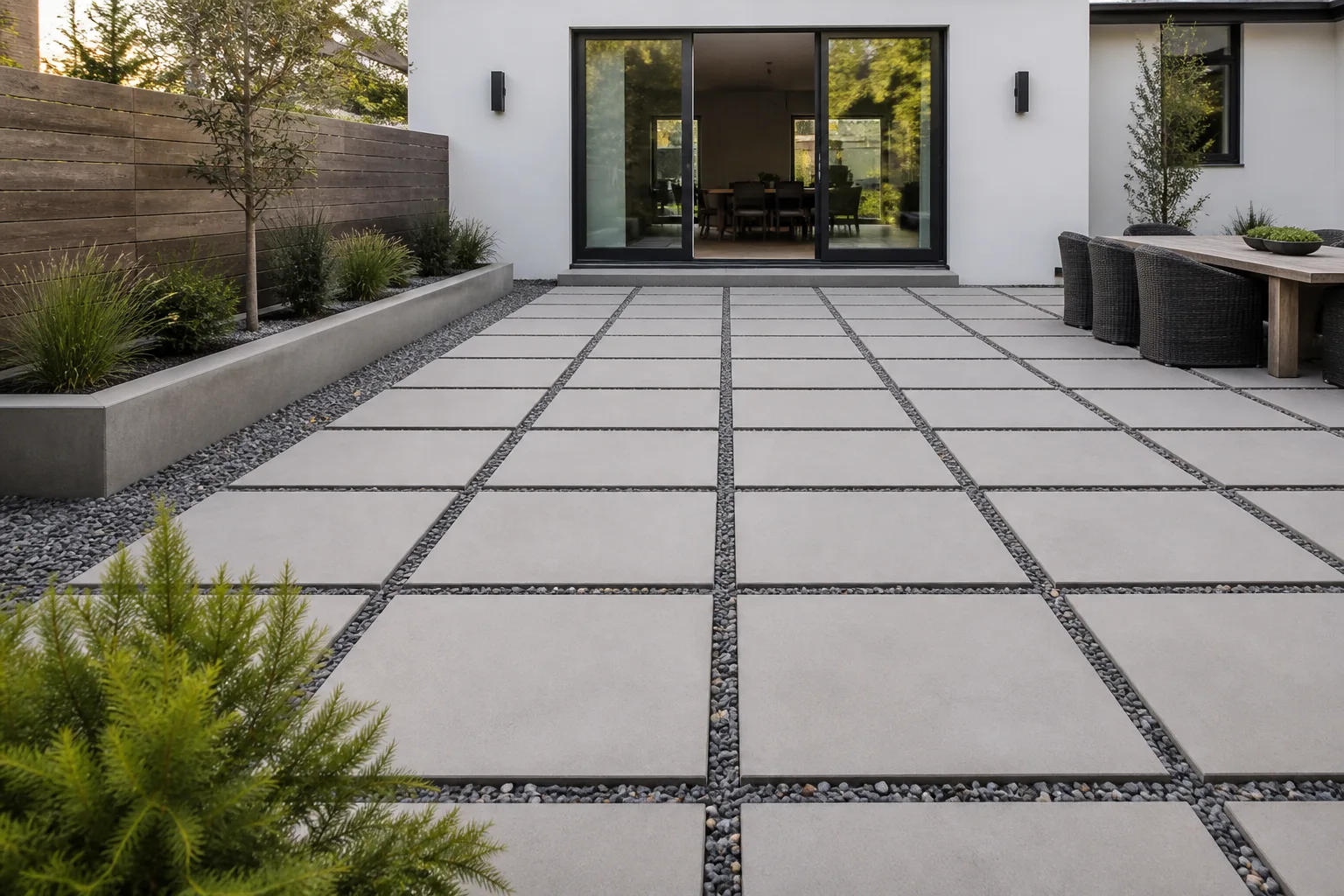
2. Opt for Large Square Pavers in a Grid
Square pavers spaced slightly apart—with contrasting gravel or sand between—create a strong geometric field that works for paths and patio extensions. Keep the grid aligned to the house or a dominant sight line so the pattern looks deliberate. For joint maintenance without harsh chemicals, see our guide on natural solutions for weeds between pavers.
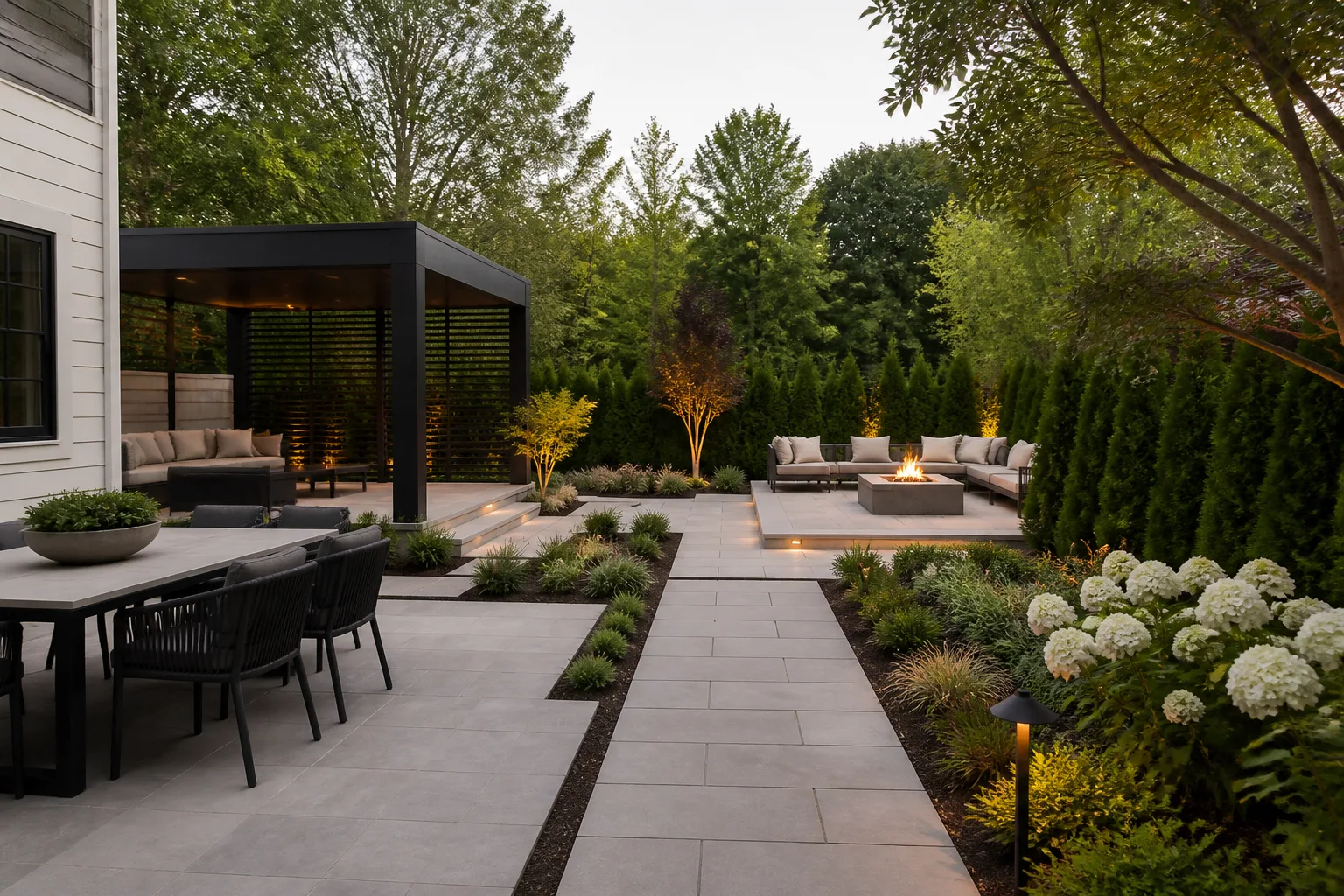
3. Build a Secondary Fire Pit Patio Connected by Walkway
A small circular or square entertaining pad away from the main patio gives you a second focal point without crowding dining furniture. Use the same stone or paver as the primary patio and link zones with a straight walkway so the yard reads as one system. Our DIY backyard fire pit guide covers clearance, base prep, and seating distances that sleek photos often skip.
4. Stack Stone Retaining Walls on Grade Changes
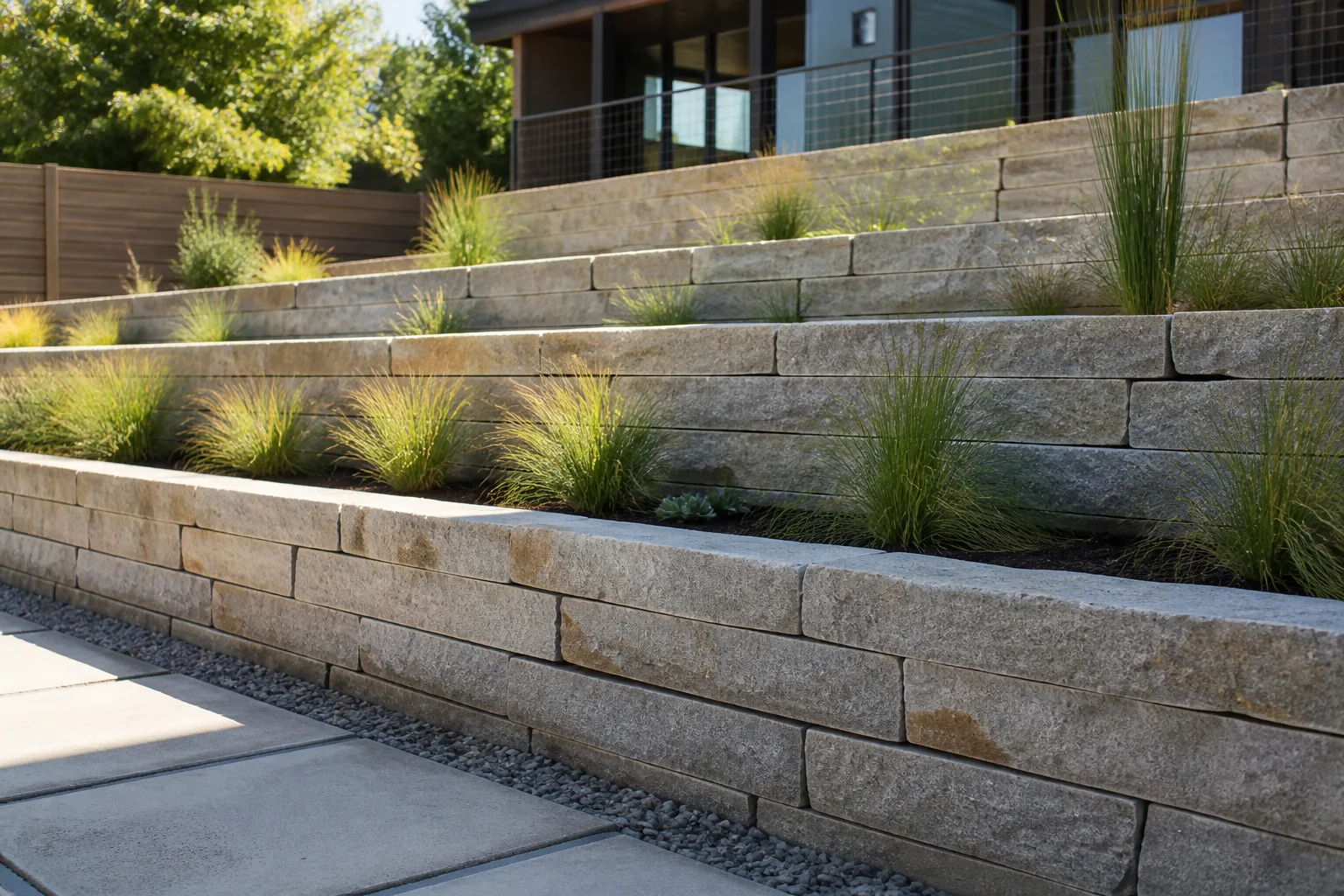
Dry-stacked or mortared stone walls turn slopes into terraces with sharp horizontal lines. Plant low grasses or groundcovers on ledges to soften edges without breaking the geometry. Always include drainage behind the wall; modern looks fail when stone hides saturated soil that heaves in freeze-thaw cycles.
5. Carve Out a Winding Stone Path on a Slope
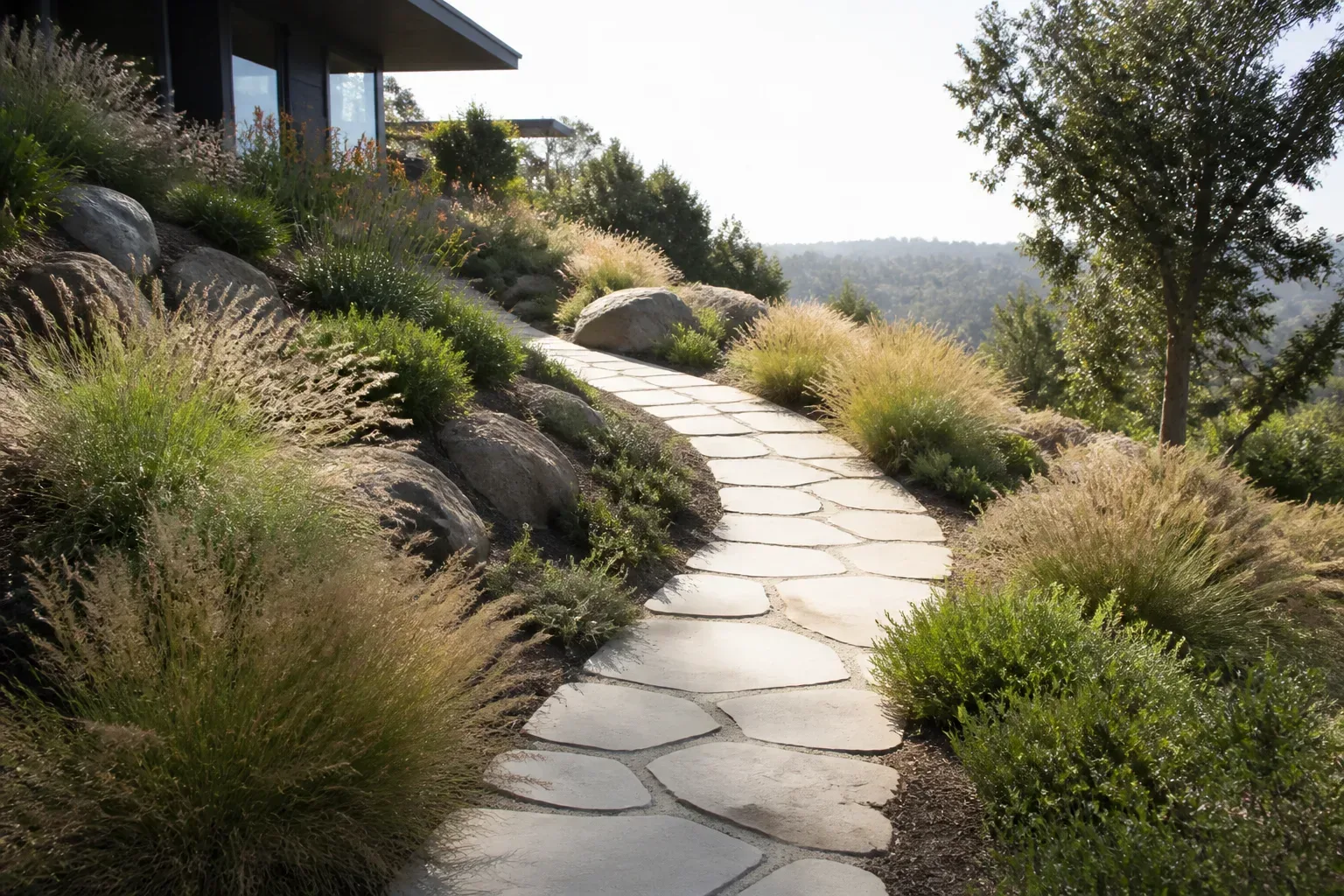
On hillsides, a single-material path with gentle curves can feel organic-modern when paired with simple plant masses on either side. Step stones or flat flagstone with tight spacing improve safety. Route the path to views you want to frame, not just the shortest line uphill.
Minimal Planting and Groundcover Ideas
Modern planting is edited. UF/IFAS notes modern landscapes generally avoid bushy mixed borders and meandering curves everywhere (UF/IFAS modern design). You are choosing fewer species and repeating them.
6. Use Statement Planters Instead of Busy Beds
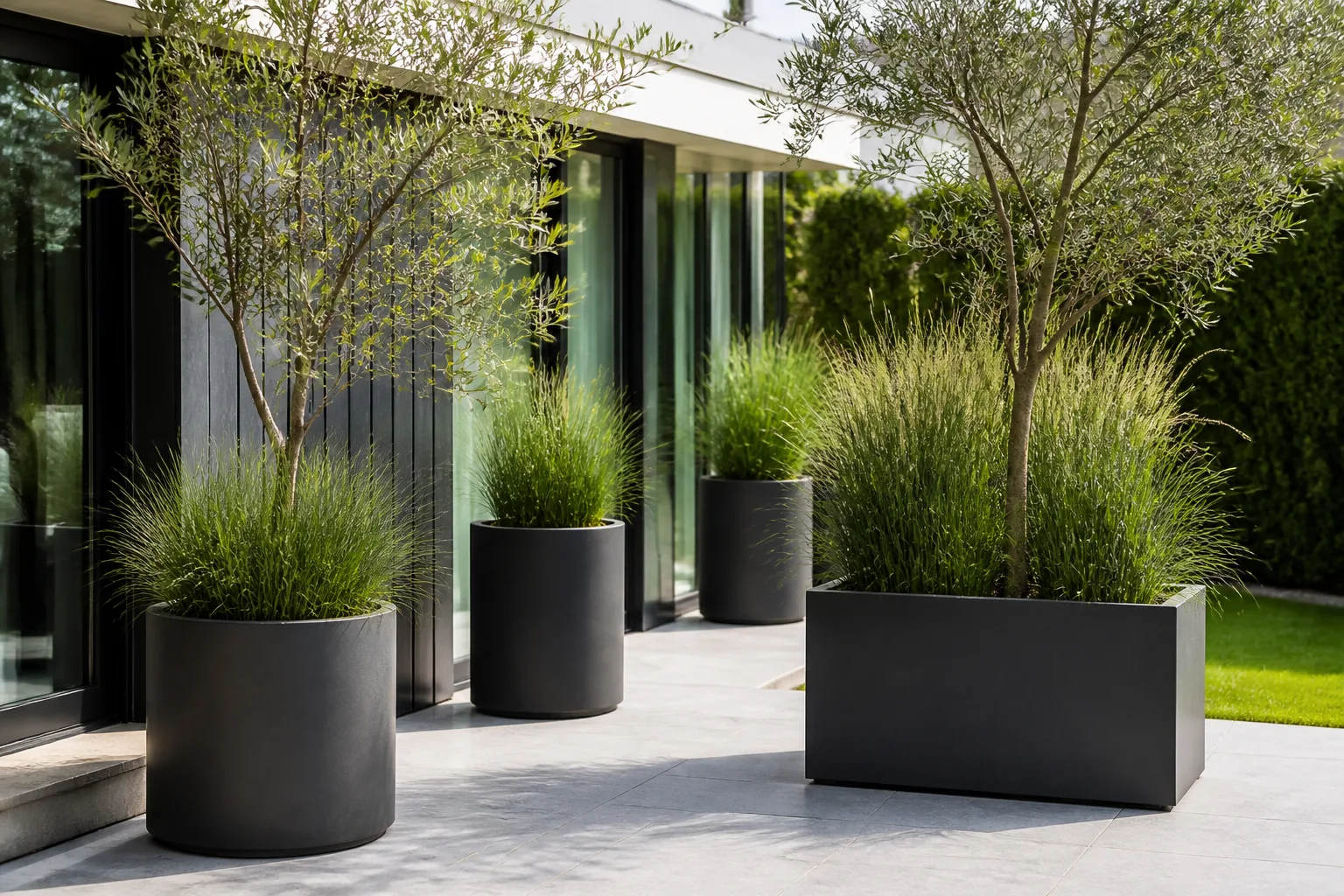
Three to five large containers with small trees, upright grasses, or sculptural shrubs can define a patio without building raised beds. Match pot shapes (cylinders or wide rectangles) and limit finish colors. Elevate pots on feet in wet climates so drainage holes stay clear.
7. Xeriscape a Sloped Edge
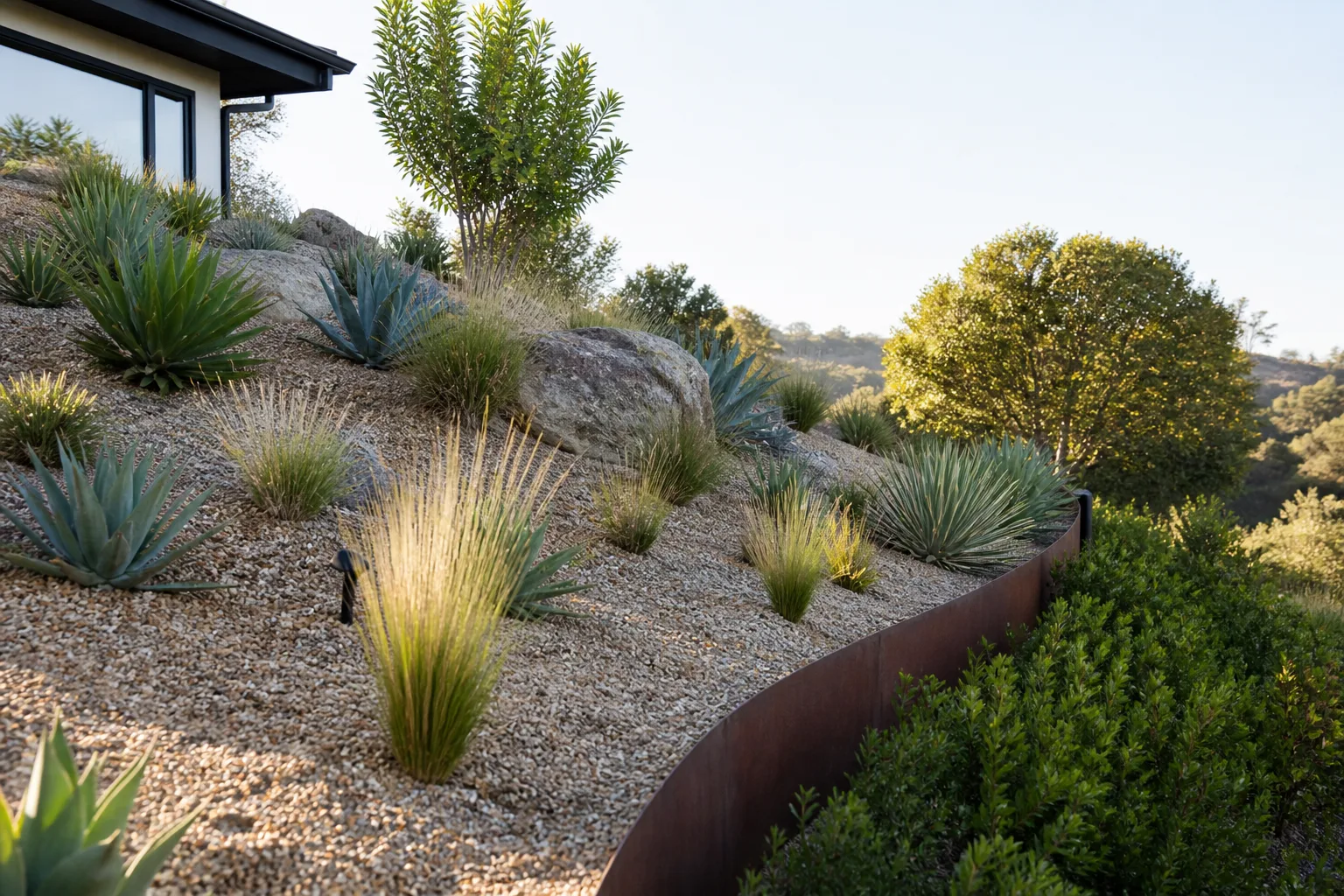
Xeriscaping—grouping drought-tolerant plants with mulch or gravel and minimizing thirsty turf—fits modern yards in arid and Mediterranean climates especially. On slopes, combine retaining edges with gravel mulch and spaced agaves, sedums, or native grasses. Do not xeriscape a low spot that already collects runoff; fix hydrology first or plants will rot. For turf replacements in shade, browse landscapers’ favorite groundcovers.
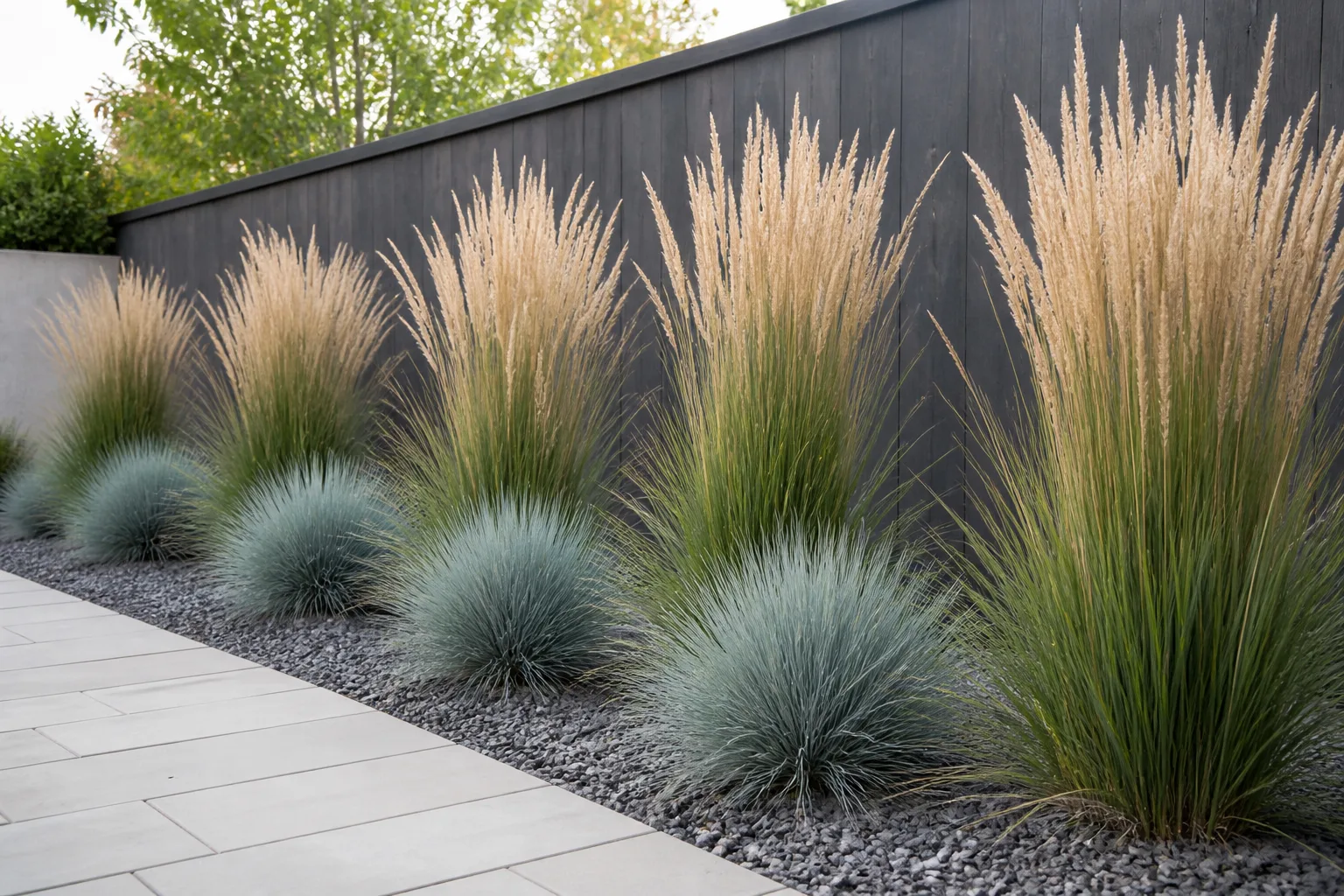
8. Repeat Ornamental Grasses for Rhythm
Feather reed grass, blue fescue, and similar upright forms add movement without flower clutter. Plant in odd-numbered groups along fences or pavers so the eye travels in lines. Grasses need division every few years; budget that maintenance or masses become thin and weedy.
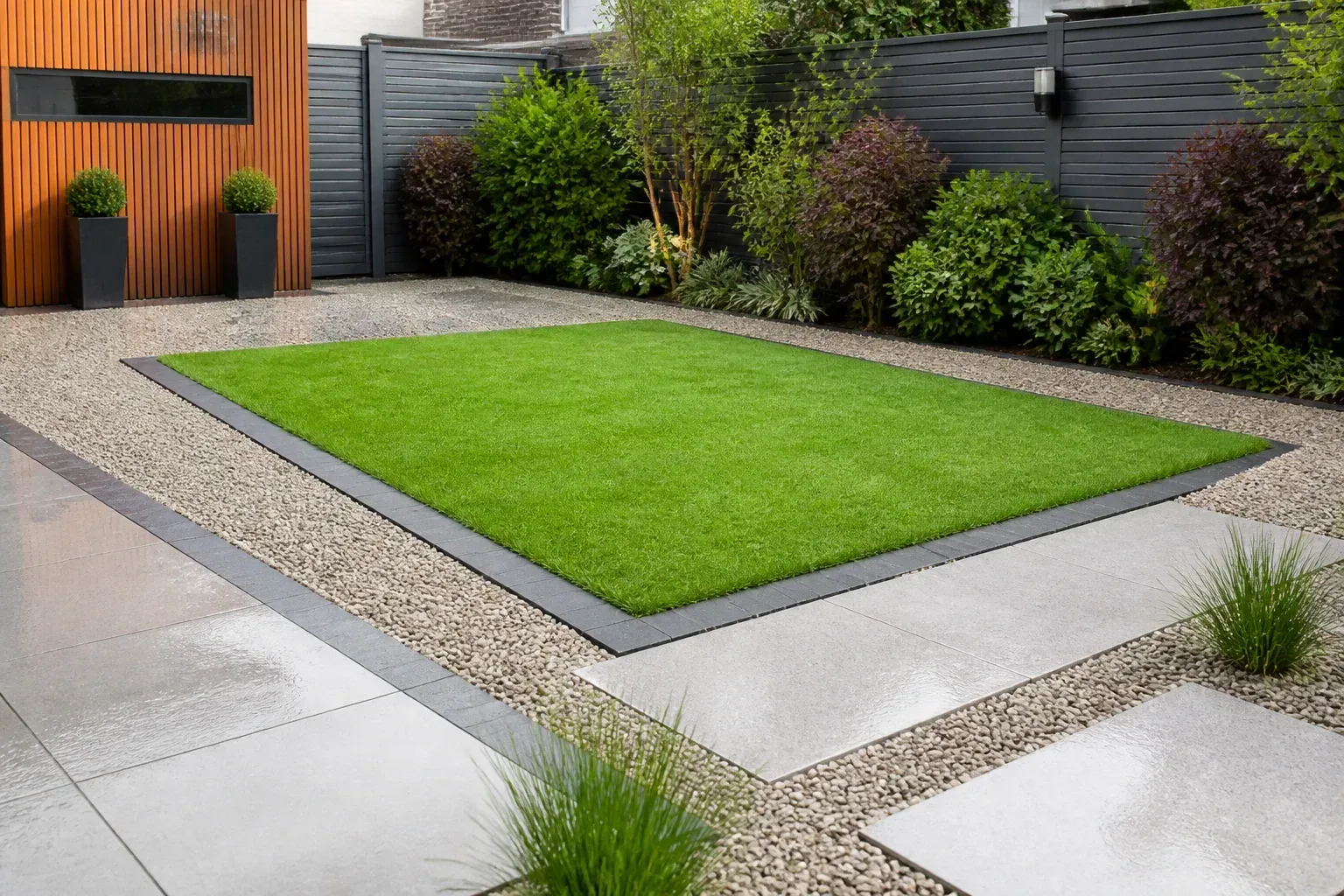
9. Keep a Small, Sharp Lawn Patch
A manicured lawn rectangle can anchor a modern plan when kept small and edged crisply. UF/IFAS notes a small lawn is often part of modern design, but only if you can maintain mowing height and fertilization responsibly (UF/IFAS modern design). If kids or dogs need run space, protect that function before shrinking turf to a strip that cannot handle traffic.
Privacy, Structure, and Shade
Modern privacy solutions emphasize planes and patterns—not lattice overload.
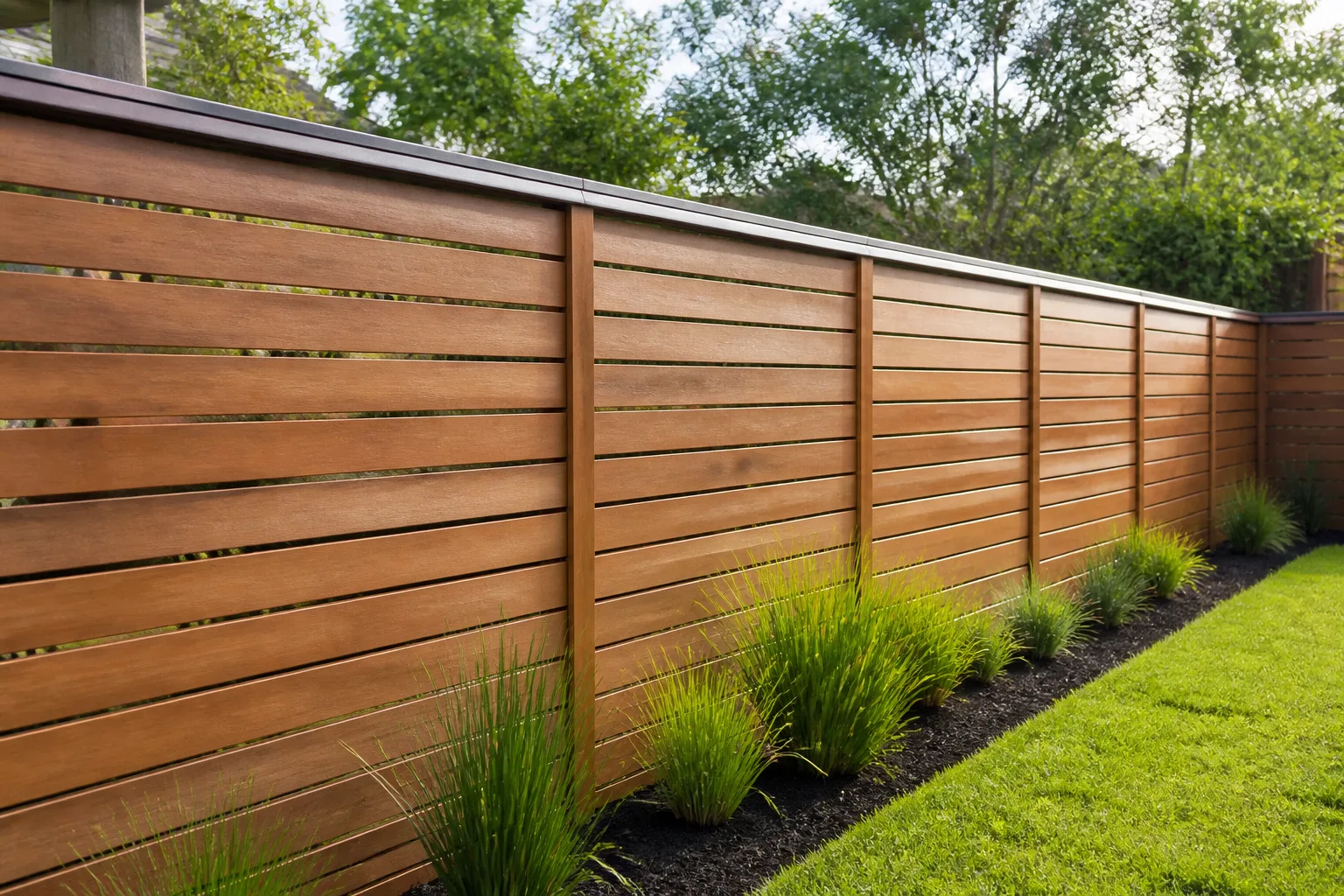
10. Install Horizontal Fence Boards
Turning fence boards horizontal emphasizes length and reads contemporary compared with traditional vertical pickets. Use consistent board spacing and a cap rail for a finished edge. Check local codes for height and wind load; long horizontal spans may need additional posts.
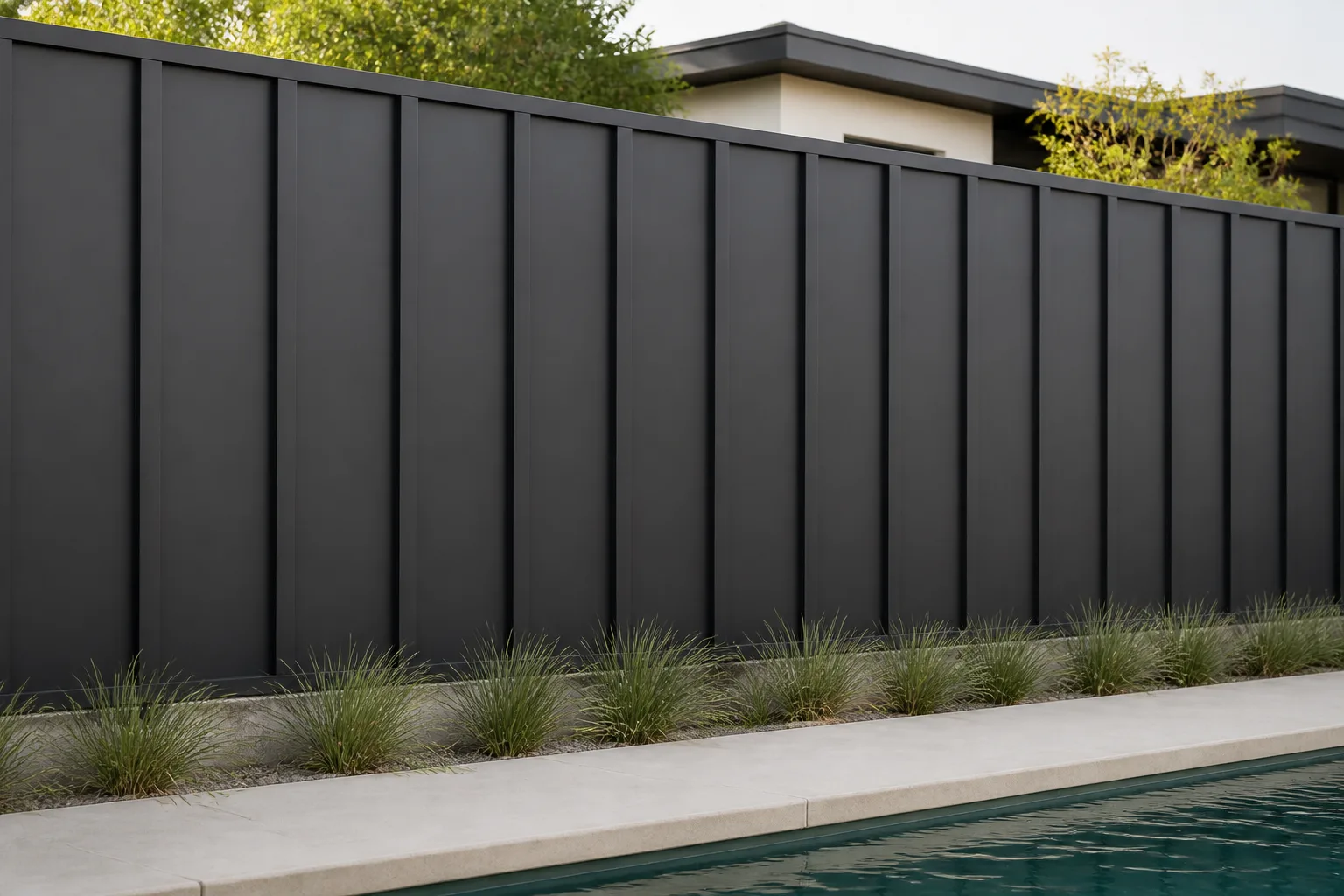
11. Modernize a Privacy Wall With Board-and-Batten
A flat wall with vertical battens over wide boards adds texture without ornament. White or charcoal paint keeps the look minimal. Pair with low planting so the wall does not feel like a prison block—one repeated grass species along the base is enough.
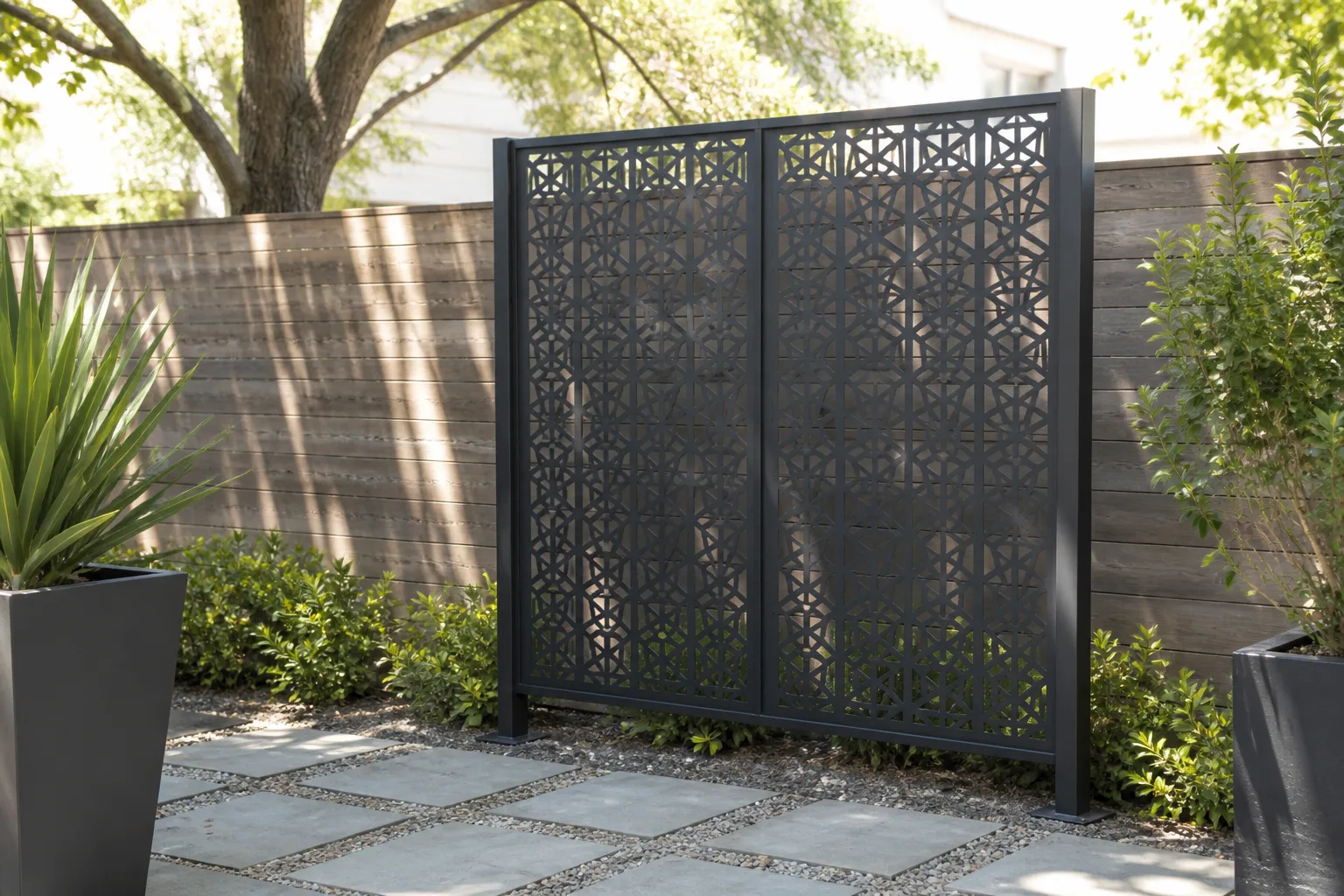
12. Layer a Laser-Cut Privacy Screen
Freestanding screens in front of an existing fence add height and pattern without rebuilding the boundary. Choose a simple geometric cutout and limit to one or two panels; too many patterns compete. Anchor posts in concrete so screens do not sway in wind.
13. Build a Sleek Pergola With String Lights
A pergola’s rectangular frame supplies shade structure with minimal visual weight. Run outdoor-rated string lights on a dimmer for evening ambiance, but illuminate steps separately for safety. The Royal Horticultural Society advises keeping garden lighting low, warm, and targeted to reduce wildlife disturbance (RHS garden lighting); see our full backyard lighting ideas for path-first planning.
14. Hang an Oversized Shade Sail Over Dining
Triangular or rectangular shade sails stretch clean lines overhead and block afternoon sun on dining zones. Install with engineered hardware rated for wind gusts and tension correctly—sagging sails look sloppy and collect water. Combine with a sail or umbrella strategy from our budget DIY backyard shade ideas if you need modular shade without permanent roof construction.
Furniture, Color, and Texture
Furniture scale and palette do more for a modern feel than extra accessories.
15. Keep Furnishings Minimal and Add Built-In Bench Seating
Built-in benches along a fence reduce loose furniture count and define a conversation edge. Add loose chairs only where you need flexibility. Built-ins need sloped seat boards or cushions for drainage—flat wood holds rainwater and rots.
16. Choose Low-Seated Modern Sofas
Seat heights around 14–16 inches read contemporary and encourage lounging. Pair with an outdoor rug and overhead shade so low profiles still feel comfortable. Verify seat depth for taller guests; ultra-low sofas can be awkward for dining-adjacent seating.
17. Stick to Black and White With One Accent Color
A neutral base keeps planting and hardscape visible. Black metal frames, white cushions, and gray stone are a reliable trio. Add one accent—cobalt planters, yellow loungers, citrus-toned dishes—so color feels intentional. All-black yards can absorb heat and show every dust speck; balance with pale hardscape or planting.
18. Embrace Earth Tones for Outdoor Dining
Olive, terracotta, mustard, and warm wood finishes modernize dining zones without neon contrast. Earth tones hide pollen and wear better than crisp white upholstery near trees. Use matte finishes; glossy outdoor tables show scratches quickly.
19. Mix Dark and Light Finishes Deliberately
Dark fence or pergola members against pale cushions and light stone create depth without clutter. Repeat the contrast in at least two places so it looks designed—not like one random dark chair. Photograph the yard in black-and-white on your phone; if shapes blur together, add a mid-tone wood or gravel band.
20. Anchor Seating With an Outdoor Rug
A rug under conversation furniture defines a zone on large patios or artificial turf. Choose flat-weave polypropylene rated for outdoor use and lift it when prolonged rain is forecast. Rugs stop working when they become a mildew mat—plan storage or a drying spot.
21. Use Indoor-Style Upholstered Outdoor Sofas
Deep cushions and sofa silhouettes blur indoor-outdoor boundaries when fabrics are solution-dyed acrylic or similar UV-rated textiles. Keep legs elevated and avoid skirting that traps moisture against decking. Indoor look does not mean indoor foam—verify cushion fill is outdoor-grade.
22. Coordinate Matching Patio Sets
One furniture collection around a pool or main patio simplifies visual noise. Matching does not require identical pieces: same frame finish plus varied seating types (sofa, lounge, side chairs) works. Leave one visual “void”—open gravel or grass—to prevent showroom density.
Warmth, Light, and Evening Use
Modern yards should work after sunset without turning into a stadium.
23. Install Landscape Lighting on Paths First
Light the route from the door to seating, grill, and fire features before accenting trees. Low glare fixtures aimed across walking surfaces keep guests safe and neighbors happier. Layer glow after safety is solved—our backyard lighting ideas walk through glow, guide, and work light roles.
24. Add a Minimal Fire Table
Fire tables combine a low profile with usable tabletop space when the burner is off—often sleeker than rustic wood-burning pits. Check fuel type (propane vs natural gas), wind exposure, and clearance to overhead structures and seating. Store tank covers that match the table finish so the utility side stays hidden.
25. Design a Custom Circular Fire Pit
Round fire pits echo modern sculpture and work in desert and coastal modern plans. Surround with low seating or spaced chairs—not crowded bench walls that trap smoke. Use the same stone as nearby paving for cohesion. Follow local fire codes and maintain the noncombustible clearance your municipality requires.
26. Build a Covered Outdoor Fireplace Pavilion
A roof structure over a fireplace creates an outdoor room with strong horizontal lines. Dark painted steel or timber frames read contemporary when proportions stay simple. Ensure chimney height and spark arrestors meet code; a dramatic roof is not worth smoke staining your siding.
Finishing Details That Stay Modern
These ideas punch above their cost when the big moves are already correct.
27. Layer Wood, Metal, Concrete, and Fabric
When furniture is minimal, material contrast supplies interest. Combine one wood tone, one metal finish, and one stone type per zone. UF/IFAS suggests warm-toned concrete and wood to avoid sterile minimalism (UF/IFAS modern design).
28. Mix Geometric Patterns on a Neutral Base
Pillows, ottomans, or tile insets can carry high-contrast geometry when walls and paving stay quiet. Limit to one pattern family per zone—stripes plus hex plus floral reads chaotic. Square grids pair well with rectangular pavers already on the ground.
29. Create Sculpture Garden Focal Points
One large planter, fountain form, or art piece at the far end of a sight line draws the eye through the yard. Negative space around the object matters more than the object itself. Do not crowd sculptures with filler plants; use gravel or a single grass species.
30. Build a Built-In Stucco Banquette
A corner banquette with stucco or smooth plaster finish wraps seating into architecture. Pair with a gravel fire pit pad for a defined gathering corner on a budget compared with full stone patios. Weep holes and frost-proof footings are mandatory in freeze zones.
31. Hang a Simple Hammock for a Mediterranean Mood
A slim hammock between posts or trees adds leisure without bulky furniture. Choose neutral fabric; wood posts stained dark read more modern than ornate stands. Place where foot traffic will not collide with the swing arc.
32. Design a Modern Rustic Covered Porch
Reclaimed wood and stone can feel contemporary when lines stay simple and furniture is oversized but low. The contrast between rustic shell and sleek seating is the point—avoid country kitsch signs or excessive lantern clutter.
33. Keep Decor Minimal and Functional
One fruit bowl, a herb pot, or a single candle cluster finishes a table. Modern yards fail when accessories multiply—string lights, signs, lanterns, and sculptures all compete. If you add decor, remove something else.
34. Channel Moody Drama With Controlled Black
Black fences, planters, or pergola paint add edge when balanced by light stone, pale upholstery, or variegated grasses. All-black everything turns heat and maintenance into daily problems. Use black as punctuation, not wallpaper.
35. Accent With a Single Bold Neon or Primary Hue
One chaise, door, or planter in saturated color acts like architectural trim. Keep surrounding surfaces neutral so the accent reads as design—not leftover furniture. Replace accents when cushions fade; neon synthetics UV-fade fast.
36. Add a Minimalist Deck With Black-and-White Palette
Small urban decks stay modern with simple railings, hidden fasteners, and a two-color palette. Avoid bulky planter clutter on tight decks; hang one vertical grass container instead.
37. Extend Clean Lines to a View Deck
When a yard opens to water or a slope, align furniture parallel to the horizon or railing. Low backs preserve sight lines. Do not block the view with tall hedges unless privacy truly requires it.
38. Tie the Plan to Long-Term Yard Trends
Modern does not mean ignoring ecology. Permeable paving, reduced turf, and climate-smart planting align with where backyard design is heading anyway—see 2026 backyard trends for rain management and pollinator beds that still respect clean geometry. Likewise, skip features designers now consider dated in our roundup of outdated backyard features before investing in built-ins.
Conclusion
Modern backyard style is a planning problem first and a furniture problem second. Start with drainage, align hardscape geometry to your architecture, edit the plant list to repeated sculptural forms, solve privacy with planes instead of clutter, then add warmth and light in layers. Pick three ideas from this list that match your climate and maintenance reality—not three that looked best in a photo—and build those well. A yard with one excellent patio, one clear seating zone, and consistent materials will outshine a yard stuffed with trendy pieces that never quite fit together.



