Summer Mowing Height: The Right Cut for Your Grass
Find the right summer mowing height for cool- and warm-season grass, plus the one-third rule, signs of scalping, and a safe reset plan.
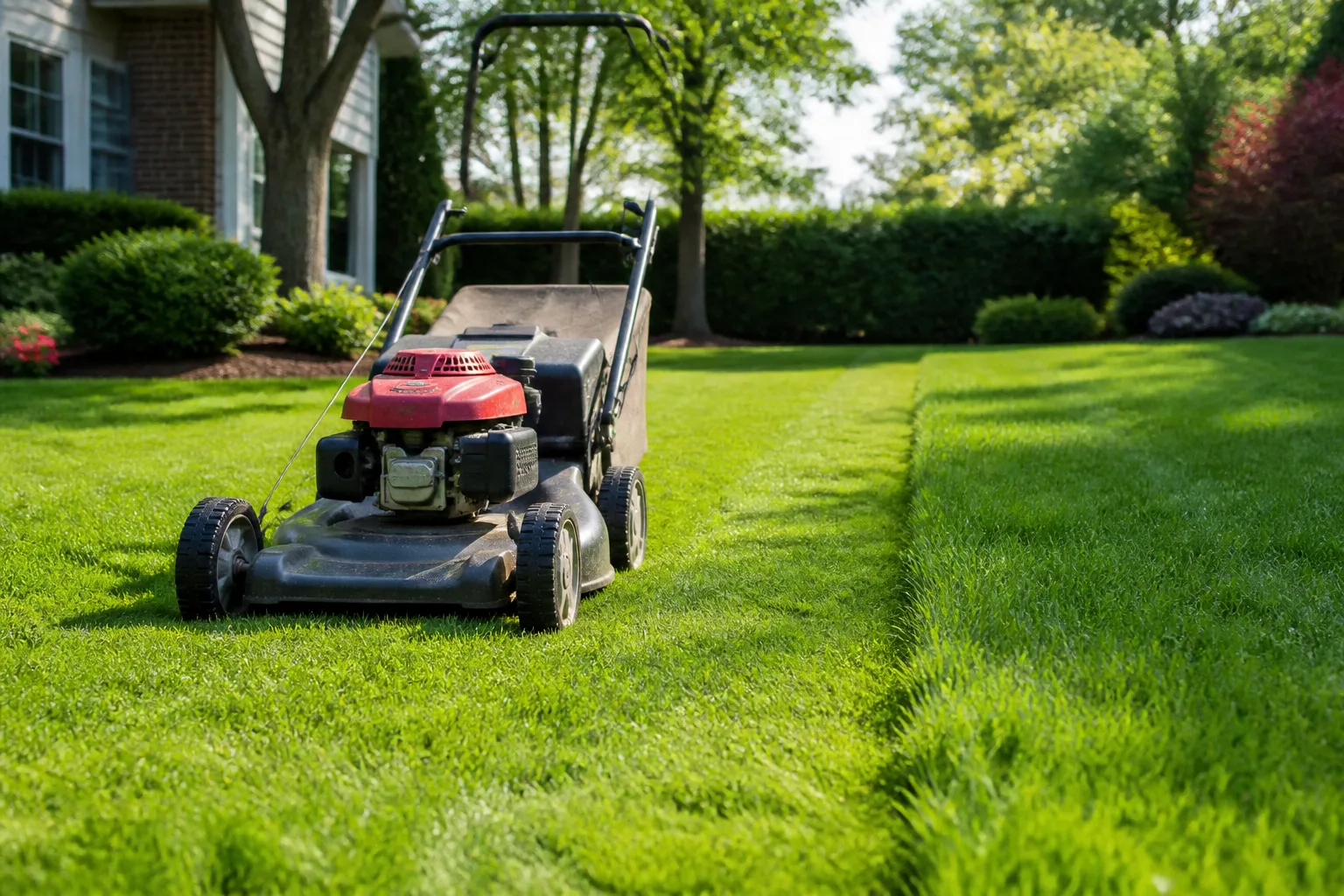
If you leave your mower at one height all summer, the result depends on what that height is, what kind of grass you grow, and whether the lawn is actively growing. A fixed setting is not automatically harmful. If it keeps your species within its recommended range and you remove only a small amount at each cut, there may be no problem at all.
The trouble starts when a spring setting is too short for summer heat, when the mower is already scalping high spots, or when you use the same number for a cool-season lawn and a warm-season lawn. In those situations, repeated mowing can remove too much leaf area, expose the soil, increase drought stress, and leave a thin lawn that weeds can enter.
The practical answer is to stop treating the mower dial as a seasonal rule. Identify the grass, measure the actual cut, move toward the upper end of the appropriate summer range when heat or drought is stressful, and follow the one-third rule every time.
The short answer: a fixed height is only safe when it is the right height
The phrase “never change your mower height” hides the decision that matters: right for which grass, in which conditions, at which actual height? A 1.5-inch cut can be reasonable for some bermudagrass lawns and badly stressful for tall fescue. A 3.5-inch cut may protect a fescue lawn in summer but be unnecessarily tall for a tightly maintained bermudagrass surface.
For a typical home lawn, summer is not the time to chase the shortest possible finish. The RHS recommends avoiding excessively close mowing because it weakens grass, encourages shallow rooting, and increases vulnerability to drought and weeds. The City of Lincoln’s lawn-care guidance similarly connects higher mowing with deeper roots, cooler soil, better drought resistance, and greater weed resistance.
If your current height is appropriate, your lawn is growing, and the cut looks clean, you do not need to move the lever merely because the calendar says summer. If the lawn is browning immediately after each cut, showing scalped spots on bumps, or becoming thin and weedy while nearby uncut grass stays vigorous, the setting deserves attention.
Why one fixed height can fail as summer gets hotter
Grass is a living plant, not a carpet. The leaves that the mower removes are the plant’s working surface: they capture light, exchange gases, and make the carbohydrates that support new leaves, crowns, and roots. A height that seemed tidy during fast spring growth can become too aggressive when heat slows growth and dries the soil.
Less leaf area means less recovery capacity
Every mowing cut is a small injury. A lawn that loses a modest amount of leaf tissue can replace it without much trouble, but repeated close cuts leave less green surface between mowings. The plant then spends more of its limited energy rebuilding leaf tissue instead of maintaining roots and crowns.
That is why short mowing can look deceptively good for a week and then fail. The first cut creates an even surface; the next hot, dry stretch reveals the cost as pale turf, slower recovery from foot traffic, and patches that do not rebound after watering. The RHS mowing guide treats removing no more than one-third of the grass height as the basic guardrail because it preserves enough leaf area for the plant to recover.
A shorter canopy exposes soil to heat and water loss
The grass canopy shades the soil beneath it. When the canopy is repeatedly shaved, more sun reaches the soil surface, the root zone heats faster, and water disappears more quickly from the upper soil. That does not mean every tall lawn has deep roots or every short lawn dies; soil texture, irrigation, species, shade, and compaction still matter. It does mean height is one useful tool for reducing summer stress.
The effect is most important on a cool-season lawn during a hot spell. Tall fescue, fine fescue, Kentucky bluegrass, and perennial ryegrass generally prefer cooler growing conditions than warm-season turf. A spring setting that leaves cool-season grass at 2 inches can be especially unforgiving when July heat arrives and the soil dries between waterings.
Thin turf gives weeds and bare patches an opening
Short mowing removes leaf area and can thin the canopy. Once light reaches bare soil, opportunistic weeds have more room to germinate, and a lawn with gaps is less able to compete for water and nutrients. The City of Lincoln notes that higher mowing also provides shade and improves weed resistance; it is not a substitute for identifying a weed or correcting compaction, but it can make the turf a stronger competitor.
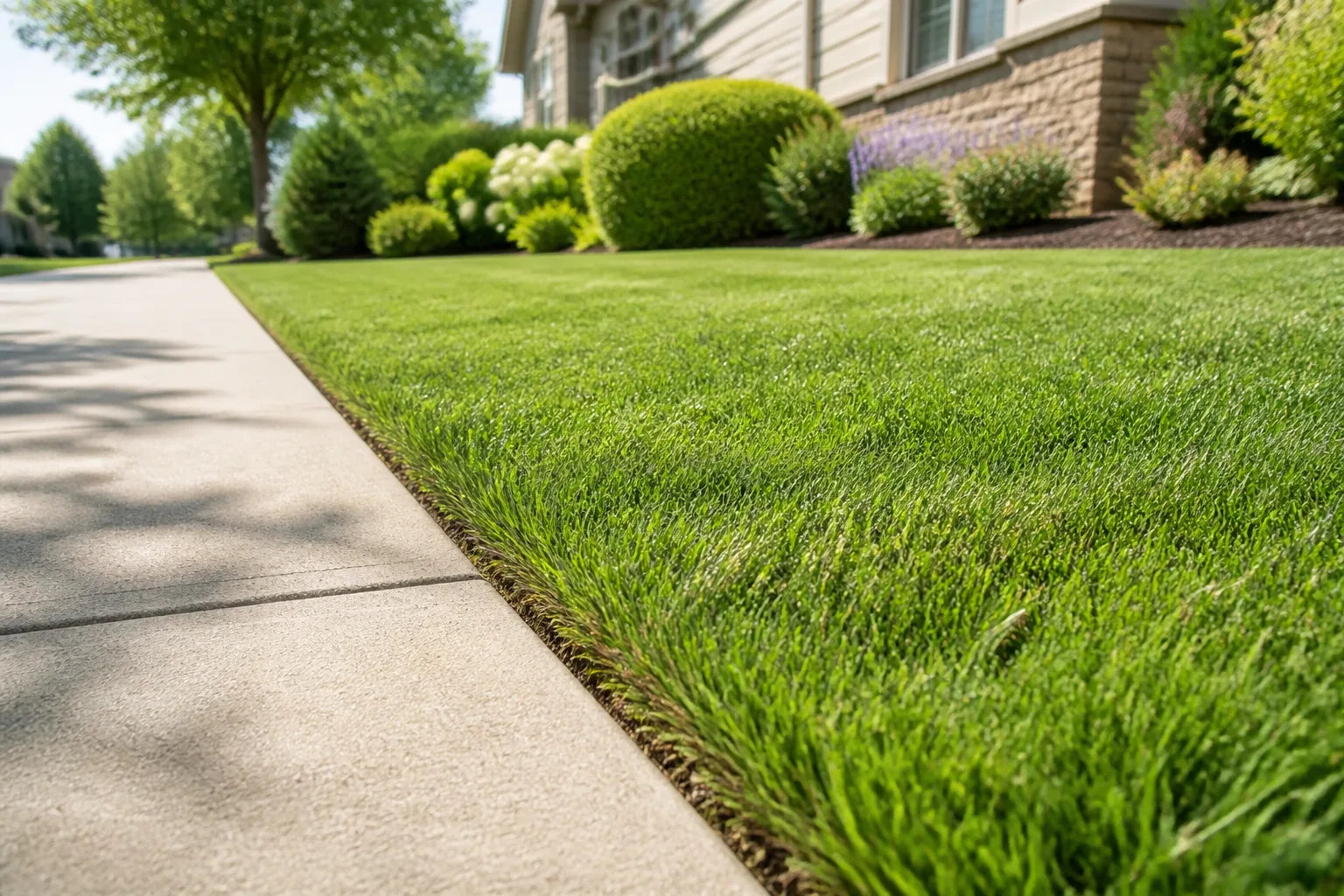
Scalping is the extreme version of this problem. If the mower deck is too low for an uneven lawn, the blade can cut into the crowns or growing points on raised areas and leave tan strips or bare crescents. Raising the deck and correcting the surface is more useful than repeatedly reseeding the same spots while the mower continues to shave them.
When leaving the mower at one height is actually fine
A constant setting can be a sensible routine when it passes four checks. The grass species fits the height, the lawn is actively growing, the mower removes no more than one-third of the blade, and the cut is clean rather than torn or uneven.
This is common on a warm-season lawn that was already set near the upper half of its normal range. Bermudagrass, zoysiagrass, centipedegrass, and St. Augustinegrass grow during warm weather and can tolerate summer mowing better than cool-season turf, although their preferred heights differ substantially. A single height can also work on a mixed lawn if it is chosen for the least-tolerant species and the result is acceptable for the whole yard.
The test is the turf, not the number printed beside the lever. Look for an even green canopy, clean cut tips, no exposed crowns on high spots, and steady growth after mowing. If the lawn remains healthy through a normal summer, changing height for the sake of change adds little. If a heat wave, drought, heavy shade, new seed, or a shift in grass type changes the conditions, revisit the setting.
Identify your grass before choosing a summer height
The biggest mistake in a height chart is treating every lawn as the same grass. Species, cultivar, climate, shade, mowing equipment, and the finish you want all move the target. If you do not know the grass, identify it from old seed or sod records, ask the person who installed it, compare the blade and growth habit with a local extension guide, or have a lawn-care professional identify a sample.
Cool-season grasses need more summer protection
Cool-season turf usually grows most strongly in spring and fall and slows during intense summer heat. Tall fescue often handles heat better than fine fescue or Kentucky bluegrass, but “handles heat” does not mean “likes a short cut.” In summer, a cool-season lawn is usually safer at the high end of its normal range, especially when the soil is drying or the site is exposed to afternoon sun.
Gardening Know How’s seasonal mowing-height guide puts cool-season home lawns around 3.5 to 4 inches during difficult summer conditions and explains the underlying reason: a taller canopy shades the soil and supports deeper rooting. Treat that as a practical starting point, not a universal prescription. A shaded lawn, a fine ornamental turf, and a tall-fescue lawn in a hot transition zone do not have identical needs.
If cool-season grass turns uniformly brown and stops producing new growth during drought, do not keep mowing just to make the surface look tidy. The RHS drought guidance notes that lawns can brown and stop growing during hot, dry periods, then green up after rain returns. Mowing dormant turf can remove tissue without solving the water shortage.
Warm-season grasses grow through summer but still have limits
Warm-season grasses are adapted to active summer growth, so they generally use lower mowing ranges than tall fescue. Bermudagrass is commonly maintained around 1 to 2 inches on a home lawn; zoysiagrass often falls around 1 to 2.5 inches; centipedegrass is commonly kept around 1.5 to 2 inches; and St. Augustinegrass typically needs a taller finish, often about 2.5 to 4 inches.
Those ranges overlap only partly. A St. Augustine lawn kept at a bermudagrass height can be scalped or thinned, while bermudagrass left at a very tall setting can become difficult to mow evenly. Use local recommendations for your cultivar and region, especially if the lawn is shaded, recently planted, or managed as a sports surface.
Warm-season turf still benefits from a modest height increase during extreme heat or drought. Lawn Love’s summer mowing comparison describes a half-inch increase as a useful adjustment for many lawns, with the important limitation that the new height should stay inside the grass’s recommended range. You do not need to force every warm-season lawn to 4 inches; you do need to avoid cutting below the range because the season is busy.
Practical summer mowing heights by grass type
Use the table below as a starting point for an established home lawn, not a replacement for a local extension recommendation. The ranges are intentionally broad because the same species may be maintained differently in a humid coastal climate, a dry transition zone, a shaded yard, or a fine-turf setting.
| Grass type | Practical summer starting range | What to watch for |
|---|---|---|
| Tall fescue | 3–4 inches | Stay toward the high end during heat, drought, or full sun. |
| Fine fescue | 2.5–3.5 inches | Do not assume its finer blade means it wants scalping. |
| Kentucky bluegrass | 2.5–3.5 inches | Heat and drought can slow recovery after a low cut. |
| Perennial ryegrass | 2.5–3.5 inches | Reduce traffic and close mowing during heat stress. |
| Bermudagrass | 1–2 inches | Lower heights require a level surface and frequent mowing. |
| Zoysiagrass | 1–2.5 inches | Raise within the range if drought or heat is severe. |
| Centipedegrass | 1.5–2 inches | Avoid repeated scalping; it can recover slowly from damage. |
| St. Augustinegrass | 2.5–4 inches | Its broad blades and runners generally need a taller finish. |
The RHS provides a separate general guide that uses about 1 to 1.5 inches for ordinary domestic lawns in summer and up to 1.5 inches in spring and autumn, while North American warm- and cool-season lawns are often managed at different heights. That difference is a useful warning: published numbers are regional and goal-dependent. Use the table to narrow the choice, then confirm against local turf guidance and the history of your lawn.
Measure the real cut instead of trusting the mower dial
Mower settings are not always comparable between machines. A lever marked “3” may not leave 3 inches on every mower, and a worn wheel, uneven deck, tire pressure difference, or bent blade can change the cut from one side to the other. Before making a large seasonal adjustment, park the mower on a flat surface, disconnect the spark plug or battery as appropriate, and measure from the ground to the blade’s cutting edge according to the manufacturer’s safety instructions.
You can also measure the grass after mowing. Choose a representative patch away from a rut or mound, use a ruler to check the standing leaf height, and compare it with the area’s uncut height. Measure several spots because a single blade is not a reliable sample. If the mower leaves a lower strip on one side, level the deck or service the machine before changing the height to compensate.
Check the deck, wheels, and blade condition
Walk-behind mowers commonly use levers near each wheel or one lever that moves the whole deck. If the mower has separate levers, set every wheel to the same position. Riding mowers may use a deck lever or dial. Reel mowers use a different cutting mechanism and often need manual adjustment; robotic mowers may use a dial or app. The owner’s manual is the authority for the mechanism and the safe way to inspect it.
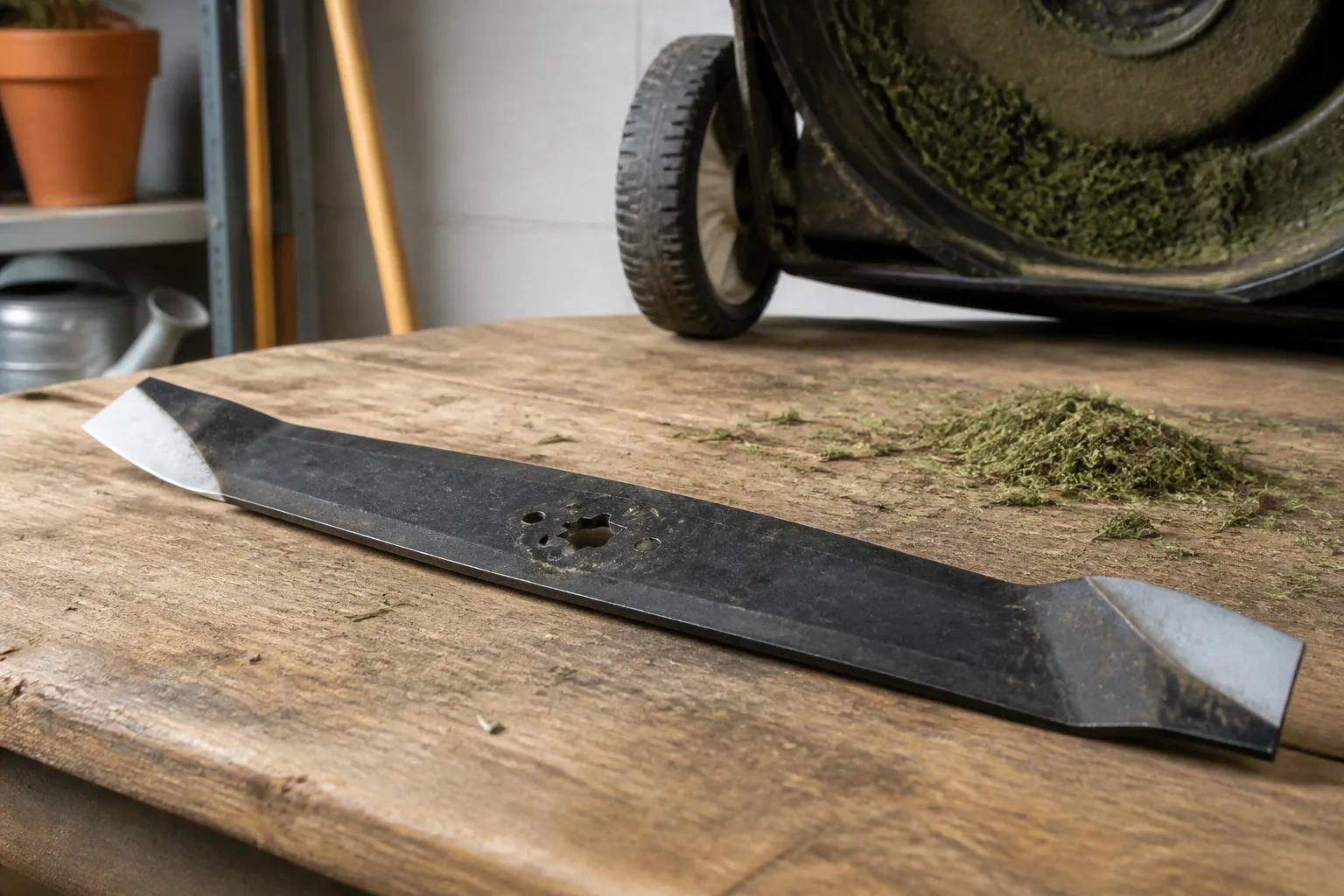
After the height is set, check the cut ends. A sharp blade leaves a relatively clean slice. A dull blade tears the tips, creating a pale or brown cast that can be mistaken for a height problem. The RHS explains that blunt blades rip and tear grass, while Gardening Know How’s mowing guide links dull blades with damaged grass and increased disease susceptibility. Height and blade condition have to be corrected separately; raising the deck cannot sharpen a blade.
Use the one-third rule to decide when to mow
Do not choose mowing day by the calendar alone. Mow when the grass is tall enough that your planned cut will remove no more than one-third of the current blade. If your target height is 3 inches, a simple example is to mow when the grass reaches about 4.5 inches: removing 1.5 inches leaves 3 inches. If your target is 2 inches, mow around 3 inches rather than waiting until the grass is 5 inches and taking a severe cut.
The rule also determines frequency. During warm, rainy growth, you may need to mow more often even though the height setting has not changed. During drought, growth may stop; mowing less often or pausing is safer than forcing the same weekly schedule. Gardening Know How recommends letting grass height, weather, and growth rate dictate timing instead of following a rigid routine.
Mow when the grass is dry and the soil is firm enough that the wheels will not leave ruts. Wet turf clumps under the deck and wet soil compacts under mower tires. The RHS advises waiting when the lawn is very wet, frozen, or frosty. In hot weather, choose a cooler part of the day and postpone if the lawn is already brittle and the forecast calls for immediate extreme heat.
If you have been mowing too low, reset gradually
If the lawn has been cut too short for several weeks, do not jump from a low setting to the maximum and expect an instant recovery. Raise the deck by about 0.5 inch at the next cut, remain within the range for your grass, and keep the blade sharp. After the turf has produced new growth and the next cut still follows the one-third rule, raise it another small increment if the lawn needs more protection.
The first change is enough to stop making the problem worse. Do not combine it with heavy fertilizer, aggressive dethatching, herbicide, and deep renovation during a heat wave. Correct the height, verify water reaches the root zone when watering is appropriate, reduce unnecessary traffic, and watch new growth. Damaged brown tips will not turn green again; recovery shows up as healthy new leaves and spreading or thickening turf.
If the cut has exposed crowns or soil on bumps, raise the deck immediately and avoid tight turns on those areas. Once temperatures moderate, level persistent high spots and repair bare soil at the seasonally appropriate time. Reseeding a freshly scalped lawn in peak heat often adds another failure point because seedlings need consistent moisture while the surrounding turf is already stressed.
If the grass is too tall, do not scalp it in one pass
A missed mowing, a week of rain, or a vacation can leave grass well above the target. The fastest-looking solution is to lower the deck and mow everything short, but that is exactly how a manageable overgrowth problem becomes summer damage.
Use a two- or three-pass reset instead:
- Wait until both the grass and soil are dry enough for a clean, stable cut.
- Raise the mower high enough to remove no more than one-third of the standing blade.
- Leave fine clippings where they fall, but rake or bag thick clumps that mat the turf.
- Wait several days while the lawn recovers and begins growing again.
- Mow a second time at the intended summer height, still respecting the one-third rule.
If the grass is extremely tall, a string trimmer or brush cutter may be safer for the first reduction, followed by removal of heavy debris and a high mower pass. Do not use a trimmer to shave the whole lawn to soil; it produces an uneven, stressful cut and can damage crowns. The RHS long-grass guidance likewise recommends a high first setting and narrower passes when a mower is handling long grass.
The temporary result may look uneven or yellow. That is less serious than removing most of the leaf tissue in one pass. Once the lawn is back within its normal range, return to a growth-based mowing schedule.
Rule out drought, dormancy, wet soil, and dull blades
Height is a common cause of summer lawn trouble, but it is not a universal diagnosis. Use the pattern of damage to separate the likely causes.
A low-cut problem often appears soon after mowing. The lawn becomes pale or brown in the cut areas, high spots are scalped to tan soil, and the next growth cycle is slow. Raise the deck and inspect whether the crown is still alive.
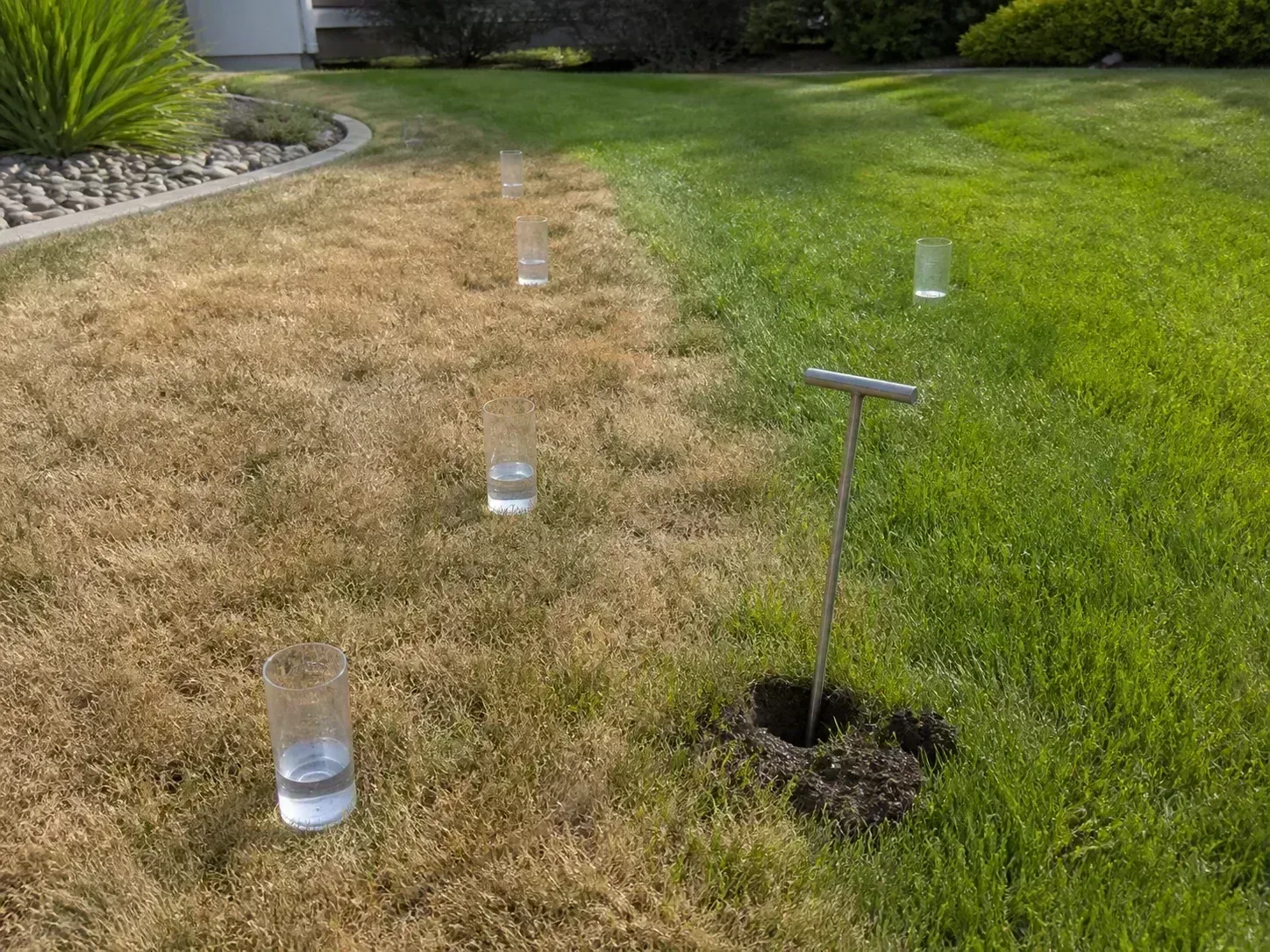
Drought stress or dormancy is more likely when the lawn browns uniformly, leaves curl or feel brittle, footprints remain visible, and growth has stopped even in areas that were not recently mowed. Check moisture several inches down rather than watering automatically after mowing. Some established lawns recover when rain returns; others need irrigation based on grass type, soil, local restrictions, and the condition of the crowns.
Wet soil or mowing wet grass leaves clumps, ruts, smeared cuttings, and compacted wheel tracks. Wait for a dry window. Repeatedly driving across saturated soil can create a separate root-zone problem that no height adjustment can fix.
A dull blade leaves frayed, whitish tips across otherwise healthy turf. It can make the lawn look brown while the standing height is correct. Sharpen or replace the blade using the mower manufacturer’s procedure, and never reach under a mower deck until the power source is safely disconnected.
Compaction, shade, disease, insects, and poor irrigation coverage can also cause thin or brown turf. If changing height and mowing conditions does not improve new growth after several cuts, inspect the soil, sprinklers, traffic pattern, and symptoms instead of continuing to move the lever.
Change height again when summer stress passes
Do not lower the deck just because the first cooler morning arrives. Wait until the grass is actively growing again and the weather is no longer keeping the lawn on the edge of dormancy. For cool-season turf, early fall growth often gives the lawn a better recovery window; for warm-season turf, the timing depends on when growth slows and whether the lawn is being overseeded.
Make the change in small steps across successive mowings. If you raised a cool-season lawn from 2.5 to 3.5 inches for summer, lower by about 0.5 inch at a time only when the lawn is growing quickly enough to obey the one-third rule. A lower setting does not make sense if the grass is still brown, the soil is dry, or the mower will remove too much at the next pass.
The final seasonal cut also depends on climate and grass type. Avoid a dramatic “winter haircut” as a default. Long, wet, or snow-prone conditions may justify a different finish than a mild climate where the lawn remains active, and local extension guidance should settle the details.
Common mistakes that make a fixed height worse
- Copying a neighbor’s setting. The neighbor may have a different species, soil, mower, shade pattern, or desired finish. Use your lawn’s growth and local guidance.
- Assuming the dial equals grass height. Measure the deck and standing grass. Worn wheels and an uneven deck can make the same setting cut at different heights.
- Lowering the deck to mow less often. Cutting shorter does not remove the need to mow; it removes leaf area and can increase stress. Mow based on growth and the one-third rule.
- Raising the mower above the species range. Taller is not always better. An overly tall, wet canopy can mat, hold moisture, and produce clumps. Stay within the grass’s recommended range.
- Mowing a dormant lawn for appearance. If there is no active growth, mowing removes tissue without solving drought, heat, or dormancy. Reduce traffic and address the cause.
- Mowing wet turf. Wet grass clumps and wet soil compacts. Wait for a dry surface and firm footing.
- Blaming height for every brown patch. Compare recently cut and uncut areas, inspect soil moisture, and check for disease, insects, compaction, and irrigation gaps.
- Making a major change in one pass. Raise or lower gradually so the lawn can keep enough leaf area and you can see whether the change helps.
- Ignoring the blade. A sharp blade and correct height work together. A ragged cut can make healthy turf look sick.
- Leaving heavy clippings in piles. Grasscycling is useful when clippings are short and dispersed. Rake or collect mats that shade and smother living turf. Reading Public Works explains the difference between leaving fine clippings in place and allowing excessive clippings to build up.
Conclusion
Leaving your mower at one height all summer is not automatically a mistake. It becomes a problem when the setting is too low for the grass, too high for the conditions, mismatched to the species, or used to remove more than one-third of the blade at a time.
For the safest summer routine, identify the turf, measure the actual cut, choose the upper end of the appropriate range when heat or drought is stressful, and mow only when the grass is dry and growing. Raise a low setting gradually, reduce overgrown grass in stages, keep the blade sharp, and pause when the lawn is dormant. A mower that stays at one number can work; a mower that never responds to the lawn cannot.



