28 Best Small Full-Sun Perennials for Gardens
Choose 28 small full-sun perennials by height, spread, drainage, bloom time, and pollinator value, with honest notes on watering and spread.
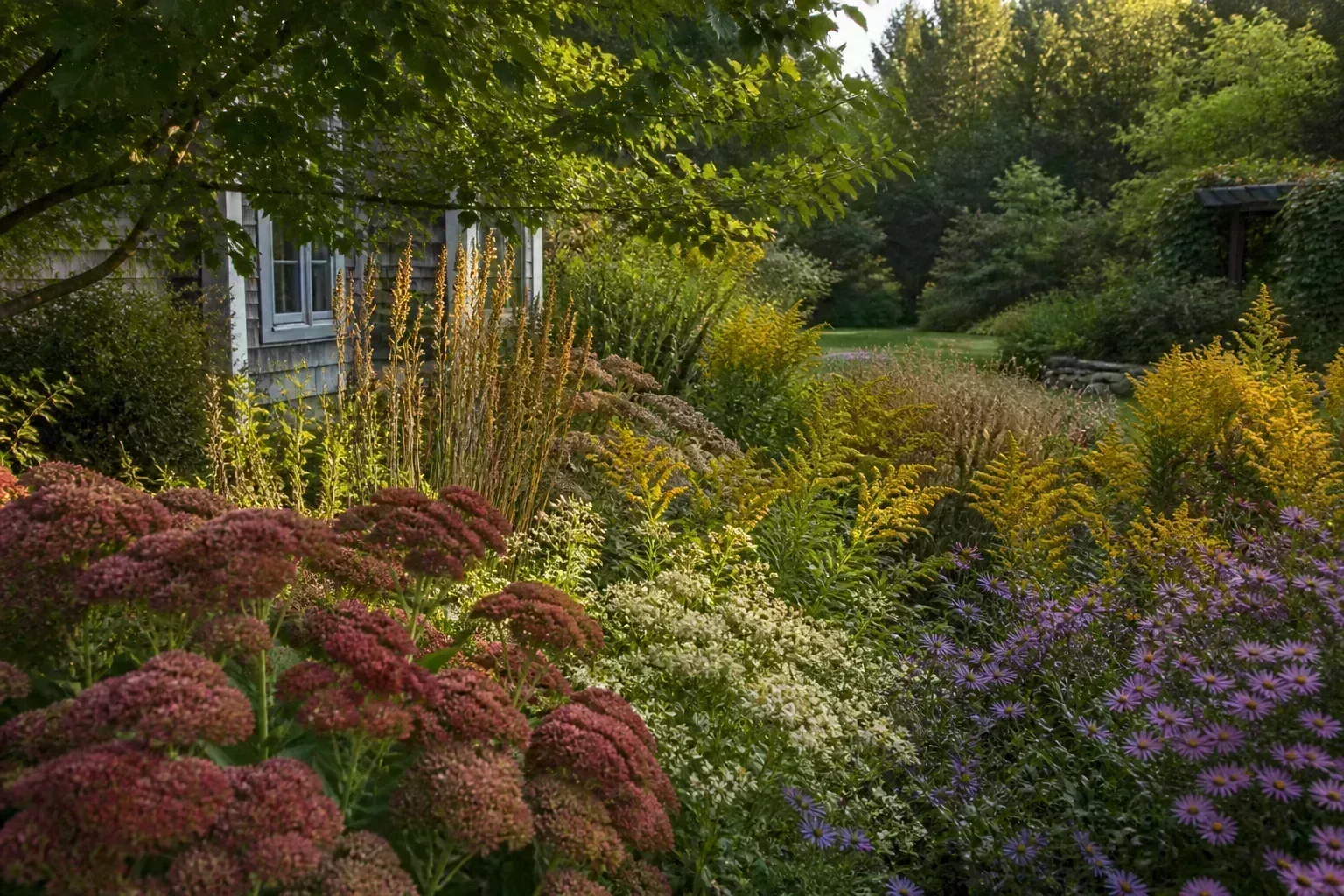
A sunny garden does not have to be a parade of oversized plants. The best compact perennials give you flowers, foliage, or groundcover without swallowing a path or leaning into its neighbors—but only when their mature size and soil needs match the site.
The 28 choices below cover four useful jobs: low mats for gravel and edging, compact clumps for the front of a border, pollinator plants for a sunny bed, and fragrant or seasonal accents. Some spread by runners or seed, some stay in a neat mound, and some are “small” only when you buy the right cultivar. Read the mature height and spread on the label, not the size of the pot in your hand.
How to choose a small perennial for full sun
Check exposure, drainage, and mature width
In practical gardening terms, full sun means at least six hours of direct sunlight a day. The light may be gentler in the morning and hotter in the afternoon, so two beds with the same number of sun hours can still feel very different. A pale, windy rooftop border, a reflective south-facing wall, and an open prairie-style bed each need slightly different plant choices.
Start by watching the proposed bed on a clear day. Record when direct light arrives and leaves, then dig a small hole after rain: if the soil is still saturated the next day, do not place a dry-site perennial there and hope gravel on top will solve the problem. The RHS guide to perennial plants emphasizes matching plants to soil and growing conditions because perennials occupy the same site for years; that is the principle that prevents most avoidable failures.
Mature width matters just as much as mature height. A plant that reaches 12 inches tall but spreads 36 inches is not a small edging plant, and a six-inch nursery pot may become a two-foot clump. If the bed is narrow, leave an access strip between the plant and the path so stems do not become a weekly trimming job.
Decide whether you want a mat, clump, or upright accent
Choose by growth habit before flower color:
| Garden job | Look for | Strong starting choices | Main caution |
|---|---|---|---|
| Cover gravel, a slope, or a bed edge | A low mat or trailing stems | Sedum, hens and chicks, snow-in-summer, creeping thyme | Runners can cross a tidy border |
| Fill the front of a sunny border | A compact mound or short flower stems | Coreopsis, catmint, lavender, dianthus | Rich soil can make some plants flop |
| Feed pollinators without a tall wall | A compact cultivar with open flowers | Coneflower, yarrow, blazing star, salvia | Check cultivar height and leave airflow |
| Add late-season color | A plant with fall bloom or persistent seedheads | Stonecrop, aster, garden mum, compact daylily | “Late bloom” does not mean winter-hardy everywhere |
The distinction between a mat and a clump also changes how you plant. Mats need a boundary and enough time to knit together; clumps need spacing that preserves their shape. The NC State Extension profile for purple coneflower is a useful example of why plant identity matters: the species can reach three to four feet, while compact cultivars are better suited to a small bed.
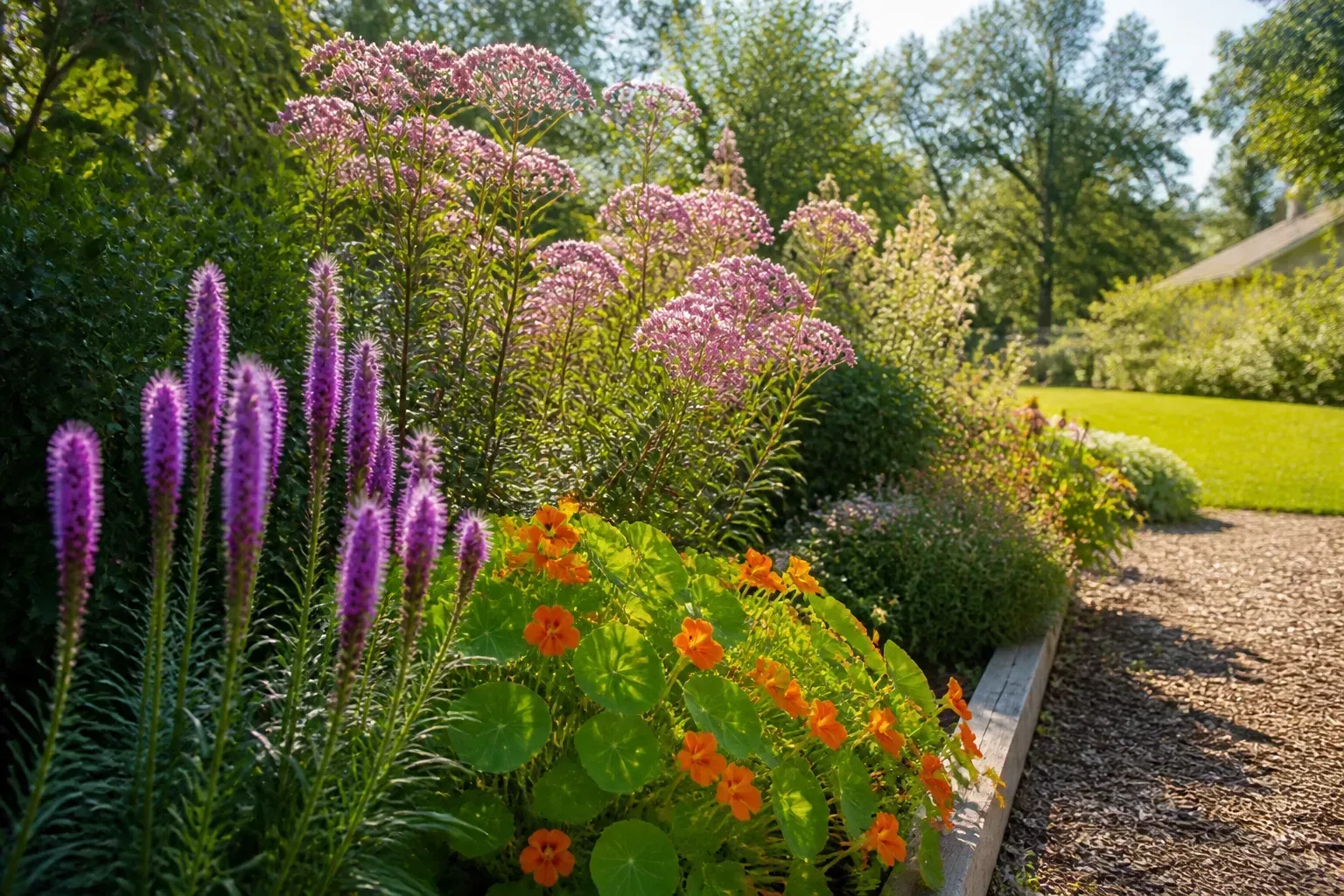
28 small full-sun perennials, grouped by site
Dry, low-growing ground covers
These first seven are for the sunny edges where soil drains quickly. They are useful in rock gardens, gravel strips, wall pockets, and path borders, but “groundcover” does not mean “safe to walk on.” Use stepping stones where feet will land.
1. Yellow alyssum (Aurinia saxatilis) forms a low gray-green mound or mat with bright yellow spring flowers. It suits lean, sandy, sharply drained soil and looks best spilling over a wall or edging a rock garden; shear lightly after flowering to keep it compact. Skip it in an irrigated bed that stays wet, where the crown is more likely to decline than to flower well.
2. Snow-in-summer (Cerastium tomentosum) combines silver foliage with white flowers in late spring and early summer. It can cover a sunny slope quickly, which is a benefit when you have bare gravel and a drawback beside slow-growing alpines. Remove faded flower stems before they seed if you want a more controlled patch.
3. Lamb’s ear (Stachys byzantina) is grown mainly for its soft, silver leaves, with small pink-purple flower spikes as a bonus. It handles dry soil and is often left alone by deer, but humid weather and overhead irrigation can turn dense foliage into a rot and leaf-spot problem. Give it airflow and remove damaged leaves rather than keeping the crown constantly damp.
4. Hens and chicks (Sempervivum tectorum) makes tight rosettes that multiply into a colony of “hens” and offsets. It is one of the best small choices for a shallow, sunny trough, gravel pocket, or stone wall because its fleshy leaves store water. The flowering rosette dies after bloom; remove it and allow the offsets to fill the space instead of treating that natural life cycle as a disease.
5. Moss phlox (Phlox subulata) creates a low cushion covered with pink, purple, or white flowers in spring. It wants sun and drainage and can soften the edge of a path without the height of garden phlox. Shear lightly after flowering if the mat gets shaggy, and avoid crowding it into a constantly wet or poorly ventilated corner.
6. Blue star creeper (Isotoma fluviatilis) stays only a few inches tall and produces small blue or lavender star-shaped flowers. It works between stepping stones and in a moist, well-drained sunny edge, but it is not a lawn substitute for regular foot traffic. Keep it within a defined area because its spreading stems can wander beyond a narrow planting pocket.
7. Creeping thyme (Thymus serpyllum) is a fragrant, low mat for full sun, gravel, and dry pathway edges. It tolerates occasional brushing from a shoe better than most flowering perennials, but repeated traffic still creates bare patches. Use it around stones rather than in the traffic lane, and do not overwater it in heavy soil.
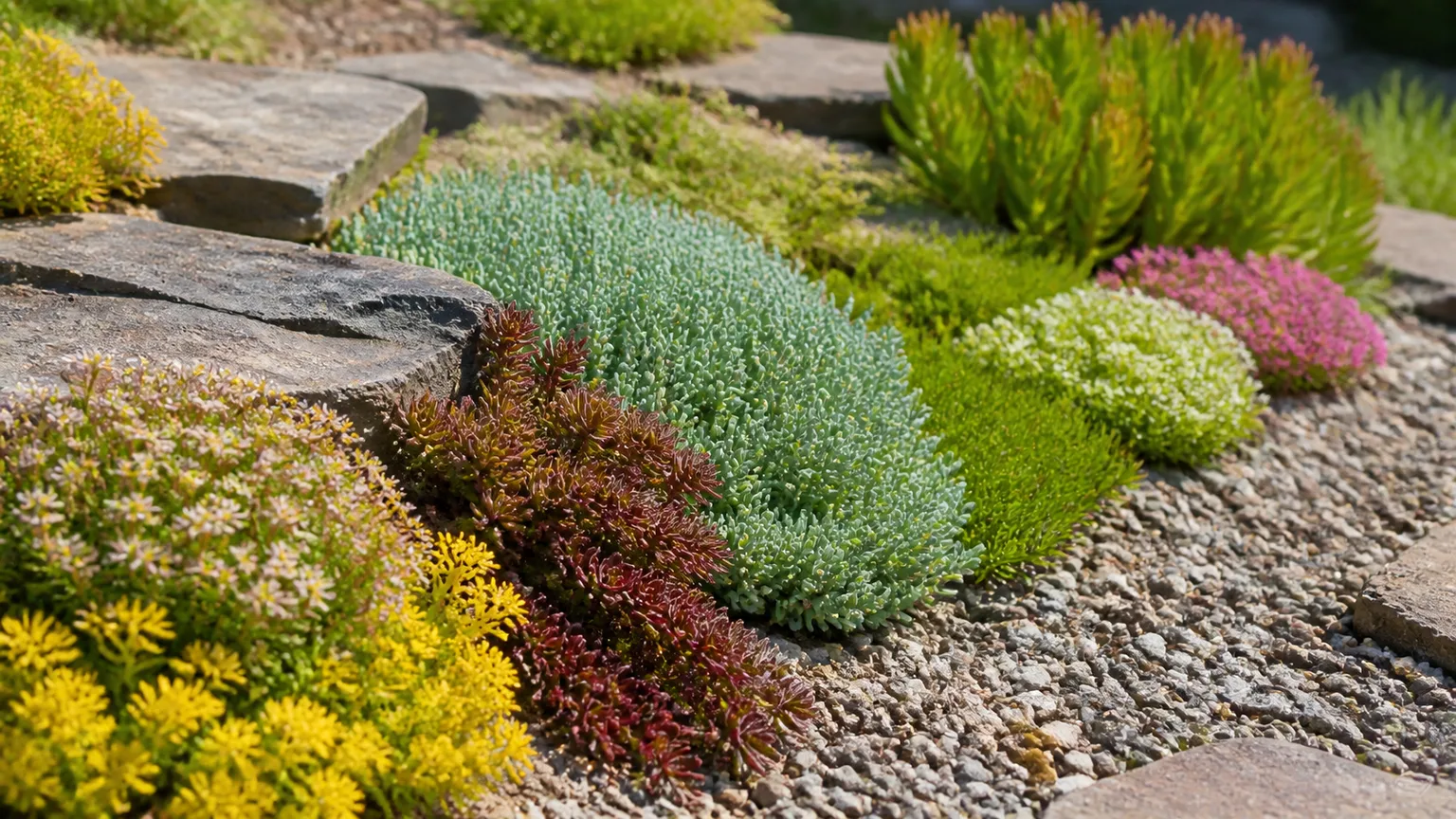
Compact bloomers for the front of the border
The next seven are clumping or mounding plants that give a sunny bed more flower color without relying on a fast-spreading carpet. Cultivar names matter here: the same genus may contain both a 12-inch front-of-border plant and a four-foot back-of-border plant.
8. Low sedum or stonecrop (Sedum spp.) is a broad category that includes tiny creeping forms as well as upright autumn stonecrops. For a small bed, choose a low, spreading cultivar with a stated mature height and width; upright ‘Autumn Joy’-type plants are excellent for fall flowers but are not low groundcovers. Give sedum sun, modest fertility, and fast drainage—the Family Handyman guide to full-sun perennials also flags wet soil as the main reason autumn stonecrop fails.
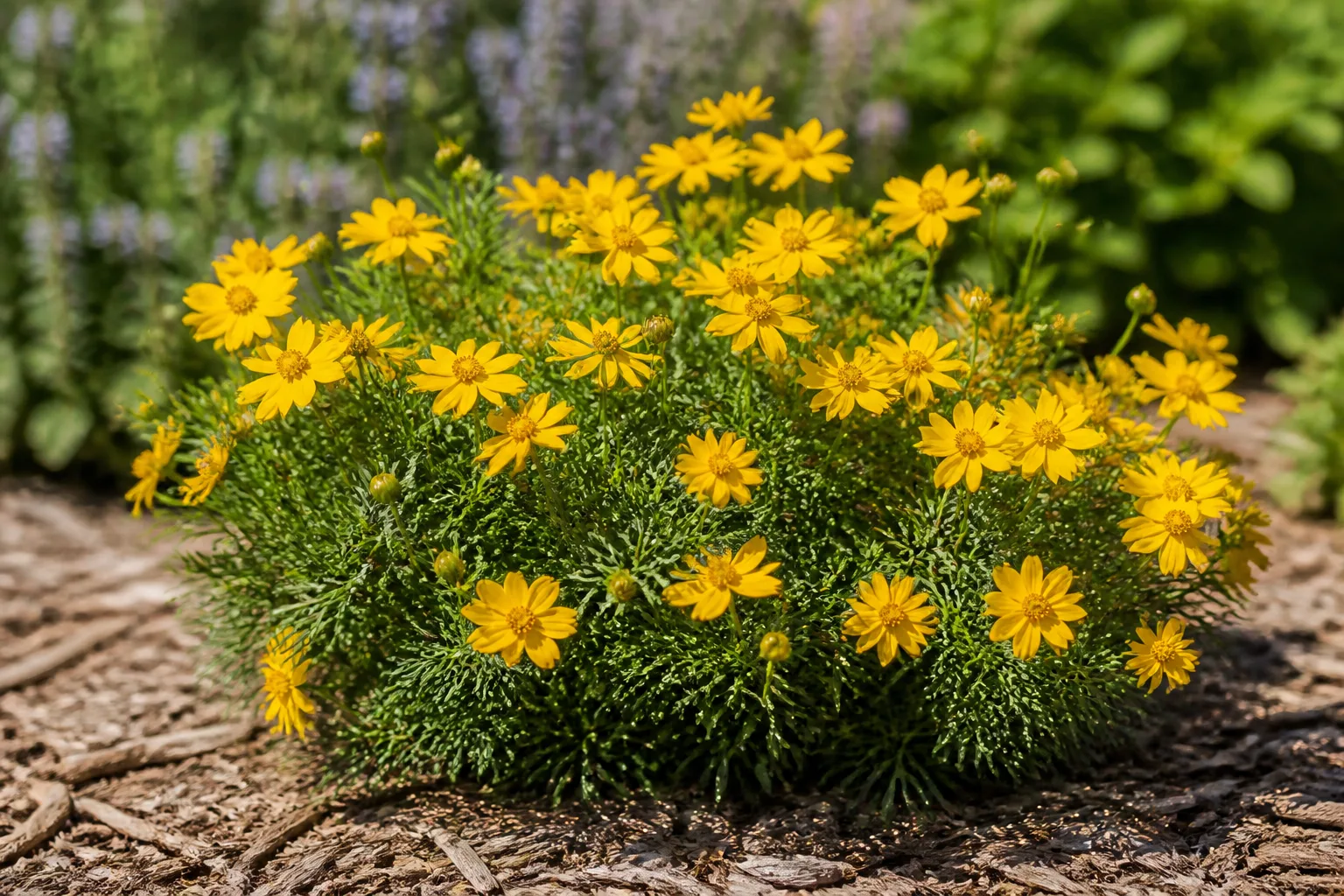
9. Threadleaf coreopsis (Coreopsis verticillata) produces airy foliage and a long run of yellow, daisy-like flowers. It handles sun, heat, and lean soil better than many lush border plants, though some forms spread by rhizomes or seed. Shear after the first flush if the plant becomes loose, and choose a compact cultivar when the bed has a hard edge.
10. Blanket flower (Gaillardia × grandiflora) brings red, orange, yellow, or peach daisy flowers from early summer into fall. It is a strong choice for a hot, dry border, but its life span can be shorter in heavy winter soil or an overly rich bed. Deadhead for a tidier display, or leave a few seedheads for birds and natural reseeding where volunteers are welcome.
11. Catmint (Nepeta spp.) forms a soft gray-green mound topped with lavender-blue flower spikes. It tolerates full sun and dry spells after establishment, and a hard cutback after the first flush often produces a fresh second mound. Give it room to spill slightly over the edge; repeated shearing of a plant that is simply too wide is a sign that the cultivar is wrong for the space.
12. Perennial salvia (Salvia nemorosa and related cultivars) offers upright purple, blue, pink, or white spikes above aromatic foliage. Cut the first flower stems back after they fade to encourage another flush; this simple haircut is also recommended in practical coverage from Family Handyman. Keep the crown in well-drained soil and leave enough space for air movement through humid summer weather.
13. English lavender (Lavandula angustifolia) is compact, fragrant, and useful beside paths or in a sunny container. It is not a plant for wet clay: NC State Extension’s English lavender profile specifies full sun and very well-drained soil, and notes that overwatering contributes to root rot. If your soil holds water, raise the bed or choose a different perennial rather than watering lavender more carefully.
14. Yarrow (Achillea millefolium) produces ferny foliage and flat flower clusters in yellow, white, pink, or red. It is tough in sun and dry soil and useful for pollinators and cut flowers, but it can spread by rhizomes and seed. Shear spent blooms before seed ripens if you want a defined clump, and buy a compact cultivar for a narrow border.
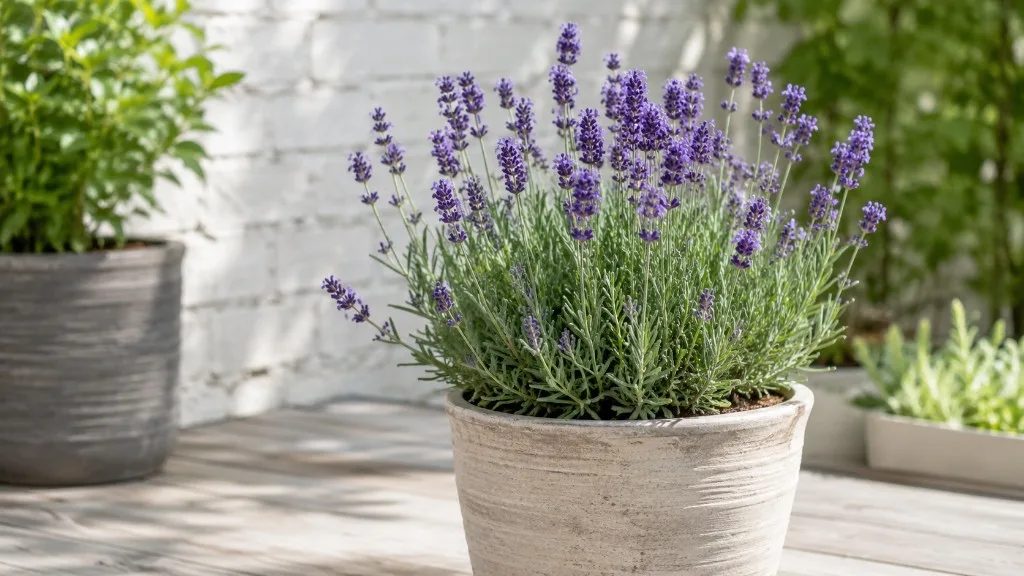
Pollinator-friendly perennials for sunny beds
These seven bring more insect activity and seasonal structure. They are not all tiny as species, so use compact selections and place taller stems toward the back of a narrow bed rather than treating the word “perennial” as a size guarantee.
15. Rose vervain (Glandularia canadensis) forms a low, spreading mound with pink or purple flowers from late spring into summer. It is suited to rocky or sandy soil and can tolerate short dry periods once rooted. Use it where a loose edge is welcome; it is less useful when every plant must stay inside a precise outline.
16. Lady’s mantle (Alchemilla mollis) makes a rounded clump of scalloped leaves that catches droplets and produces airy chartreuse flowers. It can take full sun in cooler or moderate climates with adequate moisture, but hot afternoon sun and dry soil may call for light shade. Remove seedheads if you do not want volunteers in cracks and gravel.
17. Compact coneflower (Echinacea purpurea cultivars) gives you the pollinator value of purple coneflower in a more manageable frame. NC State describes the species as adaptable, drought tolerant once established, and attractive to bees, butterflies, and seed-eating birds, while also noting occasional leaf spot and aster yellows concerns. Choose a named compact cultivar, keep the soil draining, and leave a few healthy seedheads standing for wildlife.
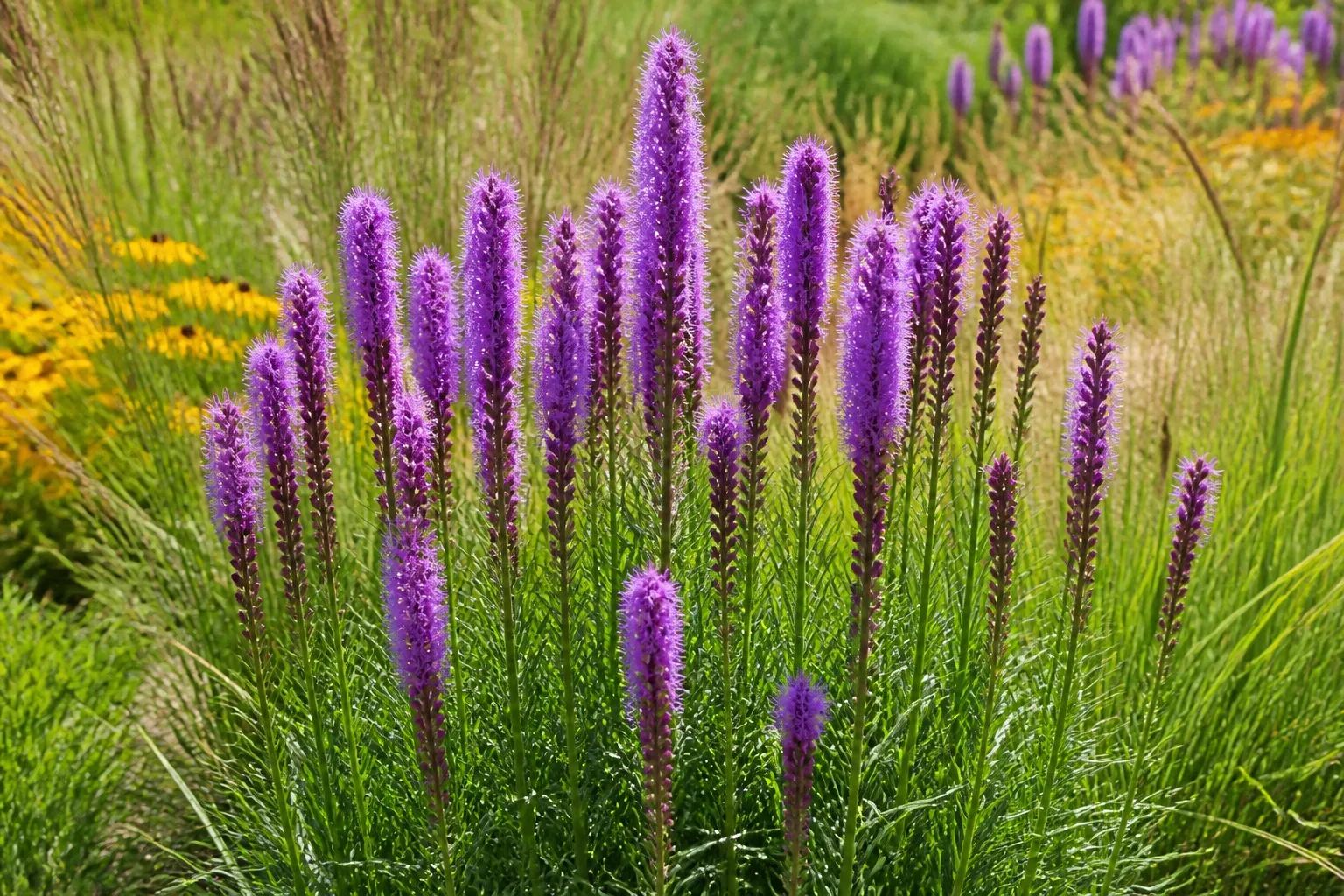
18. Compact blazing star (Liatris spicata cultivars) sends up bottlebrush-like purple spikes from a clump of narrow leaves. It adds vertical shape without the broad footprint of many tall perennials, and the flowers are useful in a sunny pollinator border. Plant corms or divisions at the depth recommended on the label, water during establishment, and do not confuse a compact selection with the full species range.
19. Aromatic aster (Symphyotrichum oblongifolium) produces a dense mound and purple daisy flowers late in the season, often continuing toward frost. It tolerates sun and dry soil once established and helps carry a pollinator bed after summer bloomers fade. It can become wider than expected, so give it a visible footprint or trim after flowering rather than planting it directly against a narrow walkway.
20. Silky aster (Symphyotrichum sericeum) is a smaller, silver-leaved native aster for a sunny, lean, well-drained site. Its purple flowers and fine texture work especially well in a gravel or prairie-style planting. It is a better fit for a naturalistic edge than a formal clipped border, where its relaxed habit may look untidy.
21. Compact black-eyed Susan (Rudbeckia cultivars) supplies yellow flowers with dark centers and a long summer-to-fall display. The species can self-sow heavily, so compact named cultivars are easier to manage in a small garden; deadhead if you want to limit seedlings, or leave selected seedheads for birds. Space plants for airflow because crowded foliage is more prone to mildew and leaf problems.
Fragrant, seasonal, and flexible compact picks
The last seven are useful when your priority is fragrance, repeat color, a small cultivar, or a site that needs more than one season of interest. Confirm the exact hardiness and mature dimensions because cultivar differences are especially large in this group.
22. Hardy garden mum (Chrysanthemum cultivars) can be a compact fall anchor in a sunny border or container. Buy plants labeled for your climate rather than assuming every florist mum will overwinter, and plant early enough for roots to settle before hard frost. Pinching stems earlier in the season creates a fuller plant; after buds form, stop pinching so flowers can develop.
23. Compact Shasta daisy (Leucanthemum × superbum cultivars) gives classic white petals and yellow centers without requiring the height of the largest forms. Full sun and good drainage support stronger stems, while deadheading can extend the display. Divide crowded clumps when the center thins, and keep winter soil from staying waterlogged.
24. Compact daylily (Hemerocallis cultivars) is a practical choice for a sunny edge because it tolerates heat, handles a range of soils, and comes in many flower colors. Select a dwarf or miniature cultivar for a narrow border; the species and many older cultivars are much larger than the name “daylily” suggests. Remove spent scapes for a cleaner look, but do not expect deadheading to make every cultivar rebloom.
25. Compact Russian sage (Salvia yangii cultivars) brings silvery foliage and airy blue flower wands to a hot, dry border. Use a compact selection and give it excellent drainage; many Russian sages become too tall or wide for a small front bed unless their mature size is checked first. Cut old stems in late winter or early spring rather than repeatedly trimming the plant during bloom.
26. Pincushion flower (Scabiosa columbaria) makes a low mound with delicate stems and blue, lavender, pink, or white flowers. It is a useful bridge between a formal border and a pollinator planting because the foliage stays relatively restrained while the flowers float above it. Deadhead regularly for more buds and keep the crown from sitting in wet soil.
27. Perennial dianthus (Dianthus spp.) offers compact blue-green foliage and fragrant pink, white, or red flowers for a sunny edge, trough, or raised bed. It prefers lean, well-drained soil and can decline when crowded or kept wet. Remove spent flowers and divide or replace old plants when the center becomes woody rather than feeding heavily to force weak growth.
28. Compact penstemon (Penstemon cultivars) provides upright tubular flowers that attract hummingbirds and fit the middle or front of a sunny border depending on the cultivar. Choose a species suited to your climate and drainage; many penstemons dislike heavy winter moisture even when they handle summer drought. A gravelly bed, restrained watering, and good airflow usually do more for longevity than rich compost.
Planting guide for a sunny perennial bed
Soil preparation and spacing
Prepare the site by removing perennial weeds and loosening compacted soil, but do not automatically turn a dry-site bed into rich, moisture-holding soil. The RHS recommends thorough weeding before planting and notes that perennials can be planted in autumn or spring; for heat-sensitive transplants, a cooler planting day and careful aftercare matter more than rushing into the hottest afternoon.
Set each plant at the same depth it grew in its container, with the crown neither buried nor sitting above the soil. Use the mature spread on the label to calculate spacing, then allow a little extra room in humid climates so leaves dry after rain. A two-inch layer of mulch can reduce evaporation, but keep it away from crowns and stems; mulch piled against a plant is a rot risk, not better care.
Watering through the first season
“Drought tolerant” describes an established root system, not a newly planted root ball. Water new perennials thoroughly when the root zone begins to dry, checking more often during hot, windy weather and less often after meaningful rain. A slow soak that wets the whole root ball is better than a daily sprinkle that keeps only the surface damp.
After several weeks of new growth, lengthen the interval between waterings while keeping an eye on wilt, dry soil, and recently planted roots. The RHS perennial guide recommends regular watering during the first year and extra water during long dry spells; that is a safer rule than a fixed schedule copied from another climate. Containers need more frequent checks because they heat and dry faster than beds.
Deadheading, cutting back, and division
Deadhead when you want more flowers, a tidier shape, or less self-seeding. Leave some healthy seedheads on coneflower, yarrow, aster, and black-eyed Susan if you want winter structure and bird food, but remove diseased foliage and any seedheads that are putting a vigorous plant in the wrong place.
Cut back floppy or spent plants after their main display, but do not keep shearing a plant that is simply too large for its site. Division is the better long-term fix for an overcrowded clump; the RHS notes that lifting and dividing older perennials can maintain vigor and control size. Divide at the season recommended for the plant and re-water the divisions until roots re-establish.
Best choices by garden problem
For dry, rocky, or sandy soil
Start with hens and chicks, low sedum, creeping thyme, yellow alyssum, snow-in-summer, lavender, dianthus, coreopsis, yarrow, or silky aster. These choices generally prefer drainage and modest fertility, but the order still matters: lavender and dianthus are less forgiving of wet winter clay than yarrow or some coneflowers.
For a hot bed beside pavement, combine one mat-former with one compact mound and one upright accent. Hens and chicks or sedum can occupy the driest edge, lavender or coreopsis can fill the middle, and a compact blazing star can add height without turning the border into a thicket.
For clay, humidity, or wet winters
Do not force a Mediterranean plant into a saturated bed. Improve drainage with grading or a raised planting area, or choose a perennial that tolerates average moisture and humidity better. Coneflower, black-eyed Susan, salvia, daylily, and some catmint cultivars can work in ordinary garden soil when the bed drains, but none is a guarantee for a puddling site.
In humid climates, spacing is a disease-management tool. Leave room between plants, water at soil level, remove badly affected leaves, and avoid rich fertilizer that produces soft, crowded growth. Lavender, lamb’s ear, dianthus, and sedum deserve the strongest drainage warning; they are not improved by more frequent watering.
For deer, pollinators, and low upkeep
Fuzzy lamb’s ear, aromatic lavender, yarrow, salvia, catmint, and many dianthus are often less appealing to deer, while coneflower, blazing star, aster, coreopsis, and blanket flower add open blooms for pollinators. “Deer resistant” is a probability, not a fence: hungry deer may browse plants they usually ignore, especially when new growth is tender or food is scarce.
For the lowest ongoing workload, pick plants that match the soil first, then group them by water need. A bed of lavender beside thirsty daylilies creates a maintenance conflict; a bed of sedum beside plants that need daily irrigation creates a rot problem. The simplest garden is usually the one with the fewest incompatible watering zones.
Mistakes that make full-sun perennials fail
The most common mistake is treating a list label as a site diagnosis. A plant described as “full sun” may still need afternoon protection in a hot climate, and a plant described as “drought tolerant” may die if it enters winter with roots in heavy, wet soil.
The second mistake is choosing by the nursery pot. Read the tag for mature spread, growth habit, hardiness, and soil moisture. “Compact” can mean 18 inches rather than six inches, and a trailing groundcover can fill three feet of border even when it is only four inches high.
The third is ignoring spread. Blue star creeper, creeping thyme, snow-in-summer, phlox, some sedums, yarrow, and catmint can all move beyond the original planting footprint. A spreading plant is not automatically bad; it is simply best placed where filling space is part of the plan.
Finally, be skeptical of full-sun lists that quietly include shade-leaning plants. Hostas, heucherella, and toad lilies may tolerate gentle morning sun, but they are poor choices for a hot, exposed bed with all-day afternoon light. Use them in the conditions they actually prefer rather than trying to make a plant list more inclusive at the expense of plant health.
Quick comparison chart and buying checklist
| If you want… | Start with… | Watch for… |
|---|---|---|
| The driest, smallest planting pocket | Hens and chicks, sedum, creeping thyme | Winter wet and foot traffic |
| A fragrant sunny edge | English lavender, dianthus, catmint | Drainage, spread, and mature width |
| A compact pollinator bed | Coneflower cultivars, salvia, yarrow, blazing star | Cultivar height and airflow |
| Spring groundcover flowers | Yellow alyssum, snow-in-summer, moss phlox | Self-seeding and boundary control |
| Late-season flowers | Stonecrop, aromatic aster, garden mum, daylily | Hardiness and fall cleanup |
Before buying, confirm five things on the plant tag: direct-sun requirement, mature height, mature spread, hardiness range, and moisture preference. Then ask whether the plant is a mat, clump, or upright form, whether you want it to seed or spread, and whether you can water it consistently for the first season.
If the answer to those questions is yes, choose the plant that solves the bed’s main job. A small full-sun perennial does not need to be the rarest or showiest option; it needs to stay healthy, stay in bounds, and give you a reason to enjoy the space more than once a year.
Conclusion
The best small full-sun perennials are not defined by a single flower color or a promise of zero maintenance. They are plants whose mature habit, drainage needs, hardiness, and bloom season fit the exact patch of ground you have.
For a dry rock garden, start with hens and chicks, sedum, creeping thyme, lavender, or dianthus. For a sunny border with pollinator value, look at compact coneflower, salvia, catmint, yarrow, blazing star, and asters. Whatever you choose, water new plants through establishment, leave room for their mature spread, and treat “drought tolerant” and “deer resistant” as useful traits—not guarantees.



