25 Best Evergreen Shrubs for Year-Round Landscaping
Compare 25 evergreen shrubs by sun, soil, mature size, landscape use, and winter risk so you can choose a year-round planting that fits your yard.
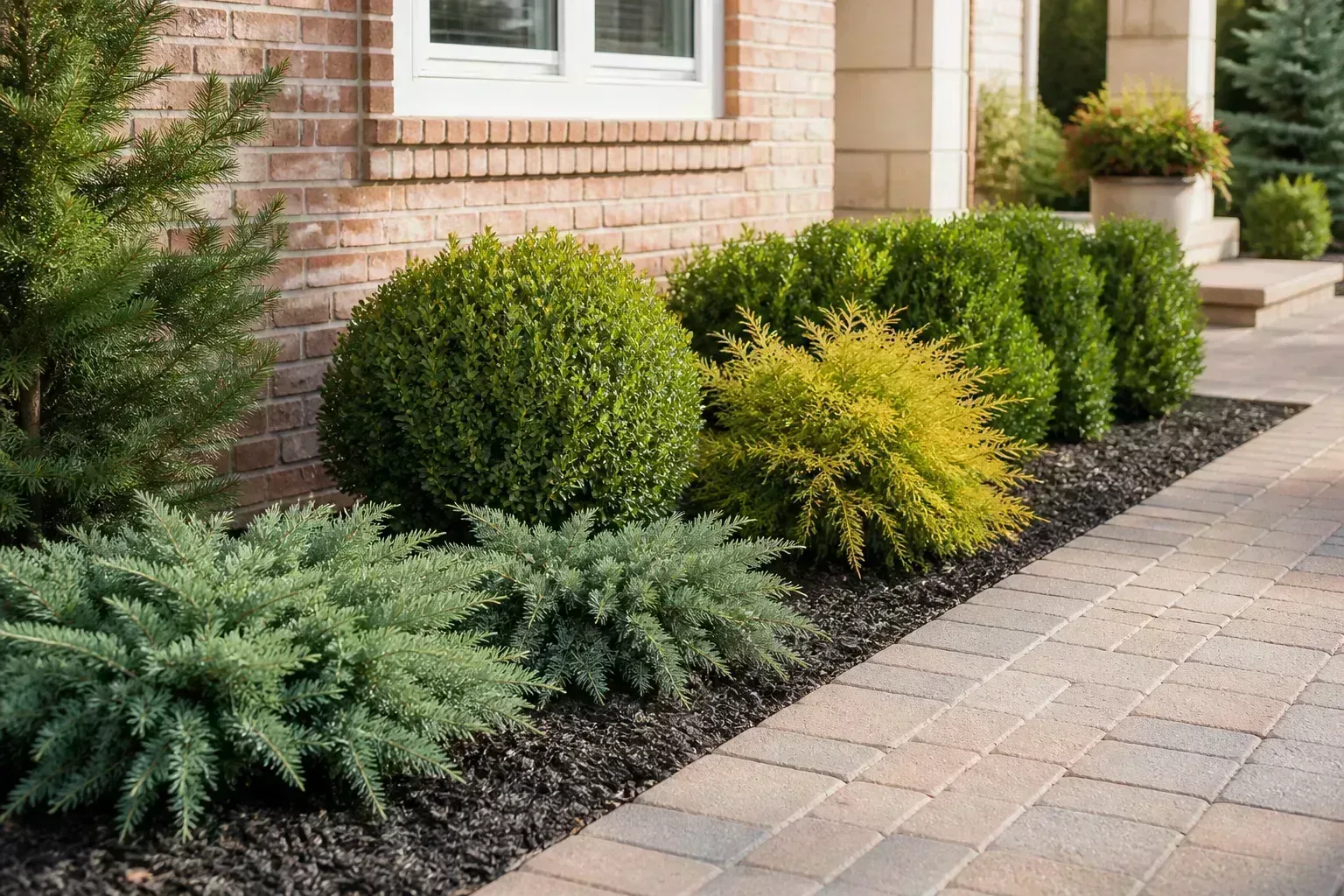
A year-round hedge is only low-maintenance when the shrub matches the site. A boxwood that fits at the nursery may become a winter-burned, overcrowded foundation plant; a fast-growing screen may eventually shade windows, lift into power lines, or demand more pruning than the original lawn.
The shortlist below separates broadleaf evergreens from conifers and groups them by landscape job. Use the plant names as starting points, then confirm the exact cultivar’s mature size, hardiness, soil preference, and local status before buying. The USDA Plant Hardiness Zone Map is a useful cold-survival filter, but it cannot account for wet clay, reflected heat, salt spray, wind tunnels, or a sheltered courtyard.
How to Choose an Evergreen Shrub Before You Buy
Match the shrub to sun, soil, moisture, and climate
Start by watching the site for a full day. “Part shade” beside a north-facing wall, filtered shade under a mature tree, and hot afternoon shade on the west side of a house are not interchangeable conditions. Likewise, an evergreen that accepts occasional drought may still fail in a bed that stays saturated after rain.
Use this quick match before you compare flowers or foliage color:
| Landscape job | Look for | Strong starting points | Main caution |
|---|---|---|---|
| Tall privacy screen | Dense habit, reliable width, enough root-zone space | Arborvitae cultivars, inkberry, blue holly | Fast growth often means a large mature plant and more pruning |
| Formal low hedge | Small leaves, dense branching, predictable response to trimming | Boxwood, Japanese holly, dwarf holly cultivars | Shearing cannot correct a plant that is fundamentally too large |
| Shady foundation bed | Broadleaf evergreen that tolerates filtered light and cool roots | Mountain laurel, rhododendron, Pieris, selected yews | Acid-loving plants struggle in limed or waterlogged soil |
| Sunny slope or rock garden | Excellent drainage, low spreading habit, drought tolerance after establishment | Creeping juniper, Blue Star juniper, bearberry | Wet soil is a more serious problem than low rainfall |
| Warm-climate fragrance | Heat, drainage, and container or patio suitability | Bay laurel, rosemary, wax myrtle | A mild-winter plant may be only semi-evergreen after a freeze |
The selection rule from Gardening Beyond’s evergreen-shrub guide is worth keeping: match mature dimensions, sunlight, and growth rate to the exact planting location. Add soil texture, drainage, and winter exposure to that rule. A pretty shrub in the wrong bed becomes a recurring correction project.
Plan for mature width, spacing, and maintenance
Measure the bed from the wall, walkway, window, and property line before you shop. Then compare those measurements with the plant’s mature width—not the height of the container you are holding. If a shrub is expected to reach 6 feet wide, planting it 2 feet from a wall guarantees crowding even if it looks tiny on planting day.
For a hedge, use the mature width as a starting point and adjust for the visual result you want. Spacing at roughly 60 to 80 percent of mature width fills sooner, but it also increases competition for water and air movement. Spacing at or near mature width reduces pruning and disease pressure but leaves visible gaps for longer. Do not use a single “two feet apart” rule for every evergreen.
Also decide whether you want a naturally rounded plant or a clipped line. Slow-growing boxwood can accept formal shaping; a loose rhododendron or an arching daphne usually looks better with selective pruning. The Planet Natural evergreen-shrub guide is useful for comparing broad categories, but the nursery tag for the named cultivar should win whenever size or hardiness ranges differ.
Best Evergreen Shrubs for Hedges and Privacy
Six choices for screens, foundation beds, and formal structure
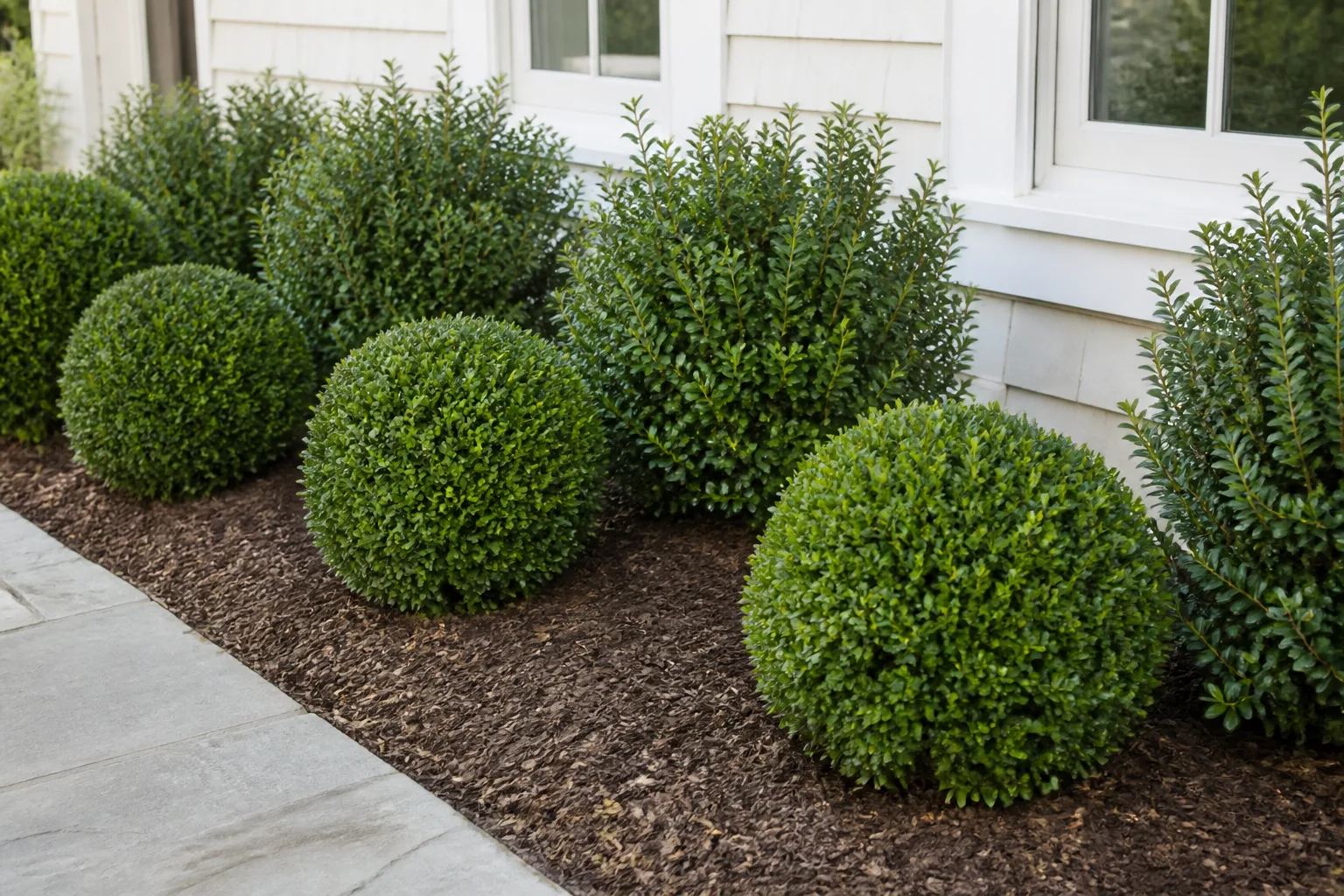
1. Boxwood (Buxus spp.) — Boxwood is the classic small-leaved evergreen for edging, topiary, and formal foundation beds. Common box can eventually become much larger than the sheared balls sold at garden centers, and it is shallow-rooted, so keep the soil evenly drained and mulch the root zone rather than planting deeply. NC State Extension notes that winter sun, wind, snow load, poor airflow, and boxwood pests can all matter; choose a disease-resistant alternative when local boxwood problems are severe.
2. Japanese holly (Ilex crenata) — With small leaves and dense branching, Japanese holly gives a boxwood-like look while offering upright, columnar, or rounded cultivars. It suits formal lines and narrow beds better than many large hollies, but it still needs drainage and a cultivar whose mature width fits the site. It is a useful choice when you want structure without a tall conifer wall.
3. Inkberry holly (Ilex glabra) — Inkberry is a native broadleaf evergreen with a rounded or upright habit, glossy leaves, and dark fruit on female plants when a compatible male is nearby. It tolerates acidic clay or sand and can handle moist or occasionally wet soil better than many foundation shrubs. NC State Extension’s profile also notes its value for pollinator, rain, winter, and wildlife gardens; allow room for suckering rather than treating it as a perfectly static ball.
4. American arborvitae (Thuja occidentalis) — Arborvitae is a species, not a single-size shrub. Choose a narrow cultivar for a screen or a dwarf form for a border, and check the width as carefully as the height. It is usually better for a living wall than a foundation corner. Plant in sun to light shade, water consistently while it establishes, and protect young plants from deer where browsing is common.
5. Eastern red cedar (Juniperus virginiana) — Eastern red cedar is a durable native conifer that can be grown as a screen, windbreak, or specimen when space allows. Many plants sold under this name become trees, so it belongs in a large-property category unless you select a shrub-form cultivar. Its blue-green foliage and berry-like cones offer structure and wildlife value, but do not put a potentially 30-foot plant beneath wires or beside a small window.
6. Blue holly (Ilex × meserveae) — Blue holly brings dark, slightly bluish foliage and strong winter structure to a sunny or partly shaded border. Female plants need pollen from a compatible male cultivar to produce berries, so ask the nursery about pollination rather than buying one plant and expecting fruit. It can make a handsome informal screen, but its mature width and prickly leaves make it less friendly beside a narrow path.
Compact, Spreading, and Groundcover Evergreens
Five low-growing choices for edges, slopes, and rock gardens
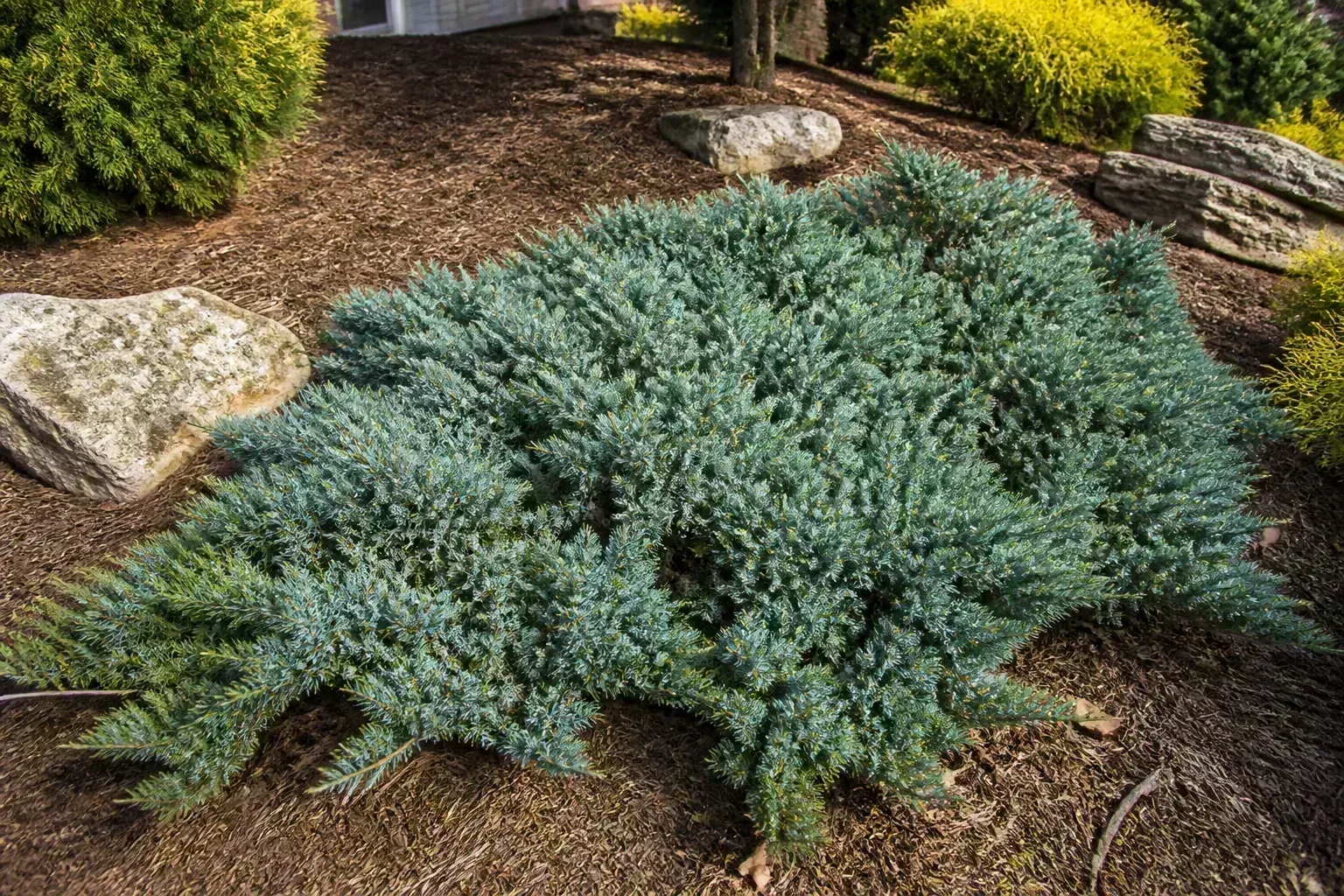
7. Creeping juniper (Juniperus horizontalis) — Creeping juniper is a ground-hugging conifer for slopes, retaining-wall edges, and dry rock gardens. It spreads much farther than it grows tall, so measure the expected width before planting it near a walkway. Full sun and sharp drainage are more important than rich soil; persistent wetness can thin or kill it.
8. Blue Star juniper (Juniperus squamata ‘Blue Star’) — This slow-growing juniper forms a compact blue-gray mound instead of racing across a slope. It works as a specimen in gravel, a punctuation mark in a mixed border, or a container accent in a cold-winter climate where the pot can be protected. Its prickly foliage is beautiful but not ideal where children or pets regularly brush past it.
9. Bearberry (Arctostaphylos uva-ursi) — Bearberry is a low, trailing evergreen with small leaves, pale flowers, and red fruit. It is a strong option for lean, acidic, sharply drained soil and can handle drought once established. Avoid rich, wet beds and unnecessary transplanting; a plant adapted to exposed, low-nutrient ground often declines when watered like a thirsty bedding plant.
10. Wintercreeper (Euonymus fortunei) — Variegated cultivars such as ‘Emerald ‘n’ Gold’ can brighten a shady edge and stay low when kept shrub-like. The problem is its ability to climb, root, and spread beyond the spot where it was planted. Check your state and county invasive-plant guidance before buying; the Invasive Plant Atlas entry documents wintercreeper as a plant with serious invasive potential in parts of the United States. Where it is restricted or invasive, choose a non-spreading groundcover instead.
11. Cotoneaster (Cotoneaster horizontalis) — Rock cotoneaster has a layered, fan-like habit, small leaves, spring flowers, and red fruit that can extend the season of interest. In colder or exposed sites it may be semi-evergreen rather than perfectly green all winter, so treat it as a site-dependent choice. It is useful on slopes and over walls, but confirm regional invasiveness and avoid planting it where its spread would be difficult to monitor.
Flowering and Broadleaf Evergreens for Shade and Texture
Five choices for acidic soil, woodland edges, and seasonal bloom
12. Rhododendron (Rhododendron spp.) — Rhododendrons give you large evergreen leaves and clusters of spring flowers, but they are not generic “plant anywhere” shrubs. Most prefer cool roots, filtered or morning sun, acidic well-drained soil, and shelter from drying wind. They are usually better as specimen shrubs or loose masses than as clipped hedges. Check the cultivar’s mature height because dwarf forms and small trees can share the same common name.
13. Evergreen azalea (Rhododendron spp.) — Evergreen azaleas are the smaller-leaved, often more compact relatives of rhododendrons and can make excellent flowering foundation plants when the soil and light are right. Their best site is usually morning sun or bright filtered light with consistent moisture and good drainage. Do not assume every azalea stays evergreen in every climate; cold, exposure, and cultivar determine how much foliage it retains.
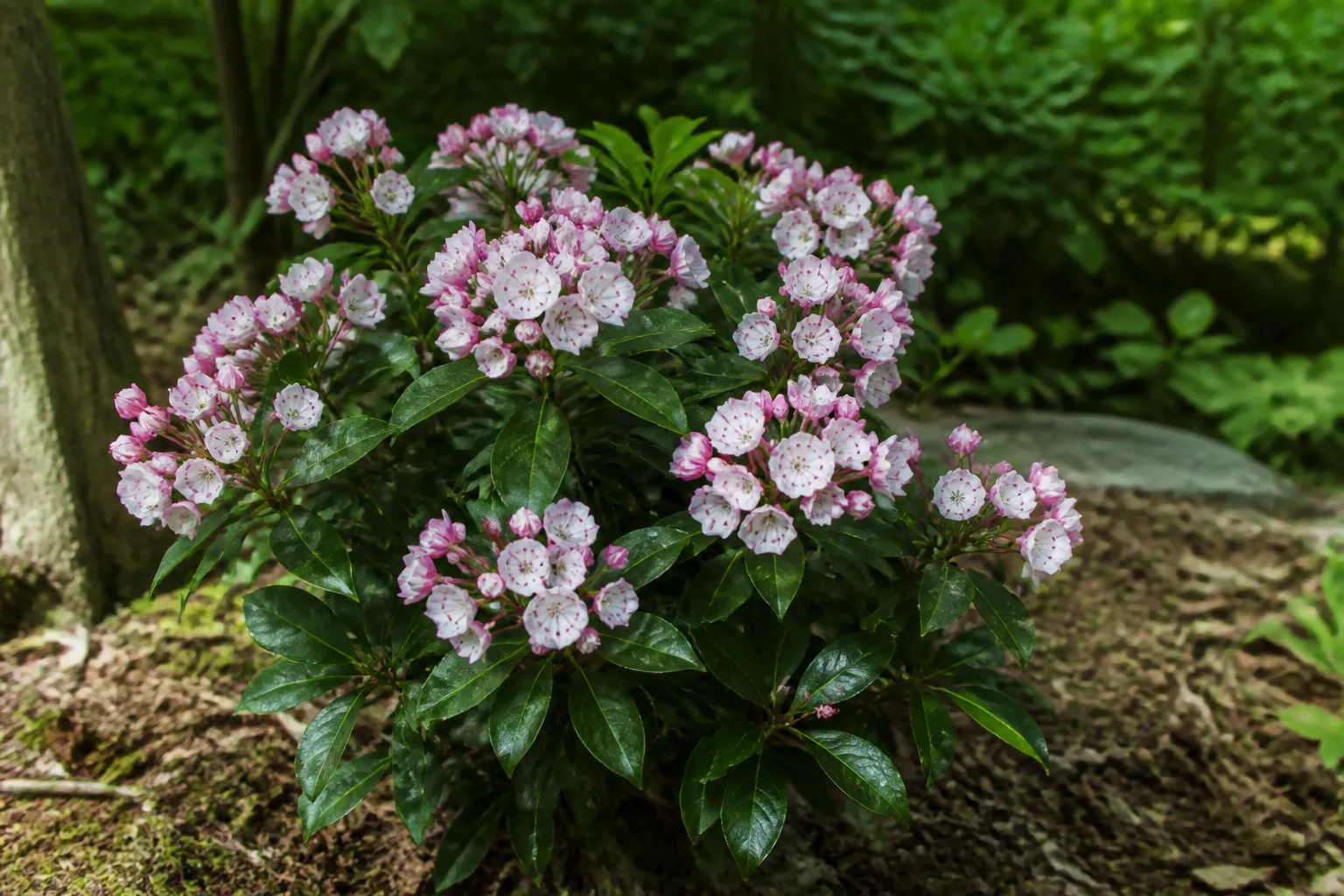
14. Mountain laurel (Kalmia latifolia) — Mountain laurel is a native eastern broadleaf evergreen with leathery leaves and unusual late-spring flowers. It prefers cool, moist, acidic, humus-rich, well-drained soil and partial shade; heavy clay and standing water are poor matches. NC State Extension describes its high poison severity and high flammability rating, so place it away from ingestion risks and defensible space near a home. Prune just after flowering because next year’s buds form on old growth.
15. Daphne (Daphne × burkwoodii ‘Carol Mackie’) — Daphne earns its place for fragrance, compact size, and cream-edged foliage, especially near a path or entry where the flowers can be enjoyed. It is also a plant to buy only when the site is excellent: moist but well-drained soil, protection from extremes, and minimal root disturbance. Depending on climate, it may be semi-evergreen. Its finicky reputation is a warning to avoid overwatering, deep planting, and repeated relocation.
16. Pieris (Pieris japonica) — Pieris, sometimes called Japanese andromeda, offers glossy foliage, colorful new growth in some cultivars, and hanging clusters of early-spring flowers. Give it part shade, acidic well-drained soil, and shelter from harsh afternoon exposure. Dwarf cultivars can suit a foundation bed, while standard forms need more room. Like several plants in this group, it is a poor fit for alkaline or waterlogged ground.
Needled Shrubs for Color, Texture, and Four-Season Form
Five conifers for sun, structure, and winter interest
17. Canadian hemlock (Tsuga canadensis) — Canadian hemlock has soft, fine-textured needles and performs in part shade better than many conifers. Species plants become large trees, but compact and pendulous cultivars can function as shrubs. It wants cool, moist, well-drained soil and protection from drying exposure. Use it for a woodland screen or specimen, not a hot, dry foundation strip.
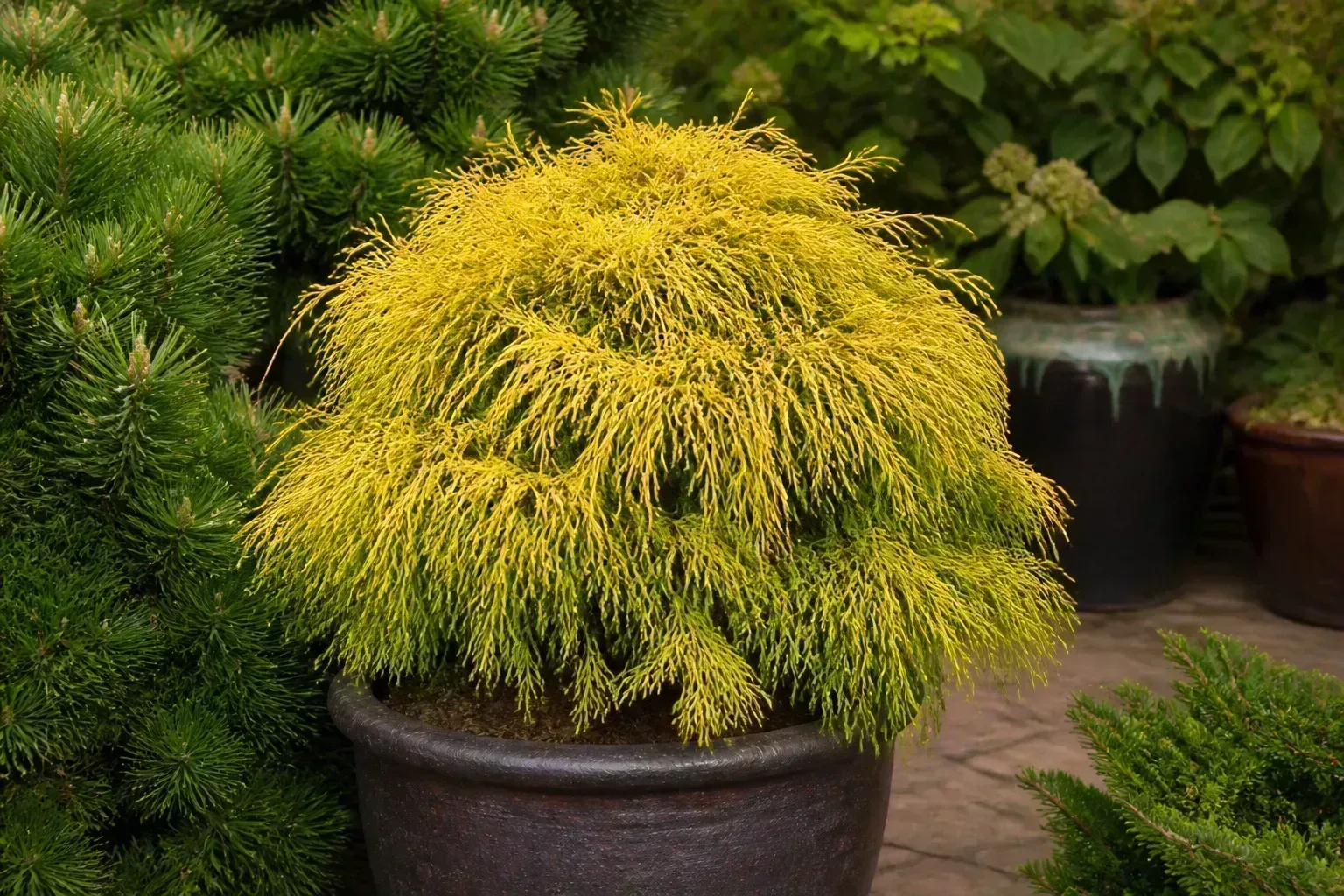
18. Golden Mop false cypress (Chamaecyparis pisifera ‘Golden Mop’) — ‘Golden Mop’ adds a bright yellow threadleaf texture to a sunny border, rock garden, or foundation bed. It is slow-growing, so it is a good choice when you want a small accent without constant shearing. Full sun produces the best color, while wet soil and heavy shade can lead to thin or unhappy growth.
19. Chinese juniper (Juniperus chinensis) — Chinese juniper includes upright, spreading, and sculptural cultivars, making the species useful for screens, mounds, and specimen planting. Select by cultivar rather than species name alone. Give it sun and well-drained soil, and avoid crowding it against a wall. Junipers are generally forgiving once established, but they do not recover gracefully from chronically wet roots or severe shearing into old wood.
20. Korean fir (Abies koreana) — Korean fir is more often a small tree than a shrub, but compact cultivars can anchor a smaller landscape with dense needles and distinctive purple-to-tan cones. It prefers cool conditions, moisture without saturation, and good drainage. Give it room to develop a natural form; it is not a good candidate for repeated hedge clipping or a hot, droughty site.
21. Yew (Taxus spp.) — Yews are among the most useful shade-tolerant evergreens for hedges and foundation planting. Their soft, dark needles tolerate shaping, and their cultivar range includes low, spreading, upright, and columnar forms. The safety caveat is not optional: Penn State Extension reports that taxine occurs in the leaves and other major plant parts, with the fleshy red berry portion the notable exception. Treat yew as a toxic plant and do not place it where children, pets, or livestock can chew it.
Warm-Climate and Fragrant Evergreen Choices
Four useful shrubs for mild winters, containers, and scent
22. Southern wax myrtle (Morella cerifera) — Wax myrtle is a fast-growing, aromatic broadleaf evergreen for warm climates, coastal sites, informal screens, and wildlife plantings. It tolerates sun to part shade and can handle sandy conditions, but it can become a large shrub or small tree. Use it where suckering and a loose form are welcome; do not squeeze it into a narrow foundation strip.
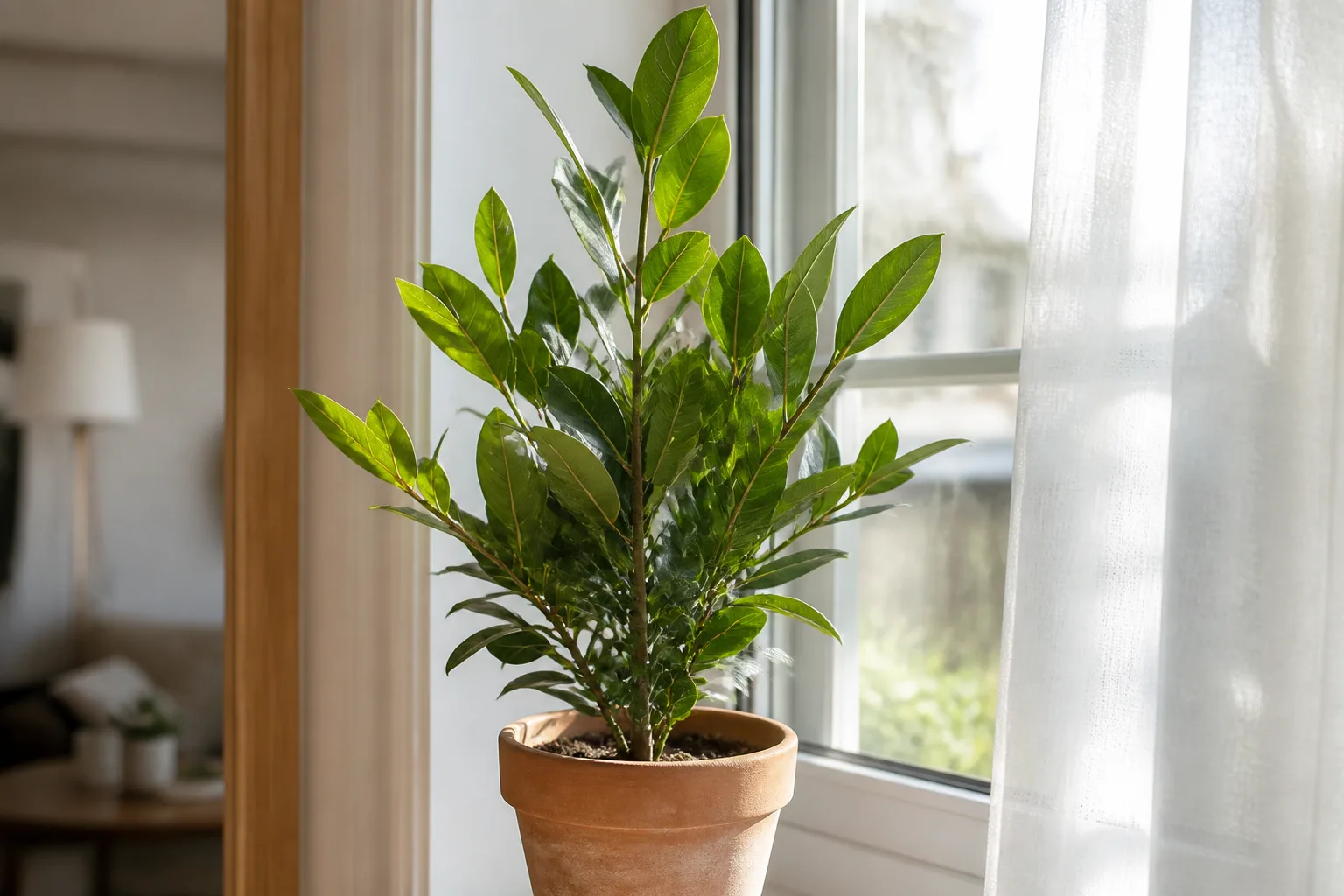
23. Bay laurel (Laurus nobilis) — Bay laurel can be kept as a clipped shrub, grown as a multi-stemmed specimen, or maintained in a container that moves to shelter during cold weather. It prefers sun to part shade and well-drained soil. Harvest leaves only when the plant is correctly identified, and remember that a container protects roots less than in-ground soil does during a freeze.
24. Rosemary (Salvia rosmarinus) — Rosemary is a woody, aromatic evergreen in mild climates and a useful container shrub in colder ones. Give it full sun, lean well-drained soil, and a light hand with water. Its gray-green needles and blue flowers suit a Mediterranean bed, but a wet winter or a heavy clay site can be more damaging than summer drought.
25. Winter heath (Erica carnea) — Winter heath is a low evergreen subshrub that can flower when much of the garden is dormant. It works in sunny rock gardens, acidic borders, and containers with excellent drainage. It is compact rather than a privacy plant, and it needs enough light and air movement to avoid becoming thin or woody. Check the exact species or hybrid because “heath” labels cover several different hardiness ranges.
Planting and Care That Keeps Evergreen Foliage Healthy
Water, mulch, and pruning in the first years
Plant in the season recommended for your region, set the root flare at the soil surface, and loosen circling roots without shredding the root ball. Water the entire root zone slowly after planting, then check moisture below the surface rather than relying on a damp mulch layer. New shrubs need consistent establishment watering even if the mature plant is drought-tolerant.
Keep mulch a few inches away from stems and spread a moderate layer over the root zone. Mulch protects shallow roots, moderates temperature swings, and reduces competition from grass, but a volcano of mulch around the trunk or main stems holds moisture against bark and creates new problems.
Prune according to growth habit. Remove broken, crossing, or dead branches first; selectively shorten long shoots when the plant is actively growing; and avoid turning a naturally loose shrub into a green cube. For flowering broadleaf evergreens, check when buds form before cutting. For conifers, never assume bare old wood will regrow after a hard cut.
Prevent winter burn, snow breakage, and salt injury
Evergreen leaves and needles lose water through winter. When the ground is frozen, roots cannot replace that moisture quickly, so drying wind and bright winter sun can turn foliage bronze or brown. Gardener’s Path explains that winter burn risk rises with marginal hardiness, shallow roots, wind, intense sun, and abrupt temperature changes.
The most reliable prevention is site fit: choose a hardy cultivar, water deeply through fall when rainfall is insufficient, mulch the root zone, and avoid late-season fertilizing that pushes tender growth. A temporary burlap screen can reduce wind on exposed sites, but do not wrap foliage tightly in plastic or leave a protective cover in place through warm weather.
Heavy snow can bend or split branches. Brush fresh, light snow upward with a broom if it is safe to do so, but do not shake or beat ice-coated branches. Keep deicing salt and salty runoff away from planting beds; salt can injure roots and burn foliage, especially beside driveways and sidewalks.
Do not prune winter-browned foliage immediately. Wait for spring growth, inspect stems for living tissue, and remove dead portions once the damage boundary is clear. If a shrub repeatedly fails in one exposed location, replacing it with a better-matched cultivar is often more sensible than repeating the same winter rescue.
Toxicity, Invasiveness, and Local-Fit Warnings
“Evergreen” is not a safety rating and “deer-resistant” is not a guarantee. Yew and mountain laurel deserve special caution around people and animals; other hollies, daphne, and many landscape plants can also cause problems if eaten. Keep plant tags, record the scientific name, and check a veterinary or poison-control resource if an animal or child may have ingested plant material.
Wintercreeper is the clearest invasive warning on this list, but it is not the only reason to check locally. A plant can be well behaved in one climate and aggressive in another, or a cultivar can spread differently from the species. Ask your county extension office, state invasive-plant council, or reputable native nursery before planting anything marketed as a vigorous groundcover.
Finally, do not place a large privacy tree in a small foundation bed just because a seller calls it a shrub. Leyland cypress, full-size arborvitae, eastern red cedar, and wax myrtle can all outgrow the space in time. Choose the smallest cultivar that performs the job, leave access for pruning and inspection, and preserve clearance from walls, windows, pavement, utilities, and fire-prone areas.
Conclusion
The best evergreen shrub is the one that stays inside its mature footprint while getting the light, drainage, soil, and winter protection it needs. Use boxwood or Japanese holly for formal structure, inkberry or arborvitae for screens, junipers and bearberry for sunny groundcover, rhododendron or mountain laurel for acidic shade, and bay laurel or rosemary for mild-climate fragrance.
Before you buy, measure the site, check the soil and drainage, confirm the cultivar’s mature dimensions, and ask whether the plant is toxic or invasive where you live. That short pause is what turns an attractive nursery purchase into a durable year-round landscape.



