How to Grow and Care For 'Pineapple' Tomato
'Pineapple' tomato care from seed to harvest: planting dates, staking, fertilizer, heat tips, pests, and how to know when these orange-yellow fruits are ripe.
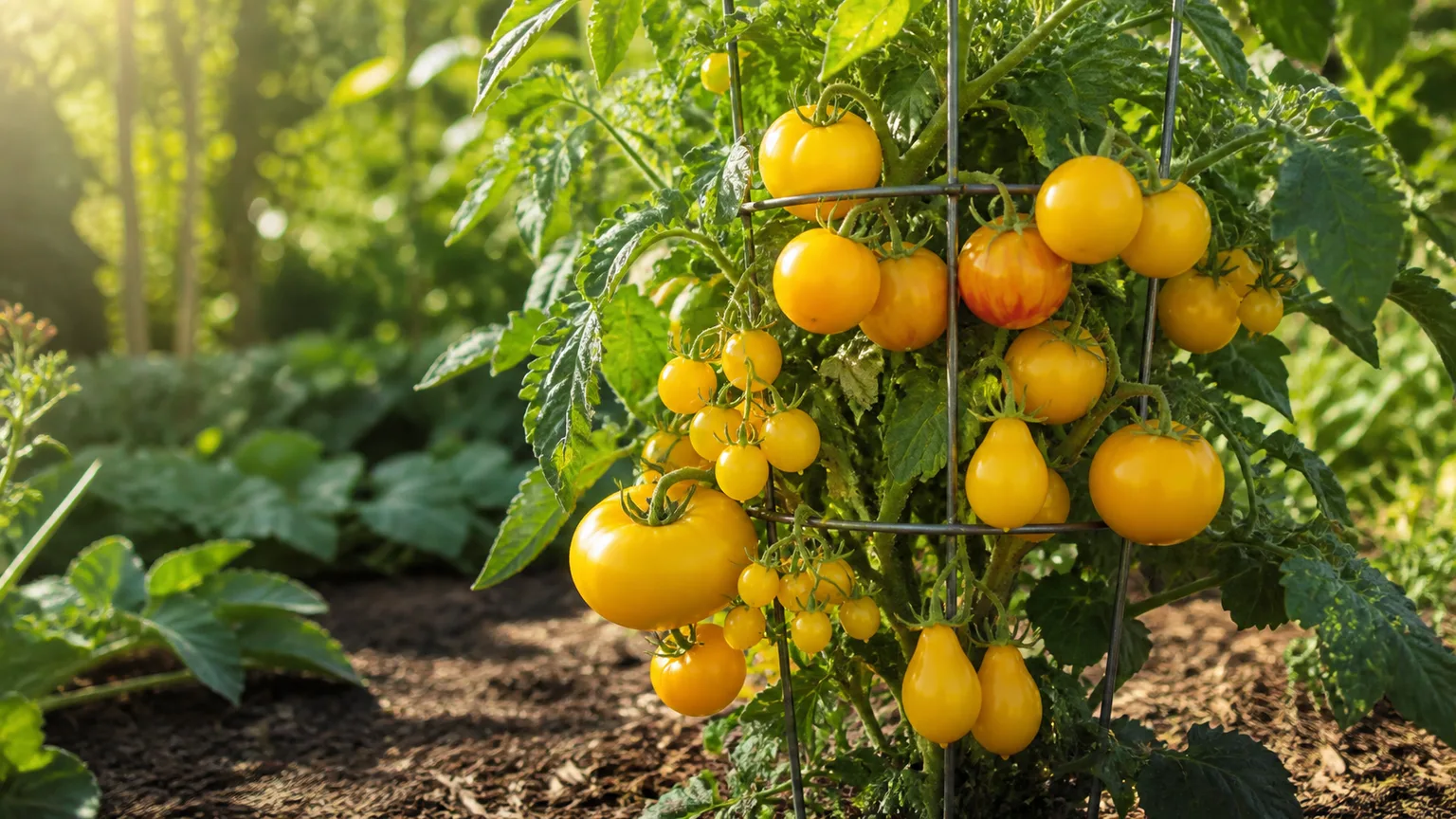
‘Pineapple’ tomato is the kind of heirloom that makes neighbors slow down on the garden path. Slice one open and you get a sunset of orange-yellow flesh streaked with red, a ribbed beefsteak exterior, and a flavor that reads sweet and fruity rather than sharp. The trade-off is patience: this Kentucky-born open-pollinated variety needs a full warm season, sturdy support, and a gardener who can keep moisture steady on a vine that may reach six to eight feet.
Treat ‘Pineapple’ as a late-season indeterminate beefsteak, not a set-it-and-forget patio plant. Plan support before you transplant, start seeds early if your frost-free window is tight, and harvest when color and feel say ripe—not when the calendar says so. Do that, and you get one of the most photogenic slicing tomatoes in the heirloom world.
‘Pineapple’ Tomato at a Glance
‘Pineapple’ belongs to Solanum lycopersicum and is sold as an heirloom beefsteak with documented garden history in Kentucky. It is indeterminate, meaning the main stem and side shoots keep extending and setting fruit until frost kills the plant. Most seed lines list 85 to 90 days to maturity from transplant, not from the day you sow seed—an important distinction Rutgers NJAES repeats for all tomato varieties (Rutgers tomato culture guide).
Fruits are large—often one to two pounds—with a ribbed, slightly flattened shape and bi-colored skin that blends yellow, orange, and red. Inside, red marbling runs through golden flesh. Plants typically grow six to eight feet tall and two feet wide with good fertility and support.
| Trait | Detail |
|---|---|
| Common name | ’Pineapple’ tomato |
| Botanical name | Solanum lycopersicum ‘Pineapple’ |
| Type | Open-pollinated heirloom beefsteak |
| Growth habit | Indeterminate vine |
| Days to maturity | ~85–90 from transplant |
| Fruit size | Large; often 1–2 lb |
| Sun | Full sun; 8+ hours ideal |
| Soil pH | ~6.0–6.8 |
| Hardiness | Frost-tender annual |
Keep pets away from green plant parts. ASPCA lists tomato plants as toxic to dogs and cats because of solanine; ripe fruit is listed as non-toxic, but the foliage and unripe green fruit are not pet snacks (ASPCA tomato plant safety).
Why Grow ‘Pineapple’ Tomato
Gardeners grow ‘Pineapple’ for flavor and presentation, not shelf life. The taste is sweet and low-acid compared with many red slicers, with a tangy backbone that still reads as tomato—not tropical fruit, despite the name and the ribbed rind that faintly echoes a pineapple’s pattern. The flesh is meaty with relatively few seeds, which makes thick slabs hold together on sandwiches and platters.
In the kitchen, ‘Pineapple’ shines where color matters: caprese with basil, chunky salsas, BLTs, and any dish where a bi-colored cross-section is part of the appeal. It is not a paste tomato; juice content is moderate. If you want sauce, pair it with denser paste types and use ‘Pineapple’ for fresh eating.
Because the variety is open-pollinated, you can save seed from your best fruits if you isolate plants from other tomato varieties. That is a genuine advantage over many hybrids, and it matches what Burpee and other seed sellers describe as the core appeal of heirlooms: stable traits passed generation to generation when cross-pollination is controlled (Burpee heirloom seeds guide).
’Pineapple’ vs Hawaiian Pineapple and Other Bi-Colors
Seed catalogs and garden blogs sometimes blur bi-colored beefsteaks together. ‘Pineapple’ (Kentucky heirloom) and ‘Hawaiian Pineapple’ are related in appearance—both produce large orange-yellow fruit with red flushing—but they are distinct cultivars with different seed lines and slightly different performance in trials. Rutgers heirloom trials recorded ‘Hawaiian Pineapple’ averaging nearly 11 ounces per fruit in one study group, illustrating how large bi-colors can get under good conditions (American Gardener heirloom tomato roundup citing Rutgers data).
When buying seed or transplants, read the full variety name on the packet or tag. A label that says only “pineapple tomato” at a generic big-box display may not be the Kentucky line you expect. If seed saving matters, stick to one named variety per isolation block.
Choose Seed or Transplants
Starting from seed gives you control over timing and variety authenticity. Buying transplants saves six to eight weeks but limits choice. NC State Extension recommends selecting transplants by disease resistance, space, climate, sunlight, and intended use—not fruit photo alone (NC State growing tomatoes guide).
For ‘Pineapple’, favor short, dark-green transplants with thick stems. Avoid tall, pale, root-bound plants already holding small green fruit in tiny cells; they often stall after planting. If your growing season is shorter than 120 frost-free days, starting seed indoors is usually the safer path than hoping a nursery carries this specific heirloom.
When and Where to Plant
Timing for short and long seasons
Work backward from your last spring frost. Sow seed six to eight weeks before that date—or eight to ten weeks if your season is short and you want buffer time for potting up. Transplant into the garden when soil temperatures reach about 60°F and air nights stay above 50°F. Cold soil and cold nights delay growth and invite blossom problems on large-fruited types.
Because ‘Pineapple’ is late maturing, northern gardeners should treat it as a single main crop and put it in the sunniest bed available. Southern and mid-south gardeners can use the variety’s reported heat tolerance as an advantage, but even heat-friendly heirlooms abort flowers when daytime highs persist above roughly 90°F or nights drop below 55°F (Rutgers tomato culture guide).
Site selection and rotation
Choose full sun—Rutgers recommends at least eight hours of direct light—and a well-drained spot without tree-root competition. Rotate away from beds that grew tomatoes, peppers, eggplants, or potatoes in the last two years when possible; rotation reduces but does not eliminate soil-borne disease carryover (Rutgers tomato culture guide).
Avoid low pockets where cold air and excess rainwater collect. Tomatoes tolerate brief dry spells once established, but they do not thrive with wet feet.
Start ‘Pineapple’ Tomato from Seed Indoors
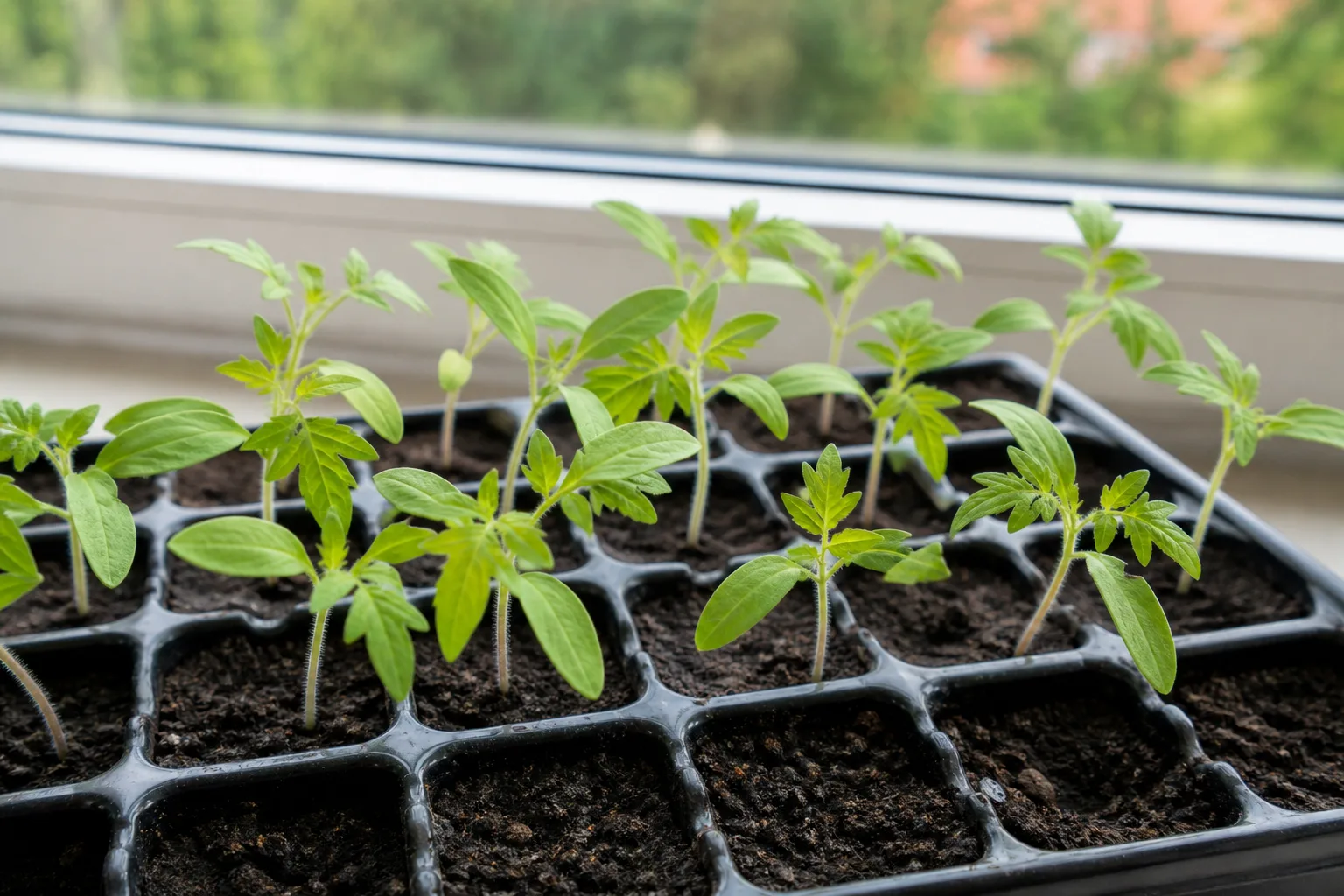
Heirloom tomato seed germinates reliably at 65–85°F. Use a moist seed-starting mix—not garden soil—and sow ¼ inch deep in trays or cells. A humidity dome speeds germination; remove it when seedlings emerge, usually in 7–14 days.
Bottom watering or a heat mat under trays keeps mix evenly moist without saturating stems. When seedlings develop true leaves and sturdy stems, pot up to individual 3- or 4-inch containers. Bury the stem slightly deeper at each pot-up if the seedling is leggy; tomatoes root along buried stems.
Give seedlings bright light—a sunny south window plus supplemental LED if needed—to prevent stretch. Fertilize lightly with diluted soluble feed once true leaves expand. Harden off for a week before transplant: gradually increase outdoor hours, starting in shade and working toward full sun and wind.
Planting in the Garden
Set support at planting time, not after the vine leans. Dig a deep hole and bury the transplant up to one-third of the stem after removing the lowest leaves; this builds a stronger root system.
Space plants 24 to 30 inches apart in rows 36 inches apart—slightly wider if you plan a two-leader trellis on large bi-colors. Mulch after soil warms with straw, shredded leaves, or black plastic to hold moisture and reduce soil splash on lower leaves (Rutgers tomato culture guide).
If a late cold snap threatens newly planted seedlings, use row cover overnight when temperatures may dip below 45°F. Remove or vent cover on warm sunny days so plants do not overheat.
Light, Soil, and Water Requirements
Light: Aim for eight to ten hours of direct sun. Less light produces leafy plants and slower ripening—especially painful on an 85-day variety.
Soil: Test before amending. A practical tomato range is pH 6.0–6.8. Incorporate finished compost and follow your soil test for lime or fertilizer; Rutgers suggests about 3–4 pounds of 5-10-5 per 100 square feet only when no test is available (Rutgers tomato culture guide). The goal is fertile, well-drained loam that holds moisture between waterings.
Water: After establishment, target about 1 inch of water per week from rain plus irrigation. Water slowly and deeply at the root zone; drip lines beat overhead sprinklers for disease prevention. Fluctuating moisture on heavy fruit triggers cracking and contributes to blossom-end rot—a calcium-uptake disorder linked to uneven watering more than a true soil calcium shortage in many gardens.
When fruits begin ripening, some gardeners slightly reduce water to concentrate flavor. Do not swing from drought to flood; stability matters more than a gimmick.
Fertilizing Through the Season
At planting, mix a balanced starter (5-10-10 or compost) into the root zone according to soil test results—not a double dose “because heirlooms are hungry.” Two to four weeks after transplant, side-dress with a phosphorus-forward feed or bone meal if growth is pale and slow.
When first fruits reach about 1 inch in diameter, side-dress again with balanced fertilizer or compost tea. Rutgers recommends a second side-dress at first harvest (Rutgers tomato culture guide). Avoid high-nitrogen feeds mid-season; excess nitrogen pushes leaves at the expense of fruit and worsens “all foliage, no tomatoes” problems during wet or extreme weather.
Support Options: Cage, Stake, or Trellis
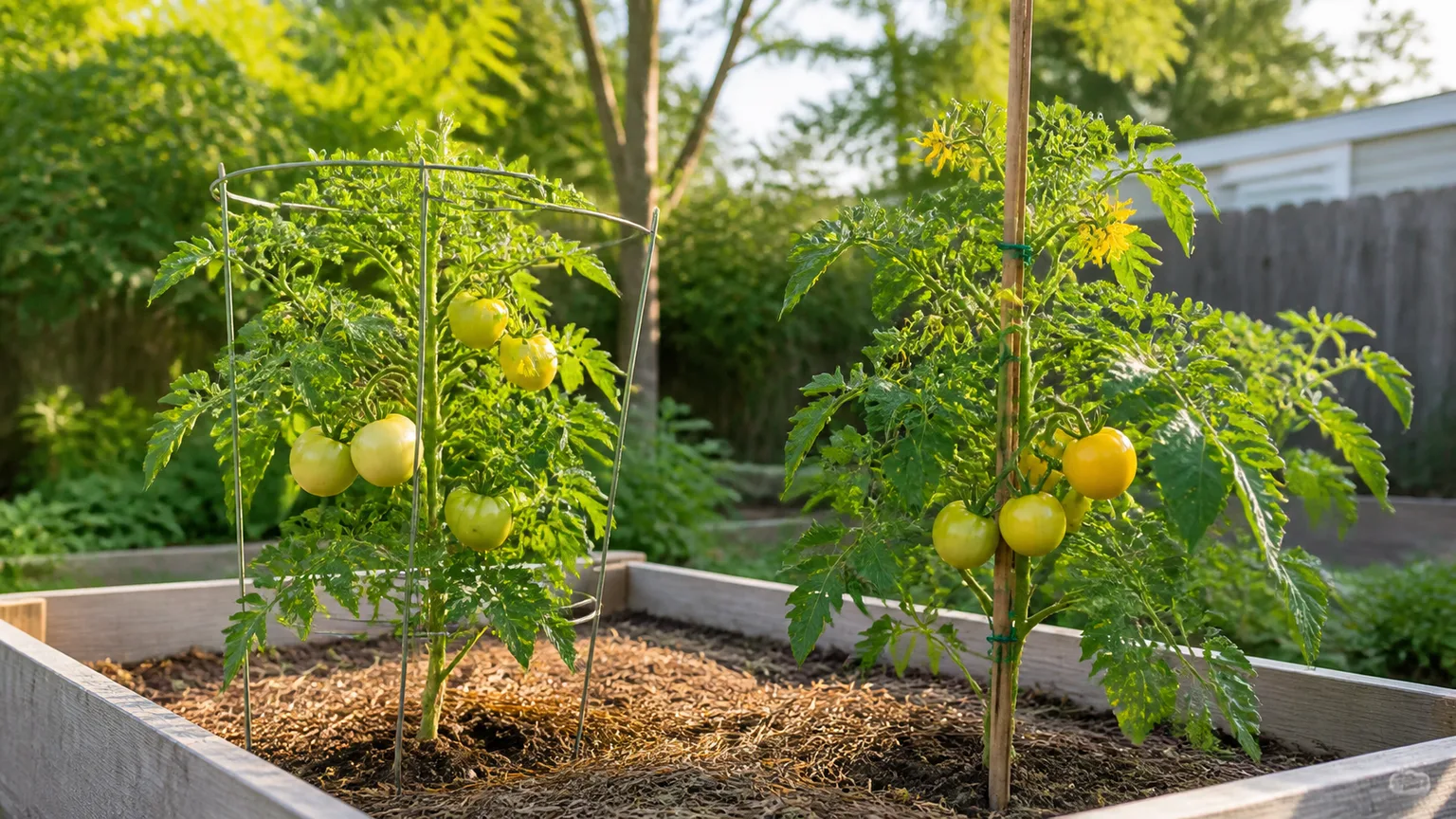
‘Pineapple’ fruits are heavy. Weak support equals broken branches and fruit on the ground.
Heavy-duty cages (concrete-reinforcement wire or tall commercial cages) suit gardeners who prefer minimal pruning. Guide shoots back inside the cylinder as they escape.
Staking suits those who want earlier, larger individual fruit and can prune regularly. Use stakes at least 6 feet tall, driven 8–10 inches into soil (Rutgers tomato culture guide).
Trellising works well for two-leader systems (below). Install cattle panel, string, or sturdy twine before vines lengthen.
Pruning Indeterminate ‘Pineapple’ Vines
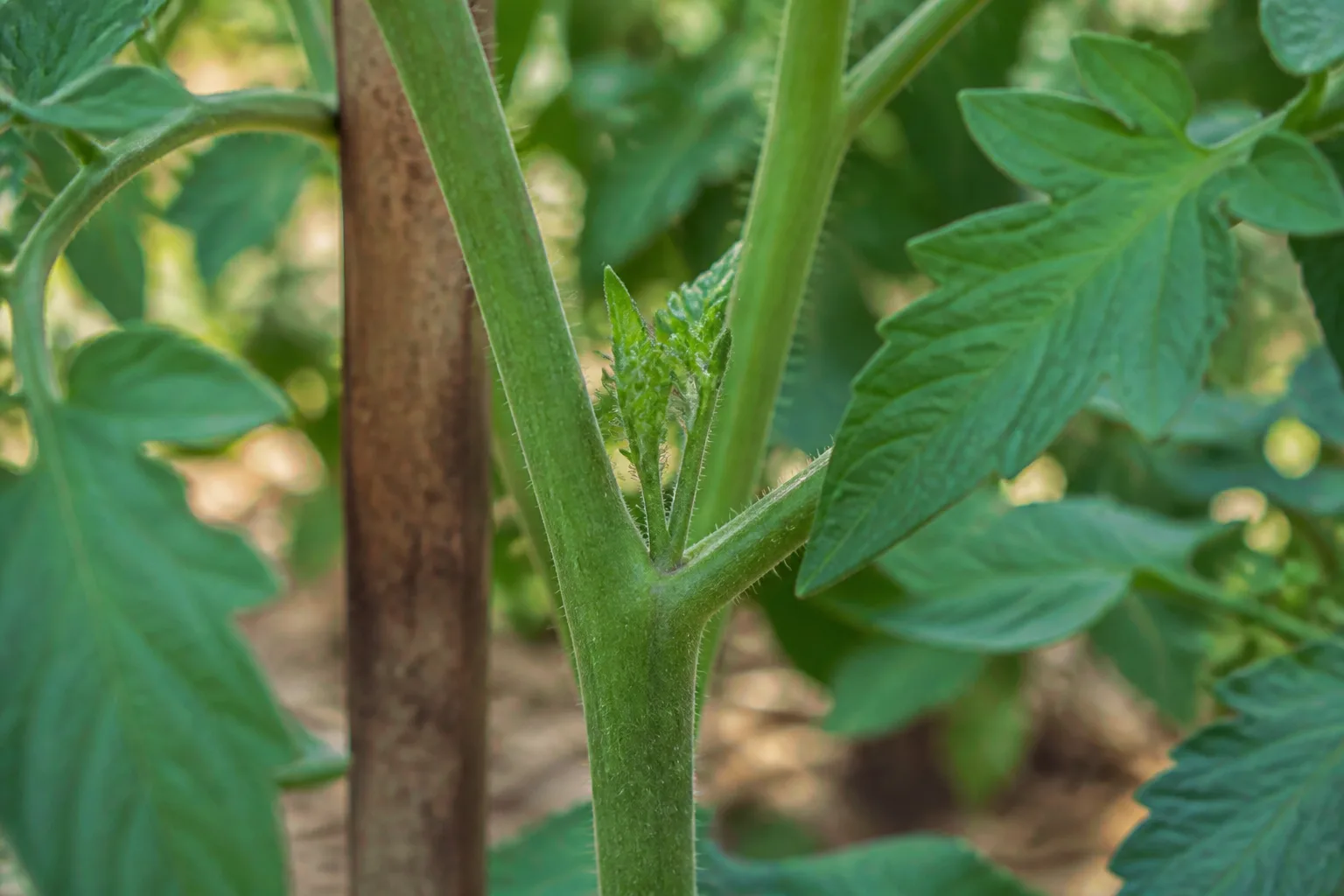
One-leader, two-leader, and minimal-prune approaches
One-leader staking: Remove all suckers—the shoots that emerge between leaf and main stem—when they are under 2–3 inches. Tie the single stem to the stake with soft ties in a figure-eight loop. Expect fewer total fruits but larger average size; fruit may be more sun-exposed.
Two-leader system: Allow one sucker below the first flower cluster to become a second main vine; prune additional suckers on both leaders. UNH Extension notes this approach can increase manageable fruit load on indeterminate plants when paired with good support (UNH pruning tomato plants).
Minimal prune + cage: Remove only suckers for the first few weeks, then let the plant fill a tall cage. This often suits ‘Pineapple’ growers who want yield without daily sucker patrol.
Three weeks before expected frost, pinch growing tips and remove new flowers so the plant ripens fruit already on the vine instead of setting tomatoes that will never mature.
Pollination and Saving Seeds
‘Pineapple’ is open-pollinated and largely self-fertile; wind and vibration move pollen within flowers. Insects help but are not strictly required for fruit set.
To save seed that breeds true, isolate ‘Pineapple’ from other tomato varieties by at least 25–50 feet in home gardens—or bag blossoms—because insects can carry pollen between varieties. Ferment seeds from fully ripe fruits, rinse, dry, and store cool and dry. Label with year and variety name.
Harvesting Ripe ‘Pineapple’ Tomatoes
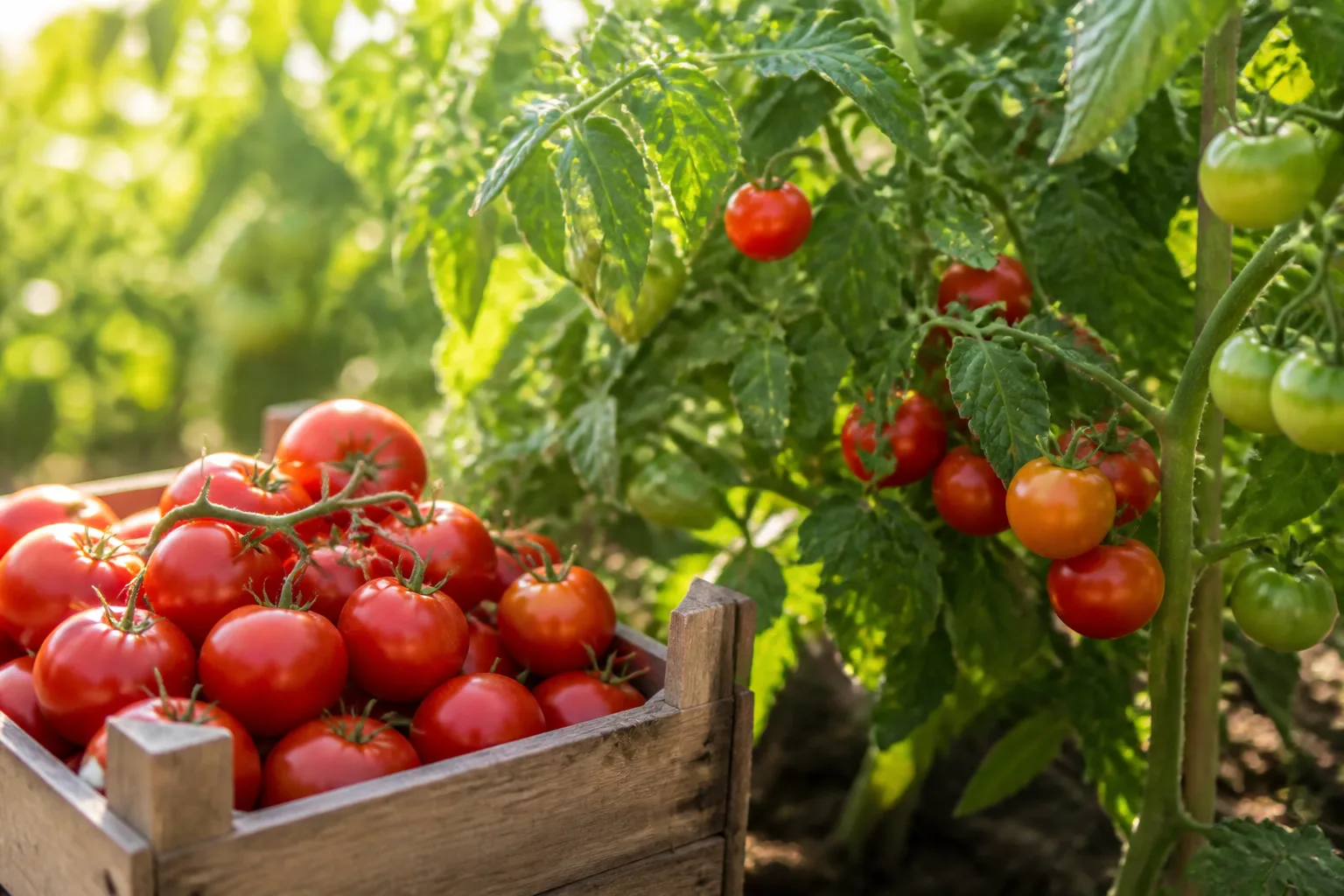
Harvest when fruits show uniform orange-yellow skin with red streaking, little to no green shoulder, and a firm but slight give when gently pressed. Color alone can lie on shaded fruits; feel and days since full size help confirm ripeness.
Cut with clean pruners, leaving about an inch of stem attached for longer counter life. Support heavy fruit with your hand while cutting so branches do not snap. Do not stack harvest buckets deeply; weight bruises large beefsteaks.
If frost threatens with partially colored fruit indoors, ripen on a counter out of direct sun—flavor may not match vine-ripened, but it beats composting green fruit.
Growing in Containers (Honest Limits)
Full-size ‘Pineapple’ on a long indeterminate vine is a poor container candidate. If you must try, use a half-barrel or 20-gallon equivalent pot with drainage holes, a trellis anchored to a wall or railing, and expect daily water checks in summer heat. Fertilize with diluted liquid feed every two weeks.
For patio growing, choose a compact determinate yellow or bi-color instead. Container success with this variety is possible but high-maintenance and usually lower-yielding than in-ground culture.
Common Pests and Diseases
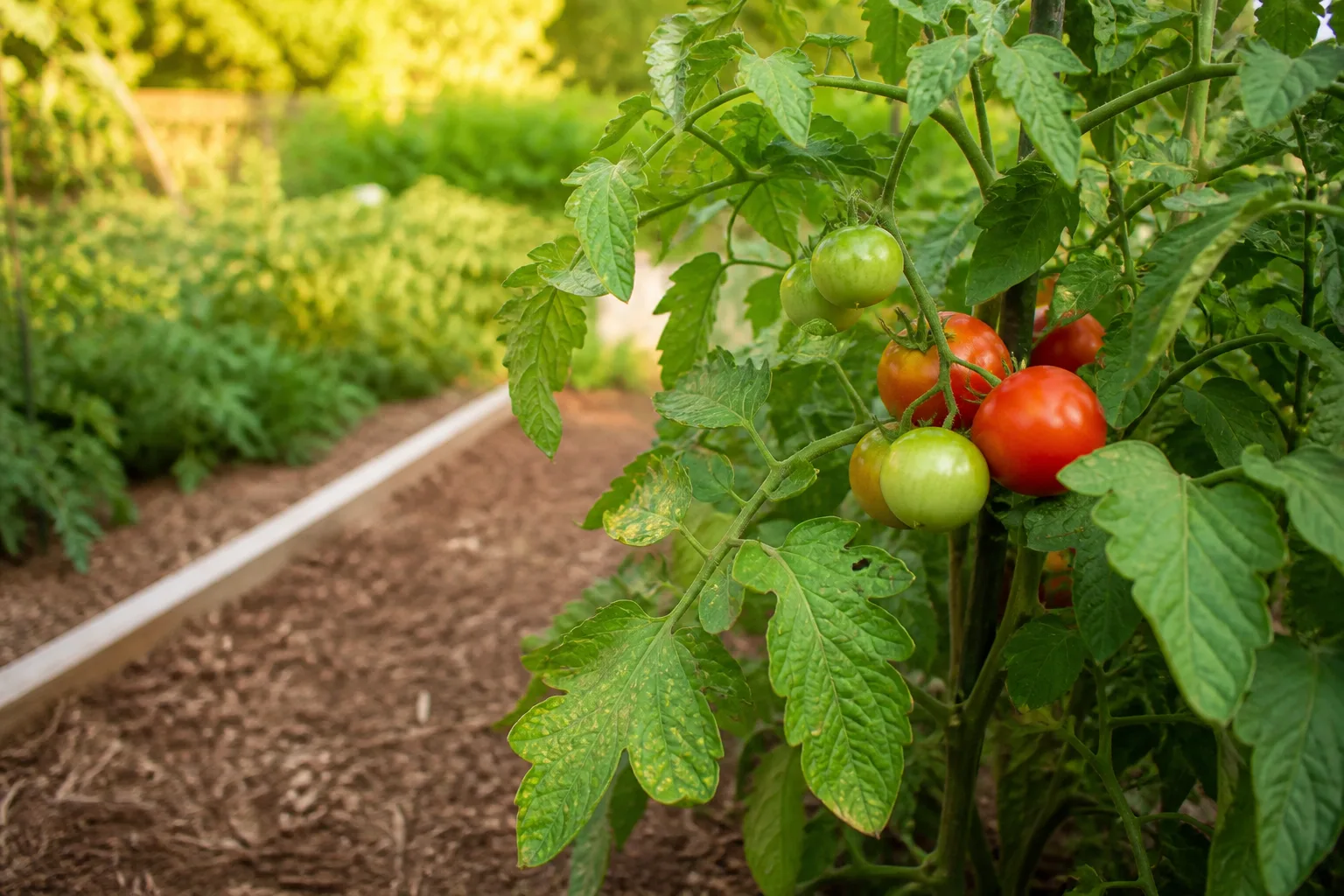
Tomato hornworms strip foliage fast on large vines. Scout leaves weekly; hand-pick or treat early with Bacillus thuringiensis (Bt) on small caterpillars. Hornworms blend with stems—check from below.
Aphids cluster on new growth. A strong water spray dislodges light infestations; insecticidal soap helps persistent colonies. Avoid broad sprays that kill beneficial insects.
Blister beetles can defoliate quickly in some regions; hand-pick wearing gloves (they can irritate skin) and avoid crushing beetles on bare hands.
Fungal diseases—early blight, septoria, powdery mildew—favor wet foliage. Space plants for airflow, mulch soil, water at the base, and remove badly infected lower leaves. Destroy—not compost—severely diseased plants at season end.
Troubleshooting: Cracking, Catfacing, and Slow Ripening
Cracking on ripening shoulders usually means uneven watering or heavy rain after dry spells. Mulch, drip irrigate, and harvest promptly when ripe.
Catfacing—deep scars and lobes on blossom end—often traces to cool weather during flowering on large-fruited varieties. Plant after soil warms; catfaced fruit is safe to eat trimmed.
Slow ripening late in season: pin tips, remove new flowers, and consider partial shade cloth only during extreme heat waves that stall color development—not as a substitute for sun during normal weather.
Sunscald appears as pale leathery patches on fruit exposed after heavy leaf removal. Never strip mature shading foliage from bearing plants (Rutgers tomato culture guide).
Conclusion
‘Pineapple’ tomato rewards gardeners who plan for a long, warm season and serious support. Start seed early in short climates, transplant into sun and tested soil, keep moisture steady, and choose a pruning/support style you will actually maintain through summer. Harvest when color, feel, and marbled flesh align—not when impatience wins.
Grow it once for the plate photo alone; grow it twice because the flavor earns a permanent row. Save seed from your best fruit if you have isolation space, and you will never depend on finding this Kentucky heirloom on a nursery bench again.