Bay Leaf Plant Care for Laurus nobilis
Laurus nobilis
Learn how to grow bay leaf (Laurus nobilis), with guidance on light, steady moisture, drainage, container care, pruning, harvesting, winter shelter, and pet safety.
Bay Leaf Plant Care for Laurus nobilis
Start with wateringThe most common care mistake for Bay LeafWatering guide →Bay Leaf care essentials
Light
Water
Keep the root zone evenly moist but never waterlogged. Water when the upper layer of potting mix has begun to dry, then let excess water drain. Bay tolerates a little dryness but should not be left completely dry.
Soil
Moist, adaptable garden soil or all-purpose potting mix that drains freely
Humidity
Temperature
Fertilizer
About Bay Leaf
Bay Leaf is native to Mediterranean Basin, including southern Europe, western Asia, and northern Africa, typically reaches Usually 10–30 ft (3–9 m) tall and about 5–20 ft (1.5–6 m) wide in a landscape; it can reach about 60 ft (18 m) in favorable native conditions. Pruning and container growing keep it smaller. indoors, with slow growth. Bay Leaf has a broadleaf evergreen tree or large shrub; male and female flowers grow on separate plants growth habit and part of the Lauraceae family. It is also known as Bay laurel, Sweet bay, True laurel, Grecian laurel, Bay tree, and Bay leaf tree.
| Detail | Information |
|---|---|
| Also known as | Bay laurel, Sweet bay, True laurel, Grecian laurel, Bay tree, Bay leaf tree |
| Native region | Mediterranean Basin, including southern Europe, western Asia, and northern Africa |
| Mature size | Usually 10–30 ft (3–9 m) tall and about 5–20 ft (1.5–6 m) wide in a landscape; it can reach about 60 ft (18 m) in favorable native conditions. Pruning and container growing keep it smaller. |
| Growth rate | Slow |
| Growth habit | Broadleaf Evergreen Tree Or Large Shrub; Male And Female Flowers Grow On Separate Plants |
| Scientific name | Laurus nobilis |
| Family | Lauraceae |
Bay Leaf Plant Care for Laurus nobilis
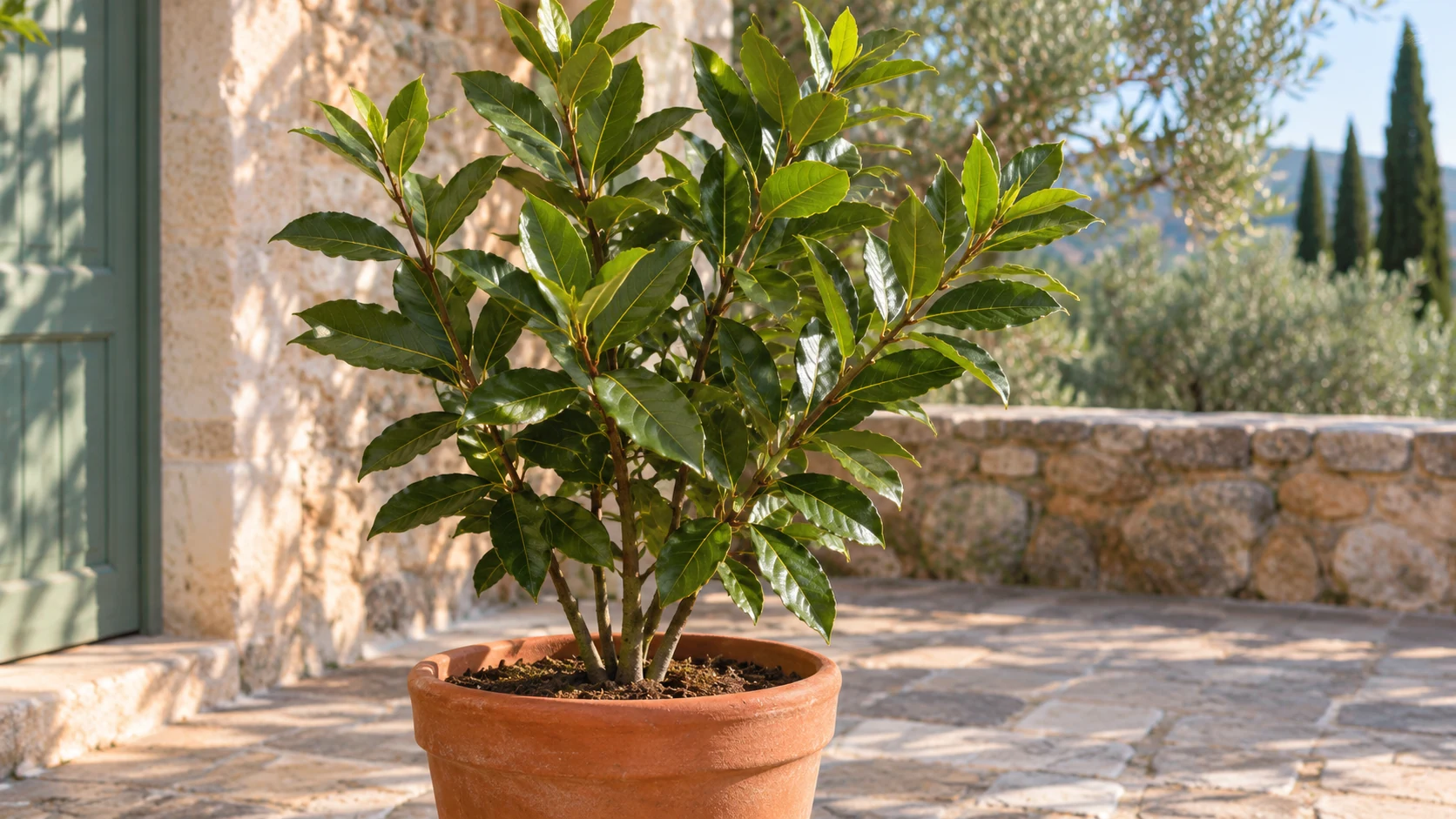
Bay leaf care starts with a label. This guide covers true bay laurel, Laurus nobilis: a slow-growing, evergreen Mediterranean tree or large shrub that can live in a mild-climate garden or in a container that can be moved when conditions turn harsh. It is woody and long-lived, so the most useful care plan is steady light, evenly moist but freely draining roots, and enough room for a crown you can shape.
Start by confirming the botanical name
Look for Laurus nobilis on the nursery tag before choosing a site or harvesting leaves. “Bay,” “laurel,” and “sweet bay” are common names, so ask for the scientific name when you need to distinguish true bay from other plants sold under similar labels. The NC State Extension profile identifies true bay as an evergreen tree or shrub in the Lauraceae family, native to the lands around the Mediterranean Basin.
For a plant bought under a common-name label in India, use the same species check you would anywhere: confirm the Latin name. For example, Wisconsin Extension describes California bay and bay rum tree as other plants also called “bay,” separate from sweet bay (Laurus nobilis) (Wisconsin Extension profile). Do not use a leaf for food or assume another “bay” plant has the same care or safety profile unless its species is confirmed.
The Bay Leaf plant overview provides the site’s species reference if you want to check that the plant you have matches this guide.
True bay and other plants sold as bay
Do not identify an unknown plant by leaf appearance, smell, or taste and then use it in cooking. If the tag is missing, ask the nursery to confirm the Latin name before harvesting.
Know the tree before choosing a spot
In the landscape, Laurus nobilis can become a substantial tree or shrub; the Missouri Botanical Garden lists a usual garden height of about 10–30 feet and notes that plants may reach roughly 60 feet in favorable native conditions. It grows slowly, keeps its leaves year-round, and tolerates shaping, which is why containers are useful when you need to control its size or bring it into shelter. Male and female flowers occur on separate plants, so a single potted specimen may not produce fruit; the Missouri Botanical Garden Plant Finder describes its size, growth form, and container use.
Choose the growing setup that fits your local exposure rather than treating bay as a small windowsill herb:
| Growing situation | Practical starting point |
|---|---|
| Mild, frost-free garden | Plant where the soil drains freely and the tree can spread or be clipped. |
| Sunny patio or balcony | Use a stable pot with drainage holes; give strong light and watch how quickly the root ball dries. |
| Hot, exposed terrace | Start with morning sun and bright afternoon shade; increase direct sun gradually if new leaves remain healthy. |
| Indoor winter shelter | Use the brightest suitable window and keep the pot away from heating vents and cold drafts. |
Give it bright light without baking the pot
Bay accepts full sun to partial shade. A container can grow outdoors in full sun after acclimation, while a warm, dry summer may make light afternoon shade more comfortable; The Spruce’s care guide recommends a sunny window indoors and some afternoon shade in hot, dry climates.
Light in hot Indian weather
Across India, heat and exposure differ sharply between a coastal balcony, a dry inland terrace, and a shaded courtyard. In a hot location, begin with morning sun or filtered light and protect the pot from strong reflected heat off walls or paving; this uses bay’s tolerance for partial shade while avoiding a sudden move from nursery shade into intense midday exposure. If new growth stays firm and evenly colored, you can gradually increase sun; if leaves scorch or the pot dries unusually fast, give it more afternoon protection.
Bright shade is not the same as a dim room. When the plant must stay indoors, put it close to the brightest unobstructed window available and rotate the container occasionally so one side does not remain turned away from the light. A second light-placement reference on the Bay Leaf hub summarizes the plant’s climate and exposure notes.
Moving a container between indoors and out
Move a sheltered indoor tree outdoors gradually, starting in a bright, protected position rather than immediately leaving it in all-day sun. When it comes back inside, choose the brightest available window and keep it away from heating vents and cold drafts; let the soil check, not an outdoor watering schedule, determine when to water. The Bay Leaf climate section is a useful place to compare that transition with the plant’s other seasonal needs.
Water when the top layer begins to dry
Keep the root ball slightly moist but never saturated. For a container, feel the top 1–2 inches of mix; when that layer is beginning to dry, water thoroughly until excess drains from the holes, then empty the saucer. Wisconsin Extension notes that bay prefers regular moisture and should not dry out completely, while frequent saturation can damage roots; its sweet bay care notes support using the soil and drainage as cues instead of a fixed weekly schedule.
Check more often in hot, windy weather and less often when the plant is cool or growth has slowed. Pot size, root crowding, mix texture, and rainfall affect how quickly the mix dries, so use the mix itself as your cue instead of repeating a fixed weekly interval. For the deeper watering routine, use the watering section on the Bay Leaf overview.
Adjust for monsoon rain and dry spells
During heavy monsoon spells, let rainfall count as watering and check whether the pot drains freely before adding more. If the mix stays wet for days, move the container under an open shelter where it still gets bright light, raise it on pot feet, and keep the saucer empty.
In a hot dry spell, use the same finger check, but shorten the interval between checks rather than giving small daily sips. Water the whole root ball and allow it to drain; if water runs straight through a very dry mix, pause briefly and water again so the center has a chance to re-wet.
Use a stable pot and free-draining mix
Choose a pot with open drainage holes and enough weight to keep a leafy, top-heavy bay stable in wind. A general-purpose container mix is a reasonable starting point; if it stays dense and wet, blend in a modest amount of horticultural grit or perlite rather than making an extremely coarse mix that dries too quickly. The Royal Horticultural Society’s bay guide recommends well-drained compost for container plants and warns that overwatering can damage roots.
Inspect the roots and mix when water begins running straight through, roots circle the pot, or the plant stops making normal new growth. RHS suggests repotting container-grown bay about every two years in spring; in warm Indian conditions, treat that as an inspection point, not an automatic date. The soil and potting section on the Bay Leaf hub has additional notes on drainage and root space.
Handle seasonal growth and cold snaps
In frost-free parts of India, bay can remain outdoors through the year if its pot drains during rain and it has some protection from harsh afternoon exposure. In cooler hill climates or places that occasionally freeze, use a movable container and shift it to a sheltered, bright, cool location before a hard frost; a pot’s roots are more exposed to cold than roots in the ground. Gardener’s Path’s winter guide notes the extra cold risk for container-grown roots and recommends sheltering pots from freezing conditions.
When cool weather slows growth, reduce watering but keep the root ball from drying completely; Wisconsin Extension describes cool-room bay as dormant and needing only enough water to keep the soil barely moist (Wisconsin Extension’s cool-season notes). Avoid moving bay into a hot, dark room and then keeping the mix constantly wet: low light and slow growth mean the plant uses water more slowly. Use local conditions and the forecast to decide when to shelter it, rather than trying to apply a U.S. hardiness zone or a U.K. frost date directly to an Indian city.
Keep feeding and pruning restrained
Bay is slow-growing, so heavy feeding will not make it fill a pot overnight. For a container plant, use a balanced fertilizer according to its label during active growth; The Spruce’s bay fertilizer guidance recommends feeding container-grown plants in spring. Pause if growth has stopped because the plant is cold, recently repotted, or water-stressed. Keep the Bay Leaf fertilizer and pruning notes nearby when you need a topic-specific routine.
You can keep bay as a rounded shrub, a multi-stemmed plant, or a single-trunk standard, but choose the shape while the plant is young. Small trims are easier to manage than cutting an old crown back severely; the Nature & Garden bay guide describes bay’s tolerance for shaping, while the RHS notes that mature trees recover slowly from hard pruning (RHS pruning guidance). If a large correction is needed, spread it over seasons and avoid removing most of the foliage at once.
Harvest only from an established, identified plant
Once the tree is established, pick a few mature leaves as needed rather than stripping young shoots. If you plan to dry leaves, use only foliage from a positively identified Laurus nobilis and store it only when fully dry.
Understand pet safety
ASPCA lists Laurus nobilis as toxic to cats, dogs, and horses; it names eugenol and other essential oils as toxic principles and reports vomiting, diarrhea, and possible obstruction after a large ingestion of whole leaves. Keep the live plant, fallen leaves, prunings, and dried cooking leaves where pets cannot reach them, and contact a veterinarian if an animal may have eaten any part. The ASPCA Bay Laurel entry is the authoritative reference for this plant-specific pet-safety classification; the pet-safety section on the Bay Leaf hub provides the matching site guidance.
Common mistakes and what to check first
Avoid using an unidentified “bay” as culinary bay, leaving a container in standing water, letting the root ball dry completely, or keeping a woody tree in a dim corner. Yellowing is not a reason to add fertilizer immediately: first feel the mix, check the drainage holes, and look for a recent shift in light or temperature.
Use this order when the plant looks unhappy: confirm the Latin name; check how wet the top layer and lower root ball feel; make sure the pot drains; then review light and recent weather. If the roots are healthy and the plant is in a bright, stable place, only then decide whether feeding, repotting, or pruning is appropriate. The Bay Leaf overview’s grower notes collect the plant-specific checks in one place.
When to use this page vs other Bay Leaf guides
This overview is for choosing a growing setup and understanding how light, water, soil, seasons, pruning, and safety fit together. The separate Light guide focuses on windows and outdoor exposure; Watering is for moisture checks and seasonal adjustments; Soil covers mix and drainage; Fertilizer covers feeding; Repotting focuses on roots and pot size; Propagation covers making new plants; and Pruning covers shaping. Those topic pages should be used when you need a step-by-step answer on one decision rather than the whole-plant picture.
Related Bay Leaf guides
Use the Light, Watering, Soil, Fertilizer, Repotting, Propagation, and Pruning guides for their individual decisions. The Bay Leaf hub also has quick-care, climate, watering, soil, grower-note, and pet-safety sections; those sections are linked where they add context above.
Conclusion
For Laurus nobilis, start with the botanical name, choose a bright site with some afternoon protection in hot exposure, and water only when the upper mix begins to dry. Keep the roots airy through monsoon rain, shelter a container before frost where freezing weather occurs, and keep every leaf and pruning out of pet reach. If you are unsure what to change first, check identification, soil moisture, drainage, and recent light or weather shifts before adding fertilizer.
How to care for Bay Leaf?
When should you water Bay Leaf?
Keep the root zone evenly moist but never waterlogged. Water when the upper layer of potting mix has begun to dry, then let excess water drain. Bay tolerates a little dryness but should not be left completely dry.
- Feel the upper 1–2 inches of mix. Water when that layer is starting to dry - Water when the upper layer of potting mix has begun to dry, then let excess water drain.
- then empty any water left in the saucer - Water when the upper layer of potting mix has begun to dry, then let excess water drain.
- Drain excess water - Water when the upper layer of potting mix has begun to dry, then let excess water drain.
What soil works best for Bay Leaf?
Moist, adaptable garden soil or all-purpose potting mix that drains freely
- Use a general-purpose potting mix for containers - Moist, adaptable garden soil or all-purpose potting mix that drains freely.
- Add perlite or coarse horticultural grit if the mix holds too much water - Moist, adaptable garden soil or all-purpose potting mix that drains freely.
- Choose a stable pot with open drainage holes - Moist, adaptable garden soil or all-purpose potting mix that drains freely.
Grower notes for Bay Leaf
Confirm that the plant is true bay
Look for the botanical name Laurus nobilis on the plant label before using leaves in food. California bay (Umbellularia californica) and cherry laurel (Prunus species) are different plants; common-name labels alone can be misleading, and cherry laurel is not a culinary substitute.
Give bay bright light and winter shelter
Bay grows in full sun to partial shade. A movable pot is useful where winters are cold: give the plant a bright position, move it outdoors for suitable warm weather, and shelter it from hard frost. Indoors, use the brightest suitable window and keep the tree away from heating vents and cold drafts.
Keep the roots moist but airy
Bay wants more regular moisture than drought-tolerant Mediterranean herbs such as rosemary. Let the upper layer of mix begin to dry, but do not let the root ball dry out completely or sit in water. A pot with open drainage holes makes this balance easier to manage.
Choose the tree shape early
Bay can be trained as a single-trunk standard or kept as a multi-stem shrub, and it tolerates pruning and shaping. Decide which form suits the space while the plant is young; light shaping in late winter or early spring is easier than correcting a crowded, older canopy.
Harvest from an established plant
Wait until the plant is established, then pick mature leaves as needed. The Spruce recommends waiting until a plant is at least two years old before harvesting. Dry leaves in a warm, dry place until they crumble, then store them in a sealed container; remove whole leaves from cooked dishes before serving.
Keep bay leaves away from pets
ASPCA lists Laurus nobilis as toxic to cats, dogs, and horses because it contains eugenol and other essential oils. Keep the plant, fallen leaves, and dried cooking leaves out of reach, and contact a veterinarian or ASPCA Poison Control if an animal may have eaten them.
Is Bay Leaf Safe for Pets?
ASPCA lists bay laurel (Laurus nobilis) as toxic to cats, dogs, and horses because it contains eugenol and other essential oils. Keep plants and leaves out of reach and contact a veterinarian or ASPCA Poison Control if ingestion may have occurred.
ASPCA identifies Laurus nobilis as toxic to cats, dogs, and horses and names eugenol and other essential oils as toxic principles. Do not infer that other plants sold under a common-name label such as “bay” have the same identity or toxicity classification.
Watering Bay Leaf
For Bay Leaf, feel the upper 1–2 inches of mix. Water when that layer is starting to dry, then empty any water left in the saucer. and water check container plants every few days in warm or bright weather and water thoroughly when the top 1–2 inches of mix begin to dry. Let the pot drain freely; adjust the interval for light, temperature, and pot size. Outdoor containers use water faster in summer. In a cool, bright winter room, reduce watering as growth slows, but keep the mix just barely moist and never leave the root ball saturated.
| Detail | Information |
|---|---|
| How often | Check container plants every few days in warm or bright weather and water thoroughly when the top 1–2 inches of mix begin to dry. Let the pot drain freely; adjust the interval for light, temperature, and pot size. |
| How to check | Feel the upper 1–2 inches of mix. Water when that layer is starting to dry, then empty any water left in the saucer. |
| Seasonal changes | Outdoor containers use water faster in summer. In a cool, bright winter room, reduce watering as growth slows, but keep the mix just barely moist and never leave the root ball saturated. |
Signs of overwatering
- The potting mix remains wet for days after watering
- Leaves yellow or drop while the root zone stays saturated
- Roots weaken in a pot without clear drainage
Signs of underwatering
- The mix has dried completely through the root ball
Soil & potting for Bay Leaf
Use a mix of Use a general-purpose potting mix for containers, Add perlite or coarse horticultural grit if the mix holds too much water, Choose a stable pot with open drainage holes for Bay Leaf. Provide drainage holes and prevent standing water. Bay accepts several soil types, but its roots do not tolerate a persistently soggy pot. Target soil pH around Broadly tolerant, from acidic through alkaline soils. Repot check container-grown plants about every two years. Repot or root-prune when roots crowd the pot, refreshing the mix while keeping the root system and canopy in balance., ideally in spring, as new growth resumes.
| Detail | Information |
|---|---|
| Recommended mix | Use a general-purpose potting mix for containers, Add perlite or coarse horticultural grit if the mix holds too much water, Choose a stable pot with open drainage holes |
| Drainage | Provide drainage holes and prevent standing water. Bay accepts several soil types, but its roots do not tolerate a persistently soggy pot. |
| Soil pH | Broadly tolerant, from acidic through alkaline soils |
| Repotting frequency | Check container-grown plants about every two years. Repot or root-prune when roots crowd the pot, refreshing the mix while keeping the root system and canopy in balance. |
| Best season to repot | Spring, as new growth resumes |
Signs it needs repotting
- Roots circle the inside of the pot or emerge from drainage holes
- Water runs straight through a dense, root-filled mix
- Growth slows as the container becomes crowded