How to Grow and Care for Bay Laurel
Learn to grow true bay laurel—not mislabeled substitutes—with container care, root pruning, leaf drying, and fixes for yellow leaves and scale.
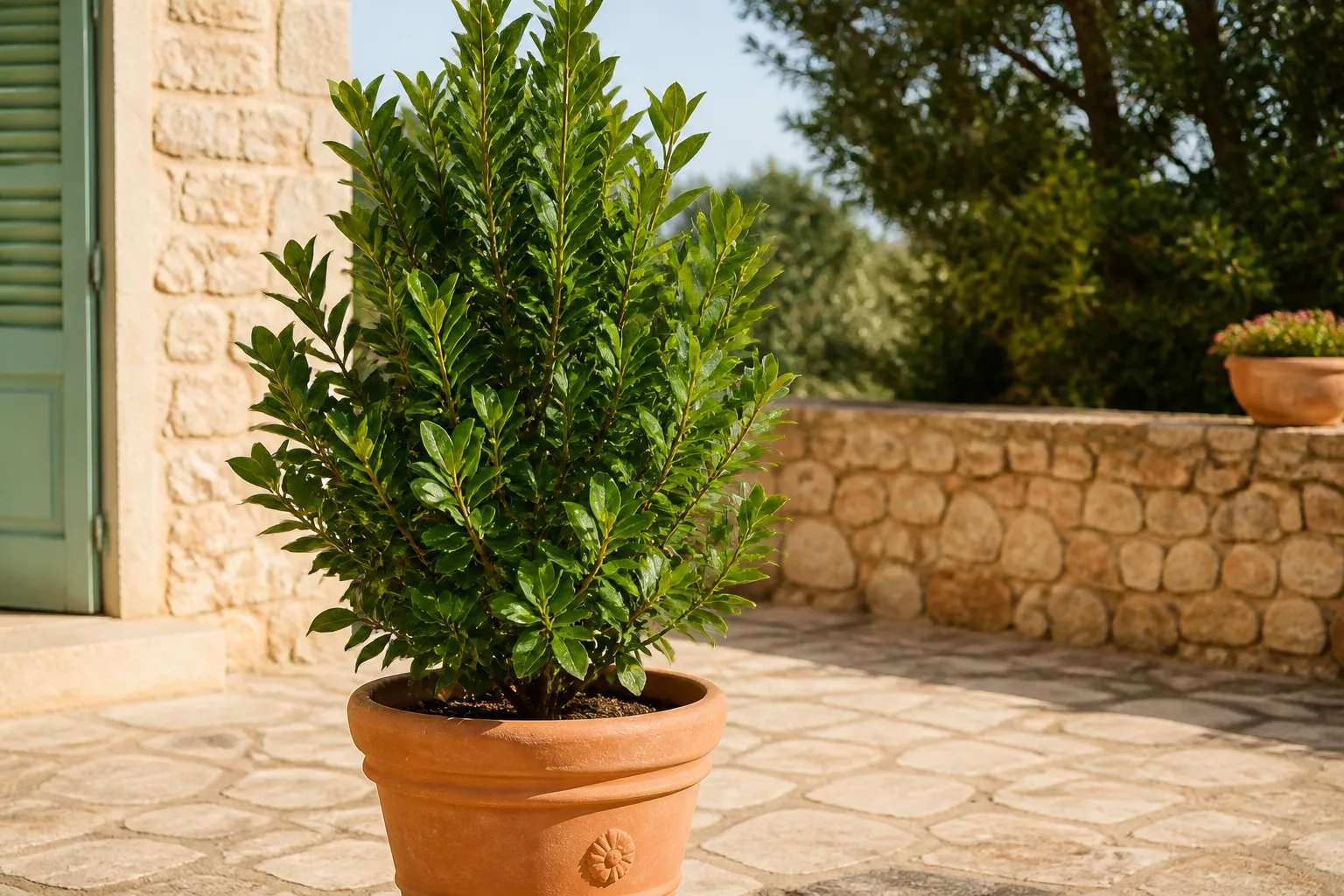
Bay laurel (Laurus nobilis) is the evergreen Mediterranean tree behind the bay leaves in your spice rack—not a generic “laurel” hedge and not the intensely aromatic California bay (Umbellularia californica) that some nurseries mislabel. Grow the right species, give it bright light and steady moisture, and a single plant can supply glossy cooking leaves for decades in a pot or in warm-climate ground beds. Get the species wrong, overwater a container, or shock it with a late frost, and you get yellow leaves, scale outbreaks, or a tree that never produces leaves worth harvesting.
Missouri Botanical Garden describes L. nobilis as a pyramidal aromatic evergreen that reaches up to 60 feet in native habitat but is usually kept much smaller—often 8 to 30 feet in gardens, and far less in containers. (Missouri Botanical Garden) NC State Extension notes the same slow growth, dioecious flowering, and container use in zones colder than 8b. (NC State Extension) This guide walks you from nursery label to harvest, with the container root care and winter schedules extension sources emphasize but many care pages skip.
Bay Laurel Quick Reference
Use this table before you change light, water, or pot size. Bay laurel punishes guesswork slowly—symptoms show up weeks after the mistake.
| Factor | Target | Notes |
|---|---|---|
| Botanical name | Laurus nobilis | Confirm label; avoid misidentified “bay” |
| Outdoor hardiness | USDA zones 8–10 | NC State lists 8b–10b; protect below ~50°F in pots |
| Mature landscape size | 10–60 ft. tall possible | Usually pruned to 8–30 ft.; much smaller in pots |
| Light | Full sun to partial shade | More sun = better leaf flavor outdoors |
| Soil | Moist, well-drained | Tolerates loam, sand, clay if drainage is good |
| Soil pH | Roughly 6.0–7.0 ideal | Tolerates ~4.5–8.3 per extension reports |
| Water | Even moisture; not soggy | Shallow roots; root rot if constantly wet |
| Fertilizer | Light; spring for containers | Landscape plants rarely need heavy feeding |
| Harvest start | After ~2 years | Midsummer leaves often peak flavor |
| Pets | Toxic to cats, dogs, horses | ASPCA lists eugenol and essential oils |
| Propagation | Softwood cuttings in summer | Slow; patience required |
If you are building an indoor herb corner, pair this tree with smaller culinary herbs from our best herbs to grow indoors list—but give bay its own pot. It outgrows thyme and basil on a different timeline.
True Bay vs Plants Sold as “Bay Leaf”
Spice adulteration is real. A 2017 quality-control study in Planta Medica found bay-leaf products on the market that were not Laurus nobilis, including other Lauraceae species sold under the same common name. (Planta Medica) At the nursery, the risk is similar: plants tagged “bay,” “sweet bay,” or even “bay leaf” may not be true laurel.
True bay laurel (Laurus nobilis) has thick, glossy, deep green leaves 2–4 inches long with a strong midrib and finely wavy edges. Stems are green to gray and smooth. Crush a leaf: the scent should be herbal and warm, not sharply medicinal or camphor-heavy.
California bay (Umbellularia californica) is a West Coast native with longer, narrower, more intensely aromatic leaves. The flavor is stronger—often too strong for standard recipes—and the plant is not the Mediterranean species cooks mean by “bay leaf.”
Cherry laurels (Prunus laurocerasus and related) are ornamental hedging plants with toxic cyanogenic compounds in leaves—not culinary bay. NC State’s plant toolbox explicitly warns that L. nobilis is confused with cherry laurel and aucuba in retail settings. (NC State Extension)
How to Confirm Laurus nobilis at the Nursery
Before you buy, check four things on the tag and the plant itself. First, the botanical name must read Laurus nobilis—not Umbellularia, Prunus, or a vague “Lauraceae sp.” Second, leaf shape: elliptic to lance-shaped, leathery, glossy—not long willow-like blades unless you deliberately want a narrow-leaf cultivar such as L. nobilis f. angustifolia. Third, growth habit: bay is slow; a “instant 6-foot bay tree” in a tiny pot is often root-bound or mislabeled. Fourth, purpose: if you want cooking leaves, skip purely ornamental cultivars whose flavor may differ from the species type—‘Saratoga’ and similar named clones are legitimate L. nobilis, but verify the label.
When in doubt, buy from a herb-focused grower or a nursery that lists the full Latin name. One verified plant beats three cheap substitutes you cannot safely cook from.
Choosing Container vs Landscape Placement
Most North American gardeners outside zones 8–10 treat bay laurel as a container plant moved outdoors in summer and indoors before frost. That matches Missouri Botanical Garden’s recommendation: north of zone 8, grow in pots and bring inside for overwintering in cool, bright conditions. (Missouri Botanical Garden)
Choose a container if you live north of zone 8, rent, want a patio herb, or plan to shape a topiary standard. Bay adapts well to pots, tolerates being slightly root-bound, and lives for decades with root maintenance. Wisconsin Horticulture notes container bays at botanic gardens that have been maintained for many years with regular root pruning. (Wisconsin Horticulture)
Choose in-ground planting if you are in USDA zones 8–10 (especially 8b and warmer coastal areas), have well-drained soil, and want a screen, specimen tree, or large hedge. Site it where roots stay moist but never sit in standing water. In hot-summer deserts, afternoon shade reduces leaf scorch.
Wind matters outdoors. Full sun with constant drying wind stresses shallow roots. A sheltered south or west wall often outperforms an exposed hilltop.
Light Requirements Indoors and Out
Bay laurel produces its best-flavored leaves when it receives full sun for at least part of the year. NC State lists full sun (six or more hours of direct light) to partial shade (two to six hours). (NC State Extension) Indoors, place pots in the brightest south- or west-facing window you have, especially from fall through spring.
Outdoor summer placement: After acclimating from indoors, give container plants full sun in cooler climates (Wisconsin Extension recommends full sun in the Midwest once hardened off). In hot, dry regions, partial shade with afternoon protection prevents leaf burn while still delivering enough intensity for healthy growth.
Indoor winter placement: When you bring pots inside, increase light if possible—what was partial shade outdoors becomes “dim” indoors. Leaf drop after the move is common; stable light and humidity reduce the shock. Avoid blasting heat from radiators or forced-air vents directly onto foliage.
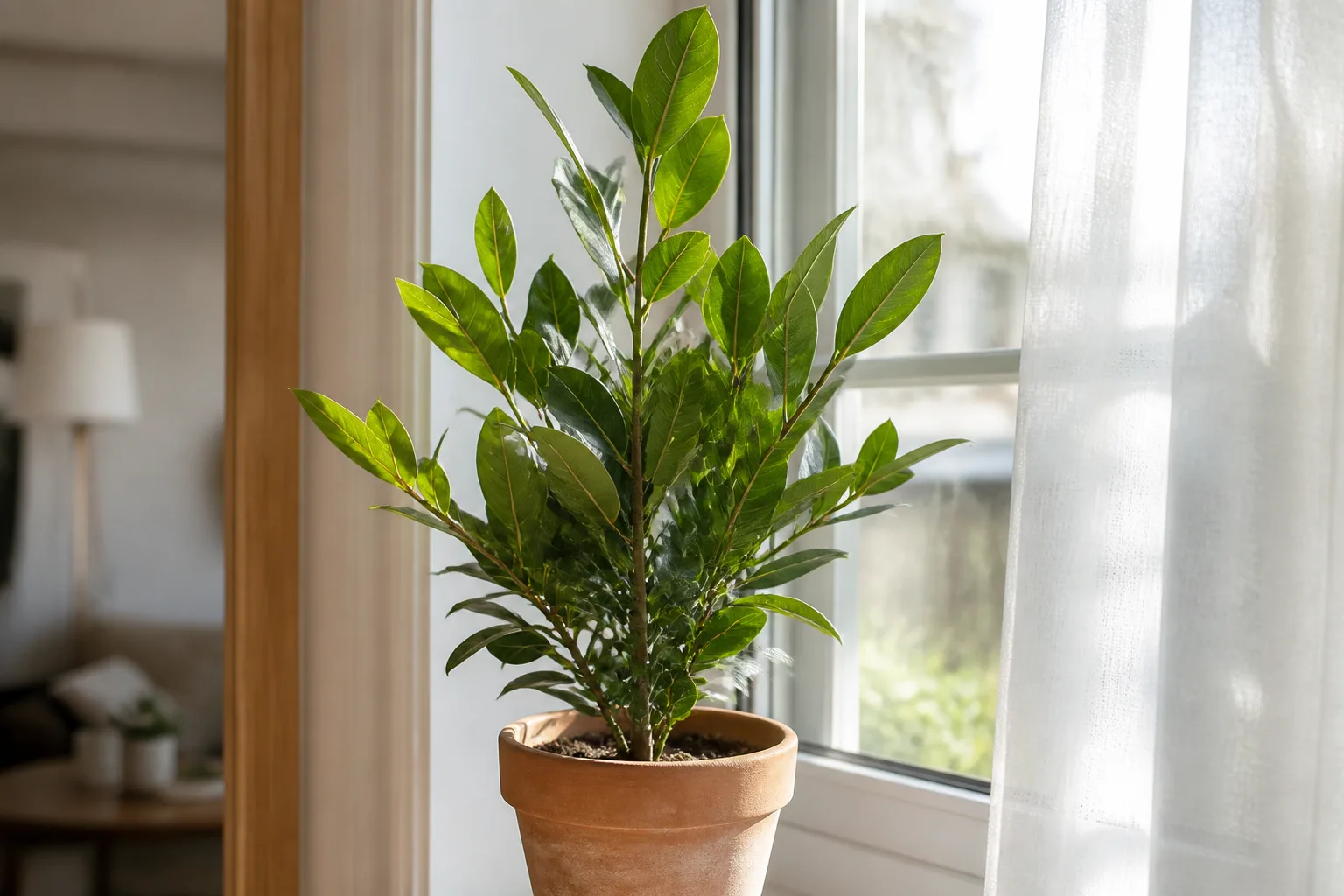
If leaves look pale and internodes stretch, light is the first variable to fix before you reach for fertilizer.
Soil, Drainage, and Potting Mix
Outdoors, bay laurel accepts average garden soil provided drainage is good. It tolerates loam, sand, and clay textures when water does not pool. Ideal pH sits near neutral (6.0–7.0), though established plants tolerate a wide range.
In containers, use a quality all-purpose potting mix with perlite or bark for porosity—not garden soil, which compacts in pots. The pot must have a drainage hole; saucers should be emptied after watering.
Because roots are shallow and fine, the top few inches of soil matter most. Refresh the upper layer each spring when you fertilize, being careful not to bury the trunk deeper than it was planted.
Watering Without Triggering Root Rot
Bay laurel wants moist soil that still breathes. Wisconsin Extension is blunt: it can never be allowed to dry out completely, yet constant saturation kills roots. (Wisconsin Horticulture) NC State and Missouri Botanical Garden both list “medium” water—steady but not swampy.
Outdoor containers: Water when the top inch feels dry to the touch, then soak until water runs from the drainage hole. In heat waves, shallow roots may need water every day; in cool cloudy weather, stretch to several days.
Indoor active growth (warmer room): Treat it like a conventional houseplant—regular watering when the upper soil dries slightly.
Indoor dormancy (cool room, 35–60°F): Wisconsin Extension recommends minimal water—just enough to keep soil barely moist because growth nearly stops. (Wisconsin Horticulture) This is the schedule most houseplant guides omit, and it prevents winter root rot in a dark cool garage.
Yellow leaves often mean too much water; brown crispy edges often mean underwatering or heat stress. Fix drainage and rhythm before assuming disease.
Temperature, Humidity, and Seasonal Moves
Move container plants outdoors in spring once nights stay consistently above freezing and indoors in fall before temperatures drop below about 50°F (10°C)—the threshold Missouri Botanical Garden and many growers use for potted subtropicals. (Missouri Botanical Garden)
Hard frost browns foliage. Light frost may defoliate branches that recover in spring; repeated hard freezes kill unprotected roots in pots faster than in-ground roots.
Humidity: Indoor heating dries air. If bay drops leaves after coming inside, increase humidity with a tray of pebbles and water (pot above the waterline) or a humidifier—not misting alone. Harvest dropped leaves for cooking if they are clean and pest-free.
Acclimate in both directions: one week of part shade outdoors in spring; avoid placing a cold garage plant directly against a hot south window in one jump.
Fertilizing Slow-Growing Bay Laurel
Bay laurel is slow-growing and does not need heavy feeding. Landscape trees in decent soil often thrive on compost mulch alone.
Container plants benefit from a balanced organic fertilizer—fish emulsion or kelp—once in spring as new growth starts. Do not fertilize dormant winter plants in cool storage.
If leaves yellow despite correct watering and light, a single spring feeding may help; repeated fertilizer without fixing soggy soil worsens salt buildup. Refresh the top 2–3 inches of potting mix annually instead of doubling fertilizer rates.
Pruning for Shape, Topiary, and Leaf Production
Pruning controls size and stimulates dense branching—each cut encourages new shoots you can harvest later. Wisconsin Extension recommends annual pruning when the tree is not actively growing (late winter to early spring) for shape, and midsummer leaf harvest for peak flavor. (Wisconsin Horticulture)
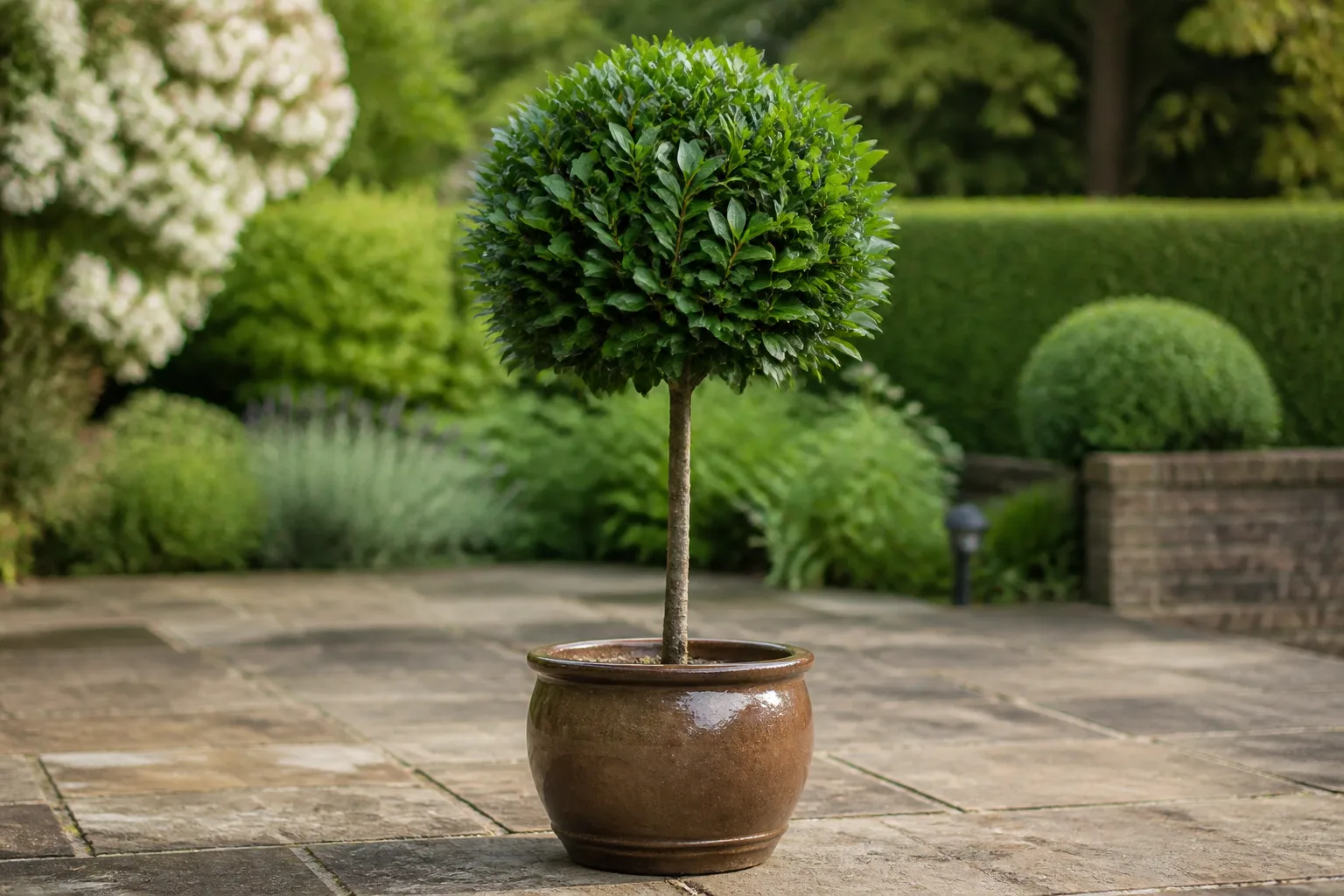
You can prune lightly anytime for kitchen harvest, but hard structural cuts are safest in late winter. Bay tolerates topiary, standards, and hedges; formal shapes need touch-up cuts several times a year.
Sterilize pruners between cuts if you removed diseased tissue. Avoid stripping an entire side of the canopy at once— gradual reduction keeps the root-to-shoot balance stable.
Harvesting and Drying Bay Leaves Safely
Wait until the plant is at least two years old and well established before serious harvest. Pick mature, fully sized leaves individually rather than stripping bare branches.
Fresh use: Rinse leaves and add whole to soups, stews, braises, and marinades; remove before serving. Never eat whole bay leaves. NC State Extension warns they can cause choking and cuts in the mouth and digestive tract because leaves stay stiff even after cooking. (NC State Extension)
Drying: Wisconsin Extension notes dried leaves concentrate oils. Lay leaves in a single layer on parchment in a warm, dry, airy room for about two weeks until brittle, then store airtight away from light. Mid-summer harvest often gives the strongest flavor for drying.
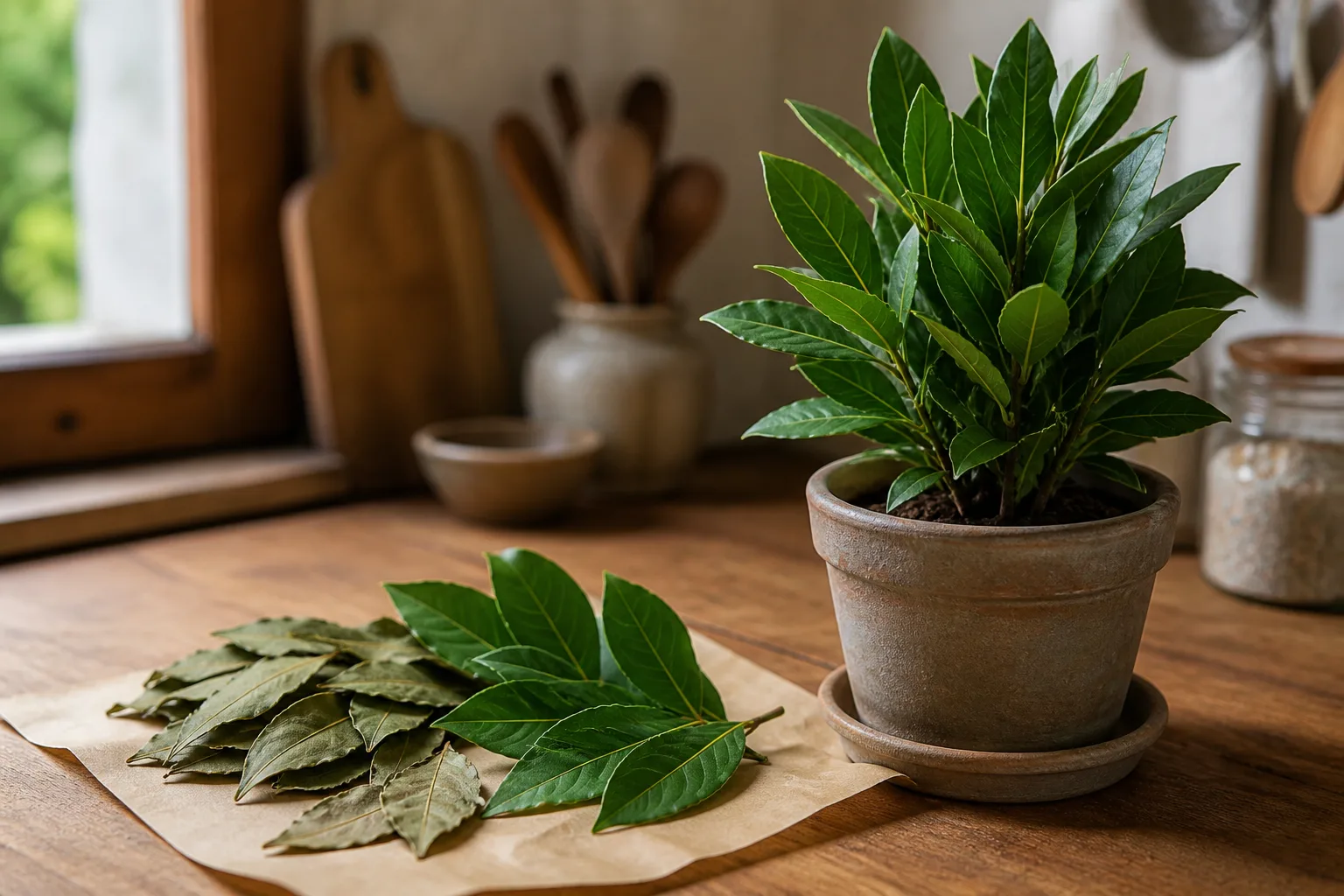
Harvest lightly through the season so the plant keeps photosynthesizing. A healthy bay should always look slightly “picked over” if you cook from it regularly.
Propagating Bay Laurel from Cuttings
Bay is possible but slow from propagation. Wisconsin Extension lists fresh seed (erratic germination), half-ripe softwood cuttings in summer, and air layering. (Wisconsin Horticulture)
For cuttings: take 6-inch softwood stems in early summer, dip in rooting hormone, and stick into moist coarse sand or a sand-peat mix. Cover with loose plastic, keep warm with bright indirect light, and check for roots in one to two months—a gentle tug that meets resistance means success. Overwinter young rooted cuttings protected; they may take another season before they resemble a small tree.
Seed is mainly for enthusiasts with patience and a male plant nearby for pollination—bay is dioecious, so a lone tree will not produce viable seed without a partner.
Repotting and Root Pruning
Container bay often outlives its pot without wanting a larger one. Wisconsin Extension advises repotting to balance roots and top growth, pruning roots at least every two years even if the pot stays the same size: trim circling roots that touched the old pot wall and replace removed soil with fresh compost-based mix. (Wisconsin Horticulture)
Choose a wide, heavy base pot for tall standards so wind does not topple them. A 24-inch container can hold a 5–6 foot tree. Slightly root-bound conditions are acceptable—roots peeking from drainage holes are a signal to root-prune, not necessarily to jump three pot sizes.
After root pruning, keep the plant shaded and evenly moist while it recovers; skip heavy harvest that season.
Overwintering Potted Bay Laurel
North of zone 8, overwintering is the make-or-break skill. Bring pots in before the first 50°F night if you want zero frost damage.
Cool bright room (ideal): 35–60°F with as much sun as available and minimal water matches Wisconsin’s dormant protocol. Growth pauses; leaves may hold or drop partially.
Warm room: Bay stays semi-active and needs brighter light, regular watering, and possible supplemental humidity. Expect some leaf drop after the outdoor-to-indoor transition.
In zones 8–10 in-ground: Mulch roots in rare cold snaps; established trees tolerate more than pots. Winter is also the best window for structural pruning.
If frost burns foliage, wait until spring to assess dieback—scratch small twigs; green underneath means live wood. Cut back to healthy tissue or to about 6 inches above soil in severe cases and allow new shoots from the base.
Pests and Diseases
Bay leaves repel some pantry pests, but the live plant still attracts sap-suckers, especially indoors. NC State lists scales, psyllids, susceptibility to laurel wilt (mainly a concern where ambrosia beetles and affected Prunus relatives occur), Phytophthora, and root rot. (NC State Extension) Missouri Botanical Garden adds anthracnose and powdery mildew on foliage. (Missouri Botanical Garden)
Scale and Indoor Sap-Suckers
Scale looks like brown or tan bumps on stems and leaf undersides. Mealybugs leave white cottony clusters. Spider mites cause stippling in dry heat. Indoors, inspect monthly at stem crotches.
Treat localized infestations by pruning affected leaves, wiping stems with alcohol on a cloth (not dripping into soil), and applying horticultural oil or insecticidal soap on a mild day outdoors—follow label rates. Severe recurring scale on a small pot plant may be less costly to replace after quarantine than to fight for years. See our scale on houseplants guide for identification photos and repeat-treatment timing.
Moth eggs sometimes glue two bay leaves together with cottony fluff; peel leaves apart and destroy the egg mass.
Troubleshooting Leaf Drop, Yellowing, and Dieback
Leaf drop after moving indoors is normal if light and humidity changed. Stabilize conditions and wait two to three weeks before panicking.
Yellow leaves: Check overwatering first, then low light, then rare nutrient deficiency. Reduce water and improve drainage before fertilizing.
Brown dry leaves: Underwatering, frost damage, or heat scorch. Match water to season; prune dead tips in spring.
Cracked or peeling bark: Often rapid swings in moisture or temperature—not usually fatal. Keep watering even and avoid placing pots where afternoon sun hits a frozen trunk.
Winter dieback outdoors: Prune below damaged wood once new growth shows where live tissue begins. Extreme dieback: cut to 6 inches and let basal shoots regenerate.
Spotted leaves with drop: Possible foliar fungus—improve airflow, avoid wetting foliage at night, remove affected leaves, and consider fungicide only if spread continues.
Messy berries: Only female plants with a nearby male pollinator produce purple-black drupes. Single potted plants indoors rarely berry; landscape pairs may drop fruit— prune flower clusters if mess matters.
Pet Safety and Kitchen Use Rules
ASPCA lists bay laurel as toxic to dogs, cats, and horses because of eugenol and other essential oils, with vomiting and diarrhea possible; large ingestion of whole leaves can cause intestinal obstruction. (ASPCA)
Keep pots off floor-level shelves pets climb, pick up fallen leaves, and store dried leaves in closed containers. Cooking with intact leaves that you remove before serving is standard; letting pets access the plant or chew fallen foliage is not.
Call ASPCA Animal Poison Control at (888) 426-4435 or your veterinarian if a pet eats bay material.
Conclusion
Bay laurel rewards patience: confirm you have Laurus nobilis, give it bright light and steady moisture, root-prune on schedule, and harvest leaves for the kitchen—not for pets to nibble. Container growers should master the 50°F move-in date and the cool-room dormant watering split; warm-climate gardeners can shape landscape trees that become true garden fixtures. When something looks wrong, check water and light before disease sprays—most bay problems are cultural, not mysterious. Start with a correctly labeled plant this season, and you can stop buying dried bay leaves that might not even be true laurel.