How to Get Rid of Squash Bugs in the Garden
Flat gray bugs on pumpkin vines? Learn to ID squash bugs, scrape eggs every 10 days, handpick into soapy water, and use row covers before they wreck your harvest.
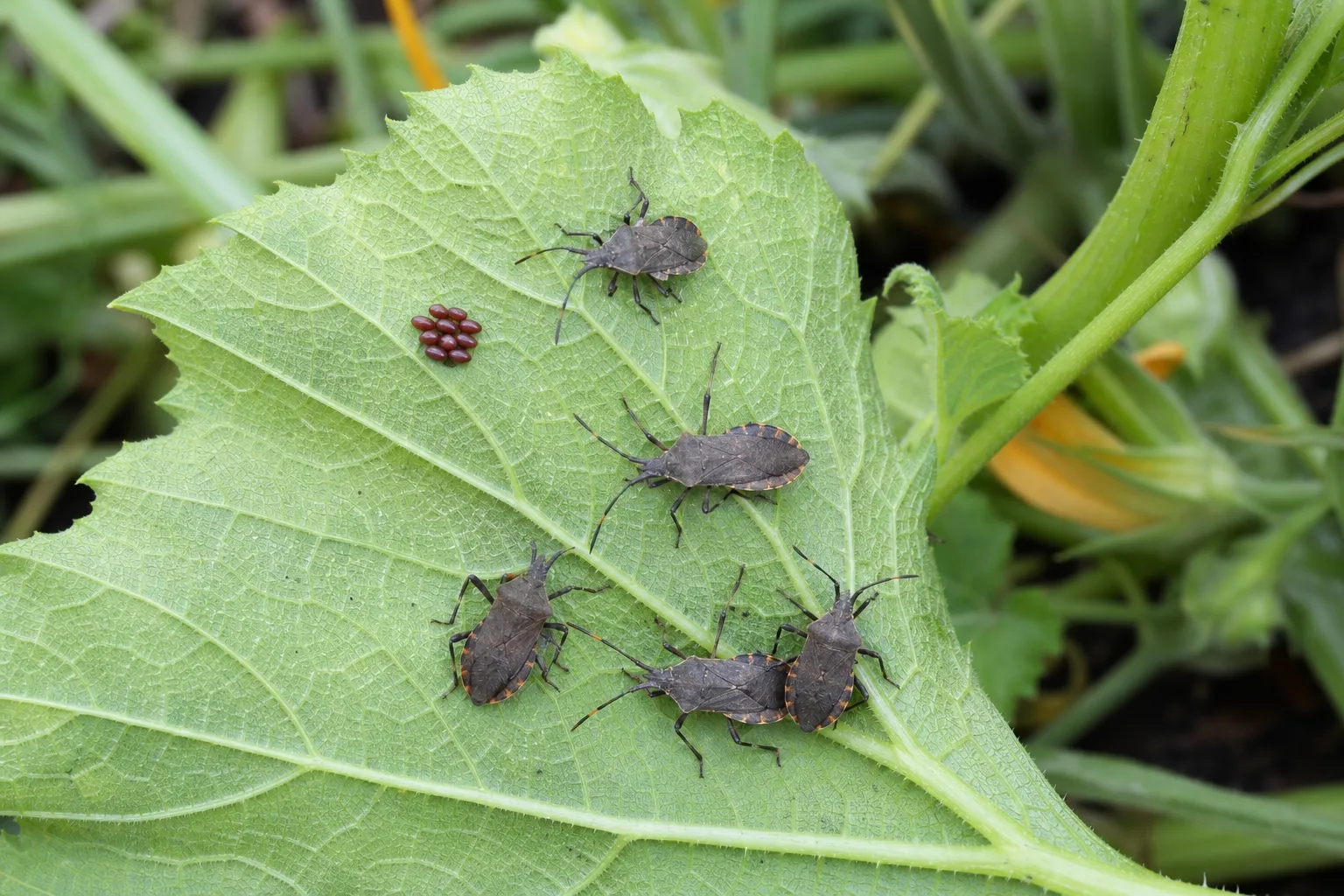
Gray-brown insects clustered under your zucchini leaves are not a cosmetic problem—they are squash bugs (Anasa tristis) draining sap, injecting toxic saliva, and sometimes spreading cucurbit yellow vine disease before you notice wilt. The fix is not one spray on a random Saturday. It is a timed sequence: find eggs before they hatch, kill nymphs while they are soft-bodied, accept that adults are stubborn, and block next year’s adults from finding your seedlings in the first place.
If you already fought this pest last season, pair this in-season control guide with our keep squash bugs from returning plan—sanitation and row covers do different jobs at different times, and using both is how you break the cycle.
What Squash Bugs Are and Why They Hit Cucurbits Hard
Squash bugs are true bugs (order Hemiptera, family Coreidae)—sap-sucking insects built for cucurbits. They feed on squash, pumpkins, zucchini, melons, cucumbers, and gourds by piercing leaf and stem tissue with mouthparts evolved for the job. A female can lay up to 200 bronze eggs in clusters on leaf undersides, and populations explode during hot, dry stretches when plants are already stressed (Colorado State University Extension).
Unlike cucumber beetles, squash bugs are not famous disease vectors—but they can carry cucurbit yellow vine disease, a bacterial wilt that clogs phloem and kills vines near harvest (UConn IPM). Even without CYVD, heavy feeding weakens vines, scars fruit, and can kill young seedlings outright.
Squash Bugs vs Stink Bugs, Assassin Bugs, and Squash Vine Borers
Misidentification wastes time and kills allies. Use behavior plus shape:
Squash bugs are flat, oval, about 5/8 inch long, gray-brown with orange-yellow edges on legs and antennae when flipped over. They congregate in groups on cucurbit stems and leaf undersides. Stink bugs are wider, more shield-shaped, and usually feed on other crops—they walk with a characteristic slow, armored gait. Assassin bugs look superficially similar but are solitary predators with a curved proboscis; never drop them in soapy water. Squash vine borers are moths whose orange-and-black adults lay eggs at stem bases—damage shows as sudden wilting and frass at the crown, not stippled leaves.
If the insect is alone, holding another bug, and not on a cucurbit leaf cluster, look twice before you squish.
Signs You Have Squash Bugs (Not Just Heat Stress)
Heat wilt and squash bug damage both yellow leaves—but the pattern differs. Squash bug feeding starts as small yellow stipples where sap was removed. As toxins accumulate, spots turn brown, leaves crisp, and vines wilt even when soil moisture is fine (Colorado State University Extension). Flip leaves: bronze egg clusters between veins and gray nymph groups are the smoking gun.
Leaf Damage, Fruit Scarring, and When Plants Collapse
Mature plants tolerate moderate feeding better than seedlings with only two or three true leaves. On fruit, squash bugs cause pitted, corky scars on zucchini and pumpkin skins—cosmetic on hard squash, market-killing on summer squash sold fresh. When dozens of adults feed on a young plant, whole vines collapse within days. Established pumpkins may limp through summer with scarred fruit; ignoring bugs until August still costs you yield and seeds overwintering adults for next June.
Use this quick threshold guide before you choose a method:
- Seedlings (0–4 true leaves): Any egg cluster or adult warrants immediate removal—plants have almost no tolerance.
- Vegetative vines (5+ leaves, no fruit): Remove all eggs and nymphs; handpick adults when counts stay below roughly one adult per plant.
- Flowering and fruiting vines: Continue egg scraping; add soap sprays on nymph clusters only; avoid spraying open blossoms.
- Late season (fruit sizing): Focus on protecting fruit quality and preventing adults from overwintering nearby—heavy feeding now still reduces storage life of winter squash.
If stippling covers more than 30 percent of a leaf and new leaves keep yellowing despite removal, the population has outpaced handpicking alone—add nymph-targeted soap while doubling inspection frequency.
The Squash Bug Life Cycle—and Your Control Window
Understanding timing is the difference between control and chasing adults all summer:
- Overwinter: Only adults survive, hiding under debris, mulch, and boards near last year’s patch.
- Spring emergence: Adults fly to young cucurbits, feed, and mate—often from late May through June in northern gardens, earlier in the South.
- Egg laying: Bronze eggs appear on leaf undersides; hatch in 7–14 days (about 10 days is a safe scouting interval).
- Nymph stage: Five instars over 4–6 weeks; nymphs feed in groups, start green, turn gray, and are most vulnerable to soap sprays.
- Adult generation: New adults appear mid- to late summer; late-season adults often do not lay eggs but still feed and overwinter (Colorado State University Extension).
In warm regions, two or three generations per year are possible; northern gardens often see one main brood plus stragglers. Your control window is narrowest at egg and early nymph stages—miss that, and you spend July fighting armored adults that shrug off most organic sprays.
Why Ten-Day Egg Checks Beat Monthly Spraying
Squash bug eggs hatch on a predictable clock. Checking every three days during peak season catches clusters before nymphs spread. A monthly spray misses two full generations of egg laying. Put a recurring phone reminder on your cucurbit bed from June through August—ten minutes of leaf flipping beats an hour of wilt recovery.
Step 1: Inspect Leaves and Crowns Every Three Days
Start at the crown where stems meet soil—adults hide there during midday heat. Work outward, flipping every leaf, especially lower ones touching mulch. Check leaf litter and boards within ten feet of the bed; bugs retreat there when disturbed.
Best times: early morning when bugs are sluggish, or immediately after rain or irrigation when adults surface from soil to escape saturated conditions (Colorado State University Extension). Midday inspections miss bugs buried in mulch—do not assume a clean top-side glance means you are clear.
Carry a white bucket half-filled with soapy water (a tablespoon of dish soap per gallon). White makes nymphs visible; soap breaks surface tension so adults cannot climb out.
Scouting protocol (ten minutes per bed): Start at one end of the row and work systematically—do not hop between plants randomly. For each plant, flip three lower leaves (bugs prefer shade and moisture), inspect the crown, and scan the top two inches of soil surface for hiding adults. Mark heavily hit plants with a ribbon so you recheck them first on the next pass. Log the date and egg count in a phone note; when counts rise week over week, add soap sprays or row covers immediately rather than waiting for wilt.
Step 2: Scrape and Destroy Egg Clusters First
Eggs are your highest-leverage target. Each destroyed cluster prevents up to two dozen nymphs you would otherwise handpick or spray later.
Eggs look like tiny bronze footballs laid in orderly rows between leaf veins—sometimes on stems. Scrape them with a butter knife, old credit card, or duct tape wrapped sticky-side out. Drop scrapings into soapy water or crush them on a hard surface. You can remove eggs and keep the leaf; if a leaf is heavily infested, cut it off and bag it instead of composting.
Never compost material with eggs or live bugs—home piles rarely heat enough to kill them. Bag and discard, or use municipal yard waste. This single habit prevents more reinfestation than most sprays.
Step 3: Handpick Adults and Nymphs Into Soapy Water

Handpicking feels slow until you see how fast a bucket fills. Hold the soapy water directly under the leaf and flick bugs in with a finger or stick—they drop straight down when startled. Nymphs cluster; adults scatter—work clusters first.
Some gardeners run a shop vac with a narrow nozzle at dawn for large infestations—empty the canister into soapy water immediately so bugs do not crawl back out. Gloves help; squash bugs emit a foul odor when crushed but are not dangerous to handle.
Repeat every three days through peak season. Consistency interrupts the life cycle more reliably than any single heroic session.
Board Traps and the Post-Rain Window
Overnight board, tile, or wet cardboard traps exploit squash bugs’ habit of gathering under flat objects for warmth and moisture. Place traps near infested plants at dusk; check at dawn before bugs retreat to vines. Drop trapped adults into soapy water.
Combine traps with post-rain handpicking—when soil surface is wet, bugs climb stems where they are easy targets. Dry, hot afternoons are the worst time to hunt; schedule control for mornings after watering or rainfall.
Trap placement tips: Use one trap per three to four infested plants, pressed flat against moist soil—not propped on edge where bugs will not gather underneath. Wet cardboard lightly if the bed is dry; squash bugs seek humidity overnight. In the morning, lift traps slowly—bugs drop quickly when startled. Process traps before direct sun hits the bed, when bugs are still sluggish.
Step 4: Use Insecticidal Soap on Nymphs—Not Adults
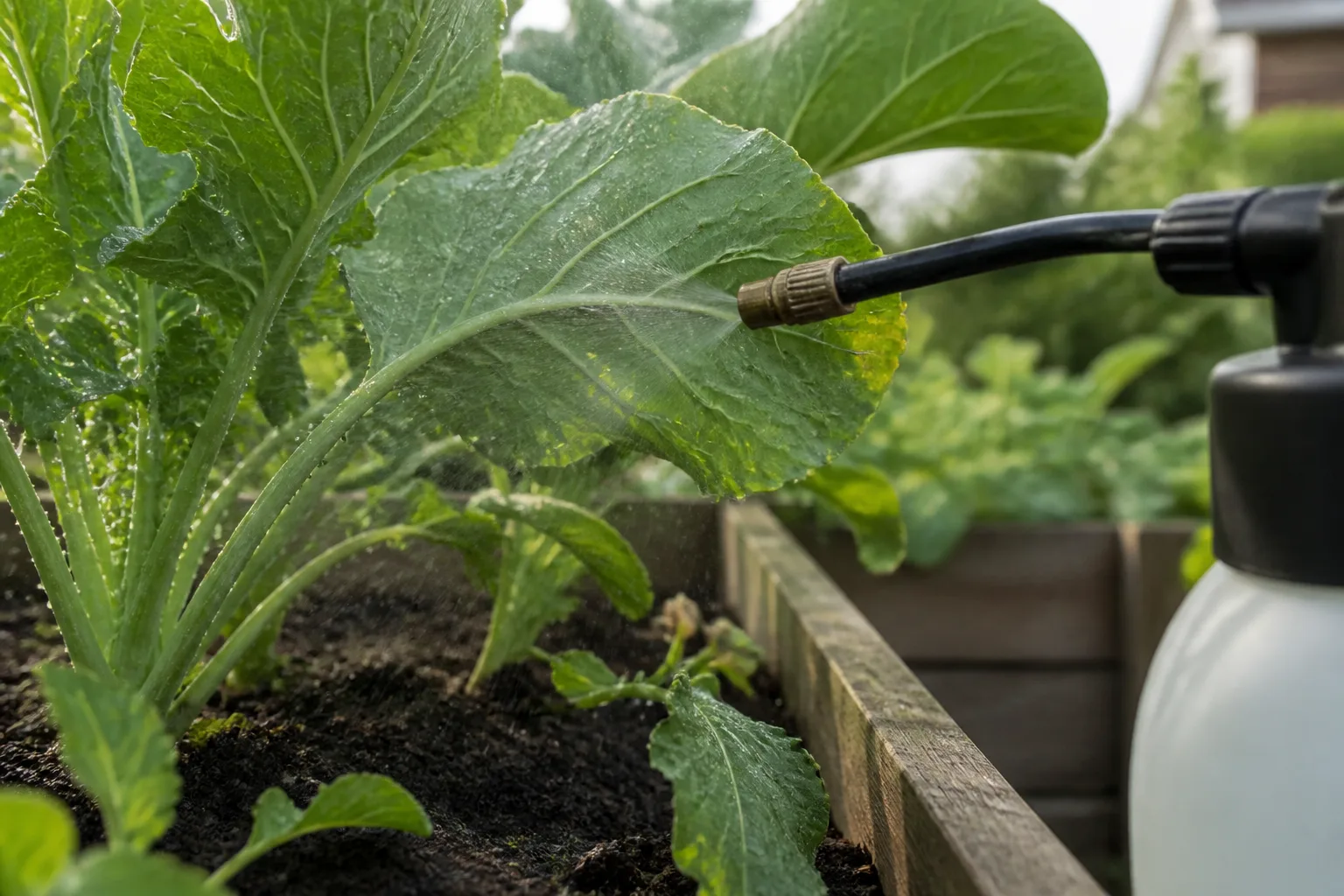
Adult squash bugs have hard cuticles. Insecticidal soap and horticultural oils work on young nymphs through direct contact suffocation—not as a repellent blanket. After handpicking visible bugs, spray leaf tops and undersides where nymph clusters remain. Reapply every 3–5 days until nymph counts drop (Colorado State University Extension).
Use commercial insecticidal soap labeled for vegetables, or see our how to use insecticidal soap guide for mixing and spot-test rules. Neem oil can suppress feeding and reproduction on nymphs when applied per label—details in using neem oil as an organic insecticide. Neither product reliably kills mature adults; do not keep spraying hoping for a miracle.
Spray rules that protect pollinators: apply in early morning or evening, never during midday heat, and avoid open flowers. Soap is non-selective—it kills soft-bodied beneficials on contact too. Target nymph patches, not the whole garden indiscriminately.
Step 5: Deploy Row Covers and Resistant Varieties Early
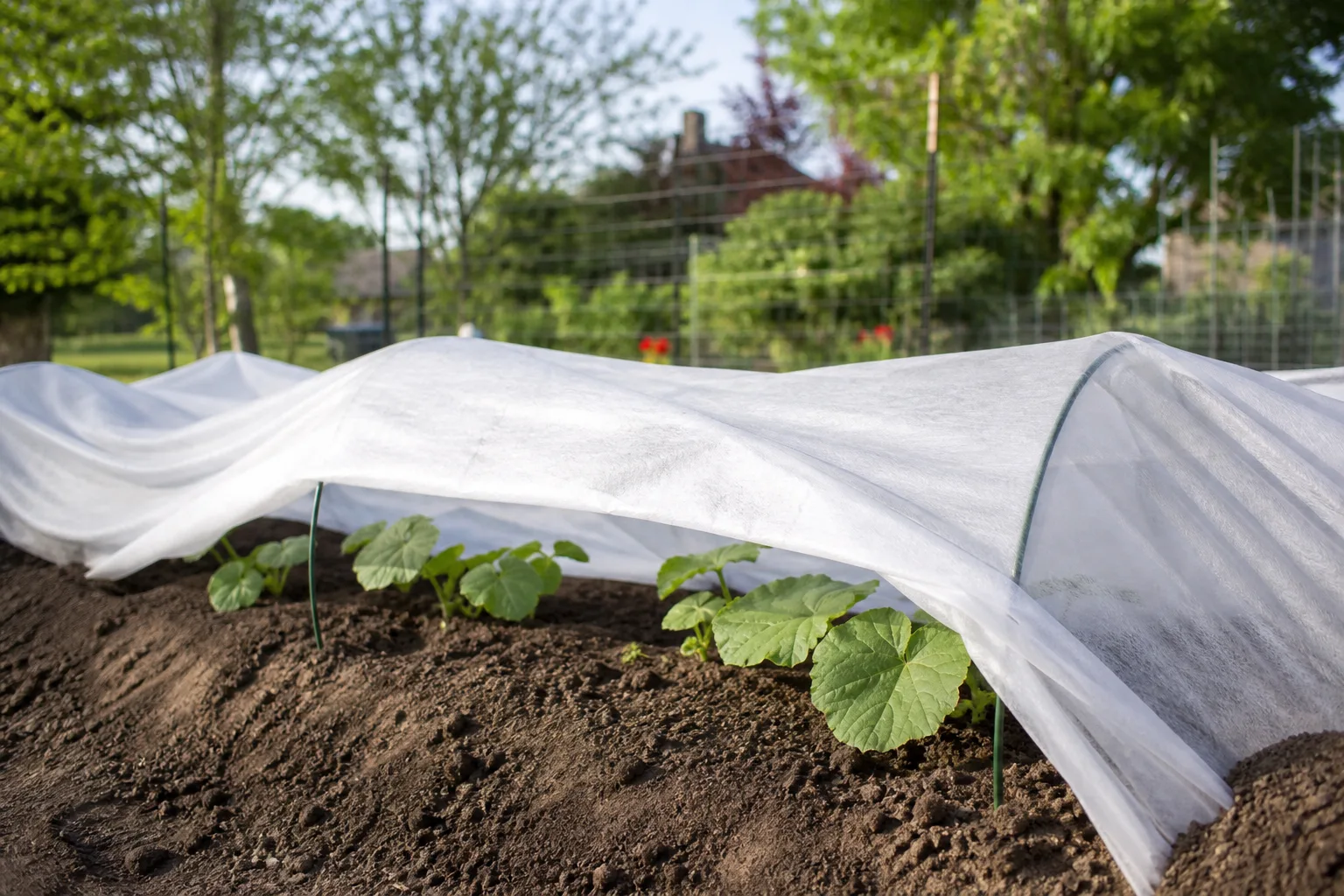
If squash bugs overwintered near your beds, floating row cover on seedlings is the strongest barrier. Install at transplant or when seeds emerge; seal edges with soil so adults cannot crawl underneath. Remove covers when flowers open for pollination—or hand-pollinate and keep covers longer in severe years (UC IPM).
Resistant varieties reduce damage but do not eliminate scouting. Extension trials consistently rank butternut, ‘Royal Acorn,’ and ‘Sweet Cheese’ among the least susceptible types, while many summer squash and hubbard types attract heavier pressure. If you grow bug magnets like yellow straightneck, place them as trap crops on the garden perimeter and destroy bugs there before they reach main plantings—a technique also used to manage CYVD in commercial fields (UConn IPM).
Crop rotation: move cucurbits to a bed that did not host them for three to five years when space allows. Rotation alone will not stop flying adults from neighboring yards, but it breaks local population buildup.
Step 6: Invite Beneficial Insects Without Harming Them
Natural enemies target eggs and nymphs more than adults. The tachinid fly Trichopoda pennipes parasitizes squash bugs—its larva kills the host from inside (Colorado State University Extension). Ground beetles, ladybugs, and assassin bugs also consume nymphs.
Support them by planting pollen-rich flowers—dill, cilantro, yarrow, borage, sunflowers—near cucurbits, and by avoiding broad-spectrum sprays during peak beneficial activity. Companion planting alone will not replace egg scraping, but it lowers the nymph count your handpicking must handle. For broader cucurbit bed design, see companion plants for cucumbers—many companions overlap for squash culture.
When to Worry About Cucurbit Yellow Vine Disease
CYVD is less common than squash bug leaf damage but more devastating. The bacterium Serratia marcescens overwinter in squash bugs and infects seedlings when bugs feed in spring (UConn IPM). Young plants with fewer than five true leaves are most vulnerable.
Watch for vines that yellow suddenly near harvest despite adequate water, with erect, curled leaf margins and honey-colored phloem in the crown when you cut a stem. Roots may rot secondary to clogging. Infected plants will not recover—remove and destroy them (do not compost). Aggressive early-season squash bug control on seedlings is the primary CYVD prevention strategy in affected regions.
If your area has no CYVD history, still control squash bugs for yield—but prioritize CYVD response if multiple vines collapse with crown discoloration in late summer.
CYVD vs ordinary squash bug damage: Ordinary feeding causes scattered stippling that progresses leaf by leaf. CYVD often triggers whole-plant yellowing within days, with leaves standing upright and margins curling inward while fruit near maturity softens prematurely. Cut a lower stem: honey-brown phloem in the crown strongly suggests CYVD, not drought. Remove suspect plants immediately and intensify squash bug control on remaining seedlings—CYVD management is about stopping bug colonization early, not curing infected vines.
Five Prevention Habits That Stop Next Year’s Infestation
In-season control saves this year’s harvest; fall habits determine whether you restart from zero next spring:
- Remove and destroy all cucurbit vines and fruit debris after frost—do not leave infested stems in beds or compost piles.
- Clear hiding places: rake thick mulch back from crowns in fall if you had heavy infestations; store boards and pots away from vegetable beds.
- Rotate cucurbit plantings and use row covers on bug-prone sites every spring without exception.
- Choose resistant varieties for main crops; relegate highly susceptible types to trap-crop borders if you grow them at all.
- Scout from day one—the first eggs appear weeks before damage looks dramatic.
Our keep squash bugs from returning guide walks through fall sanitation, overwintering sites, and spring barrier timing in more detail.
What Not to Do When Squash Bugs Show Up
Do not wait for visible wilt. By then, multiple generations may already be present. Do not compost infested vines. Do not spray open flowers with soap or oil—you will kill pollinators without touching hidden adults under mulch. Do not confuse squash bugs with assassin bugs and wipe out predators. Do not rely on diatomaceous earth alone on wet foliage—it loses effectiveness when damp and does not reach bugs under leaves (what is diatomaceous earth). Do not apply synthetic pyrethroids casually if you are committed to organic production—they kill beneficials and require label compliance; handpicking plus nymph-targeted soap resolves most home-garden infestations when started early.
If yellow leaves appear without visible bugs, rule out water stress, powdery mildew, and nutrient issues before assuming pests—our cucumber leaves turning yellow guide covers non-pest causes that mimic squash bug stippling.
Conclusion
Squash bugs win when gardeners treat them like a one-time spray problem. They lose when you scrape eggs on a ten-day rhythm, handpick into soapy water after rain, soap-spray nymph clusters—not adults, and block seedlings with row covers in bug-prone gardens. Mature plants can survive some feeding; seedlings and CYVD-susceptible sites cannot.
Start tomorrow morning with a bucket, a butter knife, and ten minutes under the leaves. Destroy every bronze egg cluster you find. Repeat in three days. That boring routine saves more squash than any product label promising instant knockdown—and it keeps next year’s adults from inheriting a garden full of overwintering shelter you could have cleared in fall.