How to Get Rid of House Flies With Vinegar
Learn how vinegar lures and repels house flies, the best trap recipe, where to place it, and when to call a pro after two weeks.
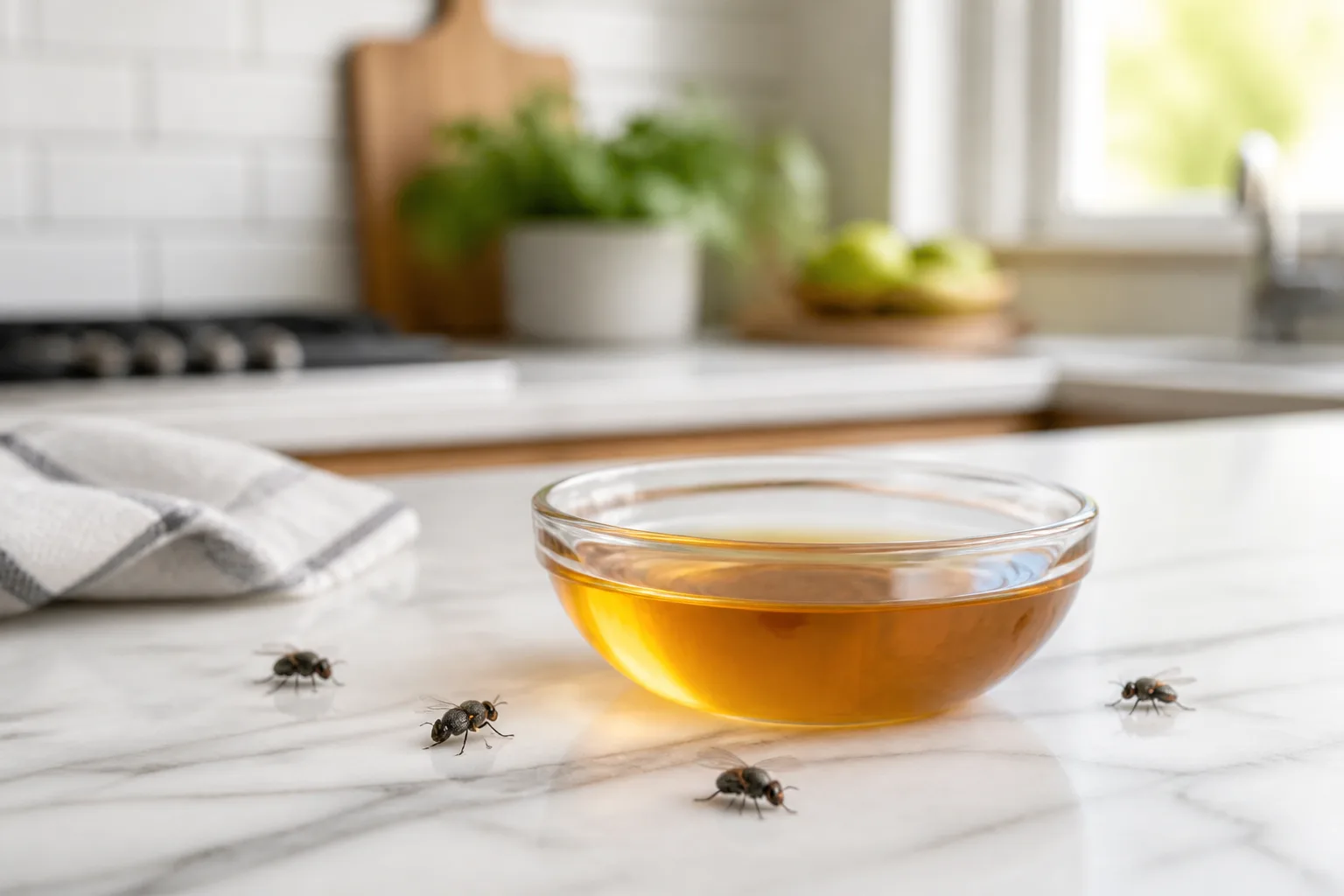
A shallow bowl of apple cider vinegar can knock down the house flies buzzing your kitchen—but only if you treat vinegar as one tool in a filth-fly management plan, not a summer-long force field. Vinegar excels at luring adults into a trap and, for a few hours, masking entry points with a sharp scent flies avoid. It does not remove the trash slime, pet waste, or drain film where larvae develop. Extension programs consistently rank sanitation and exclusion above sprays and baits for house flies (UC IPM). Vinegar fits after you start that cleanup—or in parallel while you audit breeding sites.
The Quick Answer: Trap Adults, Remove Breeding Sites, Block Entry
Fastest meaningful relief: set a vinegar + dish soap trap away from food, then walk your kitchen and trash area for breeding material—leaking bin liners, forgotten produce, wet recycling, pet food left out overnight, and drain scum. Tie off trash, rinse bins, and fix torn screens the same day. Same-hour comfort: run a fan across open doorways while you work; flies struggle in moving air.
Trap recipe that works for house flies: pour ½ to 1 inch of apple cider vinegar into a shallow bowl or jar. Add 2–3 drops of dish soap—enough to break surface tension so flies sink instead of skating across the liquid. Place the trap 6–10 feet from your fruit bowl or stove, not beside open food. Refresh daily while catches stay high; stale vinegar loses its fermentation punch within 24–48 hours.
| Your situation | Do this first | Add vinegar this way | Skip this |
|---|---|---|---|
| Flies landing on counters | Find and remove moist organic waste | ACV + soap bowl away from prep surfaces | Spraying vinegar directly on cutting boards |
| Flies follow trash odor | Seal bags; wash bin; check for maggots | Trap near bin outside kitchen if possible | Relying on trap while bin still leaks |
| Few strays after screen left open | Close door; check screen tears | One trap overnight | Whole-house vinegar fog |
| Heavy swarm after warm week | Full sanitation audit + exclusion | Trap + fan + light trap in non-food room | Promising “all summer” from vinegar alone |
House flies (Musca domestica) are filth flies: adults live roughly 15–25 days in warm conditions, but females lay eggs in decaying organic matter continuously (Utah State University Extension). Killing adults in vinegar while larvae feed in a hidden bag buys hours, not weeks.
What to Do in the First Hour
Start with a 10-minute source hunt. Open the under-sink bin, lift the compost crock lid, and check the garage can if flies enter from there. If you see maggots, stop debating trap brands—follow a thorough maggot cleanup routine before resetting vinegar baits. Mix one trap, place it downwind of the problem zone, and patch the obvious entry: a propped door, a torn screen, or a trash lid that will not seat flat.
Why Vinegar Works on House Flies—and What It Cannot Do
Vinegar plays two different roles, and mixing them up is why many pantry “hacks” disappoint.
Fermentation Lure vs Short-Range Repellent
As a trap bait, apple cider vinegar mimics fermenting fruit and organic breakdown—odors house flies already seek when hunting food and egg-laying sites. The vinegar attracts them. Dish soap removes the liquid’s surface tension; when a fly lands expecting a stable surface, it breaks through and drowns. That is knockdown, not long-distance repulsion.
As a repellent spray, diluted vinegar—and especially vinegar paired with mint or peppermint oil—puts a strong volatile scent on door frames, window sills, and trash-adjacent cabinets. Flies rely heavily on smell to navigate (Gardening Know How). The scent confuses short-range orientation. The effect is temporary: vinegar aroma fades as it dries, often within several hours in a ventilated kitchen. You are buying time to finish cleaning, not sealing the house for months.
Plain vinegar on a countertop does not sterilize breeding sites. It is not a registered pesticide. Warm vinegar may help wipe greasy splash zones where flies rest, but it does not reliably kill eggs embedded in trash or drain biofilm the way physical removal does.
Why “All Summer” Social Posts Overpromise
Cleaners and social posts love a single-ingredient story because vinegar is cheap, familiar, and safe compared with broadcast sprays. The honest version: vinegar is a support tool for adult fly pressure while you fix larval habitat. UC IPM is explicit—elimination of larval habitat is the preferred management method; adulticides and traps are supplements when sanitation is underway (UC IPM). If breeding material stays, new adults replace trapped ones within days. Outdoor populations also migrate inward through open doors; vinegar inside cannot control a dumpster 50 feet from the kitchen that never gets serviced (Utah State University Extension).
Confirm You Are Fighting House Flies, Not Fruit Flies
Vinegar traps catch many small flies—but the species determines whether the trap is solving your problem or decorating the counter.
House Fly ID Checklist
House flies are about ¼ inch long, dull gray, with four dark stripes on the thorax (Utah State University Extension). They rest on walls, ceilings, and vertical surfaces, buzz loudly, and show up near garbage, pet areas, and general food prep—not only over a single banana. Larvae develop in manure, garbage, and moist decaying matter.
When Your Vinegar Trap Is Catching the Wrong Insect
Fruit flies (Drosophila) are smaller, tan, and tend to hover around fermenting produce, wine, and recycling. They also fall for vinegar—but if your only problem is a fruit bowl, you may get faster clarity from the species-specific setups in our homemade gnat trap guide, which separates fruit flies, fungus gnats, and drain flies.
Drain flies look fuzzy and moth-like around sinks; vinegar bowls ** rarely** fix them because larvae live in drain slime, not vinegar cups. Cluster flies overwinter in wall voids and sun on windows in fall—they are not a vinegar-trap problem. Mis-ID means a full jar while the real source stays active.
Best Apple Cider Vinegar Trap for House Flies
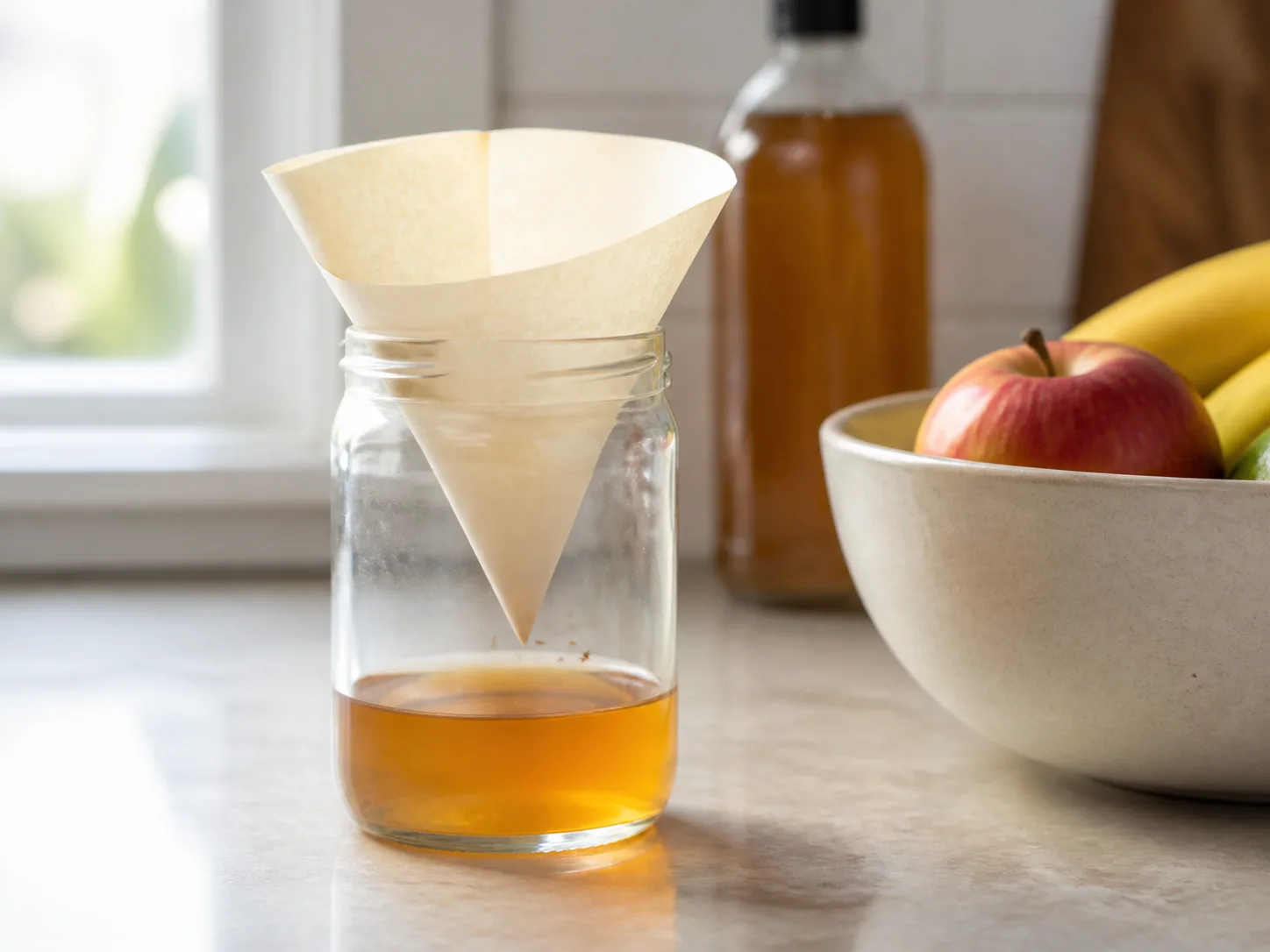
For house flies, apple cider vinegar outperforms white vinegar as a lure because its fermentation note is richer. White vinegar plus soap still works when cider is unavailable—use the same depth and soap dose.
Recipe, Placement, and How Often to Refresh
Ingredients: apple cider vinegar, liquid dish soap, a shallow bowl or wide-mouth jar, optional plastic wrap and a toothpick.
Steps:
- Pour ½ to 1 inch of cider vinegar into the container—deep enough to drown flies, shallow enough that soap mixes easily.
- Add 2–3 drops of dish soap and stir gently; you should not need suds.
- Place the trap on a stable surface 6–10 feet from open food and prep areas—counter corner, top of the fridge, or floor near the bin outside the immediate cooking zone.
- Check after 3–6 hours on a warm day. Discard and remake when the liquid looks cloudy, when catch slows, or at least every 24–48 hours.
- While the trap works, remove competing odors: rinse recycling, tie trash, and wipe sticky splash behind the bin.
Placement rules: never sit a trap beside a cutting board— you attract flies through the prep zone. If flies enter from the backyard, set a trap inside near the door they use, but prioritize outdoor sanitation described in our outdoor fly control guide. Multiple small traps beat one giant bowl in a large open kitchen.
Open Bowl vs Funnel Jar vs Cling-Film Cover
Open bowl + soap is the fastest setup and works well when you will empty it daily. Flies land, break surface tension, and sink.
Funnel jar: cut the top off a plastic bottle, invert the neck into the base filled with vinegar + soap. Flies enter the wide opening and struggle to exit—useful when you want less evaporation and fewer spills around pets.
Cling-film cover: stretch film over a jar, poke 3–5 small holes with a toothpick. Flies crawl in through holes and have trouble exiting upward. This method catches well but can dry out faster—check daily.
All three depend on the same principle: fermentation attractant + physical capture. Pick the format that fits your kitchen layout and pet access.
Vinegar Spray Repellents for Door Frames and Hot Spots
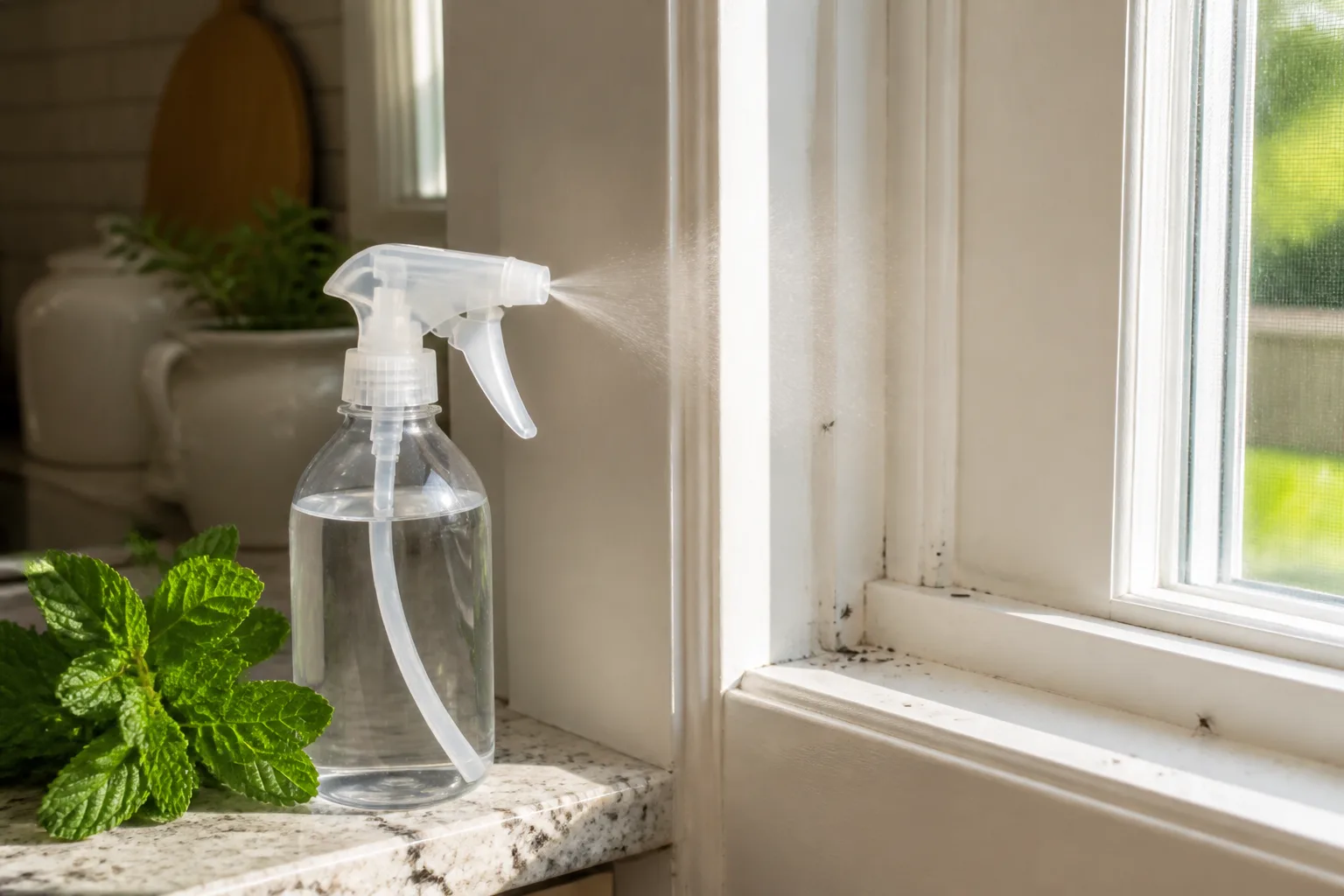
Sprays repel rather than lure—use them on pathways, not as a substitute for traps near breeding odor.
Basic spray: mix 1 part white or apple cider vinegar with 1 part water in a clean spray bottle. Mist door frames, window sills, and trash-cabinet hinges—surfaces flies cross before entering food zones. Avoid spraying directly on food prep surfaces, dishes, or pet bowls. Wipe edible-contact counters with water only after using vinegar nearby.
Reapply every few hours during heavy fly days or after cooking steam clears the scent. Vinegar spray is a barrier refresh, not a one-and-done summer shield.
Mint and Essential Oil Mixes That Last Longer Than Plain Vinegar
Peppermint and spearmint oils add a second volatile layer that many filth flies avoid when fresh. In a 16 oz spray bottle, combine 1 cup water, ½ cup vinegar, and 10–15 drops peppermint or spearmint oil. Shake before each use. Test on a hidden patch of painted trim first; essential oils can mark some finishes.
Mint leaves bruised in a bowl of vinegar release oil slowly on a windowsill—lower mess, milder effect. Pair mint sprays with physical exclusion: door sweeps, tight-fitting lids, and repaired screens. For broader natural pest barriers that complement vinegar, see natural ant deterrent tactics—many of the same scent + sanitation principles apply, though ants and flies differ in biology.
Sanitation Steps Vinegar Will Never Replace
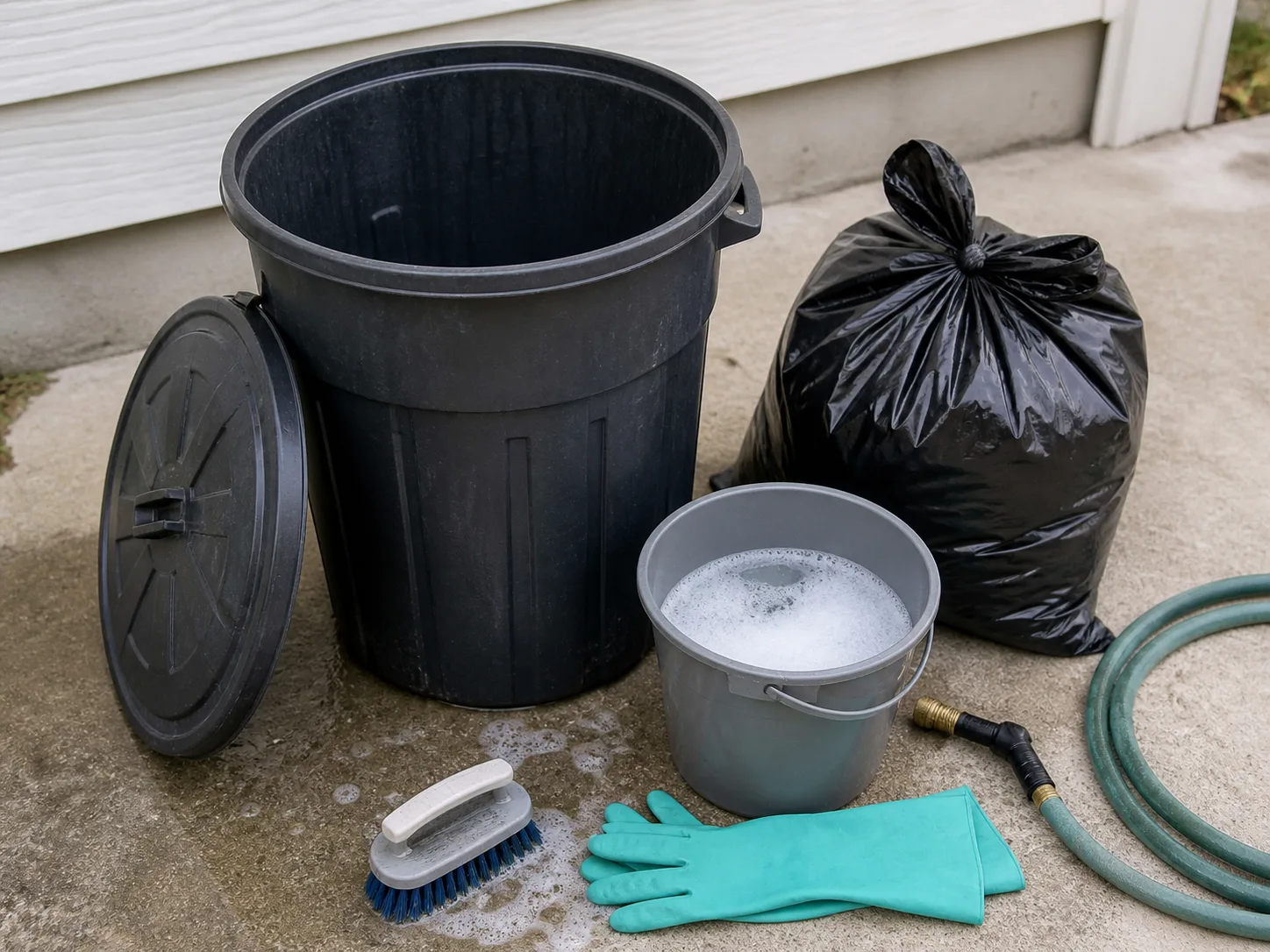
Traps measure adult pressure; sanitation stops production. UC IPM ranks removal of larval developmental sites as the preferred filth-fly strategy (UC IPM).
Trash, Drains, Pet Waste, and Hidden Organic Matter
Trash and recycling: use plastic bags, tight lids, and weekly bin washing with soap and water—even when the can is not full. Garbage left more than a week often breeds blow flies and house flies (UC IPM). Rinse bottles and cans before they sit in a warm garage.
Pet areas: scoop waste daily; wash indoor pet food mats; do not leave wet kibble overnight. House fly eggs land on manure and decaying organic matter (Utah State University Extension).
Drains: if small flies hover at the sink, vinegar in a bowl will not fix biofilm in the trap arm. Scrub the drain opening and consider a drain-fly test as outlined in the homemade gnat trap guide.
Hidden sources: check behind the fridge drip pan, under the stove, and in seldom-opened cabinets for forgotten potatoes or onions. A single rotting item can seed weeks of adults.
Dumpster distance: Utah State Extension recommends keeping dumpsters at least 50 feet from building entrances when you control placement (Utah State University Extension). Talk to property management if shared bins sit beside your door.
Combine Vinegar With Fans, Screens, and Light Traps

Vinegar works best inside a layered plan:
Oscillating fans across doorways and eating areas disrupt flight paths immediately—pair them with vinegar traps downwind, not in the fan blast where scent disperses too fast.
Screens and door sweeps stop new adults while traps knock down those already inside. Caulk gaps around utility penetrations; house flies often enter through poor exclusion even when sanitation is decent (UC IPM).
UV light traps can help in non-food rooms—garages, mudrooms, or commercial-adjacent spaces—when placed so they are not competing with open trash (UC IPM). Do not use bug zappers near food prep; splatter contaminates surfaces.
Sticky ribbons catch a few flies in confined spots but are less useful for heavy house fly infestations than odor baits like vinegar. Save ribbons for monitoring after sanitation, not as the primary tool.
Outdoor pressure feeding indoor swarms needs yard-side cleanup too—compost turning, pet waste pickup, and sealed bins—covered in detail in our outdoor fly guide.
When Vinegar Is Not Enough—and When to Call a Pro
Escalate when any of these apply after 7–14 days of consistent traps, sanitation, and exclusion:
- Counts stay high despite fresh traps and clean bins—suggesting a hidden carcass, broken sewer line, or inaccessible void breeding site.
- You see maggots repeatedly after thorough trash cleanup—breeding material is still present.
- Cluster flies or drain flies dominate the catch; vinegar traps are treating the wrong biology.
- Flies threaten food service, childcare, or immune-compromised household members—filth flies can transfer pathogens from waste to food (Utah State University Extension).
- A neighbor’s uncovered dumpster or livestock operation feeds continuous migration you cannot source-control alone.
Professionals can inspect wall voids, crawlspaces, and commercial bait placements when nonchemical steps stall. In most homes, UC IPM notes pesticides are not needed if sanitation and screens are solid (UC IPM). Vinegar was never meant to replace that foundation—it buys calm while you build it.
Conclusion
Apple cider vinegar belongs in your house fly toolkit as a cheap, low-toxicity adult knockdown: a soap trap for flies already indoors and a short-lived spray on entry paths when paired with mint or peppermint. It does not replace trash removal, drain cleaning, screens, and fan barriers—the steps extension guides put first. ID house flies before you commit to vinegar alone, refresh traps daily while catches are active, and audit breeding sites with the same energy you spend mixing the bowl. When two weeks of disciplined IPM still leaves a swarm, the problem is almost certainly habitat you have not found yet—not weak vinegar. Fix the source, keep a trap as your barometer, and save the pantry bottle for the next warm week when a door stays open too long.