How to Get Rid of Flies Outside and Keep Them Away
Flies ruining your patio? Remove breeding sources first, then pick the right trap, fan, or repellent for house flies, cluster flies, or fruit flies—with extension-backed safety notes.
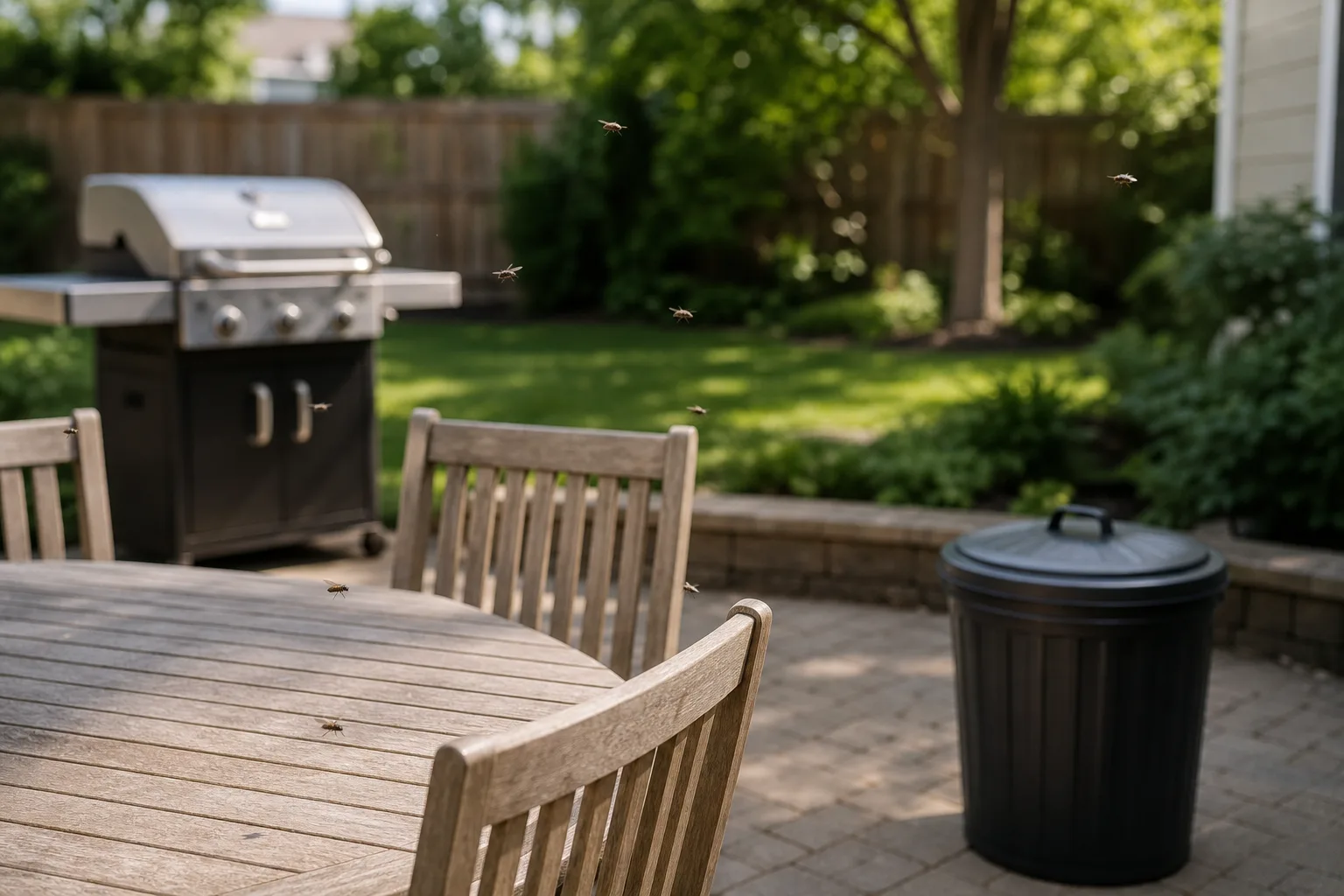
A handful of flies on a warm afternoon is normal. Dozens circling your grill, landing on every glass, and following you through the door is a breeding-site problem—and no amount of swatting fixes that. Outdoor fly control works when you treat it like integrated pest management (IPM): remove what flies need to reproduce, then add knockdown or barrier tools matched to the species and the space you actually use.
The Quick Answer: Sanitation First, Then Match the Method to the Fly
Fastest meaningful relief: walk your property on a warm day and find where flies cluster—that spot is almost always food, moisture, or larval habitat. Tie off leaking trash, scoop pet waste, turn compost, and dry standing water before hanging traps. Same-day patio relief: run an oscillating fan across the eating area, set vinegar or cone traps downwind and away from food, and light citronella or unscented candles for smoke barrier—not because candles are magic, but because flies struggle in moving air and avoid dense smoke.
House flies (Musca domestica) breed in decaying organic matter; adults live roughly 15–25 days under good conditions (Penn State Extension). Killing adults without removing larvae means new flies in days, not weeks. Cluster flies overwinter in wall voids and sun on siding in fall—they are not fixed by trash cleanup alone. Fruit flies need fermenting sugars near the patio bar or compost crock, not a yard-wide spray.
| Your goal | Do this first | Add this second | Skip this |
|---|---|---|---|
| Stop a backyard swarm | Find and remove breeding material | Cone or bottle traps 20+ feet from patio | Blanket pesticide on lawn |
| Save tonight’s cookout | Fan + lid all food + fresh trash liner | Traps at property edge | Fogger as your only step |
| Fewer flies indoors | Seal screens + door sweeps | Outdoor sanitation audit | Indoor spray only |
| Fall cluster flies on siding | Vacuum resting flies; seal attic/crack entries | Professional void treatment if heavy | Sticky traps on every window |
UC IPM ranks sanitation and exclusion above sprays for filth flies because adults are mobile and larvae hide in moist organic matter (UC IPM). Traps and fans buy comfort while sanitation ends the cycle.
Signs You Have an Outdoor Fly Problem (Not Just a Few Strays)
Two or three flies do not mean failure—they mean open habitat somewhere within a few hundred feet. Infestation signs show up in patterns, not single insects.
Flyspecks, Swarms, and Maggots
Flyspecks—pinhead dark spots on walls, bin lids, or porch rails—are fly excrement and usually sit within a few feet of feeding or resting sites. Follow the specks backward to the source. Swarms hover at predictable times on warm days; watch where they loiter at midday—that is your audit map. Maggots in trash, compost, or pet areas mean active breeding; adult traps alone will not catch up until the material is removed or sealed. If maggots are in your bin, use our step-by-step maggot cleanup guide before debating trap brands.
When Flies Mean a Deeper Issue Nearby
Heavy fly numbers plus yellowjackets or wasps hunting flies can signal a large carcass or dump pile nearby—not just your kitchen scraps (UC IPM home-and-landscape flies). Check behind sheds, under decks, and along fence lines for dead animals, forgotten bagged leaves, or a neighbor’s uncovered bin. Persistent indoor flies after outdoor cleanup often trace to attic cluster flies, a broken sewer cap, or pet waste under shrubbery—not “bad luck.”
Identify Which Fly You Are Fighting
Outdoor tactics differ by species. Mis-ID wastes weekends.
House Flies
House flies are dull gray, about ¼ inch long, with four dark stripes on the thorax (Utah State University Extension). They breed in moist, decaying matter: garbage, manure, grass clippings in plastic bags, wet pet food, and drain scum in outdoor sinks. They rest on sunny vertical surfaces and follow food odor. Control = sanitation + tight lids + traps at edges.
Cluster Flies
Cluster flies are larger, slower, with a checkered gray abdomen and golden hairs underneath. They breed in earthworm-rich soil—not your trash—and pile on sunny walls and attic voids in fall seeking warmth. Vacuuming resting adults and sealing entry points matter more than vinegar traps. If hundreds appear indoors every autumn, outdoor sticky paper will not touch the void population.
Fruit Flies and Fungus Gnats at the Patio Edge
Fruit flies are tiny tan flies hovering over fermenting fruit, beer dregs, recycling bottles, and compost crocks. Patio control is source removal plus small vinegar traps—same mechanics as our homemade gnat and fruit-fly traps, placed away from the bar. Fungus gnats from overwatered porch planters look similar but breed in wet potting mix; let the top inch dry or repot—sticky cards at soil level beat yard-wide zappers.
Find and Remove Breeding Sources Before You Buy Traps
Flies need moist organic material for eggs and larvae. Walk this list on a warm afternoon when activity peaks.
Trash Bins and Recycling
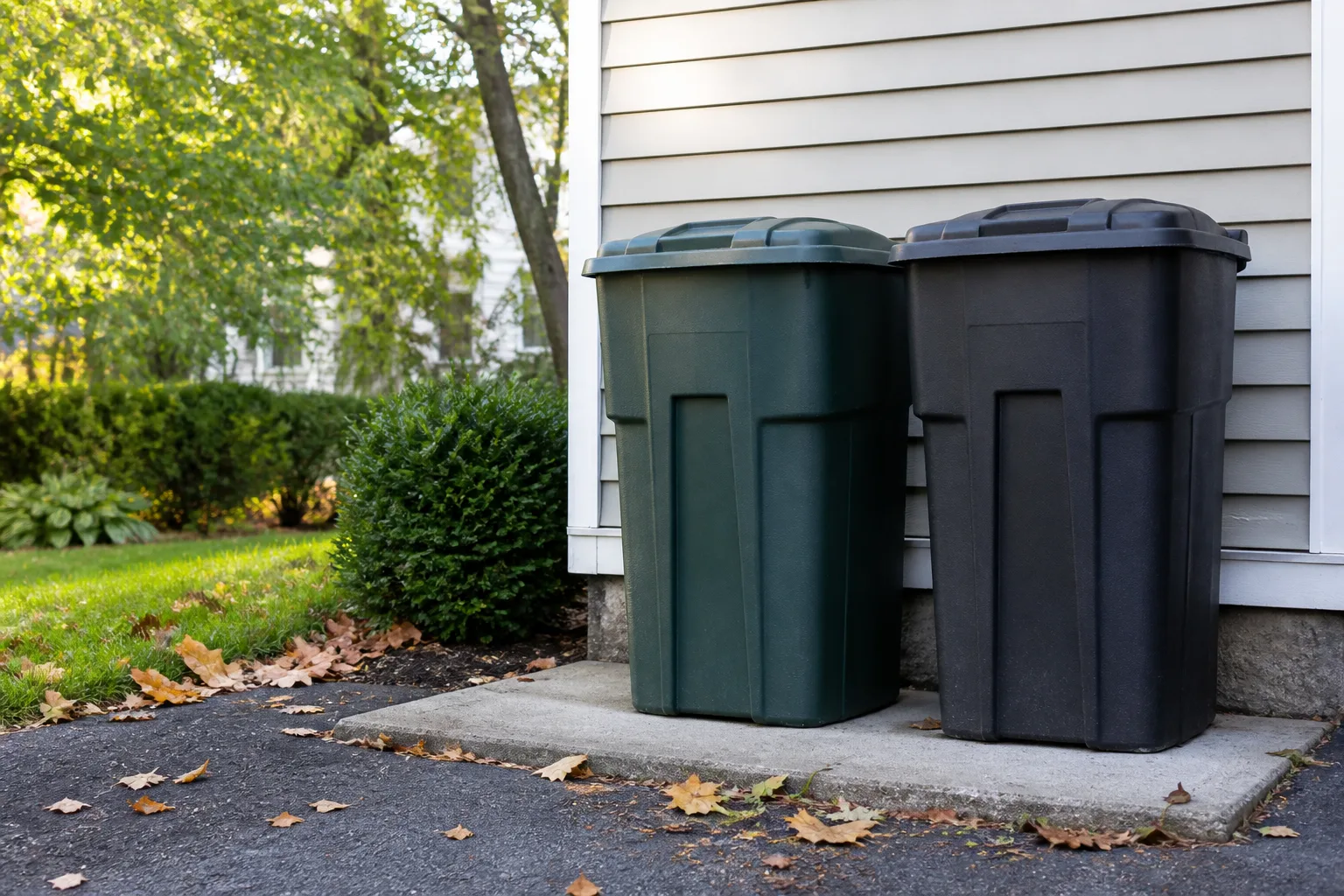
Rinse sticky residue from bins quarterly; line every can; never leave bags beside the cart with torn corners. Replace cracked lids and store carts downwind of patios when possible. Rinse beer and soda bottles before they go to recycling—one dribble ferments thousands of fruit flies. If raccoons scatter trash nightly, fix the latch before buying UV traps.
Compost, Pet Waste, and Standing Water
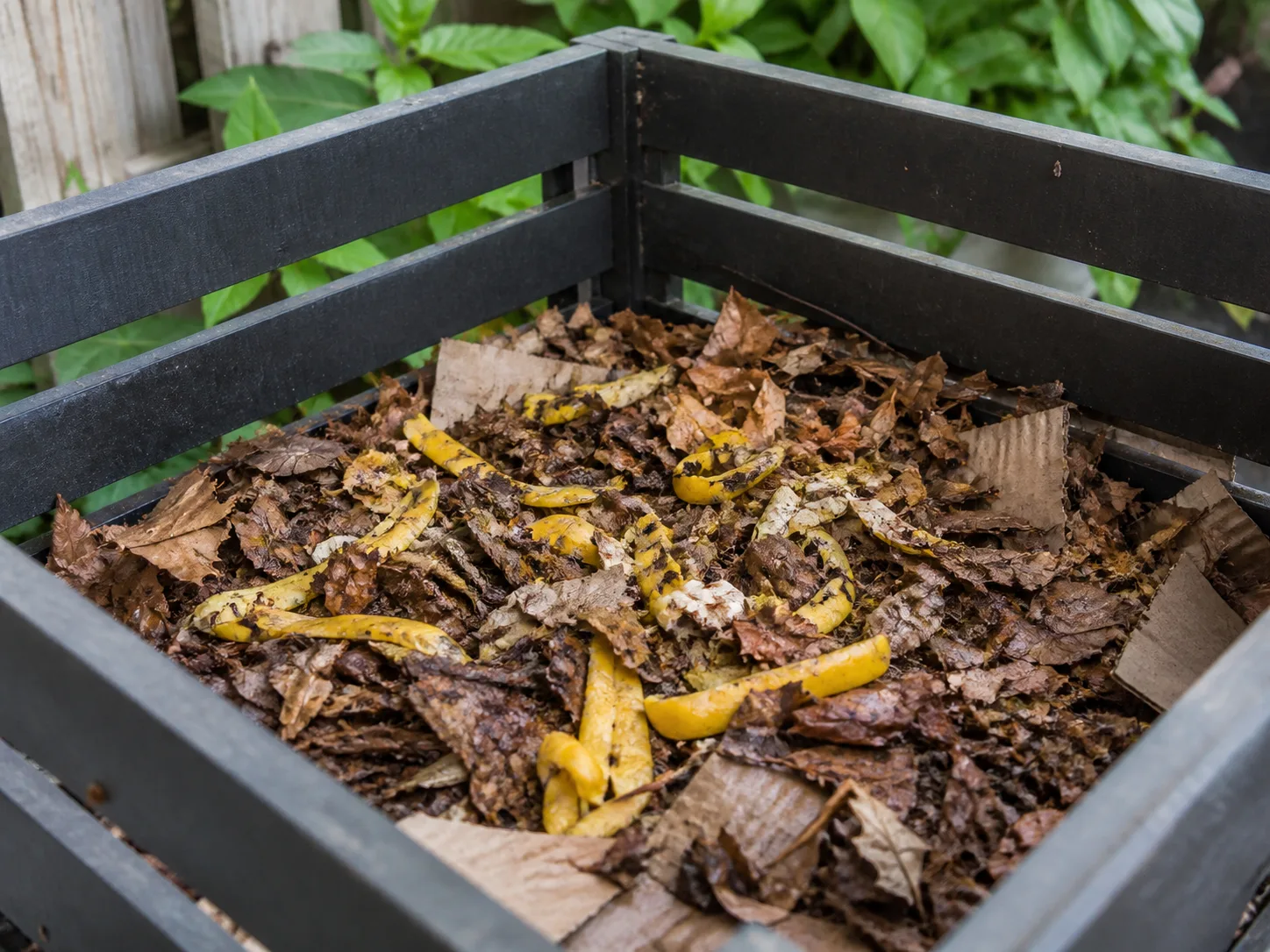
Compost: bury food scraps in the center, keep the pile hot and turned, and sit bins at least 30–50 feet from doors and dining areas when space allows. Surface maggots often mean the pile is too wet or meat-heavy—add browns and turn, or pause food additions until it cooks again. Pet waste: scoop daily; flies lay eggs in fresh droppings within hours in summer. Standing water in saucers, clogged gutters, and birdbath overflow breeds other insects that attract predators—but filth flies drink from any shallow puddle. Tip saucers after watering; refresh birdbaths on a schedule instead of letting scum build.
Sanitation Checklist That Actually Cuts Populations
Run this once, then weekly through fly season:
- Trash and recycling: tied liners, closed lids, washed interiors, no side piles.
- Compost: turned, covered food, no meat/dairy if rats or flies are heavy, distance from patio.
- Pet areas: waste removed, outdoor bowls cleaned, no spilled kibble under decks.
- Yard debris: no bagged grass cooking in sun; move manure away from living spaces.
- Moisture: fix leaks, empty saucers, clear gutter clogs.
- Food events: covered serving dishes, prompt crumb cleanup, dedicated lidded scrap bowl.
- Lighting: swap bright white porch bulbs for yellow “bug” bulbs where you do not need security floodlights—fewer flying insects attracted to entries (UC IPM).
Sanitation is boring and works. Most failed outdoor campaigns skip step one and buy louder zappers.
Traps and Knockdown Tools Ranked by Job
Traps reduce adults; they do not replace source removal. Place all attractant traps downwind and away from eating areas—otherwise you invite flies to the party.
DIY Bottle and Vinegar Traps
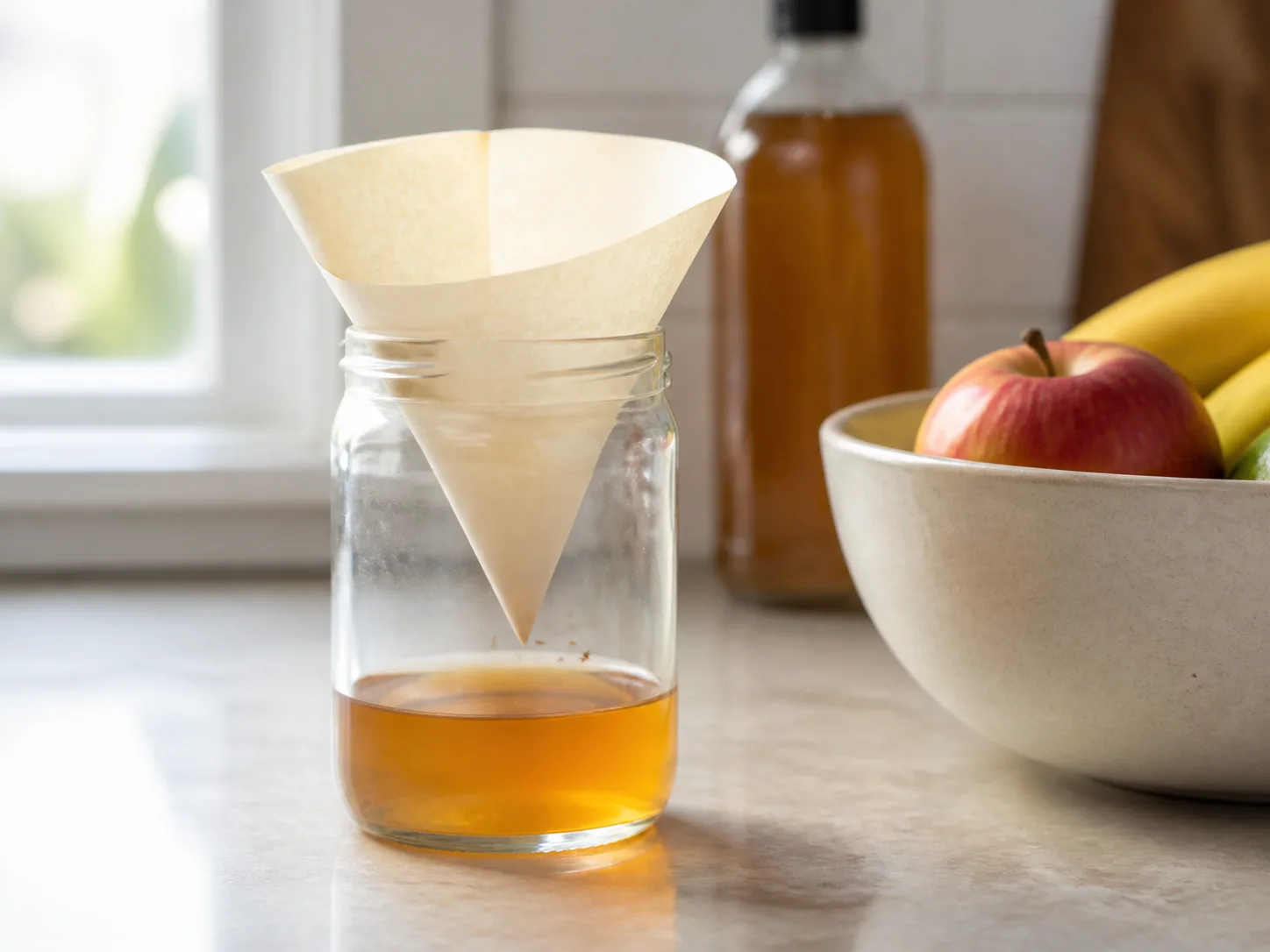
Apple cider vinegar + a drop of dish soap in a jar mimics fermentation odor; flies sink when they contact the soap film. Add a paper funnel with the tip snipped above the liquid for higher catch. Best for: fruit flies, small house-fly numbers, patio margins. Limit: useless if a garbage pile still reeks ten feet away. Refresh every 2–3 days; rinse jars to prevent new larvae in trap liquid.
Sticky Paper and Cone Traps
Fly paper and inverted cone traps with foul-smelling bait excel at high house-fly pressure near bins or compost—hang on bin interiors, fence posts, or tree branches, not above the picnic table. Replace when coated or when odor fades. Cone traps with protein or sugar bait catch heavily but smell bad; treat them like infrastructure, not décor.
UV Lights and Bug Zappers
UV light traps with sticky boards attract flies at night near compost or alley areas; electric zappers snap loudly and kill indiscriminately, including pollinators. Position zappers far from gardens and dining zones. Research consistently shows zappers alone do not control backyard fly populations—they are a supplement, not IPM core.
| Trap type | Best for | Placement | Main drawback |
|---|---|---|---|
| Vinegar jar | Fruit flies, light house flies | Patio edge, away from food | Needs fresh bait |
| Cone bait trap | Heavy house flies | Near compost/bin, not patio | Strong odor |
| Sticky ribbon | Local knockdown | Bin interior, shaded fence | Gross; catches non-targets |
| UV sticky trap | Night-active fliers | Away from doors | Needs power; cleaning |
| Electric zapper | Quick adult kill | Property perimeter | Kills beneficial insects |
Repel Flies From Your Patio and Dining Area
Repellents discourage flies; they do not shrink a breeding population. Use them after sanitation or during events.
Fans, Candles, and Scented Barriers
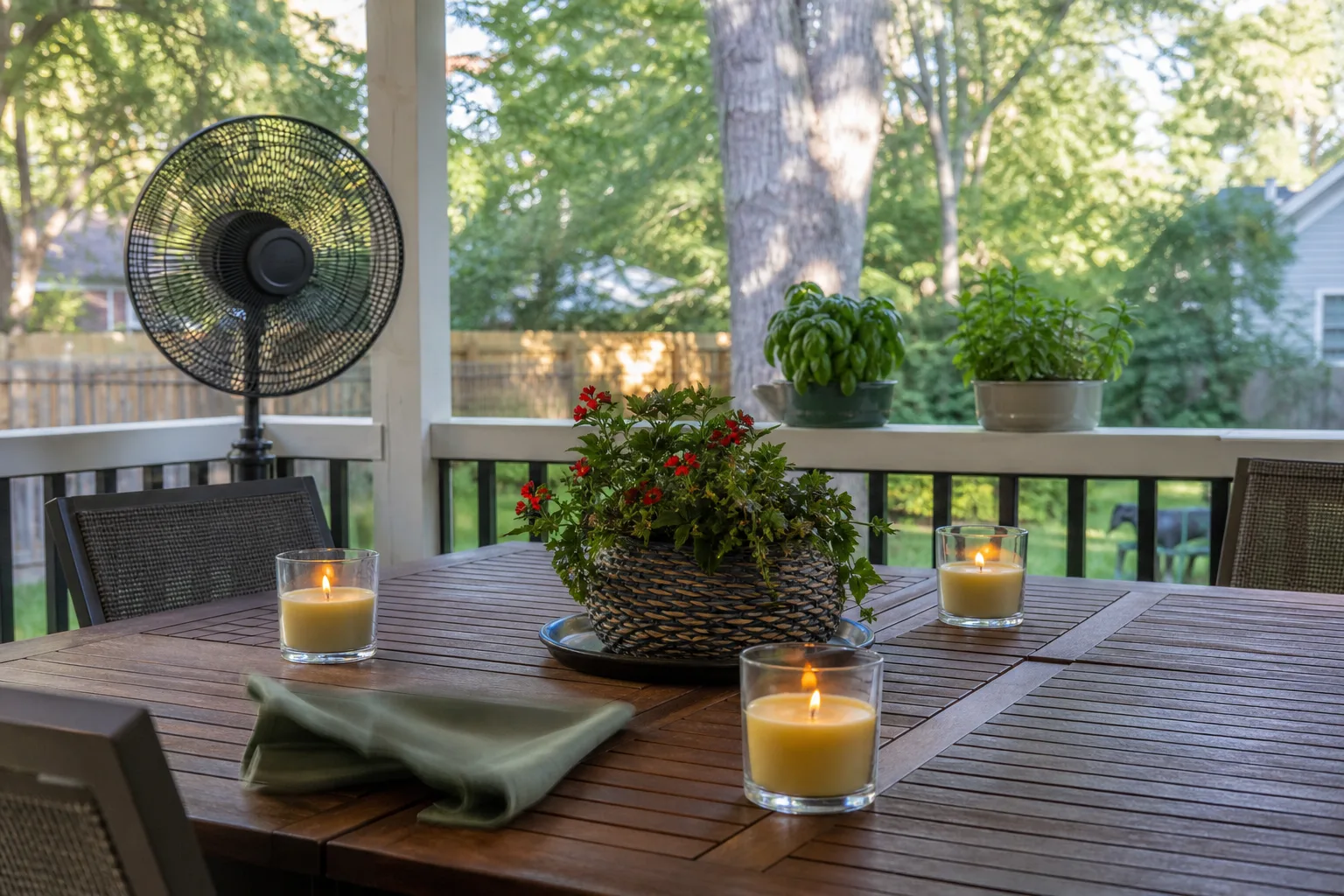
Oscillating or ceiling fans create air flies cannot navigate—aim airflow across the table, not straight at guests’ faces. Citronella, unscented, or beeswax candles add heat and smoke that confuses weak fliers; set several around the seating ring, not one candle in the center. Expect a few feet of effect, not yard-wide protection. For wasps competing for the same food, see natural wasp repellents—different tools, same picnic timing.
Repellent Plants and Essential Oils
Basil, mint, lavender, and lemongrass on the patio may mask odors slightly if leaves are bruised or brushed when you walk by—they are not substitutes for trash hygiene. Essential-oil strips (lavender, eucalyptus, rosemary, clove) hung from railings need weekly refresh and can irritate skin or pets if over-applied. Use oils as minor barriers near doors, not as the primary plan.
Encourage Natural Predators Without Creating New Problems
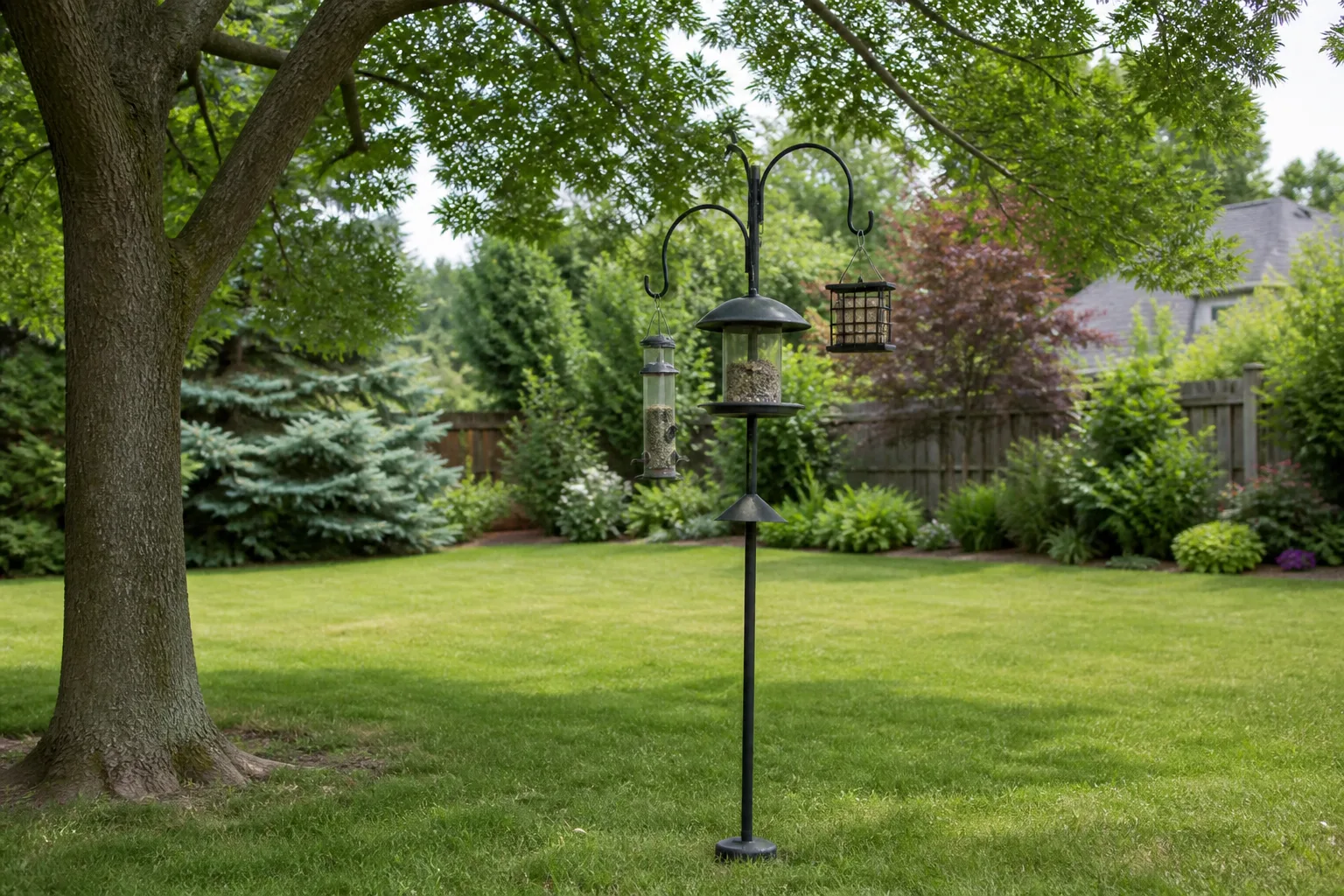
Birds, bats, spiders, and frogs eat flies—but they cannot out-eat an open dumpster. Birdhouses and a clean birdbath support fly-hunting species when paired with sanitation; place houses away from open food zones so you do not concentrate droppings near the patio. Bat houses help at dusk if habitat fits local species. Leave benign spider webs under eaves where safe—they are free fly traps. Do not introduce predatory carnivorous plants expecting yard-wide control; they catch individuals, not swarms.
Keep Outdoor Flies Out of the House
Outdoor success still fails if flies walk in with you. Install 16-mesh or finer screens; repair tears and door sweeps. Keep garage doors closed during peak fly hours. Store indoor compost crocks lidded and empty often. Cluster-fly seasons need attic sealing and weatherstripping before the first cold snap—outdoor vinegar traps will not reach void populations.
Pesticides, Foggers, and When Chemicals Fail Outdoors
House flies develop resistance to many insecticides; wind and drift make broadcast yard sprays unreliable and risky for bees, butterflies, and aquatic life (UC IPM Pest Notes). Reserve labeled fly baits for secured, inaccessible locations near bins—not open lawn. Outdoor foggers can knock down adults temporarily an hour before an event if you follow label ventilation and keep food covered; they do not stop tomorrow’s hatch from untreated breeding sites. Never fog near bee hives, ponds, or neighbor dining areas. Read every label; store products away from children and pets.
When to Call a Pest Professional
Call when sanitation is solid but swarms persist, when you suspect dead animal carcasses in walls or crawlspaces, when cluster flies fill living spaces each fall, or when commercial kitchens or daycare settings need documented control. Pros can apply residual products to resting sites (eaves, trash enclosures) and locate hidden breeding you cannot reach. Flies can carry foodborne pathogens; chronic heavy infestations near food prep deserve faster escalation—not another week of sticky paper alone.
Conclusion
Outdoor flies leave when you remove their nursery: tied trash, scooped pet waste, managed compost, and dry standing water. Identify house vs cluster vs fruit flies so you do not fight the wrong battle. Add traps at the property edge, fans and candles at the patio, and screens at the door for comfort while sanitation does the real work. Save chemicals and foggers for labeled, targeted, last-resort situations—and call a pro when breeding sources stay hidden after a honest audit. Fix the source once and your yard stays usable long after the trap jar is empty.