9 Garden Seating Ideas for a Comfortable Yard
Plan sun, shade, and traffic before you shop. These 9 garden seating ideas—from tree benches to wall seats—make your yard feel like a real outdoor retreat.
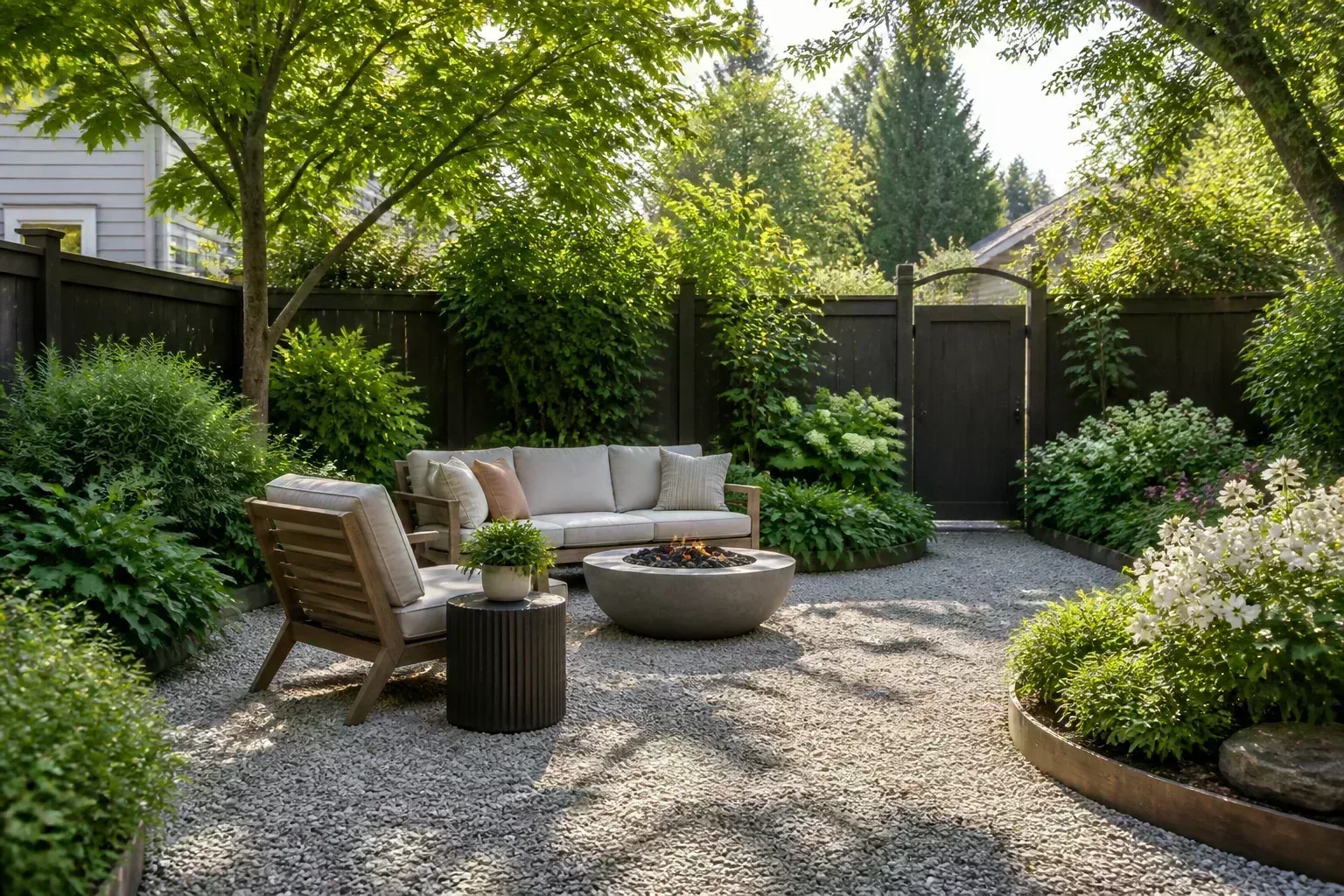
A gorgeous bench in the middle of an empty lawn still reads like furniture waiting for a moving truck. Garden seating ideas only work when the seat matches how your yard is actually used—where afternoon sun hits, where kids cut through, whether you need shade at 2 p.m. or a flat spot for coffee at 7 a.m. The nine options below cover hanging chairs, built-ins, DIY stump seats, and mobile chaises, but they share one rule: placement and comfort come before style.
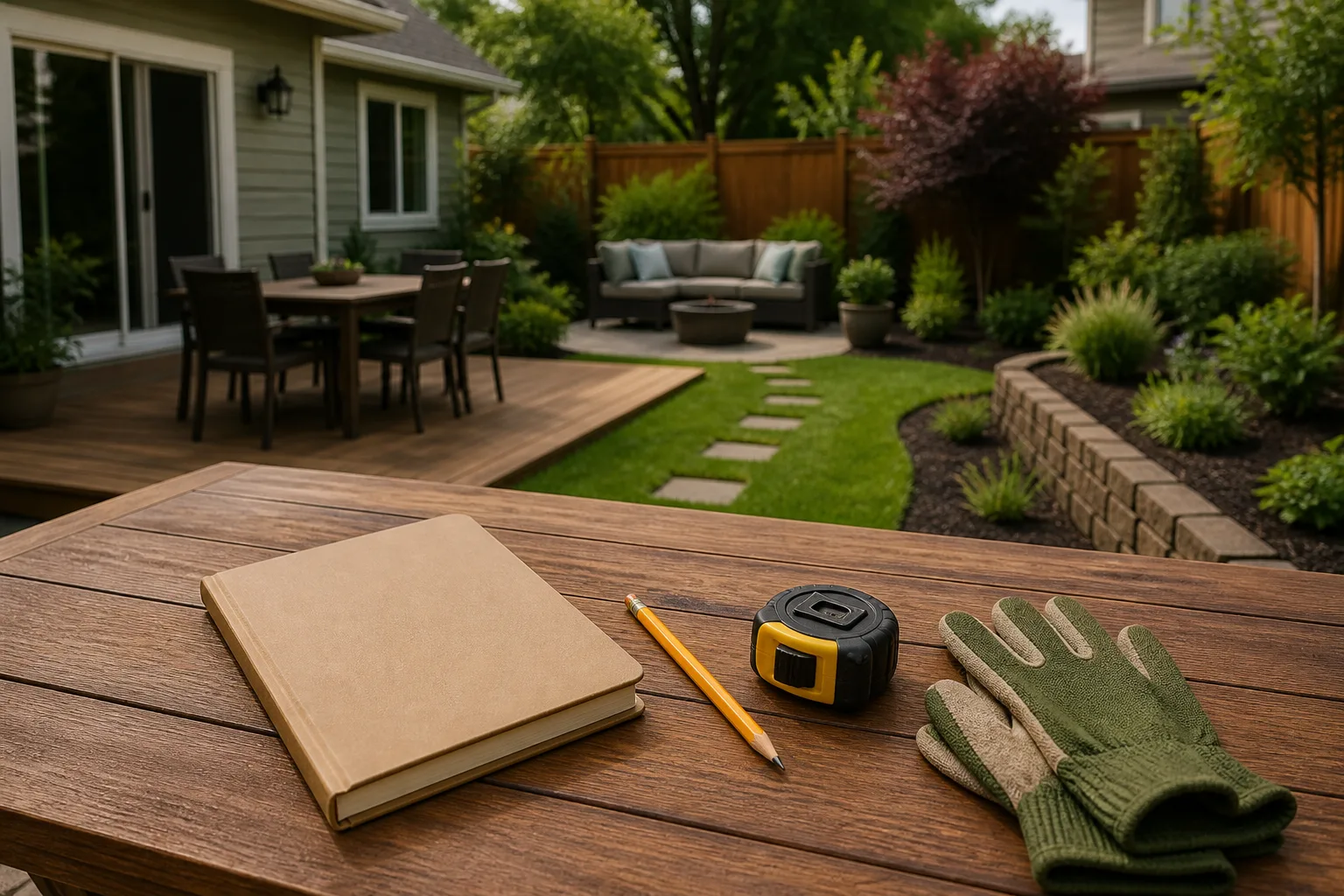
University of Florida extension guidance on landscape design treats the yard as linked outdoor rooms with defined circulation, not a random collection of decor (UF/IFAS planning tips). Apply that lens here. Map your microclimate first, then pick the seat type that fits the zone.
What makes garden seating work before you buy anything
Comfort, anchoring, and a stable surface beat throw pillows. Outdoor seating fails when seat height is wrong for your legs, when stone or metal burns bare skin in July, or when the chair blocks the path to the grill. Before browsing catalogs, decide what job each seat does: solo reading, conversation for four, nap-length lounging, or quick perch while watering pots.
If you are also reshaping hardscape, skim landscape design for beginners for bed layout and path width—seating should follow the plan, not dictate it.
Map sun, shade, drainage, and how people move
Walk the yard at 9 a.m., 2 p.m., and 7 p.m. on a sunny day. Mark where glare makes screens unreadable and where existing shade from the house, fence, or trees already falls. UF/IFAS notes that topography affects drainage: the best designs move water away from structures, not across your doorway (UF/IFAS planning tips).
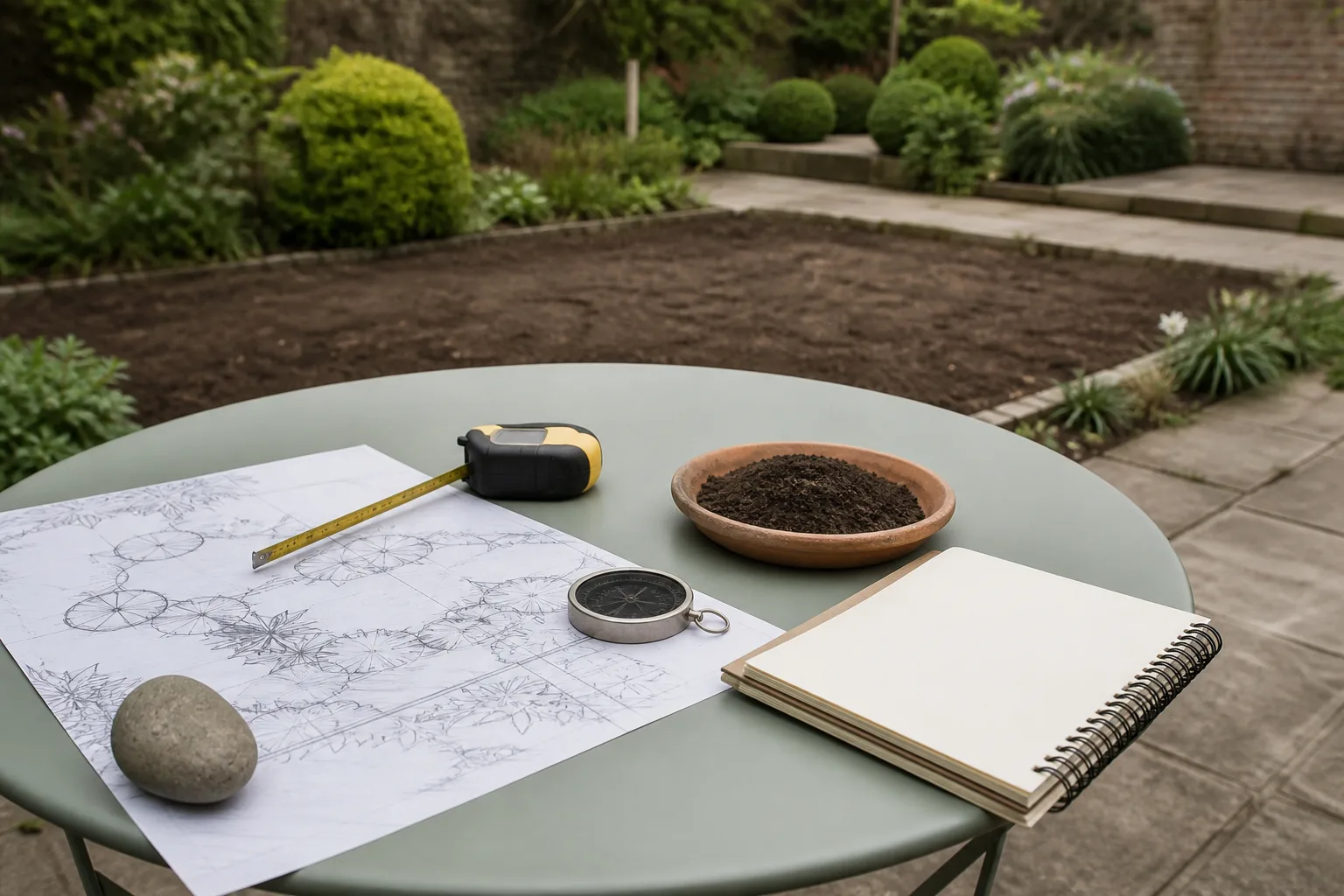
Draw arrows for traffic from the back door, garbage route, and any kid shortcut. Seats belong off those lines but facing the view you want—garden border, fire feature, or privacy screen. On a narrow side yard, orient chairs along the long axis so the space feels wider, a trick that also works on small patio layouts.
Comfort dimensions and clearances that matter outdoors
Standard bench ergonomics translate outdoors with weather allowances:
| Element | Typical range | Outdoor note |
|---|---|---|
| Seat height | 17–19 inches | Add 1–2 in. if thick cushions compress |
| Seat depth | 15–18 inches | Deeper for lounging, shallower for dining |
| Back angle | 5–15° off vertical | Slatted backs need lumbar cushion in long sits |
| Knee clearance | 14+ inches under seat | Storage benches need interior height too |
| Walk-behind space | 30–36 inches | Tight paths feel cluttered fast |
Leave 3 feet minimum between a seat front and a fire bowl lip, more if local fire codes require it—confirm before building a permanent pit near fixed benches (DIY backyard fire pit guidance).
Conversation groups need 7–8 feet between facing seats so knees do not clash, plus side tables within arm’s reach. Solo reading nooks can shrink to a 4×4 foot gravel pad with one chair and a pot. Sketch those footprints on paper before buying a six-person dining set for a four-foot-wide side yard.
Budget tiers: what to build first
Spend in the order that changes daily use, not photo appeal:
| Tier | Seating moves | Typical cost |
|---|---|---|
| Under $200 | Thrifted chairs, stump seat, gravel pad, outdoor cushions | Prove placement before permanence |
| $200–$800 | Storage bench, hanging chair with stand, wall-mounted fold-down | Adds function without construction |
| $800–$3,000 | Tree bench kit, arbor bench, built-in cap stones, wheeled chaise set | Permanent zones after layout is tested |
| $3,000+ | Masonry seat walls, poured ledges, custom pergola seating | Worth it only when drainage and shade are solved |
Renters should favor freestanding frames, fold-down wall benches on removable lag shields, and planters that double as seat backs. Homeowners can invest in seat walls tied to patio pours once they have lived through one full summer in the yard.
Nine garden seating ideas worth building or buying
The ideas below mirror what homeowners search for—hanging seats, storage benches, tree wraps, hardscape built-ins, rustic logs, wall mounts, arbors, and chaises—but each section adds where it belongs, what it costs in upkeep, and when to skip it.
Hanging chairs and cocoon seats for patios and porches
Bubble chairs, egg chairs, and macrame hammocks suspend you slightly off the ground, which reads playful and frees floor space on a small deck or porch. Freestanding frames mean you do not need a mature tree with a rated limb—important for renters and new builds.
Choose a frame rated for your wind exposure. Open lawns gust more than courtyards; anchor freestanding bases with sandbags or bolt-down plates if the manufacturer allows. Materials run from powder-coated steel and rattan to weather-resistant synthetic wicker. Macrame looks great but needs covered storage in rainy climates.
Place hanging chairs where the arc of the swing clears walkways and low branches. A partial roof or pergola rafter works; a dead tree limb does not. Check weight ratings on both chair and stand—adult plus cushion often exceeds 250 pounds, and dynamic swing loads add stress. In windy corridors between buildings, choose a chair with a shorter swing radius or a locking position so gusts do not slam it into siding.
Pair one hanging seat with a low side table anchored nearby; reaching drinks while swaying gets old fast. For ground-level lounge alternatives on the same pad, see backyard patio ideas for rug and shade layering.
Storage benches that earn their footprint
Dual-purpose storage benches hide cushions, hose nozzles, pool toys, or kid gear while providing seating along a fence or patio edge. They shine in yards where every square foot counts.
Even “waterproof” boxes trap humidity. Store seasonal items only—cushions you bring indoors nightly, towels, deflated floats—not heirlooms or electronics. Drill weep holes if the manufacturer permits, and crack lids open after rain so mold does not bloom. Elevate the bench on pavers if the lawn stays soggy; trapped moisture rots bottom boards within a few seasons.
Size interior volume before buying: a bench that seats three adults often stores less than you expect once hinge hardware and wall thickness eat space.
Tree benches that follow shade through the day
A wraparound tree bench turns a shade tree into the coolest seat in the yard as the sun moves. Round or hexagonal kits in wood or powder-coated metal install around trunks from saplings to mature maples.
Root protection is non-negotiable. Leave 12–18 inches minimum between the trunk and the bench inner edge on established trees; widen to 24+ inches for young trees whose trunks still expand quickly. Never bolt through bark into living tissue. Use floating brackets or segmented sections that can be adjusted outward as the trunk grows.
Install on level, well-drained ground. Compaction from heavy foot traffic inside the ring can stress roots—keep planting inside the bench ring shallow (annuals, mulch) rather than deep digging. If the tree is diseased or hollow, skip the bench and plan removal with an arborist instead of building seating that locks you into a hazard.
Built-in wall and retaining-wall seating
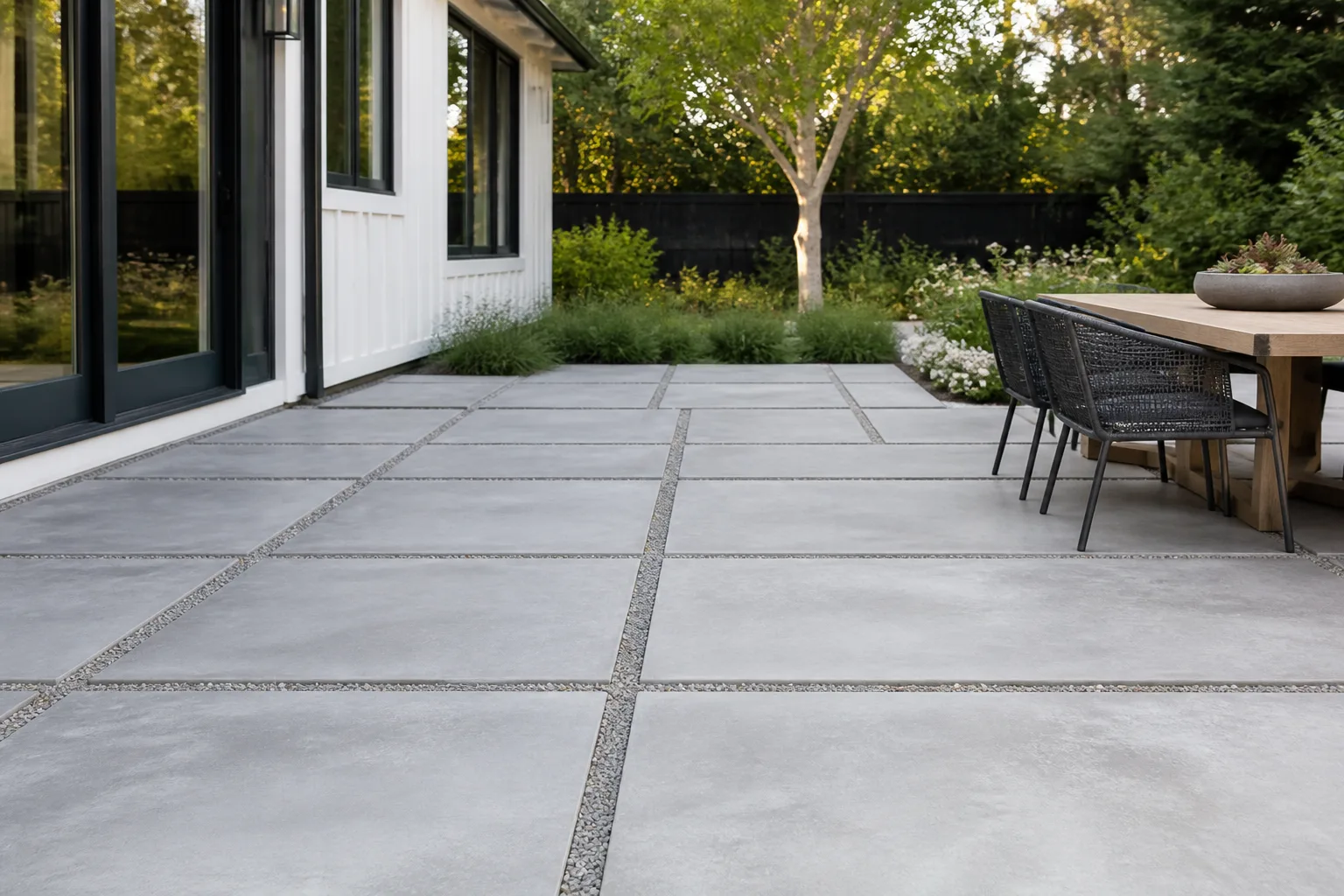
Seat walls along property lines, patio perimeters, or retaining walls integrate seating into hardscape so the yard feels architected, not furnished. Stone, poured concrete, pavers, and brick all work; cap stones with thermal breaks—wood slats or thick outdoor cushions—because masonry stores heat.
On terraced slopes, a low retaining wall at seating height doubles as a perch overlooking a lower planting bed. Match wall height to ergonomics: 18–20 inches for a comfortable perch without a back, or 17–19 inches with a raised back wall behind.
Tie into drainage: seat walls should not block water moving down slope. Weep gravel and landscape fabric behind walls per your local code. For broader hardscape context, modern backyard ideas cover patio extensions that pair well with built-in ledges.
Stump seats and log benches from downed trees
When removing a tree, leaving a 24–28 inch stump at seating height turns removal into a garden feature. Trunks 18 inches or wider can sit alone; smaller diameters need a cedar or rot-resistant plank bolted across the top with galvanized hardware.
Let fresh wood dry one full season before heavy sanding and sealing—green wood checks and warps. Remove loose bark, treat cut surfaces with exterior sealer, and reapply every two to three years. For a longer bench, salvage a straight section 18+ inches diameter, chainsaw a flat base, then flatten the sitting plane and chamfer edges.
This is the fastest budget seating idea if you already own the stump. Pair with low groundcovers around the base so mowing does not nick the wood.
Wall-mounted and folding benches for tight spaces
Wall-mounted benches along a garage, shed, or house wall add seating without eating depth on a 6-foot-wide side yard. Folding hinged versions tuck flat when you need passage for wheelbarrows or bikes; some use chains or drop-down legs for load support.
Verify wall structure before lag-bolting: sheathing alone is not enough—hit studs or block. Rated hardware lists weight limits; do not exceed them with stone tops or three adults bouncing kids. Fold-ups need stainless hinges and occasional lubrication; coastal salt accelerates corrosion.
Paint or stain to match trim so the bench reads built-in. Add a slim cushion only if the fold mechanism still clears the wall when closed.
Bench arbors for yards that lack shade
A bench arbor combines seating with an arched roof and lattice sides—instant enclosure for sun-baked yards. Cedar and powder-coated steel kits are common; vines softening the lattice turn the structure into a garden room over two to three growing seasons.
Anchor to the ground. Arbors tip when adults lean back or wind loads climb with mature vines. Use ground anchors, concrete footings, or bolt-through plates per the kit—buy anchors separately if the box omits them. Check overhead utilities before erecting tall arches.
Plant annual or perennial vines suited to your zone: clematis for moderate growth, honeysuckle where you want fragrance (it can be aggressive—contain roots), or annual morning glory for quick first-year cover. Prune yearly so weight does not overload lattice panels. For privacy planting around the arbor, see ideas for creating a backyard oasis.
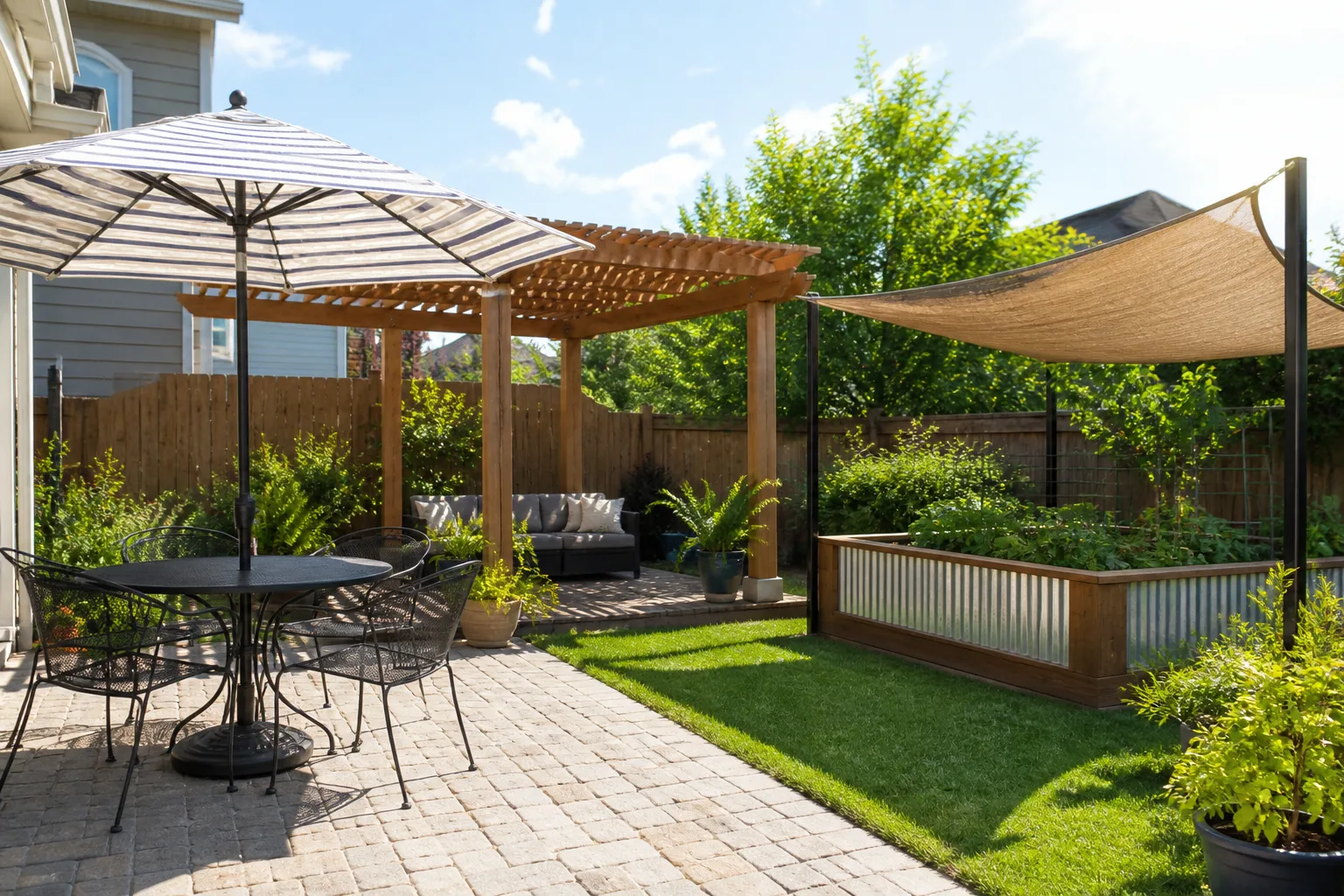
Chaise lounges on wheels you can chase sun or shade with
For nap-length lounging, a chaise with casters or wide wheels beats dragging a heavy lounger across lawn or gravel every time shade shifts. Look for locking wheels, rust-resistant frames, and quick-dry sling or mesh fabric.
Wheels work best on firm surfaces—concrete, compacted gravel, large-flagstone joints—not deep soft lawn where casters sink. Store cushions indoors; body oils and sunscreen break down fabric faster outdoors. If your yard is mostly turf, a lightweight sling chaise without wheels plus a furniture slider mat may be cheaper than replacing stuck casters annually.
Materials, cushions, and weatherproofing that last
Outdoor seating materials fail in predictable ways. Match the material to your maintenance appetite and climate.
Wood, metal, stone, and wicker trade-offs by climate
| Material | Best for | Watch for |
|---|---|---|
| Cedar, teak, ipe | Natural look, DIY builds | Annual seal in wet/sunny climates; splinters on bare wood |
| Powder-coated aluminum | Light weight, rust resistance | Cheap coatings chip; touch up scratches |
| Wrought iron | Traditional gardens | Rust if finish fails; heavy to move |
| Synthetic wicker / resin | Cushioned lounge sets | Brittle in extreme cold; recycle at end of life |
| Stone / concrete caps | Built-in walls, permanence | Heat in sun; needs cushions or wood caps |
| Plastic / HDPE lumber | Budget, zero seal | Can sag in heat; looks less refined |
Cushions: use solution-dyed acrylic or polyester rated for outdoor use, with open-cell foam that drains. Store or cover when not in use; even “all-weather” foam mildews if water sits for weeks. Dark cushions fade slower but run hotter on bare thighs; light colors show dirt but stay cooler in full sun.
Evening seating needs a different plan than afternoon lounging. The Royal Horticultural Society recommends minimizing bright upward-facing garden lighting that spills onto seating areas used at night—warm, low path lighting preserves ambiance without harsh glare (RHS garden lighting). Run string lights along a fence behind a bench rather than a single floodlight aimed at the seats. Light steps and the path to the door, not people’s faces. Solar path lights work for occasional use; wired low-voltage kits hold brightness for nightly dinners. Position fixtures so neighbors’ bedroom windows are not in the beam path.

Placement rules that stop seats from floating on the lawn
The fastest upgrade is not a new bench—it is moving the one you have. Seats look intentional when they have something behind them and something beside them: a fence, hedge, stone wall, planting border, or patio edge. Open lawn in front is fine; open lawn on all sides reads temporary.
Strong placements:
- Flush against the longest fence or wall, facing into the garden
- Backed into a perennial border with height behind the shoulders
- At the perimeter of a patio, looking inward across the hardscape
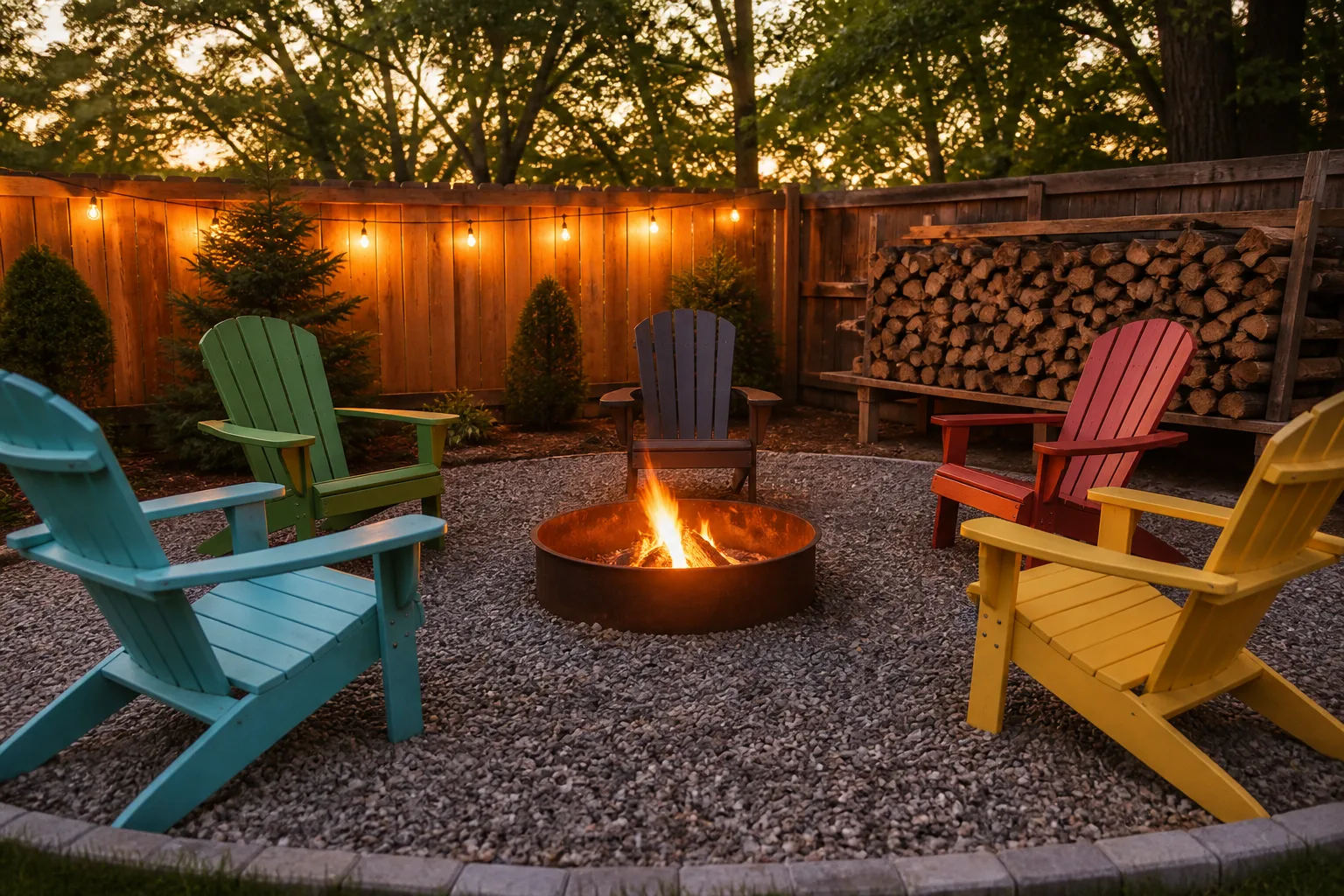
- Beside a fire pit with hedge or low wall as backrest
- Under a roof overhang or arbor where structure defines the nook
Weak placements:
- Centered on turf with no backdrop
- Blocking the only path to utilities or the grill
- Full-sun stone with no shade plan for summer afternoons
- Under dripping tree sap or heavy fruit drop without a washable cushion strategy
Budget a gravel or paver pad at least the footprint of the seat plus 12 inches on each side so chairs do not sink into mud. That single pad often costs less than replacing rotted bench legs. On sloped sites, terrace the pad slightly so chairs do not creep downhill every week.
Grouping rule: odd numbers of seats (three chairs around a fire, five along a wall) feel more relaxed than rigid symmetry; match chair heights so conversation does not feel like a board meeting. Repeat one material—teak bench plus teak side stools—so mixed yards read intentional instead of clearance-rack random.
For weekend sequencing, budget-friendly backyard makeover ideas put ground fixes before furniture splurges. If you are adding multiple zones at once, cool backyard ideas walks through shade, water, and fire features that pair naturally with the seats above.
Seasonal maintenance and safety checks
Spring: Tighten bolts on arbors, wall mounts, and tree benches; inspect for winter warp or rust bloom. Re-stain or oil wood before peak UV. Test folding hinges.
Summer: Move lightweight pieces if grass dies underneath; rotate cushions so they dry evenly. Check arbor vine weight after storms.
Fall: Clean storage benches before closing lids for winter; leave desiccant packs if humidity is high. Store hanging chair cushions indoors.
Winter: Snow load can collapse arbor lattice—brush heavy snow or tie tarps only if manufacturer allows. Elevate metal feet off saturated soil with pavers.
Replace any seat with structural cracks, wobbly anchors, or rot at load points—outdoor seating injuries spike on failed DIY mounts, not worn paint.
Conclusion
The best garden seating ideas are the ones anchored to how your yard actually lives: shade when you need it, a back when the wind picks up, storage where clutter collects, and wheels or built-ins where space is tight. Start with a sun-and-traffic map, pick one zone to perfect this season, and add the next seat only after the first gets used weekly. A stump by the herbs, a storage bench on the patio, or an arbor at the garden’s far end each work—if they land against a wall, a border, or a path edge instead of floating on open grass. Build the retreat one deliberate seat at a time, and the yard starts feeling like an outdoor room instead of a furniture showroom.



