25 Backyard Patio Ideas for Any Budget
Plan zones, shade, and seating before you shop. These 25 backyard patio ideas fit small yards and tight budgets while still feeling comfortable and stylish.
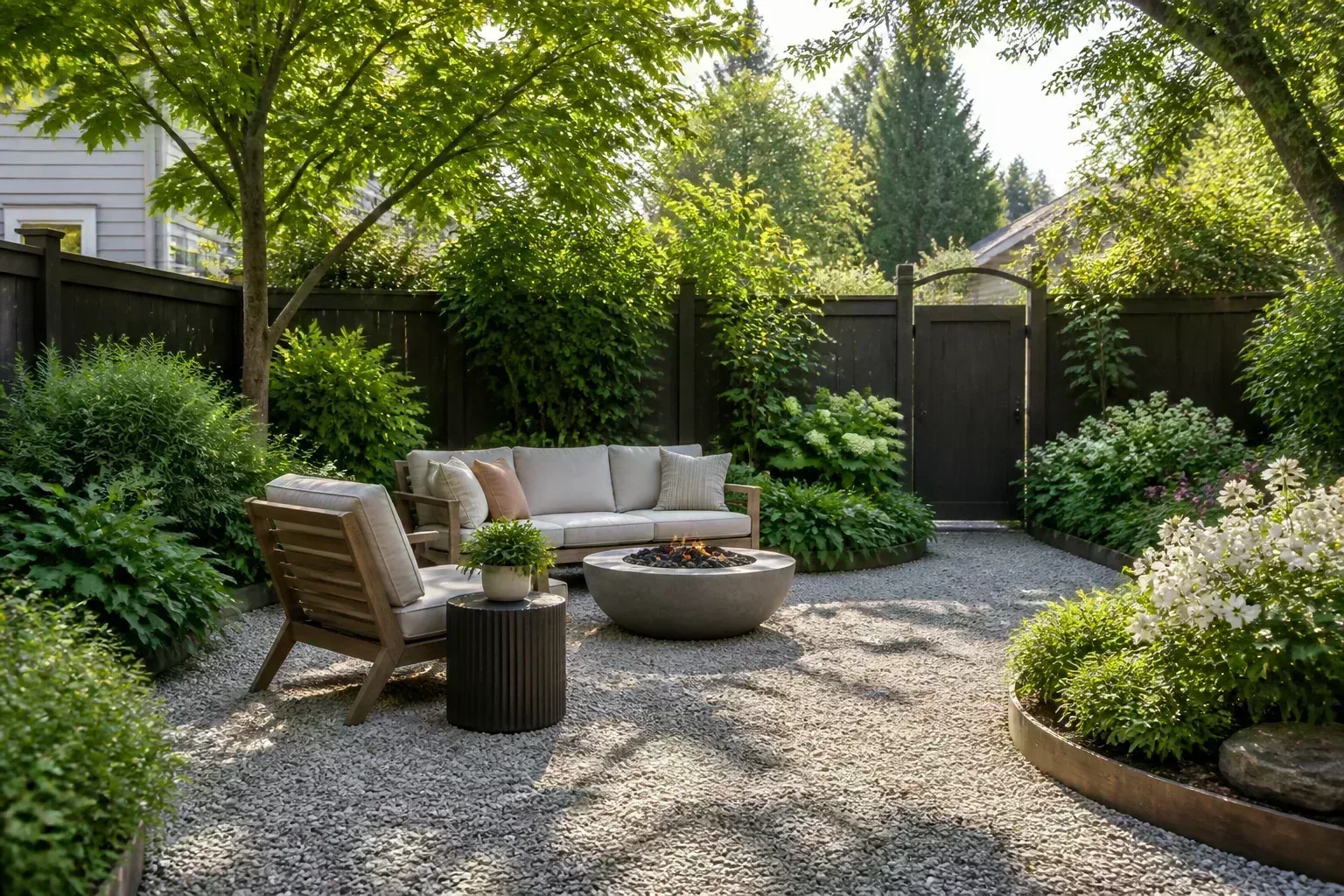
A backyard patio fails for boring reasons: afternoon sun with no shade, a slab that holds puddles, furniture aimed at the neighbor’s kitchen window, or string lights plugged into an outlet that trips every time it rains. The decor ideas matter—but only after the layout works. Backyard patio ideas that actually get used start with drainage, movement, and comfort, then layer rugs, lighting, plants, and the weekend projects that make the space feel intentional.
The 25 ideas below are grouped by job—floor, light, shade, seating, privacy, plants, focal points, and covered upgrades—so you can match solutions to your yard instead of copying a photo built for a different climate and budget.
What makes a patio feel finished before you add decor
Comfort, enclosure, and a usable surface beat throw pillows every time. A patio reads as “done” when you can sit for an hour without squinting, when your drink has a stable place to land, and when the edge of the space feels defined rather than bleeding into lawn or driveway. University of Florida extension guidance on landscape planning stresses treating the yard as linked outdoor rooms with clear circulation—not a random collection of Pinterest moments dropped on grass (UF/IFAS planning tips).
Before shopping, note your microclimate: full sun, partial shade, or deep shade, plus how water moves in a hard rain. The best-looking rug on a slope that floods every storm still feels like a mistake. If you are starting from bare lawn, skim our budget-friendly backyard makeover ideas for ground and path upgrades that often come before furniture.
Renters can still upgrade a patio without permanent construction: freestanding planters for screening, weighted umbrella bases, removable string-light clips on fascia boards, and furniture that disassembles for the next move. Document any holes or anchors in a lease addendum before drilling into siding or deck rails. Landlords often approve removable improvements faster than poured concrete.
Homeowners with an existing concrete slab should tap the surface for hollow sounds and hairline cracks before investing in paint or built-in seating. Minor cracks can be filled; heaving slabs need mud-jacking or replacement—not another coat of decor.
Plan your patio like outdoor rooms, not a furniture drop
Extension educators recommend defining who uses the yard and how before selecting plants or pavers. Will kids cut through the space? Do you need a dining zone for six or a two-person coffee corner? Those answers determine size, shade placement, and whether a fire feature belongs in the center or against a wall.
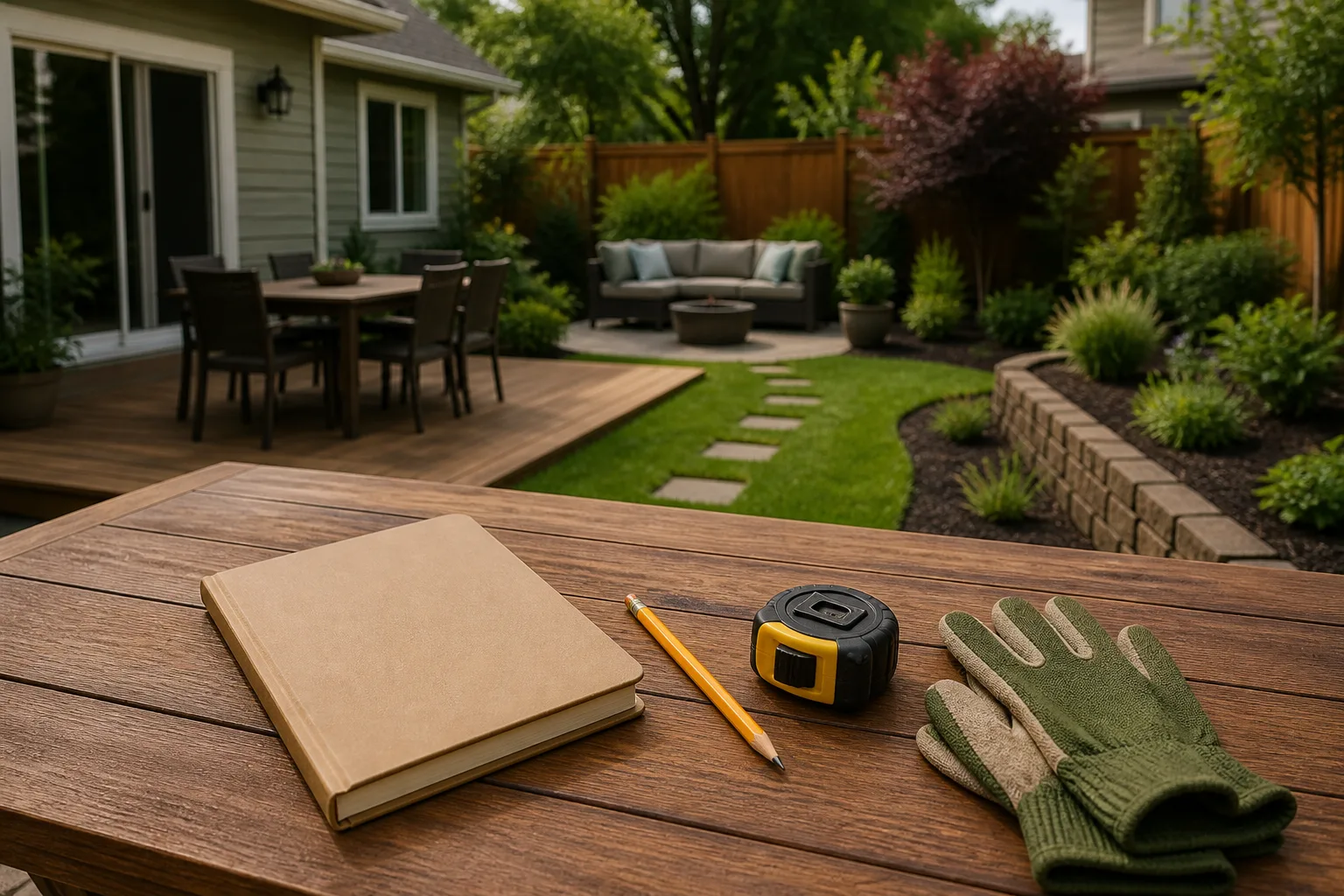
Sketch three bubbles—lounge, dine, cook or serve—and connect them with a path material you can maintain. On a 10×12-foot slab, two bubbles are enough. On a larger pad, lighting can later define zones without building new walls.
Map sun, shade, drainage, and how people move
Walk the patio at 9 a.m., 2 p.m., and 7 p.m. on a sunny day. Mark where glare hits seating and where shade already exists from the house, fence, or trees. UF/IFAS notes that topography affects drainage: the best designs move water away from structures toward planted areas or a deliberate low point—not across your doorway (UF/IFAS planning tips).
Draw arrows for traffic from the back door, grill, and garbage route. Furniture should not block those lines. If the only flat area is a narrow side yard, orient chairs along the long axis so the space feels wider.
Budget tiers that change what you build first
Spend in the order that changes daily use, not photo appeal:
| Tier | Build or buy first | Why it pays off |
|---|---|---|
| Under $500 | Outdoor rug, string lights, shade umbrella, thrifted chairs, portable fire bowl, potted privacy plants | Defines rooms without construction |
| $500–$5,000 | Gravel or paver extension, better seating set, pergola kit, outdoor curtains, painted concrete | Creates surfaces and shade structure |
| $5,000+ | Permanent patio pour, built-in seating, retractable awning, wired lighting, drainage fixes | Worth it only after layout is proven |
Skipping this sequence is why many yards have expensive sectionals on soggy grass nobody sits on. For a broader retreat framework, see ideas for creating a backyard oasis.
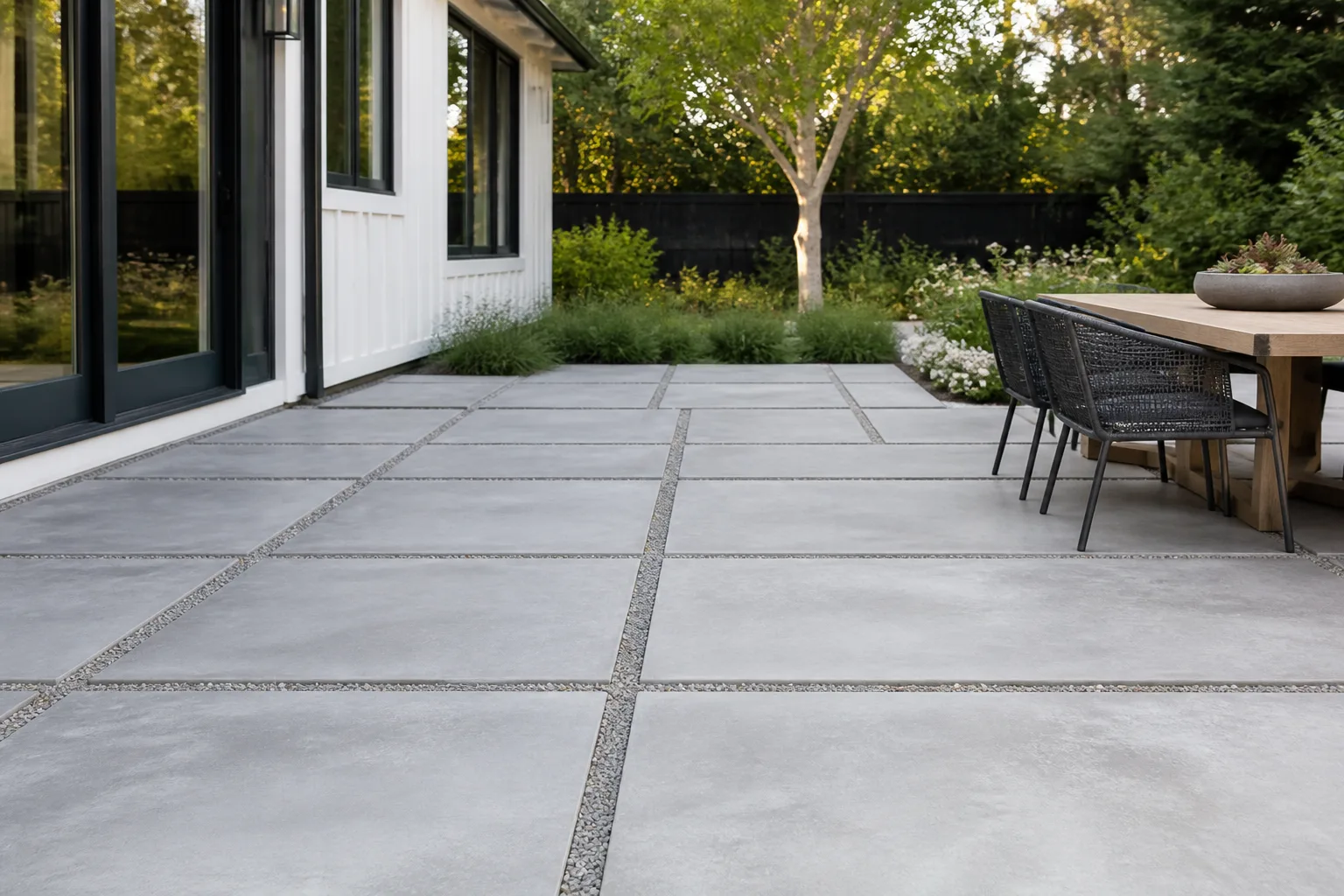
Define the floor: rugs, paint, and surfaces that anchor the space
Idea 1–4: outdoor rug, painted concrete, gravel pad extension, and a folding patio set that stores off-season.
Outdoor rugs that create an outdoor living room
An outdoor rug visually shrinks a large slab into a living room or dining room. Choose polypropylene or recycled-plastic weave rated for UV and mildew; avoid indoor cotton rugs that hold moisture against concrete. Size the rug so at least the front legs of seating sit on it—typically 8×10 feet for a four-chair lounge or 5×8 under a bistro table.
On bare concrete, sweep and degrease before laying the rug so grit does not grind the finish. Lift and rinse the rug monthly in humid climates to prevent algae along the edges. If the slab slopes toward the house, fix grading or add a channel drain before trapping water under textile—rugs hide puddles briefly, then mildew wins.
For small patios, one 5×7 or 6×9 rug under a bistro set often defines the whole “room.” Oversizing rugs on tiny pads makes furniture feel like it is floating off the edge. In open yards with no walls, a rug still works when paired with two chairs and a low table; it signals “sit here” even without a roof overhead.
Painted concrete and pattern upgrades on a budget
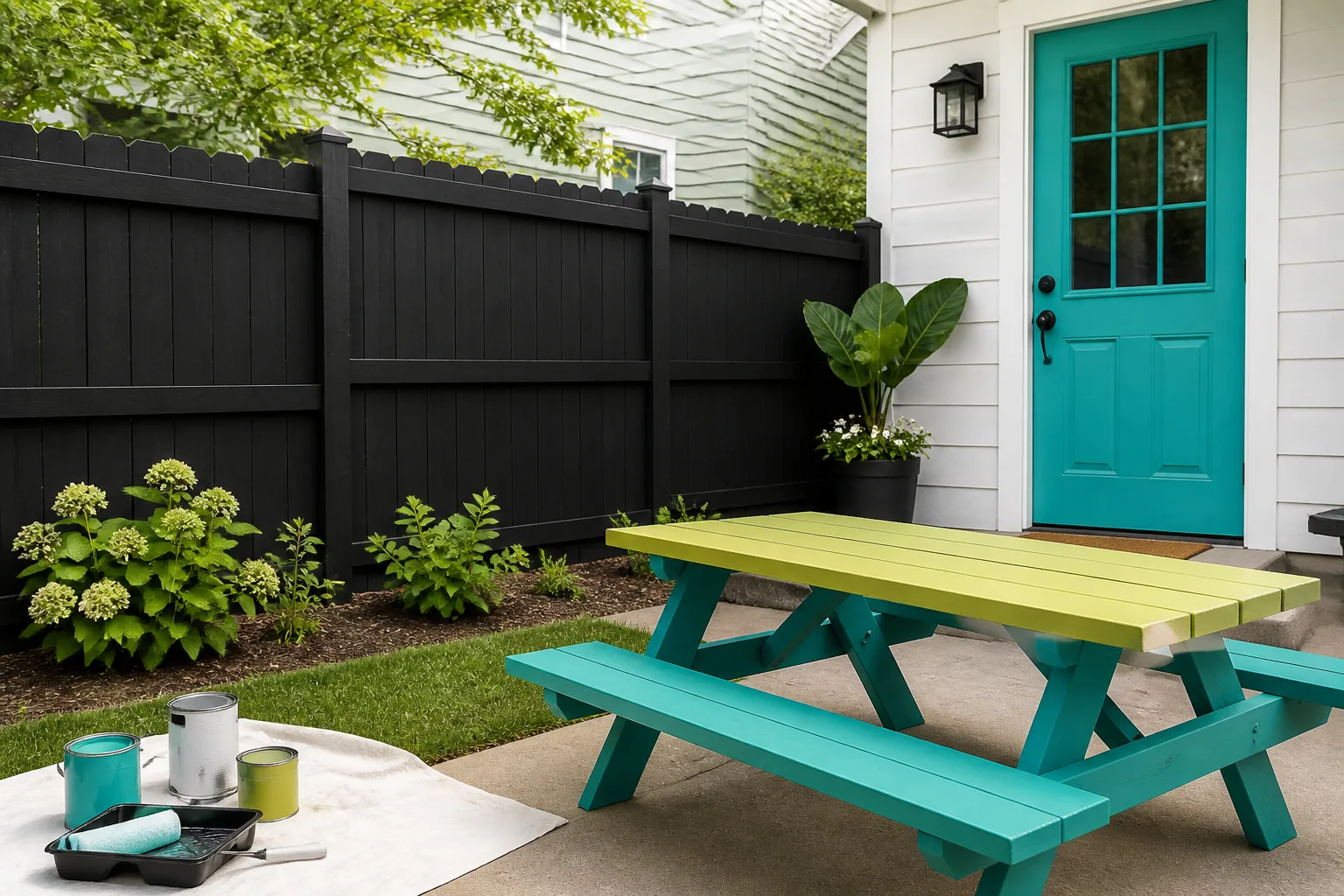
Idea 5: geometric painted concrete. Clean the slab, etch or degrease per product label, apply concrete porch paint or stencil a medallion in two tones. This is one of the highest-impact budget patio ideas when the structure is sound but the color is prison-yard gray.
Limitations matter: painted concrete on exterior slabs needs recoat every two to four years in freeze–thaw zones, and trapped moisture under failed paint blisters in weeks. Do not paint if the slab actively spalls or if standing water has nowhere to go—fix drainage first.
A gravel pad beside an existing slab (Idea 6) extends dining or fire-pit space for less than a full pour. Use landscape fabric, 2–3 inches of compacted gravel, and steel or plastic edging so stones do not migrate into lawn. Pair with a no-grass backyard approach if you are reducing turf overall.
Idea 7: a folding wood patio set suits cold climates where winter storage matters. Measure your shed door before buying—many “apartment” sets fold smaller than full four-top tables.
Lighting that makes a patio usable after dark
Ideas 8–11: string lights, woven pendant, floor lanterns with flameless candles, and zone lighting under pergola beams.
Layer light instead of blasting one bright fixture. The Royal Horticultural Society advises minimizing garden lighting for wildlife; when you do light, keep it low, warm, and aimed across paths and steps—not up into trees or ponds (RHS garden lighting). That guidance applies directly to patios.
String lights, pendants, and lanterns done right

String lights (Idea 8) work best when they define an edge—along a fence, under a pergola rafter, or parallel to the house eave—rather than random zigzags that snag heads. Use outdoor-rated bulbs and a GFCI-protected circuit. For covered patios, a woven pendant (Idea 9) over the dining table replaces harsh overheads with a pool of warm light.
Floor lanterns with flameless candles (Idea 10) add movable mood without open flame near cushions. Zone lighting (Idea 11)—rattan pendants or sconces on separate switches—lets you dim the lounge while keeping the grill area bright. More detail lives in our backyard lighting ideas guide.
Avoid uplighting trees directly behind seating; it attracts insects and spills into neighbor windows. Turn decorative lights off when you go inside.
Shade and weather protection without a full remodel
Ideas 12–16: cantilever umbrella, privacy slats, outdoor curtains, pergola kit, pop-up gazebo, retractable awning.
Shade is not one-size-fits-all. Compare by cost, wind, and how much floor space the hardware eats:
| Option | Best for | Watch out for |
|---|---|---|
| Cantilever umbrella | Dining tables, movable shade | Needs heavy base; wind can cantilever arms |
| Pergola kit | Defining a room, hanging lights/plants | Partial shade only unless you add slats or cloth |
| Retractable awning | Small patios attached to house | Fabric fade; retract in storms |
| Outdoor curtains | Side shade + soft privacy | Must be outdoor UV fabric; mildew if trapped wet |
| Pop-up gazebo | Temporary dining, renters | Not for high wind; store in winter |
Idea 12: a neutral cantilever umbrella covers more table area than a center-pole model. Ideas 13–14: stained privacy slats or outdoor curtains on a pergola edge cut afternoon glare and nosy sightlines while still allowing breeze—see privacy in yard for height and permit basics.
Wind matters: cantilever arms and pop-up canopies fail first in gusty lots. In coastal or prairie wind, choose a pergola with shade cloth or a retractable awning with a wind sensor that auto-retracts. Outdoor curtains need tie-backs or weights so they do not whip into candles or grills.
Idea 15: a pergola kit anchors a detached patio; choose hardware rated for your wind zone and anchor posts in concrete if the structure will carry hanging plants or lights. Idea 16: a retractable awning suits a patio tight against the house where posts are impossible. Pop-up gazebos (Idea from temporary dining setups) work for one-season entertaining on driveways converted to patios—anchor legs with sandbags and take them down before storms.
Seating and furniture that fit small yards and tight budgets
Ideas 17–20: colorful painted Adirondacks, thrifted/vintage sets, wood-pallet sectional, multipurpose fire-table.
Scale furniture to the pad. A 10-foot-wide slab fits a bistro set or two chairs and a slim side table—not a six-piece sectional. Idea 17: paint Adirondack chairs in one bold color for cohesion on a neutral slab.
Idea 18: thrifted or marketplace furniture beats flat-pack when frames are steel or teak-like hardwood; test wobble and rust before hauling home. Idea 19: wood pallet sectionals work only with heat-treated pallets, exterior screws, and outdoor foam in quick-dry fabric—budget-friendly but high-maintenance.
Idea 20: multipurpose pieces—a fire pit with a solid cover that becomes a coffee table, or nesting stools that tuck under a console—keep small patios from feeling crowded. Store cushions in a bin or bench; damp foam ruins the best layout.
When buying new, look for powder-coated steel or FSC teak frames with removable cushion covers. Sling chairs dry fast after rain but can feel stiff for long dinners. Wicker-look resin survives UV better than natural rattan left out year-round in snow country. Measure doorways if pieces must move indoors for winter—sectionals that only fit through a slider are useless in a basement storage plan.
For dining, a drop-leaf table against a wall expands for guests and folds flat on weekdays. Bench seating along one edge saves 18 inches versus four freestanding chairs. If you grill on the patio, leave 36 inches behind the cook’s heels so the lid can open without hitting the house.
Privacy fixes that keep the patio feeling like yours
Ideas 21–22: cedar slat screen on fence, decorative wall baskets and tall planters.
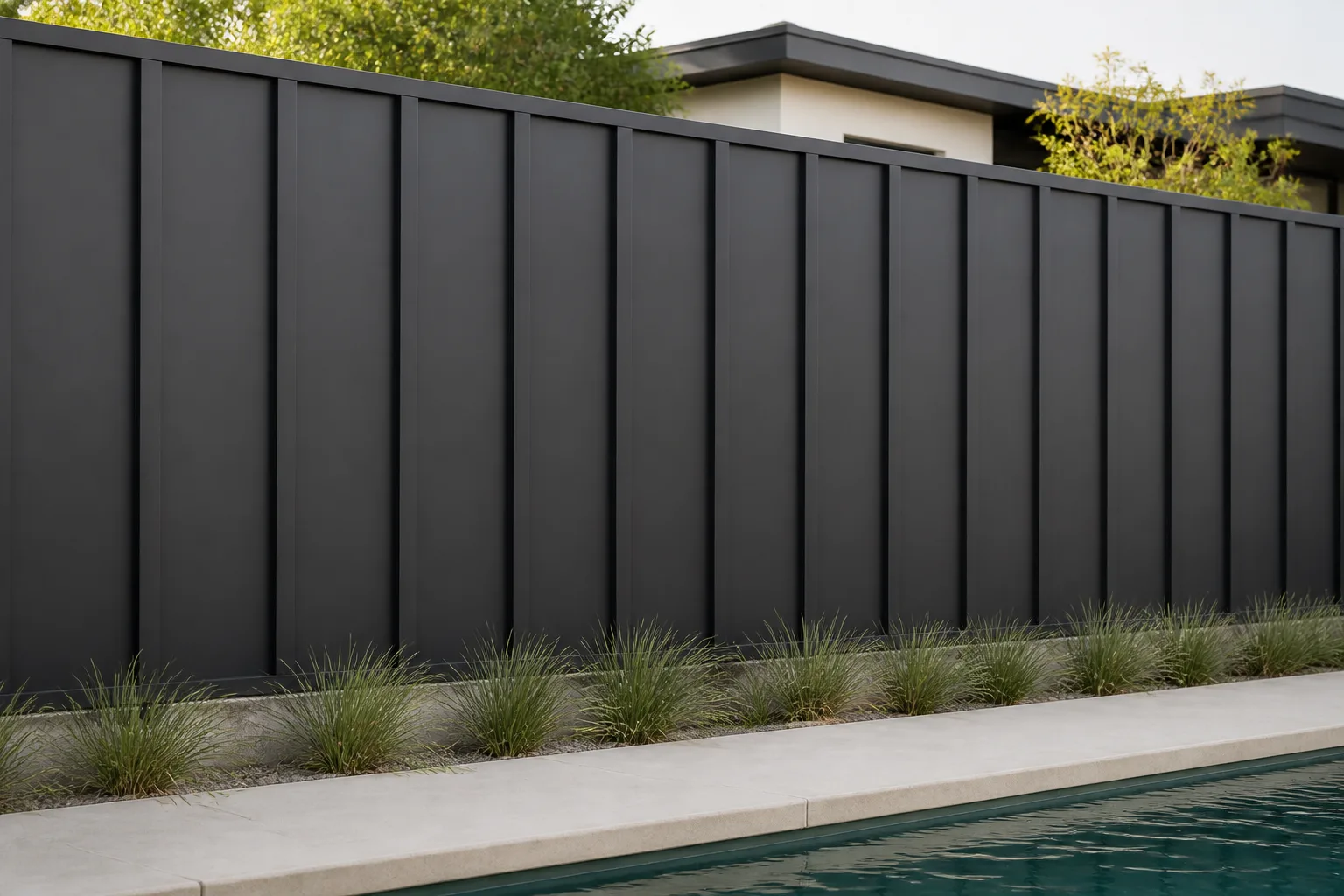
Privacy is sightline-specific. Stand where you sit and note what you see at eye level. A 6-foot slat wall (Idea 21) along one fence line often beats planting a full perimeter hedge you will not maintain. Leave small gaps between slats if you need light and air; solid walls can make a narrow patio feel like a box.
Idea 22: wall baskets, pampas grass in a tall vase, and a patterned rug with a bistro set add bohemian texture while breaking up a flat fence plane. Layer tall container plants—ornamental grasses, cannas in frost-free zones, or columnar evergreens where hardy—for renters who cannot build.
Plants, florals, and vertical growing for patio borders
Ideas 23–24: container herbs on the dining table, hanging plants on pergola rafters, modern plant stands grouped at corners.
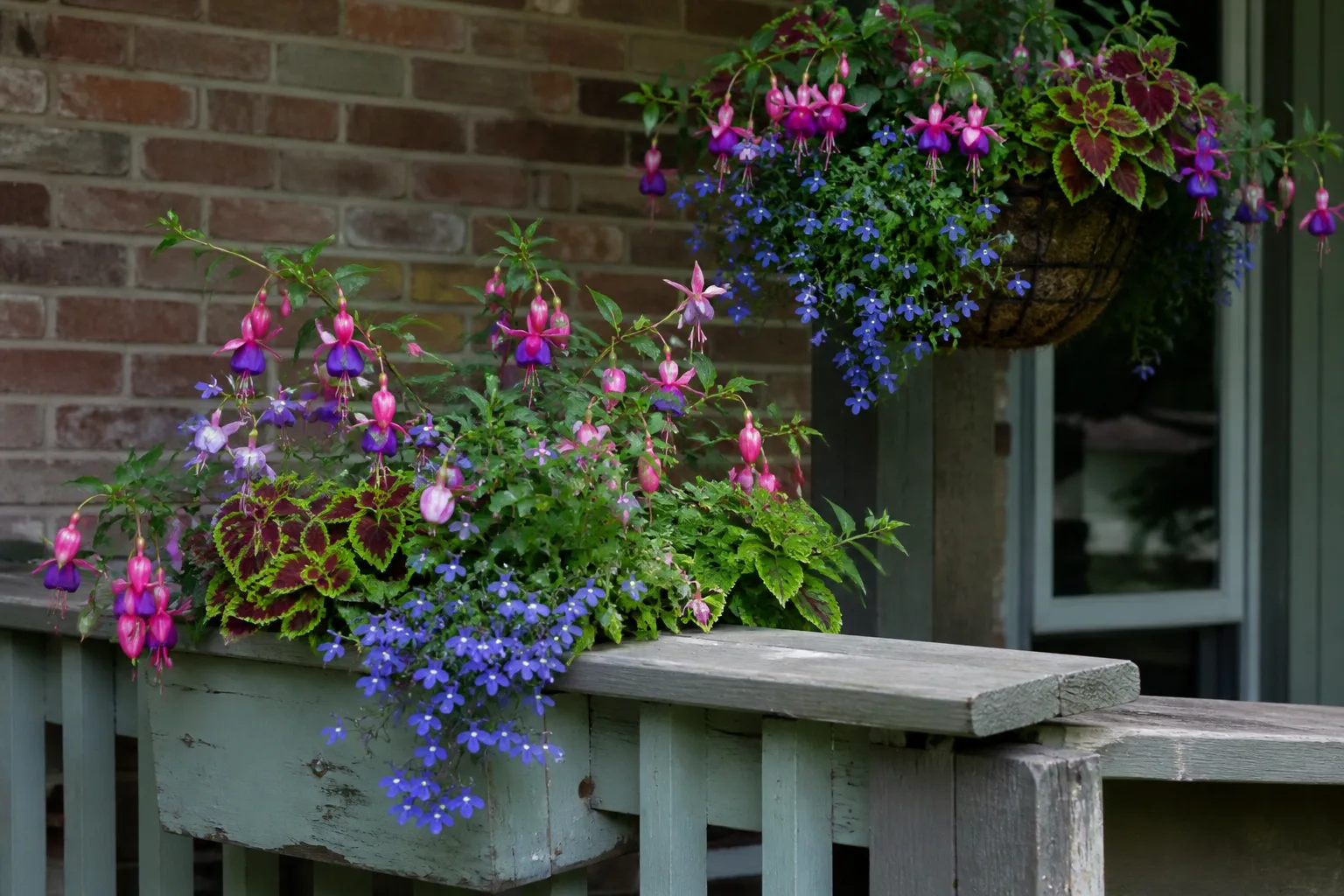
Plants should solve a job: shade, fragrance, screening, or pollinator interest. Idea 23: a row of identical herb planters on a picnic table doubles as centerpiece and kitchen supply. Idea 24: hang plants from pergola rafters or use tiered stands to lift foliage off precious floor space.
Match plants to sun exposure on the pad itself, not the lawn ten feet away. Full-sun containers need more frequent watering than in-ground beds. For vertical growing on fences, see DIY vertical garden ideas. Cut garden flowers in jars (Idea from classic cottage style) beat silk florals that UV-fade in one season.
Floral decor on the patio—cut blooms, dried wreaths on French doors, floral pillows—works when materials are outdoor-rated or easy to swap. Supermarket stems in repurposed jars last a weekend; change water daily in heat. Dried wreaths need covered placement or they turn to dust in direct rain. Tie pillow fabrics to one bloom color already in the yard so the look feels collected, not catalog-perfect.
For herb rows on the dining table, use identical pots with drainage trays so water does not stain wood. Basil, mint, and rosemary tolerate afternoon sun on many patios; move pots to partial shade if leaves bleach. Harvesting before dinner doubles as centerpiece and garnish—a rare decor item that earns its counter space.
Fire pits, hammocks, and focal points for slow evenings
Ideas 25 (split across features): portable fire pit on gravel, hammock in a shady corner.
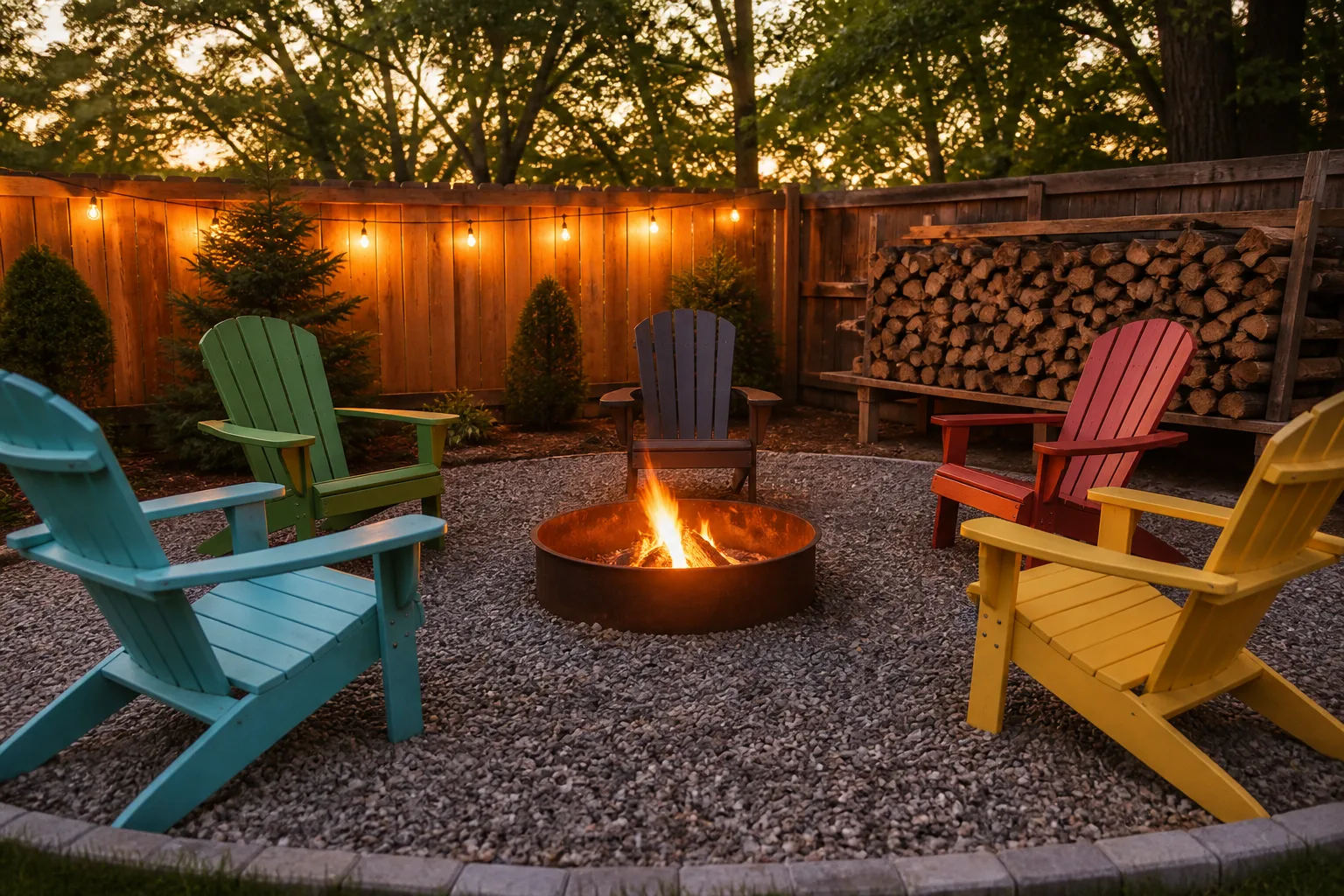
A portable fire pit (Idea 25a) on non-combustible ground—gravel, concrete, or pavers—not grass or wood decking—creates an evening anchor for less than a built feature. Check local burn rules, wind, and clearance to structures before the first match; our DIY backyard fire pits guide covers typical distance and liner basics.
Idea 25b: a hammock needs two solid anchor points rated for dynamic load—tree straps on healthy trunks, or posts set in concrete. Hang in partial shade; full sun turns nylon into a radiator by July. Leave enough sag that you sit at chair height, not hammock-cocoon height, if elders will use it.
Water features—a small fountain or birdbath on the patio edge—add white noise that masks traffic without competing with conversation. Keep pumps on a GFCI outlet and plan winter drain-down in freeze zones. Even a galvanized stock tank with a recirculating pump can anchor a corner visually for less than built masonry.
Covered patios, fans, and entertainment zones
If you already have a covered patio, treat the ceiling as a fifth surface. String lights across rafters (echoing a starry sky) cost less than recessed cans. An outdoor-rated ceiling fan moves air on still humid nights; mount only to structure engineered for the weight and vibration.
Outdoor TVs belong on covered walls with moisture-rated enclosures and cables routed so they are not trip hazards. Angle screens away from west glare. These are lifestyle upgrades—skip them if drainage or seating layout is still unresolved.
On covered patios, outdoor ceiling fans need wet- or damp-rated housings and blades sized to the room—52-inch fans suit many 12×14-foot covers. Mount to a joist or approved fan box, not thin beadboard alone. In humid climates, wipe blades seasonally so dust does not throw the balance.
Accent color (pink blooms, red cushions against gray hardscape) works when the base palette is restrained—one or two hues repeated in pillows, pots, and a table runner, not every object in a different color. Pull accent hues from a plant already in the bed so the patio feels tied to the garden instead of decorated in isolation.
Weekend DIY accents with outsized impact
Quick wins that punch above their price:
- Painted fence accent wall behind seating—one bold rectangle or geometric shape defines a focal wall without repainting the whole yard.
- DIY wall art on fence boards using exterior paint and stencil.
- Mirrors (where rain-sheltered) to bounce light on narrow side patios—use outdoor-rated or fully protected glass.
- Bar cart or rolling console for drinks and blankets—mobility matters on small pads.
- Secondhand urns grouped in threes at the patio edge—visual weight without construction.
Hanging wall baskets on fence boards (Idea 22 detail) work best when you vary texture—dried grasses, a small trailing succulent in one basket, and an empty woven form for shadow. Stagger heights so the arrangement reads from the seating angle, not from the alley behind the fence.
Painted fence accent walls need exterior primer on raw wood and two coats of satin or matte porch paint. Tape a crisp border with painter’s tape and a level; a wobbly rectangle reads amateur faster than no paint at all. In HOA neighborhoods, confirm color rules before going saturated.
Do these after rugs and lighting; they are seasoning, not structure.
Conclusion
The best backyard patio ideas share a sequence: solve sun, drainage, and privacy, define the floor with rug or surface upgrade, add scaled seating, then layer light, shade, plants, and one focal feature—a fire bowl, hammock, or dining pendant. Twenty-five separate trends only work when each passes that filter for your yard size, climate, and real budget.
Start this weekend with a paper sketch and a hose test for puddles, not a furniture catalog. Buy the tier that matches your funds, prove where people sit for two weeks, then add the decor that makes the patio feel like yours. A patio you use three evenings a week beats a magazine spread you avoid in August heat.