19 Lush Backyard Ideas Without a Traditional Lawn
Plan 19 lush no-grass backyard ideas—from gravel patios and groundcovers to fire pits, pool zones, and lighting—that keep your yard green without mowing turf.
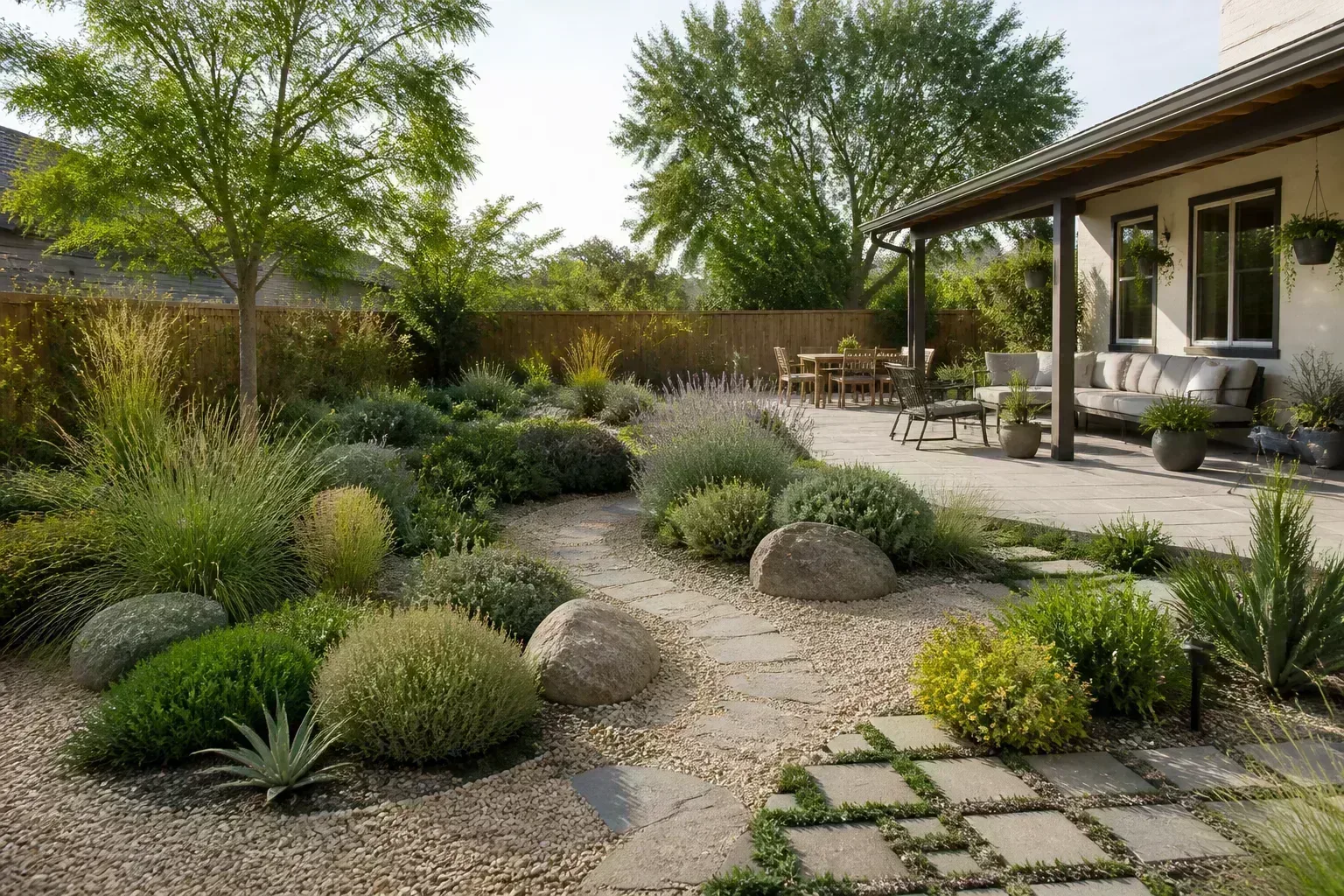
A backyard without turf is not a backyard without life. No-grass layouts can feel greener than a struggling lawn when you combine living groundcovers, layered planting, permeable hardscape, and outdoor rooms that match how you actually live outside. The mistake is treating “no grass” as one design—gravel, sedges, fire pits, and pool lounges solve different problems and fail quickly when installed on soggy soil or in the wrong traffic lane.
Plan Your No-Grass Backyard First
Before you copy a photo, treat the yard like a set of rooms. UF/IFAS landscape planning guidance stresses knowing your regional climate, topography, soil, sun and shade patterns, and who will use each area (UF/IFAS planning tips). Check your USDA hardiness zone so groundcovers and shrubs survive winter. The best no-grass yards feel lush because plants and paving are placed on purpose, not because someone eliminated mowing and left bare dirt.
Know Sun, Drainage, and Who Uses the Yard
Sketch three questions on paper: Where does water sit after rain? Which paths do kids, dogs, or delivery drivers cut across daily? Where do you want to eat, cook, or sit after dark? UF/IFAS recommends promoting drainage away from the house and linking zones with clear walkways so people move naturally between spaces. Be honest about maintenance: a gravel patio needs occasional raking; a native meadow can take two to three seasons to look intentional (Penn State Extension on meadows); thyme mats fail in heavy dog traffic.
Build in this order: fix drainage and slopes → install primary hardscape (main patio, paths) → add privacy planting → place seating and cooking zones → layer groundcovers and accent planting → add lighting last. Skipping drainage is how beautiful furniture ends up on the only puddle in the yard. For deeper plant picks, see our guide to grass alternatives.
Idea 1: Concrete Slabs With Gravel Joints
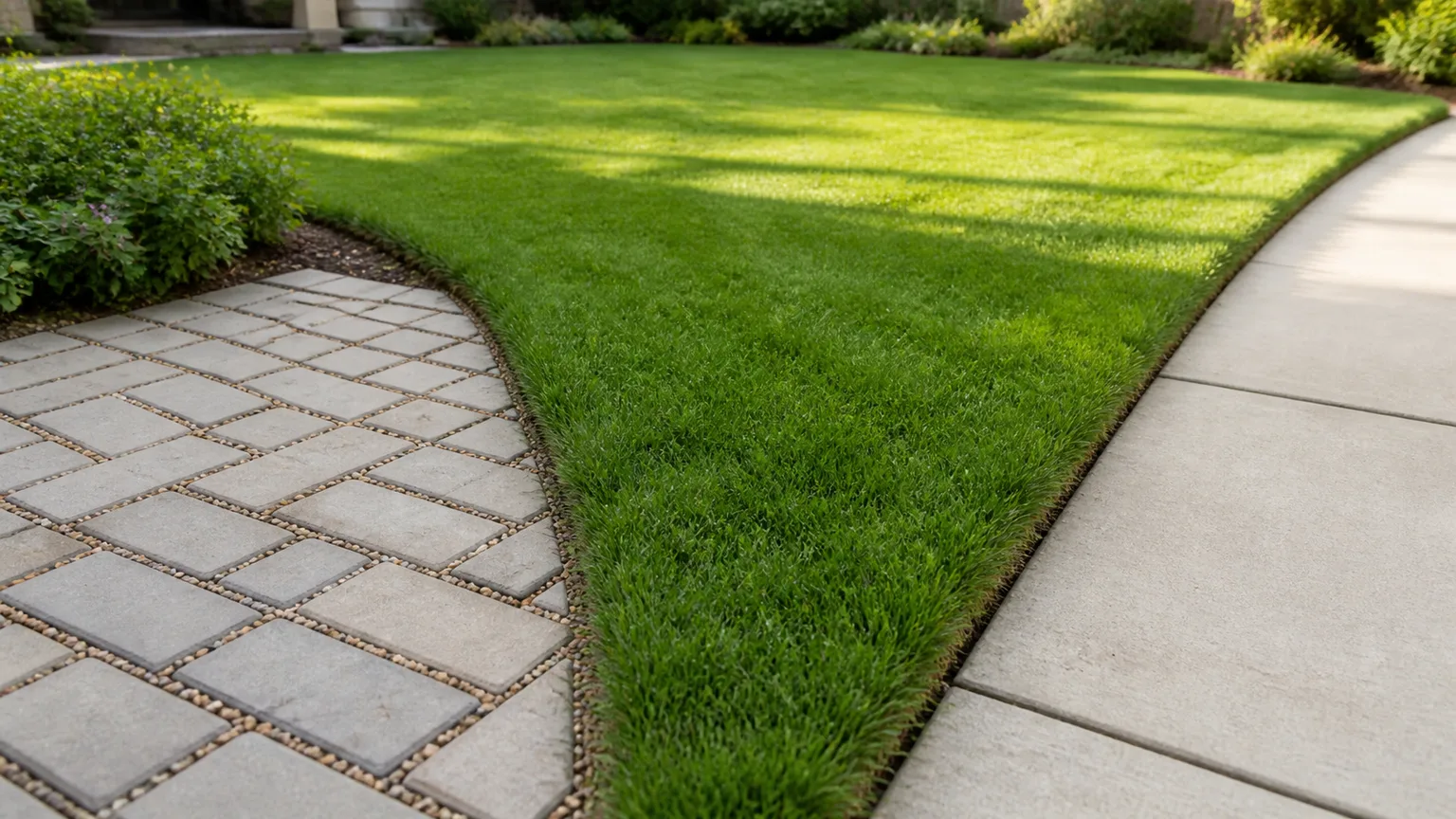
Large concrete pavers or slabs with gravel joints give you a crisp, modern field that reads greener when paired with planting pockets between slabs. The gravel gaps help air and water move compared with a solid poured slab, which matters in hot climates where impervious surfaces amplify heat (pervious vs impervious hardscape). Use consistent joint width and align the grid to the house so the pattern looks deliberate.
When it works: Entertaining patios, side yards, and modern courtyards with light foot traffic. When to skip: Steep slopes without retaining edges, or tree-root zones where rigid slabs will crack. Leave planting strips between slabs for low sedums, creeping thyme, or ornamental grasses so the surface feels alive—not like a parking lot.
Idea 2: Gravel Courtyard Patio
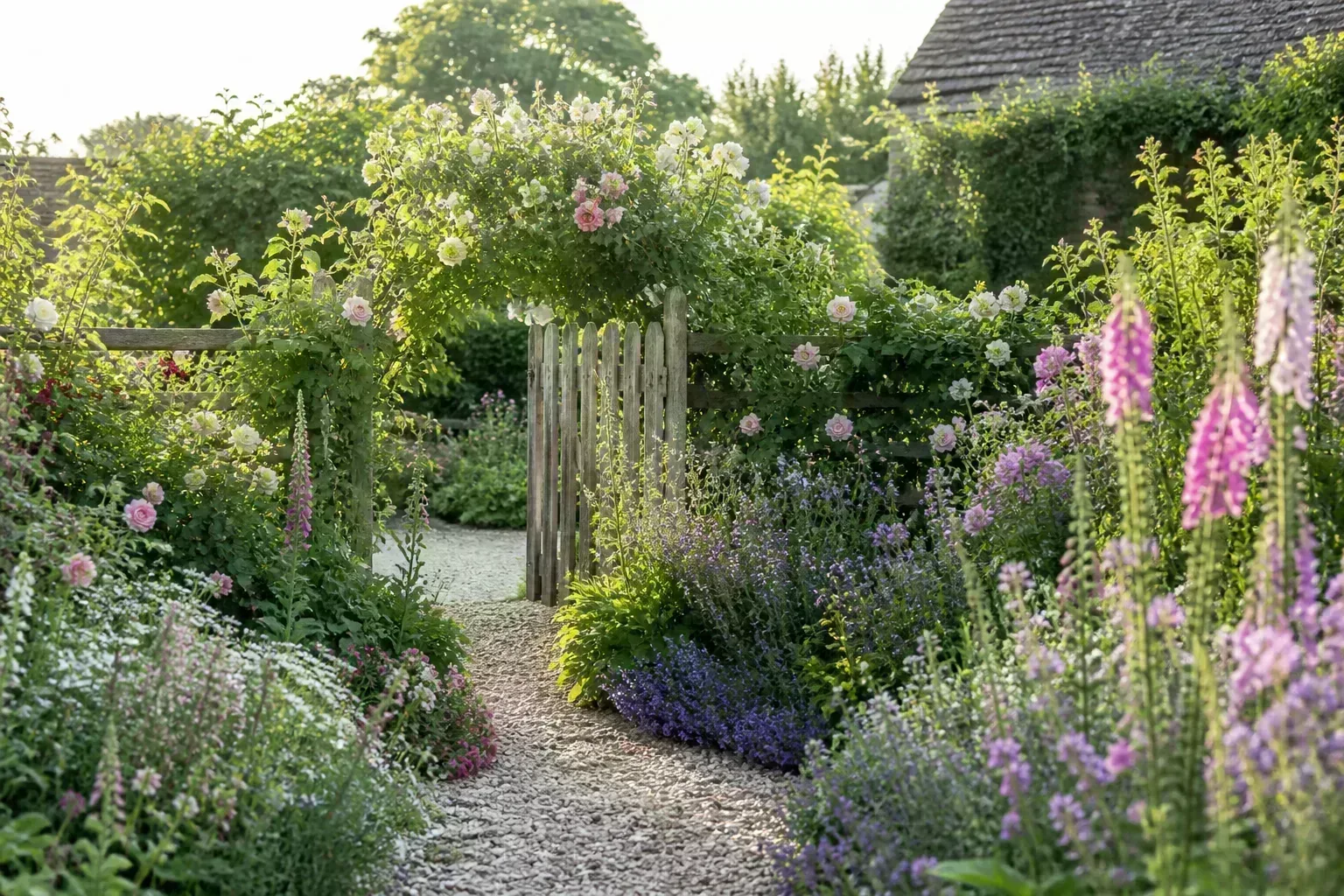
A pea gravel or crushed-stone patio is one of the fastest ways to define a no-grass living area. Edging is non-negotiable: without a steel, brick, or concrete border, gravel migrates into planting beds and paths. Compact a base layer, add landscape fabric only where weeds are brutal (not over tree roots), and top with 2–3 inches of stone.
When it works: Country gardens, fire-pit pads, and side courtyards with good drainage. Trade-offs: Gravel is not ideal for strollers, heels, or bare toddler feet; add a flagstone path for the route you walk daily. Rake and top-dress every few years. Pair gravel with wrought iron or wood furniture for a relaxed look that still feels green when bordered by shrubs.
Idea 3: Essential Patio Furniture Layout
A small backyard that is patio-only can still feel complete with four pieces: dining table, bench or secondary seating, side table, and a fire bowl or chiminea on a noncombustible pad. Scale matters more than brand—leave 36 inches behind chairs so people can push back without tumbling into a planter. Anchor the layout to one focal point (view, fire, or kitchen door) so the space does not float in the middle of empty hardscape.
Pro move: Define the patio edge with planters of evergreen shrubs or tall grasses so the seating island feels nestled, not exposed. This is the lowest-drama starting point if you are phasing a makeover; see budget-friendly DIY backyard ideas for weekend-scale upgrades.
Idea 4: Grass-Like Groundcovers Instead of Turf
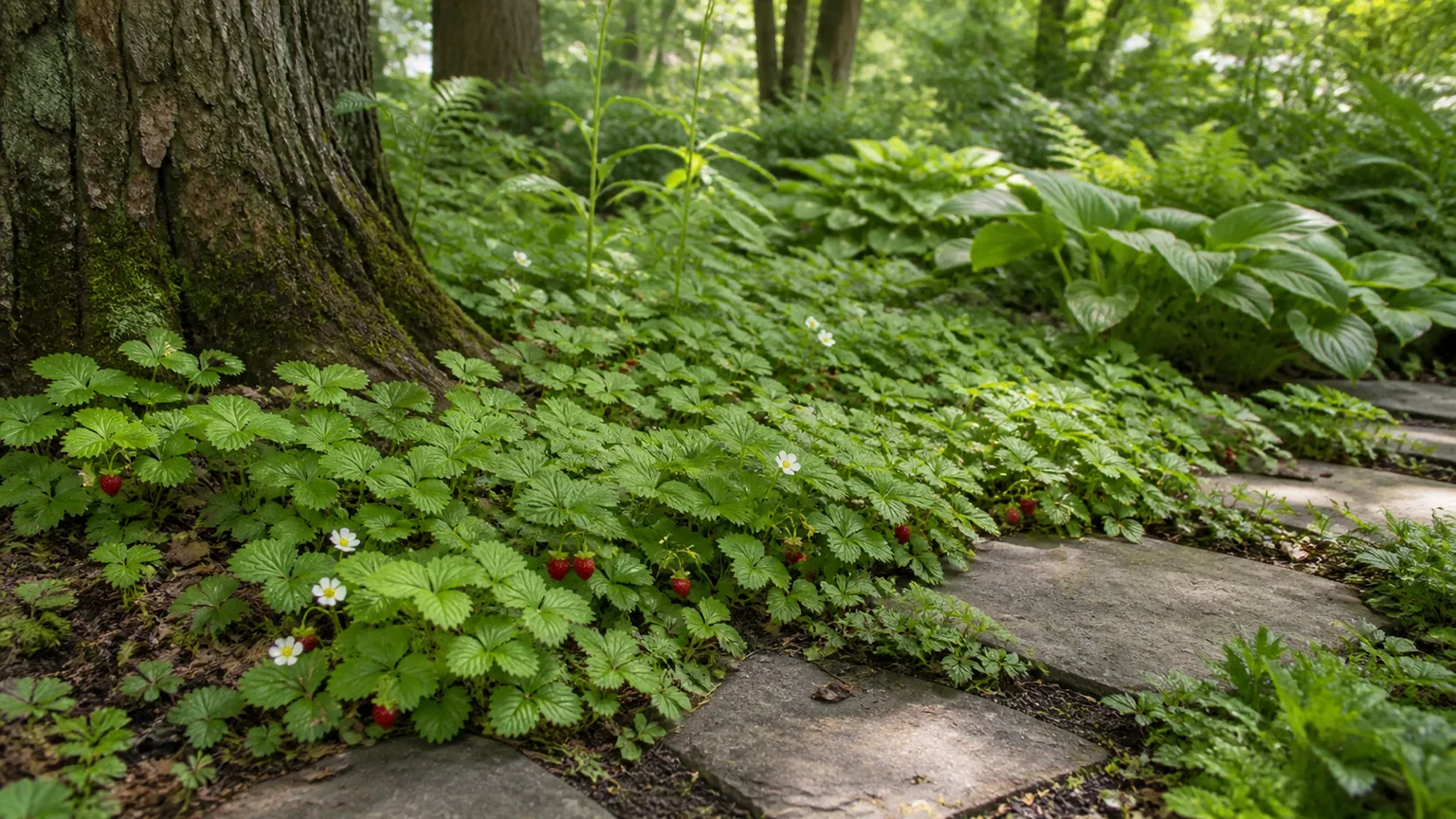
Living green surfaces are how many no-grass yards avoid looking like a desert. Grass-like groundcovers replace mowing with the right plant for your light and traffic:
- Pennsylvania sedge (Carex pensylvanica) for dry shade and light foot traffic in cool regions.
- Liriope for sun to part shade and well-drained borders (BHG grasslike groundcover guidance).
- Creeping thyme for sunny, well-drained pockets with occasional walking—not daily dog runs.
- White or microclover for sunny areas where you want pollinator value and less fertilizer.
Penn State Extension notes that many former “lawn weeds” like clover fix nitrogen and feed pollinators when you stop broadleaf herbicides (Penn State turfgrass alternatives). Match the plant to traffic first, then aesthetics. High-use paths still need stepping stones.
Idea 5: Layered Shrubs for Privacy and Green Mass
You can make a no-grass yard feel lush and secluded by stacking plants vertically—groundcover at your feet, mid-height shrubs at eye level, and trees or tall screens at the perimeter. Penn State Extension recommends native tree and shrub beds for borders because they reduce erosion, filter runoff, and support birds (Penn State turfgrass alternatives). Use plants as implied walls: a low hedge defines a dining zone; a taller mixed border blocks a neighbor’s window without a fence.
Design rule: Repeat three to five species in groups instead of one-of-everything collector beds. Leave breathing room at mature size—crowded shrubs turn into a maintenance hedge whether you wanted that or not. For oasis-style layering, combine this idea with tips in our backyard oasis guide.
Idea 6: Dedicated Outdoor Grill Station
A built-in or freestanding grill zone turns a hardscape yard into a cooking room. Place it on a noncombustible surface (concrete, pavers, or gravel with a stone pad) with clearance to siding, overhangs, and vinyl fencing per your grill manual. Add counter space for trays, a trash pull-out, and task lighting so you are not grilling in your own shadow.
Circulation: Keep the path from kitchen door to grill at least 42 inches wide and separate from the main lounge so guests are not dodging hot grates. If smoke drifts toward seating, shift the grill or add a low wall—not more plants that will collect grease smoke.
Idea 7: Fire Pit Gathering Circle
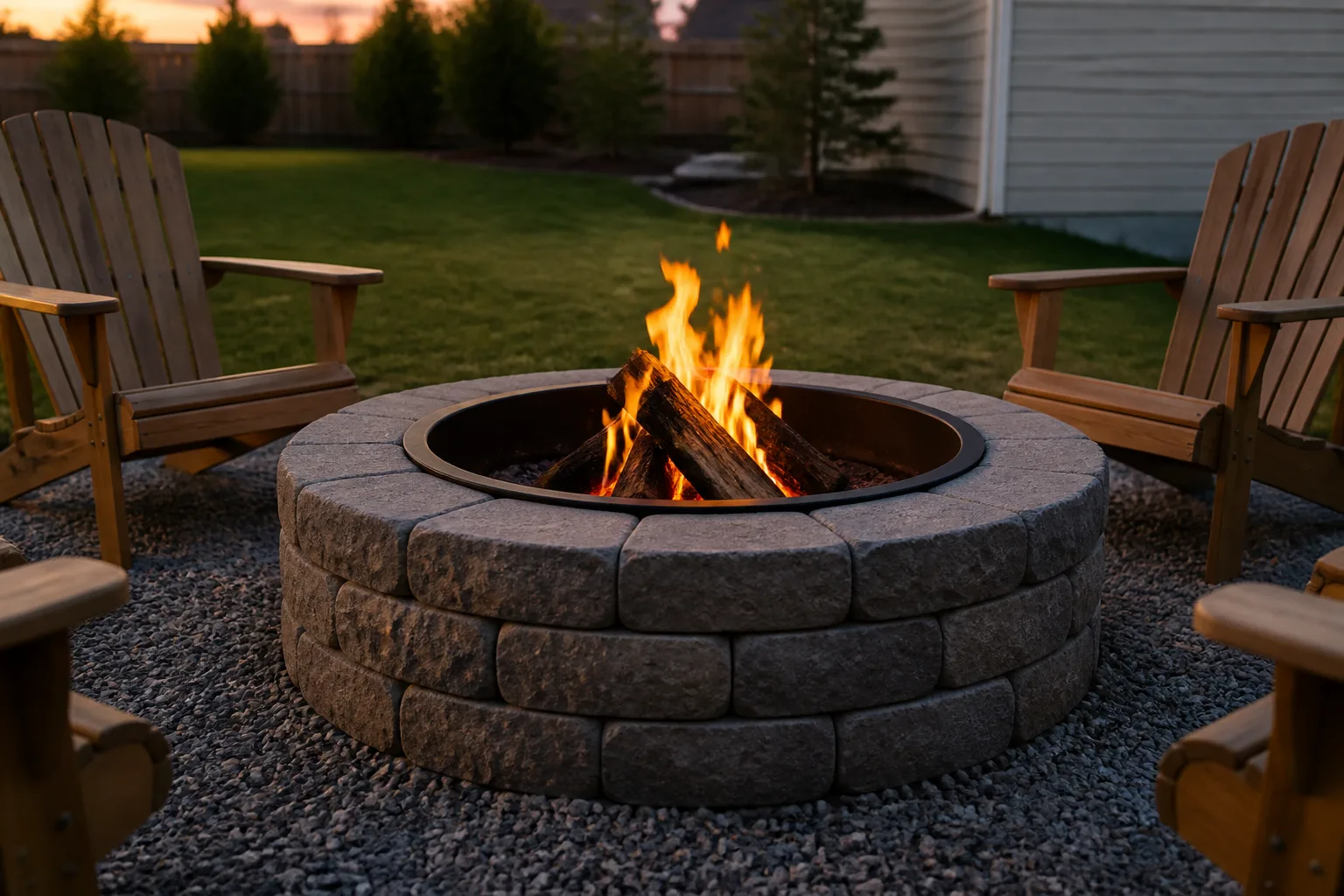
A fire pit seating circle is the anchor many no-grass backyards missing a lawn lack: it gives people a reason to stay outside after sunset. Use a portable fire bowl on a stone pad for flexibility, or build a permanent pit with gravel or pavers in a full circle so chairs sit level. Our DIY backyard fire pit guide covers construction basics; the layout rule here is simpler—every seat should face heat and conversation, not the back fence.
Safety: Check local burn rules, keep overhead clearance free of branches and pergolas, and store a hose or extinguisher within reach. Wood fires need more clearance than gas; never place combustible mulch or wicker right at the edge.
Idea 8: Covered Outdoor Dining
Covered dining makes a no-grass yard usable through hot afternoons and light rain. A pergola with retractable shade cloth, a pavilion roof, or a cantilever umbrella over the table blocks harsh sun where it actually hits—usually west and south exposures. Align the cover with the table, not the whole patio, so you do not shade plants that need sun.
Pair covered dining with a hard surface that stays level: pavers beat deep gravel under chair legs. If mosquitoes are brutal, add a fan under the cover before you buy another citronella bucket.
Idea 9: Pool Lounger Zones
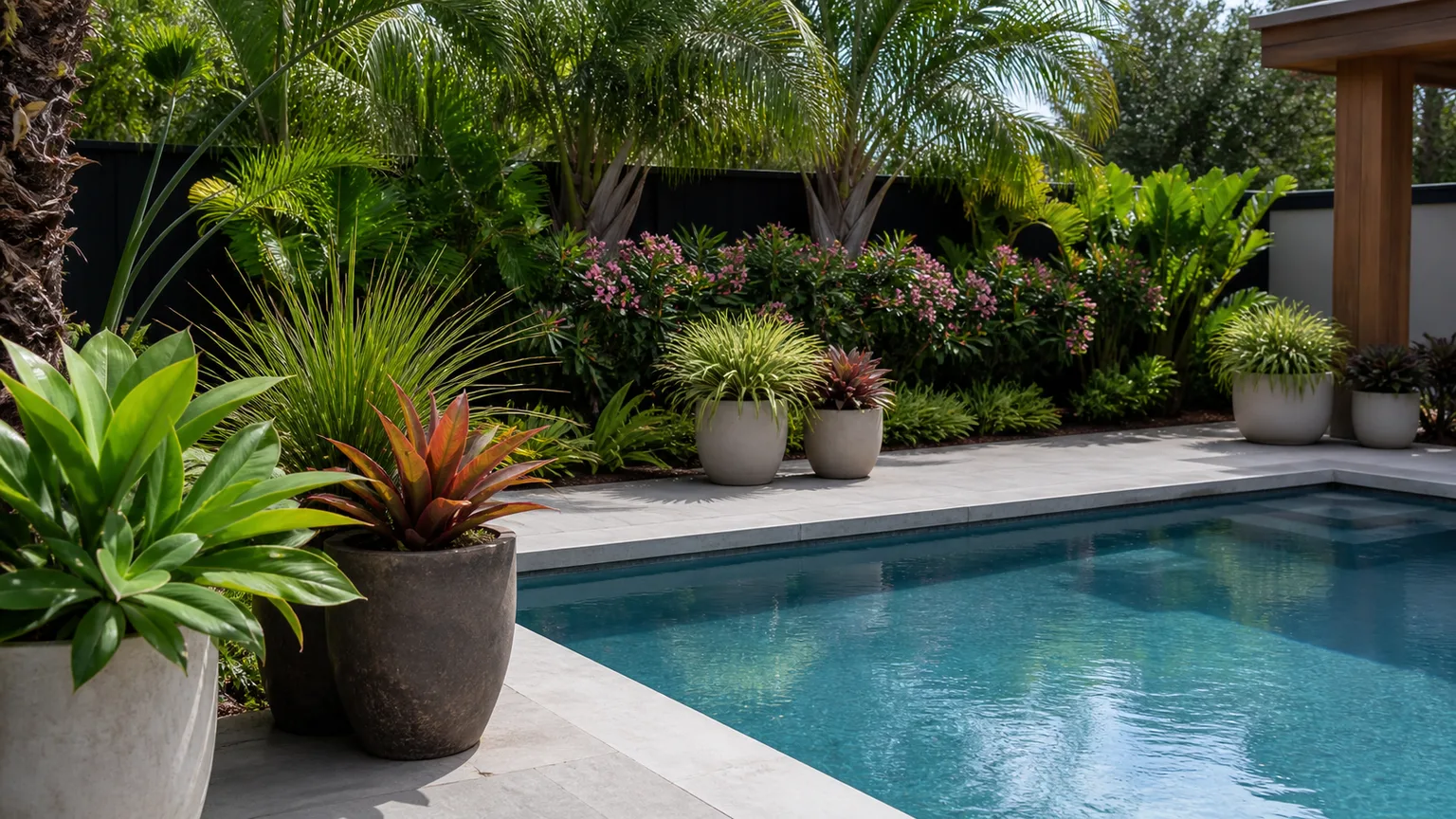
Pool decks without turf succeed when you zone seating by activity: chaise lounges for sun, a bench or coffee table grouping for conversation, and a dry path to the house. Leave enough space between loungers for towels and side tables—tight layouts look chic in photos and feel cramped with real humans.
Use permeable or textured surfaces so wet feet are not skating on polished stone. Plant poolside with salt- and splash-tolerant species in raised beds so roots are not under the coping. Our poolside planting guide covers species that handle chlorinated splash.
Idea 10: Water-Edge Deep Seating
If your backyard backs onto a lake, pond, or large water feature, orient deep seating—sectionals, Adirondacks, or daybeds—toward the view with backs protected from wind. Hardscape can step down in terraces so upper social zones and lower water-edge lounging feel separate without walls.
Stability: Anchor lightweight furniture in windy corridors. Use outdoor-rated cushions with quick-dry fill; humidity and morning dew linger longer by water than on an inland patio.
Idea 11: Umbrellas and Shade Structures
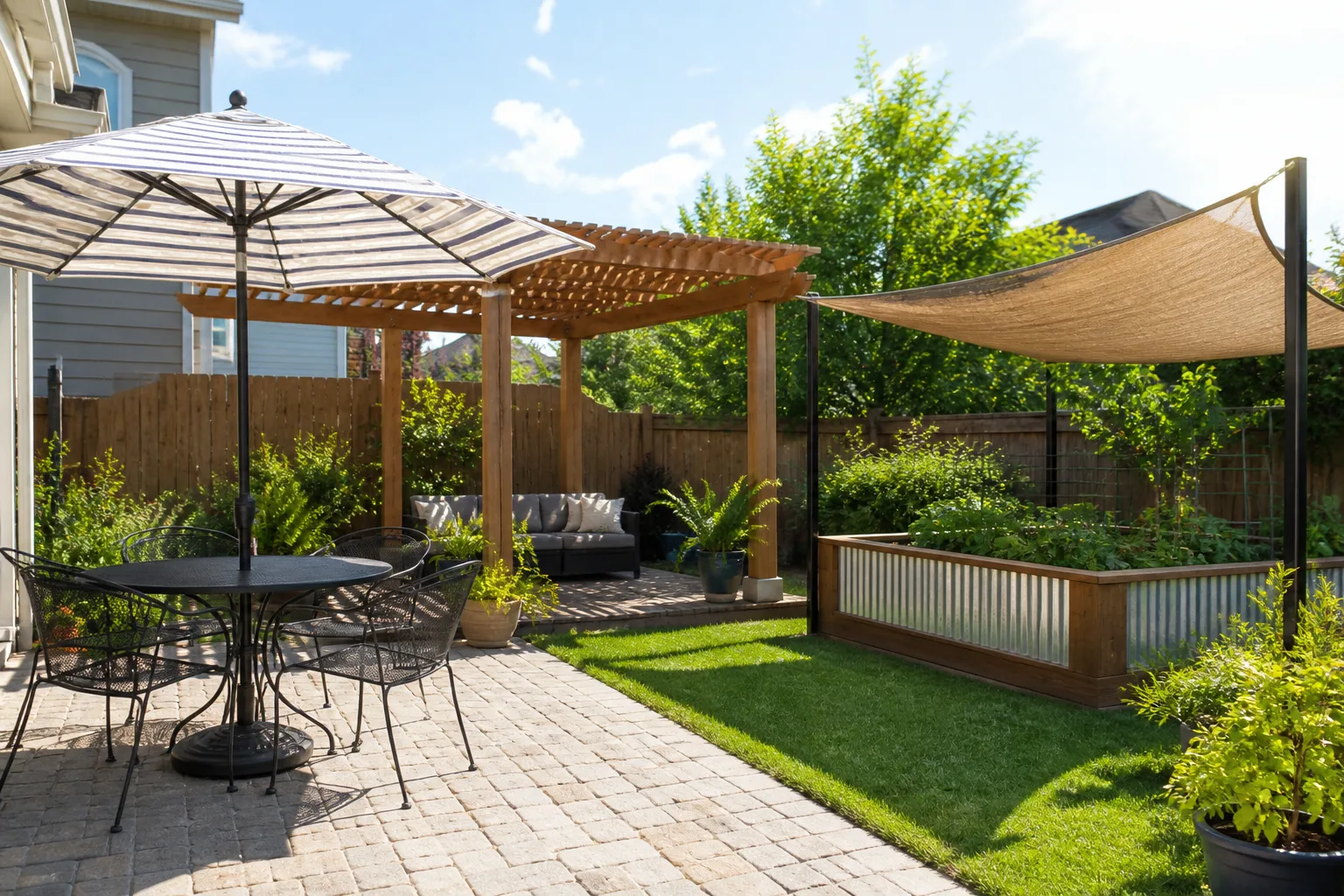
Shade is what makes stone and concrete livable in summer. Layer solutions: a cantilever umbrella over dining, a shade sail over a lounge pad, and a pergola at the hottest west-facing edge. Umbrellas should tilt with the sun path; sails need engineered anchor points—not fence posts alone.
For budget shade ideas that do not require a new roof, see budget DIY backyard shade ideas. Dark umbrella fabric absorbs heat; lighter colors reflect more but show dirt—pick based on whether you battle heat or pollen.
Idea 12: Country Gravel-and-Stone Style
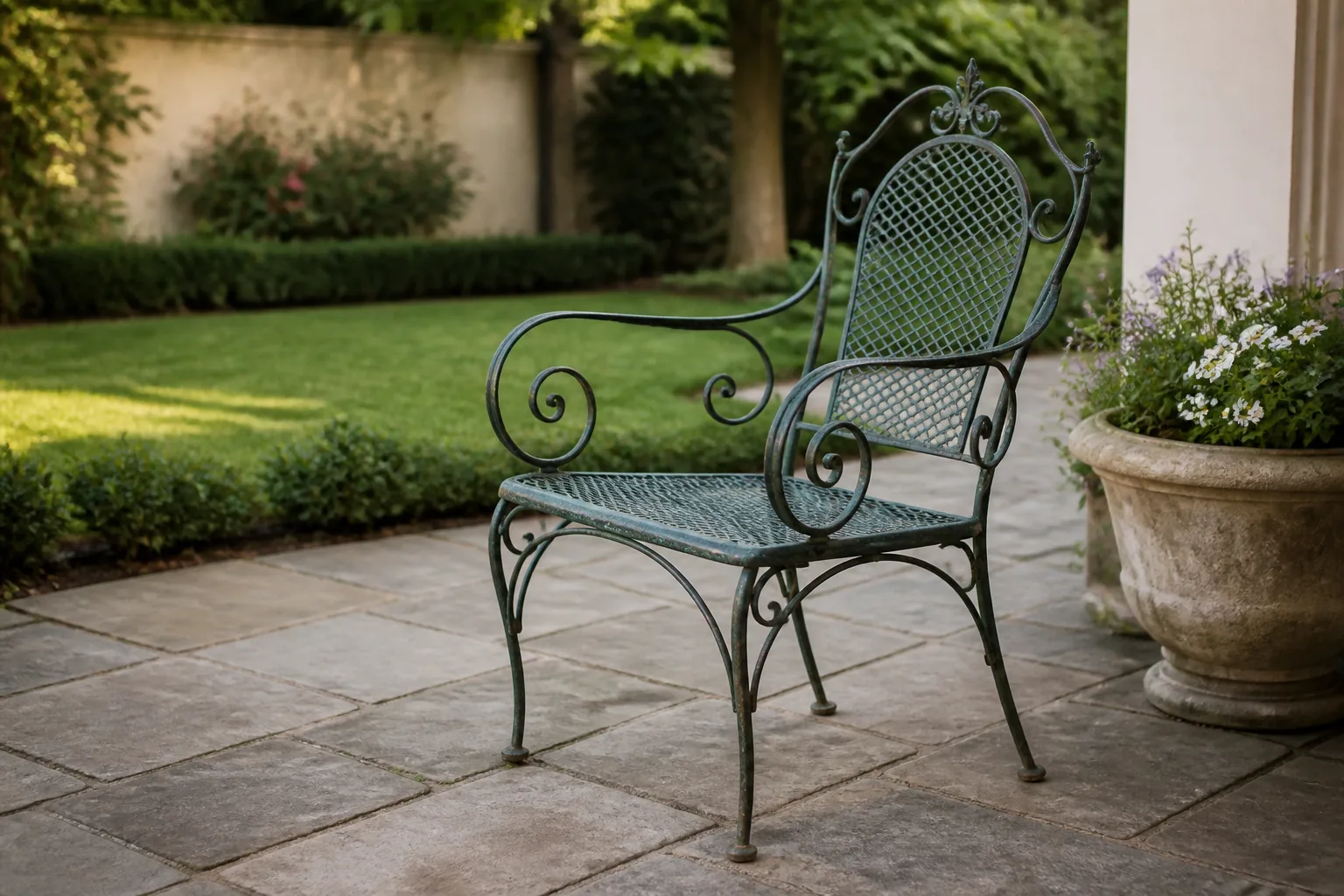
Not every no-grass yard is poolside modern. A country look uses compacted gravel paths, irregular flagstone steps, wrought iron or painted wood furniture, and clipped shrubs in simple rows. The green comes from structure—boxwood balls, hydrangea borders, and vines on a pergola—not from a turf carpet.
Keep gravel paths narrower than patios so the yard reads as garden, not quarry. Edge paths with steel or brick and allow low groundcovers like wild strawberry or creeping thyme to soften corners in part shade.
Ideas 13–15: Minimal Zones, Color Pops, and Layered Lighting
13. Minimal yet practical zones. Divide the yard into clear activity pads—eat here, sit there, walk this line—instead of scattering furniture. Egg chairs or a single curved sofa work when the layout is open and circulation is obvious. Negative space is part of the design; every corner does not need a pot.
14. One bold color pop. Keep hardscape neutral, then add one accent color in pillows, umbrellas, or a pair of chairs—yellow, terracotta, or cobalt reads cheerful against gray stone and green planting. If you add pattern, limit it to textiles; busy pavers plus busy cushions fight each other.
15. Layered outdoor lighting. Light in three layers: path lights for safe walking, task light at grills and steps, and ambient strings or lanterns at seating height (backyard lighting ideas).
 Warm 2700K LEDs feel residential; avoid blasting the whole yard like a stadium. Install paths first—you will use the yard more if you can see where gravel ends and a step begins.
Ideas 16–19: Family Flow, Modular Seating, Pool Gates, and Play Patches
16. Pool-to-fire lounge flow. If you have both pool and fire features, connect them with a dry walk path wide enough for wet feet and towels. Place towel hooks or a bench at the transition so the fire zone does not become a damp chlorine zone.
17. Modular pouf seating. Outdoor poufs add flexible seating for crowds and become side tables with a tray on top. Lightweight fills move easily but blow away in wind—store or weight them when storms approach.
18. Pool safety gates and barriers. Young children and pools require code-compliant barriers, not just pretty fences. Removable mesh fences, self-closing gates, and latch heights are regulated locally—check your municipality before choosing acrylic or glass for aesthetics alone. Glass and acrylic barriers can look invisible while meeting function if installed to spec; never trade latch security for Instagram appeal.
19. Play patch where turf fails. A small play area with engineered wood fiber, rubber mulch, or even a sand box fits backyards where grass never thrived under swings. Separate play surfacing from gravel dining areas with a low border. Older kids may prefer a sport court strip of pavers or synthetic turf on a pad—compare heat and maintenance in our artificial turf guide before committing.
Conclusion
A lush no-grass backyard is a planned mix of living surfaces, useful hardscape, and outdoor rooms—not a single material swapped for turf. Start with drainage, sun, and traffic patterns, then choose two or three ideas that match your climate and household: maybe gravel joints and a fire circle, or groundcovers and a shaded dining pergola. Keep high-wear routes on stone or pavers, let plants carry the green in beds and borders, and add light last so you actually use the space after work.
If you still need a patch of traditional turf for sports, Penn State Extension’s approach—turf where you need it, alternatives everywhere else—often beats an all-or-nothing makeover (Penn State turfgrass alternatives). Build one zone well this season, then expand. A yard that functions beats a yard that only photographs well.