Marigolds vs Mums for Fall Porch Planters
Compare marigolds and mums for fall porch planters: bloom timing, watering, varieties, and when each plant actually wins.
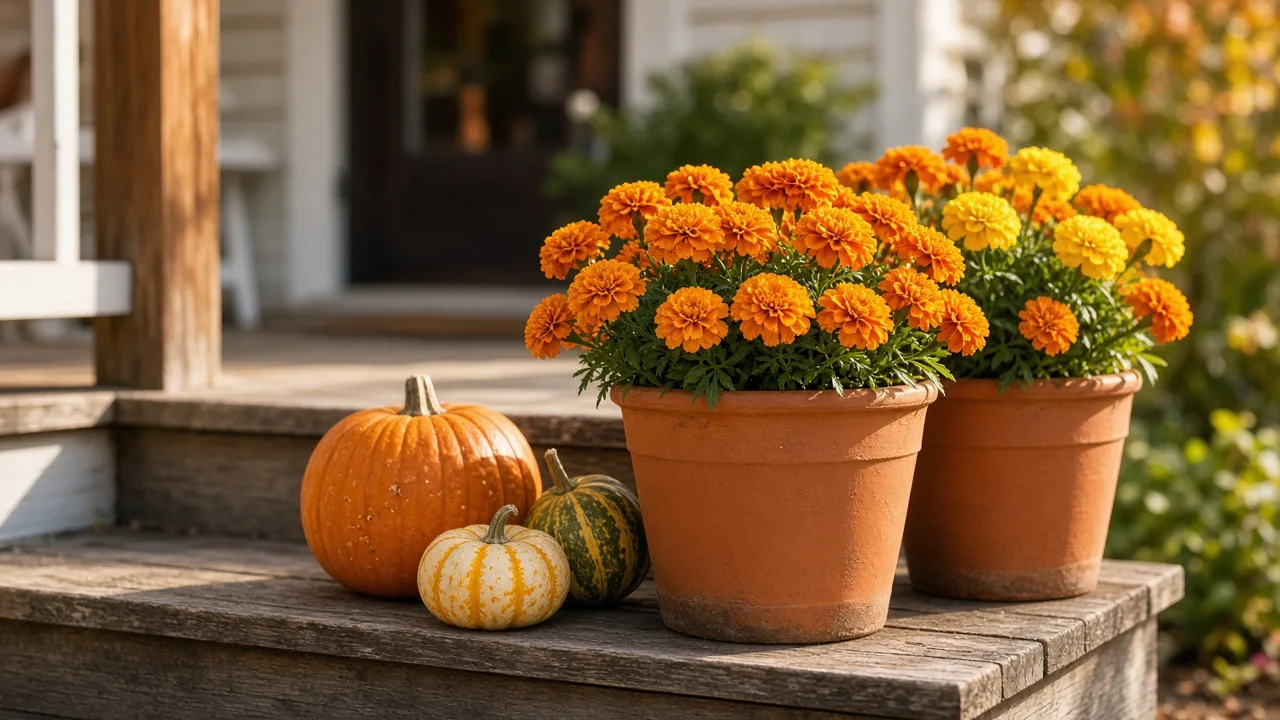
Every September, porch planters fill with garden mums in bronze, burgundy, and gold — and by October, half of them look tired, wilted, or oddly flat despite daily watering. Marigolds (Tagetes spp.) have become a popular swap because they deliver similar warm autumn colors with less drama, provided your porch gets enough sun and you choose a dwarf variety built for pots.
This is not a blanket recommendation to abandon mums. Mums still win when you want peak fall bloom on a partly shaded stoop, when you are planting garden-hardy types in the ground six to eight weeks before frost, or when you need that rounded, chrysanthemum-mound silhouette at the center of a mixed container. Marigolds win when your porch is sunny and hot, when you are tired of mums collapsing after a warm weekend, and when you want a plant that keeps producing flowers if you deadhead spent blooms.
Both plants belong to the daisy family (Asteraceae), but they behave very differently in containers. Understanding those differences is what turns a trendy swap into a display that still looks good when neighbors start hauling out pumpkins.
What Makes Marigolds a Smart Fall Porch Swap
Marigolds are not traditional “fall flowers” in the chrysanthemum sense. According to NC State Extension, marigolds are typically grown as summer annuals that bloom from summer into fall if conditions stay warm and bright. That timing matters: marigolds you buy in late August or September are often already blooming plants carried over from summer production — not fresh fall transplants like forced mums.
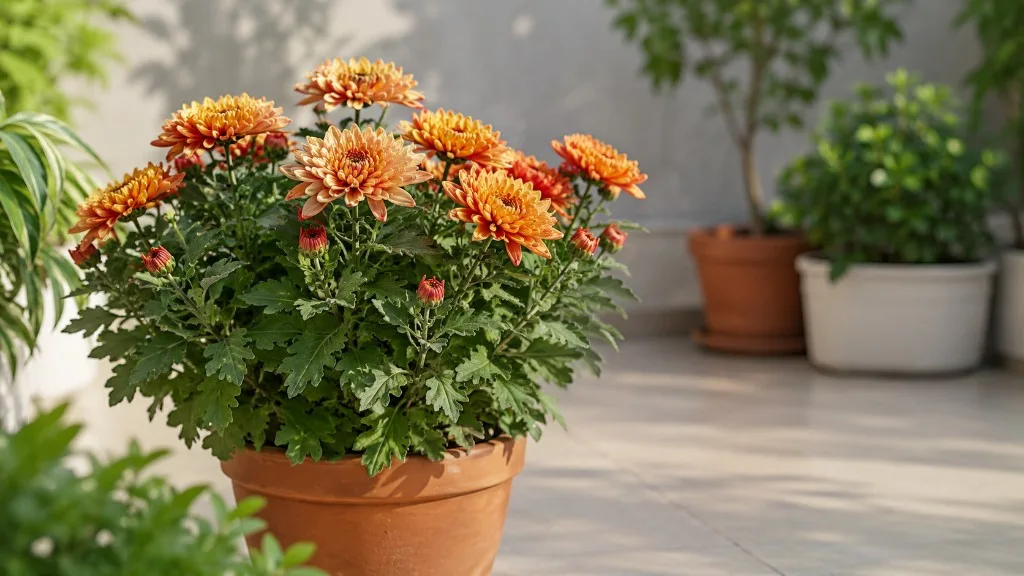
The swap works because many gardeners treat porch mums as short-term décor anyway. The cushion mums sold at grocery stores and garden centers in autumn are bred for pot culture, as NC State’s chrysanthemum profile notes — compact, rounded, and loaded with small flowers — but they are frequently forced into bloom and root-bound in tight pots. They look perfect for a week, then decline unless you repot, water precisely, and give them full sun.
Marigolds tolerate the heat and drying cycles that wreck forced mums on sunny steps. University of Missouri IPM describes marigolds as durable bedding plants that thrive in sun and heat, need minimal maintenance, and adapt well to containers when drainage is good. Their strongly aromatic foliage also makes them less appealing to deer and some chewing pests — a practical bonus on open porches.
Why Mums Break Down on Porches Faster Than They Should
Mums fail on porches for predictable reasons, not because you lack a green thumb. Store-bought fall mums are often root-bound in nursery pots too small for the top growth. Roots circling the bottom cannot take up water fast enough on a hot afternoon, so the plant wilts even when the soil feels moist at the surface.
Light mismatch is the second killer. Chrysanthemums want full sun with organic, well-drained soil, though they can tolerate some shade in the South, per NC State Extension. A covered porch that looks bright from the kitchen window may deliver only two or three hours of direct sun — fine for a photo, not enough for a mum loaded with buds.
Watering habits matter too. Mums in tight pots need frequent, deep watering, but overhead splashing keeps foliage wet and invites disease. Florist-type mums are also less cold-hardy than garden-hardy perennials; if you buy them in full bloom in October, there is no time left in the season for roots to establish before frost, which is why many never return next year even when labeled “perennial.”
What Marigolds Bring to a Fall Display Instead
Marigolds offer continuous bloom potential when you remove spent flowers. NC State Extension recommends deadheading marigolds for repeat blooming throughout summer — the same habit extends color into early fall on plants that were already established in summer beds or larger containers.
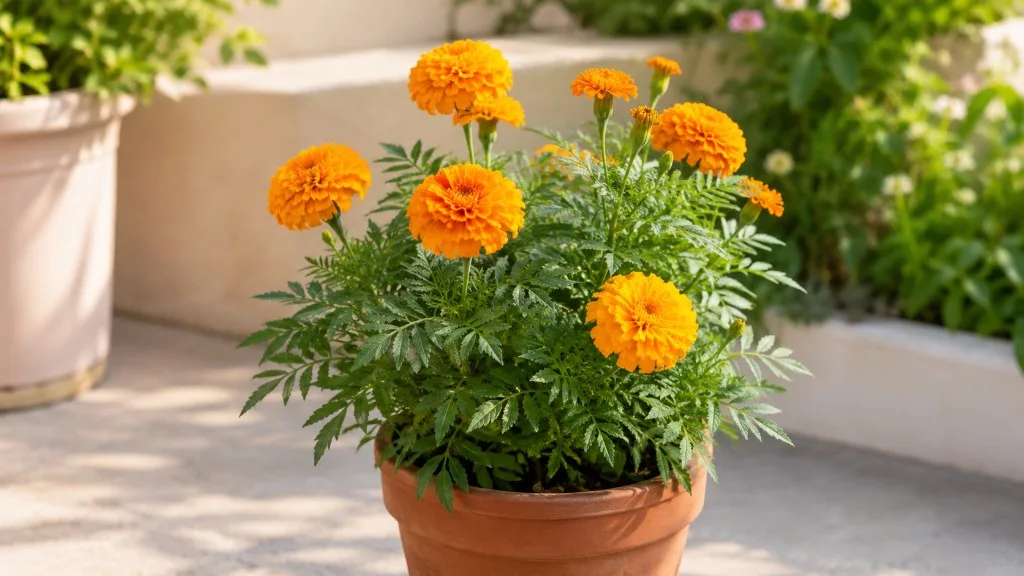
Color overlap is strong. French marigolds (Tagetes patula) come in solid orange, yellow, gold, mahogany red, and bicolor combinations, according to Missouri IPM — hues that read as autumn on a porch beside gourds and dried grasses. Signet types (Tagetes tenuifolia) stay 6 to 12 inches tall, matching the scale of cushion mums without the top-heavy mop shape.
Marigolds are also inexpensive and widely available as six-packs and 4-inch pots late in the season, sometimes at clearance prices when nurseries rotate inventory. That makes them a low-risk experiment if you want to refresh porch pots without spending mum-premium prices every weekend.
Marigolds vs Mums: An Honest Side-by-Side Comparison
| Factor | Marigolds (Tagetes) | Garden mums (Chrysanthemum) |
|---|---|---|
| Typical role on porch | Extend summer color into fall; swap-in filler | Peak autumn bloom focal point |
| Frost tolerance | Frost-tender; die after hard freeze | Hardy types survive in ground zones 5–9; pot mums often treated as annuals |
| Best sun | Full sun; 6–8+ hours (Missouri IPM) | Full sun; some afternoon shade OK in hot South (NC State) |
| Container fit | Best: French & signet dwarfs | Best: cushion/pot mums; can be root-bound at purchase |
| Watering | Tolerates some drought; prefers deep, less frequent soak | Needs steady moisture; wilts quickly when root-bound |
| Re-bloom | Deadheading triggers more flowers | Deadheading helps; many porch mums bloom once heavily |
| Height in pots | 6–14 in (French); up to 36 in (standard African — poor in pots) | Usually 12–18 in in retail pots |
| Perennial potential | Annual in most climates; reseeds in warm zones | Garden-hardy types yes; forced pot mums rarely |
| Pest notes | Aromatic foliage deters some pests; nematode suppression in soil | Few serious issues; botrytis if wet foliage |
Use the table as a starting point, not a verdict. Your porch microclimate beats any generic ranking.
Bloom Timing, Hardiness, and What Happens After Frost
Marigolds peak in warm, bright weather. Epic Gardening’s comparison of mums and marigolds notes that marigolds prefer summer heat and continue flowering with deadheading, while chrysanthemums naturally shift into peak color as days shorten and nights cool. On a sunny September porch, established marigolds can look fresher than mums forced into bloom out of season.
After the first hard frost, marigolds brown and collapse. They will not overwinter in a pot in USDA zones with freezing winters. Mums are more complicated: garden-hardy Korean, rubellum, and spray types can persist in borders, but the mums on your porch in October are usually florist or cushion types optimized for one season of display, not long-term survival. NC State Extension warns that many mums sold in fall do not reliably return in the Southeast, especially if planted late.
If your goal is a display through Thanksgiving, neither plant is guaranteed in cold climates without protection. Marigolds fade at frost; mums lose flowers to repeated freeze-thaw cycles in exposed pots. For the longest show, choose the plant that matches your remaining frost-free weeks, not the one with the best Instagram photo in August.
Water Needs, Heat Tolerance, and Porch Stress
Marigolds are more forgiving of drying than root-bound mums, though they are not cacti. Missouri IPM describes marigolds as drought-tolerant once established but still responsive to supplemental irrigation during dry spells. In a container, that means checking the root ball, not the surface crust: when the top inch is dry, water until it runs from drainage holes, then stop.
Mums in small retail pots often need water daily on a sunny stoop and sometimes twice daily during heat waves — yet still wilt because the root volume is too small. Repotting a mum into a container at least 2 inches larger, using quality potting mix, immediately improves survival odds. Marigolds rarely need that rescue if you bought them in appropriately sized pots to begin with.
Heat tolerance favors marigolds on south- and west-facing steps where reflected heat bakes dark pots. Mums can scorch or dry out faster in those spots unless you increase pot size and shade the container side, not the flowers. On the other hand, mums handle cool, overcast autumn weeks better than marigolds, which stall when temperatures drop and light weakens.
Cost, Availability, and Whether You Can Replant Next Year
Porch mums carry seasonal markup in September and October. Marigolds, already in production for summer bedding, are often cheaper per plant — especially if you shop end-of-season annual tables. For a trio of front steps, that difference adds up when you refresh pots after a cold snap kills frost-tender plants.
Replanting next year follows different paths. Save marigold seed from dried heads if you grow open-pollinated varieties, or buy six-packs again in spring. Perennial mums require spring planting, pinching through summer, and six to eight weeks of root growth before frost — the opposite schedule from grabbing a blooming pot in October. If you want a mum that returns, buy a labeled garden-hardy cultivar in spring, not a forced fall pot mum.
Best Marigold Varieties for Fall Containers
Not every marigold belongs on a porch. Height and habit matter more than flower color once wind and rain enter the picture.
French Marigolds for Compact Pots and Mixed Planters
French marigolds (Tagetes patula) are the closest structural match to cushion mums. Missouri IPM lists mature heights of 6 to 14 inches, depending on cultivar, with the widest color range in the genus — solid tones and bicolors with contrasting petal edges. Look for series marketed as dwarf or landscape types rather than old-fashioned tall French strains.
Good container candidates include ‘Bonanza’, ‘Durango’, ‘Naughty Marietta’ (yellow with red centers), and ‘Hero’ — all typically staying under a foot. These work as the filler in a thriller-filler-spiller combo beside ornamental kale, trailing ivy, or a small grass. One 12-inch pot can hold three French marigolds comfortably if you leave room for growth.
Signet Marigolds for Window Boxes and Low Edges
Signet marigolds (Tagetes tenuifolia) — sometimes called gem marigolds — produce small, single flowers on fine foliage and stay in the 6-to-12-inch range cited by nursery growers for mum substitution. NC State Extension notes signet types among the primary garden species alongside French and African marigolds. Their lacy leaves and citrus-scented foliage read lighter than the chunky mum mound, which helps small porches feel less crowded.
‘Lemon Gem’ and ‘Tangerine Gem’ are classic choices. Signets excel in window boxes and low urns where taller African marigolds would block sight lines. They also tolerate edging roles in mixed fall bowls with pansies or violas in regions where nights stay cool but not freezing.
When to Skip Tall African Marigolds in Containers
African marigolds (Tagetes erecta) produce the largest flowers — up to four inches across, per Missouri IPM — on plants that historically exceeded three feet, though modern breeding has shortened some lines. Standard African types reaching 34 to 36 inches are poor porch candidates: they topple in wind, need staking, and overpower the pot visually.
If you love the giant pom-pom look, use African marigolds as a thriller in a large, heavy container on a sheltered patio — not on narrow front steps. Better yet, plant tall Africans in the ground at the porch base and keep pots low with French or signet types. Triploid hybrids between African and French types stay 10 to 16 inches, bloom heavily because they set little seed, and bridge the gap when you want bigger flowers without cane-like stems.
Light, Water, and Deadheading Essentials
Marigolds are only “easy care” when light and water match their needs. A shaded porch turns them leggy and flowerless within weeks.
Full-Sun Placement Rules for Porches and Steps
Marigolds grow best in full sun, with Missouri IPM recommending at least six to eight hours of direct light daily for optimal flowering. NC State Extension notes that full sun encourages blooms, while partial sun reduces flower production. For porch placement, track midday and afternoon sun, not just morning light filtered through railings.
If your entry receives less than four hours of direct sun, marigolds are the wrong swap — choose shade-tolerant fall color such as ornamental cabbage, coleus, or heuchera instead, and keep mums only if you can move pots to a brighter spot midday. Reflective heat from brick and concrete counts as stress, not substitute sunlight; it increases watering frequency without replacing photons.
Water at the Base, Not the Blooms
Water at soil level early in the morning or in the evening on hot days, directing the stream at the root zone rather than overhead. Wet marigold flowers and foliage invite botrytis, the fungal disease Missouri IPM describes as thriving in cool, moist conditions — common in autumn when dew sits on petals overnight.
Check containers daily until you learn each pot’s rhythm. A glazed pot on a sunny step dries faster than a plastic liner inside a decorative basket. When marigold leaves wilt slightly in afternoon heat but recover by evening, you are probably on schedule. Wilting that persists into morning means under-watering or root rot from poor drainage — lift the plant and inspect holes if water pools on the saucer.
Use potting mix, not garden soil, in containers. Missouri IPM emphasizes loose, well-drained medium and containers with drainage holes. Marigolds in heavy, waterlogged mix yellow and stop blooming even with full sun.
Deadheading for Continuous Color Through Autumn
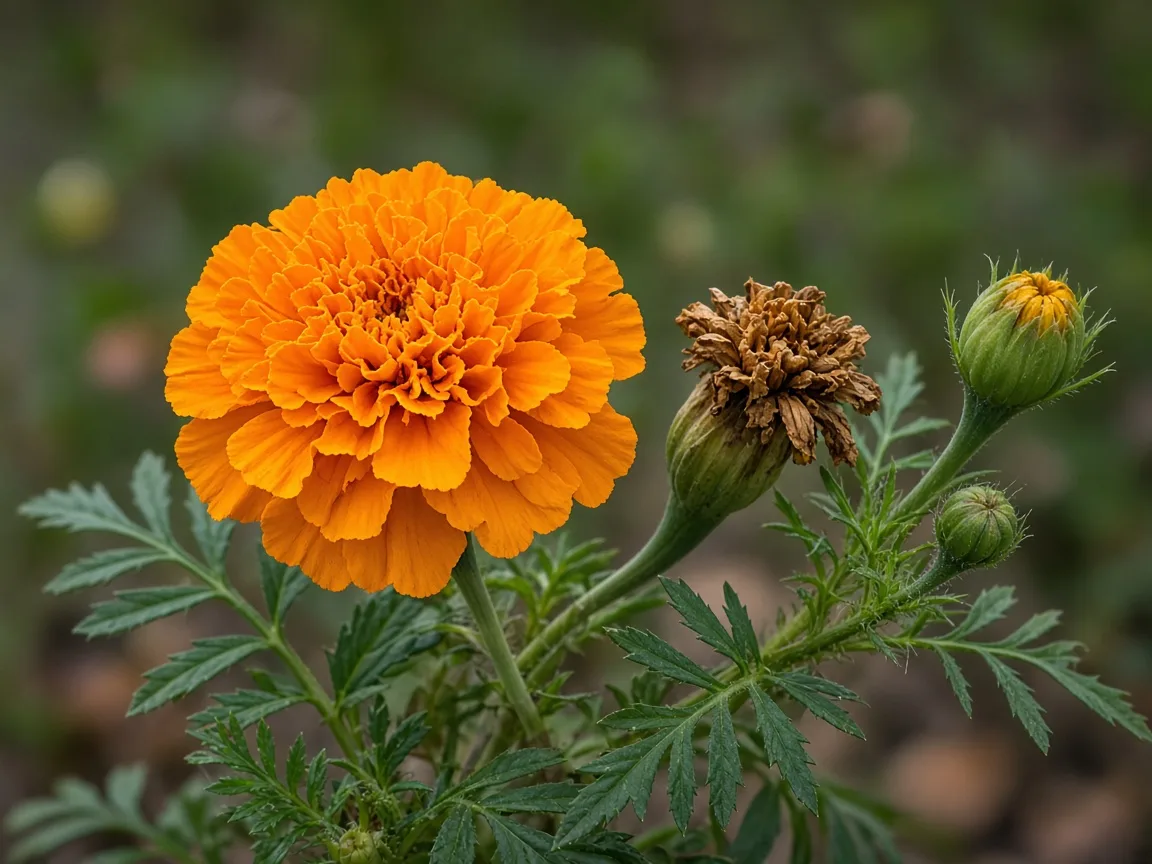
Deadheading is the habit that separates a sharp fall display from a pot of brown seed heads. When a marigold flower fades, pinch or snip it back to the nearest leaf joint or side bud. NC State Extension links deadheading to repeat bloom through the growing season; the same removal prevents the plant from shifting energy into seed production on porch pots you want to stay colorful.
Work through the pot twice a week during peak bloom. Remove yellowing leaves at the base to improve airflow. If botrytis appears as gray mold on spent flowers, strip affected blooms immediately and avoid evening overhead watering. Marigolds respond quickly — often pushing new buds within days when nights stay above 45°F and sun remains strong.
How to Build a Fall Porch Display With Marigolds
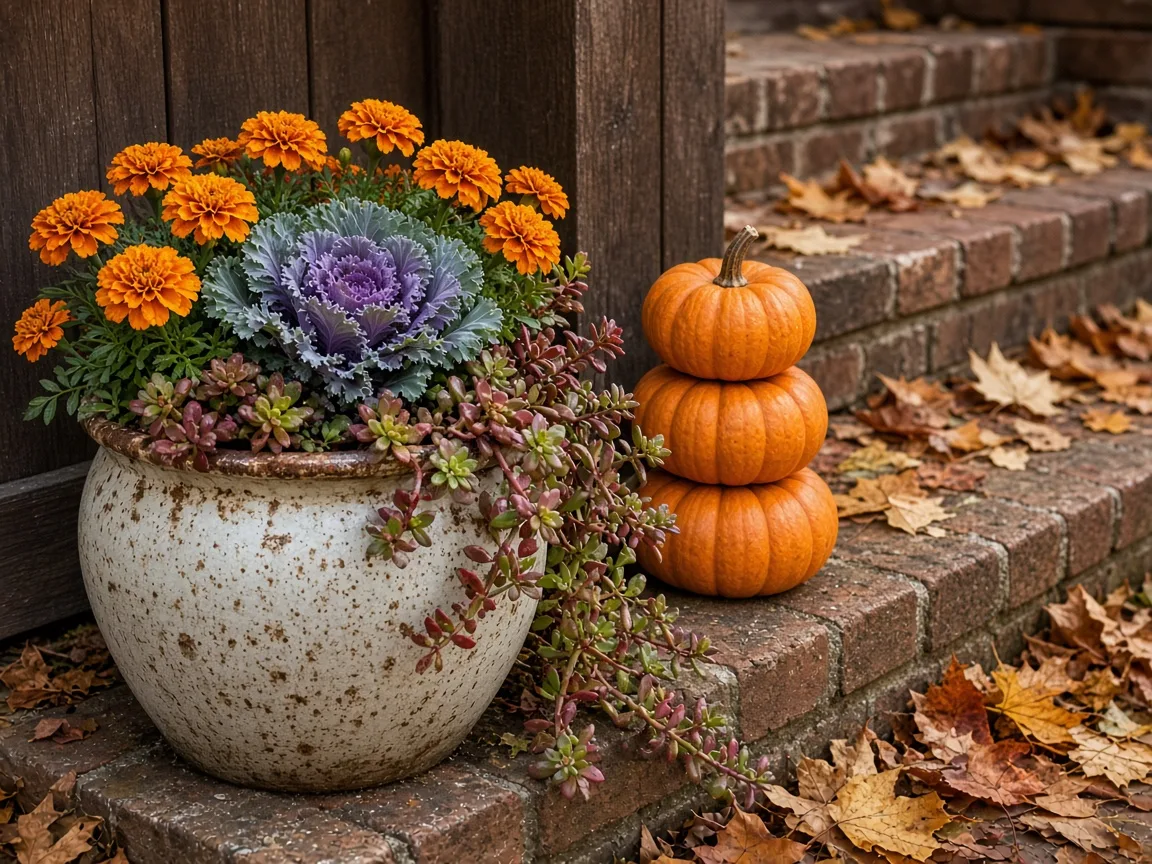
Start with one anchor pot rather than redecorating the entire entry. Choose a frost-safe container with drainage, at least 12 inches wide for three French marigolds or a mix of one grass, two marigolds, and trailing sedum. Dark pots heat roots faster; light-colored ceramics reduce stress on south-facing steps.
Layer for autumn without pretending the plants are winter-hardy. Pair orange or gold marigolds with ornamental kale, dusty miller, or a small purple fountain grass for height. Add pumpkins and gourds beside the pot, not on top of the foliage, so air circulates and you do not crush stems. Repeat one flower color on both sides of the door for cohesion — the same design move that makes mum displays look intentional applies here.
If you already have summer marigolds in beds, transplant carefully into porch pots four to six weeks before your average first frost, watering well and shading for two days. Late purchases should be budded, not fully open, so you get two to three weeks of fresh bloom after setup. Do not expect September-planted seed to catch up; soil temperature and day length work against quick establishment.
Move pots closer to the house wall when frost is forecast. A few degrees of radiant warmth can extend marigold color through light frosts, though hard freezes end the show. Have a backup plan — empty pots, evergreen boughs, or cold-hardy pansies — for the week after marigolds collapse.
When Marigolds Are Not the Right Mum Replacement
Skip marigolds when your porch is shaded or north-facing. They will stretch, produce few flowers, and look sparse beside neighbors’ mums that tolerate slightly lower light.
Skip them when you want maximum fall bloom in October only and cannot find established plants. Buying marigolds in full summer bloom on a cool October weekend gives you a short window. Forced mums, despite their flaws, are timed for autumn retail and deliver instant mound shape.
Skip tall African types in standard porch pots unless you stake and shelter them. Wind and rain will lay them flat, which is the main practical objection nursery professionals raise against standard marigolds in mum-sized containers.
Keep mums — or choose asters, pansies, or ornamental kale — when you garden in zones with early hard frosts and need color after marigolds die. Marigolds are not a perennial replacement for hardy border mums planted in spring; they are a season-extending annual for sunny, warm porches.
A Simple Decision Framework Before You Shop
Walk your porch with a notebook before spending money. Count hours of direct sun between 10 a.m. and 4 p.m. If the answer is six or more, marigolds belong on your list. If it is under four, cross them off.
Next, measure your pot diameter and depth. Pots under 10 inches wide suit signets only. Midsize pots handle French marigolds plus one foliage partner. Tall Africans need ground planting or oversized containers on sheltered ground, not elevated narrow steps.
Decide your timeline. Need color this weekend for an event? Buy budded marigolds or forced mums based on sun. Planning for next year’s return? Buy garden-hardy mums in spring, not either plant in a fall clearance pot.
Finally, set a maintenance budget. Will you deadhead twice weekly and water daily in heat? Marigolds reward that attention with weeks of color. If you travel often, larger pots, drip trays, and self-watering inserts help both plants — but neither survives complete neglect on a baking stoop.
Conclusion
Marigolds earn their place as a fall porch alternative to mums on sunny, warm entries where forced mums wilt too fast and dwarf French or signet types fit the pot scale. They are not a universal upgrade: shaded porches, late-season planting, and hard frost timelines still favor mums, pansies, or foliage-forward combinations.
Shop with variety height, sun hours, and frost dates in mind — not trend headlines. When the match is right, marigolds deliver autumn color with less watering panic and a second act of blooms after deadheading. When the match is wrong, no amount of orange petals will fix a dark stoop or a 36-inch stem leaning into your door. Know your porch first; the right flower follows.



