Is It Too Late to Plant Fall Vegetables in October?
Planting fall vegetables in October can still work. Learn what to sow, what to transplant, what to skip, and how to protect crops through early freezes.
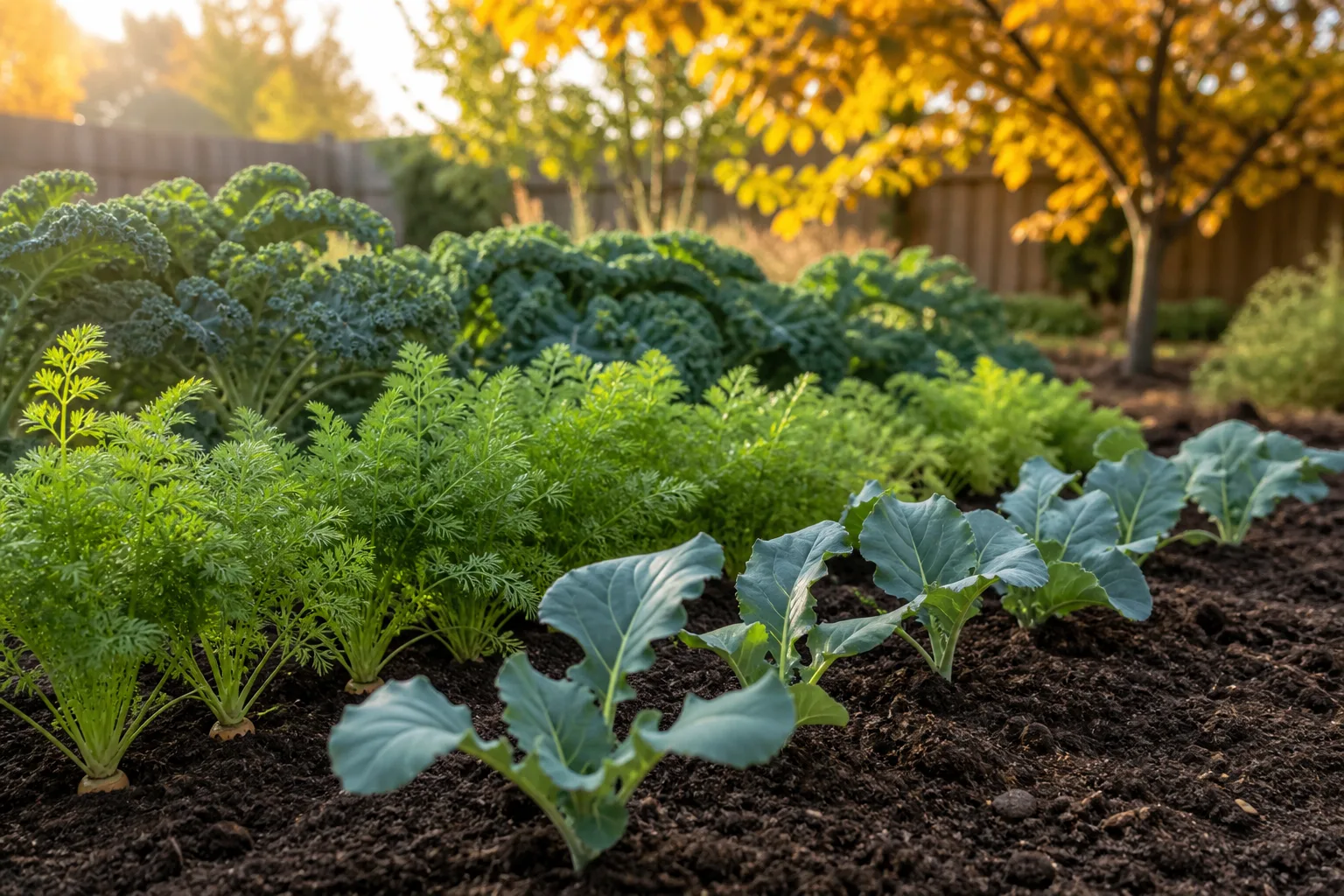
October is not automatically too late for a vegetable garden. It is the month when the question changes from “What grows well in fall?” to “What can finish, or become useful, before my soil and weather shut the door?”
If your ground is workable and you still have a few weeks before a hard freeze, you can often plant radishes, turnips, spinach, lettuce, mustard greens, scallions, and other quick cool-season crops. Garlic is a different kind of October project: it will make roots now, go dormant through winter, and give you a summer harvest rather than a fall one.
The deciding information is local. A gardener with six weeks of mild weather left can gamble on a small crop of beets or a sturdy kale transplant; a gardener facing a hard freeze next week should choose baby greens, cover an existing bed, or sow a winter cover crop instead. Use the framework below to make that call without wasting seed or a final stretch of good soil.
The Short Answer: October Is a Timing Test, Not a Hard Stop
Yes, you can still plant vegetables in October in many regions, but not every vegetable and not every kind of harvest. Fast crops and cold-tolerant greens are the best bets for an immediate harvest; garlic, some onions, and a few hardy crops are bets on spring or summer. Tomatoes, peppers, cucumbers, melons, and summer squash are almost never sensible new October plantings in a typical temperate garden.
The fastest route is a bed that already has loose soil, available sunlight, and reliable moisture. If you are starting from a bare patch of compacted ground, subtract several more days for preparation and germination. That can turn a crop that looks possible on the packet into a crop that never reaches edible size.
Think in three harvest categories before you choose a packet:
| October job | Good candidates | What to expect |
|---|---|---|
| Harvest before hard cold | Radish, baby turnip, baby beet, spinach, leaf lettuce, arugula, mustard | Small or baby harvests are more realistic than full-sized roots or heads. |
| Hold through cold weather | Kale, collards, some spinach, hardy lettuce, mache, scallions | Growth slows; harvest resumes during mild spells or in spring. |
| Start now for another season | Garlic, overwintering onion types, cover crops | The goal is roots, dormancy, soil cover, or a summer crop—not dinner in October. |
Penn State Extension’s guidance on season extenders and fall vegetables describes fall crops as “shoulder-season” vegetables and emphasizes that the right choice depends on frost dates, crop type, and how much time and effort you can give a season extender. That is a more useful rule than a universal list of vegetables because October can mean an early winter in one garden and a productive cool-season start in another.
Start With Your First Fall Frost, Not the Calendar
Your average first fall frost date is the planning anchor, but it is not a guarantee. It is a historical average, not a promise that your garden will freeze on that exact night. A cold pocket at the bottom of a slope can frost earlier than a raised bed beside a south-facing wall, while a city garden surrounded by masonry may stay warmer for several nights.
Look up the average first frost for your ZIP code through a local cooperative extension or a reputable frost-date calendar, then check the actual forecast. If the forecast is already calling for several nights near freezing, use the next sections to decide between a quick crop, protection, and stopping for the season.
Frost and freeze are different deadlines
A light frost forms when temperatures near the ground dip to around 32°F (0°C). It can damage tender basil, beans, cucumbers, tomatoes, and peppers while leaving many kale, spinach, radish, and carrot plants usable. A hard freeze is a more serious, sustained cold event that freezes plant tissue more deeply and may freeze the soil surface or root zone.
Do not treat the first frosty morning as the same thing as the end of every crop. Lettuce, spinach, kale, collards, carrots, and beets have different tolerance levels, and variety matters. Cornell’s radish growing guide, for example, describes radishes as frost-tolerant but warns that heat reduces quality, while its garlic growing guide treats frost as part of a normal fall-to-summer cycle.
The more important question is what happens after the cold night. If the following week returns to sunny days and above-freezing nights, an established cool-season crop can keep growing. If the forecast shows a string of hard freezes, a crop that has not yet reached usable size needs cover or a more protected location.
Count backward from the harvest you can realistically reach
Seed packets list days to maturity, but that number is an estimate under favorable conditions. For direct-sown crops, it usually counts from sowing; for transplants, it generally counts from transplanting outdoors. Read the packet carefully, because starting a seed indoors does not mean the outdoor maturity clock began the day you sowed it in a tray.
For a late planting, use this simple calculation:
Last practical sowing date = expected first hard freeze − days to maturity − autumn buffer.
The buffer matters because sunlight weakens and the days shorten in fall. Penn State’s cool-weather gardening notes explain that a crop started later in the season may need more time than the spring packet estimate, and recommend working backward from the local frost date. For a quick crop, start with a 7- to 14-day buffer; for a slow root or head-forming brassica, use more or choose a smaller harvest goal.
Here is a worked example. Suppose your garden usually gets a hard freeze around November 10, and you want baby radishes listed at 25 days. Add a conservative 10-day autumn buffer: 25 + 10 = 35 days. That gives you a practical target around October 6, not November 1. If you are already past that date, you can still sow a short row as an experiment, but plan to harvest young rather than expecting mature roots.
The Best Crops to Direct-Sow in October
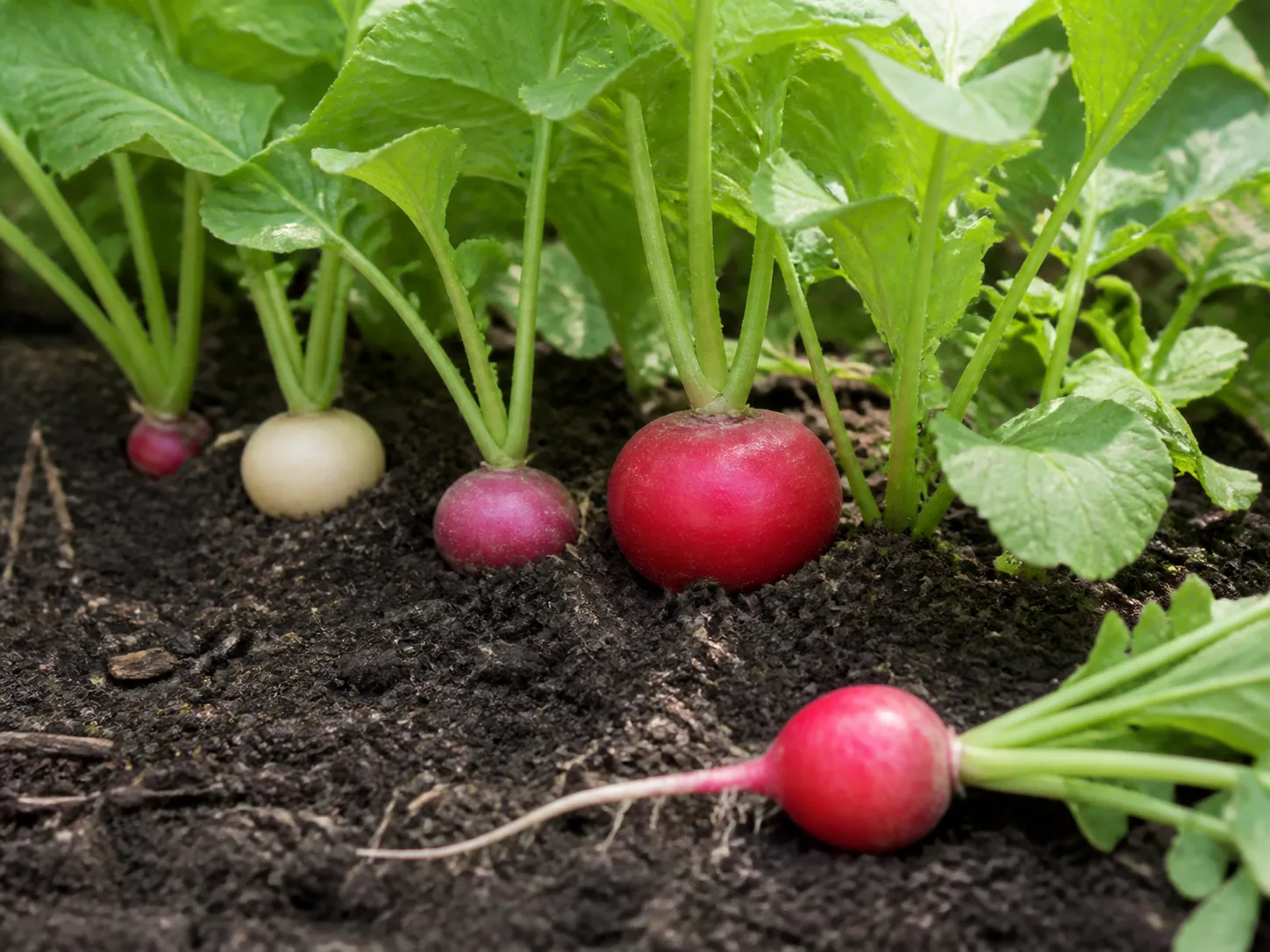
Direct sowing makes the most sense for crops that dislike root disturbance, germinate quickly, or are useful as baby leaves and roots. The bed must stay evenly moist while seeds germinate; October’s cool air does not help a seed buried in dry soil.
Plant a shorter row than you think you need. A succession of small sowings gives you more control than one large gamble, especially when frost is close. Mark each row with the sowing date and variety so you know which one to thin, cover, or harvest first.
Fast roots: radishes, turnips, beets, and baby carrots
Radishes are the clearest October win when the soil is still workable. Cornell’s radish growing guide describes spring radishes as ready in roughly three to six weeks and notes that cool, moist weather improves quality. Sow about ½ inch deep in loose soil, thin seedlings so roots have room to swell, and harvest promptly rather than leaving a mature root to become pithy or excessively pungent.
Winter radishes need more time and space than the small red types sold for quick spring harvests. If you are late, choose a fast variety and harvest it young. Radishes can also be sown beside slow-germinating carrots to mark the row, but do not use that trick as an excuse to crowd both crops.
Turnips and beets are reasonable in the middle of October if you have enough warm days left for roots to reach a usable size. Their greens can provide the first harvest while the roots continue enlarging. Thin beets early; crowded seedlings produce a canopy of leaves and disappointing roots because each “seed” can contain more than one embryo.
Carrots are a better October idea in mild climates, a protected raised bed, or when you are happy to harvest small roots. Their slow, shallow germination and long maturity window make them a poor last-minute choice in a cold region. If you do sow them, smooth the seedbed, keep the top layer damp, and cover with a light fabric until emergence so a fall wind does not dry the surface.
Cornell Cooperative Extension’s last-planting table is based on observations near Ithaca, New York and places radishes later than spinach, turnips, or early broccoli. That table is useful as an illustration of crop speed, not as a calendar for every garden. The same page explicitly says to move dates earlier in colder locations and later in milder ones.
Leafy crops: spinach, lettuce, arugula, mustard, and tatsoi
Leafy greens are often the best answer when the harvest window is short because you do not have to wait for a root or a tight head. Sow spinach, leaf lettuce, arugula, mustard, mizuna, or tatsoi densely enough for baby leaves, then cut what you need with scissors or a clean knife.
Spinach prefers cool conditions and can tolerate more cold once established than a tiny seedling can. Keep the seedbed moist through germination, thin crowded plants, and protect the canopy from drying wind. In colder climates, a row cover can turn an exposed planting into a late fall salad bed, although growth may pause once sunlight and temperatures drop.
Lettuce is more forgiving as a baby-leaf crop than as a full head. Hardy winter varieties can hold under cover, but a packet labeled “winter” is not a guarantee for every zone. A small transplant from a nursery can be more reliable than seed when October has already arrived, especially if you want the plant to grow a little before cold weather.
Mustard greens, mizuna, and tatsoi bring a useful advantage: they can be harvested at many sizes. That lets you take a first cut before a freeze, cover the remainder, and return for more during mild weather. The trade-off is that brassica greens can attract caterpillars, flea beetles, and slugs, so inspect leaves and use a cover early rather than waiting until damage is severe.
Savvy Gardening’s practical fall checklist recommends keeping materials ready in September and October—especially row cover, straw, and leaves—so protection is available when temperatures change. That preparation is as important as the seed choice: a hardy variety without moisture or wind protection can still fail.
When to Choose Transplants Instead of Seeds
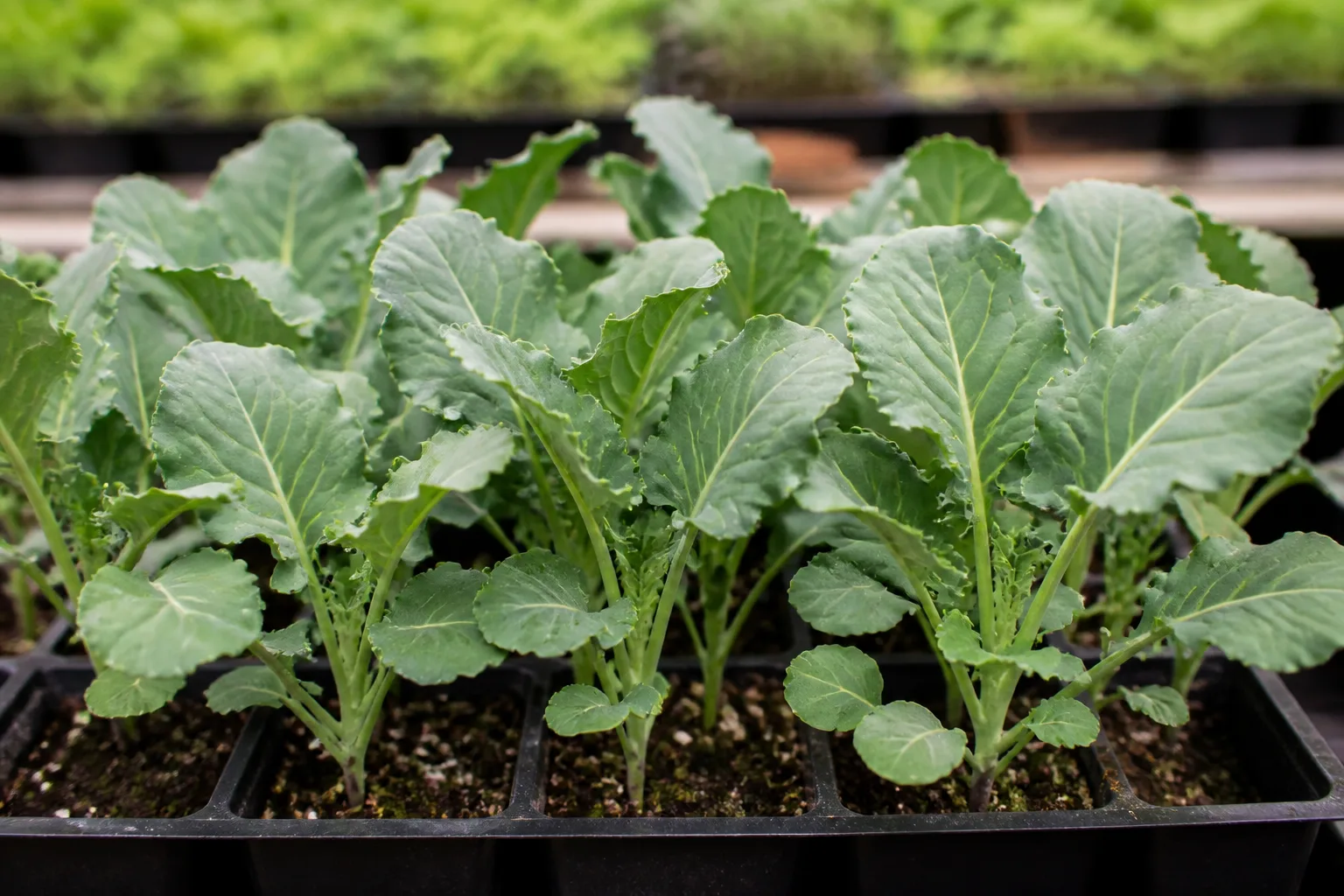
A healthy transplant gives a late crop a head start, but the advantage disappears if the plant is root-bound, wilted, or shocked by being moved into hot, dry soil. Choose compact, vigorous starts with a well-formed root ball, water them before planting, and set them out during a cool part of the day.
Transplants are most useful for crops that need too many days to mature from seed or that are difficult to establish in a cold, shortening season. Direct-sow crops such as carrots, beets, and radishes instead; their roots are easily forked or stunted when transplanted.
Kale, collards, and Swiss chard
Kale and collards are among the safest late-season greens when you can find established plants. They can grow a little before winter, then pause and provide leaves whenever conditions allow. Collards are particularly valuable in a winter-minded bed, though cold tolerance still depends on variety, size, wind exposure, and whether the soil drains.
Swiss chard is a good fall green in regions with moderate winters, but it is not as dependable through severe cold as kale or collards. Green- or white-stemmed types are often better candidates for cold weather than highly colorful selections. Plant in full sun where possible, water the root zone deeply, and harvest outer leaves rather than stripping the crown.
If a transplant is leggy, plant it at the depth recommended for that crop rather than burying the crown under a thick blanket of soil. Firm the soil around the root ball, water slowly, and give the plant several days of protection from strong wind. A stressed transplant has less cold tolerance than a well-rooted one, so the first week of care can decide whether the head start pays off.
Broccoli, cabbage, and cauliflower
Broccoli, cabbage, and cauliflower are the crops gardeners most often overestimate in October. A small seedling may survive a cold night, but survival is not the same as producing a full head before winter. If you are late, buy a transplant only when your local forecast offers enough growing time for the size you want.
Penn State Extension’s succession-planting guidance notes that fall brassica maturity commonly runs from about 60 to 90 days from transplant, with wide variation by variety. That is why many successful fall brassica crops are started in midsummer, not first planted in October. In a late window, choose early varieties, accept baby heads or leafy harvests, and use protection.
Broccoli and cabbage are generally better October bets than cauliflower because they are more forgiving of uneven weather and can still provide leaves if a perfect head never forms. Cauliflower has a narrow quality window and dislikes interrupted growth. If it is already October and your region freezes soon, use that space for greens or garlic instead of forcing a crop that needs a long, steady run.
Give the Bed a Quick Reset Before Planting
You do not need to rebuild the entire garden before sowing a final crop. You do need to remove diseased or collapsing summer plants, pull obvious weeds, and make sure the bed will drain. A dense mat of old cucumber or squash vines can hide slugs and make seed contact uneven.
Clear only what is finished and leave healthy roots or stems that are still producing. For plants with obvious disease, bag or dispose of the affected material according to local guidance rather than incorporating it into a slow backyard compost pile. Do not leave tomato, pepper, cucumber, or squash debris simply because winter is coming; it can shelter pests and make spring cleanup harder.
Work a thin layer of finished compost into the surface if the bed is depleted, but avoid adding a heavy dose of high-nitrogen fertilizer to a crop that needs to slow down. Excess nitrogen can produce soft, lush growth that is more vulnerable to cold, while the bigger October need is steady moisture and good soil contact.
Before you plant, check three simple conditions:
- Sun: the bed still receives enough direct light after nearby trees and buildings cast longer autumn shadows.
- Soil: it crumbles when squeezed instead of forming a wet, sticky clod.
- Moisture: water can reach the seed zone and drain away without pooling.
If one condition fails, fix that first. A smaller crop in a good bed is more productive than a full packet scattered into shade, compaction, or standing water.
Protect a Late Crop From Cold and Wind
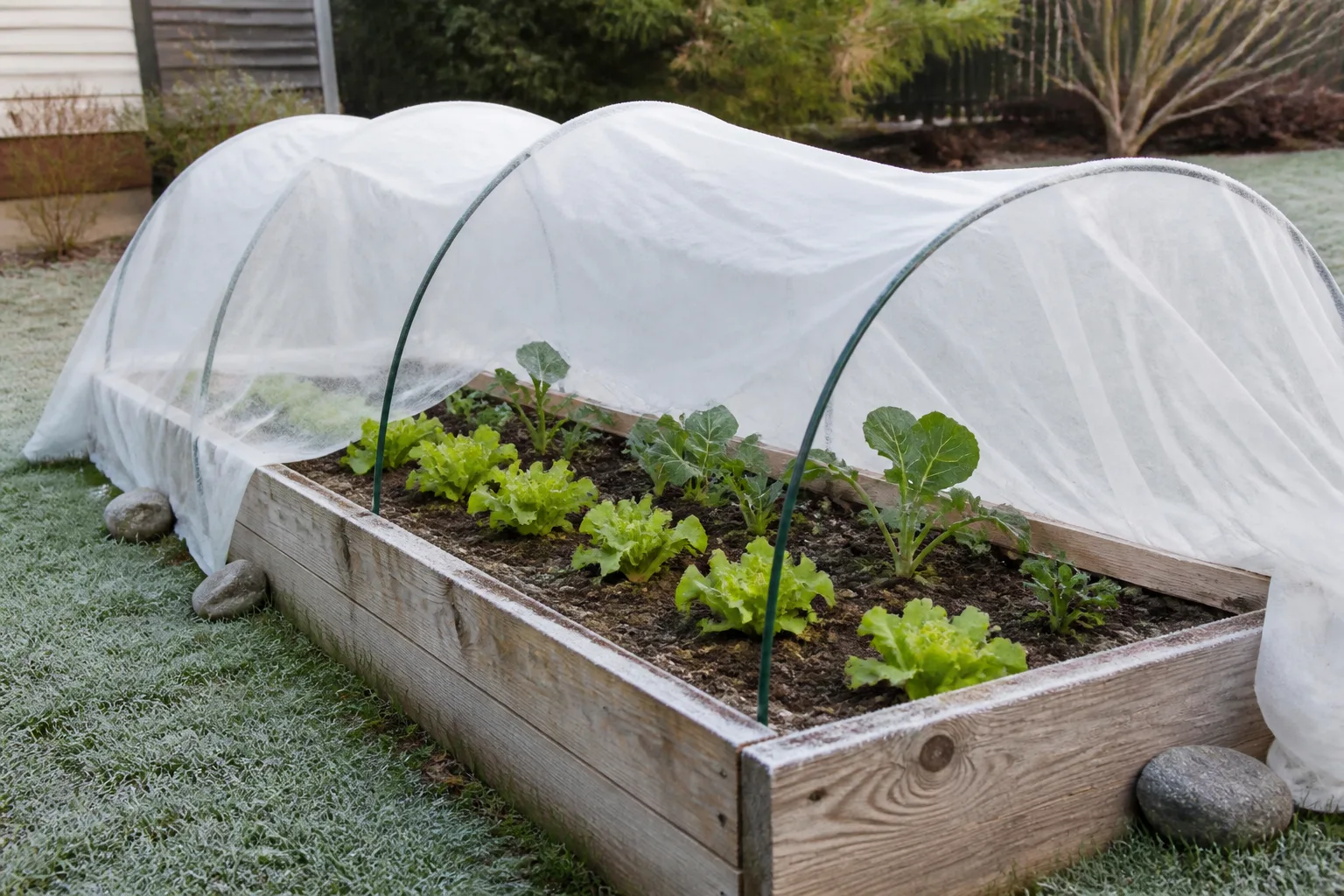
Protection buys time; it does not erase the calendar. A cover can keep leaves from being damaged by a light frost and reduce drying wind, but it cannot make a long-season crop mature in a week. Use it to protect a crop that is otherwise a good match for your remaining weather.
Water the soil before a hard cold night if it is dry, because hydrated soil holds and releases more heat than powder-dry soil. Do not saturate a waterlogged bed, and do not water foliage late in the evening when leaves will stay wet for hours.
Row covers for quick insurance
A floating row cover is the simplest protection for a small late garden. Drape it over hoops or directly over low plants with enough slack for growth, anchor the edges so wind cannot lift it, and keep the fabric from rubbing constantly on tender leaves.
Set the cover before sunset when a frost is forecast. Check it the next day: fabric protects from cold, but a sunny morning can heat the space quickly. Remove or vent the cover when conditions are mild, and inspect underneath for slugs, caterpillars, and excessive condensation.
Never use a sheet of plastic directly on foliage. Plastic touching leaves can conduct cold to the plant and cause damage where it rests. If plastic is the only material available, support it above the crop and secure the edges; for a single cold night, an old sheet or frost cloth is usually safer than bare plastic.
Cold frames and low tunnels for winter harvests
A cold frame or low tunnel makes more sense when you want to keep harvesting through repeated cold spells. Penn State Extension’s season-extender guide describes low tunnels as hoops covered with fabric or plastic and notes that cold frames collect solar heat inside a sheltered structure. Both need ventilation, anchoring, and regular checks; they are not set-and-forget boxes.
Place a cold frame where it receives winter sun and drains well. A slight slope and a south- or southeast-facing exposure can improve light and drainage. Keep the transparent lid clean, open it on sunny days, and close it before temperatures fall. A low tunnel can protect a row of greens, but its usable height must fit the crop you expect to grow.
Use season extension for the right job. It is excellent for spinach, lettuce, kale, scallions, and small brassica starts. It is much less useful for trying to grow a heat-loving tomato or pepper through a cold, dark winter. If the crop has stopped growing, protect the soil and plan for spring rather than piling on more plastic.
Garlic and Green Onions Are October Exceptions
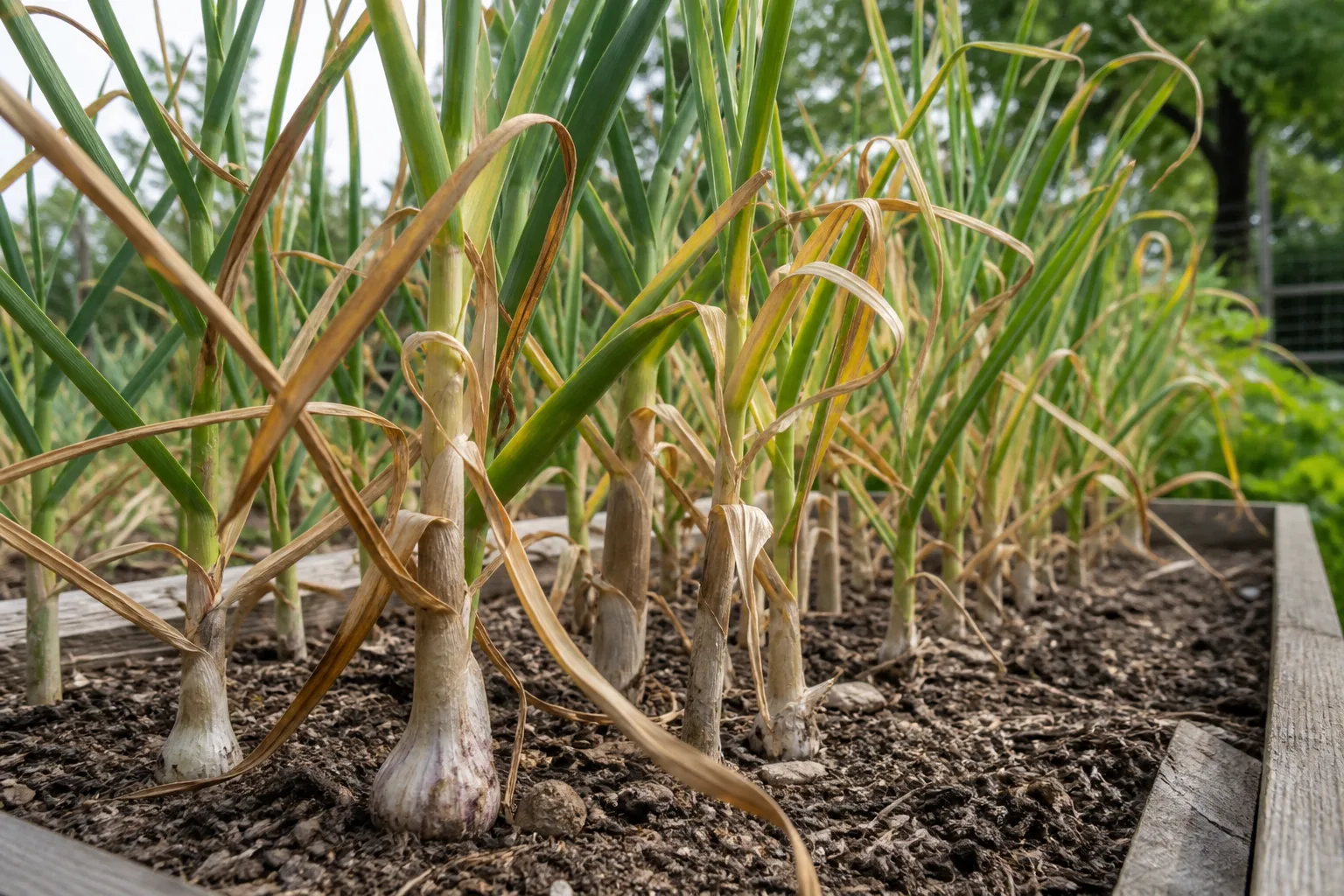
Garlic belongs in an October article because it follows a different schedule from fall salad crops. You are not planting it for an immediate harvest. You are planting individual cloves so they can form roots before winter, rest through cold weather, and resume growth in spring for a summer bulb harvest.
Cornell’s garlic guide says fall plantings take about eight months to mature, recommends well-drained soil, and advises keeping papery skins on the cloves. It also explains that fall-planted garlic can make roots even when top growth is not obvious late in the season. Use disease-free planting stock suited to your region rather than assuming supermarket garlic is adapted to your winter.
Plant cloves with the pointed end up in loose, fertile, well-drained soil, then mulch after the soil has cooled. The mulch should moderate freeze-thaw cycles and suppress weeds, not create a wet collar around the cloves. In spring, pull back enough mulch for shoots to emerge and keep the row weed-free.
Green onions or scallions are a more immediate October option in mild climates. GrowVeg’s October sowing guidance recommends fresh seed and a little cold protection for late salad-onion sowings; the seedlings can tick along in winter and push forward in early spring. If cold weather is close, a short protected row is a better goal than a large planting.
What Not to Plant in October
The best October garden includes a few deliberate “no” decisions. Skip new tomatoes, peppers, eggplant, cucumbers, melons, and summer squash unless you garden in a genuinely frost-free climate with a crop calendar that supports them. A warm spell does not change their need for warm soil and frost-free nights.
Be cautious with long-season carrots, parsnips, Brussels sprouts, large cabbage, and full-size cauliflower when the ground will freeze soon. These may be excellent fall crops when started months earlier, but a new sowing at the end of October may only produce seedlings that pause before reaching a useful size.
Do not plant a crop simply because the packet says “days to maturity” and the arithmetic appears to fit. Packet estimates can assume spring-like light, ideal moisture, and a variety that is different from the one in your hand. Add a buffer, reduce your harvest target, and ask whether you are willing to protect the bed.
Finally, do not force a food crop into a diseased bed. If a summer planting had a serious, recurring disease, clear it, rotate plant families when possible, and use the remaining weeks for soil cover or a clean, unrelated crop. A bare bed is not failure if it is being restored intentionally.
Harvest, Mulch, and Watch Moisture
Harvest before a predicted hard freeze when the crop is tender or nearly ready. Pick tomatoes, peppers, beans, and cucumbers before a killing freeze, even if they are immature, because they are warm-season plants. Cool-season greens can often stay longer, but cover them when the forecast calls for damaging cold.
Root crops give you more flexibility. Radishes and baby turnips should be pulled when they reach good eating size. Carrots, beets, and larger turnips can often remain in the ground while the soil is workable, especially under mulch. Make sure you can still dig them; a thick frozen bed is not a convenient storage plan.
Cold changes flavor as well as survival. Penn State Extension explains that some cold-season crops convert stored starches into sugars as temperatures fall, which helps explain why carrots, beets, turnips, kale, and Brussels sprouts may taste sweeter after a light chill. That does not mean every frost improves every crop, and a severe freeze can still destroy tissue.
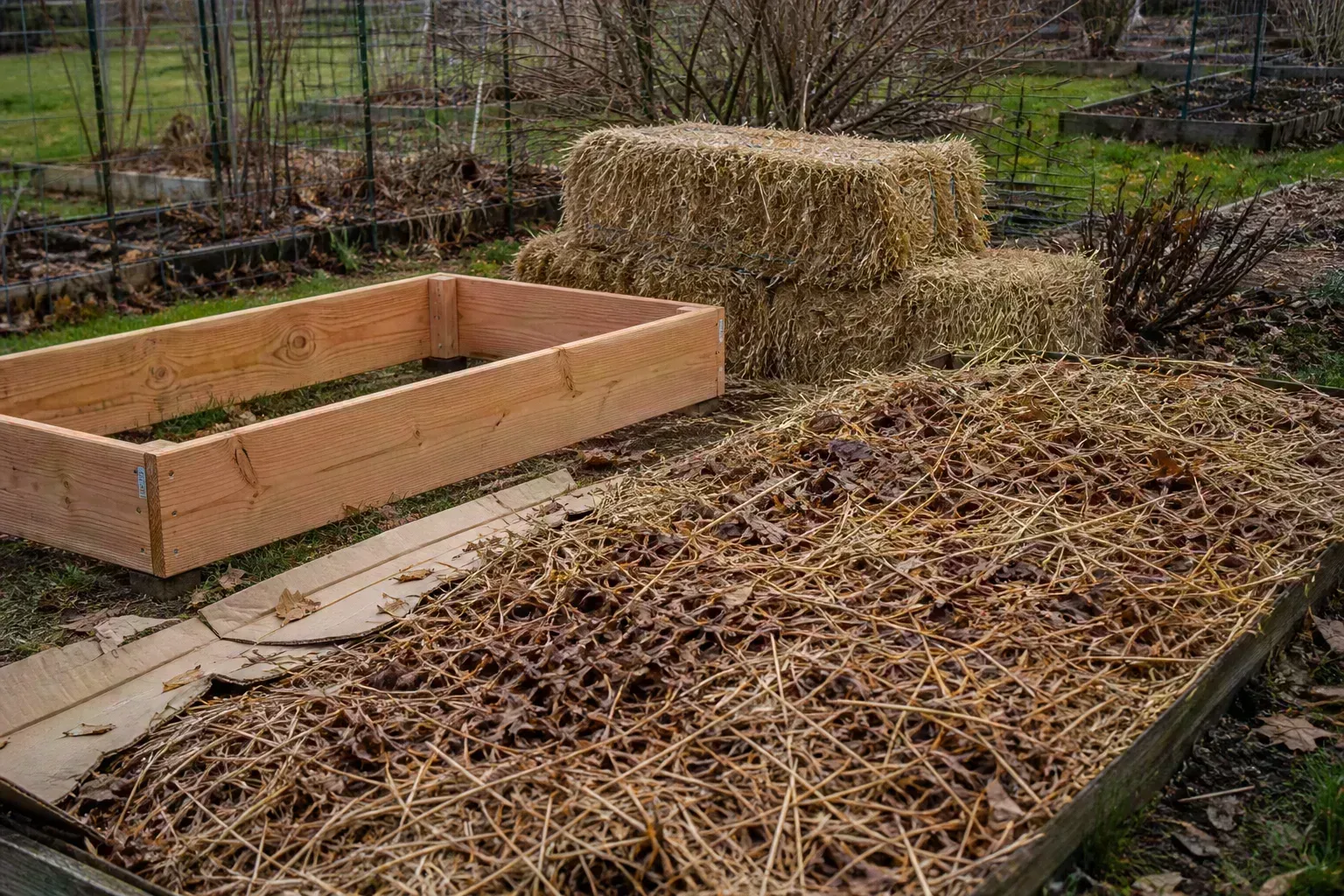
Mulch after the soil is cool, not while the bed is still warm and wet. Use clean straw or loose shredded leaves around root crops and hardy plants, leaving the crown of leafy greens exposed enough to breathe. A deep, compacted layer that stays wet can encourage rot, hide slugs, and make spring emergence harder.
Check moisture every few days during a dry autumn. Cold air does not guarantee moist soil, and a row cover can prevent rain from reaching the bed. Water at the root zone when the surface is dry, then let excess drain. Plants going dormant still need enough moisture to avoid entering winter severely dehydrated.
The Four-Week October Plan
If you are standing in the garden with seed packets in hand, use this sequence instead of trying to do everything at once.
Week one: measure the window. Look up your average first frost and likely hard-freeze date, inspect the 10-day forecast, and count backward using the packet’s days to maturity plus a buffer. Choose one or two fast crops rather than scattering every leftover seed.
Week two: prepare and sow. Remove finished summer plants, repair the soil surface, water the seedbed, and sow radishes, baby turnips, spinach, lettuce, or mustard if the math still works. Mark the rows and protect the surface from drying while seeds germinate.
Week three: add insurance. Thin crowded seedlings, set out healthy kale or collard transplants if your region has enough time, and install hoops before the first serious cold arrives. A cover is easiest to use when the frame is already in place.
Week four: switch goals as weather dictates. Harvest young leaves, protect anything worth carrying forward, mulch garlic and roots, and stop sowing crops that cannot mature. If the bed is no longer a good harvest bet, sow a suitable cover crop or top-dress it with compost and leaves for spring.
Conclusion
October gardening is still possible when you match the crop to the time left, the soil you have, and the cold your garden actually receives. Start with the first hard freeze, count backward from a realistic harvest, and favor fast roots, baby greens, hardy transplants, garlic, and scallions over anything that needs a long warm season.
Plant into clean, moist, well-drained soil; protect young crops from frost and wind; vent covers on sunny days; and mulch only after the soil cools. If the window is too short, a cover crop and a well-prepared bed are not a consolation prize—they are the next season already underway.



