How and When to Harvest Asparagus
Learn when asparagus is ready to pick, how long to harvest each spring, and the snap-or-cut technique that keeps crowns strong for decades.
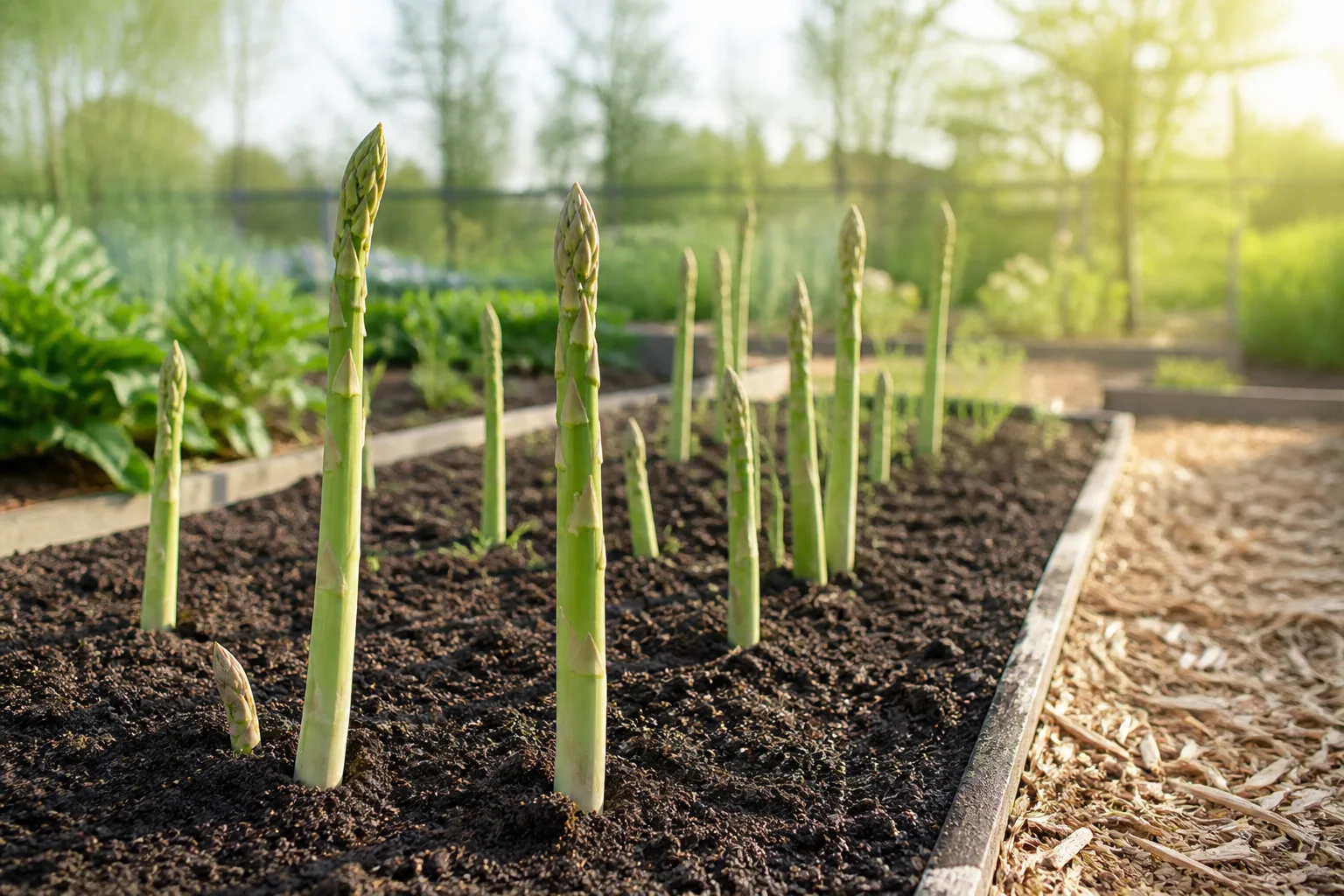
Asparagus is the spring crop that punishes impatience. The spears you see in year one and year two are not a bonus harvest — they are the fuel your crowns need to become a bed that feeds you for a decade or more. Get the timing wrong and you get skinny spears, weak ferns, and a bed that never reaches its potential. Get it right and a modest row of crowns can deliver tender spears every spring with less work than most annual vegetables demand.
This guide is the harvest playbook: when to start picking by bed age, how to judge spear readiness, the snap-or-cut decision, when to stop each spring, what to do with the ferns afterward, and how to store spears at peak quality. If you are still choosing a site or digging trenches, pair this with our perennial vegetables overview — but once crowns are in the ground, harvest discipline is the skill that determines whether your bed thrives.
Why Asparagus Harvest Timing Matters More Than Most Vegetables
Most garden vegetables are annuals. You plant, you pick, you pull the plant at season’s end. Asparagus (Asparagus officinalis) is a perennial whose edible spears are simply the plant’s first spring shoots. Every spear you remove is energy the crown planned to spend on leaf growth. Harvest too early in the bed’s life or too long in a single spring, and you drain the root system that must power next year’s crop.
That is why asparagus guides sound repetitive about waiting. The advice is not caution for caution’s sake — it is crown economics.
Spears vs. Ferns: The Energy Trade-Off Every Grower Must Respect
An asparagus spear left unharvested does not stop growing. It opens into a ferny branch that photosynthesizes all summer, storing carbohydrates in the crown and roots for winter dormancy and the next spring flush. Those ferns are not decorative leftovers; they are the battery charger for your harvest.
When you harvest a spear, you remove that photosynthetic potential. A young bed cannot spare much removal. A mature bed can tolerate six to eight weeks of daily picking because the crown has deep reserves — but only if you stop when the plant signals exhaustion and let ferns rebuild stores for the rest of the season.
Understanding this trade-off makes every rule in this guide logical: establishment years protect fern growth, harvest windows lengthen as crowns mature, and the pencil-thickness stop rule is the plant telling you it needs leaves, not more cutting.
Year-by-Year Harvest Timeline From Planting to Peak Production
Timelines differ slightly between extension research and home-garden practice, but the pattern is consistent: short windows early, longer windows as crowns age. Penn State Extension describes commercial harvest length increasing each year after planting — about seven days in the first harvest year, fourteen days in the second, three weeks in the third, thirty to thirty-six days in the fourth, and roughly six to seven weeks once plants reach full maturity around year five.
Home gardeners often follow a simplified 1-2-4-8 week progression described by Harvest to Table: one week of picking in the second year after crown planting, two weeks in the third, four weeks in the fourth, and up to eight weeks in the fifth year and beyond. Both frameworks say the same thing — lengthen harvest only as crowns prove they can recover.
The table below assumes you planted one-year-old crowns in spring. Seed-started asparagus needs one or two additional establishment years before the same windows apply.
| Bed age (years after crown planting) | Typical harvest window | Goal |
|---|---|---|
| Year 1 (planting summer) | No harvest | Root establishment |
| Year 2 | 1–2 weeks, light sampling if vigorous | Crown strengthening |
| Year 3 | 3–6 weeks | First substantial harvest |
| Year 4 | 4–8 weeks | Building toward full production |
| Year 5+ | 6–8 weeks (up to 8–12 in strong beds) | Peak and maintenance harvest |
Year 1: Establishment — Do Not Harvest
The summer you plant crowns is a zero-harvest year. Every spear that emerges should grow into ferns. Crowns are adapting to new soil, rebuilding root mass, and storing energy for survival through winter. Removing spears — even a tempting handful — weakens plants that have not yet paid off the transplant shock.
Keep the bed weeded, water during dry spells, and let waist-to-shoulder-high fern growth develop by summer. Harvest to Table notes that vigorous summer fern height is a reliable sign crowns are gaining strength for future harvests.
Year 2: Optional Light Sampling Only
The second summer after planting, you may harvest lightly for about one to two weeks if plants look vigorous — thick spears, healthy fern growth the previous year, and no obvious stress. Take only spears thicker than a pencil and leave the rest to fern out.
Some gardeners skip year-two harvest entirely; that is safer than pushing a weak bed. Research cited by practical growers suggests a short second-year harvest can increase later yields when plants are clearly strong, but weak crowns should not be tested. If spears are skinny from the first emergence, let everything grow and treat year two as another establishment season.
Year 3: Your First Real Harvest Window
The third summer after crown planting is when most home gardeners begin regular picking for three to six weeks. Spears should be thick enough to harvest daily when they reach proper size, but the window stays shorter than a mature bed because crowns are still building reserves.
Think of year three as proof of concept: you are learning your bed’s rhythm while still protecting long-term productivity. Stop when spears thin to pencil size, even if the calendar says you could keep going.
Years 4–5: Building Toward Full Production
By the fourth year, many beds support four to eight weeks of harvest following the 1-2-4-8 progression. Crown diameter increases, spears emerge in thicker clusters, and daily picking becomes worthwhile. Penn State Extension places the fourth-year commercial window at thirty to thirty-six days and full maturity around year five.
Yield still climbs toward peak during this stretch. Do not interpret a longer window as permission to ignore the stop rule — overharvesting in year four can still reduce year-five spears.
Year 5 and Beyond: Mature Harvest Seasons
A mature asparagus bed — typically five years after crown planting — can support about six to eight weeks of spring harvest, sometimes extending toward twelve weeks in mild climates with excellent soil and irrigation. Epic Gardening notes that established plantings can remain productive for fifteen years or more when harvest discipline and fern care stay consistent.
Peak yield per crown is often quoted around one-half to three-quarters of a pound per season — roughly ten to fifteen spears spread across the harvest window. Twenty-five crowns might produce twelve to eighteen pounds in a strong year, which is a grocery-store bundle every week for two months. Production typically peaks around years seven to eight, then may decline slowly in very old beds.
When Asparagus Spears Are Ready to Pick
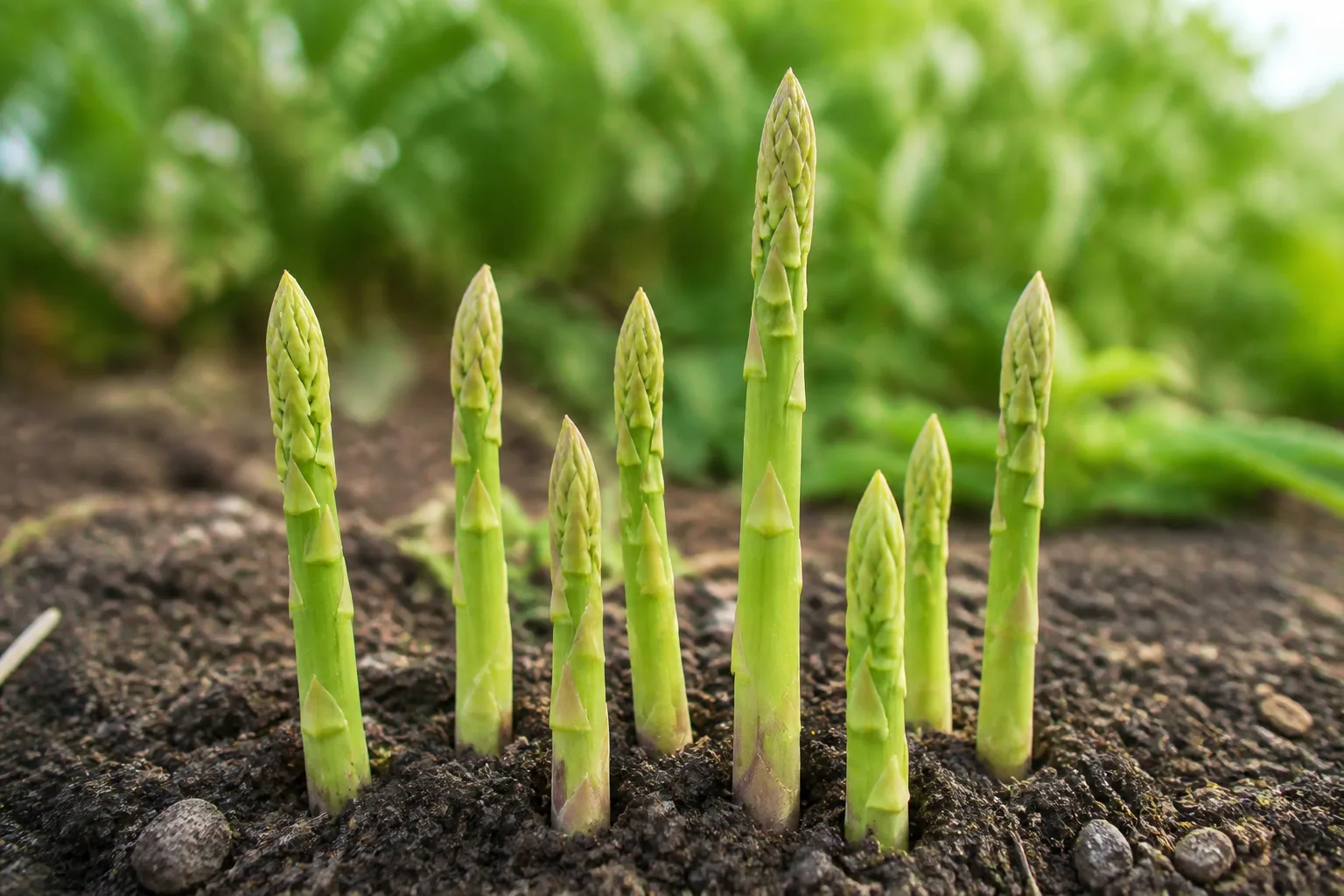
Readiness is a combination of size, firmness, and tip stage — not a single number on a ruler.
Height, Diameter, and Tip Stage
Harvest when spears are:
- 6 to 10 inches tall in cool early-spring weather; Harvest to Table shortens the target to 5 to 7 inches as weather warms past about 70°F (21°C) because spears elongate and toughen faster in heat.
- At least the thickness of your index finger, or about 5/16 inch (8 mm) minimum diameter per Penn State Extension. Spears thinner than a pencil during active harvest usually mean the crown is tiring — stop picking, not keep cutting.
- Tips tight and closed — bracts still packed together, not opening like a fern. Once tips begin to branch, texture turns fibrous and flavor declines. Discard or compost overgrown spears rather than trying to salvage them.
Purple and green cultivars follow the same rules; color does not change timing. White asparagus is the same plant grown under blanched soil or mulch — harvest height rules still apply once spears emerge to the surface.
Daily Checks and Season Length
During the active harvest window, check the bed every day. In warm spring weather, spears can lengthen by up to 2 inches per day according to Penn State Extension. A spear perfect at breakfast can be overgrown by evening.
Morning or evening harvest preserves crispness for storage. Pick before a predicted hard freeze if spears are already at harvest size — freezing damages tender tips and ruins texture.
Asparagus is often the first vegetable to harvest each spring, beginning as soil temperatures rise and often finishing by early summer in warm regions. Northern beds may start later and end later; southern beds may start in February or March. Track soil temperature and emergence on your bed rather than a fixed national date.
How to Harvest Asparagus Spears
Technique matters because crowns carry buds below the soil surface that produce next year’s spears. Damage those buds or cut too deep into the crown, and you reduce future yield.
Snapping vs. Cutting: Which Method Home Gardeners Should Use
Snapping — bending the spear near the soil line until it breaks at its natural tender point — is the default method for most home gardeners. The spear breaks where flesh turns fibrous, so you rarely bring tough base material to the kitchen. Snapping also avoids slicing hidden buds beneath the soil.
Cutting with a clean knife or asparagus knife below the soil line produces a longer spear and can reduce water loss at the cut end — a reason commercial growers often cut. The portion below soil is usually white, woody, and trimmed off anyway. Cutting carries more risk: a knife dragged through soil can spread disease between plants, and a cut too close to the crown can injure the bud cluster.
Practical rule: snap for home harvests; cut only if you sanitize the blade between spears and stay shallow. Never tug spears sideways or wrench them — that tears crown tissue.
Step-by-Step Harvest Technique
- Walk the row when spears are cool — morning is ideal — with a container that keeps spears upright.
- Select spears at proper height and thickness with closed tips. Skip pencil-thin shoots during active harvest; they signal stop time approaching.
- Snap or cut at the soil line, taking the spear cleanly without disturbing neighboring shoots.
- Move down the row daily rather than stripping one crown completely while neighbors still produce — even distribution reduces crown stress.
- Leave all spears below harvest size to continue growing. Do not clear-cut a crown in a single pass early in the season.
- Refrigerate promptly — flavor drops fast as sugars convert to starch after picking.
If you see only a few spears the first week of a young harvest year, that is normal. Production clusters as soil warms and crowns wake in sequence.
When to Stop Harvesting Each Spring
Stopping on time is as important as starting at the right age. A bed that is picked too long in one spring produces fewer, thinner spears the next year.
The Pencil-Thickness Rule
The universal home-garden stop signal: when most new spears are thinner than a pencil (about 3/8 inch or 9 mm), end the harvest. Harvest to Table frames this as harvesting until diameter decreases to pencil size, then letting plants grow.
At that point the crown is redirecting energy away from spear thrust — respect it. Some growers harvest every remaining spear regardless of size on the final day, then shift immediately to fern phase so nothing wasted blocks regrowth. Apply a nitrogen-focused fertilizer after the last pick to support leafy fern development through summer.
Weather Signals and Calendar Cutoffs
Calendar dates are backup cues, not primary rules. Warm regions sometimes use early July as a rough cutoff; cool northern beds may finish by late June. Heat accelerates spear elongation and tip opening — shorten harvest when spears jump from ideal to overgrown in a single day.
Declining vigor — fewer spears emerging, widespread thin shoots, or spears that open quickly — means stop even if the calendar says you have another week left. Overharvesting a stressed bed is how perennial plantings become disappointing within a few seasons.
What Happens After You Stop Picking
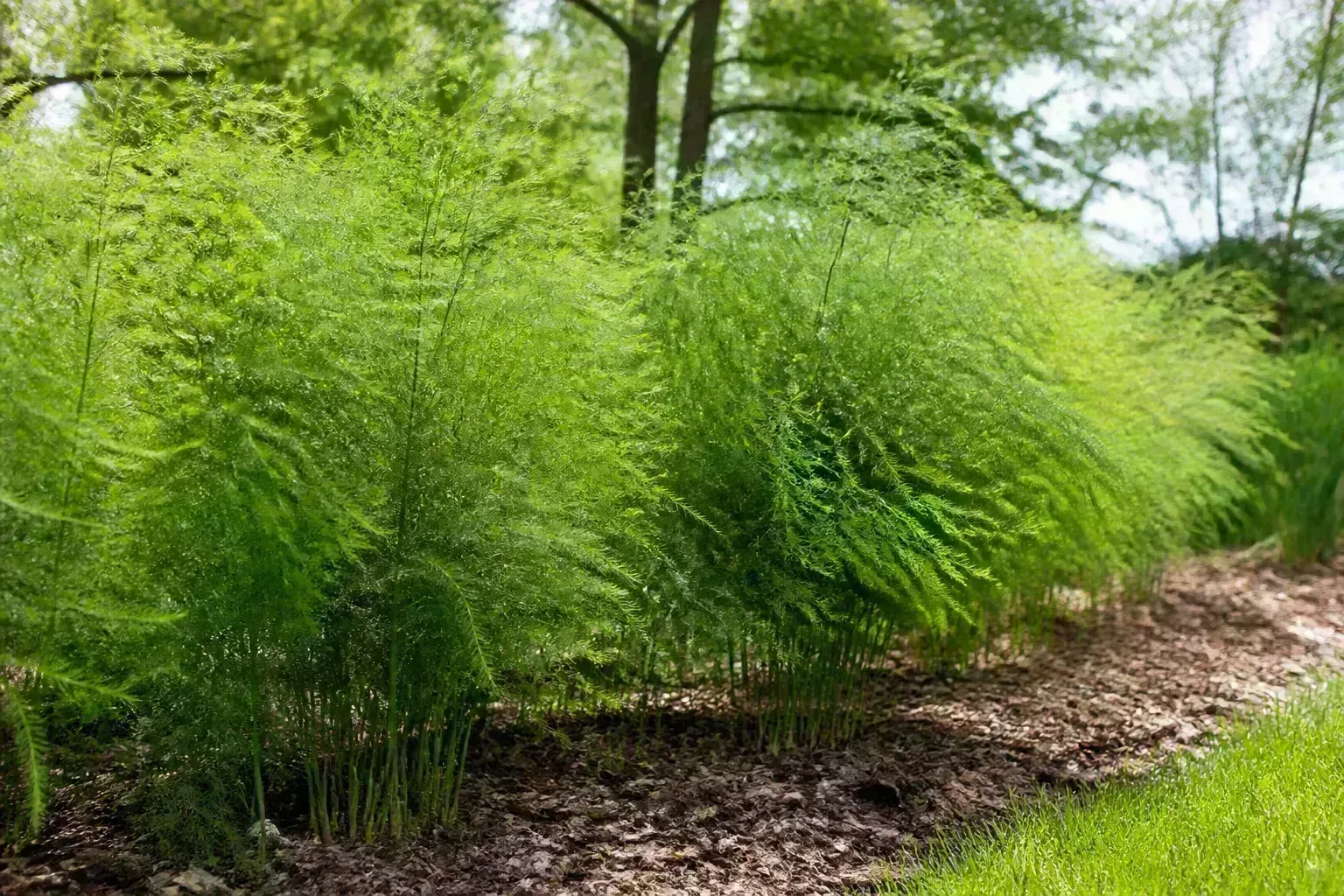
Once harvest ends, every emerging shoot should grow into ferns. You are no longer producing dinner; you are recharging the crown.
Ferns photosynthesize through summer, building the root reserves that power next spring’s spears. Healthy summer growth often reaches waist to shoulder height. Keep ferns watered during drought, control weeds without deep cultivation that slices roots, and watch for asparagus beetles on foliage — beetle damage on ferns still stresses the plant.
Do not mow ferns until they brown and die back in fall. Cutting green ferns mid-summer to force a second harvest weakens crowns; Harvest to Table explicitly warns against midsummer forcing on spring-harvested plants. After dieback, mow or cut ferns at soil level and add compost or balanced fertilizer according to soil tests.
Male hybrid cultivars — common in modern seed catalogs — produce thicker spears and no seed-bearing berries, reducing self-sowing weeds. Female plants divert energy to red berries; they are edible only after cooking and are toxic raw, so keep kids and pets away from berry-stage plants if you grow older varieties.
Storing and Using Fresh Asparagus
Asparagus is a use-soon crop. Sugars begin converting to starch within hours of harvest, which is why market asparagus rarely matches the sweetness of spears walked straight to the kitchen.
For short storage:
- Cool immediately — rinse briefly, then refrigerate.
- Store at 32 to 36°F (0 to 2°C) with high humidity. Penn State Extension reports good quality for 7 to 14 days under proper cold storage; Harvest to Table suggests up to 10 days at about 36°F when spears are wrapped in a damp cloth inside a perforated bag.
- Avoid prolonged storage below 32°F — tips may gray — and avoid room-temperature holding above 50°F (10°C), which toughens spears quickly.
For longer preservation, blanch and freeze spears (three to five minutes in boiling water, ice bath, drain, freeze), or pressure-can using current tested recipes — asparagus is low-acid and is not safe for boiling-water canning alone.
Common Harvest Mistakes That Weaken Your Bed
Harvesting the planting year. The most common beginner error. Those first spears are not a preview meal; they are establishment fuel.
Ignoring the pencil rule. Continuing to pick skinny spears steals energy the crown cannot replace that spring.
Cutting too deep or too often on one crown. Bud damage and uneven stripping concentrate stress on individual plants.
Skipping fern phase. Mowing or removing green ferns after harvest ends guarantees a weak next year.
Tilling the bed. Asparagus roots form a shallow mat. Tilling destroys crowns and brings buried weed seed to the surface.
Harvesting opened tips. Tough, fibrous spears do not improve in the kitchen and still cost the plant a growth cycle if left too long before removal.
Planting in a rushed rotation. Asparagus belongs in a dedicated perennial bed, not a vegetable row that will be tilled for tomatoes next season. See our perennial vegetables guide for crops that share long-horizon planning.
Troubleshooting Thin or Weak Spears
Thin spears in an old, mature bed often mean crowns are exhausted, crowded, or diseased — Fusarium root rot is a common long-term yield thief in asparagus. Dividing and transplanting may help isolated strong crowns, but severely infected beds may need replacement in a new site after years of rotation rest.
Thin spears in a young bed are usually normal — crowns are not yet fully charged. Hold harvest windows to the shorter side and prioritize fern growth.
Other causes of weak production:
- Insufficient summer ferns last year from early stop or pest damage
- Overharvest the previous spring
- Drought stress during fern phase
- Low phosphorus or poor soil organic matter at planting depth
- Weed competition stealing water and nutrients
- Too-shallow planting in hot climates or too-deep planting in cold, wet soils
Correct the underlying stress, shorten next year’s harvest window, and feed ferns after harvest ends. Recovery is slow — asparagus rewards patience twice: at planting and after a mistake.
Conclusion
Harvesting asparagus well is a rhythm, not a one-time event. Protect the bed in establishment years, lengthen picking only as crowns mature, harvest daily at proper size with closed tips, stop when spears pencil out, and let ferns rebuild the crown through summer. Snap spears at the soil line for safest home harvest, cool them quickly, and treat post-harvest nitrogen and fern care as part of the crop — not an afterthought.
Follow that sequence and a single row of crowns can deliver spring spears long after most garden plans have been forgotten. Rush it, and you will wonder why asparagus is supposed to be worth the wait. Patience at the cutting stage is what makes the wait pay off.



