How to Dig Up and Store Canna Bulbs for Winter
Step-by-step guide to digging up, drying, and storing canna bulbs over winter so they survive until spring replanting — with zone rules and rot fixes.
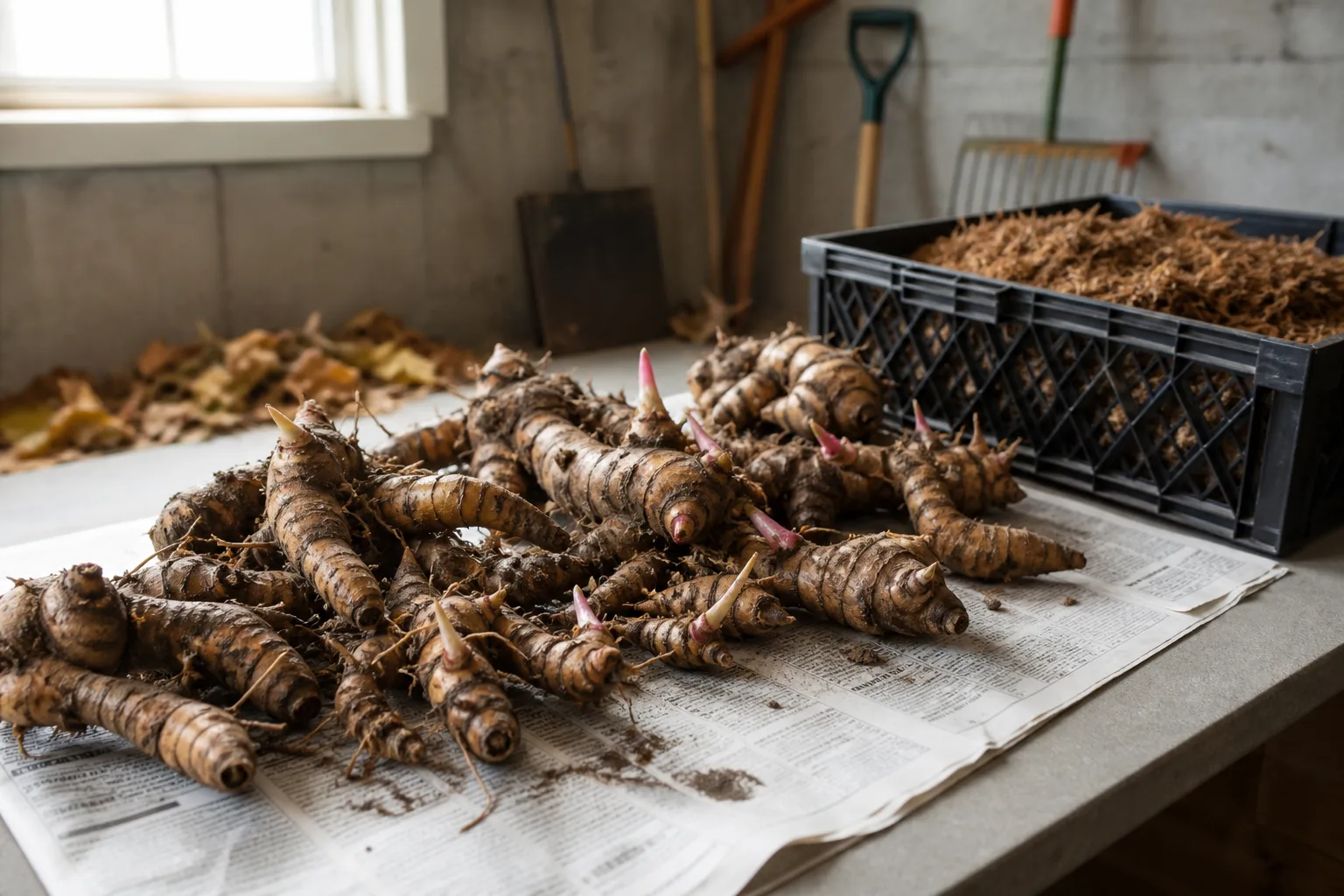
Gardeners call them canna bulbs, but what you are really storing is a rhizome — a thickened underground stem that spreads horizontally and sprouts from eyes (growth buds) along its surface. That botanical detail is not pedantry. Bulbs like tulips sit dormant as layered scales; canna rhizomes stay fleshy, moisture-rich, and vulnerable to rot if you treat them like dry gladiolus corms. Get the lift-and-store workflow right in zones 6 and 7, and one clump of cannas can return for a decade of tropical foliage and hummingbird-bright flowers. Get it wrong — dig too early, pack them wet, or store them in a freezing garage — and you are rebuying every spring.
This guide walks through the full cold-climate protocol: deciding whether you even need to dig, timing the lift after frost, curing rhizomes properly, packing them for months of cool storage, and bringing them back outdoors when soil warms. For year-round culture, feeding, and cultivar picks, see our complete canna lily growing guide.
Rhizomes, Not Bulbs: What You’re Actually Storing
Canna hybrids sold as “bulbs” in spring catalogs are rhizomes — starch-storing stems that creep outward and produce new shoots from eyes on the upper surface. A healthy division for storage should feel firm and heavy, like a raw potato, with at least two to three visible eyes. Soft, hollow, or eyeless pieces rarely survive winter packing.
NC State Extension notes that cannas sustain tissue injury when left in frozen ground at temperatures below 25°F (−4°C) for extended periods. That threshold explains why gardeners in the Deep South and coastal California rarely dig cannas at all, while Midwest and Northeast gardeners treat them as tender perennials — the same category as dahlias, elephant ears, and caladiums. The storage technique below works for all of those, though curing time and ideal temperature vary slightly by species.
Why the Distinction Matters for Winter Care
Because rhizomes hold more water than true bulbs, they need a dry-but-not-desiccated storage environment. Pack them bone-dry in a heated room and they shrivel. Seal them in plastic while still damp and they rot within weeks. The goal is a cool, dark, well-ventilated space around 41–50°F (5–10°C) with a slightly absorbent packing medium — peat moss, vermiculite, or slightly damp sawdust — that buffers humidity without trapping moisture against the skin.
Do You Need to Dig Up Cannas? A Zone-by-Zone Decision
Not every gardener needs to lift cannas. Your USDA hardiness zone is the first filter, but soil drainage and winter rainfall matter as much as the number on the map. A zone 8 garden with heavy clay and standing winter water kills in-ground rhizomes faster than a zone 7 garden on a sandy slope where lift-and-store is routine.
| Zone range | Dig up for winter? | Typical approach |
|---|---|---|
| 9–10 | No | Leave rhizomes in ground; remove frost-killed foliage |
| 8 | Optional | Heavy mulch on well-drained sites; lift if soil stays wet |
| 6–7 | Yes (recommended) | Lift after frost, cure, store at 41–50°F |
| 5 and colder | Yes, or treat as annual | Lift and store; pre-sprout indoors for earlier bloom |
Zones 9–10: Leave Rhizomes in the Ground
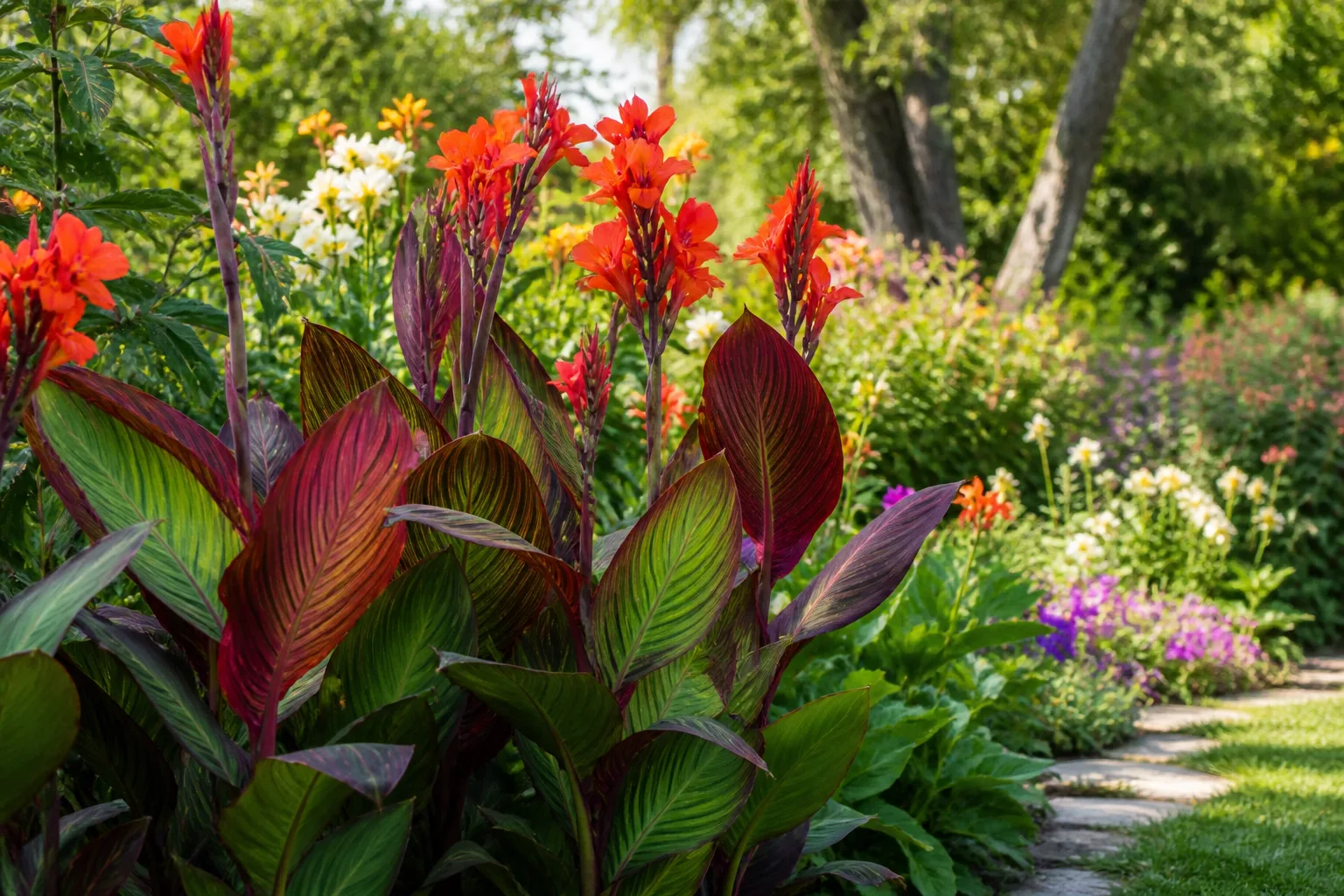
In frost-free and nearly frost-free climates, cannas behave as true perennials. After occasional light frost, cut blackened stems to the ground and pull away dead leaves. Light mulch is optional. New shoots emerge on their own when soil warms. Digging and storing in these zones is unnecessary work and can actually delay spring growth.
Zone 8: Mulch Heavily or Lift for Safety
Zone 8 is the judgment call zone. On well-drained, sandy or loamy soil, a 6-inch layer of shredded leaves, straw, or compost over the crown after cutting back frost-killed foliage may protect rhizomes through mild winters (BBC Gardeners’ World). On clay or low-lying beds that stay saturated December through February, mulch traps moisture against the crown and rot wins. When in doubt, lift and store — the same workflow as colder zones, with less urgency on timing.
Zones 6–7 and Colder: Lift and Store Indoors
NC State Extension recommends that gardeners in zones 6a and 6b cut plants to the ground after the first frost and lift rhizome clumps for winter storage in dry peat or vermiculite at a location that does not fall below 40°F. Zone 7 gardeners on the same program get reliable survival rates above 80 percent when curing and packing are done correctly. Treating cannas as throwaway annuals is valid if you prefer low effort over cost savings — but a single mature clump can be worth $30–$50 to replace, which makes storage economical after the first successful winter.
When to Dig Up Canna Rhizomes in Fall
Dig cannas after the first killing frost blackens the foliage, but before the ground freezes solid. Most gardeners lift within a week of that frost event. Light surface frost on leaves does not damage buried rhizomes; a deep hard freeze that penetrates 4 to 6 inches of soil can turn fleshy tissue to mush underground.
Wait for the frost signal deliberately. Cutting green, photosynthesizing leaves in September steals carbohydrates the rhizome needs to harden off for dormancy. Once stems collapse and turn black or brown, the plant has moved energy underground — that is your green light to dig.
Light Frost vs. Hard Freeze: Why Timing Matters
A light frost (29–32°F) wilts leaves and stops top growth without freezing soil at rhizome depth. A hard freeze (below 25°F for several hours) can damage tissue you intended to save. If an early hard freeze is forecast and you have not yet dug, mulch heavily for 48 hours and lift as soon as soil is workable — do not wait for perfect curing weather if the alternative is frozen ground.
In mild falls where frost comes late, you can wait until consistent nighttime temperatures drop into the 30s and foliage dies back naturally. There is no benefit to digging while stems are still green.
Tools and Materials You’ll Need
Gather supplies before you head to the garden on frost weekend:
- Digging fork or shovel — a fork lifts clumps with less slicing damage than a narrow spade
- Pruners or sharp knife — for cutting stems and dividing clumps
- Crate, mesh bag, or cardboard box — for curing and later storage
- Newspaper, paper bags, or perforated plastic bins — for wrapping individual rhizomes
- Dry peat moss, vermiculite, or slightly damp sawdust — packing medium
- Sulfur powder (optional) — dust fresh cuts if you divide in fall
- Permanent marker and tags — label cultivars if you grow more than one color or height
Budget 30 minutes to an hour of active digging time per clump, plus one to seven days of curing before final packing. Total project time from frost to stored rhizomes is typically under a week.
How to Dig Up Canna Rhizomes Without Damage
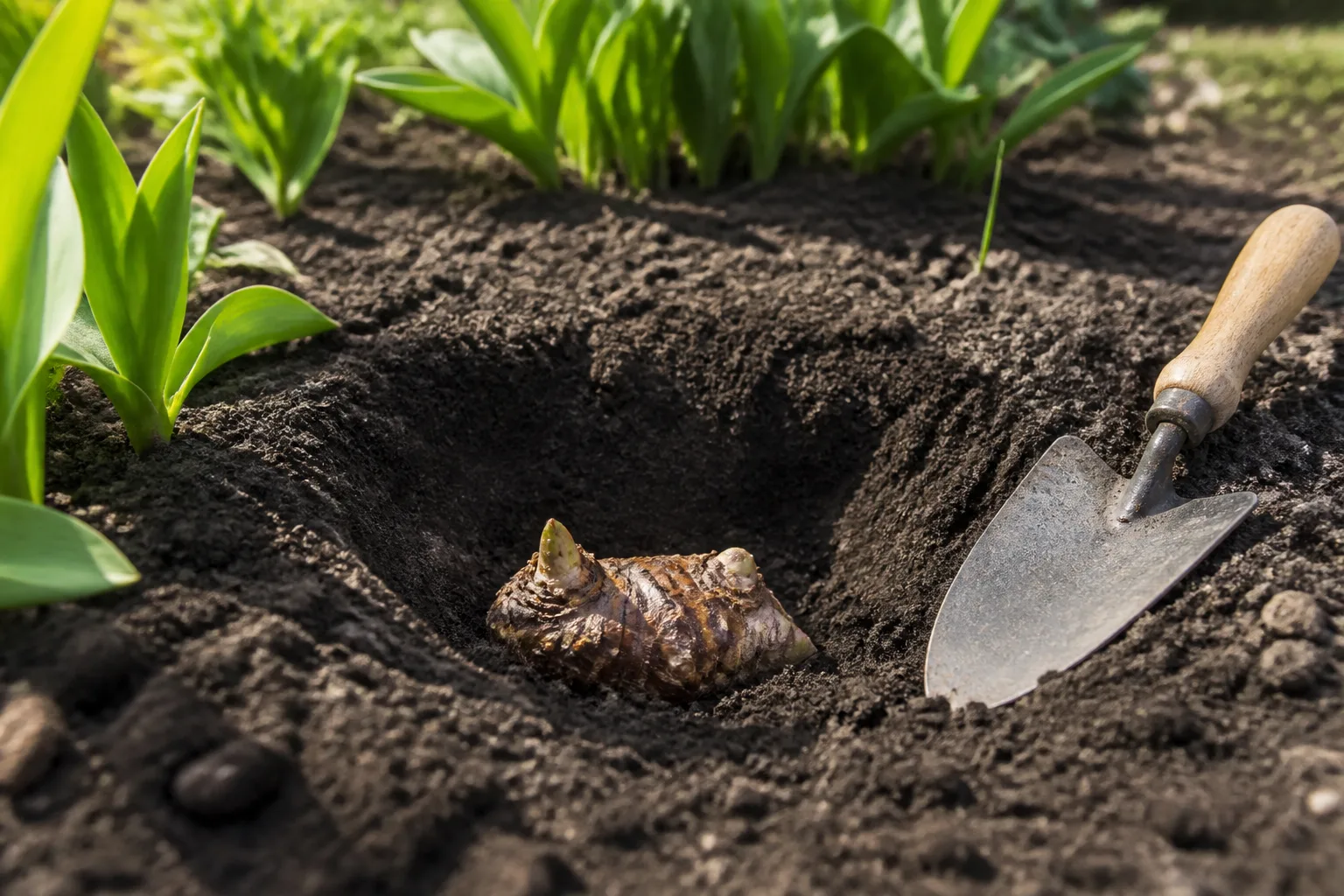
Cannas are usually planted 4 to 6 inches deep and spread wider than the visible stems suggest. Work outward from the stalk stubs, not directly under them.
Step 1 — Cut back foliage. Trim blackened stems to 2 to 6 inches above the crown. The shorter stub protects the growing point during handling; anything longer invites mold in storage.
Step 2 — Loosen the clump. Slide a garden fork or shovel blade 6 to 8 inches beyond the outermost stem and lever upward gently. Repeat around the clump until it lifts as one piece. Never pry directly against the rhizome — sliced tissue rots in storage.
Step 3 — Shake off soil. Knock loose soil against the fork tines. Do not power-wash or scrub rhizomes; scratched skin admits fungi. A light rinse of mud in cool water is acceptable if soil is heavy clay, but dry the rhizomes immediately afterward.
Step 4 — Inspect before curing. Discard any piece that is already soft, smelly, or riddled with insect tunnels. Note virus symptoms — mosaic streaking, stunted distorted leaves, weak bloom — on the parent plant; do not store or divide infected stock. Destroy those rhizomes and buy clean replacements next spring (BBC Gardeners’ World).
Cleaning, Trimming, and Curing Before Storage
Curing toughens the outer skin so rhizomes resist rot in closed storage. Lay cleaned clumps in a warm, dry, airy place — a garage shelf, covered porch, or spare closet with a fan — for one to seven days. Get Busy Gardening recommends one to three days in shade; humid climates may need the full week. Rhizomes are ready when surfaces feel leathery and dry to the touch, not tacky.
Trim dangling roots to 1 to 2 inches after curing. Long hairy roots hold moisture and mold in packed storage. Leave the crown and eyes intact.
How to Wrap and Store Canna Rhizomes Over Winter
Once cured, pack rhizomes for the long wait:
- Wrap individually in newspaper or small paper bags with a handful of dry peat moss or vermiculite tucked around each piece. The medium absorbs stray moisture without wetting the rhizome (Plant Care Today).
- Place wrapped rhizomes in a cardboard box, crate, or mesh bag so they do not touch bare skin to skin. Direct contact spreads rot.
- Label the container with cultivar name and storage date if you grow multiple types.
- Set the box in a cool, dark, dry location — unheated basement, interior garage wall, crawl space, or root cellar.
Do not seal rhizomes in airtight plastic unless you have verified they are fully dry and the bag has ventilation holes. Condensation inside a zip bag is the fastest route to mush.
Best Storage Temperature and Locations
Aim for 41–50°F (5–10°C) with low humidity (NC State Extension). Below 40°F, tissue damage increases; above 55°F, rhizomes may sprout prematurely in darkness, drawing down reserves before you can plant outdoors.
| Location | Pros | Cons |
|---|---|---|
| Basement (interior wall) | Stable cool temperature | May be too warm if heated |
| Unheated garage (insulated) | Easy access for checks | Must not drop below freezing |
| Crawl space | Naturally cool | Rodents; verify ventilation |
| Root cellar | Ideal humidity balance | Not available to most gardeners |
| Refrigerator (crisper) | Precise temperature | Too cold if set below 40°F; ethylene from fruit |
Never store cannas where temperatures hit 32°F or lower. A garage that freezes on January nights will kill rhizomes as surely as leaving them in the ground. If your only option is a warm basement (60°F+), expect earlier sprouting — check monthly and pot up any that push white shoots in February.
Storing Potted Cannas Without Digging Them Up
Cannas grown in containers can overwinter in the pot without the dig-and-wrap routine. After frost kills the foliage, cut stems to soil level, move the pot to a cool room at 50–60°F, and water sparingly — just enough to keep the mix from turning dust-dry. A basement or attached-garage wall works well.
The plant will go dormant without bright light. Do not fertilize and do not expect leaves. In late winter, move the pot to a sunny window or under grow lights to wake it up four to six weeks before your last frost date. This path saves labor for patio specimens and large decorative pots you do not want to empty.
One caution: verify the storage spot will not freeze. A pot on a garage floor against an exterior door can freeze solid while the air temperature reads 40°F. Elevate pots on a shelf or foam board.
Dividing Rhizomes at Lift Time
A single season’s growth can turn one planting rhizome into a fist-sized clump with multiple shoots. Fall or spring is the time to divide — fall division reduces spring planting workload; spring division lets you assess winter survival first.
To divide at lift time:
- Break or cut the clump apart with a clean knife so each piece has two to three eyes.
- Let cut surfaces air-dry for several hours.
- Dust cuts with sulfur powder to discourage fungal entry through open wounds.
- Cure and store divisions the same as whole clumps.
Do not divide virus-suspected plants. Mosaic-streaked foliage means infected tissue throughout the rhizome — cutting it up only multiplies the problem.
Monthly Winter Checks: Rot, Shrivel, and Pests
Stored rhizomes are not “set and forget.” Inspect once a month from December through March:
- Rot: Soft, mushy spots or sour smell — cut away affected tissue with a clean knife if less than a third of the rhizome is involved; discard the entire piece if rot is extensive.
- Shrivel: Wrinkled, lightweight rhizomes need more humidity — mist the packing medium lightly, rewrap, and recheck in two weeks.
- Premature sprouting: White or pale shoots in storage mean temperatures are too warm or light is reaching the box — move cooler and darker; pot sprouted pieces if frost is still weeks away.
- Rodents: Mice chew stored rhizomes. Elevate boxes and use metal mesh if you have had problems before.
Experienced gardeners consider 80 percent survival a successful winter. Losing one or two pieces out of ten is normal, especially after a wet fall or a warm storage spell.
When and How to Replant Stored Cannas in Spring

Replant stored rhizomes after your last frost date when soil has warmed to roughly 60°F at planting depth. In most zone 6 and 7 gardens, that means late April through May — not the first warm weekend in March.
Before planting, unwrap each rhizome and squeeze gently. Firm and heavy with visible eyes means plant it. Soft, moldy, or odorless hollow pieces go in the compost (only if virus-free). Lightly shriveled rhizomes can be soaked in lukewarm water for two to four hours to rehydrate before setting in the ground.
Plant with eyes facing up, 4 to 6 inches deep, spaced 12 inches to 3 feet apart depending on mature cultivar height. Water thoroughly after planting. For earlier bloom in short-season climates, pre-sprout indoors in 12-inch pots four to six weeks before outdoor planting (BBC Gardeners’ World).
Common Storage Mistakes and How to Fix Them
Digging while foliage is still green. Fix: wait for frost kill; if you already dug, cure extra days and accept possible smaller spring plants.
Packing wet rhizomes. Fix: extend curing until surfaces are leathery; replace damp newspaper; add dry vermiculite.
Storing in a freezing garage. Fix: move to basement or insulated interior space immediately; discard any pieces that turned to mush after a freeze.
Ignoring monthly checks. Fix: set a phone reminder for the first of each month; five minutes of inspection prevents losing the whole box to one rotting neighbor.
Storing virus-infected stock. Fix: destroy streaked or stunted rhizomes; buy certified clean replacements; never compost infected material near the garden.
Planting too deep in spring. Fix: eyes no more than 3 inches below soil surface; excessive depth produces leaves but few flowers.
Conclusion
Saving canna rhizomes through winter is straightforward once you respect what they are: fleshy tropical stems, not dry dormant bulbs. Check your zone honestly, dig after frost blackens the foliage, cure until the skin feels leathery, pack in peat or vermiculite at 41–50°F, and inspect monthly for rot or shrivel. Potted cannas can skip the dig if you have a cool non-freezing room. Divide healthy clumps at lift time, destroy anything with virus symptoms, and replant firm rhizomes after soil warms in spring. Do that and the cannas you lift this October become the tallest, brightest plants in next summer’s border — without repurchasing every May.



