26 Backyard Lighting Ideas for a Bright and Magical Outdoor Space
26 backyard lighting ideas for patios, paths, pergolas, pools, and outdoor kitchens, plus tips for warm bulbs, low glare, controls, and safe installation.
The best backyard lighting does two jobs at once: it makes a space easier to use after dark and gives the eye a few intentional places to rest. Start with the route people walk, the surface where they cook or eat, and the place where they sit; then add a smaller layer of glow around plants, fences, water, or architecture.
The Illuminating Engineering Society treats residential lighting as a mix of visual tasks, equipment, energy use, controls, and code considerations—not just a search for the brightest bulb (IES residential lighting practice). That mindset is useful in a backyard: a soft lantern that looks lovely on a coffee table is not enough to light a stair tread, while a security floodlight can make a dinner patio feel like a parking lot.
Start With the Backyard Job: Glow, Guide, or Work Light?
Divide the yard into three jobs before you shop. Glow is ambient light for seating and entertaining; guide light marks steps, doors, and paths; work light helps you read a recipe, prep food, unlock a shed, or clean up. A fourth category, accent light, reveals a tree, wall texture, fountain, or planting bed, but it should support the space rather than compete with it.
Make a quick dusk map with a piece of paper. Mark the house door, stairs, route to the lawn or shed, dining table, grill, fire pit, and any place where a person could trip; those are the first areas to solve. The National Park Service’s outdoor-lighting guidance starts with a similar principle: ask whether a light is necessary, illuminate only the task area, and use the minimum light level that works (NPS outdoor lighting principles).
Drape String Lights Across a Seating Zone
String lights are the fastest way to change the mood of a backyard, but they work best when their layout follows the furniture. Use outdoor-rated strands, give the cable a proper support system, and avoid letting the cord become a head-height trip hazard or a permanent load on a weak fence.
-
Zigzag a canopy over a patio or lawn seating area. Run parallel lines over the zone where people actually sit, not across the whole yard. Warm, widely spaced bulbs create a ceiling effect while leaving the perimeter darker, which makes the seating area feel defined instead of washed out.
-
Trace one fence line as a simple backdrop. Attach the strand to a purpose-built cable or suitable hooks so the bulbs hang consistently along the fence. This is a budget-friendly option for a narrow yard because it adds a warm vertical plane without putting lights directly in everyone’s eyes.
-
Create a covered-patio ceiling grid. A neat grid under a pergola or roof gives even ambient light for dining, but keep it dim enough that faces and food do not look flat. Use a dimmer or a timer if the grid will stay on after the gathering ends.
Hang Pendants From a Pergola or Covered Patio
Pendant fixtures add a stronger focal point than string lights, especially over a dining table or outdoor bar. They need a stable overhead structure and a product designed for the actual exposure; an indoor pendant hung under a roof is still not automatically an outdoor fixture.
-
Suspend a pendant over an outdoor dining table. Center it over the table rather than the room, and choose a shade that hides the brightest part of the lamp from seated eye level. A warm, dimmable pendant can make dinner feel intimate without forcing the rest of the yard to be bright.
-
Group mismatched pendants along a pergola beam. A small cluster works in an eclectic yard, while identical fixtures look calmer in a modern space. Keep the lowest fixture high enough for people to walk beneath it and provide a separate guide light for the steps or path.
-
Use one statement pendant as an outdoor-room anchor. A woven shade, metal star, or simple globe can establish the style of a covered porch or patio. Let it be the decorative centerpiece, then use quiet, shielded light at the perimeter so the centerpiece does not have to do every job.
Add Cordless Lamps to Tables and Sideboards
Portable rechargeable lamps solve a common backyard problem: the furniture moves, but wired fixtures do not. Choose a lamp explicitly marked for outdoor use, charge it before guests arrive, and store it somewhere dry if its weather rating is intended only for occasional exposure.
-
Place a cordless lamp on a coffee table. A low lamp gives enough light to see a drink, cards, or a book without throwing light across the whole patio. It is also easy to move from the table to a sideboard when you rearrange the seating.
-
Cluster small solar lanterns among large pots. Place the lanterns where their panels get clear daytime sun, then group two or three at different heights rather than lining every edge of the yard. This gives a soft garden vignette and avoids the runway effect of identical lights at regular intervals.
-
Use hurricane lanterns with flameless LED candles. Tall lanterns shield the little points of light from wind and make a dinner or movie corner feel layered. Battery candles remove the open-flame risk, but keep the lanterns stable and away from curtains, dry leaves, and places where people will brush past them.
Use Wall Sconces Where People Enter
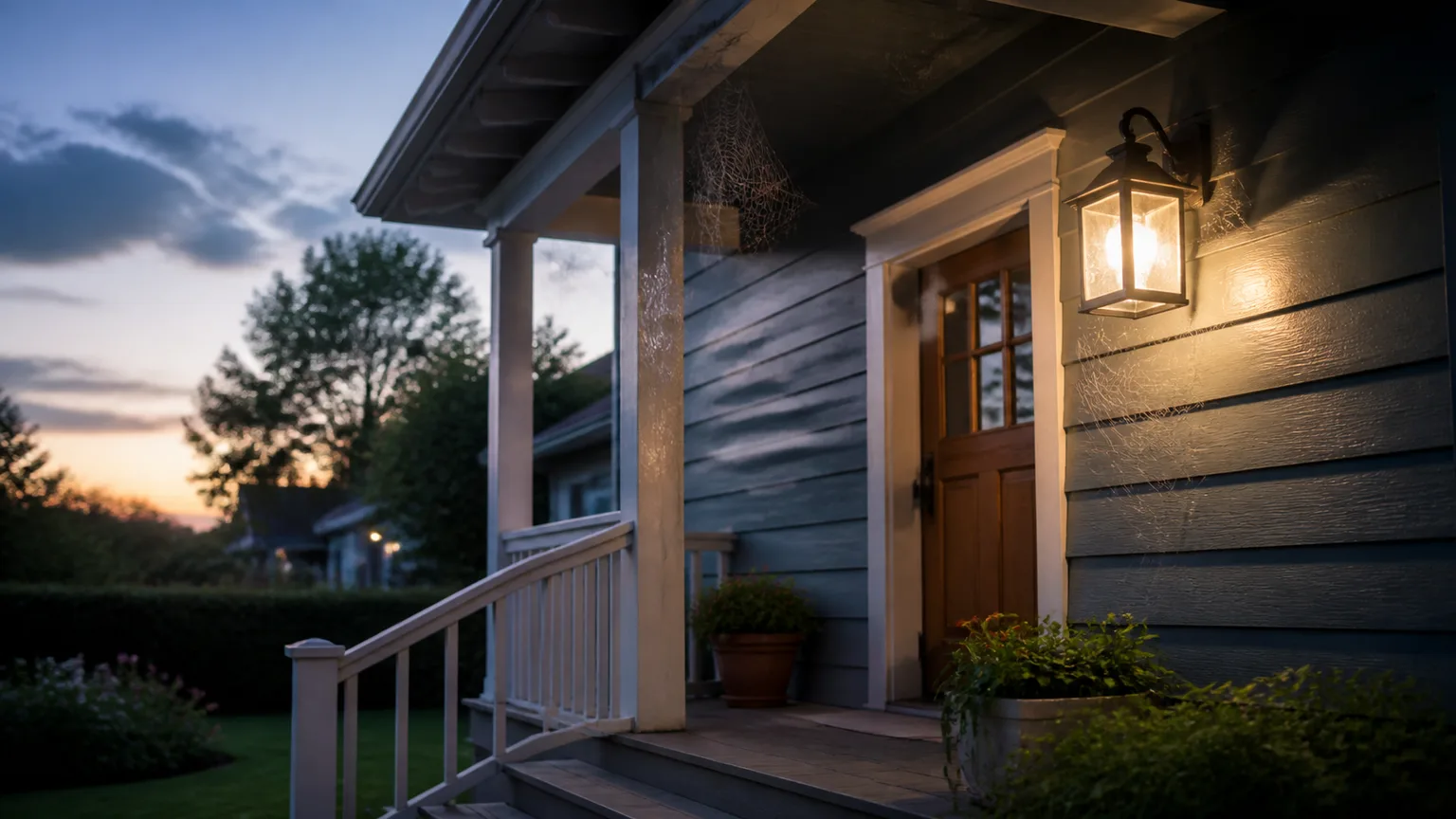
Wall-mounted sconces are most valuable at thresholds: patio doors, steps from the kitchen, a shed, or a detached studio. A pair can look symmetrical, but the important test is whether the door handle, step edge, and landing are visible without the lamp shining into the person’s face.
-
Frame patio doors with shielded sconces. Pick a fixture that hides the bulb at standing and seated eye level and sends light toward the landing. Shielding reduces glare and helps keep the view beyond the patio dark enough to feel spacious.
-
Light an outbuilding entrance. A shed, pool house, greenhouse, or guest room needs a small pool of light at the lock and threshold. A dusk-to-dawn control or motion sensor is usually more useful here than leaving a bright fixture on all evening.
-
Add a down-facing light under an eave. This is a cleaner solution for a bar or serving counter than a floodlight aimed across the yard. Keep the source tucked under the eave, check for reflected glare from pale countertops, and add task lighting directly over the work surface if needed.
Mark Steps With Recessed or Riser Lighting
Steps deserve priority because a decorative glow cannot compensate for a hidden tread or a harsh beam in someone’s eyes. Keep the light close to the change in level and aim it across the walking surface, not straight along the line of sight.
-
Install low-output lights in step risers. A recessed fixture or protected LED strip can reveal each tread while keeping the lamp itself out of view. Use consistent spacing and test at night from the top and bottom of the stairs; one over-bright fixture can create a dark patch beyond it.
-
Cap deck posts with small downward lights. Post-cap fixtures add a little perimeter definition and help people see where a deck ends. They are not a substitute for lighting the stair treads, but they can connect the deck to a path or lawn without a bright overhead source.
-
Run a concealed strip beneath a handrail. A continuous low strip can be more comfortable than several exposed point lights on a long stair. Hide the LED source behind a lip or channel, use an outdoor-rated system, and leave enough access to replace or service the power supply.
Use Path Lights to Guide a Walk
Path lights should make the route legible, not turn the walkway into a row of glowing mushrooms. Space them to overlap the walking surface, stagger them when possible, and select a hood that directs light down rather than into the garden or neighboring windows.

-
Line a path with shielded low-voltage lights. Choose fixtures with a visible hood and aim the light at the ground. Place them at turns, steps, and changes in surface first; straight runs may need fewer fixtures than a product diagram suggests.
-
Use a downlight from a tree or eave for a natural pool of light. A high fixture can imitate moonlight when its source is concealed and the beam lands softly on the path or seating area. It requires careful installation and pruning clearance, so use a qualified installer for a permanent hardwired system.
-
Put a motion-activated light on a side route. A rarely used passage to the bins, driveway, or shed does not need an all-night glow. Set the sensor so it covers the walking route without triggering every time a branch moves, and combine it with a low-level marker if the route has steps.
Light Trees and Planting Beds With Restraint
Landscape lighting looks most natural when it reveals form: a trunk, a layered shrub, a textured wall, or the edge of a bed. Uplighting is visually dramatic, but it sends light upward and can create glare, so it should be a selective accent rather than the default for every tree.
-
Moonlight a mature tree from above. A concealed, downward-facing fixture in a stable tree or nearby structure can cast a gentle pattern across a lawn. Never attach hardware in a way that damages the tree, and do not place the fixture where maintenance requires unsafe climbing.
-
Uplight one specimen tree or sculptural plant. Aim the beam narrowly at the trunk or canopy and keep the output low enough that the plant does not become a glowing billboard. If the light is visible from a seat or a neighboring window, move it, shield it, or choose a lower angle.
-
Spotlight a planter or planting-bed texture. A small accent on ornamental grass, a stone wall, or a large container can add depth to a dark corner. Use fewer accents than you think you need; darkness between the highlighted forms is part of the composition.
Artificial light can affect wildlife behavior and the natural day-night cycle, so the most responsible landscape lighting is targeted and scheduled. NPS recommends lighting only where and when it is needed, using fully shielded fixtures, warm colors, and the minimum output that works (NPS guidance for lighting at home).
Make Water Features Glow After Dark
Water reflects light, which means a small source can look brighter than expected. Start with a concealed, low-output accent at the fountain wall or waterfall edge and avoid aiming a bare lamp straight across a pool or pond toward the seating.
-
Highlight a fountain or waterfall from the side. Side lighting reveals moving water and stone texture without flattening the whole feature. Keep electrical components and connections appropriate for the installation and follow the manufacturer’s instructions for any equipment near water.
-
Define a pool or hot-tub edge with indirect light. Put the light on the surrounding deck, wall, or posts so the waterline and route to the steps are visible. Do not add floating electrical products unless they are specifically designed, listed, and used according to the instructions for that setting.
-
Use battery lanterns around an above-ground pool deck. Place them outside the walking path and away from splashes, with one brighter, shielded source at the steps. The result is more comfortable than hanging a bright strand directly over the water, where reflection can create a distracting glare line.
Light the Outdoor Kitchen, Bar, and Grill
Outdoor cooking needs task light, not just atmosphere. Put the light where hands, knives, labels, and food land; then add a softer source behind or beside the cook so the person is not working in their own shadow.
-
Install an under-counter or under-shelf LED strip. A concealed strip can illuminate a prep surface while keeping the light source out of sight. Choose a product rated for the exposure, protect the power connection, and use a switch that is easy to reach before the work begins.
-
Pair a down-facing sconce with a grill or bar. A sconce on the backsplash or adjacent wall helps with prep and serving without flooding the seating area. If the grill is far from a wall, use a fixture designed for that appliance or a movable task lamp rather than improvising a hot, dangling cord.
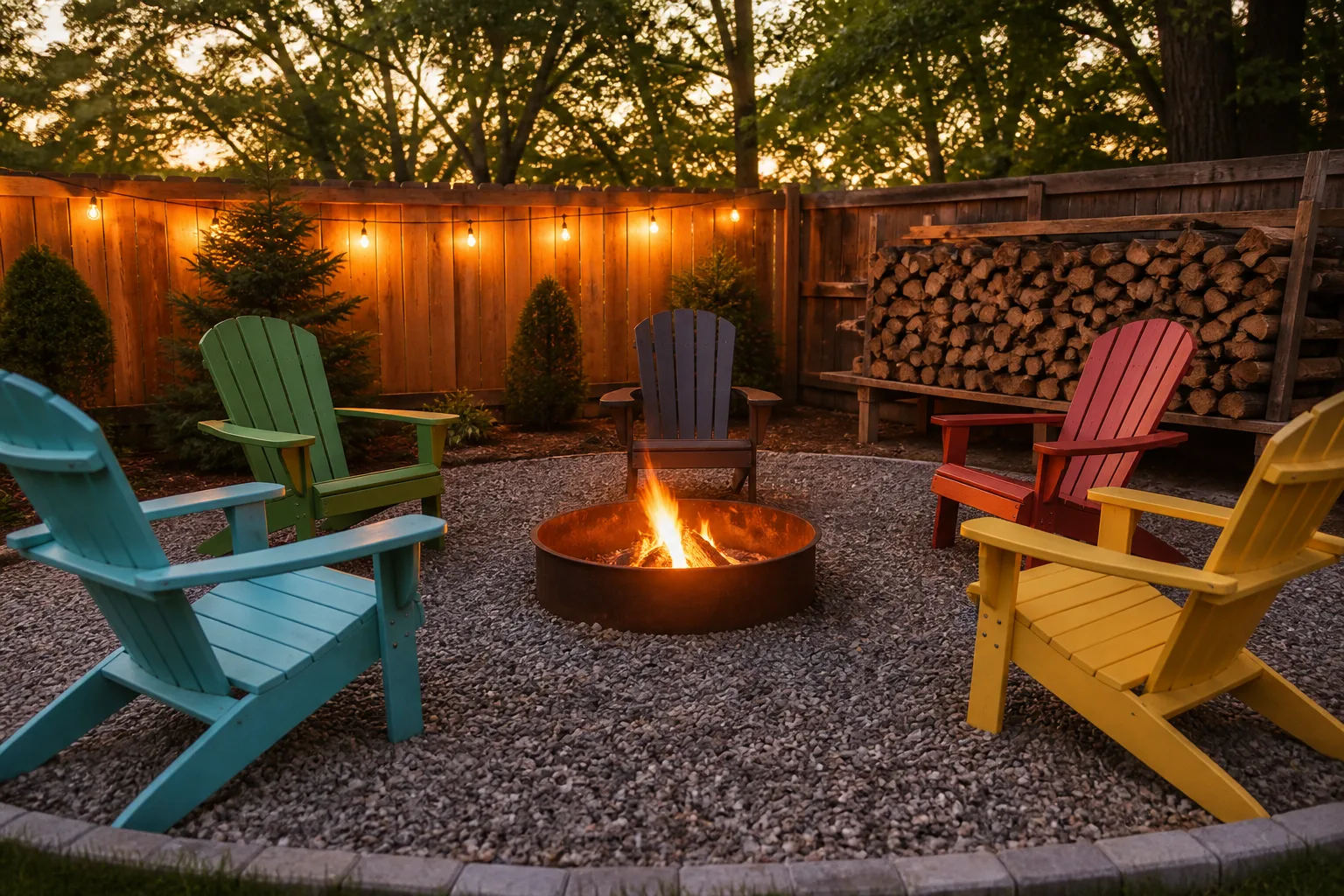
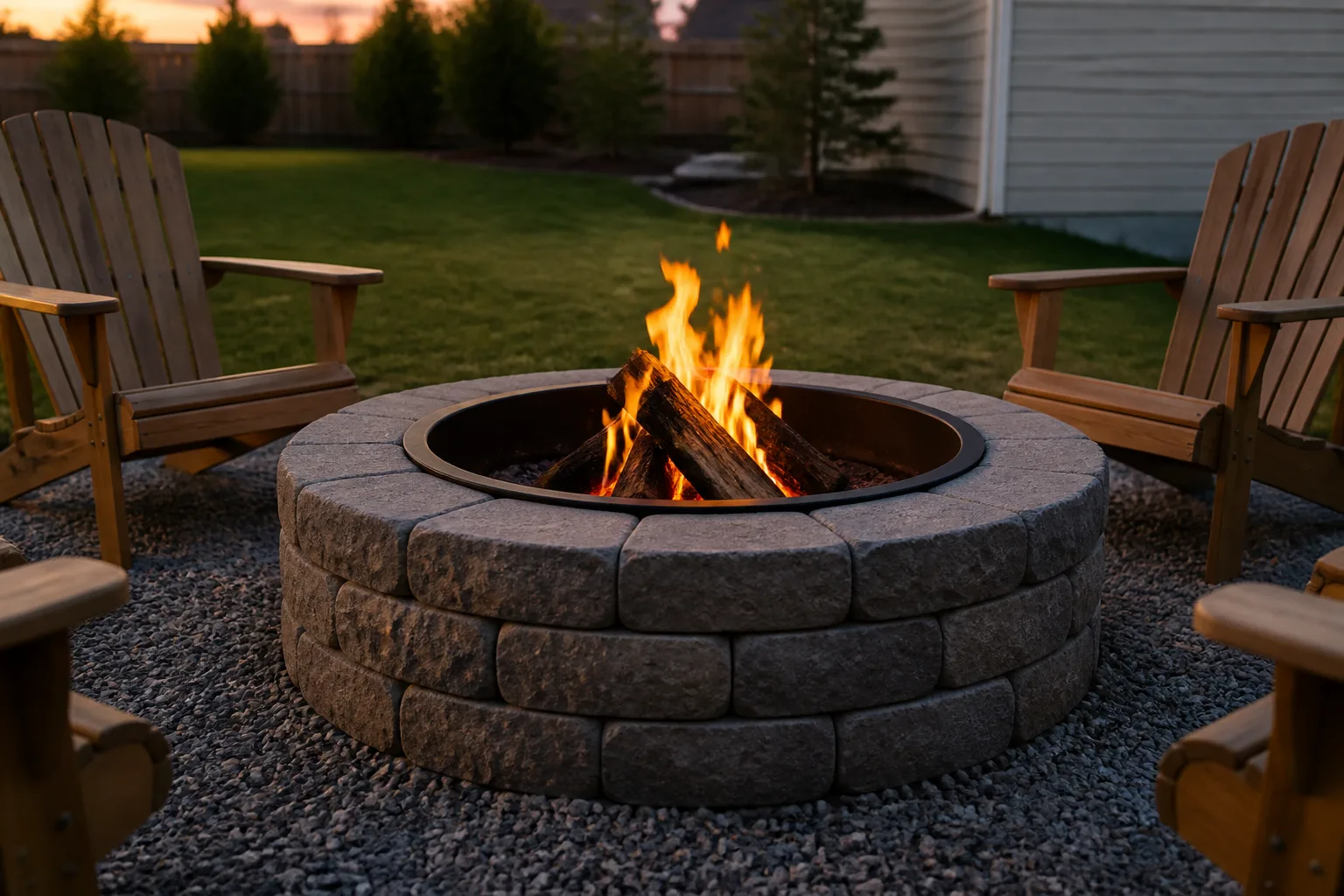
For an outdoor movie corner or fire-pit patio, borrow the same logic: keep the screen and fire area free of direct glare, light the route in and out, and use small lanterns or warm string lights behind the seating. A fire itself is already a bright focal point; more light is rarely needed beside it.
Scatter Solar Lanterns Where Wiring Cannot Go
Solar lights are useful in beds, along a path, or near a shed where trenching would be disruptive. They are not a universal replacement for wired lighting: a shady yard, several cloudy days, dirty panels, or an aging battery can reduce their runtime and output.
Use the solar guide published by Gardening Know How as a buying sanity check: decorative lights with low output can create ambiance, while lights meant to help someone reliably see a route need more output and better placement (solar-light buying guidance). Its practical warning is more important than any single lumen number: the panel needs unobstructed daylight, and inexpensive batteries may not last as long as the fixture body.
If you want a low-cost first experiment, place three solar lanterns in the area you use most, leave the rest of the yard dark, and observe them for a week. If they fade before you are finished outside, move the panels into better sun or reserve them for decorative use while choosing a wired or rechargeable source for tasks.
Combine the Ideas Without Making the Yard Too Bright
Layering is not a synonym for adding more fixtures. It means giving each layer a job and letting the layers overlap gently. A practical starting scheme is one guide layer for the route, one task layer for cooking or dining, one ambient layer for seating, and one or two accent points beyond the seating area.
Use the three-view test before you finalize the layout. Sit where guests sit, stand at the back door, and look toward the yard from inside the house; any bare bulb, bright reflection, or beam aimed toward a neighbor’s window is a design problem even if the fixture looks attractive from the patio.
The IES notes that outdoor spaces need tailored lighting solutions for safety, comfort, amenity, and enjoyment (IES lighting resources for homes and communities). That is why two small, well-placed lights can outperform six identical fixtures: the first pair solves the task while the extra four only add glare and maintenance.
Choose the Right Bulbs, Lumens, Color, and Weather Rating
Start with color temperature. Warm white around 2200–2700K is a comfortable default for seating, paths, planting beds, and most residential accents; amber or a lower temperature can be useful where wildlife and dark adaptation are a priority. For a prep surface, a slightly less warm lamp may make food and tools easier to distinguish, but it still does not need to be blue-white.
NPS specifically recommends warm outdoor LEDs, noting that 2700K can provide good color rendition and that 2200K or amber may suit more sensitive environments. The same guidance warns that higher color temperatures can appear brighter, increase discomfort glare, and affect dark-adapted vision (NPS color and light-level guidance).
Think in lumens, not watts, when comparing LED products. As a rough shopping distinction, a low-output product may be enough for decorative glow, while a path or work light needs more output; however, optics, mounting height, surface color, and spacing can matter more than the headline number. A 300-lumen light aimed at someone’s eyes is less useful than a lower-output light aimed at the tread.
Check the fixture’s exposure rating and installation instructions before putting it outside. A lamp that is merely splash-resistant is a different choice from one intended for sustained rain, and an indoor cord or power supply should never be assumed safe just because the lamp looks sealed. For new wiring, junctions, or hardwired wall fixtures, use a qualified electrician and follow local electrical code.
Set Controls for Safety, Sleep, and Wildlife
Controls let you use less light without giving up the benefit. Put entrance and side-yard lights on motion sensors, set decorative lights to switch off at a reasonable bedtime, and use a dimmer for string lights or pendants when the gathering shifts from dinner to conversation.
The National Park Service recommends timers, motion detectors, and dimmers because they help deliver the appropriate amount of light only when it is needed. DarkSky International makes the same broader case for responsible outdoor lighting: contain light, direct it to the intended target, and reduce spill, glare, and over-lighting (DarkSky responsible outdoor lighting).
Solar and rechargeable fixtures also need a control plan. Solar lamps usually come on automatically, while rechargeable lamps depend on someone remembering to charge them; neither should be the only source for a stairway or cooking station unless you have tested the setup in the conditions where you will use it.
Install, Test, and Maintain the Lighting
Do a temporary layout before you bury cable or drill holes. Use removable supports to place fixtures, wait until full dark, and walk the route with the same shoes and furniture arrangement you will use later. Check the view from a seated position as well as standing height because a bulb that is comfortable for a walker can be glaring to someone at a table.
For a permanent plan, label each circuit or zone, leave access to drivers and connections, and keep vegetation from blocking path-light lenses. Trim branches away from fixtures without turning pruning into a reason to damage a mature tree. Clean solar panels, replace failed batteries, wipe lenses, tighten loose stakes, and inspect exposed cords at the start of the season.
Pay attention to glare, not just brightness. DOE explains that glare becomes especially problematic outdoors because a bright source is being introduced into a dark environment, and small intense LED sources can be uncomfortable (DOE on glare in LED outdoor lighting). If a light feels harsh, first hide the source, lower the output, redirect the beam, or shorten the run; buying a brighter fixture is rarely the fix.
Common Backyard Lighting Mistakes to Avoid
- Lighting every boundary equally. A fully lit perimeter makes the yard look smaller and increases the chance of spill into windows. Light the route and the places people gather, then let the boundary recede.
- Using exposed bulbs at eye level. Exposed globes can be charming in a photo but uncomfortable in a real seating area. Use a shade, hood, recessed housing, or a higher mounting point.
- Treating floodlights as ambiance. Floodlights are useful for a defined task or security need, but they are a poor default for dining, planting beds, and movie nights. Use targeted, downward light and controls instead.
- Choosing cool white because it looks brighter in the package photo. Brighter-looking is not the same as easier to see. Warm light and better beam control usually create a calmer, more legible space.
- Relying on solar lights in deep shade. A solar panel under dense foliage may charge poorly even if the lamp is marketed for a garden. Move it into sun, use a remote-panel design, or choose a rechargeable or wired option.
- Leaving flame near dry material. Candles and torches add atmosphere but need stable holders, clearance from plants and fabric, supervision, and a way to extinguish them. Use flameless LEDs when children, pets, wind, or a movie crowd make that risk hard to control.
- Ignoring the neighbor’s view. DarkSky defines light trespass as light falling where it is not intended, wanted, or needed. Aim fixtures at your own walking surface, add a shield, and use a timer before a bright light becomes a nightly nuisance (DarkSky values-centered outdoor lighting).
Conclusion
The most successful backyard lighting plan is usually a small, layered system: guide the steps and door, light the surface where work happens, give the seating area a warm glow, and use a few accents to draw the eye into the yard. String lights, pendants, sconces, path lights, solar lanterns, and landscape accents can all work, but only when their brightness, direction, weather rating, and schedule match the job.
Start with one zone you use often, test it at full dark, and adjust for glare before expanding. Use warm, shielded, controllable fixtures wherever possible, protect open flame and electrical installations with the care they require, and leave some darkness in the design; that is what keeps a magical backyard comfortable for people, neighbors, and nighttime wildlife.