How to Grow Arizona Cypress in Your Landscape
Arizona cypress thrives in sun and draining soil. Compare cultivars, plan spacing, water young trees, and understand cold, heat, pests, and pruning.
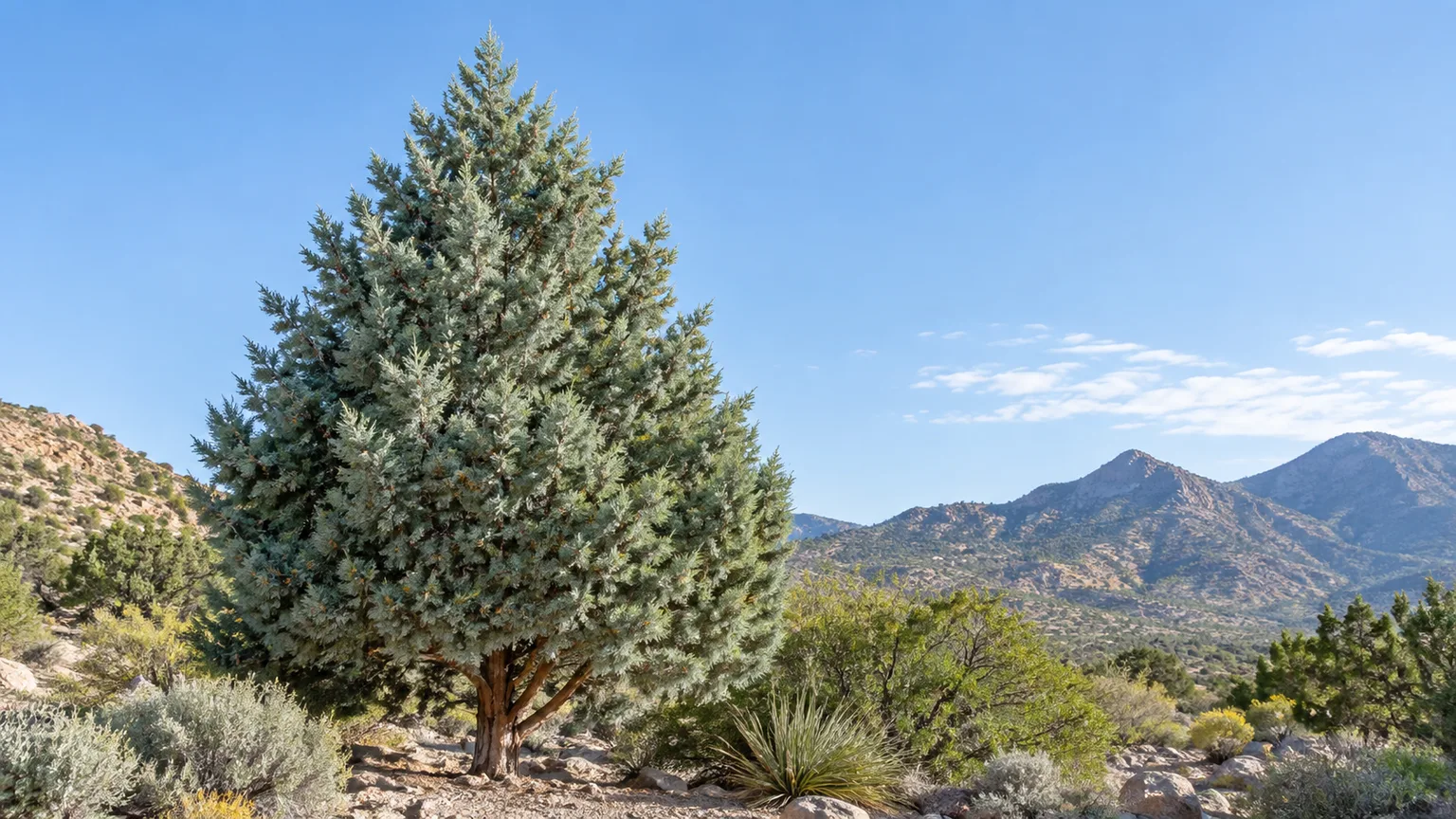
Arizona cypress is a sun-loving evergreen for people who want a substantial tree with blue-gray foliage, wind protection, or a living screen. Its reputation for drought tolerance is real, but it applies most strongly after roots have spread into the surrounding soil; a new tree can still fail in dry root balls, soggy clay, or a planting strip too small for its crown.
Nursery tags may say Cupressus arizonica or Hesperocyparis arizonica. North Carolina State Extension uses the latter and lists the former as an earlier name; both refer to the same tree. For a planting decision, the more important detail is whether the plant is the species or a named cultivar, and how large that selection gets.
Arizona Cypress at a Glance
| Feature | What to plan for |
|---|---|
| Type | Evergreen conifer in the cypress family, Cupressaceae |
| Typical species size | About 40–60 feet tall and 15–20 feet wide; cultivars vary |
| Growth | Often around 4–8 inches per year under NC State’s conditions; water and soil change the pace |
| Exposure | Full sun gives the densest growth and strongest blue color |
| Soil | Adaptable, but excess water must drain away |
| Water | Regular deep watering while establishing; low needs after establishment, with irrigation during prolonged drought |
| Best uses | Specimen, windbreak, large screen, dry-climate garden, seasonal cut greenery |
| Main cautions | Mature width, poorly drained soil, transplant drought, and canker or other stress-related dieback |
North Carolina State Extension’s Arizona cypress profile describes a broad conical tree, silvery-blue to teal foliage, heat tolerance, moderate drought tolerance, and a typical landscape size of 40 to 60 feet tall by 15 to 20 feet wide. Its listed growth rate is about 4 to 8 inches annually, a more useful planning baseline than assuming every young tree will add a foot or two each year. A well-watered cultivar in favorable soil may grow faster, but do not buy a tree on the promise of a single annual-growth number.
How to Identify Arizona Cypress
Look for a dense, three-dimensional crown with small scale-like leaves pressed close to the twigs. The foliage may read blue-gray, silver-blue, teal, or green depending on cultivar, sun, season, and viewing angle; it forms soft-looking sprays rather than the flat fans typical of some arborvitae. Older bark becomes darker and more textured, and the tree produces rounded woody cones roughly an inch across.
It is easy to confuse young Arizona cypress with other upright evergreens, including eastern red cedar, junipers, and other cypresses. A nursery label, cone shape, foliage arrangement, and mature dimensions are more reliable than color alone. The species has a broad pyramidal form, while selections such as ‘Blue Ice’ or ‘Blue Pyramid’ can hold a tighter outline; foliage color by itself does not identify a cultivar.
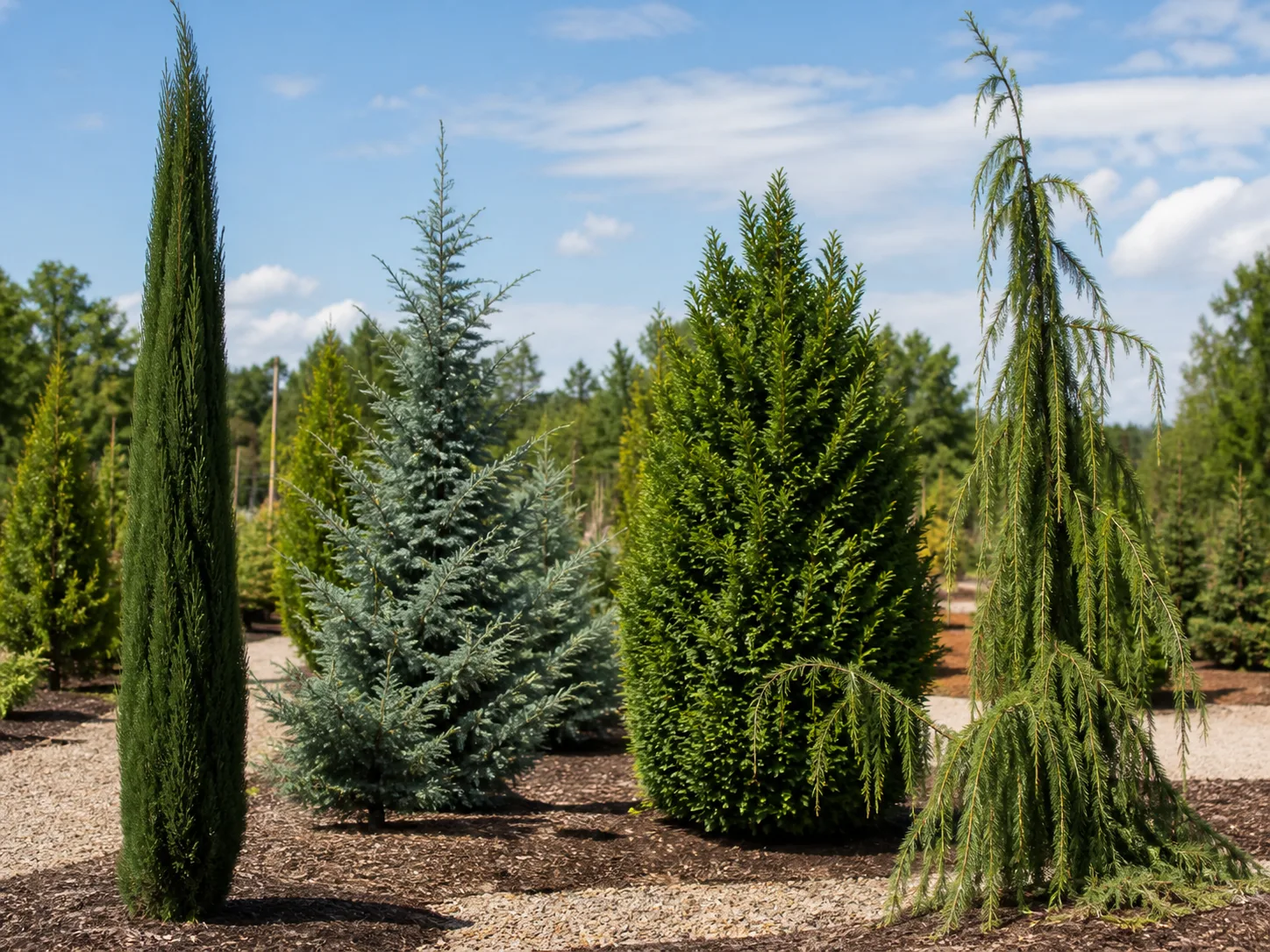
For the name, both combinations appear in catalogs: Hesperocyparis arizonica is the name used by NC State’s plant profile, and Cupressus arizonica remains common on nursery labels and in older references. If comparing plants online, search under both names and check whether the listing names the cultivar. The distinction matters because cultivar size and crown shape can be quite different from the species form.
Is Arizona Cypress a Good Fit for Your Site?
This tree is native to the southwestern United States, including Arizona, and northern Mexico, where it occurs in dry, sunny landscapes and rocky or mountainous settings, as summarized in Gardenia’s plant profile. It is a strong candidate for a large, open garden in a warm region, a slope that drains readily, or a property edge that needs evergreen structure. NC State notes heat tolerance and success on slopes and sandy soils; the University of Arkansas Cooperative Extension profile also recommends the species as an alternative evergreen screen in Arkansas.
Do not read that as a desert-only rule or a promise that the tree will flourish in every hot yard. The Arkansas Extension profile describes growth and landscape use in a humid region, so humidity alone is not a reason to reject it. The more actionable screen is whether the site receives enough sun, sheds excess water, and has enough air movement and root space; repeated leaf wetness and waterlogged soil can still make disease management harder.
Cold-hardiness listings vary by reference and cultivar. Gardenia lists the species for USDA Zones 7 through 11, but that range should be treated as a starting point rather than a guarantee for every seedling or named selection. In a colder Zone 7 garden, a windy exposure, late freeze, or young plant may be more limiting than the map number suggests; ask a local nursery or extension office about the exact cultivar and the winter lows it has survived locally.
Heat tolerance does not mean “plant it anywhere hot and forget it.” A newly planted tree beside paving or a south-facing wall can lose water faster than its roots replace it, especially in dry wind. If your site combines reflected heat, compacted soil, and restricted irrigation, select a smaller, locally adapted tree or improve the soil grade and irrigation plan before buying.
Light and Exposure
Choose a location with full sun for at least six hours of direct light on most days. Arizona cypress can live with some light shade, but growth often becomes thinner and the foliage may lose some of its silver-blue intensity. A shaded lower canopy also drops leaves and looks less effective as a privacy screen.
Consider wind along with sunlight. A young transplant needs stable soil contact and steady root-zone moisture; avoid a spot where gusts funnel between buildings or winter wind dries foliage while soil is frozen.
Soil and Drainage
Drainage matters more than achieving a perfect soil texture or pH. NC State notes that Arizona cypress grows in sandy soil and on slopes, while Arkansas Extension describes it as soil-tolerant; neither point means a tree will thrive with its roots standing in water. Sandy or rocky ground can suit it well, but compacted clay can work only if water moves through it rather than pooling around the root zone.
Before planting, watch the site after a heavy rain or a thorough irrigation. If water remains pooled for many hours, the soil has a gray, sour smell, or nearby plants regularly show root-rot symptoms, do not assume gravel in the bottom of a deep planting hole will solve the problem. A planting hole can act like a basin in clay; improve broader drainage, move the tree to a slope, or plant on a broad raised berm if the site stays wet.
Use native soil for backfill unless a soil test or severe compaction problem gives you a reason to change it. Rich, loose soil surrounded by dense clay can hold water and discourage roots from moving outward. Utah State University Extension’s landscape-tree planting guidance recommends a wide hole, exposed root collar, and minimal amendments.
When and How to Plant
Plant in early spring or fall when the soil is workable and temperatures are moderate. In hot-summer regions, fall planting can reduce heat stress, but the tree still needs irrigation if the season is dry; in colder areas, spring planting gives roots time to grow before winter. Avoid planting during a heat wave unless you can reliably keep the root ball moist without saturating the soil.
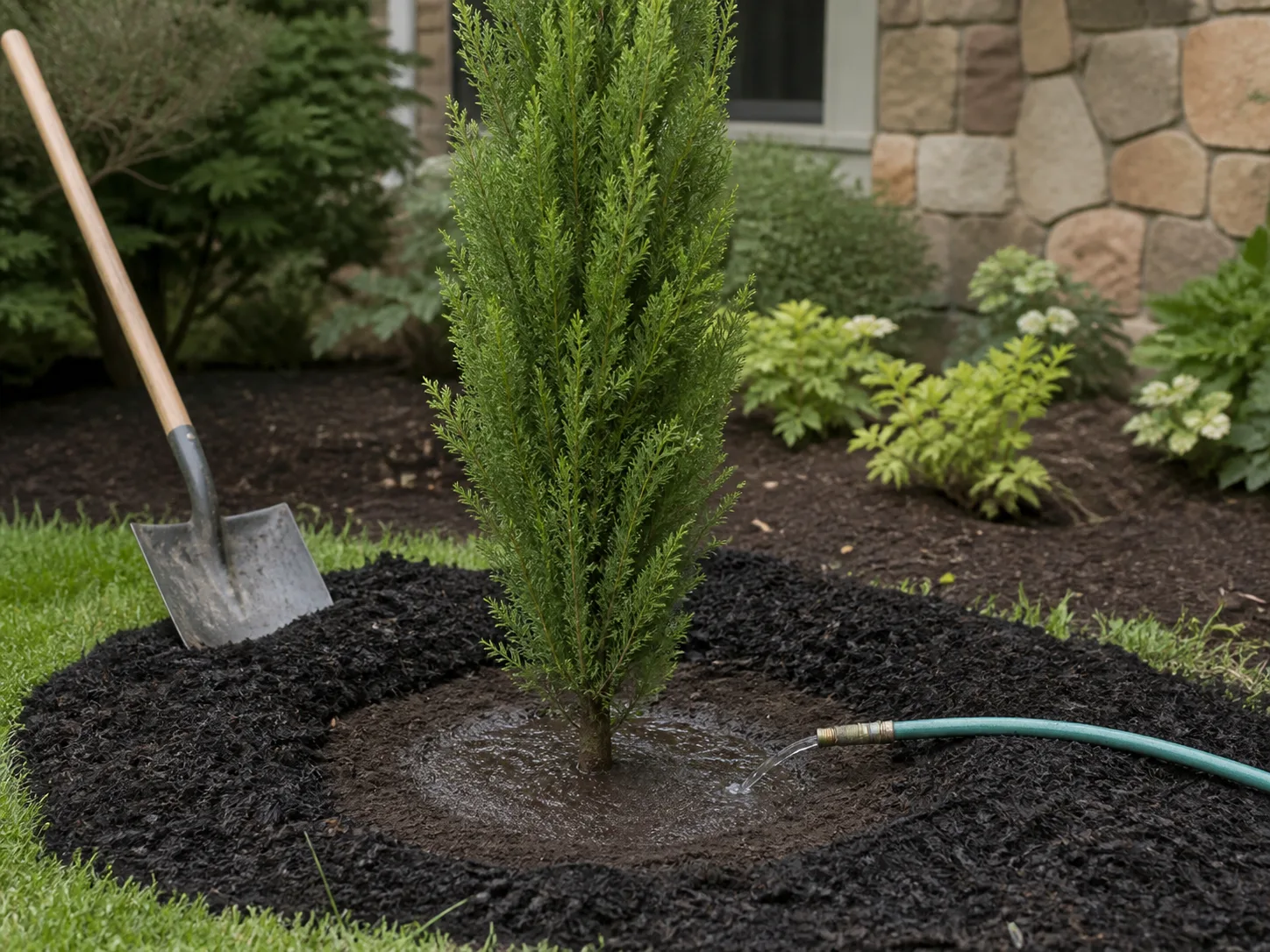
First find the root flare, where the trunk widens into the structural roots. Nursery trees are sometimes buried in their pots or burlap, so the top of the container mix may sit above the actual root flare; remove loose excess soil to locate it. Dig a hole two to three times wider than the root ball, but no deeper than the distance from the root flare to the bottom of the root ball. Set the root flare at or slightly above finished grade so settling does not bury the trunk. Utah State Extension’s planting guide explains why planting too deeply can damage the trunk and restrict future root growth.
If the tree is container-grown, slide it out and check for circling roots that wrap around the root ball. Loosen or cut only the circling roots you can clearly identify, then position the tree upright and backfill with the soil you removed. Water slowly to settle the backfill, correct any settling around the root ball, and keep mulch away from the trunk rather than piling it against the bark.
Stake only if the root ball rocks, the site is exposed, or the tree cannot stand upright. Use flexible ties and remove them once roots hold the tree securely; a stable tree benefits from natural movement in the wind.
Spacing for Screens and Windbreaks
Space trees according to their eventual width and the screen you want, not the gaps that look empty on planting day. NC State gives a typical species width of 15 to 20 feet and says to plant at least 7 feet apart for a screen, while Gardenia lists wider 8- to 16-foot within-row spacing for windbreaks. These are not contradictory guarantees: a denser privacy row fills faster but crowds crowns sooner, while a wider row takes longer to close and is easier to maintain.
Measure from trunk to trunk and check the mature width on the cultivar tag. A tree planted 7 feet from a fence may eventually press against it even if the row forms a dense screen. Leave room for inspection, pruning, and airflow; do not expect to shear a full-size tree into a narrow column.
For a windbreak, ask a local conservation district or extension service about row layout and prevailing winds. For a residential screen, also measure clearance from neighbors, overhead lines, eaves, and areas where mature shade would be unwelcome.
Watering: Establishment vs. a Mature Tree
Water the root ball thoroughly at planting, then monitor soil moisture in both the original root ball and the surrounding backfill. During the first growing season, water often enough that the root ball does not dry completely, but allow excess water to drain before repeating. A small root ball can dry in a day during heat and wind while adjacent clay remains wet, so checking only the soil surface can lead to either underwatering or overwatering.
Use a finger, narrow trowel, or moisture probe to check several inches down near the root ball. If the soil is dry at that depth, water slowly across the root ball and just beyond it so new roots are encouraged outward. If it is still cool and moist, wait and recheck rather than following a weekly calendar. Weather, soil texture, mulch, planting season, and tree size all change the interval.
As roots establish, lengthen the interval between waterings and wet a wider area. A mature Arizona cypress has low water needs and moderate drought tolerance, according to NC State Extension, but “drought tolerant” means it can tolerate dry periods better than a moisture-loving species, not that it never needs water. Deep irrigation during a prolonged dry spell is more useful than frequent shallow sprinkling, which wets only the surface and may keep foliage damp without reaching the roots. Utah State Extension’s planting guidance likewise stresses checking moisture in the root zone and avoiding waterlogged soil while new roots establish.
Avoid irrigation that keeps the trunk and lower branches wet or saturates the soil. Separate a drip zone from nearby thirsty shrubs when possible so watering matches the cypress’s lower long-term needs.
Mulch and Fertilizer
Spread a two- to three-inch layer of organic mulch over the root zone, extending it outward as the tree grows. Mulch moderates soil temperature, reduces competition from turf, and helps the root ball dry more slowly between deep irrigations. Keep a clear space around the trunk so bark stays dry and rodents cannot hide against it.
Do not add fertilizer to the planting hole. Utah State Extension explains that fertilizer at planting does not improve root establishment and can encourage top growth before a transplanted root system is ready to support it. For an established tree, test the soil or look for a specific nutrient problem before feeding; pale foliage alone can also signal overwatering, poor drainage, root injury, or normal older-foliage shedding.
If a soil test identifies a deficiency, follow its recommendation rather than spreading lawn fertilizer under the canopy. Arizona cypress can grow in leaner conditions, so feeding is not a routine annual task.
Pruning Without Losing Its Natural Form
An Arizona cypress usually needs little pruning beyond removing dead, broken, crossing, or clearly diseased branches. Its broad pyramid is part of the tree’s character; regular shearing can turn a natural specimen into a dense, high-maintenance hedge that quickly exceeds the space available. Decide on a different species if you need a narrow, formally clipped evergreen.
When you do prune, cut just outside the branch collar with sharp, clean tools and avoid leaving long stubs. Remove a branch back to a suitable lateral branch or the trunk rather than cutting across the middle of the canopy. For a large tree, high branches, or possible canker, hire an insured arborist instead of climbing or using a ladder beside heavy limbs.
The most important limit is old, bare wood. Conifers often do not push new foliage from leafless inner stems, so cutting back hard can leave permanent brown holes. BBC Gardeners’ World cautions against cutting conifers into old leafless stems when trimming a hedge. If a tree has outgrown its site, severe topping is not a reliable repair.
For a hedge, shape young trees lightly while growth is within reach and keep the bottom slightly wider than the top so lower foliage receives sun. Timing depends on your climate; finish a seasonal trim early enough that new growth can harden before frost.
Pests and Diseases: Diagnose Before Treating
Arizona cypress is often relatively trouble-free when the site fits, but “low maintenance” is not immunity. NC State lists canker susceptibility, while its conifer pest reference describes bagworm damage to conifers. The University of Arkansas Extension profile reports that its evaluated trees had not shown bagworms, rust, or cankers at that location, a useful reminder that pest pressure depends on region, weather, and tree stress.
Check the whole pattern before reaching for a spray. Bagworms make spindle-shaped cases from silk and bits of foliage that hang from branches; a few cases may be picked off and destroyed when reachable, while heavy defoliation warrants local extension advice. NC State Extension notes that dense bagworm populations can strip conifers, so inspect trees before the cases become difficult to remove and do not assume every brown twig is a disease.
Cypress bark beetles are more likely to exploit weakened or stressed trees. Utah State Extension lists Arizona cypress among host plants and describes entry holes, frass, and twig dieback as warning signs; it emphasizes reducing tree stress and removing dead or dying material. Do not apply a preventive insecticide based on a vague concern: local pest activity and the tree’s actual symptoms determine whether treatment is warranted.
Canker can cause localized branch dieback and lesions, but drought injury, root problems, and mechanical wounds can look similar from a distance. If one limb declines while the rest of the crown remains green, inspect the branch union and bark for sunken or discolored areas, resin, cracks, or a sharp transition between green and brown tissue. Avoid wetting foliage unnecessarily and maintain drainage, but do not prune randomly until you know where the living tissue ends.
Brown Foliage, Yellowing, and Branch Dieback
Some interior foliage browning is normal as an evergreen sheds older, shaded leaves; the outside tips should still look healthy, and the change should not race from one branch into the whole crown. Sudden or expanding browning deserves a check of moisture, drainage, pests, and bark. Start with the pattern rather than assuming the tree needs more water.
- Look at where the damage begins. Scattered brown foliage in the shaded interior can be normal; a whole branch, one side, or the crown tip turning brown points to stress or injury.
- Check moisture below the surface. A dry root ball suggests transplant drought; soil that stays saturated suggests drainage or irrigation trouble. Adjust watering only after this check.
- Inspect the plant. Look for bagworm cases, small entry holes or sawdust-like frass, wounds, lesions, or resin. Note whether the browning is on new tips or older interior sprays.
- Correct the site issue first. Restore steady but not soggy root-zone moisture, move lawn sprinklers away from the trunk, replace piled mulch, or improve drainage where practical.
- Escalate progressive dieback. If lesions spread, multiple scaffold branches die, the trunk shows damage, or the tree could strike a home or walkway, ask a certified arborist to diagnose it before pruning or pesticide use.
Yellowing is not a diagnosis. It can follow drought, waterlogged roots, transplant shock, nutrient issues, or insect feeding; the same symptom calls for different actions in each case. A soil test may help after irrigation and drainage are ruled out, but fertilizing first can make a root problem worse and delay the right fix.
Cultivars and Landscape Uses
Cultivar names affect both color and shape. ‘Blue Ice’ is selected for aromatic blue-gray foliage and a comparatively tight conical outline; ‘Blue Pyramid’ has powder-blue foliage and is also described by Arkansas Extension as holding a tighter pyramid than ‘Carolina Sapphire.’ ‘Carolina Sapphire’ is widely grown for bright blue foliage and Christmas-tree use, but its crown may open as it matures. NC State lists other selections such as ‘Silver Smoke’ and ‘Glabra Limelight’; their foliage and mature dimensions differ, so compare the exact plant tag rather than assuming every Arizona cypress remains the same size.
The species works best as a specimen, a broad evergreen screen, or a windbreak where its height and spread are assets. Its scale foliage and textured bark add year-round structure, while blue-leaning cultivars contrast well with dark green shrubs, grasses, and warm stone. A dry slope or a spacious perimeter can suit it better than a small foundation bed or a narrow strip between a driveway and wall.
For a screen, choose a cultivar with the mature height and width you can accommodate, not simply the bluest or fastest-growing option at the nursery. Give each crown enough room to keep its lower branches from being shaded out, and leave access for inspection. If you are comparing cypress species for different climates and site sizes, see our guide to cypress trees; Arizona cypress is one option in a diverse group, not a universal substitute for every hedge plant.
If your property is too small, consider a narrower evergreen shrub or a naturally compact conifer rather than relying on repeated shearing. If you want a large tree that can take heat and periodic dry conditions, have enough room, and can receive establishment water, Arizona cypress is a more sensible match. Its drought tolerance is most useful when you preserve the crown and put the tree in a site where roots can expand.
Growing Arizona Cypress as a Christmas Tree
Arizona cypress is used as a cut Christmas tree and is also sold in containers as a living tree. Its soft-looking foliage and blue-green color can make a striking seasonal display, but a full-size landscape tree is not a permanent indoor plant. Treat indoor display as a short holiday stay, keep the root ball from drying out, and place the tree away from heating vents, fireplaces, and direct hot sun through glass.
Before buying a living tree, check that the container has drainage holes and that the root ball is not tightly pot-bound or sitting in water. A small specimen is easier to move and plant, but it still needs an outdoor site suited to its eventual size and cold tolerance. After the holiday, return it outdoors gradually and plant it in the landscape when weather and soil conditions allow rather than holding it in a small pot indefinitely.
Propagating Arizona Cypress
You can start Arizona cypress from seed or cuttings, but seed-grown plants will not reliably reproduce a named cultivar. Collect mature cones after they have developed, allow them to dry until they open, and sow the seeds in a well-drained medium. Gardenia’s growing guide notes that seed propagation benefits from about a month of cold, moist stratification; germination can be uneven, so keep more than one seedling if you need a replacement.
Cuttings preserve the traits of the parent more reliably, though rooting can be slow and success varies with the cultivar and season. Take healthy semi-ripe shoots, remove foliage from the lower portion, and use a sterile, free-draining propagation mix with gentle warmth and consistent moisture. Keep the medium damp rather than waterlogged, and pot up only after roots have formed; a well-rooted young plant still needs a gradual transition outdoors before landscape planting.
For most home gardens, a well-identified nursery plant is more predictable than raising a screen from seed. Ask for its cultivar, mature size, local cold performance, and propagation method before buying a row.
Conclusion
Arizona cypress earns its place where a large evergreen, blue-gray color, wind protection, or a broad privacy screen is worth the space it will occupy. Plant it in full sun and soil that drains, set the root flare correctly, and water the root ball deeply while new roots spread into the surrounding ground. Once established, the tree needs less frequent irrigation than a thirsty screen species, but severe dry periods can still justify a slow soak.
Choose the exact cultivar before planning spacing, because mature size and crown shape vary more than a young nursery plant suggests. Prune lightly, keep cuts out of old bare wood, and diagnose browning by checking its pattern, the soil, and the branches before changing water or applying a treatment. When the site is right, Arizona cypress can provide durable structure with modest routine care; when the site is too wet, too cramped, or too exposed for establishment, a different evergreen is the better choice.