18 Best Plants for Swimming Pool Landscaping
Choose 18 plants for swimming pool landscaping by sun, splash, moisture, privacy, and pet safety, with smart spacing and container advice.
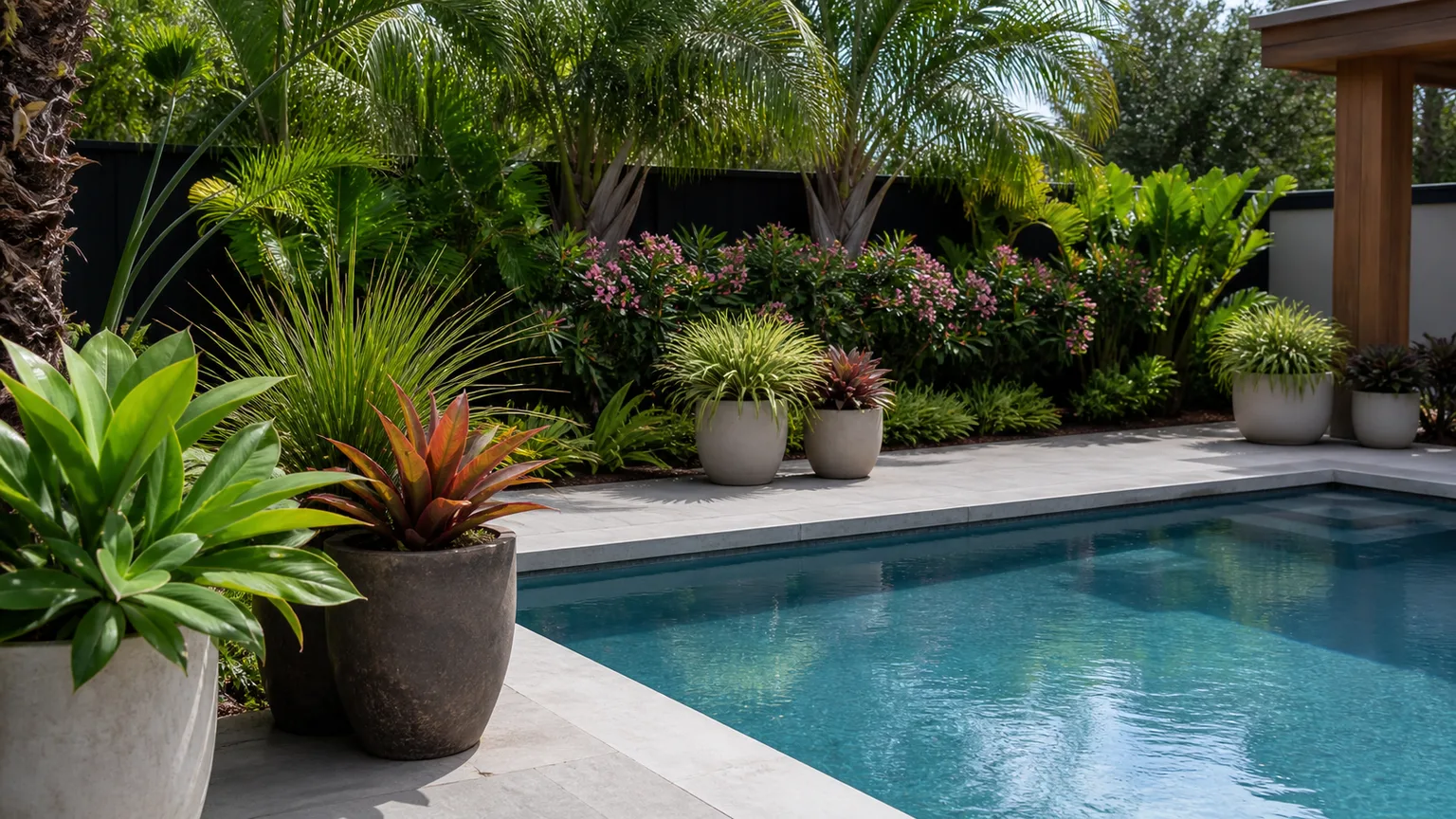
The right poolside plant does more than look tropical in a nursery pot. It must fit the amount of sun reflected off the water, survive the wind that crosses an open deck, stay manageable at mature size, and avoid turning your skimmer into a daily leaf-and-petal trap.
There is no universal “pool-proof” plant. Use the list below as a shortlist, then match each choice to the place it will actually grow. A succulent that thrives on a hot, dry coping edge may rot in a wet planting bed, while papyrus can enjoy consistently damp soil but fail in a dry, windy container.
The best poolside plant is site-specific
Start with the site, not the look you want to copy. Walk the pool at three different times of day and note the hours of direct sun, the direction of prevailing wind, where people enter and exit the water, and where splashes or backwash reach the soil. Also mark equipment panels, drains, gates, and any narrow path that must stay accessible after plants mature.
The pool adds its own microclimate: pale paving and water can reflect heat, open decks can dry containers quickly, and a privacy wall can create either a hot pocket or a shaded windbreak. Treat those conditions as design inputs rather than assuming a plant’s nursery label tells the whole story.
Four zones to map before shopping
- The active splash zone: This is the area within easy reach of swimmers, inflatables, hoses, and pool toys. Keep fragile foliage, thorny leaves, irritating sap, and plants that drop heavy flowers out of the main barefoot path. Use low, sturdy plants or containers you can move while the pool is busy.
- The dry deck zone: This is where large pots, loungers, and outdoor furniture sit. Choose plants that can handle rapid drying and reflected heat, then use heavy, stable containers with drainage. A container also lets you test whether a plant tolerates the exposure before you commit to a bed.
- The back border: This is the place for privacy screens, tall grasses, shrubs, and tropical structure. Plant for the mature width, not the size of the small plant in the pot, and leave room to prune, inspect the pool shell, and reach irrigation lines.
- The filtered-shade zone: Walls, cabanas, fences, and mature trees can create cooler pockets. This is where a staghorn fern, dwarf umbrella tree, or container tropical may work, even if the sunny side of the same pool is too intense.
Check pool water, wind, and access
Pool splash is not the same as coastal salt spray or concentrated road brine, but repeated wetting still matters. If the pool uses a salt-chlorine system, account for salt residue as well as the sanitizing water. Rutgers Cooperative Extension explains that salt exposure can scorch foliage, stress roots, reduce nutrient uptake, and worsen when drainage is poor; UConn’s salt-injury guidance likewise separates foliar residue from salt accumulated in the soil.
That is why “chlorine tolerant” is a weak shopping label by itself. The more useful question is whether you can keep direct spray off the foliage, prevent pool overflow from running into the bed, rinse leaves with fresh water when splash happens, and move the plant if the site proves harsher than expected.
For layout ideas, Better Homes & Gardens recommends combining planters, tropical plants, privacy layers, and ornamental grasses, while Randy Lemmon’s practical pool-container guide emphasizes mapping sun, reducing litter, and using weighted pots. The common thread is simple: the pool should remain usable and serviceable after the planting fills in.
Use this shortlist by job
Choose by the job the plant must do, then check its hardiness and care. For a warm, frost-free yard, the tropical group can be planted in beds. In a colder climate, the same plants are better as seasonal container accents that move indoors or into a protected space before frost.
- For tropical structure: bird of paradise, banana, Chinese hibiscus, dwarf papyrus, and zebra grass.
- For a flowering or fragrant layer: angel’s trumpet, kangaroo paw, regal pelargonium, protea, hebe, and rosemary.
- For a hot, dry edge: echeveria, aeonium, jade, and foxtail agave.
- For shade or movable foliage: staghorn fern, ornamental sweet potato vine, and dwarf umbrella tree.
The groupings are about placement, not a guarantee that every plant in a group shares the same watering schedule. Keep wet-loving papyrus away from drought-managed succulents, and do not let a fast vine swallow a drain, gate, or equipment panel.
18 pool landscaping plants worth considering
Tropical structure and bold foliage
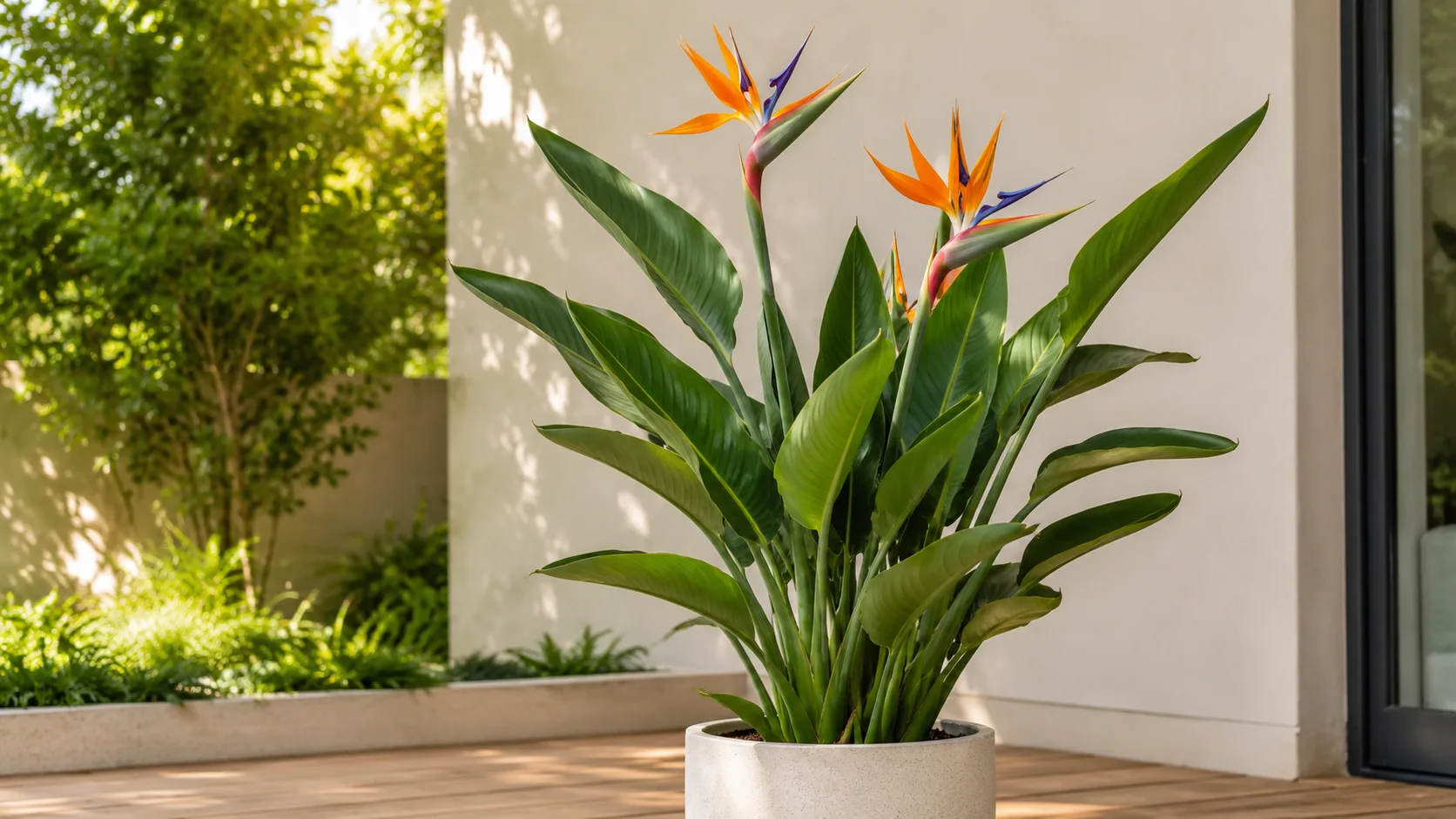
1. Bird of paradise (Strelitzia reginae) — This clumping South African perennial gives a pool the sculptural, resort-like shape many homeowners want. It prefers bright light, fertile well-drained soil, and good air circulation; NC State Extension notes that it can suffer root rot in poorly drained soil and that its large leaves look better when protected from extreme exposure. Use it as a back-border focal point or a large container, not in a narrow traffic lane. The same NC State profile flags it as toxic to cats, dogs, and horses, so keep it away from pets that chew foliage.
2. Banana (Musa acuminata) — Banana plants create instant height and broad, water-reflecting foliage, but they are herbaceous plants rather than woody trees. They grow best in organically rich, moist, well-drained soil and full sun, while their leaves can shred in strong wind. NC State Extension recommends wind protection and warns against letting outdoor banana soil dry out. Give one a sheltered corner or a large movable pot, and expect to remove damaged leaves after storms.
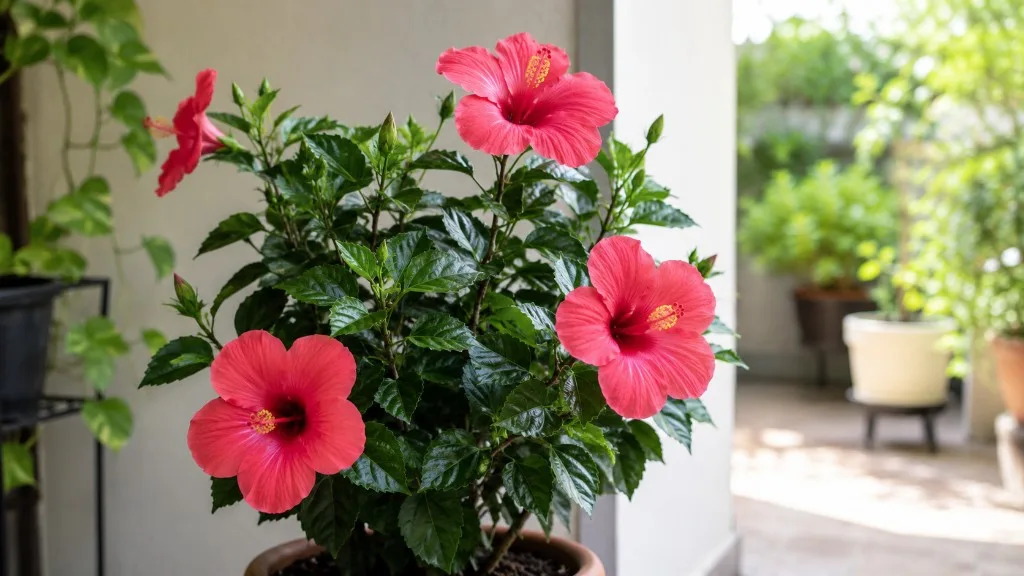
3. Chinese hibiscus (Hibiscus rosa-sinensis) — Use this warm-climate shrub where you want large flowers and a softer screen. It likes full sun to partial shade, rich moist soil with good drainage, and protection from wind and frost; it can grow much wider than a small nursery plant suggests. The NC State Plant Toolbox profile also notes that its flowers attract pollinators, so place a flowering hibiscus beside a seating edge rather than immediately beside the pool entry if bee activity would bother swimmers.
4. Dwarf papyrus (Cyperus papyrus cultivars) — Papyrus is the specialist for the damp end of the list. The species prefers wet or boggy soil, can tolerate standing water in the right setting, and is available in smaller cultivars such as ‘King Tut’ and ‘Prince Tut’; NC State Extension describes its moisture needs, wind sensitivity, and winter limits. Put it in a contained wet bed or watertight decorative pot near, but not inside, the pool. Do not use it to justify letting treated pool water flow into a planting bed.
5. Zebra grass (Miscanthus sinensis ‘Zebrinus’) — The striped leaves add movement and a strong horizontal pattern without needing a tropical climate. Plant it in full sun with room for the mature clump, and site it far enough from the coping that dry leaves and flower plumes are easy to cut back and collect. It is especially useful as a middle layer in a privacy planting, but a row of ornamental grass directly over the pool will increase seasonal cleanup.
6. Staghorn fern (Platycerium spp.) — A staghorn fern belongs on a shaded pool-house wall, sheltered trunk, or covered patio rather than in the open, reflected-sun zone. Its mounted form gives vertical interest without occupying much ground, and it can soften a fence or cabana. Protect it from direct chemical splash, keep the mounting or basket secure, and use it only where the humidity and winter temperatures suit the species.
Flowers and fragrance
7. Angel’s trumpet (Brugmansia spp.) — The pendulous, fragrant flowers are spectacular beside an adults-only patio, especially in a large container that can be moved. This is a deliberate safety exception, not a default family-pool recommendation: NC State classifies Brugmansia as highly poisonous and notes that the plant can become very large. Skip it where children or pets can reach the foliage, flowers, or fallen material, and never choose it just because it tolerates a little salt.
8. Kangaroo paw (Anigozanthos flavidus and hybrids) — The upright, tubular flowers bring warm colors to a sunny, dry border and pair well with gravel, agave, and low succulents. Choose a cultivar suited to your climate, give it sharp drainage, and keep the flower stalks out of the main walkway. It is a better fit for the far edge of a pool garden than for a constantly wet bed or a narrow route to the steps.
9. Regal pelargonium (Martha Washington geranium) — Use regal pelargonium in containers for a season of concentrated color where you can protect it from the harshest afternoon heat. It wants bright light, a fast-draining mix, and regular removal of spent blooms. A pot makes it easier to move the plant under cover when temperatures or wet weather turn against it, and it keeps the root zone separate from an over-irrigated pool border.
10. Protea (Protea hybrids and related banksias) — Proteas make a dramatic, architectural statement in warm, dry climates with acidic, sharply drained, low-fertility soil. They are poor candidates for a lush, frequently fertilized pool bed, and their flower heads can become debris if planted over the water. Use one as a set-back focal plant where its unusual blooms can be enjoyed without crowding swimmers or a service path.
11. Ornamental sweet potato vine (Ipomoea batatas) — Chartreuse, bronze, or purple foliage is an effective spiller for large containers and raised planters. NC State Extension describes it as a fast-spreading, frost-sensitive vine that prefers full sun or partial shade and well-drained soil. Give it a trellis or a clear container boundary, then trim runners before they reach a drain, pump cabinet, or wet zone.
12. Hebe (Hebe spp.) — Hebes can provide a compact evergreen framework with seasonal flowers in climates where the cultivar is hardy. They are not a one-size-fits-all choice: the genus includes shrubs with different mature sizes and temperature limits, so read the cultivar label and allow airflow. Place a hebe in a sunny or lightly shaded border away from the most aggressive splash, and prune lightly after flowering instead of shearing it into the pool path.
Dry, sunny, low-litter accents
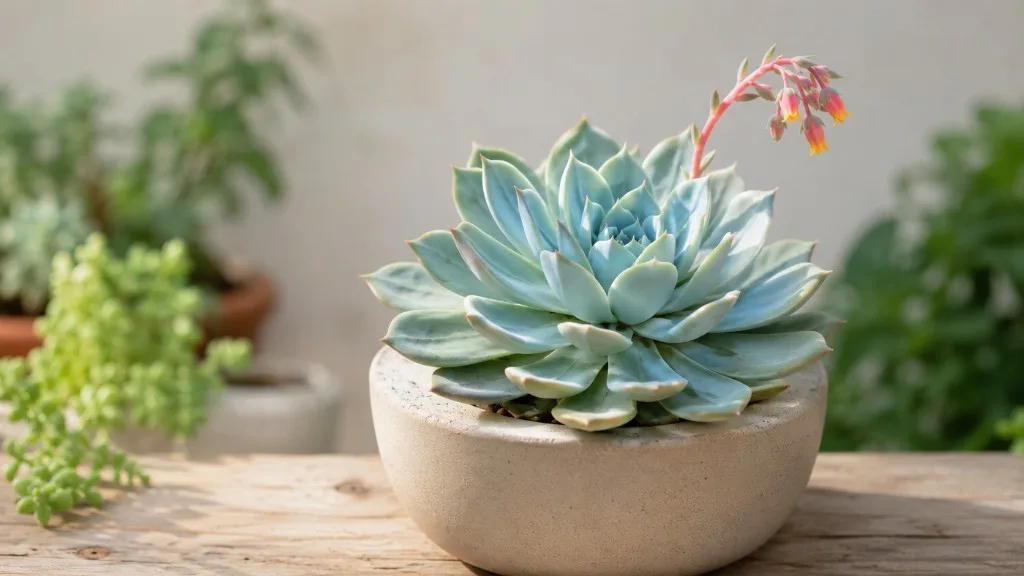
13. Echeveria (Echeveria spp.) — Echeverias are excellent for a hot, sunny coping edge or a gravel-filled container where water drains quickly. Their tight rosettes create little leaf litter, and NC State Extension notes that they prefer full sun, need little water, and are not truly frost hardy. Keep them out of splash-prone low spots, use a gritty mix, and protect them from winter freezes.
14. Aeonium (Aeonium spp.) — Aeoniums add larger rosettes and unusual color to a dry-climate pool border. NC State lists the genus as drought and salt tolerant while also warning that overwatering can cause root rot. That combination makes aeonium useful near a pool only when the soil drains rapidly and the plant is not being treated like a thirsty tropical. Move containers indoors or under protection when nights approach the plant’s lower temperature limit.
15. Jade (Crassula ovata) — A jade plant works best as a substantial container accent in a bright, dry area. Its thick stems and leaves cope with missed waterings, but a heavy pot is important on an exposed deck and its branches can become top-heavy with age. Keep the container where people will not brush against it, give it excellent drainage, and do not place it below a downspout or a sprinkler that runs daily.
16. Foxtail agave (Agave attenuata) — This soft-leaved agave gives you an architectural rosette without the rigid terminal spine of many desert agaves. It suits warm, sunny, well-drained beds and large pots, but the mature leaves still occupy space and should not narrow a barefoot path. Set it back from pool steps, gates, and loungers; use gravel or a raised bed to prevent wet soil from lingering around the crown.
17. Rosemary (Salvia rosmarinus) — Rosemary brings evergreen texture, edible sprigs, and a dry Mediterranean character to a sunny pool border or container. It is a strong choice where you want fragrance without a thirsty planting style, provided the soil drains freely. Keep it away from the immediate swim-entry zone if flowering attracts more bees than your household wants near the water, and trim it after flowering to keep the shape compact.
Filtered shade and container foliage
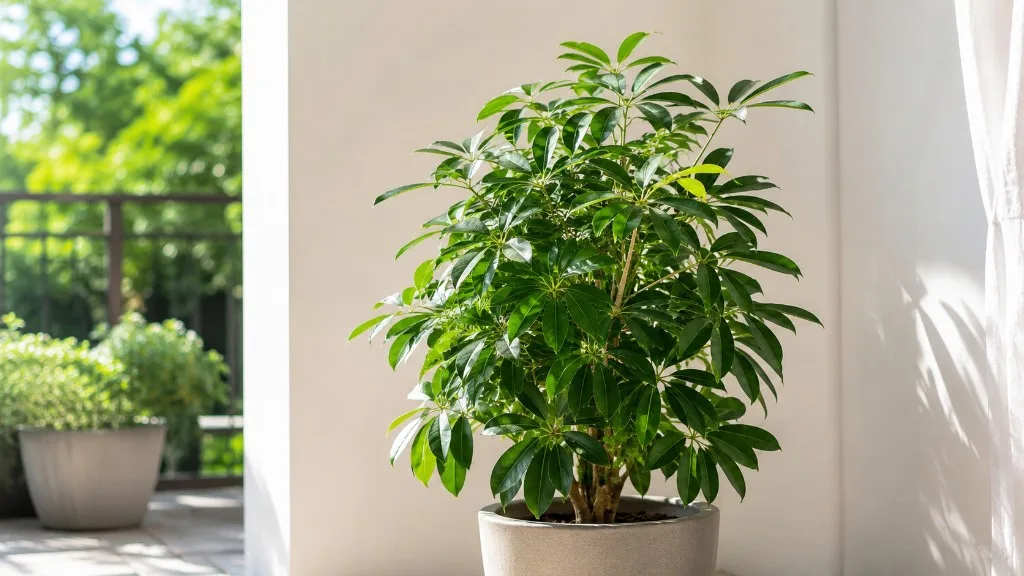
18. Dwarf umbrella tree (Schefflera arboricola) — Use this as a warm-climate container plant in a bright, filtered-light corner, under a covered patio, or beside a pool house. It gives a lush, rounded screen where full sun would scorch more delicate foliage, and a pot keeps it mobile if the season changes. Do not leave it in standing water, and keep it away from the pool’s main splash path so its foliage stays clean and its container does not become a trip hazard.
Build the planting plan before you buy
A simple three-layer layout
Start with one structural layer at the back: a wind-protected banana, bird of paradise, hedge, or clumping grass sized for the view you need to block. Add a middle layer of hibiscus, hebe, pelargonium, or grouped containers, then finish with low succulents, gravel, or a controlled spiller at the bed edge. Stagger plants instead of planting a tight line; each plant gets more air, and you can reach the soil and irrigation without stepping into the bed.
Keep the tallest plants out of the sightline needed for supervision. A privacy hedge that blocks the pool from the house kitchen may look good but create an undesirable blind spot. Likewise, do not place dense foliage against pump equipment, heaters, fences that need inspection, or the edge where a pool cover must be pulled.
Ground versus containers
Choose containers when the climate is colder than the plant’s hardiness range, the pool deck is rented or temporary, the splash pattern is uncertain, or you want to move plants for parties and maintenance. A pot also lets you separate watering: papyrus can stay moist while echeveria, aeonium, jade, and rosemary dry between deep waterings.
Use in-ground planting when the plant is genuinely hardy for the site and you have enough setback for its mature width. Containers still need drainage holes, saucers that do not overflow onto paving, and enough weight to resist wind. Inspect them every season for cracked pots, roots escaping into joints, blocked drainage, and soil salts building up after repeated evaporation.
Keep poolside plants healthy and the pool cleaner
Handling salt, chlorine, and runoff
The first defense is physical: redirect splash and overflow, avoid placing irrigation heads where they spray the pool, and do not let a backwash hose empty into a planting bed. If foliage receives a chemical or salt-laden splash, rinse it with fresh water when practical. Rutgers Cooperative Extension notes that fresh water can wash salt from leaves and help leach salts from well-drained soil; its salt-injury guidance also cautions that tolerance varies by species and exposure.
Watch for symptoms that repeat on the pool-facing side: crispy leaf margins, brown tips, premature leaf drop, weak new growth, or dieback after a period of heavy splash. Those signs can also come from drought, wind, fertilizer buildup, or root problems, so do not diagnose salt injury from one brown leaf. Compare the pool-facing side with the sheltered side, check soil moisture and drainage, and move a container or improve the water path before replacing the whole planting.
Pruning, wind, and seasonal moves
Remove damaged tropical leaves after a wind event, but do not strip a plant bare just to make it look tidy. Deadhead flowering plants before spent petals blow into the pool, cut back ornamental grasses on the schedule appropriate to your climate, and keep vines off coping, drains, fences, and equipment.
Before the first frost, bring tender containers under cover according to the plant’s needs rather than waiting for a hard freeze. NC State’s profiles for banana and bird of paradise show why winter plans matter: both can be grown as movable plants outside their warmest range, but their light, moisture, and temperature requirements change indoors. Reduce watering after moving plants inside, inspect for pests, and return them outdoors gradually in spring.
Common mistakes to avoid
- Planting for the container size: A small plant can become a wide shrub, tall grass, or heavy clump that crowds the coping. Read the mature dimensions and allow access around it.
- Calling every saltwater pool plant-safe: Salt-chlorine systems still create salt exposure, and repeated splash is different from a single accidental wetting. Observe the plant and manage the water path.
- Mixing opposite irrigation needs: Papyrus and succulents do not belong on the same watering circuit. Group by soil moisture, not just by color.
- Choosing high-litter plants over the water: Flowers, berries, seed heads, and large leaves add cleaning work. Put messy plants farther back or use containers that can be moved.
- Ignoring wind: Banana leaves, bird-of-paradise leaves, and tall grasses can shred or lean in an exposed yard. Add a windbreak or choose a lower plant.
- Blocking pool access and supervision: Leave equipment panels, gates, drains, pool-cover paths, and the view from the house open.
- Using a toxic or spiny plant in a family traffic lane: Angel’s trumpet is a particularly poor choice where children or pets can reach it. Move it to a secured adult-only area or choose a safer plant.
- Assuming “low maintenance” means no maintenance: Even drought-tolerant plants need establishment watering, pruning, debris removal, and periodic checks for salt or irrigation problems.
Conclusion
The best plants for swimming pool landscaping are the ones that fit the pool’s exposure and your tolerance for cleanup. Start with the four zones, decide whether you need tropical structure, privacy, flowers, dry-climate accents, or shade foliage, then test uncertain choices in stable containers before digging a permanent bed.
Keep direct splash and runoff away from foliage and roots, separate wet and dry irrigation, plan for mature size, and protect the clear paths that make the pool safe and enjoyable. A pool border built around those rules will look better over time than a collection of attractive plants chosen only for a tropical mood.