How to Propagate Lucky Bamboo in Water or Soil
Learn how to propagate lucky bamboo from healthy stem cuttings in water or soil. Choose the best method, prepare nodes, prevent rot, and pot up new roots.
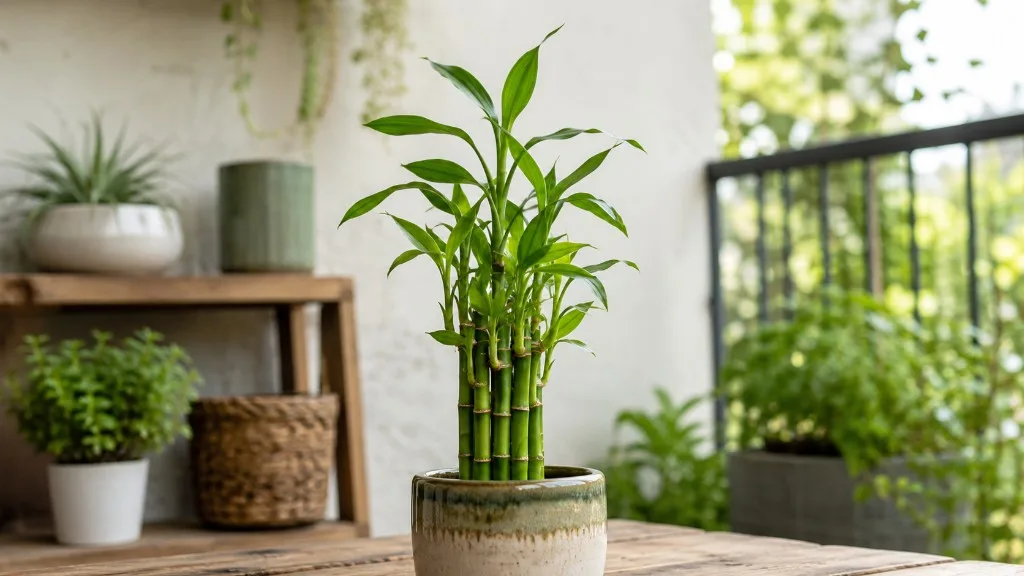
Lucky bamboo is not true bamboo. It is Dracaena sanderiana, a tropical Dracaena with ringed green stems and narrow leaves. Those visible rings are nodes, and a healthy node is the small piece of anatomy that makes stem propagation possible.
The reliable home method is to take a healthy stem cutting, remove leaves from the lower section, and root it either in clean water or in a loose potting medium. Water lets you watch the roots develop; soil avoids a later change of growing environment. Neither method is instant, and both fail most often when the parent plant is already stressed or the cutting stays too wet, too dark, or too warm in direct sun.
The short answer: use a healthy stem cutting
To propagate lucky bamboo, choose a firm green stem or side shoot from a healthy plant, then use clean pruners to cut a 3- to 6-inch section with at least one visible node. Remove the lower leaves, leaving a small leafy top, and place the cutting in clean water or a lightly moistened, well-draining mix. Give it bright indirect light and steady warmth while it forms roots.
The shortest useful version is:
- Select a firm, green, actively growing stem.
- Cut below a node with a sharp, clean blade.
- Keep the lower node in water or below the soil surface.
- Keep every leaf above the waterline or potting mix.
- Wait for roots or fresh top growth before moving the plant.
The cut does not need to be dramatic. You do not need to strip the entire parent plant, soak the cutting in fertilizer, or buy a specialized propagation kit. A clean glass, a small drainage pot, fresh medium, and a stable location are enough.
Know what you are cutting: lucky bamboo is a Dracaena
The common name can make the plant sound like a miniature bamboo, but its structure matters more than its nickname. The NC State Extension plant profile identifies lucky bamboo as a tropical perennial shrub in the asparagus family, while the Missouri Botanical Garden Plant Finder describes the upright stems as slim and distinctly nodal.
Look for the horizontal rings around the cane. A node is the point where a leaf, bud, or new shoot connects with the stem; Penn State Extension uses that definition in its general houseplant propagation guidance. Roots can form from a buried or submerged node, while a leafless piece of stem with no viable node is a poor candidate even if it looks fresh.
Lucky bamboo also behaves differently from trailing vines. A leafy side shoot is an easy cutting because it already has a growing tip and enough stem to position. A long bare cane can be divided into sections, but each section still needs a viable node and a clear top-to-bottom orientation. If you are unsure, start with one intact leafy offshoot rather than experimenting on the most attractive central stalk.
Pick the right time and parent plant
The best parent is actively growing, green, firm, and free of yellowing that is spreading through the plant, soft cane tissue, pests, or a sour-smelling root zone. A plant that is fighting rot cannot spare tissue for propagation; stabilize it first. Penn State Extension recommends beginning with plant material that is free of disease, insects, and stress, a rule that is more important than any rooting powder.
For a lucky bamboo kept indoors, you can often take a cutting outside the outdoor growing season if the room is warm and bright enough. If the parent spends summer outdoors in a warm climate, spring or summer is the more natural window because the plant is actively growing. Martha Stewart’s propagation guide makes the same indoor-versus-outdoor distinction: stable indoor plants can be handled year-round, while outdoor plants benefit from warm-season growth.
Do not cut immediately after a major move, a cold snap, or a long period of drought. Let the plant settle and resume firm growth first. If the parent is a sculpted spiral or braided arrangement, remember that a new cutting will usually grow upright; it will not automatically reproduce the trained curve of the original stem.
Gather tools and choose your rooting setup
Prepare the setup before you make the cut. You need sharp pruners or a clean knife, a small glass or jar for water propagation, and a small pot with a real drainage hole for soil propagation. If you use water, filtered or distilled water is a sensible starting point, especially when tap water leaves mineral deposits or the parent has a history of brown tips. The Missouri Botanical Garden notes that filtered or rain water may help when water additives contribute to brown tips.
For soil, use a fresh, loose houseplant mix that drains freely. A practical starting blend is two parts potting mix to one part perlite; the exact ratio is less important than the result. The mix should hold the cutting upright, stay lightly damp around the node, and release excess water. Penn State Extension lists water, perlite, vermiculite, bark, and sand among propagation media and cautions that garden soil or heavy compost can be poorly aerated and more likely to carry pathogens or stay wet.
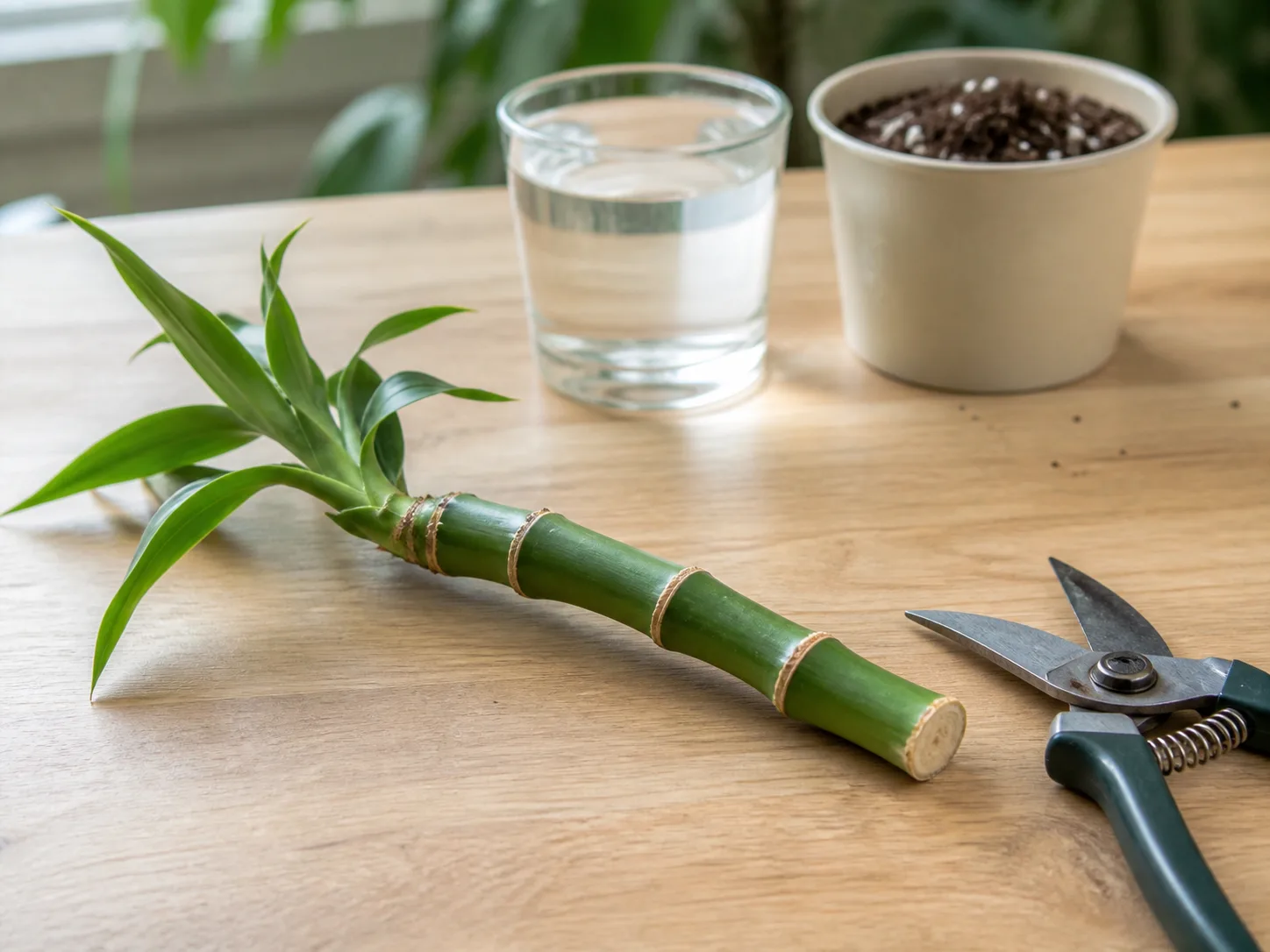
What makes a good cutting
Start with a section about 3 to 6 inches long. The length is a working range, not a rule that guarantees rooting. A longer leafy section is easier to balance in a jar or pot, while a shorter cane section can work if it has a healthy node and enough stored moisture to remain firm.
Choose a lower node that can be submerged or buried and leave at least one leafy node or growing tip above it. If you are taking an offshoot, keep a small portion of its own stem attached rather than snapping it flush against the parent. Garden Betty’s practical guide describes both approaches: nursery-style stem sections and smaller offshoots with their own growth node.
Take and prepare the cutting
Make the cut once, cleanly, rather than crushing the cane with a dull blade. Wipe the blade with rubbing alcohol or wash and dry it before cutting. Clean tools do not guarantee success, but they remove one avoidable source of contamination from fresh tissue.
Make the cut cleanly
For a leafy offshoot, cut as close to the parent cane as you can without gouging it, then make a second adjustment cut if the bottom is ragged. For a long cane, make a straight cut just below a node so the cutting has a clear lower end. Set the cutting down in a clean dish while you prepare the water or soil rather than leaving it on a dirty windowsill.
Do not seal the cut with wax, glue, or household sealant. Commercial growers may use protective treatments on cane sections, but at home the useful priorities are a clean cut, a clean vessel or medium, and correct moisture. If the cane is already soft, translucent, or foul-smelling at the cut, discard it instead of trying to root decaying tissue.
Remove leaves from the rooting end
Strip leaves from the lower half to two-thirds of the cutting, depending on its length. Leave a modest leafy top so the cutting can continue photosynthesizing, but do not allow any leaf to sit in the water or become buried in wet soil. Submerged or buried leaves decay faster than a bare node and can foul the whole setup.
If the cutting came from a crowded arrangement, remove only what is needed to create a clean rooting section. Excessive leaf removal reduces the cutting’s ability to make energy, while too many leaves increase water loss before roots exist. The goal is balance: one to several healthy leaves above the rooting medium and a bare, node-bearing base below it.
Method 1: Propagate lucky bamboo in water
Water propagation is the easiest method to monitor. You can see the base, notice whether the water becomes cloudy, and watch for roots without disturbing a hidden cutting. The trade-off is that water-grown roots will later need to adjust to potting mix if you want a soil-grown plant.
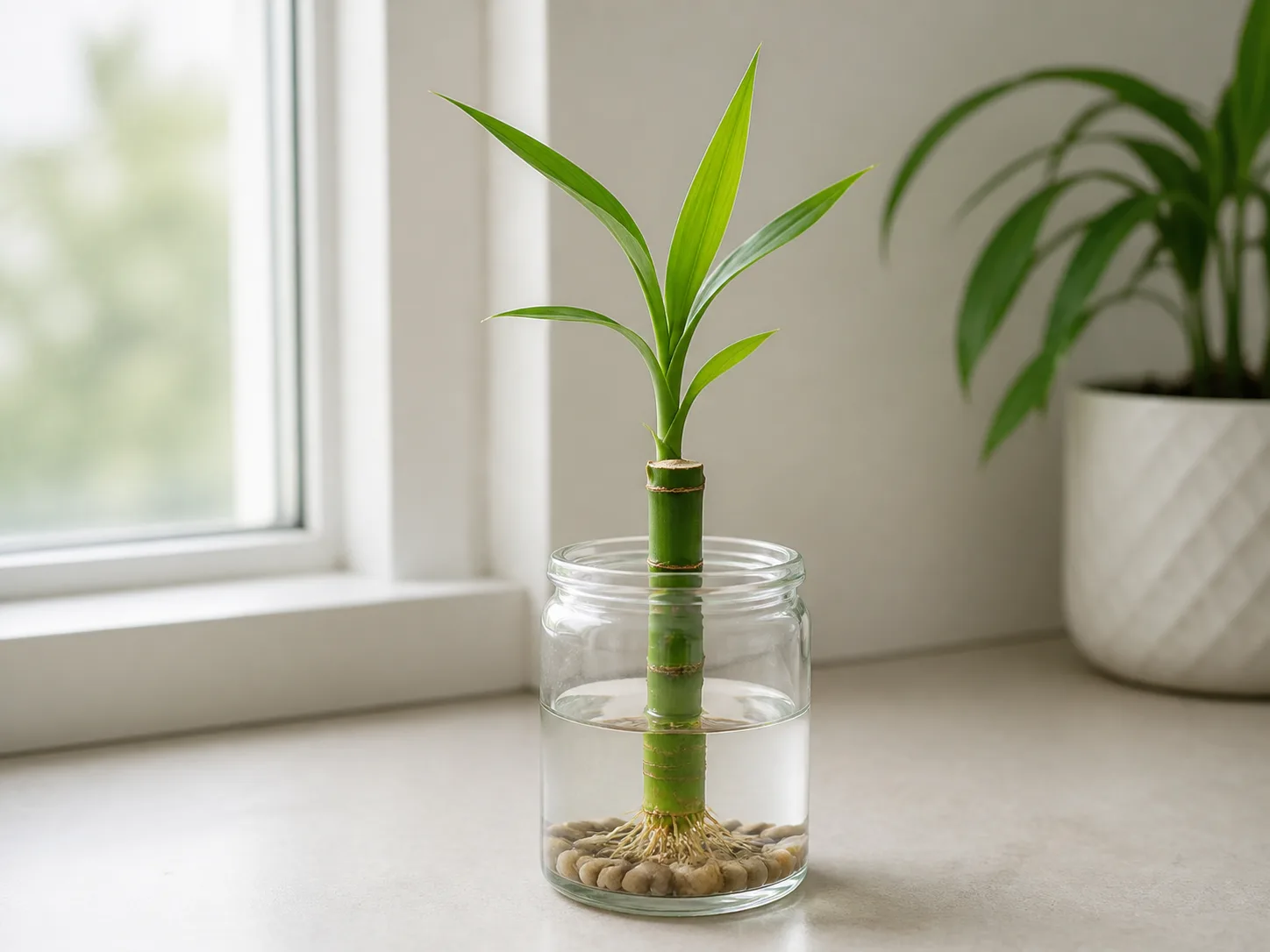
Set the cutting at the right waterline
Fill a clean, narrow glass with enough water to cover the lower node or roughly 1 to 2 inches of bare stem. Keep the leaves, leafy top, and most of the cane above the water. If the jar is unstable, add a thin layer of clean pea gravel to hold the cutting upright, but do not pack stones so tightly that you cannot inspect the base.
Place the glass in bright indirect light, not in a hot shaft of afternoon sun. Direct sun can heat the water and scorch the leaves, while a dark corner may keep the cutting alive without supplying enough energy for fast root and shoot development. A warm room with no cold draft is a better target than a precise thermostat reading; Penn State Extension gives 75 to 80°F as an optimum rooting-media range for general houseplant propagation, but that is not a promise that every lucky bamboo cutting will root on the same schedule.
Maintain clean water until roots branch
Check the water every few days. Top it up only when the level falls, and replace it when it becomes cloudy, develops debris, or smells stale. As a simple routine, a weekly water change is a good baseline; the NC State profile recommends weekly changes for water-grown lucky bamboo, and warmer rooms may require closer observation.
Rinse the glass and pebbles if they develop a film, then refill with fresh water. Do not add full-strength fertilizer while the cutting is unrooted. A cutting with no roots has limited ability to use nutrients, and excess salts can stress the fresh base; wait until it has roots and clear new growth, then use only a diluted product appropriate for water-grown plants if the label calls for it.
Roots may first appear as tiny pale points at a node, then lengthen and branch. Do not pull the cutting out every few days to inspect it. If you need to check it, lift the glass or look through the side; a new root can break easily before it has thickened.
Method 2: Propagate lucky bamboo in soil
Soil propagation hides the root process, but it lets the cutting begin life in the same kind of medium it may use as a mature plant. It also avoids the later water-to-soil transition. The main risk is overwatering: a small rootless cutting in a large, soggy pot can rot before it has enough roots to use the moisture.
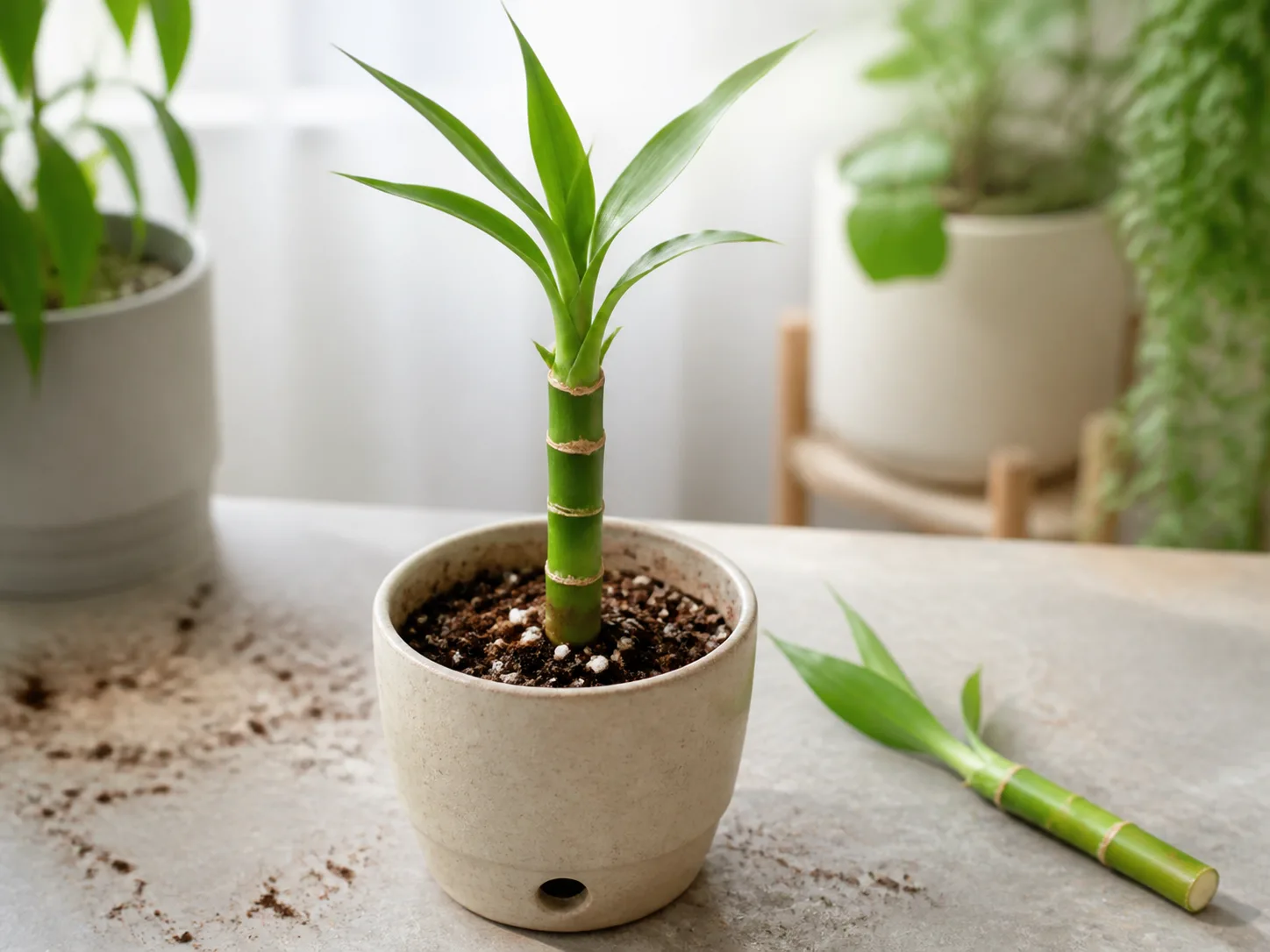
Plant one node below the surface
Moisten the propagation mix before planting so you do not need to flood the pot around the fresh cut. Make a narrow pilot hole with a pencil or dibber, insert the lower 1 to 2 inches of bare stem, and position at least one node below the surface. Firm the mix gently so the cutting stands upright, but do not compress it into a hard plug.
Choose the smallest pot that can hold the cutting without tipping. A tiny root system cannot use a large reservoir of wet soil, so an oversized container creates a longer drying time and a larger rot risk. Make sure the drainage hole is open and empty the saucer after watering.
Rooting hormone is optional. A small amount may help some cuttings, but it is not the reason lucky bamboo succeeds, and too much hormone can slow root development. BBC Gardeners’ World Magazine also treats rooting powder as optional for easy-to-root cuttings; if you use it, dust only the cut end and tap off excess.
Keep the mix moist, not saturated
Set the pot in bright indirect light and keep the mix lightly moist while the cutting is establishing. “Moist” means the node is not drying out and the mix still feels slightly cool below the surface; it does not mean the pot should stay wet or stand in a saucer of water. Let excess water drain fully after the first watering.
Check moisture with a finger or wooden skewer rather than watering by calendar. If the upper layer is drying and the cutting remains firm, water enough to re-moisten the mix and allow drainage. If the pot is still heavy and wet, wait. A clear bag is usually unnecessary for lucky bamboo; if the room is exceptionally dry, a loose vented cover can reduce water loss, but remove it when condensation stays heavy.
New leaf or stem growth is an encouraging sign, but it may lag behind root formation. Resist the urge to tug the cutting every week. Instead, look for a firm base, steady leaves, and gradual resistance only after several weeks; a gentle test can dislodge new roots if done too early.
Water or soil: which method should you choose?
Both methods can work because lucky bamboo responds to stem propagation, but the better choice depends on what you value and how you care for plants.
| Choose water if you want to… | Choose soil if you want to… |
|---|---|
| See roots as they form | Avoid a later water-to-soil transition |
| Catch a soft base or cloudy water quickly | Keep the cutting in a draining, stable medium |
| Use a glass and a few pebbles | Use a small pot that can become the plant’s home |
| Monitor the process with minimal digging | Avoid moving delicate water roots later |
Water is not automatically faster, and soil is not automatically safer. Water gives you better information; soil gives the roots a more natural long-term environment. If you are new to propagation, start one cutting in each medium when the parent plant has enough healthy material to spare. That turns the comparison into a small, low-stakes experiment without sacrificing the whole plant.
Know when the cutting has rooted
In water, look for pale roots emerging from a submerged node. A few roots that are firm and beginning to branch are more useful than one long, fragile strand. Depending on temperature, light, plant health, and cutting size, roots may begin in roughly two to four weeks, but a month or longer is not automatically failure. The Martha Stewart guide reports a two- to four-week window for water roots and three to four weeks for soil roots while still treating the process as dependent on conditions.
In soil, you cannot see the roots, so use several clues together. Fresh top growth, a cutting that stays upright, and gentle resistance after a reasonable wait are encouraging. None is conclusive by itself: a cane can remain green on stored moisture, and a newly rooted cutting can spend time making roots before it pushes a leaf.
The first clear signs of failure are different from simple slowness. A firm green cutting that looks unchanged is a patience problem; a base that turns soft, brown, translucent, or foul-smelling is a tissue problem. Diagnose the condition before changing the method.
Pot up a water-rooted cutting without shock
You can keep a rooted cutting in water with its base and roots supported by pebbles, or you can move it into soil. If you want a soil-grown plant, wait until the roots are roughly 1 to 2 inches long and have begun to branch rather than moving it as soon as a single white point appears. The roots need enough structure to tolerate handling, but very old water roots can also take longer to adapt to a drier medium.
Use a small pot with drainage and a loose houseplant mix. Make a hole large enough to receive the roots without bending them sharply, set the stem at the same general depth it had in the jar, and firm the mix around the roots. Water once so the mix settles, let the excess drain, and return the plant to bright indirect light.
For the next week or two, keep the mix evenly but modestly moist while the roots adjust. After that, allow the surface and upper layer to dry slightly between waterings. Do not respond to a brief transplant droop with repeated watering; check the base and moisture first. A small pot, gentle handling, and stable conditions reduce the shock better than a large dose of fertilizer.
Troubleshoot slow, soft, or yellow cuttings
The base is soft or smells bad. Remove the cutting from the water or soil and inspect it. If firm green tissue remains above the damaged area, trim back to clean tissue with a disinfected blade and restart in a clean glass or fresh, lightly moistened mix. If the whole base is soft, discard that cutting so the problem does not spread to other material.
The water is cloudy. Cloudiness can follow debris, algae, decaying leaf tissue, or an overdue water change. Remove any submerged leaves, wash the glass and stones, and refill with fresh water. If the cane itself is becoming translucent or slimy, sanitation alone will not repair it; cut back to firm tissue if possible or discard it.
The cutting is green but has not rooted. Check the order of likely causes: is there a viable node at the waterline or below the soil, is the setup receiving bright indirect light, is the room warm enough, and is the medium moist without being saturated? Correct one variable at a time and give the cutting several weeks before judging the result. Repeatedly pulling a soil cutting or changing from water to soil too soon resets the process.
The leaves are turning yellow. A single older leaf may yellow from normal stress after cutting, but a whole cutting that yellows quickly deserves inspection. Direct sun, stale water, an overly wet mix, cold drafts, and severe root damage are more useful first checks than adding fertilizer. Lucky bamboo is also sensitive to water quality in some homes; the Missouri Botanical Garden recommends considering filtered or rain water when water additives are associated with brown tips.
The cutting wilts in soil. First check whether the mix is dry or saturated. If it is dry, re-moisten it thoroughly and let it drain; if it is wet, do not add more water. A rootless cutting can wilt because it has not yet restored water uptake, so shade it from direct sun and keep conditions stable while it roots.
The parent plant looks sparse after cutting. That is a normal design trade-off. Leave enough healthy stems and leaves for the parent to keep making energy, and do not remove several major canes at once. A remaining cane may produce new growth from a dormant node; the Missouri Botanical Garden profile notes that cutting back older, lanky stems can encourage new growth, but the new growth will not recreate a trained spiral automatically.
Common mistakes that reduce success
- Taking a cutting from a failing plant. Propagate firm, green tissue first; fix rot, pests, or severe drought before multiplying the plant.
- Cutting between nodes. A smooth section with no viable node is much less useful than a shorter section with one healthy node in the rooting zone.
- Using a dull or dirty blade. Crushes and contamination both make the fresh base more vulnerable.
- Submerging leaves or burying them. Keep foliage above water and above the soil line so it does not become a source of decay.
- Putting the jar in direct sun. Bright indirect light supports rooting without overheating the water or scorching the leaves.
- Using a pot with no drainage. Decorative cachepots are fine as outer covers, but the rooting pot needs an open drainage hole.
- Keeping the medium constantly wet. Roots need oxygen as well as water; saturation is not the same as good moisture.
- Overusing rooting hormone or fertilizer. Hormone is optional, and fresh rootless cuttings do not need strong feeding.
- Checking too often. Rooting is a process, not a daily reveal. Disturbing the base can break fragile roots and create a new wound.
- Expecting the new plant to keep a curl. The cutting will usually grow toward its light source in a straighter form unless you deliberately train new growth later.
Conclusion
To propagate lucky bamboo, cut a healthy, node-bearing stem with a clean blade, remove the leaves from its lower section, and root it in either clean water or a loose, draining mix. Water propagation is easier to observe; soil propagation removes the later transplant step. Put the node in the rooting zone, keep leaves out of it, and give the cutting bright indirect light, warmth, and clean moisture.
The most reliable habit is restraint. Start with a healthy parent, change only what needs changing, and judge the cutting by the condition of its base rather than by a fixed deadline. Firm green tissue may simply need more time; soft, cloudy, or foul-smelling tissue needs a clean restart or a clear decision to discard it.