18 Best Indoor Plants for Your Living Room
Match 18 living room plants to your light, layout, and lifestyle—from low-light survivors to statement floor trees, with placement rules and pet-safety notes.
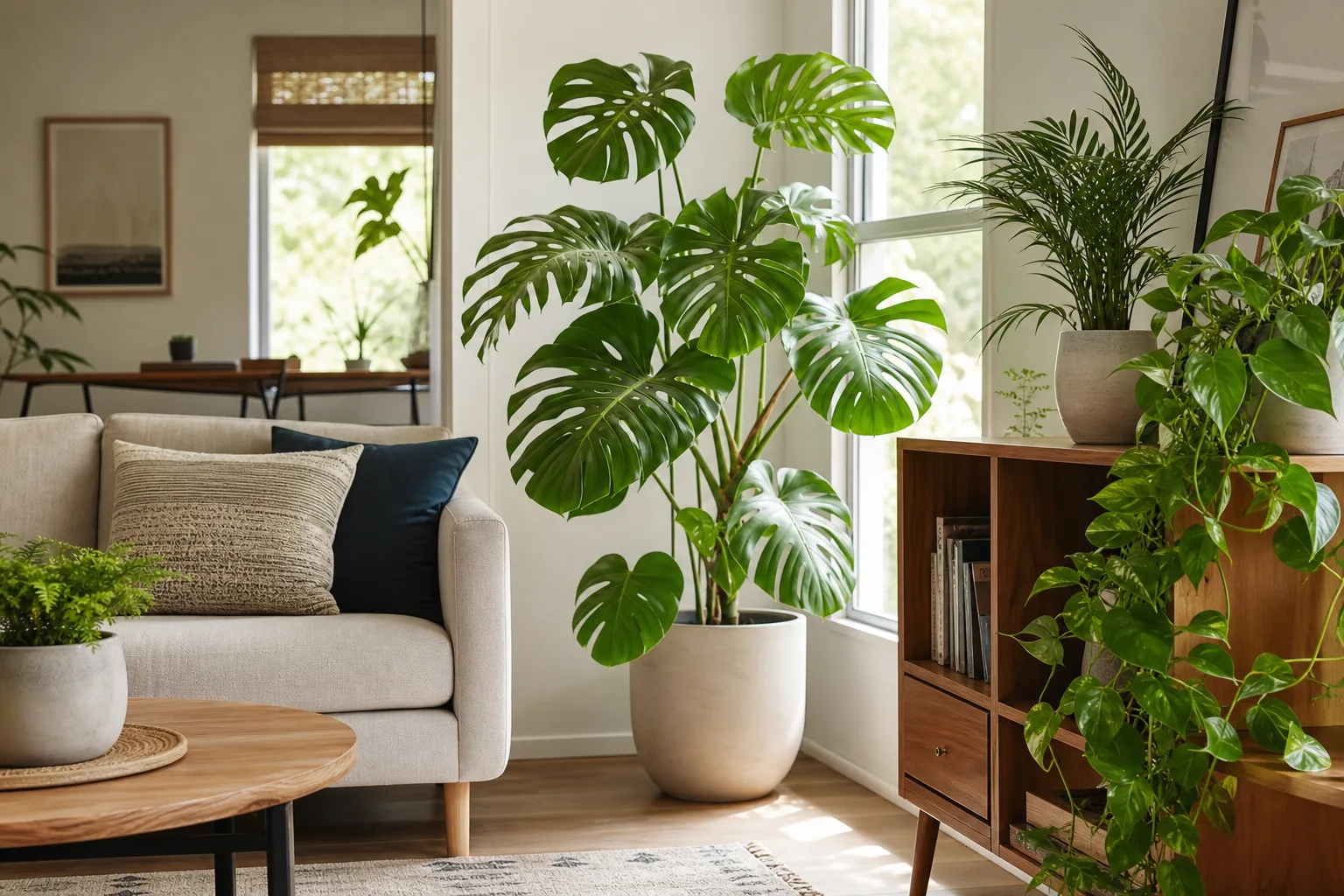
A living room plant should earn its floor space. Not with a perfect Instagram corner, but with leaves that stay healthy where you actually sit—next to the sofa, across from a north window, or on the one shelf the cat cannot reach. The best plants for the living room are the ones that match your light, furniture layout, and watering habits, not the ones that looked dramatic in a greenhouse photo.
The 18 species below cover statement floor trees, dim-corner survivors, trailing cascades, and color-forward foliage. Use them as a shortlist after a quick light audit—not as a shopping cart you fill in one trip.
Quick picks by living room job
If you already know what your room needs, start here.
Dim sofa wall or interior corner with no window sightline: Cast iron plant, snake plant, or ZZ plant. These tolerate lower foot-candle levels than most tropicals and forgive missed waterings better than they forgive soggy soil.
Bright corner with 6–8 feet of vertical clearance: Kentia palm (if you have the ceiling height), fiddle-leaf fig, or bird of paradise. All want bright indirect light; none belongs in a dim hallway alcove.
Coffee table or sideboard with afternoon sun: Chinese money plant, red Chinese evergreen, or a compact dieffenbachia. Keep direct midday beams off the leaves—sheer curtain or a few feet of setback.
Shelf, mantel, or hanging basket: Marble queen pothos, Swiss cheese plant on a moss pole or trailing, satin pothos, or string of nickels. Trailing plants need reachable watering spots; do not hang them where a stepladder becomes weekly furniture.
Pet- or toddler-forward homes: Treat dieffenbachia, pothos, monstera, elephant ear, fiddle-leaf fig, ZZ plant, corn plant, and Chinese evergreen as toxic or irritating if chewed (ASPCA toxic plant database). Cast iron plant is a safer foliage pick; still keep any plant out of reach of determined chewers.
How to match plants to your living room light
Living rooms vary more than nurseries admit. A south-facing picture window beside the TV is a different biome from a north-facing bay window across the room. University of Georgia Extension groups indoor light into low (25–75 foot-candles minimum survival, 75–200 for decent growth), medium (150–1,000), and high (above 1,000) for sun-loving species (UGA Extension B1318). You do not need a meter on day one—use window direction and distance as a proxy, then adjust after watching new growth.
What north, east, south, and west windows actually deliver
North windows give the softest, most even light—ideal for cast iron plant, ZZ plant, snake plant, and Chinese evergreen, but marginal for fiddle-leaf fig or bird of paradise unless you are within a few feet of the glass. East windows supply gentle morning sun; most list plants here thrive with sheer curtains. South and west windows pack the most energy; pull tropical foliage 3–6 feet back or filter with sheer fabric so leaves do not scorch. University of Minnesota Extension notes that even “indirect” bright spots near large south glass can exceed what low-light species want (Minnesota Extension: lighting houseplants).
Walk your room at noon. If you would not comfortably read without a lamp, that spot is low light. If you can read easily but never see a sun patch on the floor, call it medium. If moving air feels warm on your arm from sun, treat it as high light and choose accordingly.
When a living room is too dark for most houseplants
Open floor plans often put the sofa 10–15 feet from the only window. That distance drops usable light sharply. No houseplant thrives in true darkness—if you need lamps all day for human comfort, plan on a grow light for anything beyond snake plant or ZZ plant in the farthest corner. For very dim apartments overall, pair this list with our indoor plants for apartments guide, which focuses on survival in weaker light.
Placement zones that work in real living rooms
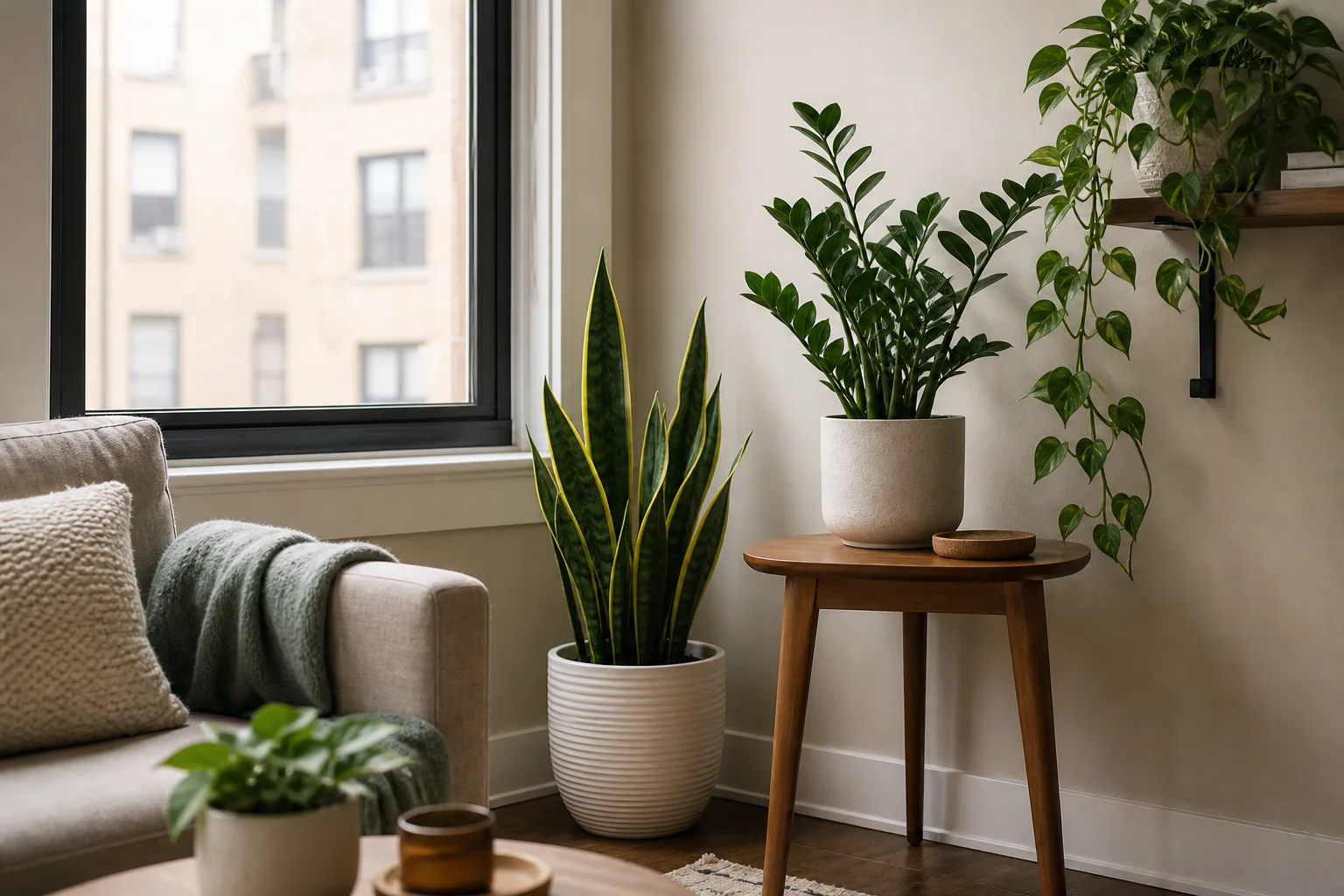
Buying the right species still fails when the pot lands in the wrong zone. Map your room before you map plants to it.
Coffee tables, side tables, and shelves
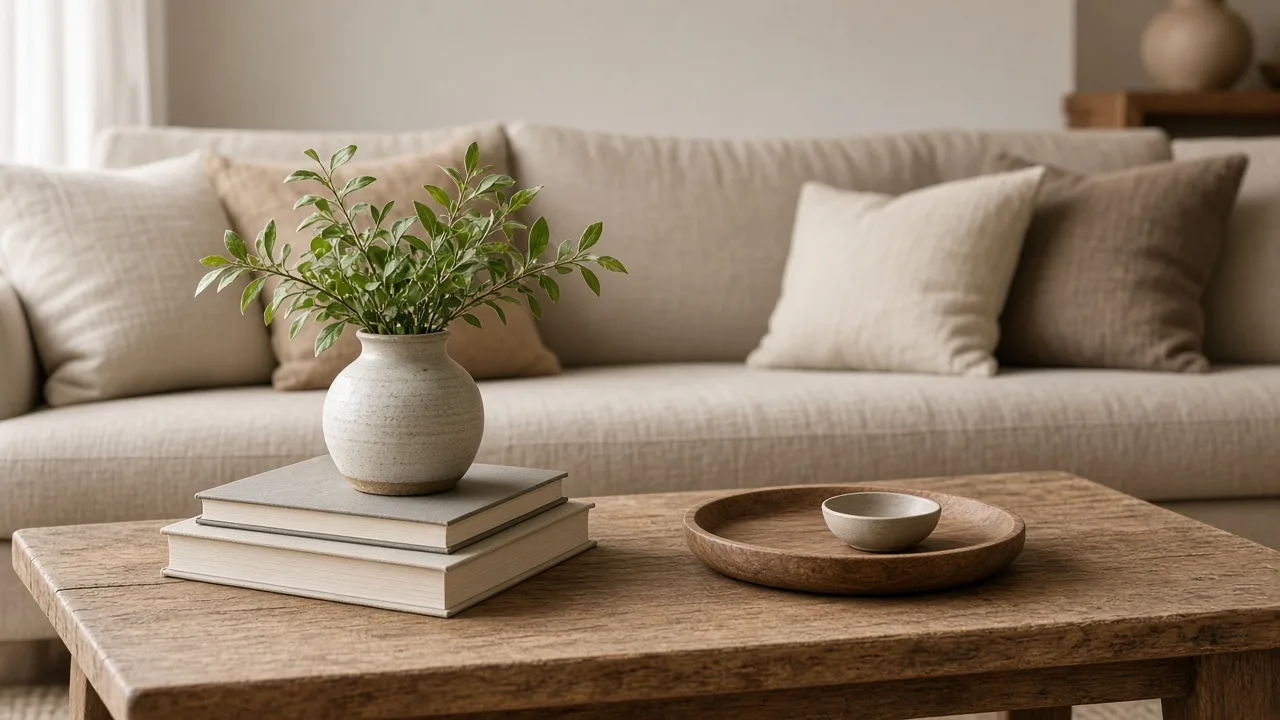
Tabletop plants should stay under 18 inches tall at purchase unless you want to look at soil more than leaves. Pilea peperomioides, Aglaonema, compact dieffenbachia, and young ZZ plant work here. Avoid elephant ear and bird of paradise on furniture—they outgrow tables in one season and tip easily. Rotate tabletop pots a quarter turn weekly so growth stays even toward the window.
Floor corners and statement spots
Corners need vertical clearance plus 2 feet of breathing room for door swing and vacuum paths. Kentia palm, corn plant (Dracaena fragrans), fiddle-leaf fig, monstera deliciosa, and mature bird of paradise belong here—not squeezed behind recliners where air stagnates. Weight the largest pots; top-heavy fiddle-leaf figs tip when someone brushes past. If ceiling height is under 8 feet, favor corn plant or ZZ plant over a palm that wants 10 feet eventually.
Mantels, ledges, and hanging baskets
Trailing species—pothos, monstera adansonii, Scindapsus pictus, Hoya carnosa, Dischidia nummularia—shine above eye level. Hang baskets within arm’s reach for watering; a ceiling hook over the sofa looks great until July when you skip water because the ladder lives in the garage. Mantel plants need drip trays; water stains on wood trim are harder to fix than yellow leaves.
Pet and child safety before you buy
Most popular living room tropicals are not pet-safe. Dieffenbachia sap can irritate mouth tissue; pothos, monstera, elephant ear, fiddle-leaf fig, corn plant, ZZ plant, and Chinese evergreen appear on ASPCA toxic lists (ASPCA). Severity ranges from drooling and vomiting to more serious reactions with large ingestions.
Practical rules: Elevate trailing plants; use heavy floor pots dogs cannot knock; skip dieffenbachia entirely in homes with toddlers who mouth objects. “Out of reach” fails the day a cat discovers a hanging basket—plan for curiosity, not compliance. NC State Extension notes dieffenbachia’s calcium oxalate crystals and recommends keeping plants away from children and pets (NC State: Dieffenbachia seguine).
Statement floor plants for bright living rooms
These are the plants guests notice. They also complain first when light or water is wrong—budget time to learn their habits.
Bird of paradise, elephant ear, and corn plant
Bird of paradise (Strelitzia nicolai) delivers orange-blue blooms on mature plants, but indoor blooms often take years and a very bright spot. Buy it for sculptural leaves, not guaranteed flowers. Keep soil evenly moist in summer, drier in winter, and expect 6+ feet of height in a generous pot.
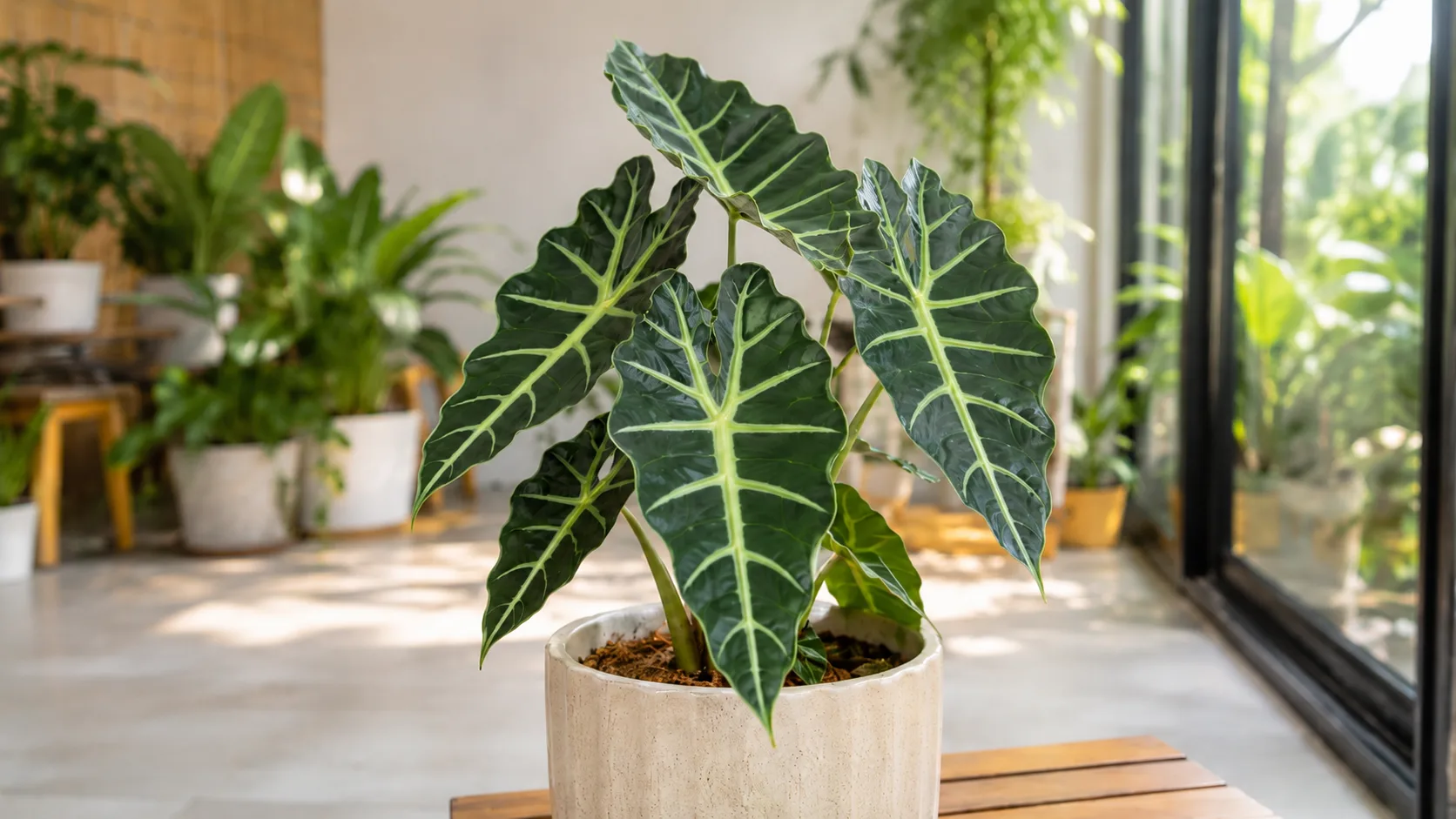
Elephant ear (Alocasia spp.) is the drama pick—huge arrow leaves, fast growth, and high humidity demand. Dry winter living-room air browns leaf edges quickly. Group it with other plants, run a humidifier, or skip it if your room sits above a forced-air vent. Toxic to pets and humans if ingested (ASPCA: elephant ears).
Corn plant (Dracaena fragrans) is the easier tropical column—thick canes, arching leaves, tolerates slightly lower light than bird of paradise. Let the top half of the pot dry before watering; yellow lower leaves often mean overwatering in a dim corner. Mildly toxic to pets (ASPCA: corn plant).
Kentia palm and fiddle-leaf fig
Kentia palm (Howea forsteriana) is the classic parlor palm—slow, elegant, and less fussy than majesty palm in dry air. Bright indirect light, water when the top 2 inches dry, and avoid repotting too often; it hates root disturbance. Give it a corner where fronds can arch without brushing walls.
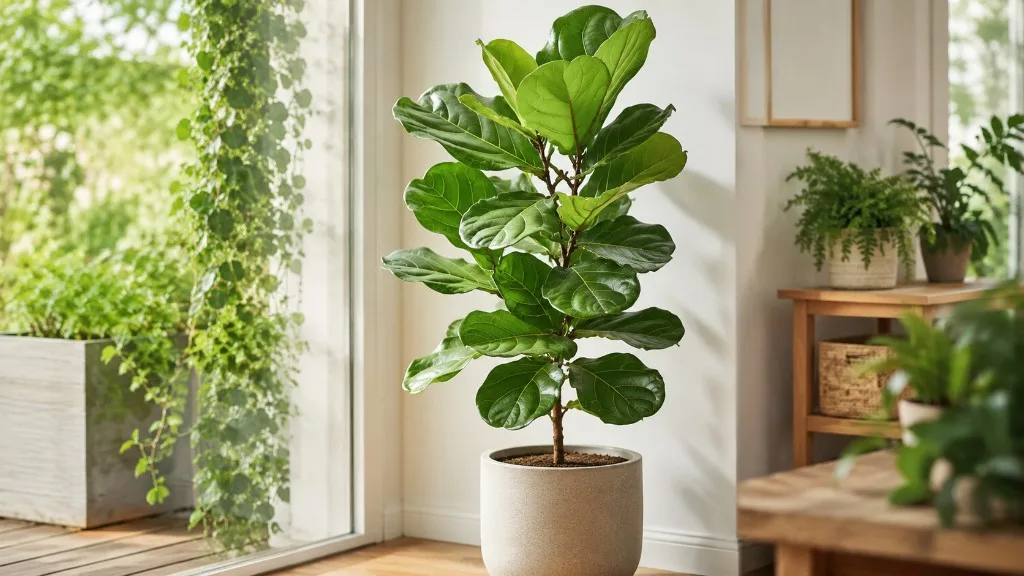
Fiddle-leaf fig (Ficus lyrata) is the temperamental star. It wants stable bright indirect light—moving it after purchase triggers leaf drop. Wipe dust from broad leaves monthly; rotate weekly for even growth. Water when the top 2 inches are dry, never on a calendar. Toxic to cats and dogs (ASPCA: fiddle-leaf). If your room only offers medium light, choose kentia or corn plant instead.
Low-effort plants for busy or forgetful households
These species forgive irregular care better than they forgive kindness in the form of extra water.
Snake plant, ZZ plant, and cast iron plant
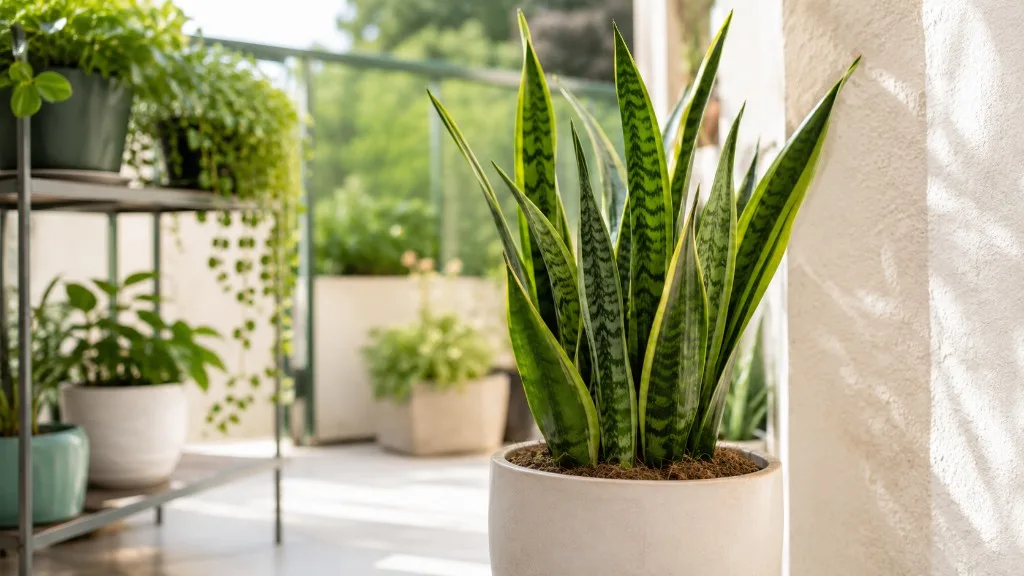
Snake plant (Dracaena trifasciata) stores water in thick leaves and tolerates low light, though growth slows and variegation fades in dim spots. Epic Gardening recommends letting soil dry completely between waterings and placing pots 3–6 feet from a bright window for best color (Epic Gardening: snake plant care). Overwatering—not neglect—kills most snake plants.
ZZ plant (Zamioculcas zamiifolia) survives dim corners and dry soil thanks to rhizomes that store water (Iowa State Extension). Glossy leaves look polished on a side table; growth is slow, which is a feature in small rooms. Toxic if ingested—keep off pet-level shelves.
Cast iron plant (Aspidistra elatior) is the true low-light workhorse. It tolerates shade, irregular water, and the temperature swings near an interior wall better than most tropicals. Variegated forms need slightly more light; plain green is the safest dim-corner bet.
Also consider dieffenbachia for medium-light tables if pets are not an issue—striking variegation, but sap irritates skin; wear gloves when pruning (NC State Plant Toolbox).
Trailing and hanging plants for shelves and windows
Vertical empty space above the sofa is prime real estate—if you can water without gymnastics.
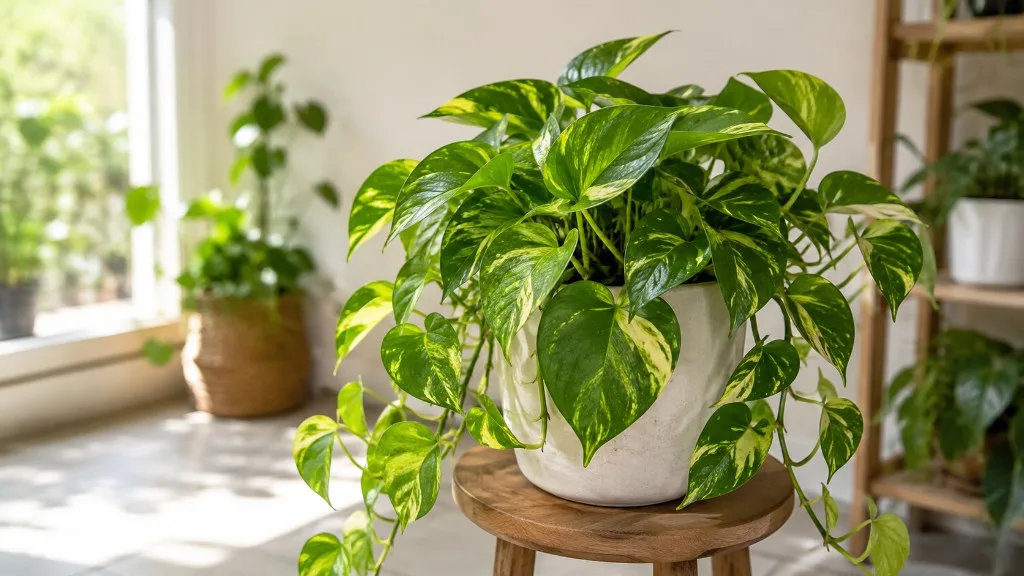
Marble queen pothos (Epipremnum pinnatum ‘Marble Queen’) trails gracefully from shelves with bright indirect to medium light. Variegation needs more light than all-green pothos; in dim spots, choose golden pothos instead. Let the top 2 inches dry; yellow leaves usually mean too much water. Toxic to pets (ASPCA: golden pothos).
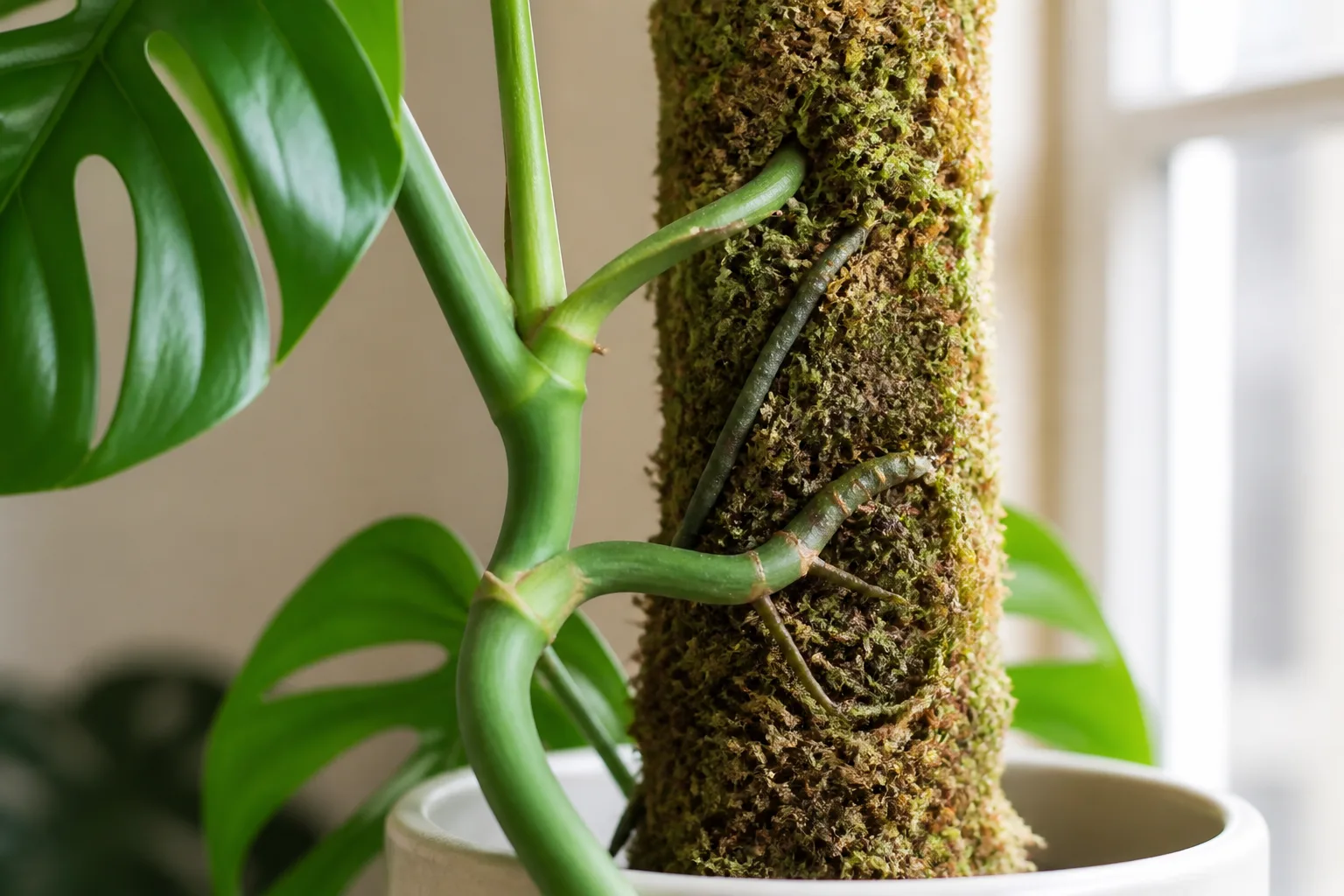
Swiss cheese plant (Monstera adansonii) offers fenestrated leaves on a smaller footprint than Monstera deliciosa. Train it on a moss pole beside the TV or let it trail from a high shelf. Same water rule: top 2 inches dry. Monstera deliciosa belongs in floor corners when you want a bigger statement.
Satin pothos (Scindapsus pictus) is not a true pothos but behaves like one—silver-spotted leaves that shimmer in window light. Tolerates lower light than marble queen but grows slower. Drought-tolerant; err on dry side.
String of nickels (Dischidia nummularia) is delicate—coin-shaped leaves on thin stems. Medium light, dry between waterings, and no cold drafts from AC vents blowing directly on the basket. Best for experienced waterers who will not mist daily out of guilt.
Hoya carnosa vines slowly and blooms in bright, stable conditions. Gardening Know How notes hoyas prefer tight pots and bright indirect light for flowering (Gardening Know How: hoya care). Let soil dry more than you would for a fern; constant moisture rots roots.
Color-forward foliage for tables and reading nooks
When you want pigment without waiting for flowers, these leaves do the work.
Red Chinese evergreen (Aglaonema hybrids) pushes pink, red, and silver tones that intensify with brighter indirect light. In dim corners, color washes out but the plant survives—trade vibrancy for longevity. Water when the top 2 inches dry; cold water shock can spot leaves. Toxic to pets (ASPCA: Chinese evergreen).
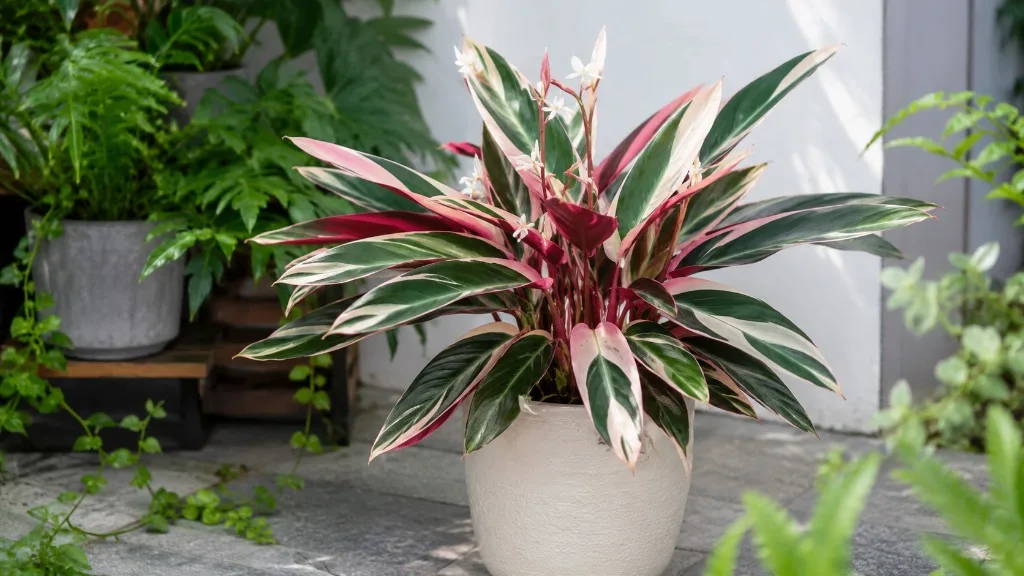
Triostar stromanthe (Stromanthe sanguinea ‘Triostar’) is the showstopper—pink, white, and green with purple undersides. It demands humidity, consistent moisture, and filtered bright light. Dry air in a winter living room produces crispy edges faster than almost any plant here. Skip it if you will not run a humidifier or group plants on a pebble tray.
Chinese money plant (Pilea peperomioides) stays compact with coin-shaped leaves—perfect for a side table. Bright indirect light, rotate weekly, water when soil dries on top. Pilea drops lower leaves when light is too low or water swings are extreme.
Classic living room plants with big personality
A few species appear in every design roundup because they scale visually—for better or worse.
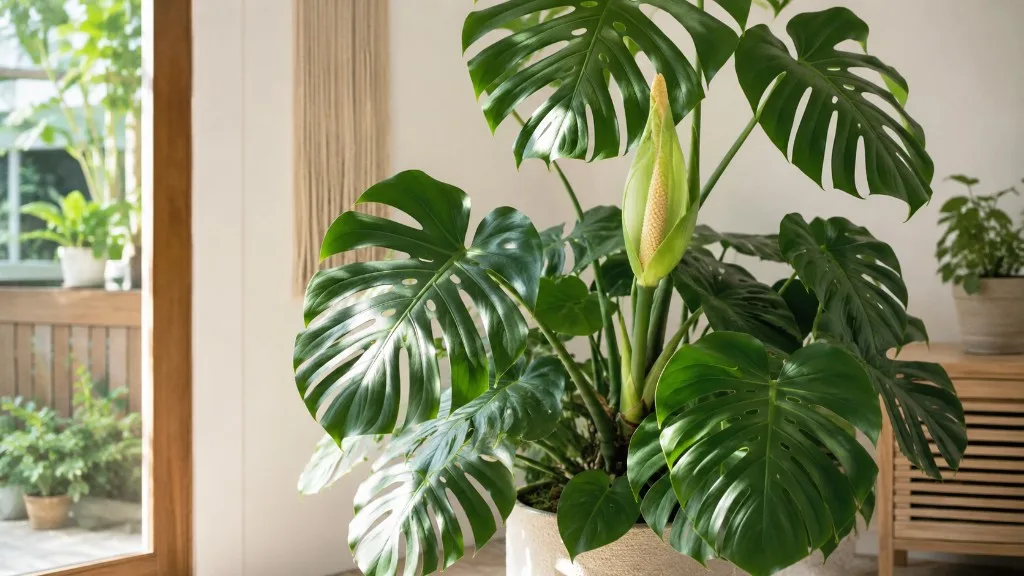
Monstera deliciosa fills a bright corner with split leaves and aerial roots. It grows fast with good light; prune and propagate cuttings to control size. Toxic to pets (ASPCA: Swiss cheese plant). Pair with a sturdy moss pole early so stems do not sprawl across walkways.
ZZ plant, snake plant, and fiddle-leaf fig already appear above—but note the contrast: ZZ and snake plant suit set-and-forget owners; fiddle-leaf rewards stable routines and punishes relocation. Pick the personality that matches your household, not the photo you saved.
Dieffenbachia bridges table and floor sizes with bold variegation. Medium indirect light, top-2-inch dry rule, and gloves when pruning because sap irritates skin. Not for pet homes.
Common living room plant mistakes
Buying for the corner before measuring light. A fiddle-leaf beside a north wall 12 feet from glass will drop leaves until you move it or add a grow light.
Overwatering the dimmest plant. Low light slows water use. Soil that stays wet breeds root rot on ZZ plant and snake plant faster than underwatering ever will.
Ignoring HVAC. Winter heat vents and summer AC blow dry, cold, or hot air directly on leaves. Fronds brown; stromanthe and elephant ear suffer first. Move pots or deflect vents.
Skipping acclimation. Plants shed older leaves after moving from greenhouse to living room—especially fiddle-leaf fig and bird of paradise. Hold water slightly, avoid fertilizer for six weeks, and do not relocate again while adjusting.
Choosing bloomers for instant color. Bird of paradise and hoya need maturity and light before flowers. Buy for foliage; treat blooms as a bonus.
One watering schedule for all pots. Trailing pothos in a sunny window dries faster than a ZZ plant in shade. Finger-test each pot independently.
Conclusion
The living room plants that make a space feel lusher are rarely the trendiest single purchase—they are the two or three species that match your window direction, furniture zones, and attention level. Audit light at noon, mark where pots can live without blocking walkways, and shortlist from the 18 species here by job: statement corner, dim survivor, trailing accent, or color pop.
Start with one plant in your brightest viable spot, learn its dry-back rhythm for a month, then add a second in a different zone. That sequence beats a cart full of tropicals that share the same weak corner and the same watering mistake. When light is truly limited, lean on cast iron plant, snake plant, and ZZ plant—and read our apartment low-light guide before forcing fiddle-leaf figs or elephant ears into a room they cannot support.