24 Backyard Privacy Ideas for a Quiet Retreat
Block sightlines, soften noise, and carve out a quiet backyard with 24 privacy ideas—from living hedges and slat fences to shade sails, planters, and renter-friendly screens.
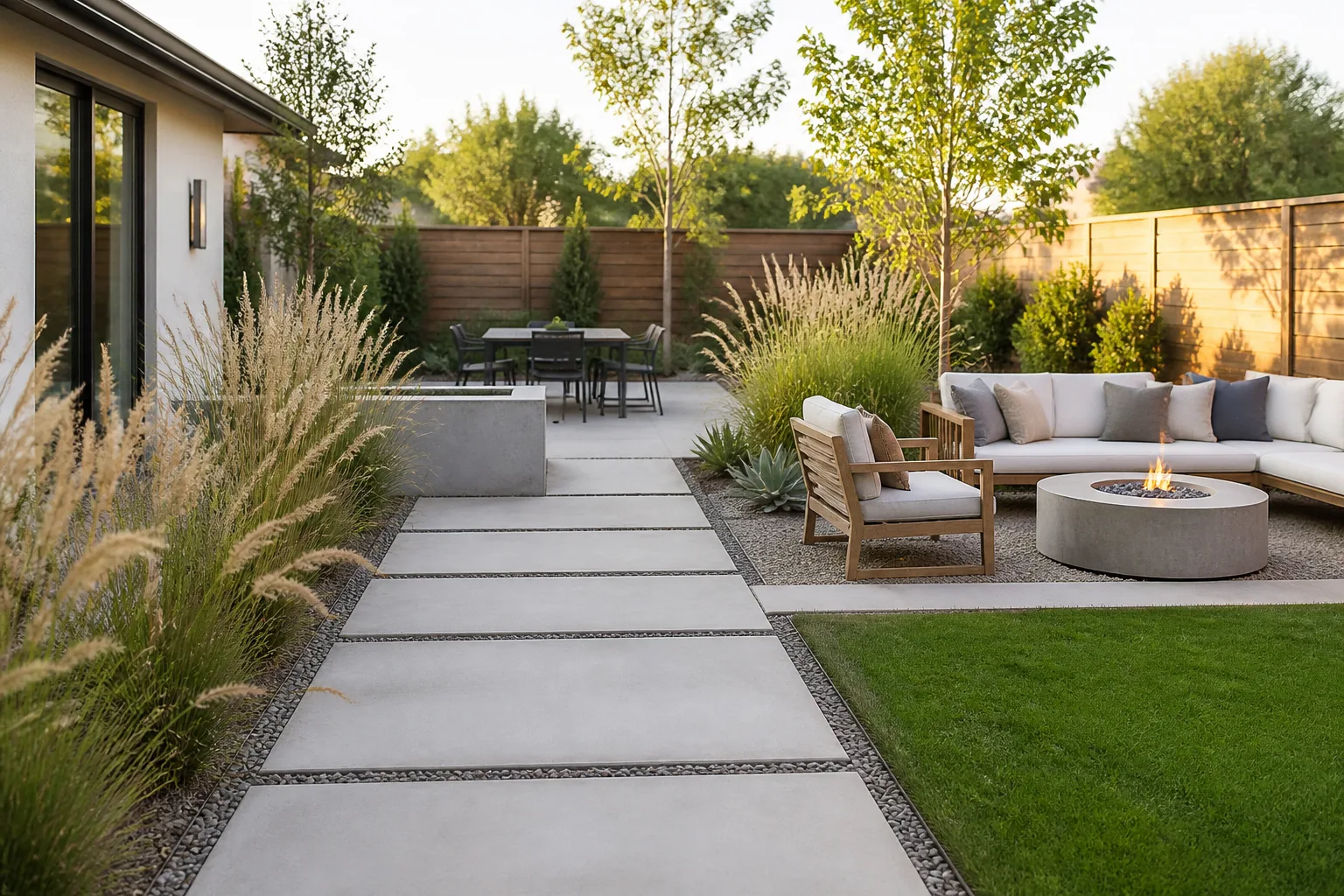
A neighbor’s second-story window, a shared driveway, or a fence you can see through should not keep you from using your own yard. Backyard privacy is less about building the tallest wall you can afford and more about interrupting the sightlines that actually bother you—then layering plants, fabric, or structure so the space still feels open, bright, and worth maintaining.
The ideas below cover 24 practical privacy solutions grouped by how they work, not by photo style. Use them as a menu: audit your views first, confirm what your town and HOA allow, then pick the mix of living screens, hardscape, and portable fixes that matches your budget, climate, and patience for pruning.
Start With a Sightline Audit, Not a Shopping List
The University of Wisconsin–Madison Extension recommends planning a home landscape around how people use the space, the architecture, and the effect you want—not around a single Pinterest feature (University of Wisconsin–Madison Extension). Privacy projects fail the same way: homeowners buy a row of arborvitae because it looked good online, then discover it hides nothing from the patio where they eat dinner.
Before you spend money, name the problem precisely. Visual privacy blocks what people can see. Acoustic privacy dulls conversation, traffic, or pool noise. A fluffy grass hedge can look private while sound sails straight over it. A solid fence helps both, but it may also steal afternoon light. Decide which problem matters most in the zone you use—seating area, hot tub, play lawn, or whole perimeter.
The One-Photo Test From Where You Actually Sit
Stand or sit where you relax most often. Take a phone photo at eye level. Mark the first object that pulls your eye—neighbor windows, alley trash bins, a gap in the fence, an upstairs balcony. Repeat from the kitchen window and the main path guests use. You are not trying to erase every distant roofline; you are finding the one or two sightlines that make the yard feel public.
Measure height and width of the target view. A 6-foot fence may be useless if the problem is a third-floor deck 40 feet away; you may need overhead fabric, a taller living screen in the right spot, or a raised seating terrace. Conversely, a 4-foot lattice panel might be enough to shield a ground-floor kitchen window without boxing in the whole lot.
Check Fence Height, Setbacks, and HOA Rules Before You Build
Nothing kills momentum like a violation notice. Fence and hedge rules vary by city, county, and homeowners association. Typical front-yard limits are lower than side and rear yards; corner lots often have extra sight-triangle rules at driveways. Planting a line of evergreens can trigger “spite fence” or high-hedge complaints if it blocks a neighbor’s light or view beyond what local code allows—another reason to solve the actual sightline instead of maximizing height everywhere.
Call your city planning or building department, read your HOA architectural guidelines, and locate your property survey or plat. Note utility easements, drainage swales, and shared fence ownership before you dig post holes or pour footings for a raised terrace.
What Usually Counts as a Legal Screen
Many U.S. municipalities allow 6-foot rear and side fences and shorter front-yard fencing, but “usually” is not a plan. Some areas cap total fence-plus-planting height, require permits above a certain height, or restrict materials facing the street. The Royal Horticultural Society notes that new hedges near highways or public rights of way may need consent, and that rows of evergreens can fall under high-hedge regulations in the UK and similar nuisance rules elsewhere (RHS screening guidance).
Document your lot lines. If the existing fence is shared, confirm who may attach trellis, vines, or topper panels. When in doubt, build slightly inside your line and keep posts on your side.
Living Screens: Hedges, Grasses, and Layered Planting
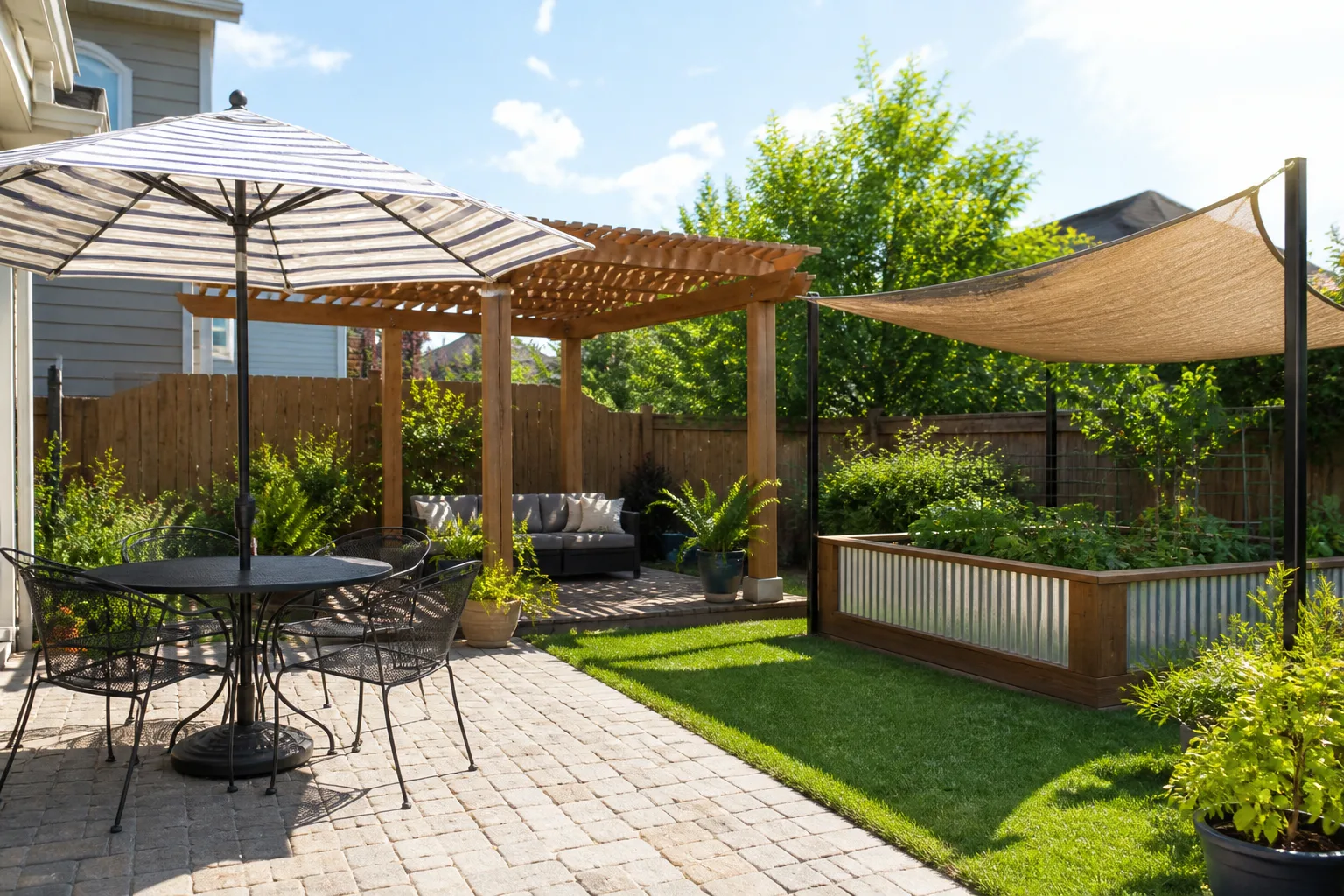
Living screens are the most forgiving long-term privacy tool because they soften edges, support wildlife, and can be trimmed if they outgrow the space. They are not instant, and they rarely block noise as well as a solid fence. The Royal Horticultural Society advises choosing screening plants by ultimate height, soil, exposure, maintenance appetite, and distance from buildings and drains (RHS screening guidance).
Layered planting beats a single soldier row. Combine a mid-height evergreen shrub, an ornamental grass drift, and a climbing vine on a trellis so coverage builds at multiple heights. Garden designers often place one well-chosen small tree or columnar shrub at the intersection of sightlines rather than ringing the entire lot—central placement can block an upstairs view with less total height than a perimeter hedge (Gardening Know How).
Evergreen Hedges That Hold Their Shape
For year-round cover, look at regionally hardy evergreens with a clear mature width:
- Arborvitae cultivars (such as ‘Green Giant’) fill fast in many zones but need space—planting too tight leads to brown interiors and replacement costs.
- Yew (Taxus), including narrow forms like ‘Stonehenge Skinny’, suits formal lines and shade; confirm pet and livestock toxicity on your property.
- Privet, boxwood, and holly work for clipped hedges where you will commit to shearing.
- Cherry laurel, photinia, and western red cedar appear on RHS lists for screening and environmental benefit (RHS hedges with environmental benefits).
Proven Winners recommends spacing based on mature width, not the pot size at purchase, and watering deeply through the first two seasons while roots establish (Proven Winners privacy hedges). A hedge that fills in three years is often healthier than one crammed to “look full” this spring.
Espaliered fruit or ornamental trees on a wall or fence add height without a wide footprint. Clearing lower branches on large shrubs—“lifting” the canopy—lets you continue screening above a standard 6-foot fence while keeping ground-level light (RHS screening guidance).
Ornamental Grasses for Soft, Renter-Friendly Coverage
Tall grasses such as feather reed grass (Calamagrostis × acutiflora ‘Karl Foerster’) create a translucent screen that moves in the breeze and reads private without a bunker wall. They are excellent in planters on a deck or atop a low wall. Choose clump-forming species; avoid invasive runners. Cut back in late winter, and plan for a year of establishment before full height.
Combine grasses with large planters of evergreen shrubs on a fence line for a portable green screen you can shift as sightlines change—one of the best backyard privacy ideas for renters.
Climbing Vines and Trellises on Existing Fences
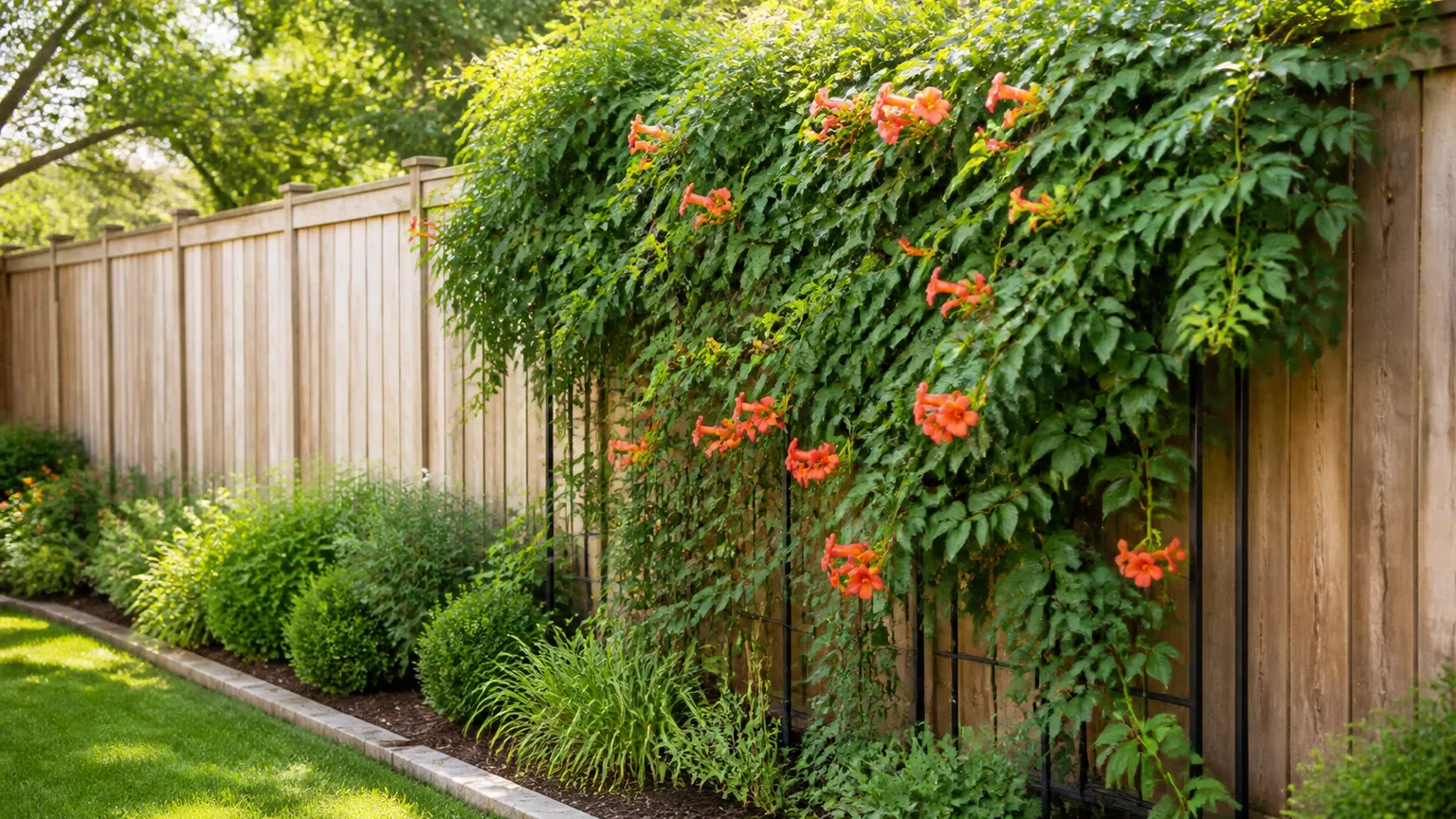
If you already have a fence but can see between boards—or neighbors see in—add a trellis topper or wire grid and grow vines. This is one of the fastest ways to gain a foot or two of leafy cover without replacing the entire fence.
Strong options by climate include star jasmine (Trachelospermum jasminoides) in warm zones, honeysuckle cultivars selected for manageable size, climbing hydrangea in shade, Boston ivy or climbing fig on masonry, and repeat-blooming roses on a sunny fence. Match the vine’s mature weight to your support; a flimsy trellis will sag in five years.
Install trellis slightly off the fence face so air circulates and wood dries. On shared fences, use freestanding trellis panels on your side rather than driving screws into a neighbor’s boards without permission.
Freestanding Lattice Panels and Decorative Screens
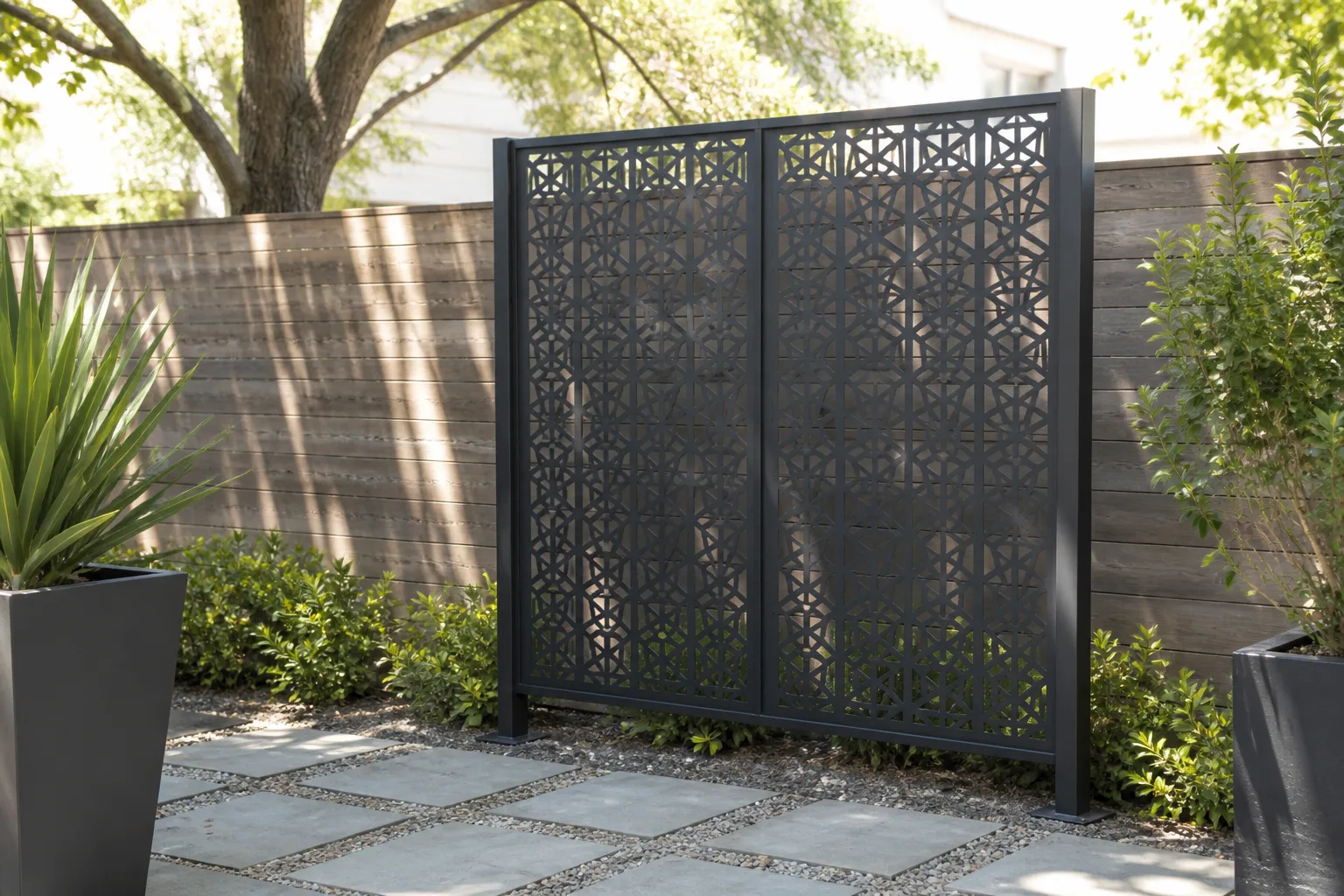
Lattice privacy panels add pattern, partial shade, and depth along a path or beside a seating area. They work as room dividers inside a large yard—creating a “retreat” pocket without enclosing the whole lot. Laser-cut metal or CNC wood screens cast shadow lines that feel modern; traditional cedar lattice softens quickly once vines climb.
Place panels where they block the sightline from the offending window, not necessarily parallel to the property line. A short run of screen at a 45-degree angle can shield a patio from a side neighbor while keeping the lawn open.
Solid Fences, Slat Fences, and Heightened Boundaries
A solid privacy fence is still the most reliable instant fix for ground-level views. Horizontal wood slat fences with narrow gaps preserve some airflow and a contemporary look; rotate slats so neighbors see less of your seating area. Painting slats light colors can make a screen feel less heavy in a small yard.
Heightening an existing wall—brick or block with a wood topper—is common in urban lots. Confirm structural load and wind exposure; tall solid panels act like sails in open sites. Leave intentional view windows or translucent sections if you fear a claustrophobic box.
For neighbor relations, consider good-neighbor designs (finished side alternating) or a lower fence plus strategic planting so you are not staring at a blank wall at eye level. Hardwood species such as ipe, cedar, or pressure-treated pine last longer in ground contact than untreated softwoods, though all wood fences need periodic sealing or staining in wet climates. Leave a maintenance gap between soil and the bottom rail so rot does not start from splash-back.
Pergolas, Curtains, and Shade Sails for Overhead Privacy
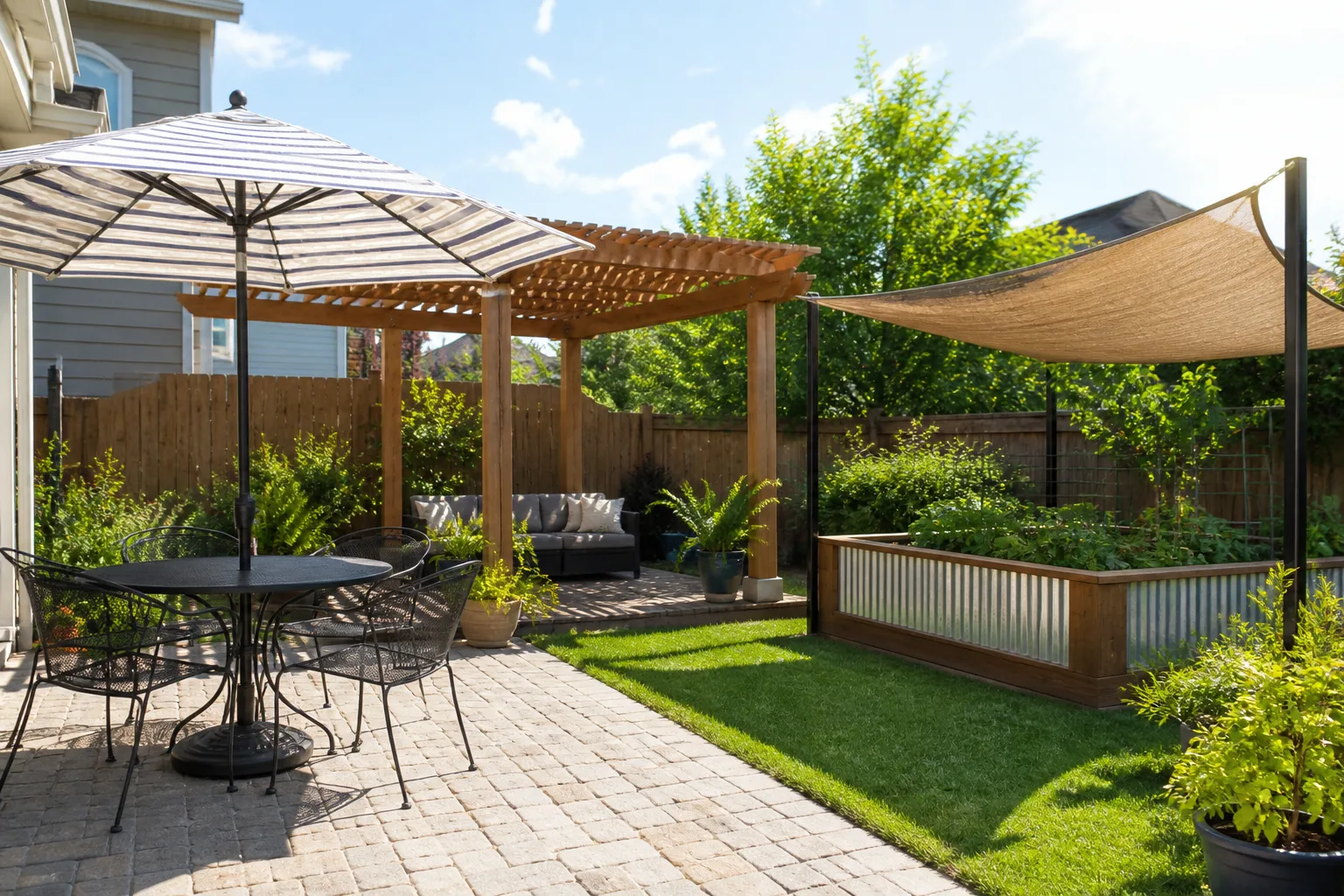
When the problem is looking down from a second story, ground fences alone will not finish the job. Overhead solutions matter:
- Pergolas with slatted roofs break up sightlines from above while defining a dining or lounge zone. Add outdoor curtains on one or two sides for instant enclosure.
- Shade sails tensioned between posts or the house cut glare and obscure overhead views into a seating area. Use UV-stable fabric and hardware rated for wind; take them down in heavy storm regions if recommended by the manufacturer.
- Pop-up canopies with removable side walls offer seasonal privacy for driveways converted to patios or rental yards.
The RHS emphasizes balancing shelter with light and outward views—total enclosure can make a garden feel smaller than partial screening (RHS how to screen off an area).
Outdoor curtains deserve their own mention: mount corrosion-resistant rods or a cable between pergola posts, choose fade-resistant fabric rated for mildew, and add tie-backs so wind does not whip panels against plants. Sheer curtains filter glare while still letting breezes through; heavier canvas blocks more sightlines after dark when interior lights make yards feel exposed.
Pop-Up Canopies and Portable Screens for Renters
Renters and condo owners need non-permanent privacy ideas:
- Freestanding bamboo roll panels on planter feet
- Wheeled trellis planters with evergreen vines
- Outdoor curtain rods clamped to a balcony or pergola
- Tall reed or willow screens tied to deck railings where code allows
Avoid drilling into siding or shared railings without landlord approval. Weighted planter boxes reduce blow-over in wind.
Raised Terraces, Zones, and Furniture Placement
Raised decks or terraces with built-in benches and higher side walls lift your seating plane so ground-floor neighbors see less of you. Even a single step up, combined with a half-wall or hedge on the exposed side, changes the geometry. Check permits; retaining walls and raised structures often have height and setback rules.
Inside a open yard, zone the space rather than fencing everything: outdoor kitchen on one level, lounge on a slightly raised pad, play lawn beyond. Half-height planting or curtains between zones gives privacy within the party without sealing the perimeter.
Furniture placement is free: orient lounge chairs with backs to the sightline, put a bench against a solid wall, or use a daybed tucked into an L-shaped corner. On a sloped lot, siting seating on the uphill side can place neighbors below your eye line. A fire pit or conversation circle centered in the yard turns backs outward toward the flame and away from perimeter sightlines—a social layout trick that costs nothing but thought.
Large Planters and Container Green Screens
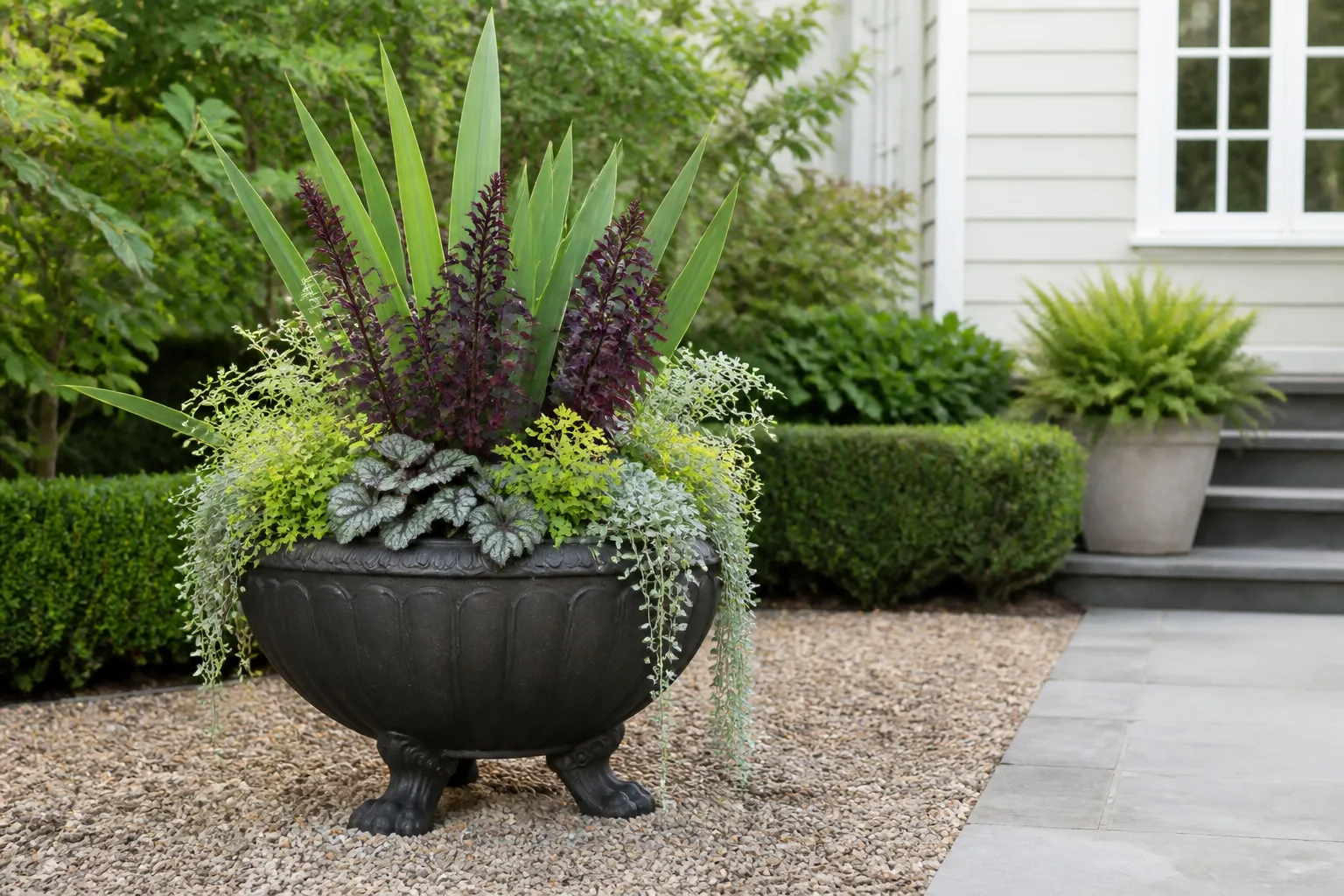
Large planters with columnar evergreens, tall grasses, or bamboo look-alikes (clumping types only) create movable walls along a fence or pool edge. Group odd numbers of pots in staggered depths for a thicker visual mass. Plan for irrigation; large containers dry out fast on hot patios.
This approach pairs well with hiding yard eyesores when bins or HVAC units share the same sightline you want to lose.
Bamboo Panels and Fast-Growing Options—With Real Caveats
Bamboo roll fencing is inexpensive, tropical in feel, and fast to install on a balcony or deck. Running bamboo in the ground is a different story: many municipalities restrict or ban invasive spreaders. If you plant bamboo for privacy, choose clumping species suited to your zone, use root barriers, and read local ordinances before you create a problem your neighbor will remember for decades.
Leyland cypress and other fast conifers tempt people who want a wall in three years. They work only where spacing, airflow, and mature height fit the lot; overcrowded Leylands become windthrow risks and disease magnets. Faster is not always cheaper when you are replacing a dead row.
Stone Walls and Permanent Hardscape
Dry-stack or mortared stone walls add permanence, sound mass, and cottage character. Budget for materials and skilled labor; stone is rarely the cheapest path. Low stone walls combined with hedges on top—a ha-ha-style transition—can raise effective height without a monolithic slab.
Ensure footings and drainage suit your soil; frost heave destroys amateur walls quickly in cold climates. Pair low stone with stepped planting so the wall does not read as a prison yard—trailing rosemary, low lavender, or sedum at the cap softens the line.
Outdoor Theater Walls and Creative Fence Backdrops
A tall privacy fence or masonry wall can double as an outdoor movie screen: mount a retractable tarp or fixed white panel, add dimmable string lights, and keep speaker volume considerate. The wall blocks views from behind the audience while giving you a defined “room” for evening entertaining. This works best when the screen faces inward and light spill does not annoy neighbors—another sightline to test before movie night.
Budget Backyard Privacy Ideas Under $200
You do not need a full fence package to feel more secluded this season:
- Outdoor curtains on a galvanized pipe or cable between posts
- A single 6×8 trellis panel plus one vigorous vine
- Three large resin planters and columnar shrubs from a local nursery
- Reed fence rolls attached to an existing chain-link fence
- A shade sail kit sized to your patio, not the whole yard
- Strategic umbrella placement to block one upstairs angle while you dine
Buy the smallest solution that fixes the photo you took in the sightline audit. Upgrade to permanent planting or fencing only after one season confirms the location.
Conclusion
The best backyard privacy ideas combine three moves: block the sightlines that matter from where you actually sit, respect local fence and planting rules, and layer living and built screens so the yard still gets light and air. Hedges and vines reward patience; slat fences and lattice panels add architecture; shade sails and curtains solve overhead exposure; planters and pop-up gear keep renters in the game.
Start with one zone—usually the main patio or lounge—then expand. Privacy that feels natural beats a fortress that you stop using because it is dark, windy, or illegal. Measure twice, plant with mature size in mind, and treat your neighbor’s view the way you want yours treated: blocked where it counts, not punished for sport.



