How to Grow and Care for Pothos Indoors
Grow pothos indoors with clear light, watering, soil, and propagation steps—plus fixes for yellow leaves, bare vines, and pet safety.
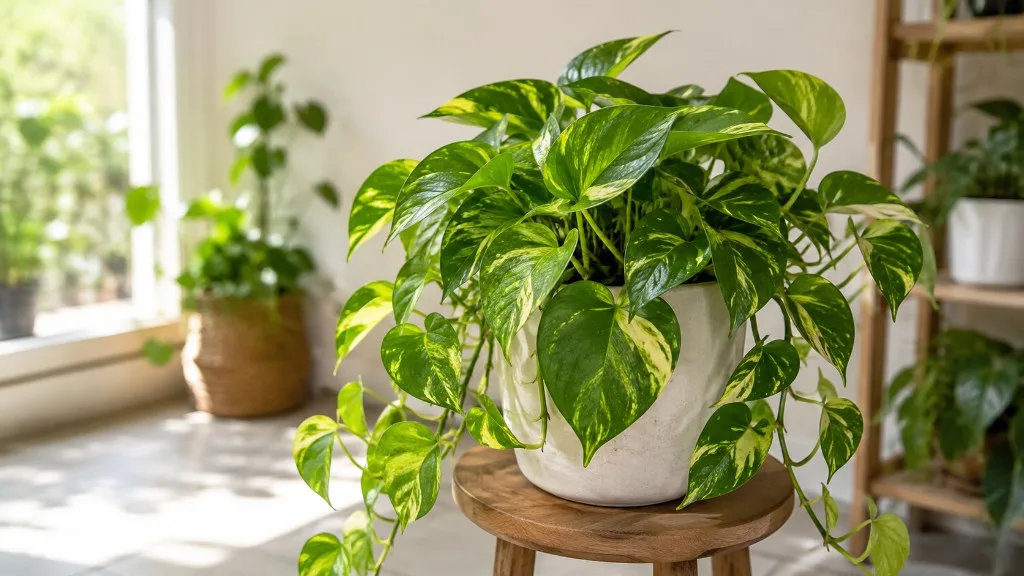
Pothos (Epipremnum aureum) is the houseplant people mean when they say “you can’t kill it”—and for good reason. This Solomon Islands native handles missed waterings, office fluorescent light, and years in the same pot better than most tropical vines. That forgiveness has a catch, though: pothos can look fine while slowly getting leggy, losing variegation, or sitting in soggy soil until yellow leaves and root rot show up all at once. This guide covers the full care loop—light, water, soil, feeding, pruning, propagation, and troubleshooting—so your Pothos hub plant stays dense, colorful, and healthy for years, not just months.
Pothos Quick Reference
Use this table before you change anything. Most pothos problems trace back to one row here.
| Factor | Indoor target | What goes wrong when ignored |
|---|---|---|
| Light | Bright indirect; east or west window | Leggy vines, faded variegation, small leaves |
| Water | When top 2 inches of mix are dry | Root rot if wet; wilt if bone dry too long |
| Soil | Well-draining aroid or houseplant mix | Heavy, compacted mix holds water at roots |
| Temperature | 65–85°F (18–29°C); avoid below 60°F | Cold patches brown leaves; heat stress bleaches variegation |
| Humidity | 40–60% is fine; higher helps in dry winters | Crispy brown tips in very dry air |
| Fertilizer | Balanced liquid, monthly in spring–summer | Pale new growth if chronically underfed |
| Pets | Toxic to cats and dogs | Oral irritation from calcium oxalate crystals |
For deeper dives on each topic, see the pothos overview, light guide, watering guide, and soil guide.
What Makes Pothos Such a Forgiving Houseplant
Pothos has been in commercial production for nearly a century and shows up in offices, dorm rooms, and plant swaps for one reason: it adapts. Penn State Extension describes it as a pass-along plant that survives low light for a while, recovers from underwatering when you finally notice the wilt, and roots easily from cuttings. (Penn State Extension) UF/IFAS notes that even at light levels as low as 50 foot-candles, pothos keeps living—though new leaves shrink and variegated cultivars lose color. (UF/IFAS EP151)
Native habitat and how it grows indoors
In the wild, pothos climbs tree trunks with adhesive aerial roots and can produce fenestrated leaves several feet long. Indoors, heart-shaped leaves usually stay under six inches, and vines commonly reach six to ten feet over a few years. The plant rarely flowers in cultivation—taxonomists only confirmed its genus after enough blooms were collected in Florida and Puerto Rico—so every pothos in your home is essentially a clone propagated from stem cuttings, not seed.
That climbing habit matters for placement. Left alone, pothos trails from a shelf or hanging basket. Given a moss pole or coco coir totem, it attaches with aerial roots and produces larger leaves—similar to how it behaves on a forest trunk. Either style works; the choice is aesthetic, not biological.
Pothos vs philodendron: Both are vining aroids often sold near each other. Pothos petioles have a groove where they meet the stem, and new leaves emerge cleanly without a papery sheath. Heartleaf philodendron wraps new leaves in a cataphyll that dries and falls off. If you are unsure which plant you have, see our pothos vs philodendron guide before copying care advice from a label meant for the other species.
Best Light for Pothos Indoors
Pothos tolerates a wide light range, but tolerance is not the same as thriving. Bright, indirect light—think an east-facing window or a few feet back from a west window—produces the fastest growth, the largest leaves, and the strongest variegation. Penn State Extension recommends moderate to bright light and warns that direct sun yellows leaves. (Penn State Extension)
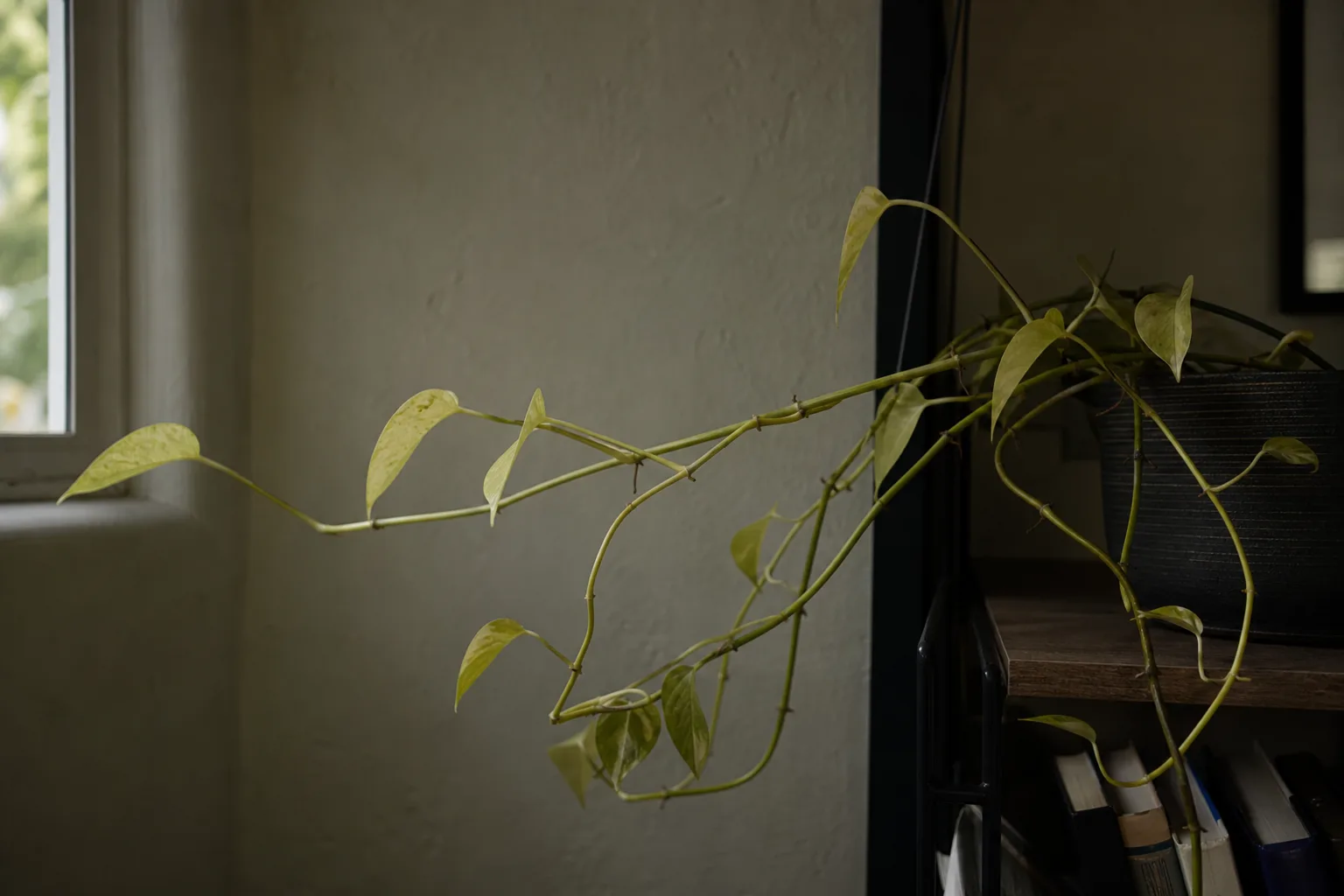
Low light and fluorescent-only offices keep pothos alive, which is why it dominates cubicle photos. Over months, though, internodes stretch, vines get bare at the base, and white or yellow variegation reverts toward solid green. UF/IFAS production guidelines tie variegation loss directly to shade above 80 percent (roughly below 2,500 foot-candles). (UF/IFAS EP151) If your plant is etiolating, move it closer to the window or add a grow light before you reach for fertilizer.
When variegation fades or leaves look pale
Two different light failures look similar but need opposite fixes. Too little light produces smaller, greener leaves on long, thin stems—classic leggy growth. Too much direct sun bleaches or scorches leaves, especially on variegated patches; UF/IFAS notes necrotic patches confined to white areas when heat and light are excessive. (UF/IFAS EP151)
Move a reverting variegated plant to brighter indirect light for four to six weeks before you declare the pattern lost. Rotate the pot weekly so both sides of the vine receive light—otherwise one side stays dense while the other goes bare.
Watering Pothos Without Causing Root Rot
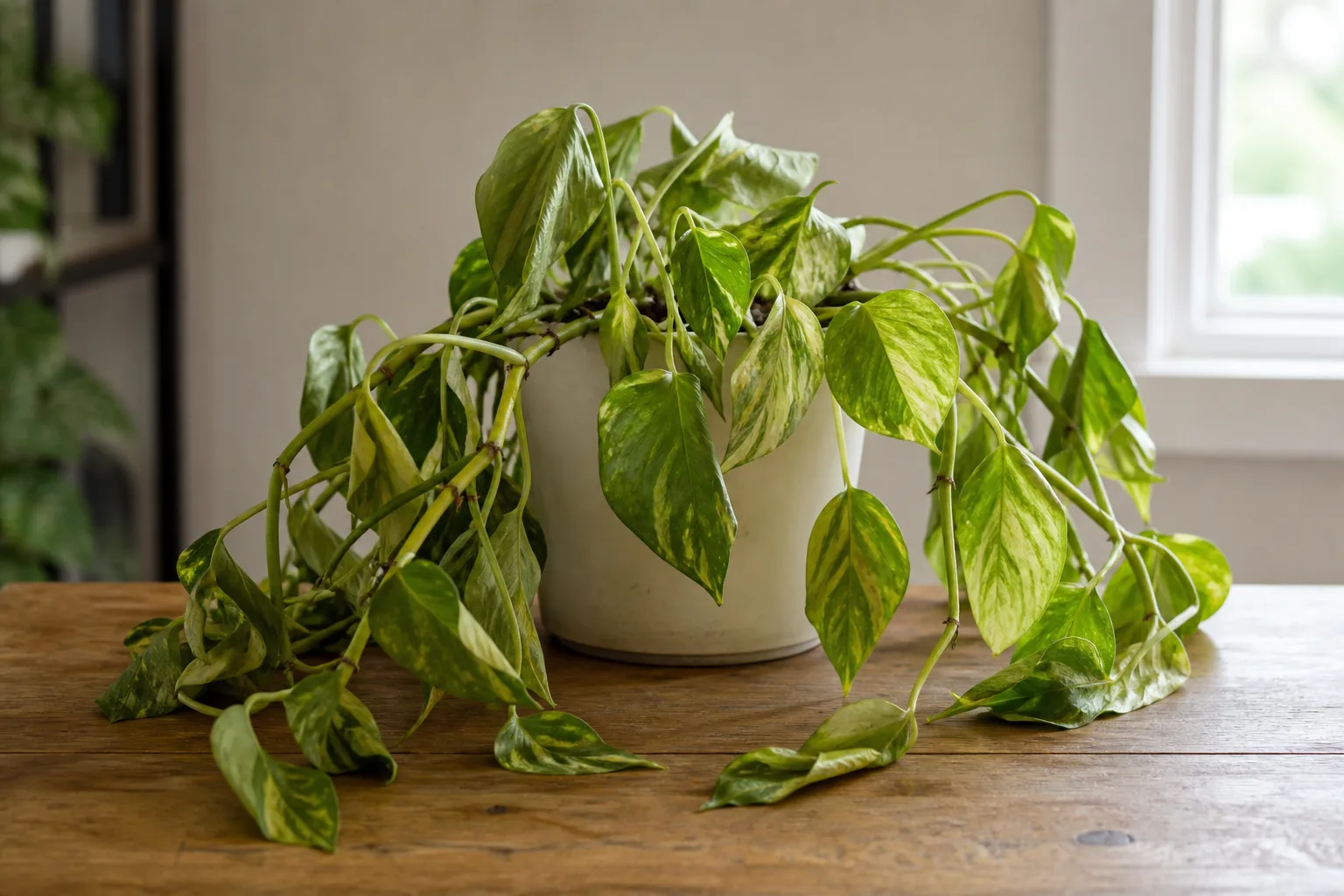
The single fastest way to kill pothos is kindness in the form of frequent watering. Penn State Extension is blunt: pothos is better kept too dry than too wet, and excess water leads to root rot—one of the few serious problems this plant faces. (Penn State Extension)
Water when the top 2 inches of potting mix feel dry to your knuckle or when a moisture meter reads dry in the upper profile. In bright, warm rooms that may mean every seven to ten days in summer; in a cool, dim corner it might stretch to two or three weeks. Never water on a calendar without checking the soil first.
Reading the droop signal correctly
Pothos is famous for telling you when it is thirsty: leaves soften and hang slightly. That droop is useful—water when you see it, and firmness usually returns within hours. Do not wait until leaves curl, crisp, or drop, and do not confuse underwatering droop (dry mix, limp but not blackened stems) with overwatering stress (wet mix, yellow leaves, mushy stems). Our drooping leaves page walks through that split step by step.
Always empty saucers and cachepots after watering. Pothos sitting in standing water develops anaerobic roots fast, especially in low light where the mix dries slowly.
Soil, Pots, and Drainage That Keep Roots Healthy
Pothos is not picky about brand names, but it is picky about air at the roots. Use a standard houseplant mix amended with perlite or bark for faster drainage, or a dedicated aroid blend if you already keep philodendrons and monsteras. UF/IFAS recommends media with good moisture-holding capacity and aeration, pH 6.0–7.0, for production—home mixes built from peat, bark, and perlite hit that range easily. (UF/IFAS EP151)
Every pot needs a drainage hole. Terracotta dries faster and suits dim rooms where overwatering risk is high; plastic holds moisture longer and works in bright, dry spaces if you still check soil before watering. Avoid oversized pots “to give it room”—extra soil volume stays wet longer and invites overwatering problems.
See the pothos soil guide for mix ratios and when to refresh compacted mix without upsizing the pot.
Temperature, Humidity, and Where to Place It
Pothos prefers 65–85°F (18–29°C) and handles ordinary room humidity. It adapts to drier air better than calatheas or ferns, though brown tips can appear in winter when heating runs constantly. Grouping plants or placing pothos in a bathroom with good light raises humidity modestly; a humidifier helps if you run heat above 68°F and air feels noticeably dry.
Keep vines away from cold window panes in winter. UF/IFAS lists scattered brown patches after exposure to 33–40°F for several hours—damage that looks like disease but is pure cold injury. (UF/IFAS EP151) Also avoid blasting hot air from radiators or HVAC vents directly onto foliage.
Good placements: a bookshelf with vines trailing down, a hanging basket in a bright corner, a moss pole beside a west window with filtered light, or a tall cabinet where aerial roots can attach to a totem. Bad placements: inside a closed terrarium long-term, on a dark stair landing with no supplemental light, or on a floor where pets can chew trailing vines.
Fertilizer: How Much and When to Feed
Pothos is a moderate feeder. During active growth—roughly spring through early fall—apply a balanced liquid houseplant fertilizer (3-1-2 or similar NPK ratio) once a month at half the label strength if you water regularly. UF/IFAS production data supports 3:1:2 or 3:1:3 ratios for steady foliage. (UF/IFAS EP151)
Skip fertilizer in winter unless the plant sits under grow lights and keeps pushing new leaves. Over-fertilizing causes salt buildup that browns leaf tips and stresses roots; flush the pot with plain water if white crust appears on the soil surface. Pale new leaves on an otherwise well-lit plant may indicate hunger—see the pothos fertilizer guide for timing and dose adjustments.
Popular Pothos Varieties and Their Light Needs
All pothos cultivars share the same basic care, but variegation changes the light math. Solid green types tolerate lower light; heavily variegated types need brighter positions to keep white or yellow patterning.
| Cultivar | Look | Light note |
|---|---|---|
| Golden Pothos | Green leaves with yellow streaks | Standard bright indirect |
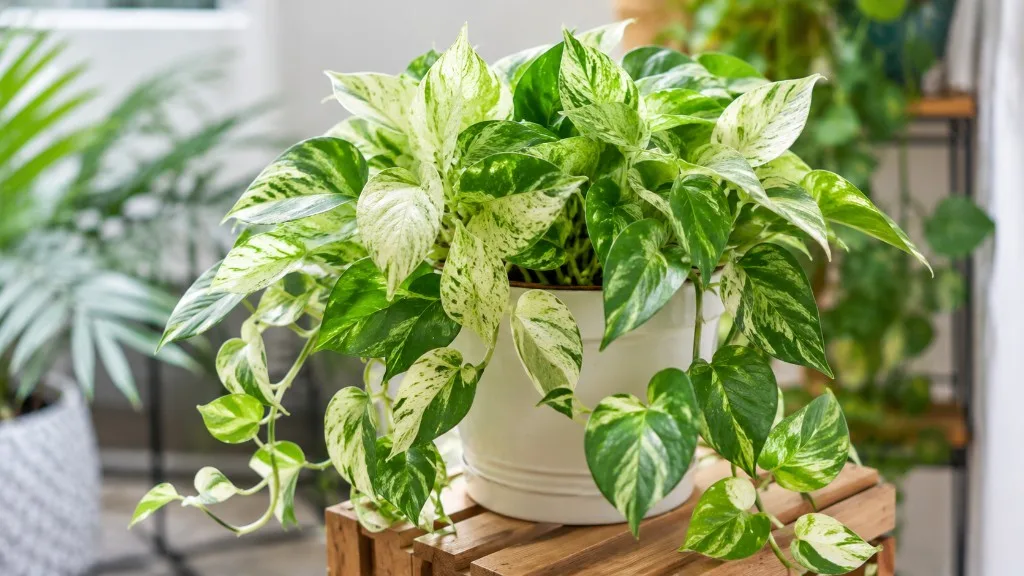
| Marble Queen | White and green marbling | Needs more light than Golden; fades fastest in dim rooms |
| Pearls and Jade | Compact white-green speckles | Medium–bright indirect; slower grower |
| Neon | Chartreuse solid color | Tolerates slightly lower light; color dulls in shade |
| Jade | Solid deep green | Most tolerant of low light |
| N’Joy / Jessenia | Smaller leaves, speckled variegation | Bright indirect; watch for reversion |
Silver Satin (Scindapsus pictus) is often grouped with pothos in shops but is a different genus—similar care, slightly slower growth. Do not assume every trailing “pothos” label refers to Epipremnum aureum.
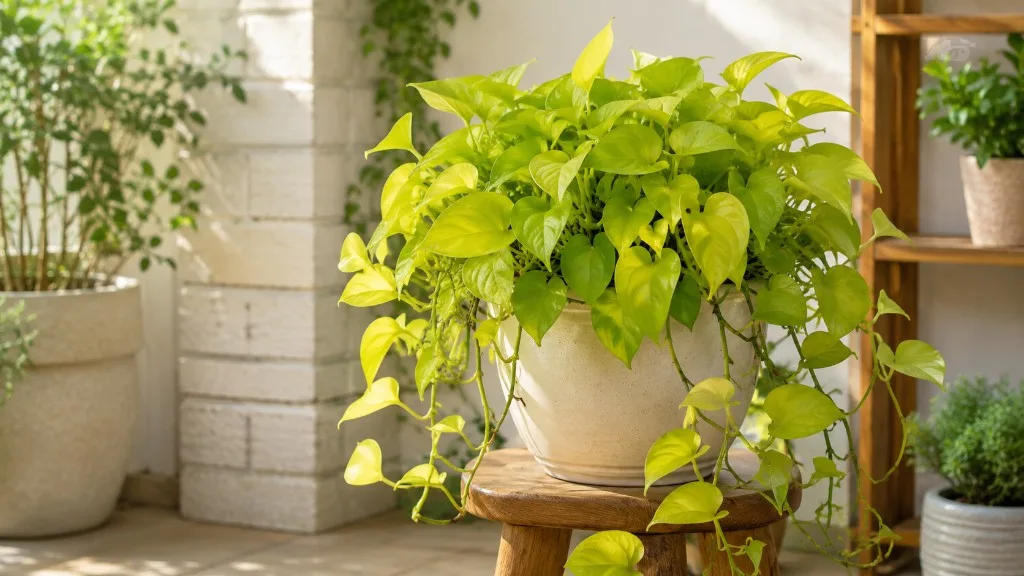
Pruning, Pinching, and Fixing Bare Bases
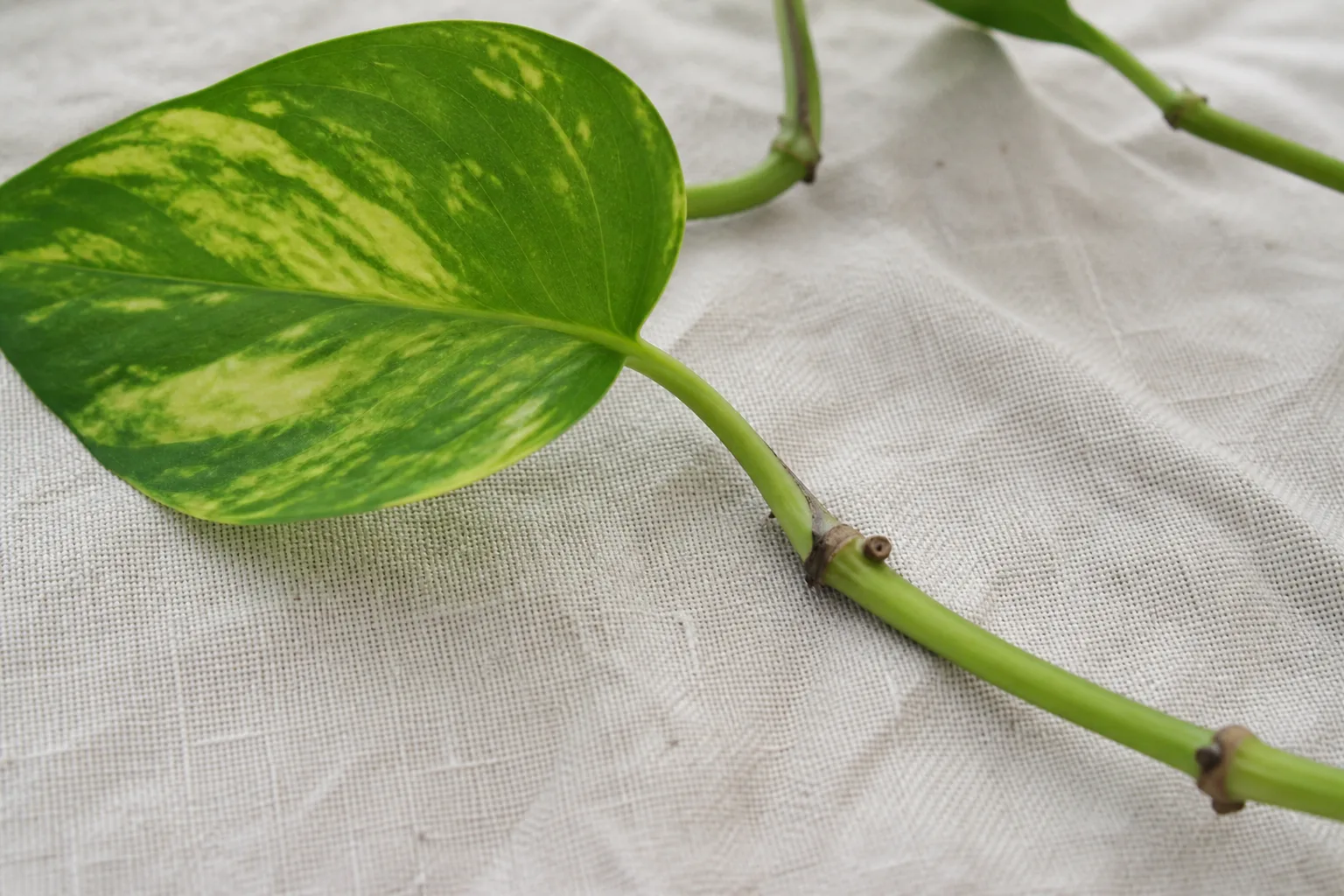
Pothos does not require pruning for health, but regular trimming keeps it bushy. Cut vines just above a node with clean scissors or pruners—nodes are the small bumps where leaves and aerial roots attach. Removing the growing tip forces side shoots from lower nodes, which is the fastest way to fatten a sparse plant.
When the base is bare but upper vines are healthy, use layering: lay a long vine on the soil surface so nodes touch mix, secure with bent paper clips, and keep that area lightly moist. Roots form at nodes in a few weeks, creating new shoots at soil level. No long vine to layer? Propagate cuttings and plant them around the parent when you repot.
Remove fully yellow or brown leaves at the base—never pull a leaf that still has green tissue; the plant is extracting mobile nutrients from it. See pothos pruning for seasonal timing and how hard you can cut back without shock.
Propagating Pothos From Stem Cuttings
Propagation is the reason pothos spreads through friend groups. Take a 4–6 inch cutting with at least one node and one or two leaves. Remove the lowest leaf so the node sits below the water line or soil surface—leaves submerged in water rot quickly.
Water method: Place the cutting in a clear jar in bright indirect light. Roots usually appear in one to two weeks; transplant to soil when roots are two to three inches long. Change water weekly.
Soil method: Stick the node into moist mix, keep humidity high with a loose bag or dome for the first week, and tug gently after ten days to feel resistance.
Spring and summer root fastest; winter cuttings work but take longer. For a full timeline, node diagrams, and cultivar quirks, read how to propagate pothos and the pothos propagation hub.
Repotting, Hanging Baskets, and Moss Poles
Repot when roots circle the bottom, water runs straight through without absorbing, or the plant wilts shortly after watering despite moist soil—classic root-bound signals. Move up one pot size (1–2 inches wider), refresh mix, and water once lightly. Penn State Extension suggests annual spring repotting for vigorous plants, or trimming roots and vines by up to one-third if you want to keep the same container. (Penn State Extension)
Wait four weeks after bringing a new pothos home before repotting unless roots are obviously cramped or pests are present. Fresh shipping stress plus repotting plus fertilizer is a common failure stack.
Hang or climb? Both work. Hanging baskets show off trailing habit; moss poles encourage larger leaves and upright growth. You can even grow pothos in water long-term in a nonporous vessel—change water every one to two weeks and add dilute liquid fertilizer at quarter strength once roots are established. Details live in the pothos repotting guide.
Common Pothos Pests and Diseases
Pothos is relatively pest-resistant indoors, but not immune. Watch for mealybugs (white cottony clusters), spider mites (fine webbing, stippled leaves), scale (brown bumps on stems), and fungus gnats (small flies when soil stays wet). Isolate affected plants, wipe leaves with diluted soap, and repeat weekly; persistent infestations may need horticultural oil or insecticidal soap. See mealybugs on pothos and spider mites on pothos for species-specific treatment loops.
Root rot from Phytophthora or chronic overwatering turns stems black and leaves dark brown; UF/IFAS notes Phytophthora leaves go dark brown without blackened veins—a useful distinction from bacterial wilt, which blackens veins and oozes from cut stems. (UF/IFAS PP340) Home growers should discard severely rotted plants, sanitize pots, and restart from healthy cuttings rather than trying to save a mushy crown.
Ethylene damage from ripening fruit, faulty heaters, or sealed shipping boxes causes yellow-then-tan leaves that look wilted despite adequate soil moisture—ventilate the room and remove the plant from the gas source.
Troubleshooting Yellow, Brown, and Drooping Leaves
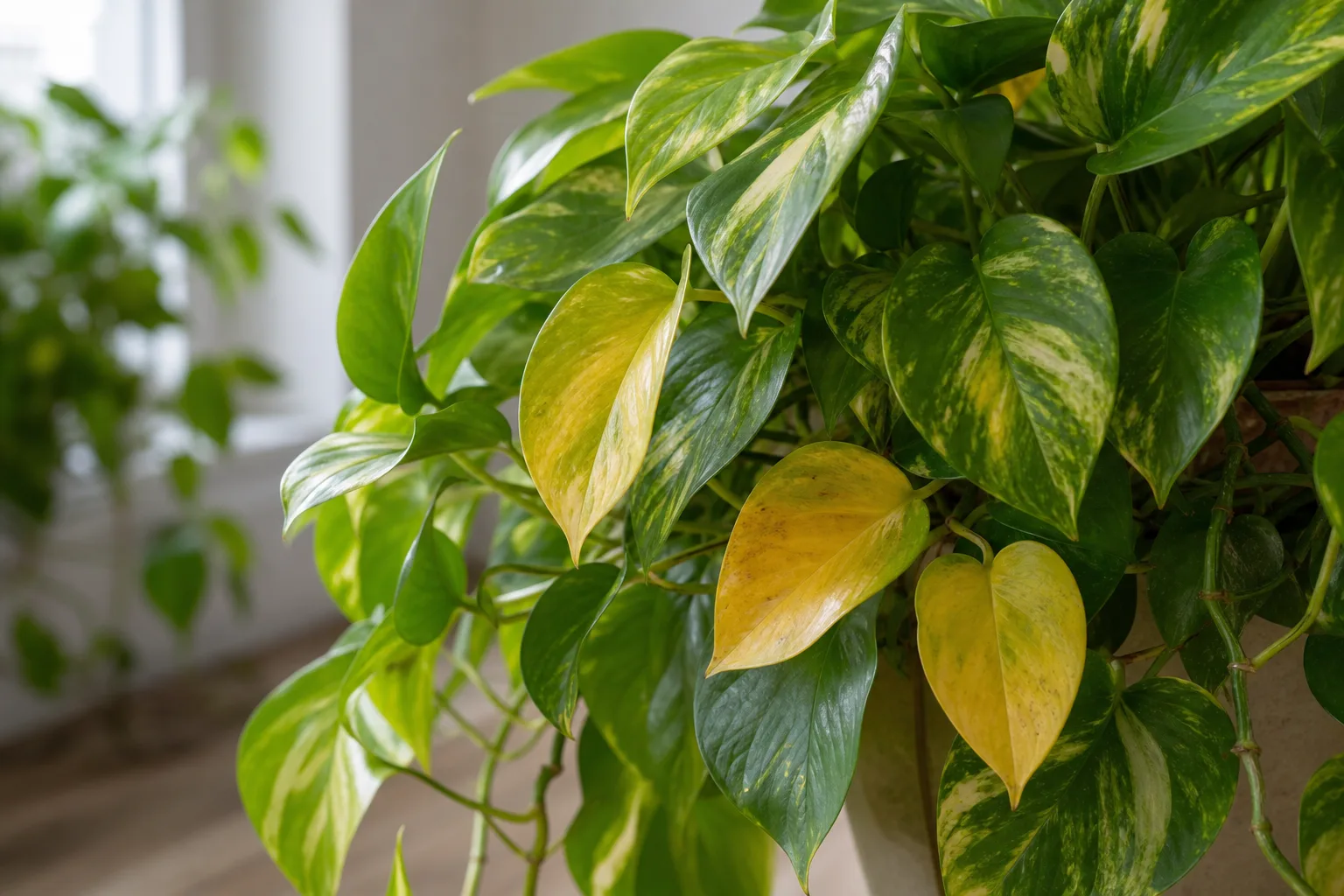
Start troubleshooting with soil moisture and light, not scissors. One yellow leaf on an otherwise healthy vine is often normal aging—snip it when fully yellow. Widespread yellowing with wet soil points to overwatering or root rot; with dry soil and limp leaves, underwatering.
| Symptom | Likely cause | First fix |
|---|---|---|
| Yellow leaves, wet mix, soft stems | Overwatering / root rot | Stop watering; check roots; repot if mushy |
| Yellow leaves, dry mix, droop | Underwatering | Soak until drainage; adjust schedule |
| Brown crispy tips | Low humidity or salt buildup | Humidifier; flush soil |
| Brown patches on white variegation | Too much direct sun/heat | Pull back from window |
| Long bare vines, small leaves | Low light | Brighter spot or grow light |
| Blackened veins, oozing stems | Bacterial wilt (rare indoors) | Discard plant; sterilize area |
Our yellow leaves and brown tips pages go deeper on each pattern. If fixes fail after two weeks, take cuttings from healthy growth before the crown declines—pothos insurance is free.
Pet Safety and Toxicity
Pothos is toxic to cats and dogs. ASPCA lists Epipremnum aureum (Golden Pothos, Devil’s Ivy) as containing insoluble calcium oxalate crystals that cause oral irritation, intense burning of mouth and lips, drooling, vomiting, and difficulty swallowing if chewed. (ASPCA)
Hang vines high, trim trailing stems above pet reach, and keep nursery pots inside closed cabinets if you have climbers. Pothos is irritating to humans too—wear gloves if sap contacts sensitive skin. If a pet eats foliage, contact your veterinarian or ASPCA Animal Poison Control at (888) 426-4435. Read the full pothos toxicity guide for symptom timelines and safe placement ideas.
Conclusion
Pothos earns its beginner-friendly reputation when you respect three rules: give it enough light for the cultivar you own, water when the top of the mix dries—not on autopilot—and use pots and soil that drain freely. Prune or layer bare vines, propagate cuttings before disaster strikes, and keep plants away from pets that chew greenery. For topic-specific depth, bookmark the Pothos hub and its care pages on light, watering, propagation, and repotting—then adjust one variable at a time until the plant tells you it is happy with new growth.