Drooping Leaves on Pothos: Causes, Checks & Fixes
Quick answer
Drooping pothos leaves almost always trace to a water mismatch-dry soil or roots failing in wet mix. First step: feel the soil at 2 inches depth before adding water or repotting.
Drooping Leaves on Pothos: Causes, Checks & Fixes
This guide covers drooping leaves on Pothos. See also the general Drooping Leaves guide, watering, and light pages for this plant.
Drooping Leaves on Pothos: Causes, Checks & Fixes
Quick answer
Drooping pothos leaves almost always trace to a water mismatch-dry soil or roots failing in wet mix. First step: feel the soil at 2 inches depth before adding water or Pothos repotting guide.
Pothos (Epipremnum aureum) stores some water in its stems, so a missed drink shows up as limp, hanging foliage before vines shrivel. That forgiving habit also makes it easy to overcorrect: watering wet soil worsens root failure while leaves keep drooping. Dry soil and a light pot mean thirst; wet soil and a heavy pot mean damaged roots-not more water.
Why pothos leaves droop
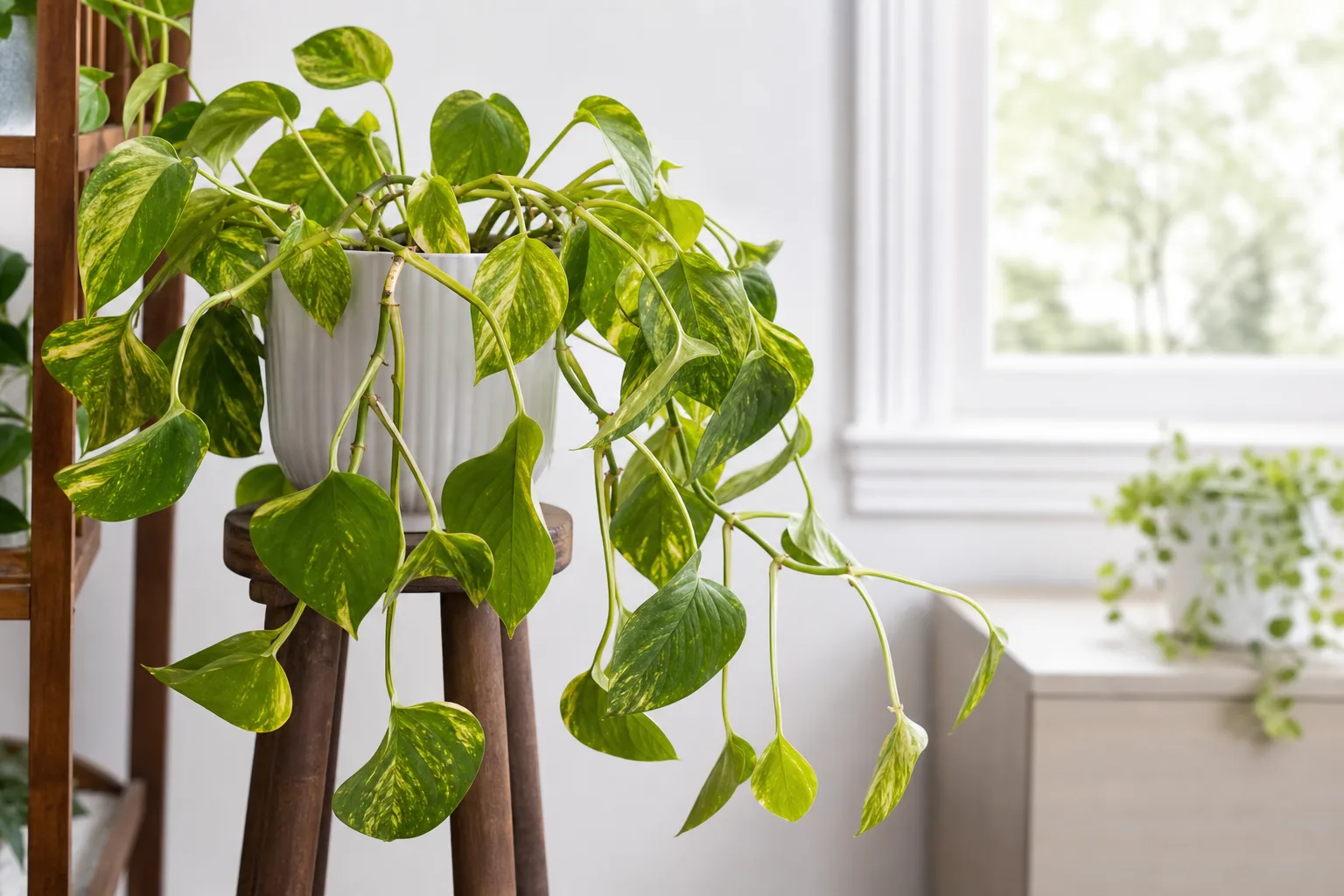
Pothos leaves lose rigidity when cells lack turgor-the internal water pressure that keeps foliage firm. On a trailing vine, that shows as heart-shaped blades hanging downward along the stem instead of angling out with their usual glossy lift.
Underwatering is the fastest cause. Too little water may lead to leaves temporarily drooping, and Penn State notes pothos is better kept slightly too dry than too wet. When the top 2 inches of mix go dry and stay dry, roots cannot resupply leaves fast enough-especially on long hanging vines where the farthest leaves are last in line.
Overwatering and root stress produce the same visual droop with opposite soil cues. Saturated mix blocks oxygen, roots stop absorbing, and leaves collapse despite wet soil. Root rot is a common houseplant issue caused by overwatering or poorly draining soil. Pothos tolerates brief drought better than chronic wet feet, so droop on damp mix is the more dangerous pattern.
Heat and airflow stress accelerate water loss. Hot and cold air from vents and windows can cause leaves to dry out and damage plant cells. A pothos beside a heating register or cold draft may droop on one side while the rest of the vine looks fine-the exposed leaves lose turgor faster than roots can replace it.
Repotting and relocation shock disturb fine roots. Excess water upon repotting adds additional stress to pothos. A plant moved from a stable shelf to harsh direct sun may droop within hours even if soil moisture looks acceptable-the change outpaces root adjustment.
Physical weight on long vines matters on mature hanging baskets. Pothos stems can reach 8 to 10 feet or longer as a vine. When the mix is slightly dry, the weight of a long trailing section can pull leaves into a droop that looks like systemic failure but perks up after even rehydration.
What drooping looks like on pothos
Healthy pothos leaves are smooth, slightly heart-shaped, and hold a gentle angle from grooved petioles. Drooping changes the silhouette:
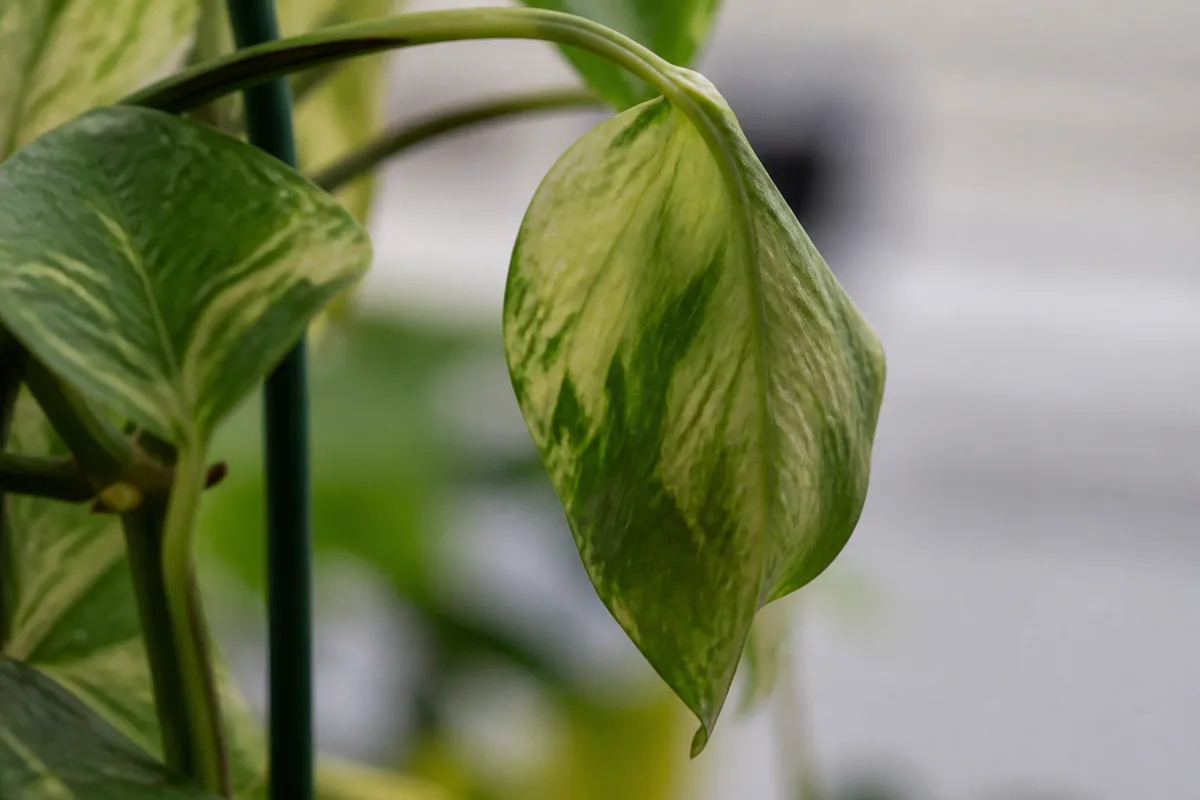
Drooping Leaves symptoms on Pothos - compare with healthy tissue on the same plant.
- Leaf blades hang straight down or fold softly along the vine instead of presenting their face outward
- Petioles lose stiffness and may bend where they meet the stem
- Color often stays green early on-unlike advanced yellowing, first-stage droop can look like a healthy plant that simply lost posture
- Whole-plant droop suggests a root-zone or environmental issue affecting the entire pot
- One-sided or one-branch droop often means uneven light, localized heat, partial root damage, or a heavy vine section drying faster than the rest
Compare with yellow leaves: drooping can precede yellowing in both drought and rot, so leaf color alone does not separate the causes. Smell and soil texture do.
How to confirm the cause
Work through these checks in order-each step narrows the diagnosis before you treat:
- Moisture at 2 inches - Insert a finger or skewer into the mix. Bone dry and pulling away from the pot wall suggests underwatering. Clinging wetness for days suggests overwatering or poor drainage.
- Pot weight - Lift the container. A light pot with drooping leaves strongly favors drought. A heavy pot with limp foliage on wet soil favors root failure.
- Perk test after water (dry cases only) - If soil is dry, water thoroughly until drainage runs free, then recheck in 4–6 hours. Pothos often recovers quickly from simple thirst when roots are intact.
- Stem firmness at soil level - Soft, blackening tissue at the base points to rot advancing up the vine. Firm green stems with wet soil still warrant an unpot check.
- Recent events - Repot within the last two weeks, a move to a brighter window, or placement near a vent explains temporary droop without root disease.
- Pattern on the vine - Drooping only on the longest trailing section may be localized dryness or weight; uniform collapse across all stems points to the whole root ball.
If dry soil and a light pot match your symptoms, treat as underwatering. If wet soil, sour smell, or yellow lower leaves accompany droop, treat as root stress before watering again.
First fix for pothos
Feel the soil at 2 inches depth and act on what you find-do not water by habit.
- If dry: Water thoroughly until excess drains from the bottom, empty the saucer, and leave the plant in Pothos light guide. Skip misting; root-zone moisture is what restores turgor.
- If wet: Do not add water. Move the pot to brighter indirect light to help the mix dry, improve airflow, and plan a root inspection if droop persists beyond 48 hours on damp soil.
This single moisture check prevents the most common mistake: watering an already-wet drooping pothos, which deepens rot while leaves stay limp.
Step-by-step recovery
After the first fix, follow the path that matches your diagnosis:
For underwatered pothos:
- Water until the full root ball is moist-not just the surface.
- If soil repelled water and ran down the sides, bottom-soak the pot in a basin for 20–30 minutes, then drain fully.
- Wait 6–24 hours before reassessing. Leaves should regain firmness; stems that stay limp may have secondary damage.
- Resume the normal rhythm: water when the top 2 inches are dry.
For overwatered or root-stressed pothos:
- Stop watering until the top half of the mix dries-unless stems are soft and black at the base (then unpot immediately).
- Unpot, rinse roots, and trim brown mushy tissue with clean scissors until only firm roots remain.
- Repot into fresh, airy mix with perlite in a pot with drainage holes. Use a good quality soilless potting mix that drains well.
- Withhold water for about a week, then water lightly. Do not fertilize until new growth appears.
For environmental droop:
- Move the plant away from heating vents, AC blasts, and cold window glass.
- Keep room temperatures in the 65–85°F range pothos prefers.
- If you recently moved the plant to much brighter light, shift it back slightly and acclimate over a week.
- Turn the container weekly so all sides receive even light and dry at a similar rate.
Recovery timeline
Mild drought droop on healthy roots often improves within 6–24 hours after proper watering. Severe dehydration on a large hanging plant may take a full day for the farthest leaves to lift.
Overwatering recovery is slower. Expect several days to see firmness return after you stop watering a mildly stressed plant; repotted rot cases may need two to three weeks before new root tips and upright leaves confirm success.
Repot or relocation droop usually resolves within 3–7 days if you keep care stable and avoid overwatering during adjustment.
Judge recovery by new growth and stem firmness-not by whether every old leaf re-angles perfectly. Leaves that stayed limp for more than a week may not fully recover and can be trimmed once the plant is stable.
Lookalike symptoms
Wilting vs drooping on pothos: The terms overlap, but acute same-day collapse after heat or missed water is often called wilting, while a gradual limp hang over days fits drooping. The fix is the same moisture check-do not treat them as different diseases.
Leggy growth vs droop: Long bare stems with widely spaced small leaves mean insufficient light, not turgor loss. Leggy vines may also hang downward from weight but leaves themselves stay firm. Move to brighter indirect light and prune if needed.
Yellow leaves with droop: Yellowing lower leaves on wet soil strongly suggests overwatering moving into rot. Yellowing with dry soil suggests prolonged drought stress. See the yellow-leaves guide if color change dominates.
Mistakes to avoid
- Watering without checking moisture - The leading cause of worsening droop on pothos.
- Misting instead of watering roots - Surface moisture does not restore turgor in the leaf tissue.
- Repotting on day one - Only unpot when wet droop persists or roots smell sour; dry droop rarely needs repotting.
- Fertilizing limp vines - Feed only after the plant regains firmness and pushes new growth.
- Heavy pruning while diagnosing - Remove only clearly dead leaves after conditions stabilize.
- Leaving the pot in a full saucer - Standing water keeps the bottom of the root ball anaerobic and mimics overwatering.
How to prevent drooping leaves on pothos
Build a routine that matches how pothos actually uses water in your home:
- Water when the top 2 inches of mix are dry - not on a fixed calendar. Allow the soil to dry between each watering and soak thoroughly when you do water.
- Use well-draining mix with perlite in a pot with open drainage holes. Empty saucers after every watering.
- Place in bright indirect light so the plant transpires steadily without scorching. Direct sun yellows and stresses leaves.
- Keep temperatures stable between 65–85°F and away from drafty vents.
- Rotate the pot weekly for even light and even drying on all sides of the root ball.
- Repot in spring with minimal root disturbance, and avoid drowning the plant immediately after-let it settle with moderate moisture first.
When to worry
Escalate beyond basic care correction if:
- Drooping continues more than 48 hours on wet, sour-smelling soil
- Stems soften and darken at the soil line
- Leaves yellow rapidly across the whole plant while soil stays damp
- The vine collapses completely after weeks of dryness and stems feel shriveled and brittle
In those cases, unpot and inspect roots. If most tissue is mushy, trim healthy vine tips above firm nodes and propagate cuttings in water or fresh mix-the parent may not recover, but the variety can be saved.
Practical checks
Urgency check
Black soft stems, sour soil on a heavy wet pot, or whole-plant collapse after extreme drought-all need action within a day, not a wait-and-see week.
Best inspection order
Soil moisture at 2 inches → pot weight → stem firmness at soil line → recent repot or move → root inspection if wet droop persists.
When to use this page vs other Pothos guides
- Pothos watering guide - Use for routine moisture checks before assuming drooping leaves is the main issue.
- Pothos problems hub - Browse all 39 common issues on this species.
- Root Rot on Pothos - Different entry point when symptoms overlap with drooping leaves.
- Wilting on Pothos - Different entry point when symptoms overlap with drooping leaves.
- Heat Stress on Pothos - Different entry point when symptoms overlap with drooping leaves.