How to Grow and Care for Pomegranate Trees
Learn how to plant, water, prune, and harvest pomegranate trees in zones 7–10, with cultivar picks, container tips, and split-fruit fixes.
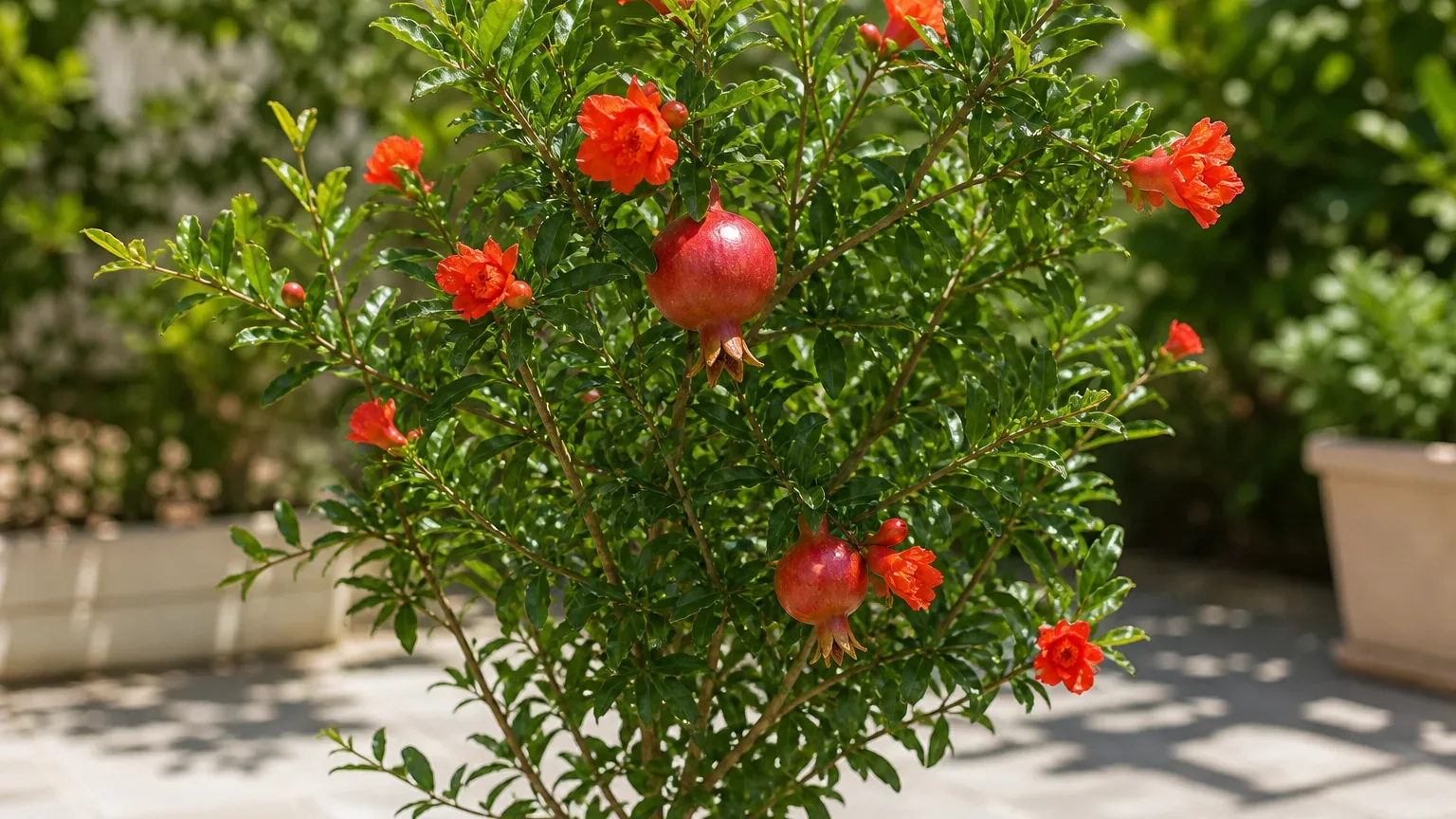
A pomegranate tree (Punica granatum) looks like ornamental fireworks in spring—glossy green leaves, thorny branches, and trumpet-shaped orange-red blooms that hummingbirds treat like a buffet. By fall, those same branches hang with leathery red globes packed with juicy arils. The plant is tougher than citrus in cold snaps, more drought-tolerant than most fruit trees, and forgiving enough for backyard growers who forget a watering week—until fruit starts splitting, flowers abort in humid bloom, or a hard freeze shatters bark on the south side of the trunk.
That gap between “easy in warm climates” and “actually getting clean, sweet fruit” is where most guides stop too soon. This page walks you through cultivar choice, planting, watering through fruit swell, training structure, harvest timing, and the fixes readers usually search for only after something goes wrong. For species-specific watering, soil, and fertilizer depth, the Pomegranate hub and its linked care pages go further on each topic.
Pomegranate Quick Reference
Use this table as a checkpoint before you change anything. If your tree looks off, match the symptom to the section below rather than guessing with more fertilizer or water.
| Factor | Target | Notes |
|---|---|---|
| USDA zones | 7–10 (cultivar-dependent) | Most types hardy to ~12°F; some to ~7°F |
| Mature size | 10–12 ft tall × 8–10 ft wide | Dwarf ‘Nana’ stays ~3–4 ft |
| Sun | Full sun; minimum 6 hours direct light | Shade = fewer, paler fruit |
| Soil pH | 5.5–7.2 | Tolerates clay and alkaline sites if drained |
| First meaningful harvest | Year 3 from nursery stock | Cuttings can fruit year 2; full crop years 5–6 |
| Water | Deep soaks; steady moisture during fruit swell | Dry-then-flood swings split fruit |
| Pollination | Self-fruitful | Male-only flowers never set fruit |
| Pruning | Late winter structure; summer sucker removal | Fruit spurs on 2–3-year wood |
| Storage | 41°F short-term; 45°F longer | Below 41°F >3 weeks risks chilling injury |
Is a Pomegranate Tree Right for Your Yard?
Pomegranate is a deciduous, multi-stemmed shrub that growers often train into a small tree. It is not a houseplant, not a shade-tree substitute, and not a good fit where summers stay cool and cloudy. What it is: a heat-loving fruiting plant that rewards full sun, sharp drainage, and a gardener who can tolerate thorns during harvest.
Before you buy, answer three questions honestly. Do you have six or more hours of direct sun on the planting spot from spring through fall? Can you provide well-drained soil—or a raised bed if your yard holds water? Are you in a climate with hot summers and winters that usually stay above the cultivar’s cold limit? If any answer is no, a container dwarf on a sunny patio may still work; an in-ground orchard tree probably will not.
Hardiness Zones and Heat Requirements
Most pomegranate cultivars grow as perennials in USDA hardiness zones 7 through 10. University of Georgia Extension notes that typical cultivars survive temperatures down to about 12°F, with hardier selections tolerating 7°F in protected sites. Anecdotal reports suggest hard-seeded types may tolerate cold better than soft-seeded ones. Pomegranates are more cold-hardy than citrus, but bark is vulnerable to frost damage in late fall before dormancy and again at spring bud break—often first on the south-facing trunk where sun warms tissue during the day.
Heat matters as much as cold. UGA research orchards report best performance when growing-season temperatures exceed 85°F for at least 120 days per year. Gardener’s Path, summarizing commercial and home-grower experience, places ideal summer daytime highs in the 70–90°F range for fruit production. In cool-summer regions, expect ornamental value and sporadic fruit at best.
Most varieties do not require winter chill hours to bloom, unlike apples or cherries. That makes pomegranates attractive in mild-winter areas—but it also means wood may not fully harden off, so sudden cold events still cause damage.
Choosing a Cultivar That Matches Your Climate
Named cultivars beat mystery seedlings every time if you care about flavor, seed hardness, and ripening time. Seedlings from grocery arils are a fun experiment, not a reliable path to the parent fruit.
Buy from a nursery that labels variety, root type, and expected size. Inspect for glossy leaves, a firm multi-stem base, and no cracked bark, scale, or sour-smelling potting mix. Confirm whether the tag describes a full-size fruiting cultivar or the compact ornamental ‘Nana’—they are not interchangeable for harvest expectations.
Wonderful, Sweet, Nana, and Regional Picks
‘Wonderful’ dominates California retail and juice production—and that popularity causes problems elsewhere. University of Georgia Extension states plainly that ‘Wonderful’ performs very poorly in Georgia despite being the national default. If you are east of the Rockies or in humid summers, prioritize regionally proven types from local nurseries or extension bulletins over whatever big-box stores stock from West Coast suppliers.
‘Sweet’ ripens earlier than many cultivars and produces very sweet, soft-seeded fruit with heavy crops in favorable climates—worth considering if your season is short but hot.
‘Nana’ is a dwarf ornamental form, cold-hardy to about zone 7, typically 3–4 feet tall. It flowers reliably and can set small fruit, but it is not a substitute for a standard orchard pomegranate if you want kitchen-scale harvests.
Other names appear in research and specialty catalogs—‘Kaj-acik-anor’, ‘Nikitski ranni’, ‘Granada’, and cold-tolerant selections from Central Asian breeding lines. When in doubt, ask your county extension office which cultivars local growers still have producing after ten years. That question filters out marketing hype fast.
How to Plant Pomegranate Trees
Plant after the last hard frost in spring for young container or bare-root trees. Fall planting can work in mild zones if the tree has six to eight weeks to root before cold—but spring is safer for beginners because you can watch first-season water needs.
Choose the sunniest, best-drained spot in the yard. Pomegranates tolerate reflected heat that wilts lesser plants. Avoid low pockets where cold air pools in winter and where spring bloom stays humid. In heavy clay or high water tables, plant on a raised bed 4 feet wide and 6–12 inches high with a gentle slope for air drainage.
Dig a hole as deep as the root ball and twice as wide. For bare-root plants, soak roots in water 30 minutes before planting. Set the tree so the graft union (if present) or root crown sits at or slightly above grade—never buried deeply. Backfill with native soil amended only if a soil test shows need; excessive organic matter alone does not fix drainage. Water thoroughly to settle soil, then mulch 2–3 inches out to the drip line, keeping mulch 1–2 inches away from stems.
Spacing, Depth, and Site Preparation
Spacing depends on how you will grow the plant:
- Fruit production (open tree form): 15 feet between trees is a common backyard target; commercial orchards often use 18 × 18 feet (~134 trees per acre).
- Hedge or screen: 6–9 feet apart with annual thinning for airflow.
- Tighter experimental spacings exist in commercial trials but demand aggressive pruning— not a beginner default.
Run a soil test before planting. UGA recommends adjusting pH toward 6.5 with dolomitic limestone if needed and incorporating phosphorus when tests show deficiency. Pre-plant weed control reduces competition; mulch preserves moisture around young roots without keeping the crown soggy.
Light, Soil, and Watering
Light is non-negotiable. Six hours of direct sun is the minimum for decent fruit color and sugar; eight hours is better. Partial shade produces leggy growth and shy flowering. Aligning rows north–south can maximize exposure in orchards, but drainage beats row orientation in home yards.
Soil flexibility is a pomegranate strength. Plants grow on deep loam, sandy loam, and many clay sites if water moves through. Preferred pH is 5.5–7.2. They tolerate moderate salinity and irrigation water up to 2,000–2,500 ppm salt in research settings—relevant only if you irrigate with brackish well water. What they cannot tolerate is standing water for extended periods; root rot and poor fruit quality follow.
Watering follows a simple rule: generous when establishing, steady when fruiting, restrained in fall. For new trees, deep irrigation every two to four weeks during dry spells in the first year—or weekly if your soil dries fast and rainfall is absent. Mature trees survive drought but will not produce reliable crops without supplemental water during prolonged dry periods.
Preventing Fruit Splitting From Water Stress
Fruit splitting is the classic pomegranate heartbreak. Rinds harden during a dry spell; a sudden heavy rain or enthusiastic watering swells arils faster than the skin stretches. Cracks invite ants, birds, and rot.
Prevention is boring and effective:
- Use drip irrigation rather than overhead sprinklers—overhead water during bloom can reduce set, and wet foliage spreads disease.
- Keep soil moisture even from flowering through harvest, especially in summer.
- Avoid heavy irrigation in fall when rains return; UGA lists excess fall moisture as a direct splitting trigger.
- Mulch to buffer soil moisture swings, not to keep the trunk wet.
If fruit splits anyway, harvest intact neighbors promptly and remove damaged fruit from the ground so pests do not build up.
Fertilizing Without Overfeeding
Pomegranates are light feeders compared to peaches—and over-fertilization is a common reason for lush leaves and empty branches.
For young plants, UGA suggests 1 ounce of 10-10-10 per foot of height, three times yearly (early spring, late spring, summer), in an expanding circle around the plant, up to 8 ounces per application at 8 feet tall. Increase the circle diameter as the canopy widens. Heavy rainfall or very sandy soil may need slightly more; clay sites often need less.
After the first two years, many established backyard trees need little or no nitrogen if growth is vigorous. Excess late-summer nitrogen hurts fruit color and size and can increase susceptibility to early cold damage. Apply phosphorus and potassium only when soil or leaf tests show deficiency. Zinc deficiency appears as unusual leaf yellowing; a foliar zinc spray after fruit set may help if tests confirm need.
If you want a deeper feeding schedule tied to container vs in-ground culture, see the Pomegranate fertilizer guide.
Pruning and Training Structure
Unpruned pomegranates become thorny, wide shrubs with fruit on the outer shell of the canopy—hard to pick, easy to sunburn, and prone to limb rub in wind. Annual pruning keeps plants reachable and renews fruiting wood.
Fruiting spurs form mainly on two- to three-year-old wood at the canopy edge. Hard rejuvenation cuts remove the very wood you need; skipping pruning for years forces aggressive correction that slashes yield.
Winter (before bud break): Remove dead, diseased, crossing, and downward-growing wood. Shape an open vase or multi-trunk form with enough lateral branches to carry fruit weight. Maintain height around 9 feet if you want to minimize ladder work—trees naturally want 10–12 feet.
Mid-summer: Rub off or cut suckers from the base and interior unless you are deliberately replacing a frozen trunk in a multi-trunk system. Light sucker control beats one brutal session every five years.
Thin heavy fruit clusters so remaining pomegranates size fully and branches do not break. Support long branches laden with fruit if they bow toward the ground.
Single-Trunk vs Multi-Trunk Forms
California commercial plantings often use a single short trunk with five to six scaffold branches—a tidy orchard look with easier floor maintenance. In humid Southeast and frost-prone areas, multi-trunk (three to six stems from ground level) is usually smarter: if one trunk dies back in a freeze, you train a vigorous sucker to replace it without losing the whole plant.
A triple-trunk compromise splits the difference. Whichever form you choose, decide in year two and stick with it long enough for structure to develop. Details on cut placement and renewal are in the Pomegranate pruning guide.
Pollination and Fruit Set
Pomegranates are self-fruitful—one tree can set fruit. Pollinators include bees, other insects, and hummingbirds. Bloom may run April through June in one continuous wave or three to four flushes, depending on cultivar; flowers can appear into fall, but early spring blooms produce the largest fruit.
The troubleshooting detail most guides skip: pomegranates bear two flower types. Hermaphroditic (perfect) flowers have a rounded, bell- or peanut-shaped base and set fruit. Functionally male flowers are narrower and vase-shaped—they attract pollinators but never become fruit. A tree heavy with male blooms looks spectacular and produces nothing. Hot, humid bloom weather can increase flower abortion; good air circulation and full sun reduce that risk.
Planting a second cultivar can increase yield through cross-pollination but is not required for fruit. If you see flowers but no fruit, check flower shape first, then look for nitrogen excess, shade, or overhead irrigation during bloom—not missing pollinator partners.
Growing Pomegranates in Containers
Any pomegranate can grow in a pot; dwarf types are easier. Use at least a 10-gallon container with multiple drainage holes—better yet 15–25 gallons for a fruiting standard on a patio. Heavy ceramic or fabric pots reduce tip-over risk when top-heavy with fruit.
Fill with standard well-draining potting mix, not garden clay. Container roots dry faster and heat faster; check moisture daily in summer. Expect lower yield than in-ground plants because roots are restricted—but consistent water and light feeding still produce usable crops on sunny decks.
Move pots to a garage, shed, or sheltered wall when hard freezes threaten roots in the pot—container soil cold penetrates faster than ground soil. In borderline zones, container culture is often the difference between survival and replacement.
When and How to Harvest
Patience is part of the plan. Nursery trees usually deliver a serious harvest around year three; much of year-three fruit may be small or late. Full commercial-level crops often arrive in years five to six. Hardwood cuttings can fruit in year two after planting, which surprises people who expect instant orchard output.
Ripening windows vary by cultivar—late August through October or early November in many U.S. regions—with multiple picks per season rather than one strip-the-tree pass.
Maturity cues combine several signs:
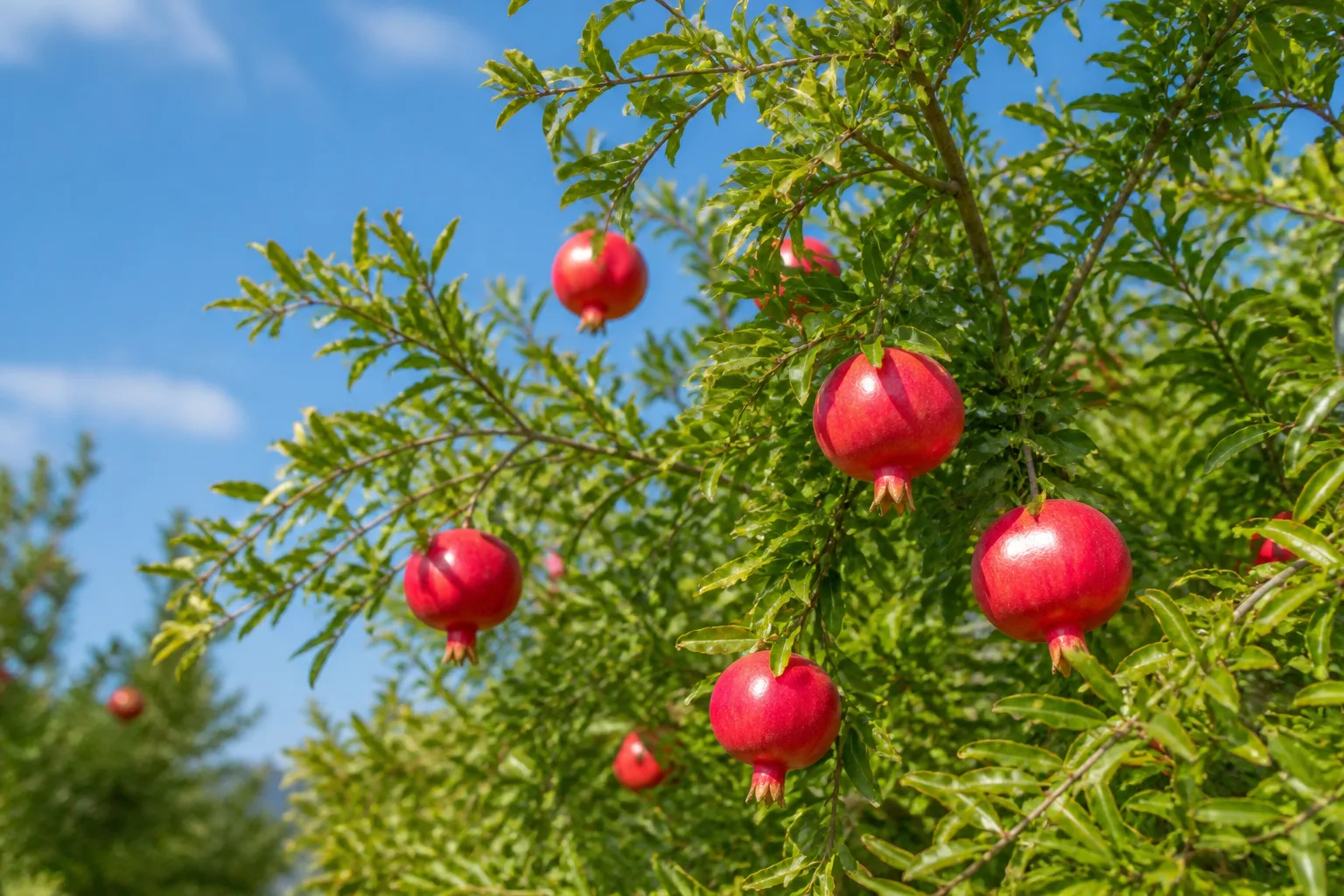
- Full red (or cultivar-appropriate) rind color
- Matte, not glossy, skin sheen
- Slightly flattened, hexagonal shape instead of perfect roundness
- Metallic “ting” sound when tapped—experienced growers swear by this test
For ‘Wonderful’, research benchmarks include soluble solids above 16–17%, acids below 1.85%, and sugar:acid ratio above 18.5—home growers rarely lab-test, but the numbers explain why early-picked fruit tastes flat.
Cut fruit with hand pruners, leaving a short stem but no sharp wood point that pierces neighbors in the basket. Handle gently; impacts crack rinds. Store at 41°F for under three weeks or 45°F for longer holding; colder long storage causes chilling injury—brown membranes and mushy arils. For kitchen use within weeks, a cool basement often suffices.
Overwintering and Cold Protection
Young trees are most vulnerable. In zones where temperatures dip near 10°F, grow in containers you can roll to shelter, or plant in the warmest microclimate against a south wall with overhead cold-frame protection during Arctic outbreaks.
White flat latex paint on the lower trunk reduces southwest winter bark splitting from freeze–thaw cycles. Avoid heavy fall nitrogen that keeps tissue soft. Wait until late winter for hard pruning so you can see what wood actually died.
If dieback occurs on one trunk in a multi-trunk plant, remove dead wood and train a sucker. On a single-trunk form, severe freeze damage often means starting over.
Pests, Diseases, and Troubleshooting
Well-managed pomegranates are relatively pest-free compared to apples or peaches—but not immune.
Common pests: aphids, whiteflies, mealybugs, scale, thrips, flat mites, and occasional caterpillars. Dormant horticultural oil in winter helps scale; insecticidal soap targets soft-bodied insects. UGA notes few labeled pesticides for home pomegranate in some states—identify pests before spraying broad-spectrum chemicals.
Diseases: leaf spot, fruit spot, Cercospora, Botryosphaeria, twig dieback, and rot in cracked fruit. Humid climates see more foliar spotting; remove fallen fruit and avoid overhead irrigation. Alternaria “black heart”—internal rot with a sound exterior—is a major California issue; moisture during bloom increases risk.
| Symptom | Likely cause | First fix |
|---|---|---|
| Flowers, no fruit | Mostly male blooms or bloom-time humidity | Confirm flower shape; improve air sun |
| Fruit split | Irregular watering | Even drip through ripening |
| Yellow leaves, wet soil | Overwatering / root stress | Reduce water; check drainage |
| Leaf yellowing, dry soil | Drought stress | Deep soak; mulch |
| Small late fruit | Late-season bloom flush | Focus harvest on spring-set fruit |
| Bark split south side | Winter sunscald | Trunk paint; multi-trunk replacement |
Propagation From Cuttings
Nurseries propagate pomegranates from hardwood cuttings because seedlings are not true-to-type. Home propagation is doable if you accept slower orchard timelines.
In late fall or winter, take 8–10 inch cuttings from pencil-thick one-year wood—suckers often make the best material. Dip in rooting hormone if you have it; stick cuttings so two to three nodes sit below the medium with only the top few inches exposed. Keep medium moist and bright; roots often form in six to eight weeks. Transplant the following year.
Texas A&M Aggie Horticulture notes trees from cuttings can bear fruit in year two, while seed-grown plants need at least three years—another reason to skip the grocery-seed experiment unless you enjoy surprises. Step-by-step timing and media mixes are expanded in the Pomegranate propagation guide.
Conclusion
A pomegranate tree rewards gardeners who match cultivar to climate, commit to sun and drainage, and treat water as a season-long rhythm rather than a panic button after a dry week. Choose ‘Wonderful’ only where it is proven locally; consider multi-trunk training if frost is a recurring threat; learn to tell male from perfect flowers before you blame pollination; and harvest by color, skin sheen, and sound—not calendar dates alone.
Get those decisions right and the plant does much of the work—showy blooms for pollinators, fruit that stores for weeks, and a shrub that can still be productive decades later. For ongoing care by topic, start at the Pomegranate overview and follow the linked guides on watering, soil, and repotting as your tree moves from first planting to steady harvest.



