How to Prune Pomegranate: Training, Suckers & Fruiting Wood
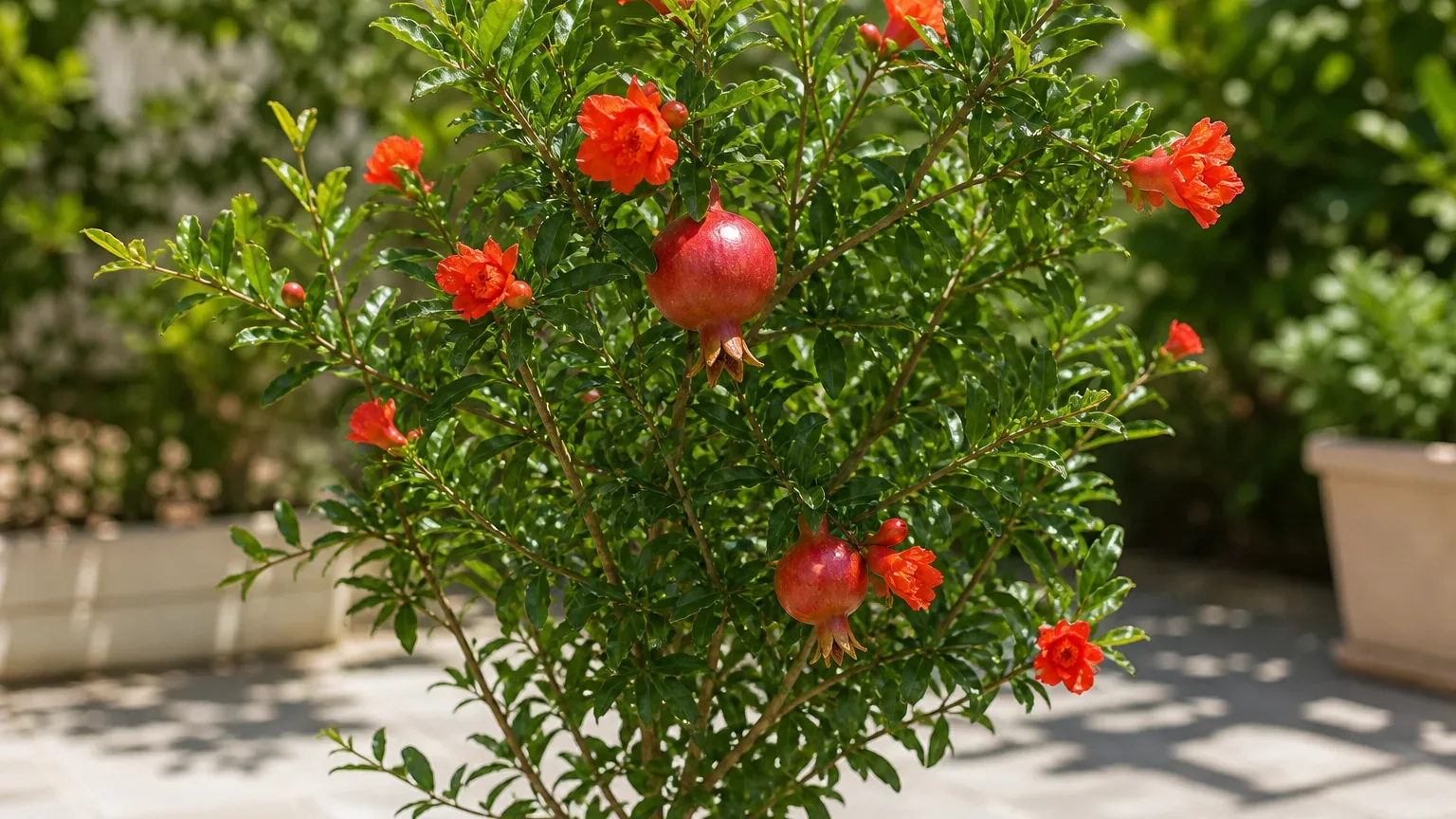
How to Prune Pomegranate: Training, Suckers & Fruiting Wood
How to Prune Pomegranate: Training, Suckers & Fruiting Wood
Quick Answer
First action: cut out only dead, damaged, diseased, or badly crossing wood with clean, sharp bypass pruners—before you train trunks, chase suckers, or shorten healthy fruiting shoots.
Pomegranate (Punica granatum) is a suckering deciduous shrub or small tree that can be kept as a multi-stem bush or trained to a few clear trunks. UF/IFAS Extension recommends light annual pruning on established plants, late-winter removal of dead wood, and frequent sucker cleanup around the trunks you keep. Fruit quality depends on keeping productive wood: Clemson notes that light pruning encourages fruiting spurs on 2- to 3-year-old wood, while heavy pruning cuts the crop. Do structural work in late winter or early spring, before the spring flush, and match cuts to the form you want—shrub, hedge, or tree—not to a generic houseplant tip-pinch routine.
What to Check Before You Cut
Walk the plant once before opening the blades. Confirm whether you want a multi-stem shrub (natural habit), a few trunks, or one clear trunk. Look for basal suckers, dead tips, crossing interior branches, thorns near walkways, and branches so low that fruit would rest on soil. Check bark for soft or sunken spots and for scale on leafless wood. Note last year’s short spur wood on older laterals—those are the fruit carriers you must not strip for “tidiness.”
Also check care before structural work. A plant in deep shade will stretch and fruit poorly no matter how you prune; fix light first. Uneven moisture splits fruit later in the season, so review watering if the plant is already stressed. Delay hard training on a newly repotted or drought-stressed plant until it is growing steadily again.
When to Prune Pomegranate
Best window for major work: late winter to early spring, before new leaves push. Missouri Botanical Garden advises pruning as needed in late winter and removing soil suckers as they develop. Clemson’s home-garden guidance is the same calendar: prune before spring growth begins. RHS lists Punica granatum under light-pruning practice (Pruning group 1) from spring into summer for free-standing plants—meaning light cleanup and shaping, not aggressive renovation.
Anytime: remove dead wood, broken limbs after storms, and unwanted basal suckers if you are holding a tree or few-trunk form.
Avoid: hard mid-season canopy cuts that remove two- to three-year fruiting wood while flowers or fruit are forming. Light tip shortening of overly long soft shoots can wait until after a flush if needed for clearance, but treat fruiting wood carefully.
In Indian climates with a clear cool dormant period and leaf drop, time structural pruning for that leafless or near-leafless window so the framework is easy to see. In warm coastal spots where plants stay semi-evergreen, still prune just before the strongest spring growth push rather than in peak monsoon humidity when wounds stay wet longer.
What Pruning Does—and Does Not Do
Pruning sets form, opens the canopy for light and airflow, keeps fruit off the ground, and renews a manageable number of fruiting shoots. It does not replace full sun, free-draining soil, or steady moisture from flowering through ripening. It also cannot turn a deeply shaded terrace plant into a heavy cropper.
On established trees, light annual pruning supports good fruit quality. Heavy cutting reduces production because you remove the spur-bearing wood Clemson describes. Over-fertilizing and excess irrigation push soft vegetative growth and can worsen fruit drop on young plants—so do not answer a hard prune with a heavy nitrogen feed.
The First Cuts: Dead Wood and Sanitation
Start every session the same way:
- Disinfect blades between plants (and after cutting diseased wood) with isopropyl alcohol or a fresh bleach solution, then rinse and dry.
- Cut dead wood back to live tissue—green or moist cambium under the bark—or remove the branch at the collar.
- Bag and discard diseased twigs and mummified fruit; do not leave infected debris under the canopy. Humid climates favor leaf and fruit spots and anthracnose; clean cuts and debris removal support that hygiene even when sprays are not your first tool.
- Wear gloves. Stems are often slender and thorny.
Only after the dead and diseased wood is gone should you train scaffolds or thin healthy fruiting wood.
Training Young Pomegranate (Years 1–2)
Decide form early. Unmanaged plants sucker freely and become dense multi-stem shrubs. That is fine for a hedge or informal bush. For fruit access and airflow, train one trunk or a few trunks.
UF/IFAS training steps for production plants:
- At planting, cut the plant back to about 60–75 cm (2–2.5 ft).
- Develop three to five symmetrically spaced scaffold limbs; keep the lowest at least 20–25 cm (8–10 in) above ground.
- In the winter after planting, shorten branches to about three-fifths of their length.
- Remove interfering shoots, leaving two or three shoots on each scaffold.
- Choose single-trunk or multi-trunk and remove extra suckers often around the trunks you keep.
Pinch soft new shoots during the first two growing seasons to build a stocky framework rather than long, whippy leaders. Keep training cuts in the dormant window when possible so you can see branch angles clearly.
Suckers: Keep, Thin, or Clear
Basal suckers are normal. Clemson notes plants sucker profusely and quickly become dense if suckers are ignored.
- Tree or few-trunk form: remove suckers at soil line or crown as they appear so energy stays in the scaffolds.
- Shrub form: keep a limited number of strong stems of different ages and remove the weakest crowded shoots each dormant season.
- Hedge: UF notes suckers can fill spacing and create a compact screen—train height with light topping, but still thin dead and crossing wood.
Cut suckers cleanly; do not tear them, which damages bark at the crown. If a sucker is already woody, cut as close to the origin as you can without gouging the parent stem.
Fruiting Wood: What to Keep
Productive pomegranate fruit sits on short spurs of two- to three-year-old wood. Flowers appear on current-season growth arising from that older framework—so “flowers on new growth” and “fruit on older spurs” are both true in practice. Your job is to keep enough two- to three-year laterals, renew a few younger shoots each year, and avoid stripping the canopy bare.
On an established plant in late winter:
- Thin crowded, crossing, or inward-growing shoots to open the center.
- Shorten only the longest, weakest, or tangled shoots back to a healthy outward bud or lateral.
- Leave a mix of one-, two-, and three-year wood rather than cutting everything to stubs.
- Support or thin crop load if branches bend toward the ground—fruit that touches soil can rot or get pest damage.
If harvest matters more than a tiny silhouette, favor light thinning over hard heading of every branch.
Size Control and Container Plants
Standard cultivars can reach roughly shrub to small-tree size; Missouri notes vigorous types such as ‘Wonderful’ may be pruned shorter than their potential height. Size control still follows the light-pruning rule: shorten and thin annually rather than cutting the plant to a stump unless cold kill or severe neglect forces renovation over two seasons.
Containers: grow in a heavy pot with open drainage, full sun outdoors in the warm season, and a cool bright overwinter spot where winters are cold—Missouri’s container guidance matches how many Indian terrace growers already manage the plant. Prune late winter while the plant is resting. Keep the canopy proportional to the pot: remove suckers that crowd the rim, shorten shoots that overbalance the pot, and avoid removing most fruiting wood in one year. Rotate the pot for even light so you are not always cutting the shaded, stretched side. Pair container size control with the overview and fertilizer guides so root-bound stress is not mistaken for a pruning problem.
Dwarf ornamental forms such as ‘Nana’ need far less structural work—mostly deadwood and light shaping—than a full fruiting cultivar.
Where Exactly to Cut
- Use bypass pruners for shoots up to about pencil thickness; use loppers or a pruning saw for thicker wood.
- Cut just outside the branch collar when removing a whole limb—do not leave long stubs and do not flush-cut into the trunk ridge.
- When shortening a shoot, cut about 5–10 mm above a healthy outward-facing bud or strong lateral, sloping slightly away from the bud.
- Prefer thinning cuts (removing a shoot at its origin) over shearing the outer shell like a topiary hedge if fruit is the goal.
How Much Is Safe
| Plant stage | Safe approach |
|---|---|
| Year 1–2 training | Firm heading and scaffold selection as above |
| Established fruiting shrub/tree | Light annual thinning + sucker control |
| Neglected dense bush | Spread renovation over 2 seasons; keep productive wood each year |
| Stressed, newly moved, or root-bound | Deadwood only until growth resumes |
If more than about one-third of the live canopy would need to come off to “fix” a neglected plant, stop and stage the work. Clemson is explicit that heavy pruning reduces fruit.
Aftercare and Recovery
After dormant pruning, water when the top few centimeters of mix or soil dry—do not keep the root zone soggy. Resume a modest spring feed only when new growth is active; see the fertilizer guide rather than dumping high nitrogen on fresh wounds. Keep full sun and airflow. Watch for new shoots within a few warm weeks.
Signs pruning worked: clean wound callus, new shoots near cut nodes, an opener canopy, fewer ground-touching branches, and continued spur wood for the next crop.
Signs it went wrong: large bare sections with no buds, dieback behind cuts, a flush of weak suckers replacing fruiting wood you removed, or a sharp drop in flowering the following season after hard heading.
Hardwood cuttings for propagation can come from healthy pencil-thick dormant wood if you already planned to shorten shoots—but do not invent extra cuts just to make cuttings.
Mistakes to Avoid
- Shearing the whole plant like a hedge every year and removing spur wood
- Ignoring suckers on a “tree” form until the crown is a thicket
- Leaving fruiting branches so low that fruit sits on wet soil
- Pruning hard in peak heat or monsoon humidity without a clear reason
- Stacking hard prune, heavy fertilizer, and repotting on the same day
- Cutting into soft or discolored wood without cleaning tools afterward
When Not to Prune
Skip structural pruning on a plant that is wilting from drought, sitting in waterlogged mix, or still recovering from transplant shock. Remove only hazards (broken limbs) until roots and shoots stabilize. Do not hard-prune during the main flowering and fruit-sizing window if you want that season’s crop.
Related Pomegranate Guides
- Pomegranate overview — habit, sun, and fruiting expectations before you reshape the plant
- Pomegranate light — full sun needed for flowers and fruit; pruning cannot fix chronic shade
- Pomegranate watering — even moisture during fruit swell to limit splitting after canopy work
- Pomegranate soil — drainage that keeps wounds and roots healthier in humid weather
- Pomegranate fertilizer — modest spring feeding after growth resumes, not on pruning day
- Pomegranate propagation — rooting hardwood cuttings taken from planned dormant cuts
- Pomegranate repotting — container timing so root work and hard pruning are not stacked