Pomegranate Fertilizer Guide for Pots and Indian Gardens
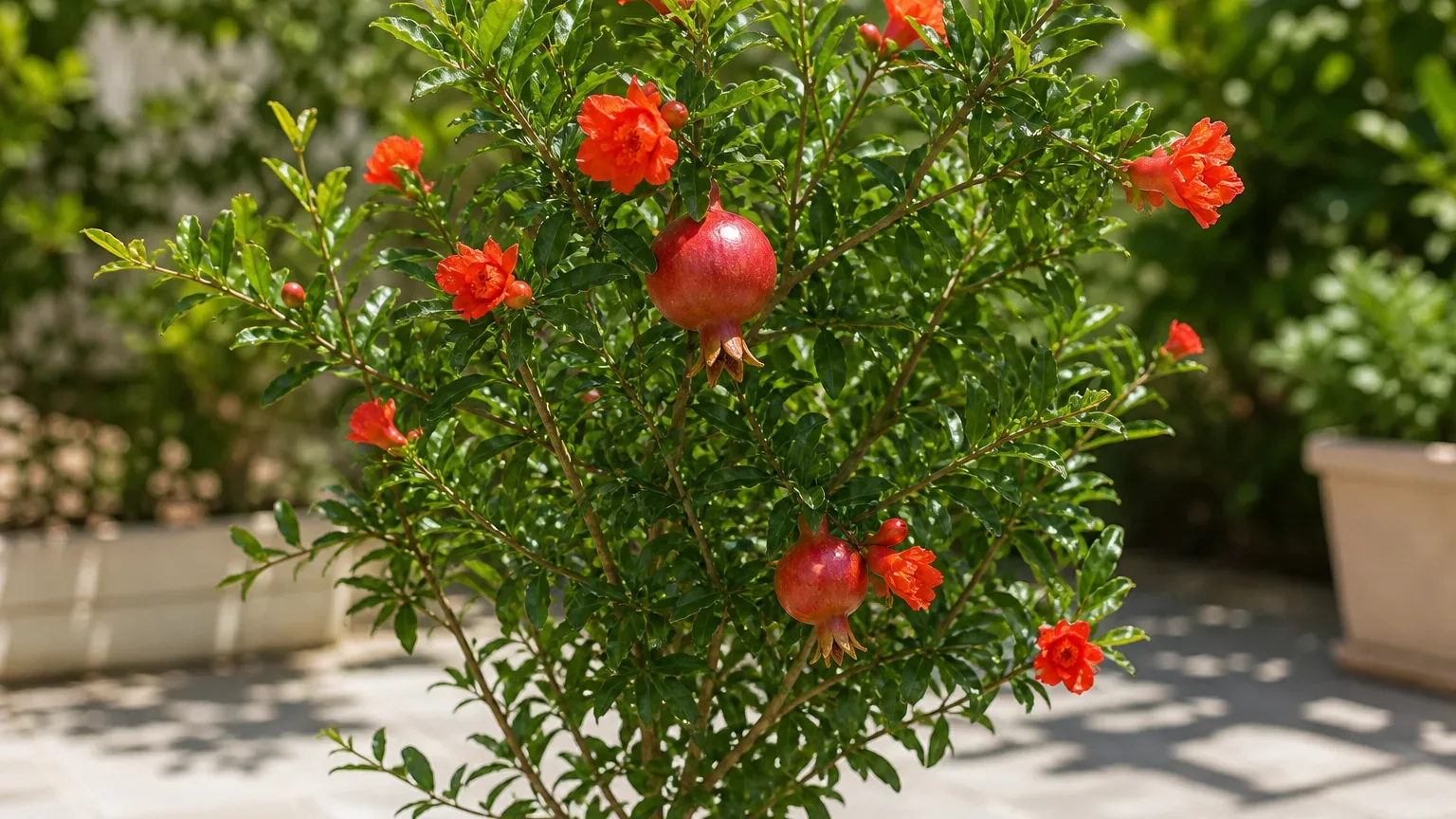
Pomegranate Fertilizer Guide for Pots and Indian Gardens
Pomegranate Fertilizer Guide for Pots and Indian Gardens
Your pomegranate does not need constant feeding. It needs nutrients when warm weather, strong sun, and healthy roots allow Punica granatum to push shoots, flowers, and fruit. For a potted anar on an Indian terrace, the safest starting point is a complete balanced or fruit-tree fertilizer used at half the container label rate every four to six weeks during visible active growth, with the application skipped whenever the mix is saturated, the plant is heat-wilted, or deciduous growth has paused.
That container plan is deliberately more conservative than an orchard schedule. A mature shrub in soil has a broad root zone; a balcony plant may have only 30–60 litres of mix, where repeated fertilizer salts accumulate. Feed the plant you have, not the kilogram dose printed for a field tree.
Pomegranate fertilizer: the quick answer
For pomegranate in an Indian garden, split nutrition around active growth rather than giving one heavy annual dump. Tamil Nadu Agricultural University publishes age-based farmyard manure plus N, P, and K rates per plant for field culture. University of Georgia Extension recommends small, repeated applications of a complete fertilizer such as 10-10-10 during the growing season, scaled to plant height. Both point to the same useful principle: timed, measured feeds are safer than one concentrated handful.
Use a complete fertilizer that supplies nitrogen, phosphorus, potassium, and preferably micronutrients. A balanced formula suits establishment; keep nitrogen modest once the plant is flowering and fruiting so you grow manageable wood rather than endless soft shoots. In a pot, follow the product’s container instructions and begin at half strength instead of converting TNAU gram-per-plant field advice into a terrace dose.
Why pomegranate needs planned feeding
Punica granatum is a sun-loving deciduous fruit shrub, not a low-light foliage houseplant. Nitrogen supports leaves and shoots, phosphorus participates in energy transfer and root processes, and potassium supports water regulation and fruit development. The goal is a healthy canopy that can flower and carry fruit—not maximum vegetative size in a cramped pot.
Fertilizer cannot compensate for shade, waterlogged mix, or a root-bound pot. Pomegranate needs strong direct light for flowering and sugar development, so check the Pomegranate light guide before treating sparse growth as hunger. If the pot stays wet for days, fix drainage through the Pomegranate soil guide because stressed roots cannot use an extra feed efficiently. Steady moisture during fruit fill still matters more than another spoon of fertilizer—irregular watering is a common cause of fruit splitting.
In-ground trees and potted pomegranate need different plans
Field recommendations are written as kilograms or grams per mature plant. TNAU, for example, lists farmyard manure plus rising N, P, and K amounts from the first year through year six and beyond. U.S. extension guides often describe ounces of 10-10-10 per foot of bush height several times a year. Those sources prove pomegranate is routinely fed as a fruit crop, but they are not container recipes: root volume, leaching, fertilizer analysis, climate, and plant size differ too much.
Container media hold a finite nutrient and salt load. NC State Extension’s container guidance treats nutrient management as part of the whole pot system, alongside water, temperature, light, and growing medium. That is why a small liquid dose, followed by observation, is more controllable than burying a large handful of granules in a 35 cm pot.
India seasonal fertilizer schedule for pomegranate
India has no single anar calendar. A dry Maharashtra orchard, a humid coastal courtyard, and a north Indian terrace with cool winters do not enter active growth together. Use the table as a decision framework, then let new leaves, flowering, rainfall, and root-zone moisture decide the exact week.
| Seasonal cue | In-ground pomegranate | Container pomegranate |
|---|---|---|
| New spring flush begins | Apply the first split based on plant age, product label, and preferably a soil test | Start half-rate liquid feed after steady new growth appears |
| Hot, dry flowering or fruit fill | Feed only if irrigation is reliable; never fertilize drought-stressed roots | Water first, then feed on a cooler morning; skip during severe heat wilt |
| Sustained monsoon rain | Pause if soil is saturated or nutrients would wash away | Usually pause while the pot stays wet; resume after drainage and growth normalize |
| Post-monsoon active flush | Apply the next planned split when soil is moist but not flooded | Resume a half-rate feed if the plant is actively growing |
| Cool leafless or low-growth period | Do not force growth with nitrogen | Stop routine feeding until fresh growth returns |
Late winter and spring flush
In much of India, late winter to spring brings stronger light and a new flush after deciduous leaf drop. Begin feeding only after you see expanding leaves or shoots, especially on a plant that was recently moved, repotted, or hard-pruned. UF/IFAS Extension recommends a balanced fertilizer in early spring just before new growth, with compost or well-rotted manure as an annual soil fertility boost—useful timing cues even when you scale the dose for a pot.
If you repotted into fresh compost-rich mix, wait several weeks and check whether the mix already contains controlled-release fertilizer. Stacking liquid feed over a charged potting mix is a common route to excess salts. Use the Pomegranate repotting guide to separate transplant recovery from feeding.
Hot summer flowering and fruit fill
Do not apply fertilizer to bone-dry roots during a heatwave. Water thoroughly, allow drainage, and feed later at a normal irrigation when leaves are firm. Consistent moisture from flowering through ripening protects fruit quality; fertilizer is secondary when the plant is wilted.
Avoid heavy nitrogen late in the fruiting season. University of Georgia Extension warns that excessive nitrogen in late summer to early fall can hurt fruit color and size and may increase chilling sensitivity. For Indian growers, that translates to a practical rule: do not chase soft leafy growth with high-N feeds once fruit is filling and the monsoon is ending.
Monsoon and cool-season pause
Pause routine feeding when monsoon rain keeps the soil saturated. Applying soluble fertilizer before a heavy downpour wastes nutrients; adding granules to an airless pot increases root stress. Move portable containers out of constant roof runoff, confirm drainage holes are open, and wait until the mix returns to a normal wet-dry rhythm.
After harvest and as cool weather approaches, many pomegranates drop leaves and slow growth. That deciduous pause is normal. Stop nitrogen-heavy feeding while the plant is bare or barely growing; resume when the next flush appears. Tie this pause to the Pomegranate watering guide, because a leafless pot uses moisture more slowly and holds fertilizer salts longer.
Best fertilizer type for pomegranate
Choose a product with a declared nutrient analysis and directions for fruit trees or outdoor containers. A complete water-soluble feed is easiest to reduce and distribute evenly in a pot. Controlled-release granules can work if you know the release period and avoid overlapping liquid feeds.
Clemson Cooperative Extension suggests fertilizing in March and July with 1 lb of 10-10-10 per 3 ft of plant height for landscape plants—evidence that a balanced complete fertilizer is a mainstream home-garden approach. In a container, treat that as a field cue, not a pot recipe: use the label’s container line and start at half strength.
Choosing an NPK formula
Utah State University Extension emphasizes annual nitrogen for vigor and notes that pomegranates often do not respond strongly to added phosphorus or potassium when soil already supplies them. University of Georgia Extension similarly advises applying phosphorus and potassium based on soil or leaf tests rather than habit. That supports using a balanced complete fertilizer for most home plants, then adjusting only when a test or clear deficiency pattern justifies it.
Clemson Cooperative Extension’s fertilizer factsheet explains how fertilizer grades represent percentages of nitrogen, phosphate, and potash, which helps you compare products instead of relying on marketing names. Avoid chasing very high phosphorus “bloom boosters” unless a soil test shows a need. Read the guaranteed analysis, check for micronutrients, and follow the container directions on the label.
Compost, FYM, and organic inputs
Mature compost or well-rotted farmyard manure can improve organic matter and contribute nutrients gradually. TNAU includes FYM in its per-plant schedule for field trees. UF/IFAS also lists annual compost or well-rotted manure around the base as a fertility practice. In a pot, use only well-finished material as a thin top-dressing, keep it off the trunk, and do not fill the container with bulky manure that reduces air space.
“Organic” does not mean unlimited. Do not combine manure, oil cake, liquid feed, and slow-release granules at once. Add one input, observe a growth cycle, and adjust. Vermicompost can help, but its nutrient analysis varies and it is not a complete substitute for a measured fertilizer program when the plant is actively growing and clearly hungry.
How much fertilizer to use in a container
There is no defensible gram dose without the fertilizer analysis, pot volume, plant size, and label directions. Start a healthy, actively growing potted pomegranate at half the label’s container rate. Repeat no sooner than four to six weeks with a water-soluble product, and stop if the plant is not producing new growth.
For controlled-release fertilizer, use the label rate for the actual container diameter or media volume and note the release period. Do not add monthly liquid feed unless the label specifically supports combining them. A newly purchased nursery plant may already contain coated granules; look for pellets before feeding.
For in-ground plants, TNAU’s age-based N, P, and K figures are useful regional anchors for mature orchard trees, but young potted plants should never receive a sixth-year field dose. Prefer soil testing when you can, and increase only after you see a full flush and good drainage.
How to fertilize pomegranate step by step
- Confirm the plant is in strong sun, actively growing, and free of severe wilt or root decline.
- Feel the mix. If it is bone dry, water and postpone feeding; if saturated, wait for drainage and aeration.
- Measure the product rather than estimating by handful. For a liquid feed, begin at half the label’s container concentration.
- Apply evenly over already moist mix, keeping concentrated granules and solution away from the woody crown.
- Allow drainage to leave the pot and empty the saucer. Record the date and product.
- Reassess new growth over the next month. Do not “top up” because results are not visible in a few days.
This sequence keeps feeding tied to root health and watering rhythm. If roots circle densely or the pot dries within a day, increasing fertilizer is the wrong response; the plant may need a larger root zone through repotting.
Reading pale leaves and slow growth
Uniformly pale older leaves can be consistent with nitrogen shortage, while unusual yellowing patterns can involve micronutrients such as zinc. Yet wet roots, high-pH iron issues, pests, drought, and natural deciduous leaf drop can mimic deficiency. Diagnose the pattern, soil moisture, recent feeding, light level, and root condition together.
If a pomegranate has not been fed for months, drains well, receives full sun, and is actively growing pale leaves, try one measured half-rate complete feed. If new growth remains chlorotic, test pH and consider a targeted micronutrient approach rather than stacking more general NPK. Avoid repeated “rescue” doses; they turn a root or drainage problem into salt injury.
Signs of too much fertilizer
Watch for a white crust on the media or pot rim, brown leaf tips and margins appearing after feeding, sudden wilt despite moist soil, leaf drop, or stalled growth. Missouri Botanical Garden salt-injury guidance describes marginal leaf burn, tip burn, reduced vigor, and smaller leaves or fruit among soil-salt symptoms—patterns that overlap with overfeeding in containers.
Stop feeding immediately. Remove visible granules if practical, then leach a free-draining pot with plain water only if the roots are otherwise healthy and the mix drains promptly. Do not flood compacted or already waterlogged soil; correct the root-zone problem first through better drainage and the watering guide.
Zinc and other micronutrient notes
University of Georgia Extension notes that zinc is one of the more common micronutrient deficiencies in pomegranate and can appear as unusual leaf yellowing; when needed, a foliar zinc application after fruit set is the usual recommendation in orchard settings. Utah State University Extension likewise suggests chelated zinc or iron when deficiency symptoms appear. These are targeted corrections, not casual monthly tonics.
Do not spray micronutrient concentrates onto a balcony plant at orchard rates without a clear diagnosis and product directions. More complete fertilizer will not fix zinc or iron problems if pH or root damage is blocking uptake. When in doubt, test the soil or mix before stacking products.
When to use this page vs other Pomegranate guides
- Use the Pomegranate overview for whole-plant placement, size, fruiting habit, and first-month priorities.
- Use Pomegranate light guidance when weak growth or poor flowering may come from shade.
- Use Pomegranate watering guidance before feeding a wilted, dry, or persistently wet plant.
- Use Pomegranate soil guidance for drainage, pH, and container-mix decisions.
- Use Pomegranate repotting guidance when roots circle, drainage fails, or the pot dries unusually fast.
Related Pomegranate guides
- Pomegranate pruning — coordinate feeding with canopy control so you do not force soft shoots before a hard prune.
- Pomegranate propagation — feed established young plants, not unrooted cuttings.
- Pomegranate fertilizer — bookmark this page to compare the next application with your seasonal notes.
- Pomegranate care hub — return to the complete cluster when a symptom does not fit a nutrition problem.
Conclusion
The best pomegranate fertilizer plan is measured, seasonal, and scaled to the root zone. Feed an actively growing garden plant in split applications suited to local conditions, using TNAU’s age-based field rates as regional context rather than a terrace commandment. For a container anar, begin with a complete feed at half the label’s pot rate every four to six weeks during active growth, then pause through saturated monsoon weather, cool deciduous dormancy, drought stress, and recovery after repotting.
Do not use fertilizer to solve shade, waterlogging, a cramped pot, or late-season fruit-color problems caused by excess nitrogen. Keep records, change one input at a time, and stop at the first signs of salt stress. Pomegranate is productive when sun, roots, water, and nutrition work together; fertilizer is only one part of that system.