Pomegranate Watering Guide for Pots & India
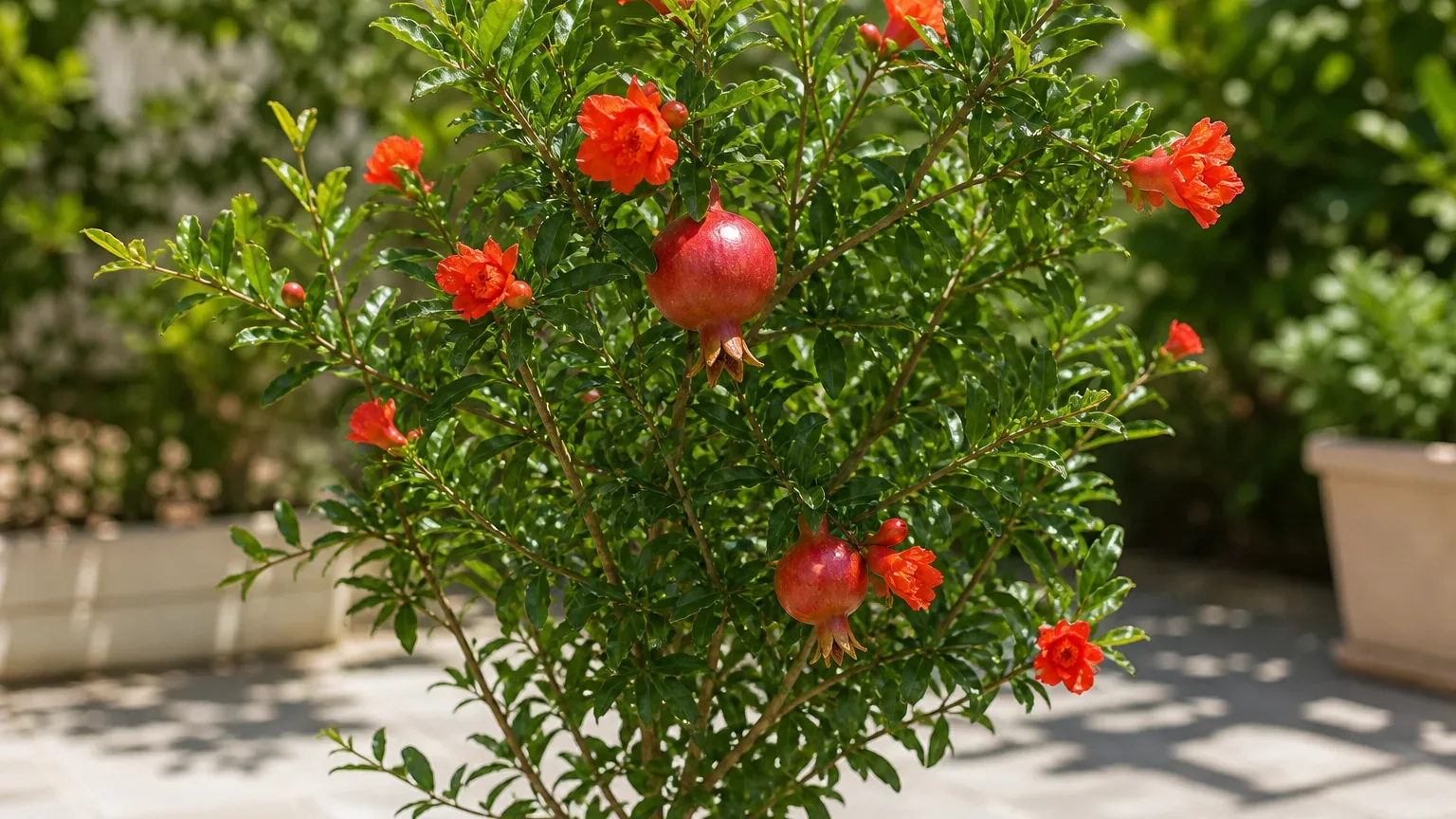
Pomegranate Watering Guide for Pots & India
Pomegranate Watering Guide for Pots & India
Pomegranate watering is easy to get half-right. Punica granatum is drought-tolerant once established, yet fruit quality still depends on regular, even moisture while flowers set and arils expand. That tension is why a plant can look fine after a dry week and then crack open after one heavy soak or monsoon shower.
This guide is for home growers in India and similar climates who keep Anar in garden beds, courtyards, or large terrace pots. You will learn how to check the root zone, how often to water by season, how containers change the rhythm, and how to avoid the drought-to-deluge pattern that splits ripening fruit. Pair this with the Pomegranate care overview and the Pomegranate soil guide when drainage or mix quality is the real problem behind “watering” symptoms.
The quick answer: water by root-zone dryness
For a potted Pomegranate, push a finger or wooden skewer about 3–5 cm into the mix. Water when that layer feels dry and the pot feels lighter than after the last soak, then irrigate until water runs from every drainage hole. Empty the saucer so roots are not left standing in runoff.
For an established plant in the ground, water deeply when the upper root zone is drying—not because the surface dust looks dry at noon. Utah State University Extension notes that once established, plants tolerate drought, but quality fruit still needs regular irrigation, and suggests a deep thorough watering every 7 to 10 days in dry conditions. UF/IFAS gives a similar interval: irrigate every 7–10 days when rainfall is lacking. Treat those figures as a starting frame for hot, dry weather, then shorten or lengthen them based on pot size, soil, and your local heat.
Why Pomegranate watering is about consistency, not constant wetness
Pomegranate evolved for warm, often semi-arid summers with well-drained soil. NC State Extension describes it as a deciduous shrub or small tree that is drought tolerant when drainage is good. Clemson Cooperative Extension likewise calls established plants drought tolerant while advising even soil moisture to reduce fruit drop and splitting.
That biology does not mean the plant wants permanently wet mix. University of Georgia Extension production guidance is clear that trees prefer well-drained soils, and that extended excess moisture harms them even though they can tolerate brief wet periods. The useful mental model is soak, drain, then wait until the root zone dries to the check depth—especially in containers, where oxygen returns only after water leaves the pot.
Fruit changes the stakes. A non-fruiting ornamental can shrug off a longer dry spell. A plant carrying developing fruit needs steadier moisture because rapid rehydration after drought is a classic trigger for rind splitting.
How to check whether your Pomegranate needs water
Leaf wilt alone is a poor timer. Midday droop in extreme heat can be temporary, while roots in soggy mix can also wilt because damaged tissue cannot move water. Always confirm moisture before you add more.
Check a container or terrace plant
Use three signals together: dryness 3–5 cm down, pot weight, and whether drainage holes stay wet for days. A pale, cracked surface can hide a wet core in peat-heavy mixes. A root-bound plant may feel light soon after watering because water races down the sides instead of wetting the ball—apply water in two slow passes a few minutes apart.
If the mix stays dark and cool for many days in warm weather, improve drainage before cutting each drink to a token sip. That is usually a soil and potting issue, not a reason to mist daily.
Check a plant in the ground
Scrape back mulch and test soil 10–15 cm deep under the canopy, including near the original root ball on a recently planted shrub. Dry crust over cool, moist soil does not need irrigation. Dry root zone plus morning limp leaves does.
After rain, dig a small inspection hole. A brief shower may wet only the top few centimetres, while heavy monsoon rain on compacted beds may puddle without soaking the active roots evenly. India’s National Horticulture Board notes that Pomegranate thrives with hot, dry summers and cold winters when irrigation facilities are available—meaning rainfall alone is not a complete plan in every region.
How to water deeply without leaving roots soggy
Apply water at soil level, slowly enough to wet the full root profile. For pots, continue until runoff appears from all holes, then discard standing water. For ground plants, wet a broad ring under the canopy rather than pouring every litre against the trunk collar.
Morning checks are easiest: cooler air, clearer leaf signals, and time for wet surfaces to dry. University of Georgia Extension prefers drip irrigation for production plantings and discourages overhead wetting that raises humidity on flowers and spreads pathogens. Home growers can mimic that idea with a watering can or hose at the base, keeping flowers and fruit as dry as practical.
Mulch helps outdoor beds hold moisture between deep irrigations, but keep organic mulch a few centimetres away from the woody crown. In pots, decorative gravel that hides chronically wet mix is a liability, not a style upgrade.
Young plants versus established trees
A newly planted cutting or nursery plant has a canopy that loses water and a root system still the size of its original ball. Keep that zone evenly moist—not swampy—through the first hot season. Tamil Nadu Agricultural University’s horticulture notes include frequent irrigation during establishment culture; home growers should translate “frequent” into shorter check intervals, not automatic daily flooding.
Once established, the same species becomes far more forgiving of short dry spells. USU’s guidance still separates survival from fruiting: drought tolerance is real, but regular irrigation is what supports quality fruit. Young or small container plants therefore need closer attention than a mature in-ground shrub with a wide root system.
Flowering, fruit swell, and harvest timing
From flowering through fruit ripening, aim for steady moisture without waterlogging. UF/IFAS warns that sudden changes in irrigation amount and timing often lead to fruit splitting, especially a few weeks before harvest, and recommends maintaining adequate soil moisture in late summer and early fall to reduce splitting risk. Excess irrigation can also aggravate fruit drop on young trees when combined with heavy feeding.
In many parts of central and southern India, commercial orchards manage flowering in seasonal “bahar” windows (often described as ambe, mrig, and hasta). NHB discusses crop timing relative to monsoon and irrigation availability. Home terrace growers usually do not impose orchard stress protocols; instead, keep watering even through the crop you already have, and do not invent a harsh dry-down for a small pot that can cook in afternoon sun.
As fruit approaches harvest, avoid a late drought followed by a huge soak. If rains arrive after a dry spell, you cannot undo the uptake physics, but you can still keep the root zone from swinging wildly afterward.
Preventing fruit splitting with steady moisture
Fruit cracking is one of the most visible watering failures on Pomegranate. USU explains that plants take up water rapidly after drought, and that rapid uptake frequently splits the rind, exposing arils to insects and decay. Late rain near ripening worsens the problem. NHB similarly links cracking in fully grown fruit mainly to moisture imbalances.
UGA production guidance adds that irrigation through drought helps minimize splitting when rain returns, while excessive irrigation near fall harvest can also contribute to splits and softer fruit. The home-grower takeaway is simple: keep moisture even through fruit expansion, prefer deep drinks over shallow daily splashes, and never “catch up” with one massive flooding after a long dry gap if fruit is near ripe.
Pomegranate watering by season in India
India is not one climate. Coastal humidity, Deccan heat, north Indian winters, and a windy high-rise balcony all dry pots at different speeds. Use the table as a decision framework, then verify with the finger or skewer test.
| Season or condition | Young or potted Pomegranate | Established ground plant |
|---|---|---|
| Hot, dry, windy weather | Check often; deep-soak when 3–5 cm is dry | Deep soak when the root zone is drying; roughly weekly in prolonged drought is a common starting point |
| Dependable monsoon | Pause automatic watering; confirm pots drain | Usually pause irrigation; divert standing water from low spots |
| Flowering through fruit swell | Keep moisture even; avoid drought-to-deluge | Maintain regular deep irrigation if rain is absent |
| Cool season / leaf drop | Water far less; wait for clear dryness | Reduce sharply; dormant deciduous plants use less water |
| After harvest | Ease off once crop is off and growth slows | Return toward maintenance irrigation only when soil dries |
NHB’s commercial guidance of weekly summer irrigation and fortnightly winter irrigation is a useful climate-scale hint for irrigated orchards, not a literal calendar for every terrace pot. Your pot may need water twice in one hot week and none for ten days in cool, overcast weather.
Hot, dry summer
Expect the shortest intervals. Small dark pots on concrete can dry in a day or two. Large wood or ceramic pots in partial windbreak dry slower. Always soak thoroughly when you do water so salts and dry pockets do not build in the upper half of the mix.
Monsoon and humid weather
Stop routine hose watering when rain or humidity keeps the root zone moist. Raise pots on feet, clear clogged drainage holes, and move containers out of roof-runoff streams. Warm, wet soil is where root stress and leaf disease pressure rise fastest—good drainage and mix structure matter as much as the watering can.
Cool season and leaf drop
Pomegranate is often deciduous or partially deciduous depending on winter chill. Bare or thinning canopies use water slowly. Water only after a confirmed dry check, and keep overwintered containers from freezing soggy. Resume more frequent checks when new growth and warmer days return, alongside brighter placement described in the Pomegranate light guide.
Container and balcony specifics that change the interval
Terrace culture is how many Indian growers keep Pomegranate edible and ornamental in limited space. Containers have less soil volume, heat from all sides, and no deep groundwater buffer, so they need more frequent checks than garden beds even when the species is drought-tolerant in the landscape.
Choose a heavy pot with open drainage holes and enough depth for woody roots. Water until runoff, then empty the tray. If you must use a cachepot, lift the grow pot out to drain after every soak. Root-bound plants dry faster and may need repotting rather than endless emergency watering.
Fertilizer salts concentrate faster in pots that dry and rewet often. If leaf edges burn while the mix still seems wet, review feeding in the Pomegranate fertilizer guide and flush the pot with a thorough soak that exits freely.
Overwatering and underwatering warning signs
Overwatering often shows as persistent yellowing, weak new growth, a sour or swampy smell, and soil that never lightens between drinks. Growth can stall even though the mix looks wet because roots lack oxygen. Stop irrigating, improve drainage, and only resume after the profile dries to a safe check depth.
Underwatering shows as wilting or curled leaves, dry crisp edges, flower or young-fruit drop, and—after a sudden heavy watering—fruit splitting on a stressed plant. An established shrub can survive short drought better than a loaded fruiting container plant can.
If you are unsure, err toward a dryness check rather than another soak. A slightly late watering is usually safer than keeping roots wet through a humid week.
When to use this page vs other Pomegranate guides
Use this watering page when you need timing, seasonal adjustments, container checks, or fruit-splitting moisture logic. Switch to sibling guides when the limiting factor is not irrigation volume alone.
- Pomegranate overview — whole-plant care map, habit, and what “good enough” looks like outdoors.
- Pomegranate light — sun hours and placement that drive both drying rate and flowering.
- Pomegranate soil — drainage, mix recipes, and monsoon-safe structure.
- Pomegranate fertilizer — feeding during growth without pushing soft, water-demanding flush.
- Pomegranate repotting — when a pot dries too fast or stays wet because roots are crowded.
- Pomegranate propagation — moisture for cuttings and newly rooted plants.
- Pomegranate pruning — structure and fruiting wood once watering is stable.
Related Pomegranate guides
For the full cluster, start at the Pomegranate plant hub, then move through overview, light, soil, fertilizer, repotting, propagation, and pruning as your next question shifts. Watering decisions become easier when sun, mix, and pot size are already correct.
Conclusion
Water Pomegranate by the root zone: deep soak when the top few centimetres are dry, drain freely, then wait. Keep moisture especially even from flowering through ripening so fruit does not swing from drought to flood. In Indian summers, check pots often; in monsoon, prioritize drainage and pause irrigation; in cool leaf-drop months, water far less. Consistency—not constant wetness—is what Punica granatum rewards with healthier roots and fewer split fruits.