Pomegranate Repotting Guide: When, Pot Size & Steps
Pomegranate Repotting Guide: When, Pot Size & Steps
Pomegranate Repotting Guide: When, Pot Size & Steps
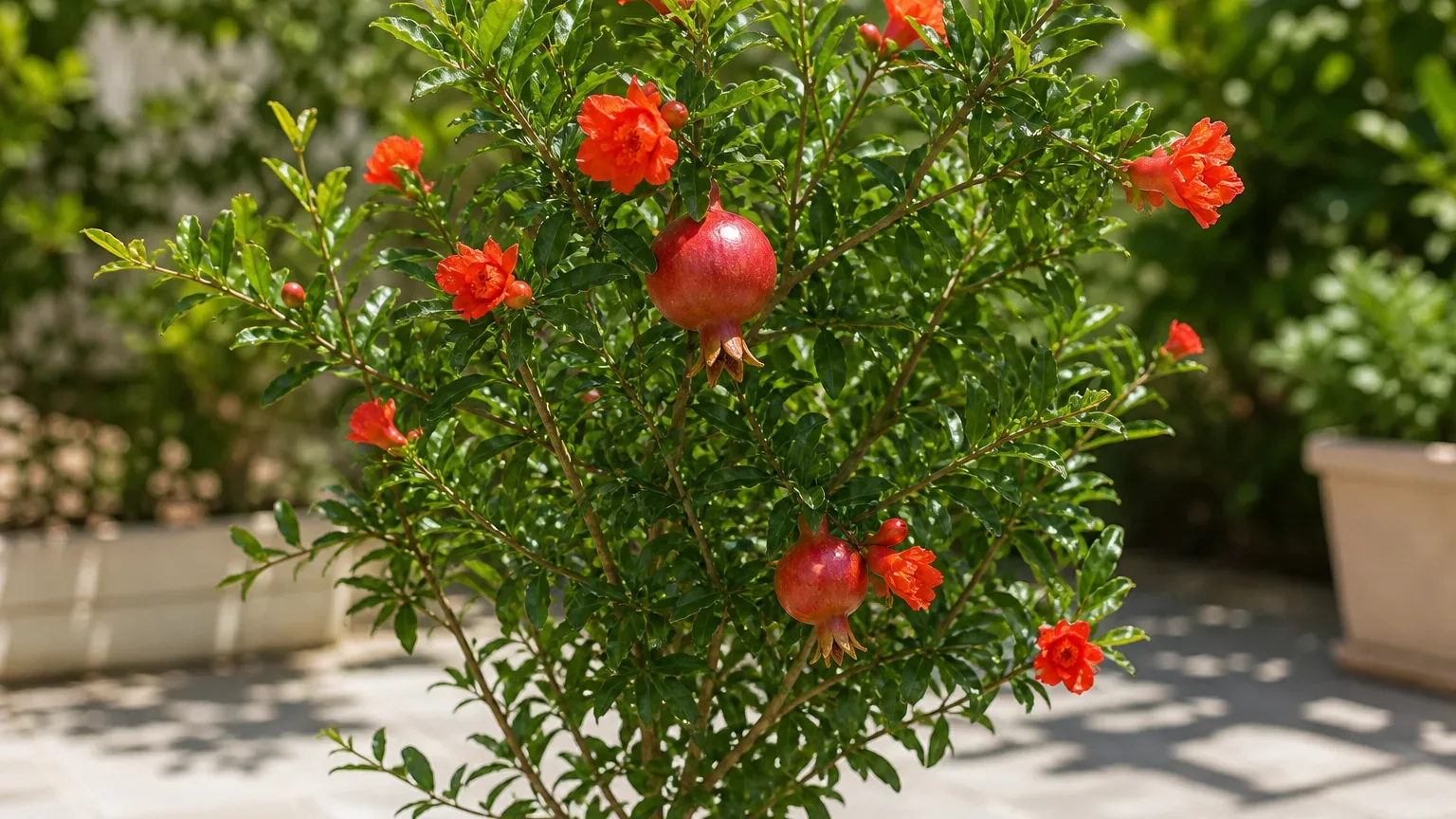
Pomegranate repotting is less about giving Punica granatum a bigger home and more about protecting a sun-loving, drought-tolerant root system from wet, airless soil. NC State Extension describes pomegranate as a woody deciduous shrub or small tree that tolerates many soil types when drainage and moisture are good, notes typical heights of about 10–12 feet (with a similar spread), and lists container and patio culture among suitable uses — including plants that can be moved under cover where winters are harsh (NC State Extension Plant Toolbox).
On an Indian terrace or balcony, that biology shows up clearly: young shrubs fill pots, organic mix breaks down, roots circle the wall, and an oversized “upgrade” keeps new soil wet through humid weeks. Done well, a repot every 2–3 years in late winter or early spring refreshes drainage, adds one modest pot size, and resets a deep soak-and-dry rhythm. Done poorly — monsoon timing, peat-heavy mix, or a giant pot — and yellowing leaves follow even though you “gave it more room.”
This guide covers when to repot pomegranate, which pot and mix to use, step-by-step transplanting, aftercare, and when to leave a healthy plant alone. Pair it with the Pomegranate care hub and the Pomegranate soil guide so the new container matches how this species actually drinks.
Why container pomegranate needs thoughtful repotting
In long cultivation from Central Asia through India and the Mediterranean, pomegranate explores deep, free-draining loam and then waits out dry spells. Utah State University Extension notes that plants thrive in well-drained loamy soil, tolerate alkaline conditions, and are very drought tolerant once established, while quality fruit still needs regular deep irrigation (Utah State University Extension). University of Georgia Extension adds that trees prefer well-drained soils, grow best roughly in the pH 5.5–7.2 range, and are harmed by extended periods of excessive moisture (University of Georgia Extension — C997).
A pot truncates that story. There is no deep soil profile, no long lateral run, and every watering either drains cleanly or sits. Repotting is your chance to restore pore space, remove sour or compacted mix, and give circling roots a little room — without creating a reservoir of unused wet soil around a heat-loving fruit shrub that declines when oxygen runs out at the roots. NC State also flags root rot among problems that show up when drainage fails (NC State Extension Plant Toolbox).
Woody roots meet pot walls
UF/IFAS describes pomegranate as a dense, bushy deciduous shrub typically 6–12 ft (2–4 m) tall that can be trained as a small tree up to about 12–20 ft (4–7 m) (UF/IFAS — The Pomegranate). In a 30–45 cm terrace pot, woody roots hit plastic or clay within a season or two if the plant is young and growing hard. Circling roots, a top-heavy multi-stem canopy, and mix that dries within a day of watering are not quirks — they are the container hitting its limit.
Repotting does not turn a balcony Anar into an orchard tree. It keeps the plant stable and drained while you manage size with pruning and cultivar choice. If the goal is a permanent landscape shrub, plan an eventual move to open ground with free drainage rather than endless upsizing of patio pots.
Signs your pomegranate needs repotting
Use root and pot behavior, not a single yellow leaflet. Penn State Extension lists classic pot-bound cues: mix that dries out very quickly, roots through drainage holes, and stalled growth despite otherwise reasonable care — then confirms by sliding the plant out to see dense, circling roots with little mix visible in the lower root ball (Penn State Extension — Repotting Houseplants). Those checks transfer cleanly to container pomegranate.
Also watch for a top-heavy canopy that rocks when you water or brush past, water that runs straight through without wetting the core, and soil that pulls away from the pot wall as a solid root mat. If the mix smells sour or stays heavy for many days after watering, you may need a soil rescue more than a size upgrade — see the Pomegranate watering guide for wet-root patterns before you disturb roots.
Root, soil, and canopy cues
Repot soon when you see two or more of these: roots exiting holes; a pot-shaped root ball with almost no loose mix; water racing through in minutes then the plant wilting the next day; canopy much wider than the pot base; or a young shrub that has not been moved in 2–3 years of active growth.
Do not repot for these alone: normal cool-season leaf drop on this deciduous plant; one lower leaf yellowing in otherwise firm growth; or a newly purchased nursery plant still adjusting to full terrace sun. Seasonal bare wood is dormancy, not automatically a root-bound emergency.
Best season to repot pomegranate in India and similar climates
Aim for late winter or early spring — typically February–March across much of India — just as days lengthen and the shrub gears up for a new flush. UF/IFAS recommends planting in early spring (February–March), avoiding late frost, with soil loosely worked and not wet (UF/IFAS — The Pomegranate). University of Georgia Extension likewise places bare-root planting of rooted cuttings in late winter or early spring (University of Georgia Extension — C997). Penn State recommends spring for container repots because roots colonize fresh mix while the plant is entering active growth (Penn State Extension — Repotting Houseplants).
Avoid peak monsoon and prolonged cool-wet windows unless the pot is cracked, roots are rotting, or the plant is tipping dangerously. Humid weather keeps new mix soggy; a leafless dormant plant uses moisture slowly, so wet feet linger. If you must rescue in a bad season, use a modest pot step-up, the leanest free-draining mix you can mix, bright sun, and a lighter watering hand until new leaves appear.
Choosing pot size, material, and drainage
Drainage holes are non-negotiable. Penn State Extension is blunt: containers need holes so mix does not stay waterlogged, and decorative cachepots without holes should only hold a drained inner pot (Penn State Extension — Repotting Houseplants). For terrace pomegranate, that means a real grow pot with open holes — never plant directly into a sealed planter that holds a lake after rain.
Prefer a stable, relatively heavy base once the multi-stem canopy spreads: terracotta, thick plastic, or concrete-style patio pots all work if drainage is clear. Unglazed clay dries faster (helpful for this species) but needs more frequent checks in peak summer. Tall, narrow pots tip easily when the crown grows; choose width that matches canopy spread as much as depth. University of Georgia Extension stresses that soil drainage is more important than row orientation in the landscape — the same priority applies in pots (University of Georgia Extension — C997).
One size up — not a giant jump
Move only one pot size up — roughly 5 cm (2 inches) wider in diameter than the current container for most patio shrubs. Penn State notes the new pot should be slightly larger than the current one, because an oversized container looks unbalanced and, more importantly for pomegranate, holds unused wet mix around roots that prefer free drainage.
A giant jump is the most common terrace mistake. Extra soil stays wet for a week after each watering, oxygen drops, and roots decay even though you “improved” the plant. If you want to slow growth rather than enlarge the shrub, root-prune lightly, refresh mix in the same pot, and control the canopy with Pomegranate pruning instead of upsizing forever.
Fresh mix for Punica granatum
Do not refill with moisture-control peat blends meant for thirsty foliage plants. Utah State University Extension emphasizes well-drained loamy soil without requiring a single exclusive soil type (Utah State University Extension). UF/IFAS associates best growth with well-drained, not heavy or moist soils in roughly the pH 5.5–7.0 band, while noting adaptation from sand to clay when drainage is managed (UF/IFAS — The Pomegranate). University of Georgia Extension’s broader pH 5.5–7.2 band is a useful container target (University of Georgia Extension — C997).
A practical DIY mix that matches LeafyPixels’ pomegranate profile is about 50% quality potting mix or loam, 25% mature compost, and 25% coarse sand, pumice, or perlite — structured enough for a deep soak to stick briefly, open enough for monsoon weeks. Moisten the mix before planting so it accepts water evenly. Full recipes and monsoon drainage checks live in the Pomegranate soil guide; use that page if the current failure is mix quality rather than pot volume.
Step-by-step: how to repot pomegranate
Water the plant lightly the day before so the root ball holds together without being soggy. Gather the new pot, pre-moistened free-draining mix, clean shears, and a screen scrap or mesh for the drainage hole if your mix is fine. Wear gloves if branches are thorny.
- Tip the pot gently; support the main stems and slide the root ball out. If it sticks, tap the sides — do not yank woody trunks.
- Inspect roots. Firm, pale-to-tan roots are fine; brown, mushy, foul-smelling roots should be trimmed back to healthy tissue. Tease circling roots outward so they can enter new mix.
- Add a base layer of mix so the old soil line sits about 2–3 cm below the new rim.
- Center the plant, fill around the sides without burying the stem bases deeper than before, and firm lightly — do not compact into a brick.
- Water thoroughly until runoff exits the holes, then empty the saucer within 15–30 minutes.
Return the plant to full sun on the terrace once it has settled a day or two. University of Georgia Extension calls for at least six hours of direct sunlight for good fruit color and productivity (University of Georgia Extension — C997). Keep care boring: same light, same watering logic, no fertilizer for several weeks. If you also change placement, pot size, and watering all at once, you will not know which stress caused leaf drop.
Post-repot care for the first month
Expect a short pause in growth and maybe minor leaf yellowing as roots reattach. That is transplant adjustment, not a cue to fertilize or water daily. Resume the pomegranate rhythm: soak deeply only when the top 3–5 cm of mix are dry, then let the pot lighten again. Established plants tolerate drought, but Utah State University Extension still recommends deep thorough watering every 7–10 days for quality fruit in dry conditions — containers often need checks more often in heat (Utah State University Extension).
Hold fertilizer until you see a clear new flush of firm leaves, then follow the light feeding approach in the Pomegranate fertilizer guide. Avoid a drought-to-deluge cycle if fruit is already on the plant; sudden water uptake after dryness can contribute to rind splitting. Stake only if a multi-stem canopy wobbles in wind; remove ties once roots grip.
When not to repot pomegranate
Skip elective repotting when the plant is newly home (quarantine and learn its dry-down first), when it is flowering heavily or carrying a large fruit set and already stressed, during prolonged cool wet weather or peak monsoon, or when the only issue is a cosmetic preference for a larger decorative planter — use a cachepot around a drained grow pot instead.
Also skip upsizing when the mix is fine, roots have room, and the canopy is manageable with pruning. More soil is not always kinder for a species that prefers free drainage over constantly moist media. Emergency exceptions remain: cracked pots, confirmed root rot, or severe binding that makes watering impossible.
Young plants, fruiting shrubs, and dwarf Nana
Nursery and young container stages move more often than woody patio shrubs. UF/IFAS notes that hardwood cuttings may spend 1–2 years in nursery rows before field planting, and University of Georgia Extension describes moving rooted cuttings into pots during propagation before orchard transplant (UF/IFAS — The Pomegranate; University of Georgia Extension — C997). Young terrace plants may need a step-up every 1–2 years until growth slows.
Mature patio specimens on a 2–3 year refresh cycle can often stay in large, stable pots if you top-dress annually, keep drainage open, and prune for height. Compact ornamental forms sold as ‘Nana’ stay much smaller than standard fruiting cultivars — do not treat a dwarf ornamental as if it needs orchard-scale containers, and do not assume a seedling labeled “pomegranate” will match named fruit quality. If you are multiplying plants rather than upsizing one shrub, use the Pomegranate propagation guide for hardwood cuttings instead of splitting a single woody crown at repot time.
Moving pomegranate from pot to ground
When a container plant outgrows every practical pot, transplant into open ground with the same rules: full sun, free-draining loam or sandy loam, and no prolonged waterlogging. UF/IFAS and University of Georgia Extension both favor deep loams with reliable drainage; raised beds help where the water table is high (UF/IFAS — The Pomegranate; University of Georgia Extension — C997). Dig a hole only modestly wider than the root ball, keep the soil line the same, water to settle, then shift toward field drought tolerance once roots explore.
Decide early whether you want a multi-stemmed shrub or a single-trunk tree. University of Georgia Extension notes the multi-trunk form is often preferred where freeze damage is a risk because damaged stems can be replaced by suckers; UF Gardening Solutions describes the natural multi-trunk habit and sucker management for tree form (University of Georgia Extension — C997; UF/IFAS Gardening Solutions). Ground planting is a space commitment: in-ground shrubs commonly reach 6–12 ft, far beyond most balcony pots.
When to use this page vs other Pomegranate guides
Use this repotting page when pot size, root binding, mix failure, or transplant timing is the decision. Use Pomegranate watering when the question is how often to soak and how to read wet vs dry stress — including fruit-splitting moisture swings. Use Pomegranate soil when you need mix recipes and pH without changing containers. Use Pomegranate light when weak sun is keeping pots wet or fruit quality thin. Use Pomegranate fertilizer only after roots have recovered. Use Pomegranate pruning to manage height and fruiting wood without endless pot upsizing. Use Pomegranate propagation when you want new plants from cuttings. Start from the Pomegranate overview if you need the full care picture first.
Related Pomegranate guides
- Pomegranate overview — identity, mature size, and core care summary
- Pomegranate watering — soak-and-dry timing after a repot
- Pomegranate soil — loam mix ratios and drainage fixes
- Pomegranate light — sun placement that helps new mix dry and fruit sweeten
- Pomegranate fertilizer — when to resume light feeding
- Pomegranate pruning — keeping patio shrubs manageable
- Pomegranate propagation — hardwood cuttings for the next plant
Conclusion
Repot pomegranate like the sun-loving, drainage-first fruit shrub it is: late winter or early spring, one pot size up, free-draining loamy mix, and a calm month of dry-down watering afterward. Watch for roots in the holes, a top-heavy multi-stem canopy, and mix that fails to hold structure — not for every yellow leaflet or normal winter leaf drop. Skip monsoon and cool-wet windows for elective moves, and use pruning plus a stable pot when you want size control rather than a bigger water reservoir. Follow those rules and container Punica granatum stays drained, anchored, and ready for the next flush of growth and fruit.