Pomegranate Light Needs: Full Sun Hours & Placement
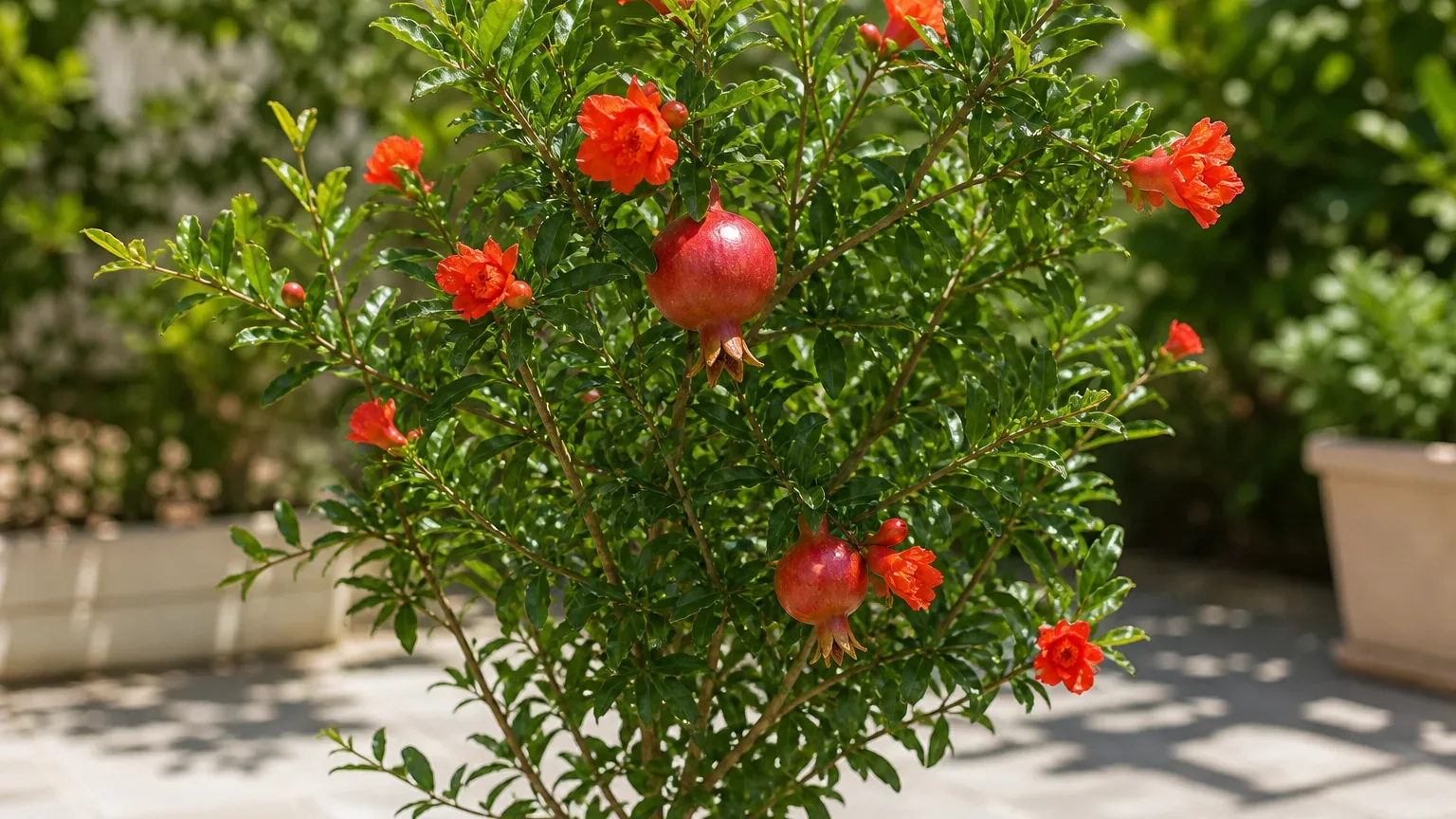
Pomegranate Light Needs: Full Sun Hours & Placement
Pomegranate Light Needs: Full Sun Hours & Placement
A pomegranate can stay alive in partial shade, but that is not the same as growing a plant that flowers well and ripens sweet fruit. Punica granatum is a sun-loving deciduous shrub or small tree. In Indian homes it belongs on an open terrace, sunny courtyard, rooftop, or garden bed — not in a dim living room treated like a foliage houseplant.
The practical test is simple: can the canopy see open sky and receive several hours of unobstructed direct sun on most clear days? If the answer is no, expect weaker flowering, poorer fruit set, and less sugar development even when watering and fertilizer look correct. Use this guide to choose placement, acclimate nursery plants, read warning signs, and decide when an indoor window or grow light is only temporary help.
How much light Pomegranate actually needs
Give Pomegranate at least 6 hours of direct sunlight a day, and prefer a longer open exposure if you want reliable flowering and good fruit color. University of Georgia Extension states that pomegranates need at least six hours of direct sunlight a day for good fruit color and productivity. NC State Extension lists cultural light as full sun (6 or more hours of direct sunlight a day), while also noting that partial shade is tolerated.
Count sun that actually reaches leaves and developing fruit, not general brightness on the balcony floor. A deep roof overhang, neighbouring tower, shade net, or larger tree can erase the middle of the day even when the space feels hot. Track the site at mid-morning, noon, and mid-afternoon before you commit a permanent pot position.
For containers, prioritize light in this order: open outdoor sun; a terrace or balcony with a wide sky view; a large sun-facing window plus outdoor time in warm weather; then a strong grow light only for young plants held indoors briefly. A normal ceiling lamp cannot replace full sun for a fruiting Anar.
Full sun versus partial shade
Full sun means unobstructed direct rays for most of the day. Partial shade — roughly 2 to 6 hours of direct sun — can keep a plant green, but it usually reduces the crop you care about. Clemson Extension recommends full sun for best flowering and fruiting and notes that partial shade reduces fruit set. Utah State University Extension adds that plants will grow in part shade, yet sun is needed to produce sugars and reach full flavor.
Treat shade as a compromise for survival, not a preferred aesthetic. If your only space is a north-facing balcony that never receives a real beam, grow a true shade foliage plant instead of expecting orchard-quality pomegranates.
Why Pomegranate needs strong direct light
Pomegranate evolved for warm, relatively bright climates rather than forest understory. Utah State University Extension describes a preference for a semi-arid to subtropical climate with hot summers and mild winters. Julia Morton’s warm-climate fruit monograph likewise notes that the plant favors a semi-arid climate and is extremely drought-tolerant once established.
That habitat maps to care decisions. Strong light drives compact woody growth, flower production on sun-exposed branch tips, and sugar accumulation in the arils. Fruits are generally borne toward the outer canopy in full sun, on short spurs of two- to three-year-old wood. A shaded interior filled with soft, leafy shoots may look lush while contributing little harvest.
The Royal Horticultural Society lists Punica granatum for full sun, with south-, west-, or east-facing aspects preferred outdoors. Under glass, RHS advises full light with shade from the hottest sun — a reminder that greenhouse heat at the leaf surface differs from open-air terrace light. For home growers in India, open outdoor sun with airflow is usually safer than a sealed, heat-trapping glass box.
Best outdoor placement in India and warm climates
In most Indian cities, place Pomegranate where buildings do not steal the middle of the day. South, southeast, and southwest exposures are often useful in the Northern Hemisphere, but compass labels matter less than clear-sky hours. A rooftop with a long sun path can outperform a “south” balcony that sits under three floors of overhang.
University of Georgia Cooperative Extension recommends a site with full sun, good drainage, and deep loamy soil, while noting exceptional heat tolerance. That heat tolerance is why many Indian growers succeed once light is solved — the plant is built for hot summers. Poor drainage in monsoon humidity is a separate problem; do not “fix” heat by moving a fruiting plant into permanent shade.
Leave space around an in-ground shrub so light reaches more than one face of the canopy. Crowding against a wall or hedge creates one-sided growth and reduces airflow around flowers. If the garden pocket is permanently dim, a large container on a brighter paved terrace is usually the better long-term choice.
Terraces, balconies, and garden beds
Open terraces and courtyards are the default home for potted Anar. Choose a position with morning-through-afternoon sun whenever possible. East-only balconies can support vegetative growth with gentler heat, but may underdeliver on fruit sugar if the afternoon sky is blocked. West exposures add intensity and heat; they work when you water from root-zone checks and protect the container, not by permanently draping the canopy.
Garden beds should be free of tall shade trees on the sun side. Young plants grown under temporary nursery shade cloth need a staged move into the open bed. Named fruiting cultivars belong in the brightest workable site; compact ornamental forms such as ‘Nana’ still prefer strong light even when fruit is secondary.
Rotate a potted plant a quarter turn every week or two if one side leans hard toward the open edge of a balcony. Rotation balances shape. It does not create extra photons, so a plant that stretches toward a narrow beam still needs a brighter site.
Protecting the pot without shading the canopy
On concrete rooftops in cities such as Delhi, Hyderabad, Ahmedabad, or Jaipur, black plastic pots can overheat while the leaves still want full sun. Use a light-coloured outer sleeve or cachepot, raise the pot slightly for airflow under the base, and check moisture more often in peak heat. Shade the pot wall, not the flowering canopy.
Reflected glare from white walls and pale tiles increases leaf and fruit heat load. Provide airflow and avoid trapping the plant against a hot railing with no breeze. If fruit shows early sunscald on the exposed face, temporary light screening of fruit clusters is more rational than moving the whole shrub into deep shade for the season.
Visit the Pomegranate overview if you are still deciding whether a full-size fruiting cultivar or a compact ornamental form fits your space.
Indoor windows and grow lights
A pomegranate can hold foliage near a bright window for a while, especially when young, but a normal room rarely supplies enough light for a productive adult plant. Indoor glass cuts intensity, and usable light falls quickly as you move the pot away from the pane. Treat indoor culture as weather protection or a temporary holding stage, not the default fruiting plan.
If cold weather forces a container indoors, place it at the brightest direct-sun window immediately. Expect slower growth and little or no useful flowering while the plant is dim. Return it outdoors as soon as nights are reliably warm, then reacclimate rather than dropping it into all-day May sun in one move.
When a window is only temporary shelter
Use the largest unobstructed window with the longest direct beam. South-facing glass is usually strongest in the Northern Hemisphere; east is gentler; west can be intense and hot at the leaf surface. Keep the canopy close to the light without pressing soft new leaves against hot glass.
A grow light helps only when the fixture is bright enough and close enough for a woody fruit shrub, not a decorative desk lamp. Choose a full-spectrum LED panel sized for the canopy, follow high-light crop distance guidance from the manufacturer, and run it on a timer for roughly 12–14 hours while outdoor sun is unavailable. Watch new growth: long internodes and hard leaning mean intensity is still too low; bleaching directly under the lamp means the fixture is too close.
Grow lights are most realistic for seedlings, rooted cuttings, or young plants over winter. They are a poor substitute for open terrace sun if your goal is a bowl of ripe fruit.
Acclimating to full sun without scorch
Nursery plants are often finished under shade cloth. An abrupt jump to a summer rooftop can bleach leaves even though mature outdoor pomegranates prefer full sun. Acclimate over 7–14 days. Start with morning sun and bright open shade, add later hours every few days, and pause if the newest leaves show pale, papery patches on the sun-facing side.
Do not combine that move with heavy pruning, a large fertilizer dose, and a dry root ball. One stress at a time. Damaged leaf tissue does not green again; success shows as clean new flushes and continued bud formation.
RHS notes that plants under glass may need shade from hot sun even while wanting full light overall. Translate that for terraces: harden the plant to outdoor intensity, then keep airflow so heat does not accumulate against glass or walls.
Seasonal light changes
Pomegranate is deciduous in cooler weather. Bare branches in winter are often normal dormancy, not proof that light failed. Still, keep the pot in the brightest safe outdoor position you can manage while leafless, because spring growth and flowering respond to the return of strong sun.
Pre-monsoon heat and fruit color
Late winter through the hot, clear months often provide the strongest light for flowering and fruit development. Do not move a flowering or fruiting container into shade simply because afternoons are hot. Protect roots, keep moisture steady, and leave the canopy in open sun. UGA Extension links adequate direct sun to good fruit color and productivity, which matters as arils mature.
If a plant arrives during a heatwave, begin acclimation with morning sun first. Brown leaf margins alone do not prove light damage; dry roots, salt buildup, and hot wind can look similar. True scorch usually appears soon after a sudden placement change on the most exposed surfaces.
Monsoon cloud and airflow
Monsoon weather lowers daily light while humidity rises. Keep the plant in the most open position available rather than tucking it under a rain shelter that also blocks the sky. Open canopy structure and airflow matter more in humid weather; flowers may abort when conditions stay too humid and still. Coordinate wet-season root care with the Pomegranate watering guide and free-draining mix advice in the Pomegranate soil guide.
Cloud is not a reason to add permanent shade cloth over a fruiting plant. It is a reason to prevent self-shading, watch slower pot dry-down, and avoid waterlogged roots while light is already reduced.
Warning signs of the wrong light
Judge placement by new growth and flowering, not by whether old leaves remain green. Combine several clues and check the root zone before blaming light alone.
Signs of insufficient light
Too little light often shows as sparse flowering, poor fruit set, weak sugar development even when a few fruits form, long soft shoots reaching for the brightest opening, and a one-sided canopy. Clemson Extension lists inadequate sunlight among environmental reasons for disappointing crops.
Move the plant toward open sun in stages. Do not increase fertilizer to force growth in a dim site; nutrients cannot replace photons. If the mix stays wet much longer after a move into shade, slow watering rather than adding more feed.
Sunscald, fruit burn, and leaf damage
Established outdoor plants usually tolerate strong sun, but fruit can still show sunscald or sunburn on the exposed face. UGA Extension describes sunscald as a change in blush on the sun-exposed side of the fruit, with sunburn progressing to darkened or necrotic skin, and notes that high sunburn can contribute to a weakened rind and later cracking. Morton likewise warns that too much sun exposure can cause sunscald with brown, russeted blemishes on the rind.
Leaf scorch after a sudden move looks different: pale or crisp patches on newly exposed foliage. Step back one acclimation stage, keep bright open light, and cool the pot if roots are baking. Do not park a fruiting plant in deep shade for weeks as a permanent “cure.”
How light changes watering and fruit quality
More sun usually means faster water use, especially in a leafy container on a windy terrace. Check sunny pots more often, but still water from soil evidence rather than a fixed daily schedule. After a move into lower light, the same pot dries more slowly — reduce frequency, keep drainage open, and empty saucers.
Fruit quality depends on both light and moisture consistency. Strong sun supports sugar and color, while irregular watering during fruit swell can split rinds. Keep the two linked: preserve the sunny site, then manage an even moisture rhythm through ripening with help from the Pomegranate watering guide. Feed only while the plant is growing actively in good light; see the Pomegranate fertilizer guide after placement and roots are sound.
If a container dries within a day despite thorough watering, or roots circle heavily, check whether pot volume is the limit using the Pomegranate repotting guide rather than blaming sunlight.
When to use this page vs other Pomegranate guides
- Use the Pomegranate overview to decide whether this deciduous fruit shrub fits your climate, space, and harvest goals.
- Use the Pomegranate watering guide when sun, monsoon cloud, or rooftop heat has changed how fast the pot dries.
- Use the Pomegranate soil guide when water lingers in humid weather despite adequate sun.
- Use the Pomegranate fertilizer guide only after light and root health can support active growth.
- Use the Pomegranate pruning guide to open a crowded canopy so fruiting wood stays in the light.
- Use the Pomegranate propagation guide when you are rooting cuttings of a named cultivar rather than gambling on seedlings.
Related Pomegranate guides
- Pomegranate care overview — whole-plant fit, size, and outdoor expectations.
- Pomegranate watering — moisture checks as light and season change.
- Pomegranate soil — drainage for hot sun and humid monsoon weeks.
- Pomegranate fertilizer — feeding a well-lit, actively growing plant.
- Pomegranate repotting — container size and root checks for terrace plants.
- Pomegranate propagation — cuttings and aftercare for young plants.
- Pomegranate pruning — keeping fruiting wood in sun and airflow.
Conclusion
Pomegranate light needs are those of a fruiting sun shrub: at least 6 hours of direct sun daily, with longer open exposure preferred for flowers, fruit set, color, and sugar. In India and similar warm climates, a sunny terrace, courtyard, rooftop, or garden bed beats any indoor room. Partial shade may keep the plant alive, but it commonly costs the harvest.
Acclimate nursery stock before full exposure, protect hot pots without shading the canopy, and read new growth rather than old scars. Keep watering aligned with light so fruit does not swing from drought to flood. When the next flush is firm, flowering continues in open sun, and fruit colors without severe scorch, the placement is working.