Pothos vs Philodendron: How to Tell Them Apart
Tell Epipremnum from Philodendron with petiole and stipule cues, then choose by light, hang, climb, and watering style.
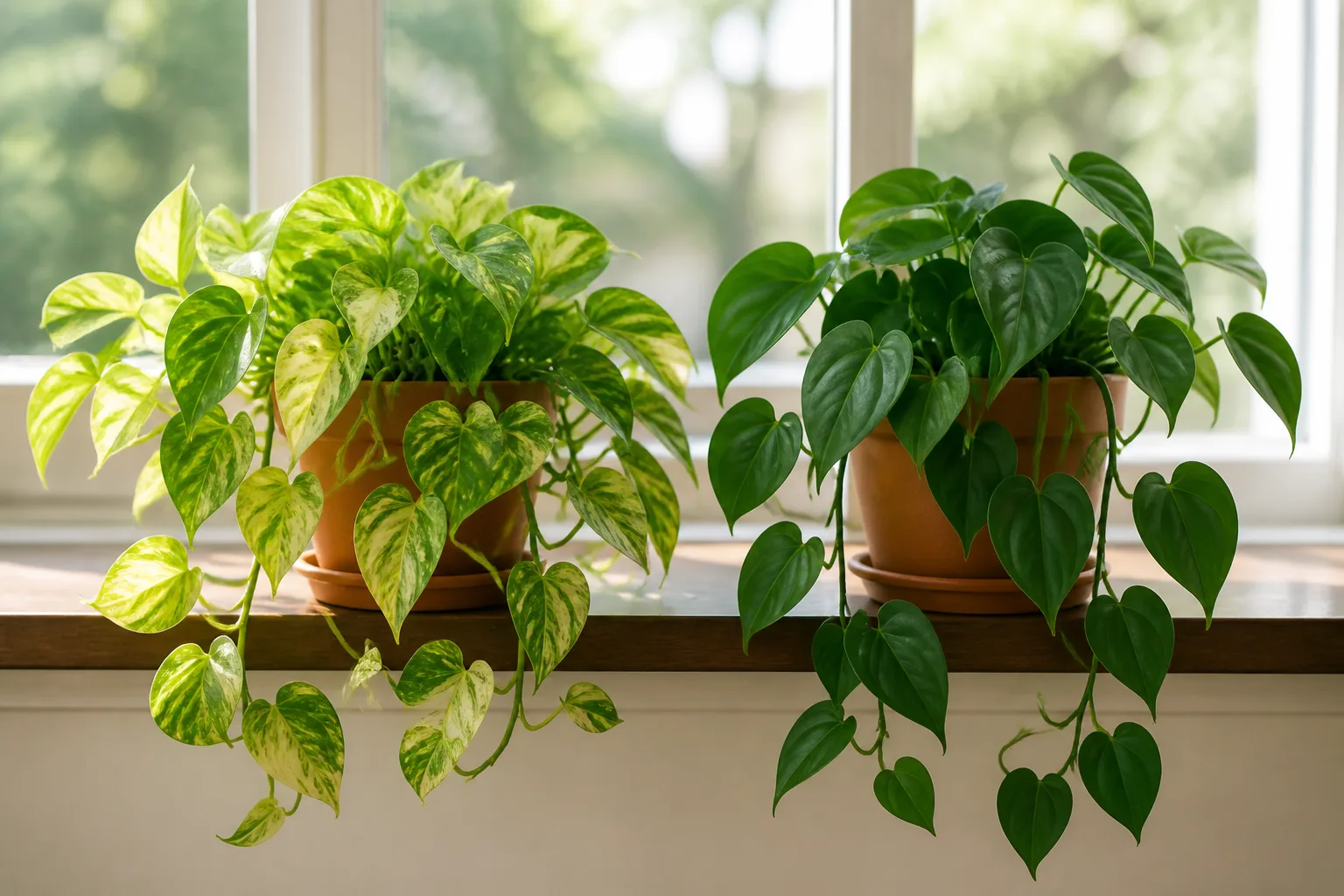
Pothos and philodendron share the nursery aisle look — heart-shaped leaves, trailing vines, “easy plant” tags — but they are not the same plant. Common houseplant pothos is usually Epipremnum aureum. The classic trailing “heartleaf” is Philodendron hederaceum. Same arum family (Araceae), different genera, and a short list of structural cues that matter more than leaf color.
This guide is for the decision you actually need: how to tell them apart at the pot (petiole groove and free stipules first), how day-to-day care differs, whether either is pet-safe (neither is), and which vine fits low light, hanging baskets, climbing poles, or a first houseplant. Upright types like Birkin are philodendrons, but they are not in the hanging-basket comparison that follows — treat them as a separate habit class.
Quick Answer: Which Should You Buy?
Choose pothos if you want a tough trailing vine that forgives dry soil between waterings, roots easily in water, and looks bold in hanging baskets — especially golden, jade, or marble-type foliage. Use the pothos hub and pothos care guide for species-level routines.
Choose heartleaf philodendron if you want a softer, often more low-light-tolerant trailer with thinner leaves and the classic “sweetheart” look. Explore the philodendron hub and cultivars like Philodendron Brasil when you want a striped heartleaf; save Birkin and Gloriosum for upright or terrestrial forms that do not follow hanging-basket rules.
If you have cats or dogs that chew plants, neither wins on safety. Both contain insoluble calcium oxalate crystals. Put vines out of reach or pick a non-toxic species instead — see pothos toxicity and philodendron toxicity.
They Are Different Genera in the Same Family
Nursery slang collapses a lot of plants into “pothos” or “philo.” Botanically, that is messy. Both groups sit in Araceae, so they share traits people notice first: aerial roots, climbing or trailing stems, and often heart-shaped juvenile leaves. Related lookalikes like Monstera and Scindapsus get mixed in too — Clemson HGIC groups philodendrons, pothos, and monsteras as commonly confused aroids.
The useful distinction for shoppers is genus. Pothos in homes almost always means Epipremnum. Philodendron is a large genus with trailing vines and upright self-heading types. Treating every “philo” like a hanging-basket heartleaf will fail you the first time you bring home a Birkin or a tree-type selloum relative.
What “Pothos” Means Botanically
Golden pothos (Epipremnum aureum) is the plant most people mean. NC State Extension describes it as a low-maintenance evergreen vine in Araceae with glossy green or variegated leaves on cascading stems, and notes it is often confused with Philodendron hederaceum. Older labels may still say Scindapsus aureus or treat it as a form of E. pinnatum; current practice recognizes E. aureum as its own species.
Indoors, vines usually keep juvenile leaf shape. Given a climb support and enough light, leaves can enlarge and mature. That is why a pot-bound hanging basket and a pole-trained plant of the same cultivar can look like different species.
What “Philodendron” Covers Indoors
Heartleaf philodendron (Philodendron hederaceum, also sold under older names like P. scandens or P. cordatum) is the main comparison plant. NC State calls it a tropical evergreen trailer or climber that can survive long periods in extremely low light. Cultivars such as ‘Brasil’ add a lime center stripe; Micans types add velvet texture.
The genus is wider than that one vine. Clemson notes many philodendrons are vining while others are self-heading, sending leaves from a clump at the base rather than long trailers. UConn likewise separates climbing species from self-heading types. If your “philodendron” is upright and compact (Birkin, Congo types), do not judge it by hanging-basket pothos rules alone.
How to Tell Them Apart at a Glance
Skip leaf color as your first test. Both genera include solid green and variegated cultivars. Use structure: petiole shape and how new leaves emerge.
ID checklist (in order):
- Petiole groove — channel on the leaf stalk (leans pothos) vs rounder / entire stalk (leans heartleaf philodendron).
- Free stipules / leaf sheath on soft new tips — present and peeling on heartleaf philodendron; absent as conspicuous free sheaths on pothos.
- Secondary only — gloss vs thinner matte leaf, bronze new growth on many heartleafs, silver blotches that may mean Scindapsus instead.
| Cue | Pothos (Epipremnum) | Heartleaf philodendron (P. hederaceum) |
|---|---|---|
| Petiole | Typically grooved / channeled | Typically non-grooved / entire |
| New growth | No conspicuous free stipules | Free stipules protect new leaves, then dry and fall |
| Leaf feel (secondary) | Often glossier; many cultivars dotted/streaked | Often thinner; Micans velvet; many new leaves bronze then green |
| Tag traps | Sold as “philo” when grooved | Sold as “pothos” when sheathed |
NC State states pothos is distinguished from P. hederaceum by the absence of conspicuous free stipules on new growth and by grooved petioles. The reverse marks heartleaf philodendron: free stipules and non-grooved petioles.
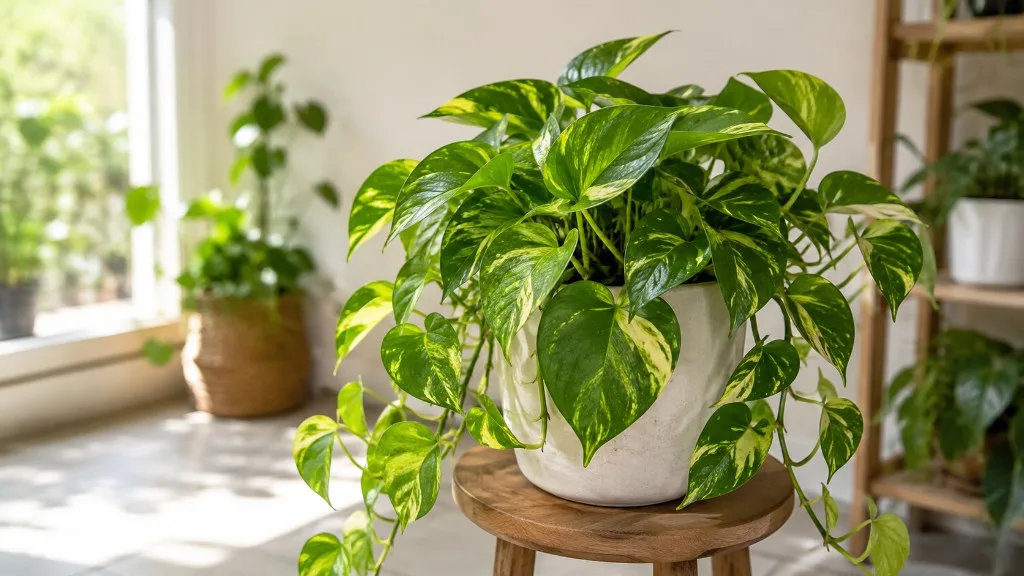
Petiole Groove and Free Stipule Cues
Look at the petiole — the stalk between stem and leaf blade. On pothos, that stalk is typically grooved (channeled) and clasps the stem. On heartleaf philodendron, petioles are usually rounder / entire, without that clear groove. Clemson HGIC lists grooved vs non-grooved petioles as one of the most common differences between heartleaf philodendrons and pothos.
Then check new growth. Philodendron new leaves often emerge with a leaf sheath (stipule) that protects the young leaf, then browns, dries, and falls — sometimes leaving messy papery bits on older stems. Pothos new foliage does not develop that same free sheath pattern. NC State describes philodendron’s conspicuous free stipules on new growth and messy falling stipules on older growth. Penn State Extension makes the same split in shopper language: grooved petioles on pothos, and a protective sheath (cataphyll) on emerging philodendron leaves that later dries and drops.
Sourced fact vs store practice: grooved petioles and free stipules are extension-documented ID traits (NC State, Clemson). Finding a soft new shoot tip in a crowded nursery pot is a practice tip — use it to see those traits, not as a substitute for them.
We do not currently publish annotated petiole/stipule macro photos in the LeafyPixels library. Until those exist, treat the plant portraits here as whole-plant references and use the checklist above at the stem: finger the petiole for a channel, then look for a thin sheath wrapping or peeling near an emerging leaf.
Leaf Texture, Lookalikes, and New Growth
Secondary cues help when petioles are hard to see. Clemson notes pothos leaves are often glossier and somewhat folded along the midrib, with fine dots or streaks of gold, white, or yellow in many cultivars. Heartleaf philodendron leaves can feel thinner and more matte or softly satin, depending on cultivar; Micans is distinctly velvet.
New leaves on many heartleaf types emerge with a bronze cast before greening — NC State notes leaves emerge bronze and quickly turn green. Pothos new leaves usually open closer to the adult variegation pattern of that cultivar. None of these texture cues beat petiole and stipule checks, but together they reduce mis-ID when tags are wrong.
Satin / silver “pothos” is often not Epipremnum. NC State lists Scindapsus pictus under common names satin, silk, or silver pothos — a third genus with silver-gray blotches on the upper leaf surface. If the plant has matte dark leaves with shimmering silver patches, route to Scindapsus pictus rather than forcing a pothos-vs-philodendron binary. Tags lie; silver blotches plus “satin pothos” marketing are your cue to check genus again.
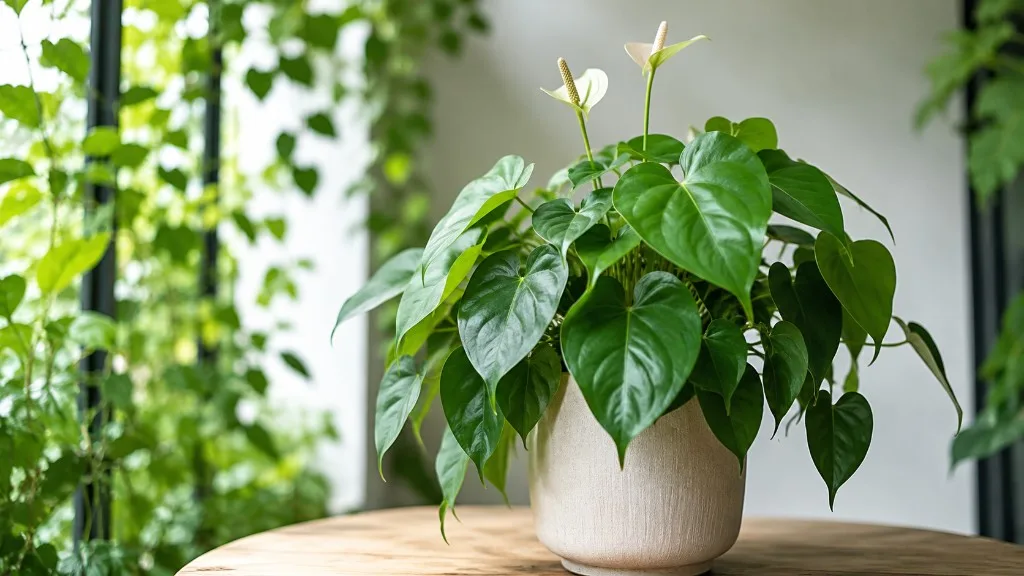
Care Comparison Side by Side
Care overlaps more than marketing implies: both want warm indoor temperatures, drainage, and protection from harsh midday sun. The differences that matter day to day are how dry the mix can go, how much light variegation needs, and how aggressively vines respond to neglect. Temperature bands are similar too — Clemson likes philodendrons around 65–70 °F at night and 75–85 °F by day, while Wisconsin puts pothos comfort roughly in the 70–90 °F range and warns against drafts and cold snaps that blotch leaves.
Think of them as cousins with different watering personalities, not opposites. If your home already grows one well, you can usually grow the other with a small adjustment to dry-down timing and light for variegation — not a brand-new skill set.
| Factor | Pothos (Epipremnum) | Heartleaf philodendron (P. hederaceum) |
|---|---|---|
| Light | Bright indirect preferred; tolerates low light; variegation fades in deep shade | Medium preferred; very tolerant of low light |
| Water | Let mix dry more between waterings | Keep evenly moist, never soggy |
| Soil | Airy, well-draining mix | Loose, organic, well-drained mix |
| Propagation | Stem cuttings root readily in water or soil | Tip / leaf-bud cuttings; also air layering |
| Toxicity | Toxic (calcium oxalate) | Toxic (calcium oxalate) |
Light Needs and Low-Light Reality
Both survive dim corners better than fussy tropicals, but “survive” is not “look good.” NC State says pothos prefers bright, indirect light and survives long periods in low light; low light can cause loss of variegation. RHS echoes bright indirect light with some shade tolerance, warning that deep shade leads to poor growth and less variegation, while direct summer sun can scorch leaves.
Heartleaf philodendron is repeatedly called out for low-light toughness. Clemson says the common heartleaf will tolerate very low light and grow under artificial or existing room light near north, east, or west windows. NC State says it prefers medium light but tolerates low light. If your room is a true cave, a solid-green heartleaf or jade-type pothos usually beats a heavily variegated Marble Queen or White Princess-style cultivar.
Variegated plants in either genus need more usable light than solid green forms because patterned tissue has less chlorophyll. That is a cultivar rule layered on top of the genus rule. For placement details by species, compare pothos light with philodendron light.
Watering and Soil Preferences
This is where many people treat them as identical and fail. For pothos, Clemson’s indoor guide recommends allowing soil to dry between waterings and using an airy, well-draining mix. RHS advises letting the top ~2 cm (about 1 in) of compost dry between waterings and avoiding excess water, especially in winter. Wisconsin Extension recommends a well-aerated medium and watering when the soil surface is dry.
Philodendron guidance leans wetter, not swampy. Clemson wants soil evenly moist but not soggy, with no standing water. UConn stresses ample water for even growth and large leaves while warning that sitting in water causes root injury and yellow drop. NC State for heartleaf: keep soil slightly moist and slow watering in winter.
Shared non-negotiable: drainage holes and a mix that does not stay anaerobic. Root rot from overwatering shows up in both — see pothos watering and philodendron watering when you need a full dry-down workflow. If you chronically forget to water, pothos usually forgives you longer. If you water on a fixed calendar without checking the pot, philodendron’s “keep moist” advice is easy to overdo in a dark, cool room.
Humidity is a nice-to-have for both, not a deal-breaker in most homes. Clemson says philodendrons tolerate typical indoor humidity even though higher humidity supports best growth. Clemson’s pothos guide notes the same pattern: they tolerate low humidity, and a humidifier helps if tips crisp. Grouping plants or using a pebble tray can help leaf size and finish — just do not let pots sit in stagnant water under the tray.
Propagation Ease
Both are beginner-friendly from cuttings, which is why they dominate gift swaps. NC State notes pothos vines easily root in water. Wisconsin Extension says cuttings root in water or vermiculite in about 3–4 weeks and recommends planting several rooted cuttings together for a fuller pot. Clemson’s pothos guide: stem cuttings need at least one node.
Philodendron propagates from tip and leaf-bud cuttings; UConn also mentions air layering for leggy plants that dropped lower leaves. Heartleaf cuttings root in water too in practice, but if you want the classic water-jar windowsill project with near-guaranteed success, pothos still feels more foolproof.
For step-by-step pothos cutting method, use propagate pothos and the pothos propagation topic.
Toxicity: Both Are Unsafe for Pets
Do not choose between these plants for pet safety. Both are toxic.
ASPCA lists golden pothos as toxic to dogs and cats, with insoluble calcium oxalates as the toxic principle. Clinical signs include oral irritation, intense burning of mouth, tongue, and lips, excessive drooling, vomiting, and difficulty swallowing.
ASPCA lists heartleaf philodendron as toxic to dogs, cats, and horses, also via insoluble calcium oxalates, with oral irritation, pain and swelling of mouth tissues, drooling, vomiting (not horses), and difficulty swallowing.
Clemson states all parts of philodendrons are toxic if eaten due to calcium oxalate crystals, and that monsteras and pothos share the same crystal issue. Wisconsin notes pothos is toxic if ingested in large quantities and that sap may irritate skin — wear gloves if you prune aggressively or have sensitive skin. RHS also flags Epipremnum as toxic around children and pets.
Trailing vines grow into chew range over months. High shelves and poles help, but curious pets still win. If toxicity is a hard filter, browse pet-safe houseplants instead of debating pothos vs philodendron. If ingestion is suspected, contact a veterinarian or ASPCA Animal Poison Control at (888) 426-4435.
Growth Habit: Trailing, Hanging, and Climbing
Both genera climb with aerial roots when given something to grip. NC State notes pothos climbs by brown aerial roots and can produce larger mature leaves on support with adequate light. Clemson shows pothos commonly trained on totems so aerial roots can attach. Heartleaf philodendron likewise climbs or trails if given support and is often sold in hanging baskets or trained on bark boards — UF/IFAS also notes trailing baskets and vertical supports.
Hanging baskets: both work. Pothos often looks denser faster and handles the quicker dry-down of suspended pots a bit better if you sometimes miss a watering. Heartleaf looks softer and drapier. In hanging pots, check weight and soil moisture more often than you would on a heavy floor planter — baskets dry from all sides.
Climbing: both reward a moss pole, coir pole, or trellis with potentially larger leaves over a season or two. Tie stems loosely at first so aerial roots can find the support; do not expect overnight “mature form” leaves indoors. Self-heading philodendrons (and upright cultivars like Birkin) are a different display — more vertical foliage columns than cascading vines — so match habit to the plant you actually bought.
Space: long vines need pruning. Wisconsin notes older pothos leaves yellow and drop until foliage concentrates at vine tips; selective pruning keeps length reasonable. The same “bald vine” look happens on neglected heartleaf. Cut just above a node, and either compost the tip or root it. If vines are sparse, plant rooted cuttings back into the same pot to refill the crown instead of only chasing length.
Which Plant to Choose for Your Setup
Use goals, not vibes. Pick the plant that matches light, display style, watering habits, and pet risk — then refine with cultivar.
Best for Beginners and Busy Homes
Slight edge to pothos for most absolute beginners who water inconsistently. It prefers a dry-down between waterings, roots easily if you want more plants, and has decades of “hard to kill” reputation backed by extension care sheets. Solid green or lightly variegated types are more forgiving than high-white cultivars. If you travel often or forget midweek waterings, start with jade or golden pothos before Marble Queen-level white variegation.
Heartleaf philodendron is equally beginner-friendly if you check soil and avoid letting pots sit in saucers. Clemson calls heartleaf very easy and adaptable. Choose it when you like thinner, softer foliage or a cultivar look (Brasil stripe, Micans velvet) more than golden splash. If you already underwater everything until it wilts, train yourself to finger-check the top inches before copying “keep moist” advice literally in winter.
A simple decision shortcut: if your last plant died from constant wet soil, buy pothos and use a draining mix. If your last plant died from chronic drought and crispy edges, buy heartleaf and water when the surface is just dry, not bone-dry for a week. Either plant beats a high-demand calathea as a first vine. For a broader starter shortlist, see best indoor plants for beginners.
Best for Low Light, Hang, or Climb Goals
Low light: lean heartleaf philodendron or solid-green pothos (jade types). Avoid expecting bright variegation to hold in a north interior corner. For more low-light options, see best low light indoor plants.
Hanging basket: pothos is the default winner for bold cascade and dry-down forgiveness; heartleaf is excellent if you want a softer curtain of leaves.
Climbing pole: either trailing species works. Choose based on the leaf look you want as vines ascend. If you want upright patterned leaves without long trailers, look at cultivars like Philodendron Birkin rather than forcing a comparison against golden pothos.
Statement foliage: go philodendron genus beyond heartleaf — for example Brasil care for lime stripes or Gloriosum care for large velvety terrestrial leaves — knowing those are different care personalities than a supermarket pothos.
First-Hand Notes From Comparing Them Indoors
These are LeafyPixels collection notes from side-by-side plants — single-home conditions, not universal thresholds.
2026-03-12 — nursery mislabel corrected by petiole/stipule check. A 4-inch hanging basket tagged “golden pothos” had round petioles and a thin papery sheath peeling at two soft tips. We treated it as heartleaf philodendron (later confirmed when bronze new leaves opened). Watering shifted from “full dry-down” to “surface just dry,” and the tip burn that showed up under the old schedule stopped within two waterings. Structural ID beat the tag.
2026-04-28 — same east window, jade pothos vs Brasil. Jade Epipremnum and Philodendron ‘Brasil’ shared a bright east sill for six weeks. Brasil held the lime stripe with slower internodes. A Marble Queen cutting on a dimmer north shelf in the same apartment (not the east sill) lost contrast and stretched within a month — a cultivar-light failure, not a genus verdict. Solid green / lightly variegated forms still out-survived high-white pothos in the darker spot.
2026-06-08 — hanging-basket dry-down contrast. Matched 6-inch coco-lined baskets: golden pothos and heartleaf on the same porch rail. After skipping midweek water in warm weather, pothos leaves stayed firm longer; heartleaf showed soft droop first and recovered after a thorough soak. For forgetful watering in hanging pots, pothos was more forgiving; for a softer curtain look with steadier moisture checks, heartleaf still won on aesthetics.
Common Buying Mistakes and Mislabeling
The biggest mistake is copying care from the wrong label. A plant sold as “pothos” that has free stipules and round petioles is probably heartleaf philodendron. A “philodendron” with grooved petioles and no free sheaths may be Epipremnum. ID the structure before you change watering.
Second mistake: buying high-variegation cultivars for a dark room, then blaming the genus when stripes fade. Light, not fertilizer, drives pattern retention.
Third: assuming all philodendrons trail. Self-heading and upright types need different space planning than a 4-inch hanging basket.
Fourth: buying either plant as “pet safe.” They are not. Place them where chewing cannot happen, or choose truly non-toxic species.
Fifth: treating outdoor tropical maturity photos as your indoor expectation. Mature split or huge leaves outdoors do not appear in a dim apartment on a short vine.
Sixth: assuming “satin pothos” is Epipremnum. Silver-blotched Scindapsus pictus is a different genus — use the Scindapsus pictus hub instead of copying pothos watering by default.
Related Guides on LeafyPixels
Next steps after you choose (not a second ID pass):
- Pothos care guide — routines once you confirmed Epipremnum
- Propagate pothos — water/soil cutting workflow
- Philodendron Brasil care — striped heartleaf deep dive
- Philodendron Birkin care — upright self-heading habit (not hanging-basket rules)
- Pothos toxicity / Philodendron toxicity — pet-safety detail
- Pet-safe houseplants — if toxicity is a hard filter
- Best low light indoor plants — when the room, not the genus, is the bottleneck
Conclusion
Use this as a one-screen finish:
ID: petiole groove → free stipules on new tips → leaf texture last. Ignore tag color claims until structure agrees.
Choose: dry-down forgiveness and water-jar cuttings → pothos. Lower-light soft trailer → heartleaf philodendron. Upright patterned column → Birkin-class philodendron, not this hanging comparison. Silver blotches + “satin” tag → check Scindapsus.
Safety: neither is pet-safe; shelf height or a non-toxic species beats “which is milder.”
Then leave this page: follow the pothos hub or philodendron hub for routines, not a generic “easy trailing plant” schedule.