How to Grow and Care for Philodendron Brasil
Grow Philodendron Brasil with bright indirect light, airy aroid soil, and soil-check watering. Keep lime variegation, fix reversion, propagate cuttings, and stay safe around pets.
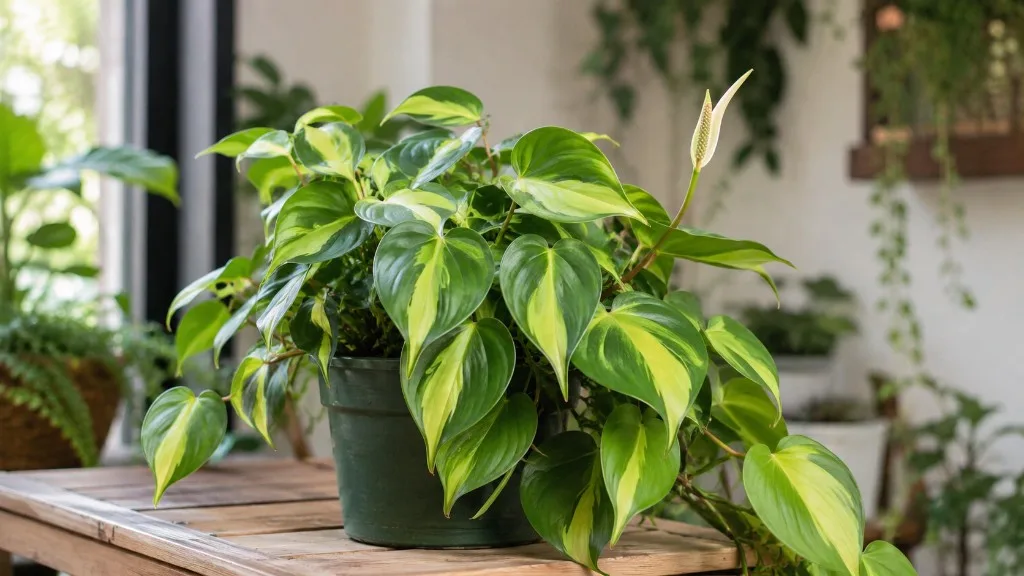
Philodendron Brasil (Philodendron hederaceum ‘Brasil’) is the houseplant people buy for lime-green streaks on heart-shaped leaves—and the one that quietly turns plain green when it lands in a dim corner. The care rhythm is classic tropical aroid work: bright indirect light, chunky soil that dries on a predictable schedule, and watering only after the mix partly dries. What makes Brasil different from solid-green heartleaf philodendron is variegation biology. Lime sectors contain less chlorophyll than dark green margins, so the plant needs more usable light to keep producing patterned leaves while still forgiving the occasional missed watering better than a fern.
Treat Brasil like a fast-rooting trailing aroid first and a color trophy second, and you get a vine that fills a shelf, roots cuttings in water within weeks, and stays chartreuse when light is honest. Skip the biology and you end up overwatering a north-window plant or chasing fertilizer while a plain-green revert shoot takes over the pot. This guide covers identification through propagation, plus the decision rules that separate healthy variegation from revert, guttation from rot, and Brasil from look-alike pothos. For species-specific schedules on light, water, soil, and more, the Philodendron Brasil plant hub breaks each factor into its own page.
Philodendron Brasil at a Glance
Use this table as your daily checkpoint. When something looks wrong, match the symptom to the section below instead of changing three variables at once.
| Factor | Indoor target | What goes wrong first |
|---|---|---|
| Botanical name | Philodendron hederaceum ‘Brasil’ | Sold as pothos or “Brasil pothos” |
| Light | Bright indirect most of the day | Green new leaves; leggy stems |
| Water | Top 3–5 cm dry, then soak and drain | Root rot from wet cold soil |
| Soil | Chunky aroid mix; pH ~5.5–6.5 | Soggy center stays wet for days |
| Temperature | 65–85°F (18–29°C) | Growth stalls below ~55°F |
| Humidity | 40–60%+; higher helps leaf edges | Brown tips in dry winter air |
| Support | Optional moss pole; fine trailing | Smaller leaves when hanging in dim light |
| Size indoors | 4–6 ft trailing or climbing | Faster with bright light and support |
| Pets | Toxic to cats and dogs | Mouth irritation if chewed |
| Outdoor zones | USDA 10–12 in shade | Frost kills foliage |
NC State Extension lists heartleaf philodendron as a climbing or trailing tropical perennial that tolerates extremely low light for survival but performs best in medium to bright filtered light. The ‘Brasil’ cultivar adds a yellow-to-lime center stripe with dark green borders—and NC State notes unstable variegation that shifts leaf to leaf even in good conditions, which changes how aggressively you prune and where you place the pot.
What Philodendron Brasil Actually Is
Philodendron Brasil is not its own species. It is a variegated cultivar of Philodendron hederaceum, the heartleaf philodendron native to Central America and the Caribbean and grown worldwide as a forgiving houseplant vine. Missouri Botanical Garden describes the species as a climbing evergreen with glossy heart-shaped leaves, aerial roots at nodes, and preference for partial shade in moist, well-drained soil outdoors in warm zones. Indoors, that translates to filtered window light and airy potting mix—not a dark hallway and peat-heavy soil that stays wet for a week.
Brasil shares the same node architecture as solid-green heartleaf: every swollen joint on the stem can root and push a new leaf. That is why propagation is easy and why a single revert shoot can dominate a pot if you ignore it. Clemson HGIC groups philodendron, pothos, and monstera as sturdy tropical houseplants needing bright filtered light, warm temperatures, and careful watering—advice that applies directly here, with extra light demand for the lime stripe.
Heartleaf Species vs ‘Brasil’ Cultivar
Solid-green Philodendron hederaceum survives dim offices because dark green tissue photosynthesizes efficiently. ‘Brasil’ inherits that metabolism but cannot afford the same variegation budget in low light, because chartreuse sectors produce less energy per square inch. In chronic shade, new leaves shift toward green—a phenotypic adjustment that often reverses when you brighten exposure. A separate problem is genetic revert: an all-green shoot from a node that stays plain green even after light improves. Bright light alone will not recolor a revert vine; you prune it back to a node that still shows lime patterning on the leaf or stem.
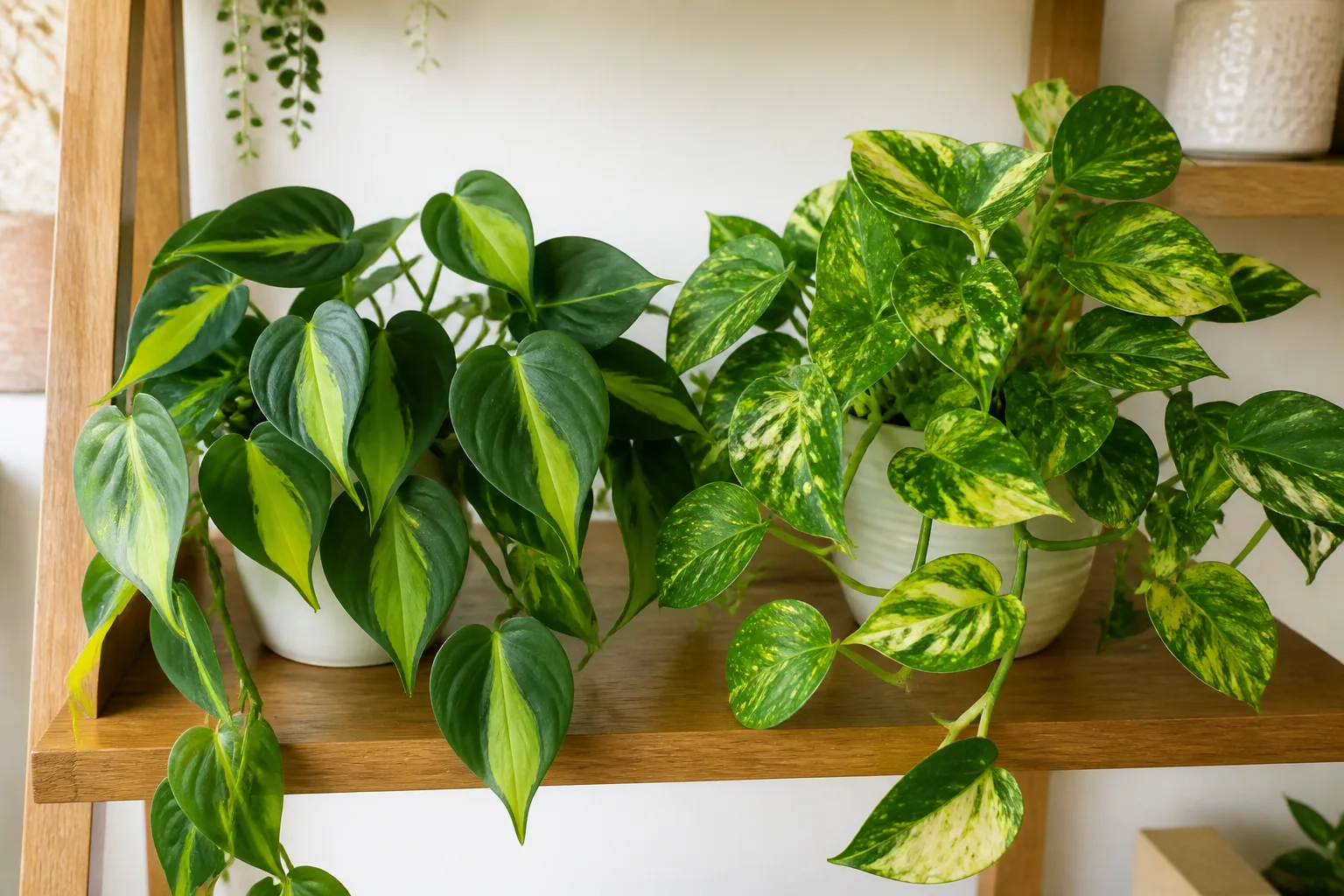
Before you copy care advice from a “golden pothos” thread, confirm the plant identity. Pothos (Epipremnum aureum) has similar trailing habits but grooved leaf stalks and no true philodendron petiole sheath. Brasil leaves are heart-shaped with a lime center band and dark green margins, not the mottled gold-on-green pattern of many pothos cultivars. Both want bright indirect light and dry-between-waterings rhythm, but confusing the two sends you to the wrong troubleshooting page when variegation—not golden speckles—is the issue.
Light Requirements and Window Placement
The most common Brasil mistake is judging by how bright the room feels instead of how much usable brightness reaches the leaves. A well-lit living room can still leave a hanging basket eight feet from the glass in a dark zone, and Brasil responds on new growth long before the whole vine looks tired. RHS philodendron guidance positions philodendrons in bright but indirect light, out of direct summer sun that scorches leaves, and notes that insufficient light produces leggy growth and fewer, smaller leaves.
For most homes, aim for roughly 200 to 400 foot-candles at the growing tips: bright enough to read comfortably near the plant without squinting at the leaf surface, with the pot within one to four feet of suitable glass rather than across the room. Think of three indoor bands: survival (50–150 foot-candles) keeps the plant alive with fading lime sectors; steady growth (150–250 foot-candles) produces acceptable trailing habit with soft variegation; display quality (250+ foot-candles of filtered brightness) supports compact nodes, firm leaves, and clear lime striping on fresh foliage.
Best Window Direction for Variegation
An east-facing window is the most reliable default in most homes. Morning sun delivers one to three hours of gentle direct light—cooler and lower-angle than afternoon exposure—followed by bright indirect brightness the rest of the day. East supports compact growth and strong variegation without the scorch risk unfiltered west windows carry in summer.
A north-facing window rarely supplies enough brightness for vivid variegation year-round, though high-latitude summer north light can maintain slow acceptable growth. Expect stretching and green-dominated new leaves unless you add a grow light. Treat north as survival, not display quality.
A south- or west-facing window can excel when the pot sits slightly back from the pane or behind a sheer curtain. In summer, south and west glass intensifies heat and UV enough to bleach leaves touching hot panes. Watch for one-sided fade on the window-facing leaf surface; add diffusion or move the pot a foot farther into the room when outdoor angles sharpen.
After any placement change, inspect the newest leaf and the next node every ten to fourteen days. Old bleached or stretched leaves will not repair; new growth tells you whether the current exposure is working. For window-by-window detail and grow-light distances, see the Philodendron Brasil light guide.
Watering Philodendron Brasil
Philodendron Brasil wants even moisture without soggy soil. Water when the top 3–5 cm (1–2 inches) of potting mix feels dry to your finger or when a dry skewer pulled from the drainage area comes out clean. In bright active growth, that is often every 7–10 days; in cooler, darker winter months, every 10–14 days is common. There is no universal calendar—always check the soil before you pour.
When you water, soak the entire root ball until water runs from the drainage hole, then empty the saucer after fifteen to thirty minutes so roots are not sitting in runoff. Light surface sprinkles keep only the top inch moist while deeper roots stay dry, which encourages shallow rooting and makes underwatering signs look confusing. Clemson HGIC indoor watering guidance emphasizes checking soil moisture rather than watering on a fixed schedule—critical for philodendrons in dimmer winter rooms where evaporation slows.
Reduce frequency when light drops, temperatures fall, or the plant sits in a oversized pot with excess soil volume. Increase frequency only when new leaves are forming steadily in warm bright conditions and the mix dries faster—not because the calendar says Tuesday. If you see water droplets on leaf tips in the morning, read the next section on guttation before you assume the plant is thirsty.
Soil, Pot, and Drainage Setup
Brasil survives in standard indoor potting mix but thrives in chunky aroid soil that holds moisture briefly while draining fast. NC State Extension notes preference for acidic to neutral, moist but well-drained soil. A practical mix combines orchid bark, perlite, and coco coir or peat in roughly equal parts, or use a commercial philodendron or aroid blend amended with extra bark and perlite if the bag feels heavy.
The pot must have a drainage hole. Terracotta pulls moisture from the soil and gives earlier warning when the mix has dried; plastic retains water longer—fine if you adjust watering downward, risky if you water on habit. Do not plant Brasil in a decorative pot without drainage unless you use it as a cachepot and lift the inner pot to drain after every watering.
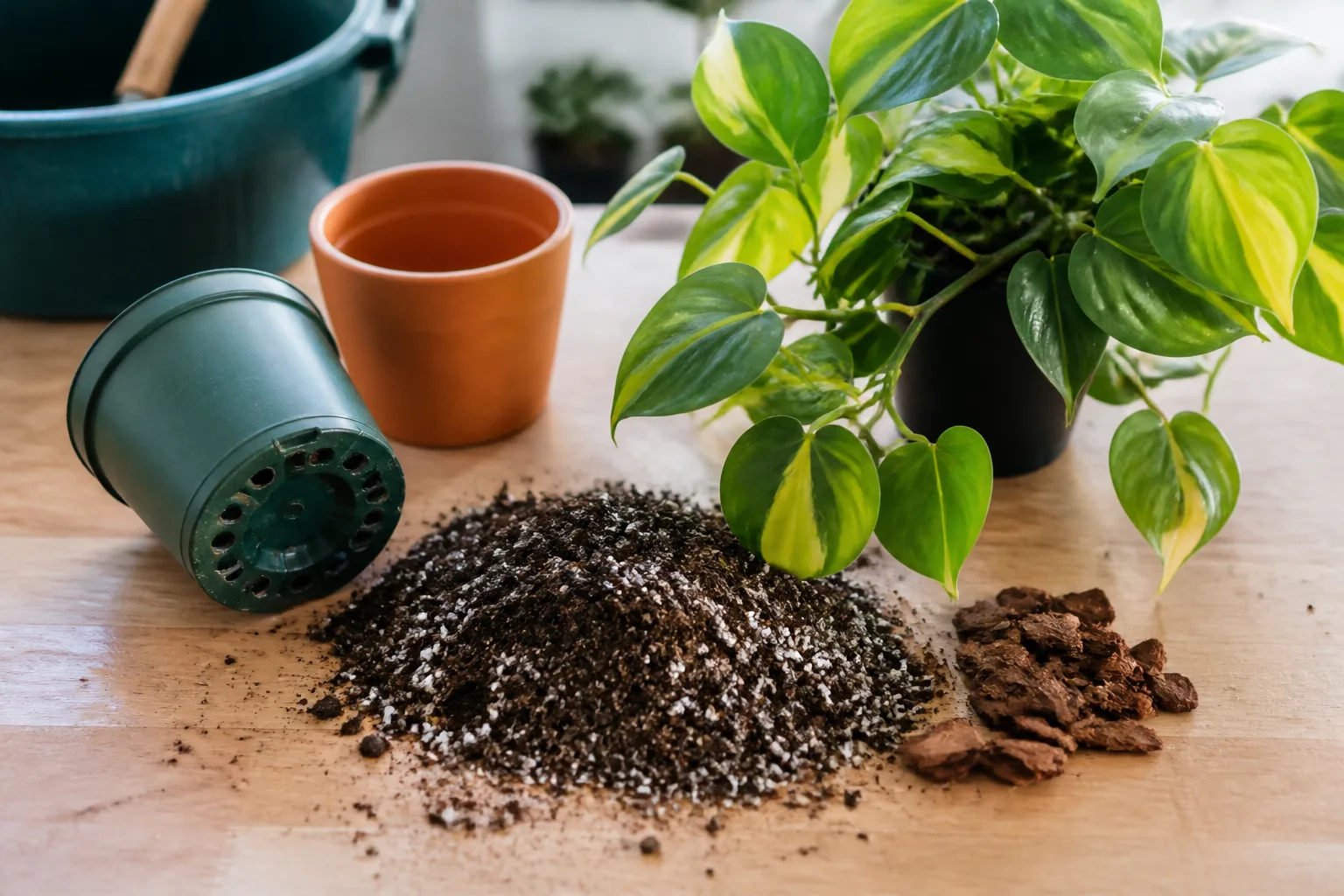
Particle size matters as much as ingredients. Fine, water-retentive mixes stay wet too long for philodendron roots in low light, which is how a “easy” plant develops root rot while the owner keeps watering on the same summer schedule. If water pools on the surface when you irrigate, the mix is either too compacted or too peat-heavy. Refresh with airy soil rather than adding sand to bad soil—sand in fine mixes often makes drainage worse, not better. For mix ratios and repot timing, see the Philodendron Brasil soil guide.
Temperature, Humidity, and Guttation
Native to tropical rainforests, Brasil grows best in warm, humid conditions but adapts well to average household temperatures between 65 and 85°F (18–29°C). Growth slows below about 60°F (15°C) and stops when temperatures approach 55°F (13°C)—keep pots away from cold winter window panes and air-conditioning vents that blast directly on foliage.
Average indoor humidity of 40–60% is acceptable. Higher humidity encourages larger leaves and faster internode growth, especially when combined with bright light. A pebble tray or humidifier helps in dry winter heating, but fix light and watering first before chasing humidity gadgets for brown tips.
Guttation—water droplets hanging from leaf margins in the morning—is how some plants relieve root pressure when soil moisture is high overnight. University of Missouri IPM describes guttation as a pressure-relief mechanism, not a sign that the plant needs more water. Occasional droplets after a thorough watering are normal. Repeated heavy guttation on consecutive mornings often means you should cut back slightly on watering or check that the pot is not sitting in a saucer of old runoff—an early warning before root rot develops.
Fertilizer Through the Year
Feed only during active growth, roughly spring through early fall when the plant is producing new leaves. A balanced liquid houseplant fertilizer at half the label strength once a month is enough—Brasil is not a heavy feeder. RHS philodendron guidance recommends feeding every two weeks during spring and summer for philodendrons in active growth, which you can interpret as half-strength monthly feeding in typical indoor light if the plant is not pushing long vines every week.
Stop fertilizer entirely in late fall and winter unless the plant sits under strong supplemental light and visibly grows. Over-fertilizing a dim winter plant produces salt buildup and brown leaf edges without fixing variegation fade—that is almost always a light problem, not hunger. Flush the pot with plain water if white crust appears on the soil surface. For seasonal schedules, see the Philodendron Brasil fertilizer guide.
Trailing vs Climbing: Shape Choices
Philodendron Brasil is a natural climber that also looks excellent trailing from a shelf or hanging basket. Without support, vines lengthen with smaller leaves and longer gaps between nodes—especially in moderate light. A moss pole or coir pole gives aerial roots something to cling to, which produces larger leaves and a fuller vertical silhouette.
If you prefer trailing, mount the pot close enough to the window that the top of the cascade receives light, not just the window-facing side. Hanging baskets are often placed too high or too far from glass; the wall above the frame can still be a dark zone. Rotate the pot a quarter turn weekly so vines do not permanently lean toward one light source. Either shape works—choose based on your room layout, then commit to the light level that shape demands.
Pruning for Fuller Vines and Color
Under good conditions, Brasil is a fast grower that benefits from light pruning to control length and encourage branching. Prune in spring or early summer while the plant is actively growing. Using clean, sharp scissors, cut stems just above a node, preferably one that still shows lime variegation on the leaf or stem.
Remove reverted all-green shoots promptly even after you improve light—otherwise they outgrow variegated sections because green tissue photosynthesizes faster. Save healthy cuttings for propagation rather than composting them. Damaged leaves with brown tips, tears, or yellowing will not heal; removing them redirects energy to healthy tissue. For technique detail, see the Philodendron Brasil pruning guide.
Propagating Philodendron Brasil
Brasil is one of the easiest philodendrons to propagate because Philodendron hederaceum roots readily from stem cuttings at nodes. Take 10–15 cm (4–6 inch) sections with at least one node and one healthy leaf, cutting just below the swollen joint where the leaf meets the stem. Remove the lowest leaf so the node can contact water or soil without submerged foliage rotting.
For water propagation, place the node in a jar of room-temperature water in bright indirect light and refresh the water weekly. Roots usually appear in two to four weeks; transplant to well-draining mix when roots reach 5–8 cm (2–3 inches). For soil propagation, bury the node in moist airy mix, keep humidity high, and maintain even moisture until the cutting resists a gentle tug.
Choose parent stems showing clear lime streaks—plain-green cuttings produce plain-green vines. Variegation follows the parent tissue; unstable patterning means not every cutting will be equally striped even from a good parent. Iowa State Extension recommends stem sections with lower leaves removed, rooted in water or perlite until roots are several inches long before potting. For step-by-step timelines, see the Philodendron Brasil propagation guide.
Repotting Without Shock
Brasil is a fast-growing plant that typically needs repotting every one to two years when roots circle the pot or emerge from drainage holes. Repot in spring or early summer during active growth, which reduces stress. Move up only one pot size—usually 2.5 cm (1 inch) wider in diameter—and refresh with airy aroid mix rather than packing old soggy soil back into a larger container.
Philodendrons dislike being severely root-bound for long periods, but they also recover slowly from repotting into an oversized pot where excess soil stays wet. If the plant wilts after repotting despite moist soil, keep it in bright indirect light, skip fertilizer for four to six weeks, and avoid watering until the top of the mix dries slightly—roots need time to explore new media. See the Philodendron Brasil repotting guide for root-check steps.
Pests and Prevention
Philodendron Brasil is not uniquely susceptible to any one pest, but mealybugs, scale, spider mites, and fungus gnats appear on stressed or overwatered plants. Inspect leaf axils and undersides monthly. Mealybugs look like cottony white clusters; scale appears as brown bumps on stems; spider mites cause stippling and fine webbing in dry conditions; fungus gnats hover when soil stays wet too long.
Treat isolated outbreaks with manual removal, insecticidal soap, or horticultural oil on a test leaf first, following label directions. Fix the underlying cause—especially overwatering for gnats and low humidity for mites—so pests do not return after you clean the foliage. Quarantine new purchases for two weeks before placing them near existing collections.
Common Problems and Fixes
Brasil is low-maintenance when light, water, and soil align. When something looks wrong, change one variable at a time and read the newest leaves first.
Curling Leaves, Brown Tips, and Variegation Loss
Curling leaves usually mean the plant is too dry. Confirm the top few centimeters of soil are dry before you water, then soak and drain. Chronic underwatering in bright light produces crisp margins; a single missed watering rarely curls entire vines.
Brown tips and edges often trace to low humidity, heat stress, or salt buildup from hard water or over-fertilizing. Increase humidity modestly, move the pot away from heating vents, and flush the soil if white crust appears. Sunburn shows as bleached or tan patches on the side facing intense direct sun—diffuse the window or pull the pot back rather than watering more.
Variegation loss on new leaves means insufficient light in most cases. Move the plant closer to a bright east or filtered south/west window, or add a full-spectrum grow light for twelve to fourteen hours daily. Existing green leaves will not regain lime striping; only new growth reflects improved light. If one shoot stays entirely plain green even in bright conditions, treat it as revert and prune back to a variegated node. For symptom-specific fixes, see not enough light, brown tips, and leggy growth pages on the plant hub.
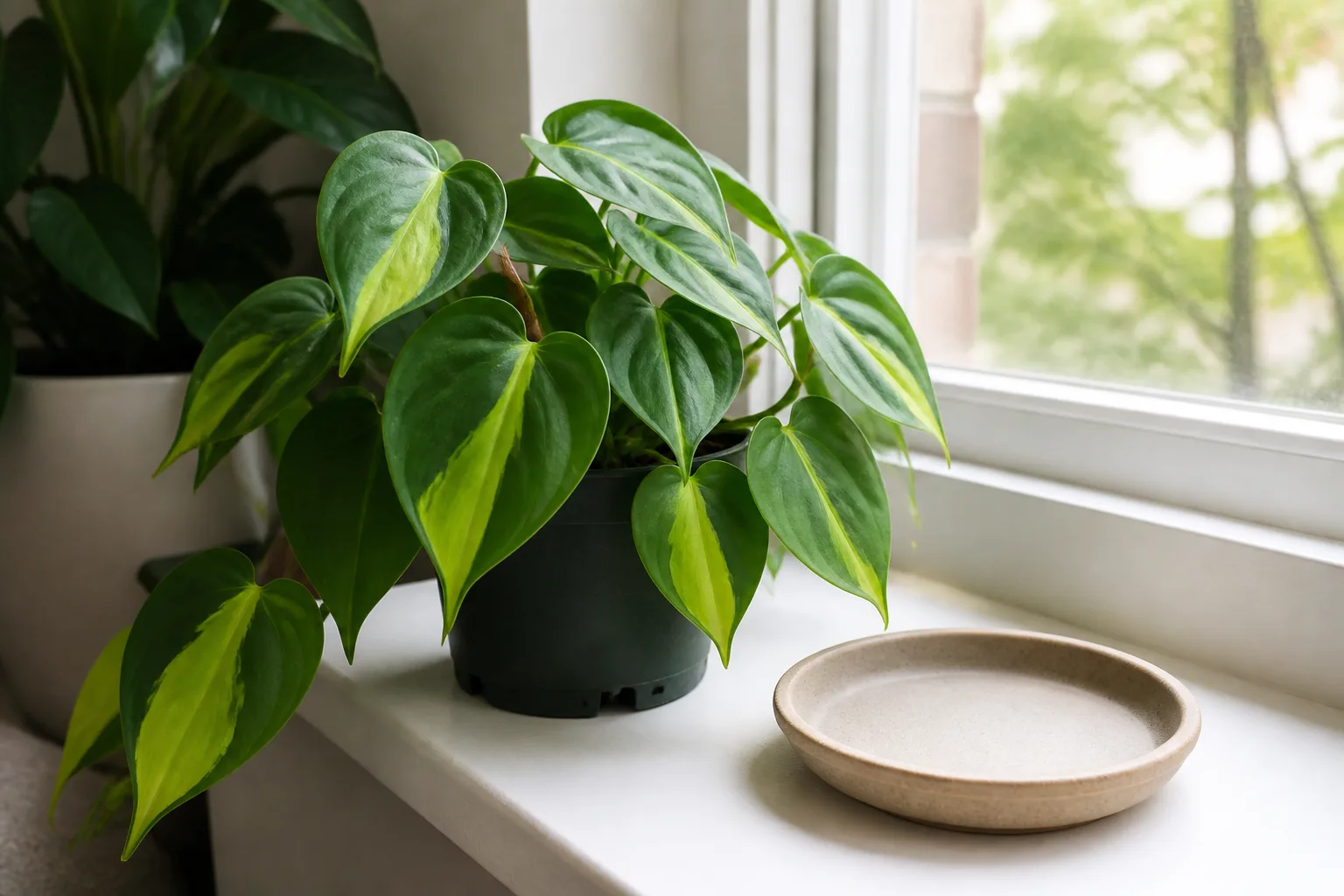
If you just brought a Brasil home, run a simple seven-day setup: Day 1—identify the brightest indirect spot within four feet of glass; Day 2—check drainage and discard saucer water after every watering; Day 3—inspect nodes for revert shoots; Day 4—note baseline leaf color on the newest leaf; Day 5—adjust hanging height so the top of the vine gets light; Day 6—set a weekly soil-check reminder instead of a fixed water day; Day 7—decide trailing vs moss pole before the vine hardens in one direction. That sequence prevents the two killers of new Brails: dim placement and wet soil in a dark corner.
Pet Toxicity and Safe Placement
Philodendron Brasil is toxic to cats and dogs because, like other philodendrons, it contains insoluble calcium oxalate crystals that irritate the mouth and digestive tract if chewed. The ASPCA lists heartleaf philodendron (Philodendron hederaceum) as toxic to cats and dogs, with symptoms including oral pain, excessive drooling, vomiting, and difficulty swallowing. Brasil is the same species; the cultivar name does not change toxicity.
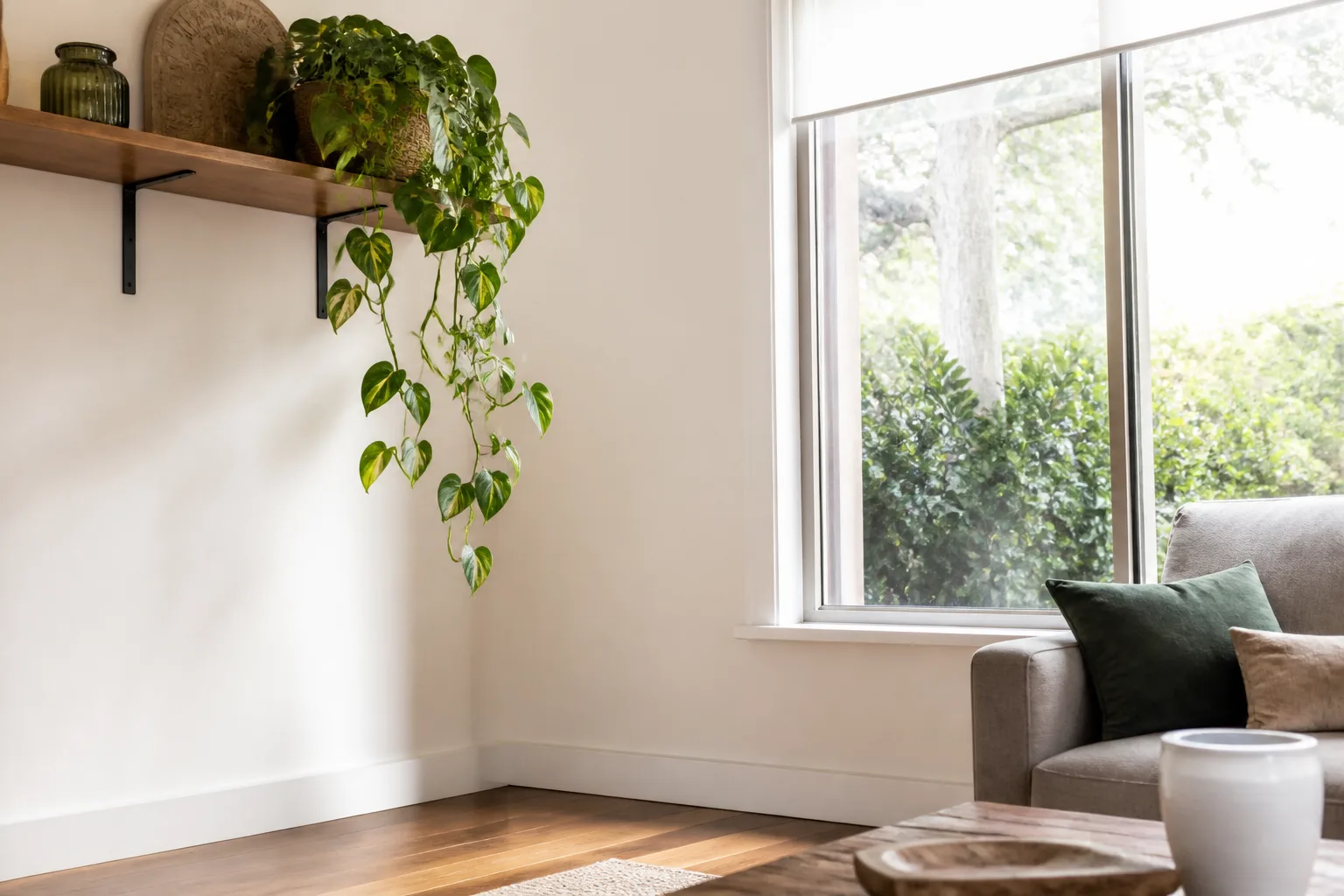
Keep plants out of reach of pets that chew foliage—high shelves, closed rooms, or hanging baskets far from cat launch points. Trailing vines are especially risky because they dangle into browsing range. Clean up fallen leaves promptly. If you suspect ingestion, contact your veterinarian or ASPCA Animal Poison Control at (888) 426-4435 (fee may apply). Brasil is a poor choice for homes with persistent chewers unless you can guarantee separation; consider non-toxic alternatives such as spider plant (Chlorophytum comosum, listed non-toxic by ASPCA) for accessible spots.
Conclusion
Philodendron Brasil rewards a short list of good habits: bright indirect light that keeps new leaves lime-striped, chunky soil that dries before the next soak, and prompt pruning of revert shoots before they take over the pot. Water when the top few centimeters of mix are dry, not when the calendar says so; read guttation as a gentle nudge to back off if droplets appear every morning. Support the vine on a moss pole or let it trail—but place either shape where leaves actually receive light, not where the room merely feels bright.
Propagation is easy at nodes, which makes Brasil ideal for sharing—if you select variegated parent stems. Pet households need honest placement away from chewers because toxicity is real, not theoretical. When variegation fades, fix light before fertilizer; when a shoot stays green in good light, prune revert instead of waiting for magic. For deeper single-topic schedules, the Philodendron Brasil plant hub links light, watering, soil, fertilizer, repotting, propagation, and pruning pages so you can jump to the one factor your vine needs today.