How to Grow and Care for Pink Princess Philodendron
Grow Pink Princess Philodendron with bright indirect light, chunky aroid soil, and soil-check watering. Keep pink variegation, avoid Pink Congo traps, and fix common problems.
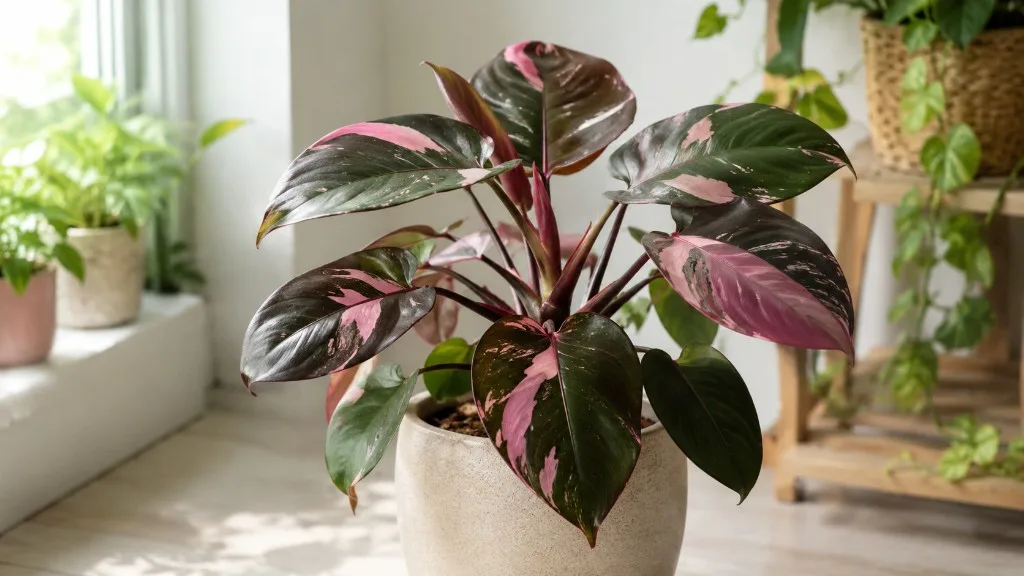
Pink Princess Philodendron (Philodendron erubescens ‘Pink Princess’) is the houseplant people buy for bubblegum-pink splashes on near-black leaves—and the one they panic over when the next three leaves arrive solid green. The care itself is straightforward tropical aroid work: bright indirect light, chunky soil, and watering only after the mix partly dries. What makes Pink Princess different is chimeric variegation, unstable pink tissue that needs enough light to keep showing up but burns faster than green when sun is too harsh.
Treat Pink Princess like a climbing philodendron first and a collector trophy second, and you get a plant that stays upright, grows steadily, and keeps producing patterned leaves. Skip the biology and you end up overwatering a dim corner plant or chasing pink with fertilizer while the stem quietly reverts. This guide covers placement through propagation, plus the buying traps and troubleshooting steps that separate a healthy Pink Princess from an expensive green philodendron. For species-specific schedules on light, water, soil, and more, the Philodendron Pink Princess plant hub breaks each factor into its own page.
Pink Princess Philodendron at a Glance
Use this table as your daily checkpoint. When something looks wrong, match the symptom to the section below instead of changing three variables at once.
| Factor | Indoor target | What goes wrong first |
|---|---|---|
| Botanical name | Philodendron erubescens ‘Pink Princess’ | Sold under wrong cultivar tags |
| Light | Bright indirect most of the day | Green new leaves; leggy stems |
| Water | Top 3–5 cm dry, then soak and drain | Root rot from wet cold soil |
| Soil | Chunky aroid mix; pH ~5.5–6.5 | Soggy center stays wet for days |
| Temperature | 65–85°F (18–29°C) | Growth stalls below ~60°F |
| Humidity | 40–60%+; higher helps leaf edges | Brown tips on pink sectors |
| Support | Moss pole or coir pole | Small leaves; leaning stems |
| Size indoors | ~3–4 ft tall on support | Slower when heavily pink |
| Pets | Toxic to cats and dogs | Mouth irritation if chewed |
| Outdoor zones | USDA 9–11 in shade | Frost kills foliage |
NC State Extension lists Philodendron erubescens as a climbing tropical perennial with glossy foliage, reddish-purple petioles, and cultivars including ‘Pink Princess’ with heart-shaped dark leaves and pink variegation. Indoors it behaves like other erubescens types: moderate vigor when healthy, faster when the plant pushes greener tissue, slower when new leaves are heavily pink.
What Pink Princess Philodendron Actually Is
Pink Princess is not its own species. It is a selected cultivar of Philodendron erubescens, the blushing or red-leaf philodendron native to Colombia and grown worldwide as a houseplant. RHS describes the species as a stout evergreen climber with glossy dark green triangular-ovate leaves, red-purple undersides, and partial-shade preference in moist, well-drained loam.
The “Princess” part is marketing; the biology is aroid. Pink Princess shares the same climbing architecture as Red Emerald, Prince of Orange, and other erubescens selections—upright vining stems, nodes that root readily, aerial roots at nodes, and juvenile heart-shaped leaves that enlarge with support. Clemson HGIC groups philodendron, pothos, and monstera as sturdy tropical houseplants that need bright filtered light, warm temperatures, and careful watering—advice that applies directly here.
Chimeric Variegation and Why It Changes Care
The pink splashes are chimeric variegation: the plant carries two cell lines, green photosynthetic tissue and pink tissue with little chlorophyll, in the same leaf. That is why patterning is unstable from leaf to leaf. One leaf may be marbled; the next mostly green; occasionally one emerges nearly all pink.
Green sectors feed the plant. Pink sectors mostly decorate it. In dim light, Pink Princess favors greener new leaves because they capture more energy. In harsh direct sun, pink tissue scorches first while green may look fine for a day or two. An all-pink leaf photographs well but often weakens and browns because it cannot sustain itself. Your long-term goal is balanced variegation across several nodes, not one spectacular half-moon followed by a green takeover.
Existing green leaves will not turn pink again. Only new growth reflects improved light or successful pruning back to variegated nodes. That single rule saves months of frustration.
Light Requirements for Strong Pink Variegation
Pink Princess needs bright indirect light for most of the day to keep producing patterned foliage. NC State Extension recommends partial shade for P. erubescens and warns that direct sunlight should be avoided indoors. RHS philodendron guidance likewise points to bright filtered light for indoor philodendrons rather than sun-baked windowsills.
In real homes, an east-facing window or a spot two to four feet back from a sheer-filtered south or west window is a common sweet spot. Gentle morning sun through glass is often tolerated; hot afternoon sun bleaches pink to white and creates crisp brown patches on variegated sectors. If new leaves arrive mostly green with long gaps between leaves (leggy internodes), increase usable light before you change fertilizer or pot size.
Windows, Grow Lights, and Sunburn on Pink Tissue
Read the plant before you read the calendar. Too little light: solid green new leaves, smaller leaf size, leaning toward the glass. Too much light: pink sectors turn white or tan; brown patches appear on exposed pink; leaf edges crisp even when soil moisture is fine.
If your brightest window is still dim in winter, a full-spectrum grow light 12–18 inches above the canopy for 10–12 hours daily can supplement. Move the plant gradually when upgrading light—sudden jumps from a hallway to a south window shock tissue. Rotate the pot weekly so one side does not dominate growth, but expect some lean; these are climbers, not symmetrical rosettes.
For window-specific tuning and recovery from dim corners, see the Pink Princess light guide.
Watering Pink Princess Without Root Rot
Overwatering kills more Pink Princess plants than underwatering ever will. NC State Extension notes that overwatering can cause root rot and recommends watering at the base while keeping leaves dry to reduce leaf-spot issues. Clemson HGIC indoor watering guidance applies the same principle: soak thoroughly, then let the mix dry before the next drink.
Water when the top 3–5 cm (about 1–2 inches) of potting mix feel dry—roughly a knuckle deep in a standard pot. In bright active growth that may mean every 7–10 days; in cooler, darker months, 10–14 days is common. Always confirm with your finger or by lifting the pot; a light pot means dry, a heavy pot means wait.
When you water, soak until excess runs from the drainage hole, then empty the saucer within 30 minutes. Never let the pot sit in standing water. If you are unsure, wait an extra day. Pink Princess tolerates brief dryness better than soggy roots, especially when nights are cool and the mix dries slowly.
Detailed dry-down cues and seasonal shifts live on the Pink Princess watering page.
Soil Mix, Pots, and Drainage
As an aroid, Pink Princess wants airy, well-draining soil rich in organic matter—not dense peat that stays wet in the center for a week. NC State Extension specifies moist but well-drained soil with partial shade; indoors that translates to a chunky mix, not garden loam in a decorative pot.
A reliable starting blend is equal parts indoor potting mix, perlite, and orchid bark (1:1:1). That ratio keeps oxygen at the roots while holding enough moisture between waterings. Target pH around 5.5–6.5, slightly acidic, which suits erubescens types. Always use a pot with at least one drainage hole; cache pots without holes belong to dry arrangements, not living philodendrons.
Upsize one size at a time—about 1–2 inches wider in diameter—when roots circle the pot or water runs through instantly without absorbing. Oversized pots stay wet too long and invite rot even when your watering hand is cautious. More mix recipes and amendment notes are on the Pink Princess soil guide.
Temperature, Humidity, and Airflow
Pink Princess is a tropical understory climber. NC State Extension recommends temperatures between 65 and 85°F and protection from cold drafts. Growth slows below about 60°F (16°C); prolonged chill can yellow leaves and stall new ones.
Average household humidity 40–50% is survivable, but 50–60%+ keeps pink and green edges cleaner. Brown tips on variegated sectors often trace to dry air plus inconsistent watering, not mysterious “philodendron disease.” A humidity tray (pebbles and water below pot level), grouped plants, or a small humidifier near the canopy helps more than misting leaves twice a week.
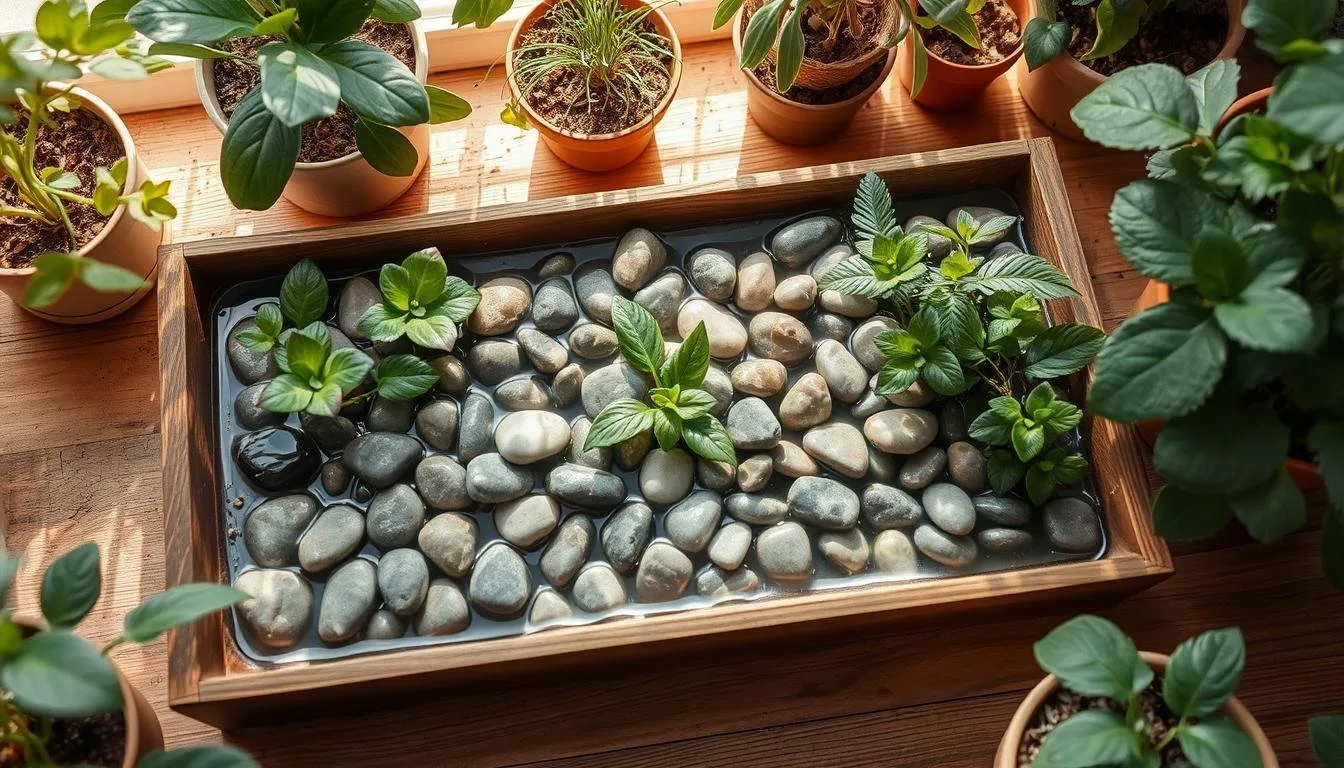
Keep the plant away from heat vents, fireplaces, and cold AC blasts that desiccate foliage overnight. If you feel comfortable in the room year-round, Pink Princess usually does too—except right in front of a drafty winter window.
Fertilizing During Active Growth
Feed monthly in spring and summer with a balanced liquid fertilizer diluted to half strength once the plant is actively pushing leaves. RHS philodendron guidance supports light feeding during growth periods for container philodendrons. Skip fertilizer on wet, cold soil, on newly repotted plants for four to six weeks, and through winter unless you grow under strong lights with visible new growth.
Fertilizer does not restore pink on reverted leaves and will not fix leggy green growth caused by dim light. It supports size and leaf count after light and watering are already correct. Heavy nitrogen on a struggling plant can push soft, weak foliage. For rate and timing detail, see the Pink Princess fertilizer page.
Moss Pole Support and Pruning for Balance
Pink Princess is a self-heading climber that grows upward when given support. Without a pole, stems lean, leaves stay smaller, and the plant looks sparse even when healthy. A moss pole or coir pole gives aerial roots something to cling to and encourages larger foliage.
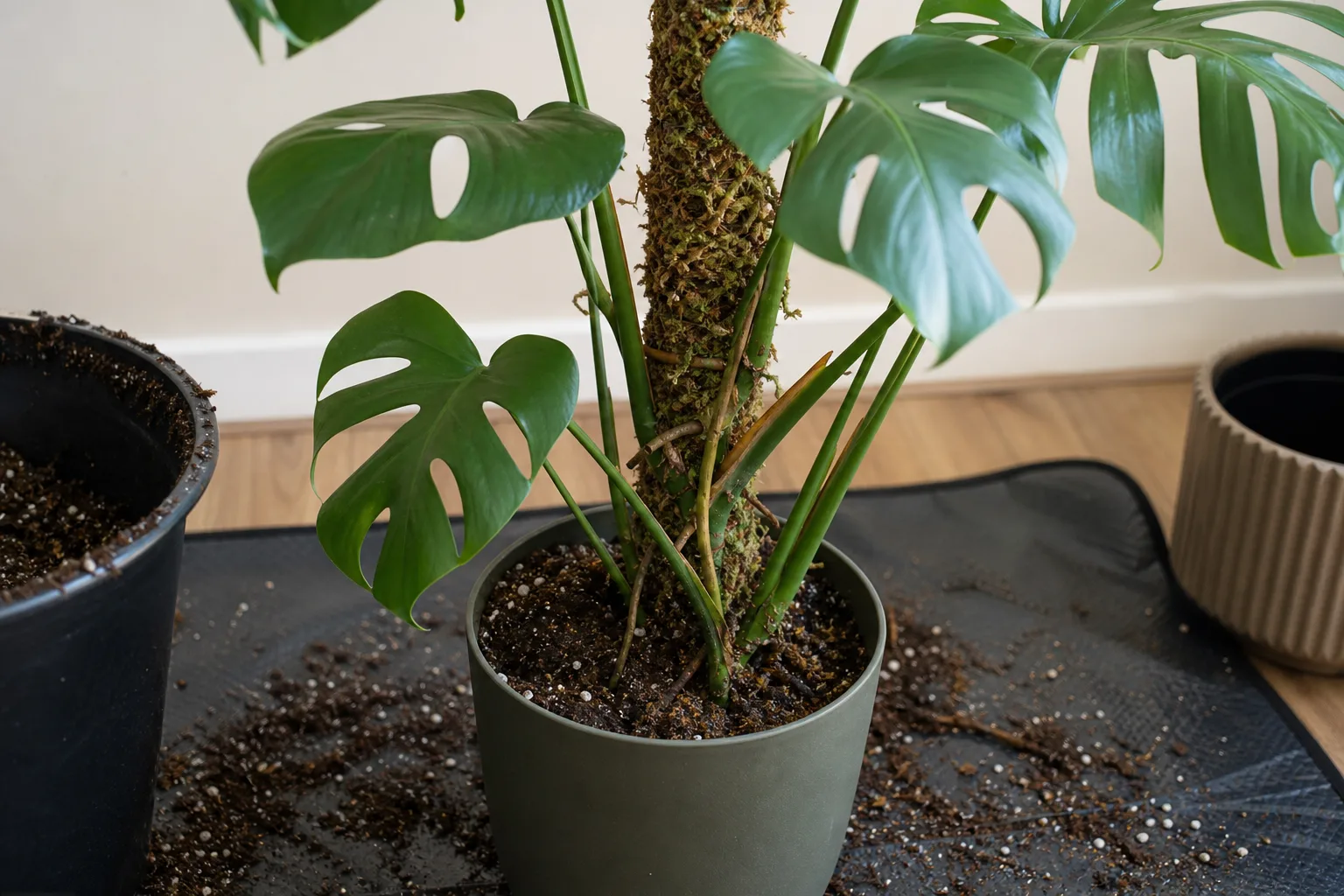
Install the pole during repotting when possible. Tie stems loosely with soft plant tape; never crush petioles. Mist the pole occasionally so aerial roots attach—attachment improves leaf size more than fertilizer does.
Prune for variegation balance, not aesthetics alone. Remove dead or damaged leaves first. If a stem pushes three or more consecutive all-green leaves after light is already adequate, cut back to the last node showing pink on the stem or a marbled leaf. Sterilize blades between cuts. Avoid removing more than about one-third of the plant in one session; green tissue still photosynthesizes. Pruning cannot replace brightness—move the plant first, then cut if the active growth point stays green for several weeks.
Advanced cut timing and pole alternatives are covered in the Pink Princess pruning guide.
Repotting Pink Princess Philodendron
Repot every one to two years, or when roots emerge from drainage holes and water races through without wetting the mix. Spring and early summer are ideal because roots repair quickly in warmth and longer days.
Steps: Water lightly the day before. Slide the plant out and loosen the outer root ball; trim black mushy roots with sterilized shears. Choose a pot 1–2 inches wider with drainage. Add a shallow layer of fresh aroid mix, position the plant, fill around roots, and water until drainage runs clear. Keep bright indirect light and resume normal dry-down watering after a week—do not fertilize for four to six weeks.
If you install a taller moss pole, do it now rather than disturbing roots again in two months. Step-by-step timing and mix refresh ratios are on the Pink Princess repotting page.
Propagating Pink Princess from Stem Cuttings
Propagation is the affordable way to backup a favorite plant or rescue a reverting stem. Pink Princess roots readily from stem cuttings with nodes.
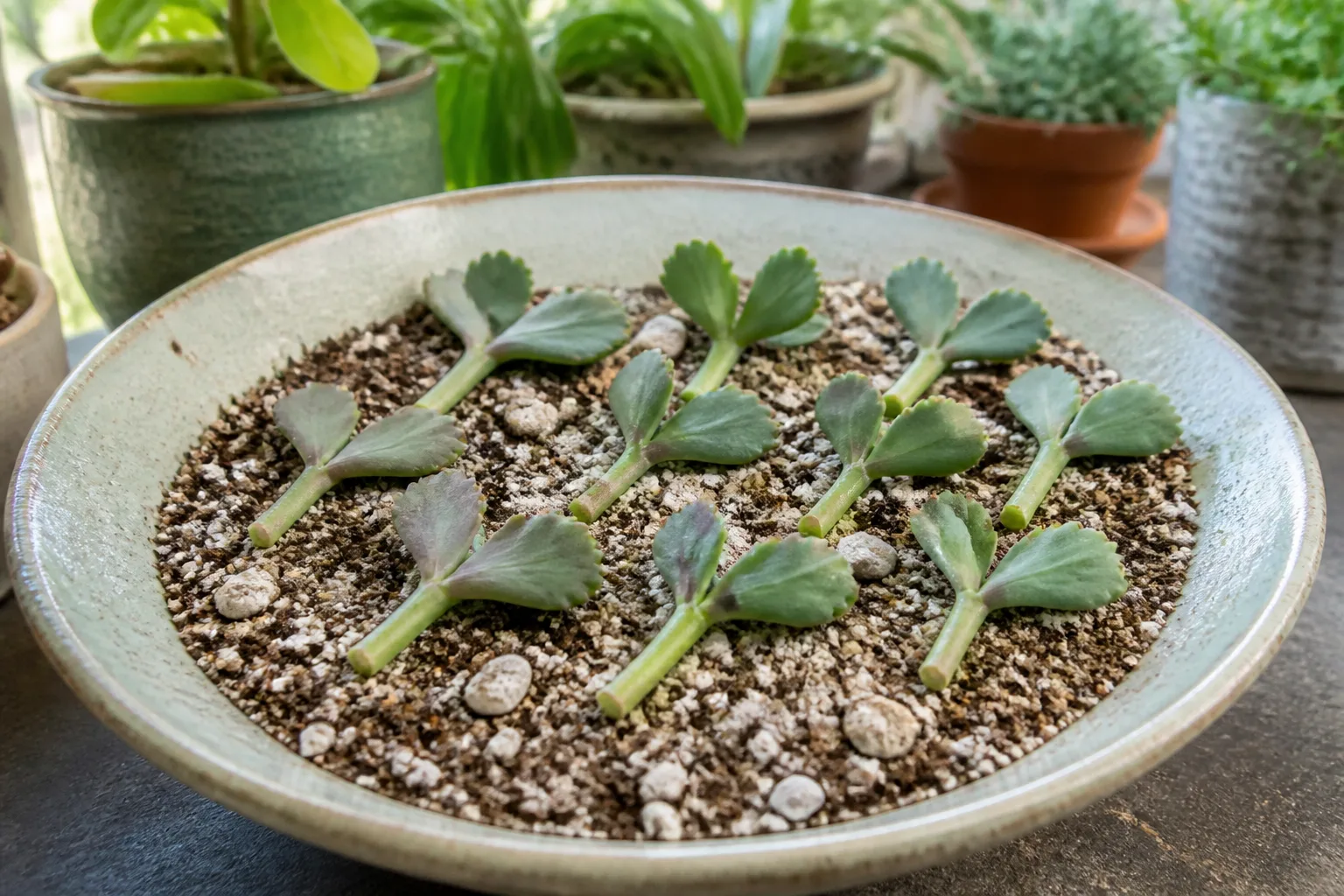
- Select a healthy stem with two to three leaves and at least two visible nodes below the cut.
- Cut just below a node with sterilized shears.
- Remove lower leaves so one or two nodes sit bare.
- Root in water or moist aroid mix. Water: submerge nodes, change water weekly, bright indirect light. Soil: bury nodes in chunky mix, keep lightly moist, cover loosely with a clear bag for humidity the first week.
- Transplant when roots are 2–5 cm (1–2 inches) long. Move to the same 1:1:1 mix you use for the parent plant.
Choose cuttings from variegated stems, not all-green runners, if you want pink in the offspring. Even then, each new leaf is a genetic roll of the dice. Full propagation timing and moss-vs-water tradeoffs are on the Pink Princess propagation page.
Pests, Diseases, and Pet Safety
Pink Princess attracts the usual houseplant pests: mealybugs, aphids, spider mites, and scale. Inspect leaf axils and undersides weekly. Isolate new plants for two weeks. Treat early with insecticidal soap or horticultural oil, repeating per label until pests are gone.
Root rot follows overwatering and poor drainage—mushy stems, yellow leaves, sour soil smell. Trim affected roots, repot into fresh mix, and correct watering before expecting recovery. Leaf spot fungi spread when foliage stays wet; water at the soil line and improve airflow.
Pet safety: ASPCA lists Philodendron as toxic to cats and dogs. Plants contain insoluble calcium oxalate crystals that irritate mouth and GI tract if chewed. Keep pots out of reach, clean fallen leaves, and call ASPCA Poison Control at (888) 426-4435 or your veterinarian if ingestion is suspected.
Troubleshooting the Most Common Problems
Start with one variable at a time: light, then water, then pot mix. Changing all three in one weekend hides the real cause.
Leggy stems and small green leaves mean insufficient light. Move closer to a bright window or add a grow light; do not prune until placement improves.
Brown leaf edges on green tissue often combine low humidity and underwatering swings. Raise humidity and water at consistent dry-down points.
Brown patches on pink sectors usually mean too much direct sun or heat on fragile tissue. Filter light or pull the plant back from the glass.
Lower leaves yellow and drop can be normal aging if the top grows and soil is not soggy. If many leaves drop at once, check roots for rot.
Rust-colored spots may indicate fungal leaf spot. Remove affected leaves, reduce leaf wetting, and improve airflow.
For symptom-specific fixes—yellow leaves, drooping, root rot, spider mites—use the problem pages linked from the Philodendron Pink Princess hub.
Reverted Leaves and Lost Pink
When new leaves stay green for several weeks despite bright indirect light, the active growth point may have reverted—green cells outcompeting pink on that stem. Fix: prune back to the last node with pink streaking on the stem or a marbled leaf, then maintain strong indirect light so the next bud has a chance to produce patterned tissue.
You cannot paint pink back onto old leaves. You cannot fertilizer your way out of a green takeover. If the entire plant lacks stem pink after months of good light, you may be growing a beautiful green philodendron—not a failure, just a different outcome than the label promised.
Buying Smart: Price, Pink Congo, and Stem Inspection
Pink Princess prices collapsed from peak collector madness but still exceed plain green philodendrons because stable pink variegation is propagated by tissue culture, a slow process where not every batch colors equally. Garden Betty notes that batches from even heavily pink mother plants may yield solid green, lightly variegated, or heavily variegated offspring—each leaf is unpredictable.
Inspect the stem, not just the prettiest leaf. Pink streaking on petioles and between nodes suggests the growth point still carries variegated cells. A single half-moon leaf on an otherwise green stem is a bad bet at premium prices.
Avoid Pink Congo imposters. Philodendron ‘Pink Congo’ has circulated with temporarily pink foliage from chemical treatment rather than stable genetic variegation; pink fades as new leaves mature. Real Pink Princess shows irregular pink from the growth point when light is adequate. If every leaf is uniformly hot pink with no green marbling, ask hard questions before paying Princess prices.
Today you can find small plants under $50 at big-box stores and online growers when supply is high; highly variegated mature specimens still command more. Buy from sources that show the whole plant, not one cropped leaf photo.
Conclusion
Pink Princess Philodendron rewards a simple loop: bright indirect light for patterned new growth, chunky soil in a draining pot, water only after the top inch dries, and a moss pole so stems climb instead of flop. Understand chimeric variegation and you stop fighting biology—green old leaves stay green, pink returns only on new growth, and all-pink leaves are fragile trophies rather than goals.
When something fails, check light first, roots second, and buying mistakes last. Link your daily habits to the deeper Philodendron Pink Princess care hub for light, watering, soil, fertilizer, repotting, propagation, and pruning whenever one factor—not the whole plant—needs tuning. Get those basics steady and Pink Princess becomes one of the easier collector aroids to grow, not a diva that only survives in greenhouse photos.