How to Plant a Hanging Flower Basket: 8 Steps
Learn how to plant a hanging flower basket with the right liner, soil, plant mix, spacing, watering, feeding, and support for a full season of blooms.
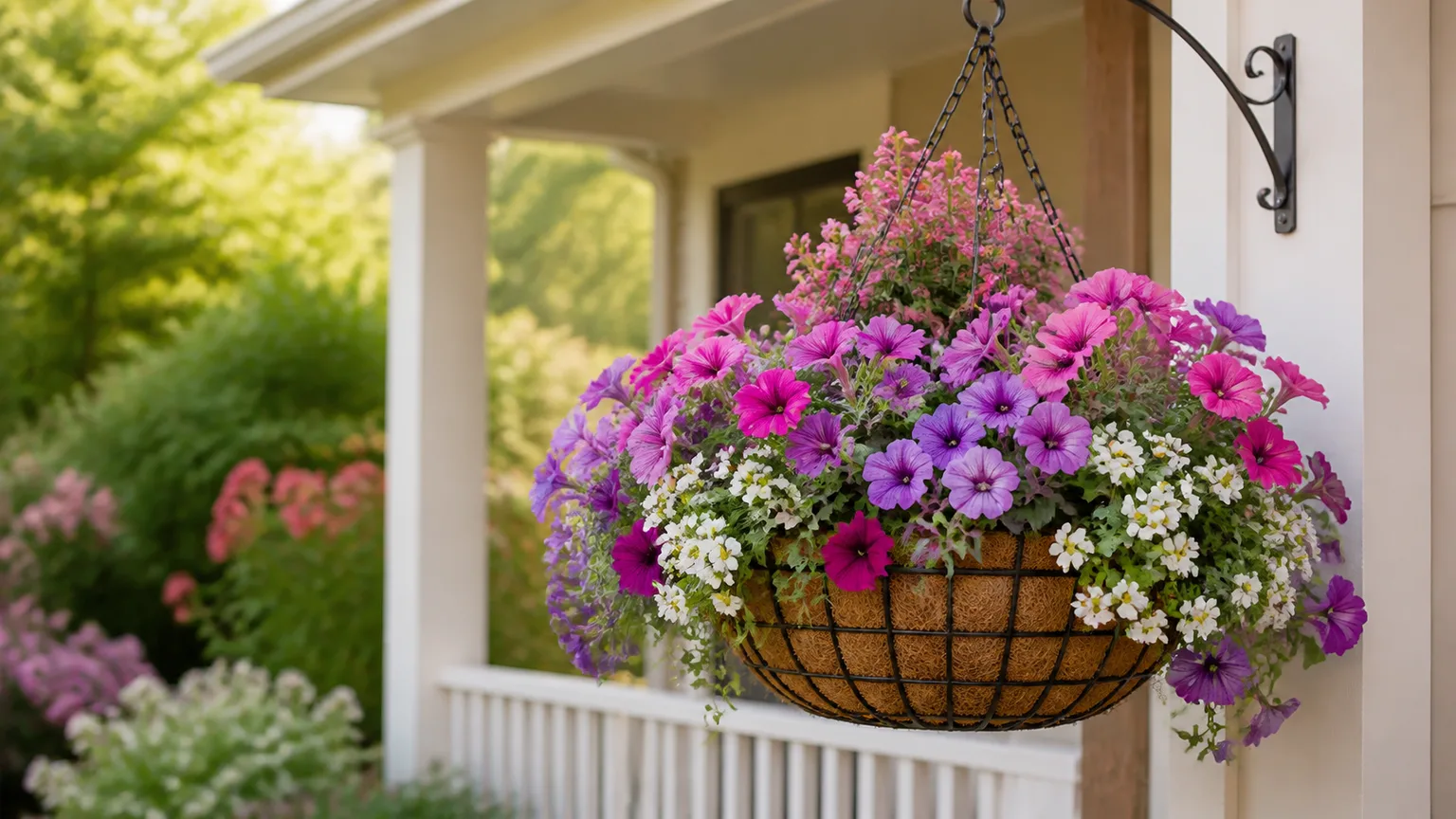
The easiest way to ruin a hanging basket is to choose the flowers first and discover later that the site is too windy, too shady, or too far from a hose. A successful basket is a small, exposed container garden: every plant shares the same limited root zone, so light, water, drainage, fertilizer, and growth rate have to make sense together.
This guide walks through the whole job, from choosing a basket and liner to hanging a newly planted display safely. The most important principle is simple: match the plants to the place and to the care you can consistently provide. A slightly less crowded basket that fits its site will usually outlast a stuffed basket that looked impressive on day one.
Choose the site and plant style before you shop
Stand where you plan to hang the basket and observe the spot for a full day if you can. Note direct sun, reflected heat from a wall, wind, rain exposure, and how easily you can reach the basket with a hose or watering can. A basket under a covered porch may receive much less rain than the same basket in an open garden, while a balcony can dry a coir-lined basket from every direction.
Outdoor baskets should go up after the local frost danger has passed for the plants you chose. The calendar varies by region, elevation, and spring weather, so use your local last-frost guidance and the nursery’s temperature advice rather than treating a particular month as universal. The Royal Horticultural Society’s planting guide likewise recommends waiting until frost risk has passed before putting summer bedding outside.
Match light, wind, and watering load
Choose one condition set for the whole basket. Petunia, calibrachoa, verbena, portulaca, and scaevola are useful starting points for a bright, warm location; impatiens, many begonias, fuchsia, and lobelia are better candidates for shade or bright filtered light. Cultivar labels still matter: a plant sold as a shade lover may tolerate morning sun but scorch in hot afternoon exposure, and a full-sun plant may flower poorly in deep shade.
Wind changes the decision as much as sunlight does. A windy position strips moisture from leaves and liner, bends tall stems, and can turn an upright focal plant into a sail. In that situation, favor compact or trailing plants, use a larger basket with more root volume, and place the basket where a wall or roof edge gives shelter without blocking the light the plants need.
If you cannot check the basket most days in hot weather, choose drought-tolerant varieties and a moisture-retentive liner, or move the project closer to a water source. Frequent watering is not a flaw in hanging baskets; it is the predictable cost of a small, elevated container with exposed sides and many roots.
Choose the basket, liner, and potting mix
A wire basket with a coir or moss liner gives the classic rounded, overflowing look and lets you plant through the sides. A solid plastic basket with drainage holes generally loses water more slowly and can be the better choice for a sunny, windy location or for a gardener who cannot water frequently. Choose the container for the site and the finished weight, not just for appearance.
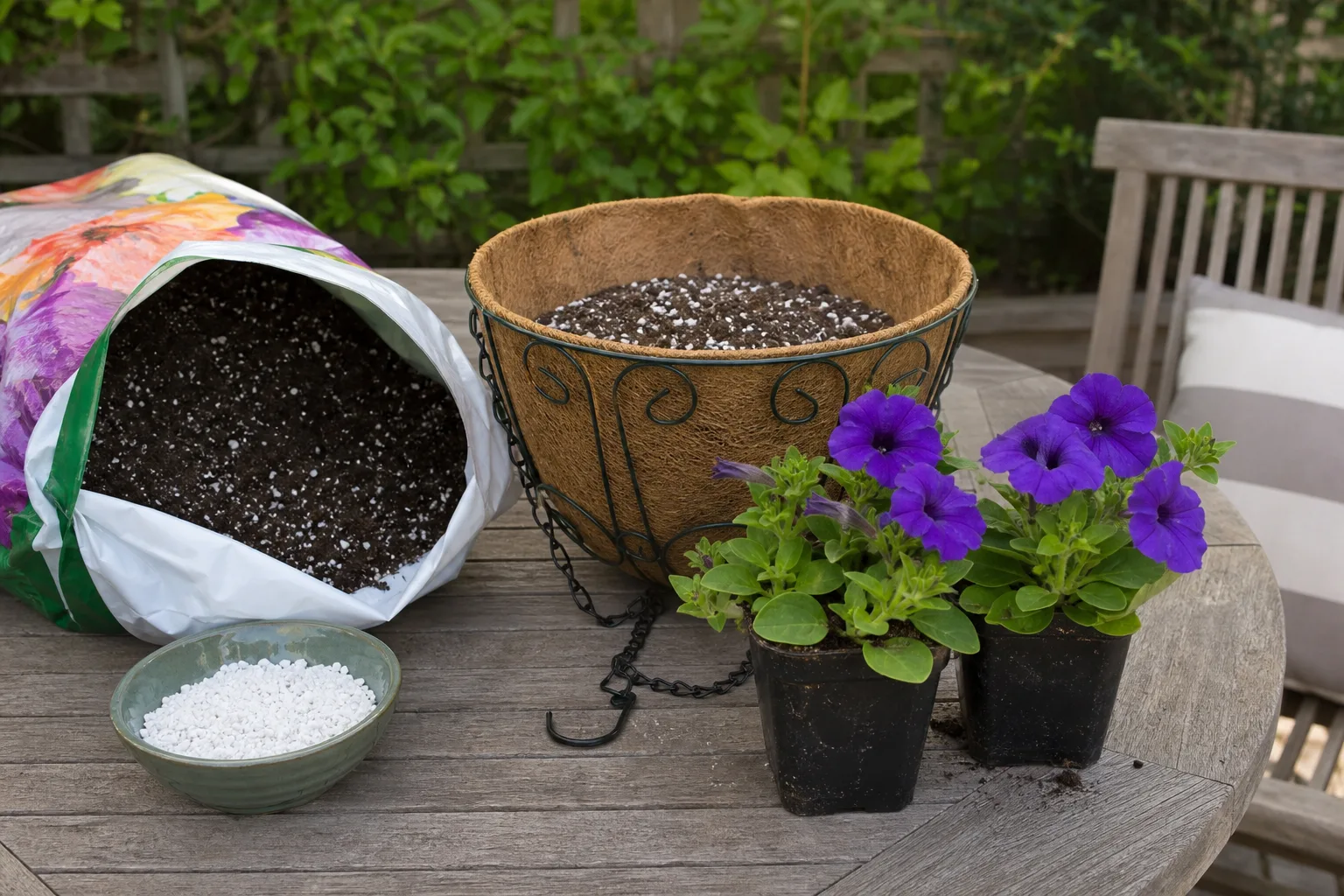
Before filling it, gather a stable short pot or bucket to support the basket while you work, a hand trowel, sharp scissors or a utility knife for the liner, a lightweight commercial potting mix, the plants, and the fertilizer you intend to use. The Iowa State University Extension guide to hanging baskets advises using a light, well-drained potting mix rather than garden soil; the reason is practical: garden soil is heavy, compacts in a container, and can make the root zone stay wet and airless.
Use a mix labeled for containers, baskets, or potting—not topsoil, garden soil, or a dense raised-bed blend. Perlite, fine bark, coir, or other components may appear in the mix, but there is no need to build an elaborate recipe if the purchased product drains evenly, wets readily, and holds a root ball without collapsing. Fill the basket to leave a shallow rim below the edge so water can soak in instead of spilling over.
Decide whether a moisture barrier is worth it
Coir and moss liners drain beautifully, but they also allow water to escape through the sides. A partial plastic barrier inside the liner can slow that loss, especially in sun or wind. It is a moisture-management tool, not permission to seal the basket: leave the bottom able to drain and make several holes in any plastic you add.
Do not line a basket solidly and leave it with nowhere for runoff to go. Saturated roots can fail even when the foliage looks thirsty. The Illinois Extension hanging-basket guide recommends a barrier with drainage openings to reduce moisture loss, which is the useful middle ground: slow the escape without creating a bowl of standing water.
Design the basket before filling it
Arrange the plants on top of the empty or partly filled basket before you commit to holes. Turn the basket as you work and judge the view from below, from the side, and from the path where people will see it. Remove one plant if the arrangement looks crowded; a basket becomes fuller as plants grow, and overplanting increases the watering and feeding burden later.
Use focal, mounding, and trailing plants
The familiar thriller-filler-spiller idea is useful, but it is a design shortcut rather than a rule. The focal plant supplies height or a strong flower shape, mounding plants fill the middle, and trailing plants soften the rim. For a basket viewed from below, you can skip a tall center and use rounded or trailing plants throughout; Illinois Extension makes the same distinction for baskets hung well above eye level.
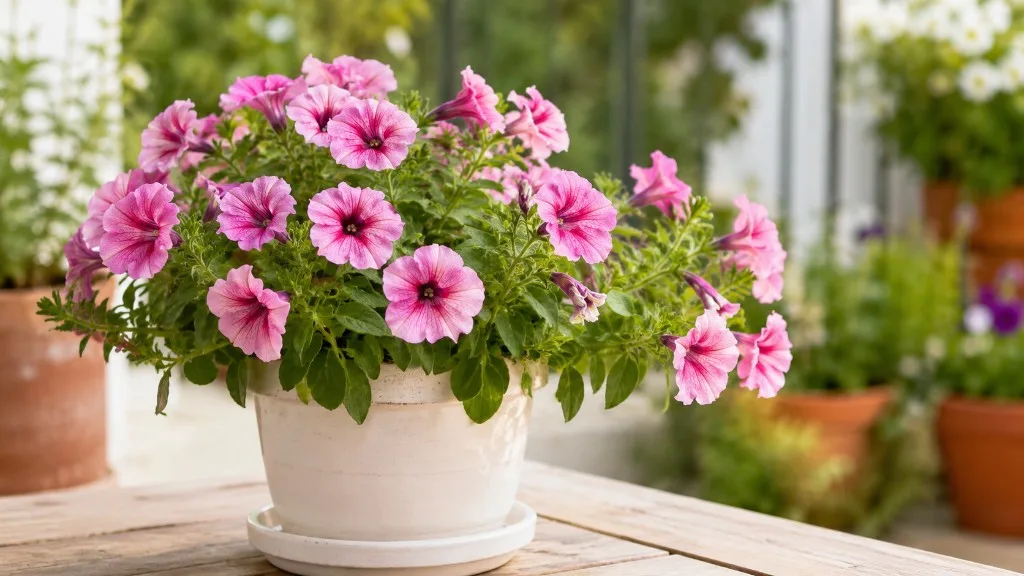
The plants must also share the same care requirements. Pairing a thirsty impatiens with a dry-soil portulaca is a recipe for compromise: water enough for one and the other may suffer. A quieter, single-color basket made from one species or several cultivars with the same needs is often easier to keep healthy than a colorful mixture with conflicting light and moisture preferences.
Here are practical starting combinations. Treat the table as a filter, not a guarantee; read the tag for the specific cultivar and adjust for your climate.
| Site | Useful plant roles | What to watch |
|---|---|---|
| Bright sun, moderate wind | Petunia or calibrachoa as the main bloom; bacopa or verbena as spillers | These baskets can dry rapidly; place them near water and check the root zone often. |
| Bright sun, hot and dry | Portulaca, compact verbena, or drought-tolerant trailing foliage | Do not combine with shade plants just to add color; heat and reflected light are demanding. |
| Morning sun or bright shade | Begonia, impatiens, fuchsia, or lobelia with a soft trailing partner | Deep shade may produce foliage but fewer flowers. |
| Sheltered filtered light | Begonia, impatiens, ivy, or a foliage-forward mix | Avoid a tall focal plant if the basket will be viewed from below. |
Choose plant count by basket size
Plant counts are starting points, not a race to fill every inch. For a 12- to 14-inch basket, plan on roughly three to five small plants; a 16- to 18-inch basket can often hold five to seven. Those ranges come from Iowa State Extension guidance, and they include plants tucked through the sides—side planting is not extra capacity.
Use fewer plants when you are buying larger transplants, growing vigorous varieties, or expect to keep the basket for more than one season. Use the upper end of the range when the plants are small and compact, but leave enough space for each root ball to contact mix on all sides. The goal is quick coverage without a solid knot of roots by midsummer.
Plant the basket step by step
Plant on a bench or patio, not while the basket is dangling from its final hook. Put the empty basket on a short, stable pot so it cannot roll, and water the nursery plants before you start. Moist root balls slide out more cleanly and suffer less stress than dry, brittle ones.
Line the basket, cut side openings, and add mix
Fit the coir, moss, or other liner snugly into the wire frame. If you are using a partial moisture barrier, place it inside the liner and punch drainage holes through the low section. For side planting, mark openings in staggered rows rather than cutting a single large slit; small, spaced openings hold the root balls more securely and leave room for soil between them.
Add a first layer of moistened potting mix. If you are planting the sides, fill only to the lowest row of openings, then cut or open each hole. Do not cut openings right at the base, where the root balls are most likely to sit in the wettest mix; leaving a little liner below the first row gives the basket structure and helps keep plants from slipping out.
Plant the sides first and the top last
For a side-planted basket, wrap or protect the foliage gently, guide each small root ball through an opening from the outside, and support it with mix from inside the basket. Handle plants by the root ball rather than pulling on stems. Add more mix to cover the roots before moving to the next row, firming lightly so there are no large air pockets.
When the sides are planted, add enough mix to support the top plants. Put the main upright or rounded focal plant near the center, then space mounding plants around it and trailing plants near the rim. Angle naturally trailing stems outward, but do not bury the crown or pack mix against stems; the plant should sit at about the same depth as it did in its nursery pot.
Leave a watering lip below the rim and check the basket from every angle. A top-heavy design can look balanced on the bench but hang crooked once the mix is wet. Reposition plants before the root balls are settled, because small changes are much harder after watering.
Water and settle the root balls before hanging
Water slowly with a fine rose until water exits the bottom. Pause, let the mix absorb moisture, then water again if the surface has settled or the root balls are exposed. This first soak connects the potting mix around the roots and reveals leaks in the liner or areas where water is racing through one channel.
Do not hang the basket immediately if it feels unstable or dramatically heavier on one side. Let it drain fully, inspect the chain and connections, and add mix only where settling left roots uncovered. The Purdue University Extension hanging-basket publication emphasizes that a basket becomes substantially heavier after watering, so the support is part of planting—not an afterthought.
Hang and acclimate the basket without stressing it
Use a hook, bracket, chain, or rope system rated for more than the basket’s fully saturated weight. A large basket filled with wet mix and mature plants can place far more load on a screw or railing than it did when empty. Check that the attachment point is sound, and do not hang a heavy basket from a decorative hook that was designed only for a lightweight planter.
For the first several days, give newly planted flowers bright but gentler conditions if the final location is intensely sunny or windy. The Purdue guidance recommends filtered sunlight for two to three weeks while plants establish; in practice, the exact period depends on how hardened-off the nursery plants are and how severe the weather is. Move the basket gradually into its final exposure rather than protecting it so long that it never adapts.
Keep the basket within easy reach during this settling period. You are looking for drooping that persists after watering, water running straight through a dry gap, leaf scorch, or a chain that tilts as the root balls settle. Correct those early, while the plants are small and the basket is still easy to handle.
Give it the care that keeps flowers coming
Hanging baskets need more active care than plants in the ground because the root zone is small, exposed, and crowded. That does not mean following a rigid calendar; it means checking the actual mix and adjusting for weather, plant growth, basket material, and exposure.
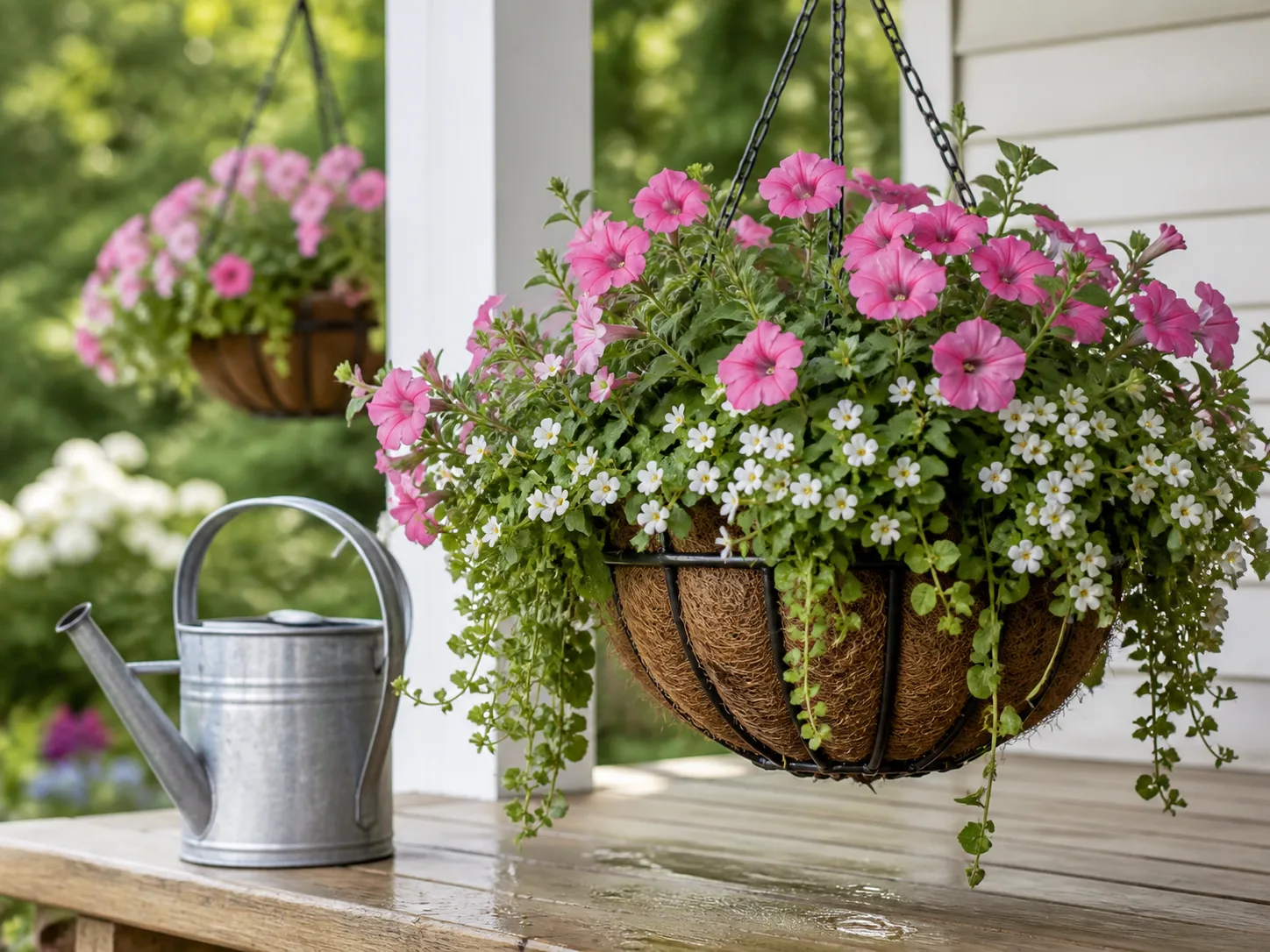
Water by the root zone, not the calendar
Check the mix with a finger near the center of the basket, not just at the dry outer edge. If the top feels dry but the center is still cool and moist, wait; if the basket feels unusually light and the mix has pulled from the liner, it needs a slow rewetting rather than a quick splash. For a routine watering, apply water until there is runoff from the bottom, then allow the basket to drain.
In hot, sunny, or windy weather, check daily and be prepared to water more than once a day. In cool, cloudy, or rainy weather, the same basket may need much less. Iowa State Extension notes that established baskets may require more than one watering on hot, sunny days, while an RHS watering trial found that maintaining moderate, even moisture mattered more than blindly maximizing the volume of water.
If the mix has become water-repellent, repeated surface watering may run down the sides without reaching the root balls. Take the basket down if it is safe to do so and soak it in a tub or large container until the mix is wetted, then let it drain completely. Do not leave it sitting in water for hours or days; rewetting is a rescue step, not a permanent watering method.
Water early in the day when possible, especially if the foliage tends to stay wet overnight. Direct the stream at the mix instead of blasting flowers and leaves, and empty any saucer or outer catchment that allows the basket to sit in runoff.
Feed, deadhead, and trim with restraint
Container plants have limited access to nutrients, and frequent watering can carry soluble nutrients out of the mix. Mix a slow-release fertilizer into the potting mix only if the product label permits it, or use a liquid fertilizer at the label rate after the plants have begun to establish. Gardeners’ World recommends additional feeding for container plants during the growing season, and Iowa State advises regular fertilization while warning against excessive nitrogen that produces leaves at the expense of flowers.
Do not stack several fertilizer products because the basket looks pale after one cloudy week. Overfeeding can damage roots and create salt buildup; check watering and light first, then use one consistent program. If the plants are sensitive or the basket is newly planted, wait until new growth shows that roots are working before starting a strong liquid-feed routine.
Remove spent flowers when the variety benefits from deadheading, but do not assume every plant needs the same treatment. Many modern calibrachoa and some small-flowered annuals are self-cleaning, while larger-flowered geraniums and some petunias look better and may flower longer when faded blooms are removed. Pinch or trim leggy trailing growth just above a leaf joint, taking no more than about one-third at a time so the plant can recover without losing all its flowering stems.
Fix common hanging-basket failures
The basket wilts by afternoon but looks fine in the morning. Check the mix before increasing fertilizer. Heat, wind, a coir liner, and a dense root ball can make the basket run out of usable moisture by midday; move it to less exposed conditions, water slowly to runoff, and consider a partial moisture barrier if drainage remains adequate.
The plant is wilted even though the mix is wet. Wet roots cannot always supply leaves with water. Check for poor drainage, a sealed liner, standing runoff, or a root ball that was planted too deeply. If the problem persists, inspect the roots when the basket can be safely handled and correct the container problem before watering again.
Water pours through immediately. A dry mix may have shrunk away from the liner, leaving channels that bypass the root zone. Take the basket down, soak it until the center is wet, allow it to drain, and then resume slow top watering. A small amount of coir or a better-fitting liner can help, but it cannot replace a thorough rewetting.
The basket has leaves but few flowers. Too little light is a common cause, but excess nitrogen, crowded roots, heat stress, or inconsistent watering can also reduce flowering. Confirm the plant’s light needs, remove only weak or crowded growth, and follow the fertilizer label rather than adding more feed automatically.
The basket looks bare in the middle. Trailing plants need time to cover the frame, and a small basket may never produce a perfect ball if it has only one edge plant. Pinch young stems to encourage branching, guide new growth over gaps, and add a compatible plant only if the root zone still has room; late-season crowding can create a fuller photo but a thirstier, shorter-lived basket.
The basket is lopsided or frighteningly heavy. Take it down before adjusting it. Redistribute plants or mix, inspect the chain and hook, and replace any support that bends, pulls away, or shows corrosion. A healthy display is not worth a failed attachment point over a walkway, door, or seating area.
Conclusion
To plant a hanging flower basket that lasts, start with the site, then choose plants that agree about light, moisture, and vigor. Use a lightweight potting mix, a liner with real drainage, a restrained plant count, and a design that balances upright, mounding, and trailing growth. Plant side openings before the top, soak the basket thoroughly, and treat the wet weight and support as part of the installation.
After it is hung, check the root zone rather than watering by habit. With consistent moisture, moderate feeding, timely deadheading, and a little protection from extreme wind or heat, a modest basket can develop into the full, flower-covered display most gardeners are trying to buy.



