6 Plants That Make a Yard Look More Expensive
Landscape designers pick six plants that read luxe on sight—from Japanese maples to massed hydrangeas—with placement rules, zone notes, and honest maintenance costs.
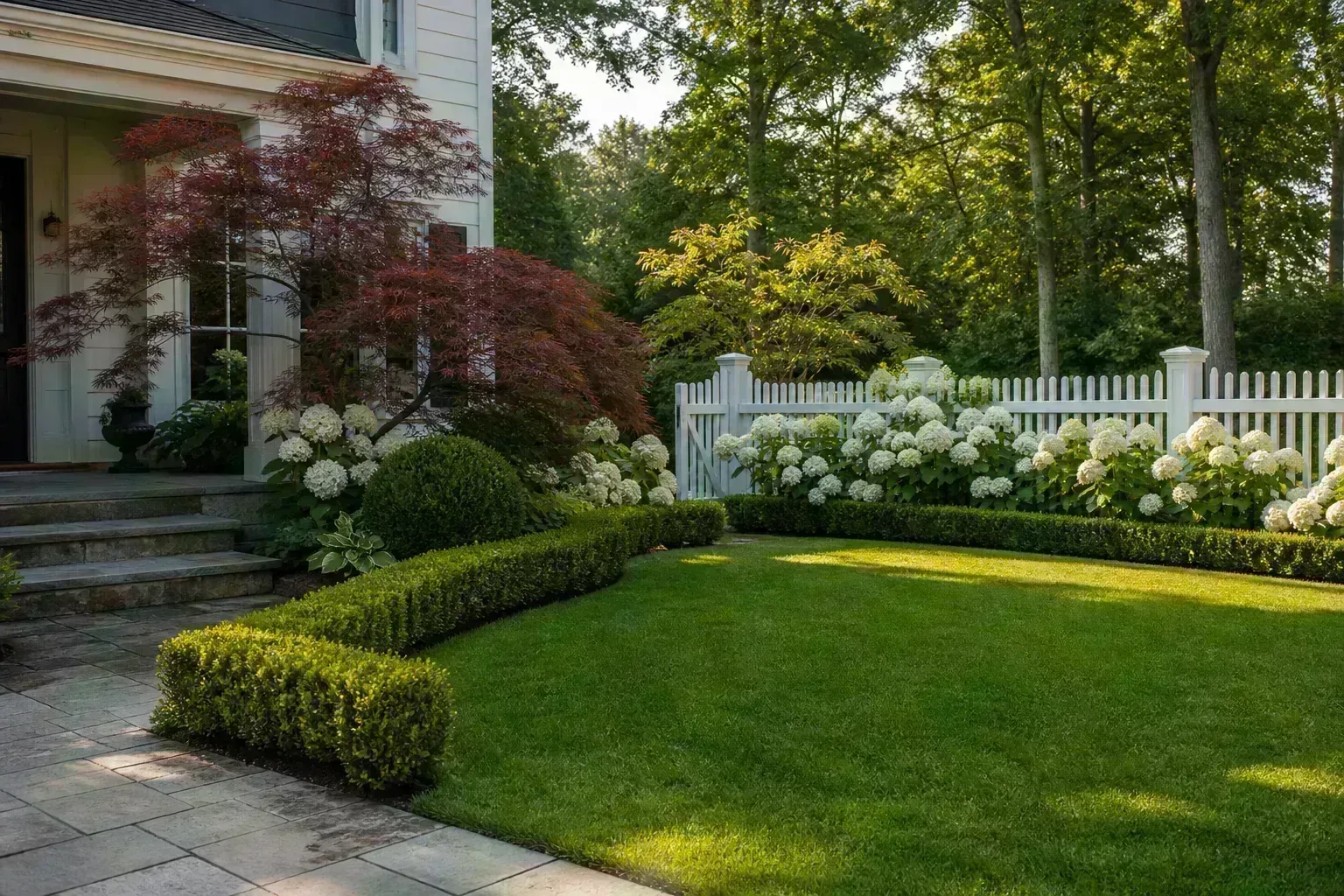
The yards that read expensive on first glance are rarely the ones with the most plant varieties. They are the ones where structure is clear, scale feels intentional, and one or two plants repeat with confidence. Landscape designers lean on a short list of performers—specimen trees, evergreen bones, massed bloomers, and mature shade—because those elements photograph like money even on a modest lot.
Below are six plants designers return to again and again, with placement rules, zone notes, and the maintenance reality behind the glamour. Pick one or two that fit your house style and climate before you try to install all six.
The list is not a shopping cart. Treat it as a menu of high-impact moves—specimen focus, evergreen bones, massed bloom, mature scale, and trained form—that professional plans combine in different ratios depending on lot size, regional climate, and how much pruning you will actually do on Sunday mornings.
What Designers Mean by an “Expensive” Yard
An expensive-looking yard is not the same as an expensive yard. Designers are selling visual order: clean lines at the foundation, one strong focal point, repetition instead of clutter, and plants sized to the architecture. A $40 shrub repeated twelve times along a fence can outclass a random collection of sale-rack perennials if the spacing and edging are disciplined.
Evergreen structure does the heavy lifting year-round while deciduous flowers act as seasonal jewelry. That is why boxwood, yew, or a well-chosen holly often appears in high-end plans before anyone talks about hydrangea color. Quiet luxury in planting means large drifts of one species, generous spacing that lets each plant breathe, and restraint at the mailbox. Repeating white panicle hydrangeas along a picket fence reads Hamptons; three different shrubs fighting for attention at the curb reads chaotic. If your beds disappear in winter, add structure first—then layer bloom.
Drive through any neighborhood with strong curb appeal and count how many front yards use more than four plant species in the public face of the lot. The answer is usually fewer than you expect. Restraint is not minimalism for its own sake—it is the discipline that lets each chosen plant read at full value instead of competing for attention.
Match Plants to Your Home’s Architecture
Before you fall for a Japanese maple photo, ask what your house is saying. Brick colonials and painted Victorians pair naturally with formal evergreens, roses, and classic bloomers. Low modern boxes and mid-century ranches often need sculptural silhouettes—columnar forms, single specimen trees, and limited color palettes. Traditional homes reward symmetry with matching urns and mirrored foundation shrubs; modern homes reward asymmetry with one offset specimen and hardscape that does half the talking. Pull paint and stone samples when you shop—a burgundy maple can fight red brick unless the mortar is warm gray.
Walk the property at the hour when you actually arrive home. That sightline from the driver’s seat is the view most neighbors see daily, and it should be the first frame you design—not the backyard vista you enjoy from the kitchen window.
1. Japanese Maple — Living Sculpture at the Entry
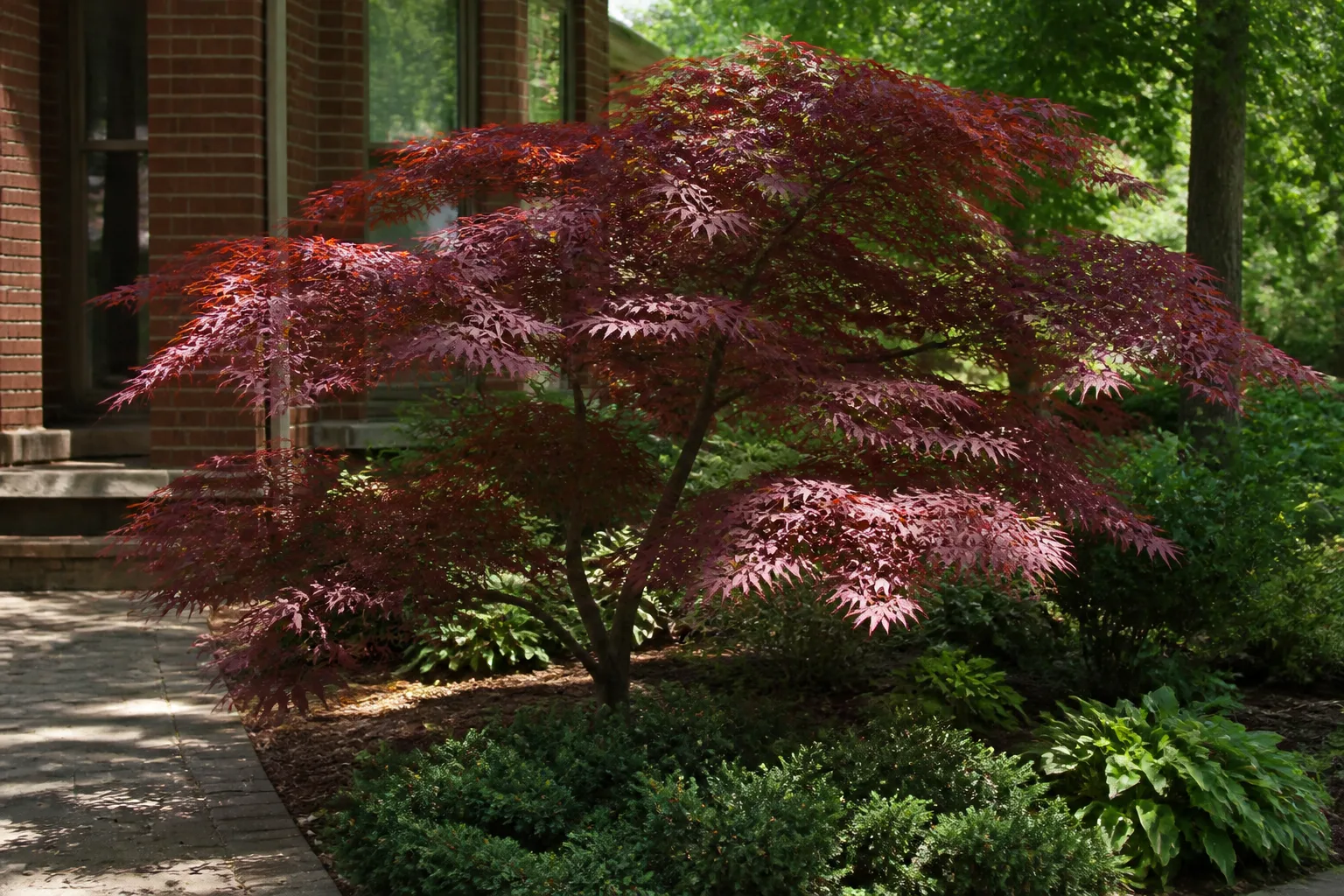
If you install one plant to elevate curb appeal, many designers start here. Japanese maples (Acer palmatum) offer layered branching, fine texture, and season-long interest in a small footprint. NC State Extension describes them as prized specimen trees with slow to moderate growth, a dense rounded crown, and fall color that varies sharply by cultivar (NC State Extension).
Place one where the front walk turns or where a blank garage wall needs softness—not buried in a foundation row where it will be sheared in five years.
Cultivars, Placement, and Zone Reality
‘Bloodgood’ delivers deep red summer foliage and a classic umbrella habit; it is the safe designer pick for partial shade entries in USDA Zones 5–8. ‘Sango-kaku’ (Coral Bark maple) trades summer leaf drama for winter coral-red stems that glow against snow and gray siding. Weeping forms like ‘Inaba-shidare’ suit courtyard corners where a low canopy can arch over stone or gravel. Site the tree 15 to 25 feet from the foundation on most lots so mature width does not swallow windows.
Japanese maples want dappled shade, evenly moist well-drained soil, and protection from drying winter wind. NC State notes young leaves are frost-sensitive and most cultivars are not drought tolerant; leaf scorch appears quickly with hot afternoon sun, wind, or dry soil (NC State Extension). Expect 15–25 feet at maturity depending on cultivar. Maintenance is moderate: spring mulch, summer irrigation during dry spells, and minimal late-winter pruning. Skip Japanese maples on open south-facing lawns with reflected pavement heat unless you can irrigate reliably through drought.
At the nursery, favor trees with a single straight leader and evenly spaced scaffold branches rather than the tallest pot in the row. A slightly smaller tree with balanced branching will look more expensive in three years than a leggy specimen staked into a lollipop. Underplant with low evergreen mounds or simple groundcover—never tall perennials that compete for the same focal moment.
2. Boxwood — Evergreen Structure That Frames Everything
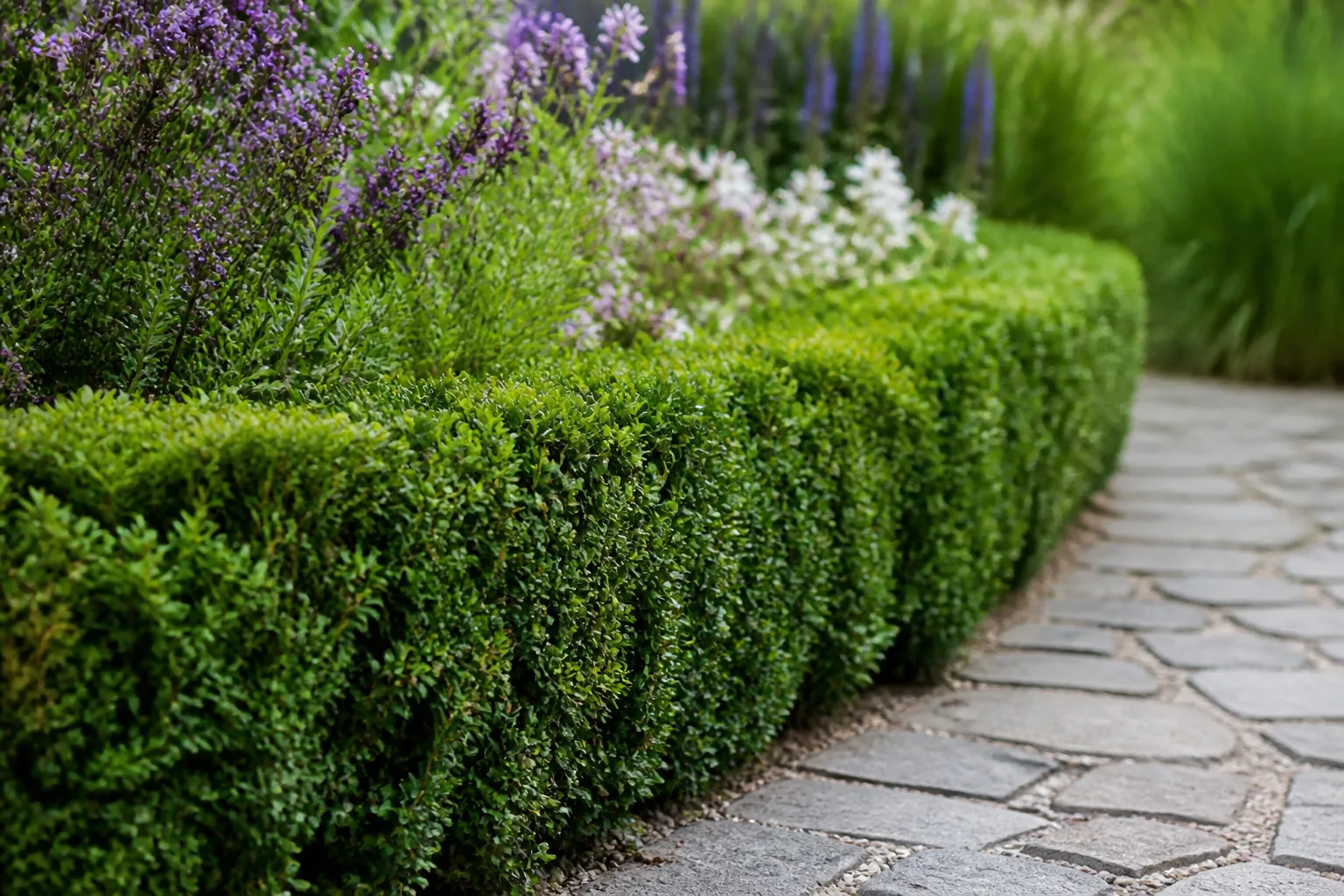
Boxwood is the shorthand for formal structure in American landscapes. Sheared hedges, globes, and cones signal that someone is tending the garden on a schedule. NC State Extension lists common boxwood (Buxus sempervirens) as a low-maintenance evergreen shrub adaptable to sun or shade, slow-growing to 15–20 feet if unpruned but easily kept at hedge height (NC State Extension). The glossy fine texture catches afternoon light in a way coarser evergreens cannot, which is why it still appears on high-end plans despite disease pressure in humid regions.
Use boxwood to define edges: along walks, under windows, around parterre beds, or as knee-high foundation skirts that stay green when perennials die back.
Hedges, Blight, and Alternatives
For a formal hedge, space ‘Green Mountain’ or ‘Wintergreen’ boxwood at 12–18 inches on center for a low border, or 2 feet for a 3- to 4-foot-tall wall. Topiaries need light trimming monthly during the growing season to hold shape. Pair boxwood with stone, brick, or black metal edging so the green reads crisp—keep mulch thin and away from stems.
Boxwood is not universally low-maintenance anymore. NC State flags boxwood blight, leaf spot, leafminer, and psyllid as real issues (NC State Extension). In blight-prone humid regions, designers increasingly specify inkberry holly or compact hollies as evergreen substitutes. Our small evergreen shrubs guide compares compact picks—including when to skip boxwood entirely. Zones 5–9 are typical. Annual thinning keeps hedges healthy longer than shearing alone.
The difference between a hedge that reads estate-grade and one that reads tired is edge discipline. Define the bed line with steel or brick edging before the first shear of spring, and keep the bottom of the hedge slightly wider than the top so lower branches receive light. A wall of green with a brown skirt at the base is the fastest way to undo an otherwise polished front yard.
3. Hydrangeas — Mass Planting for Big Coastal Energy
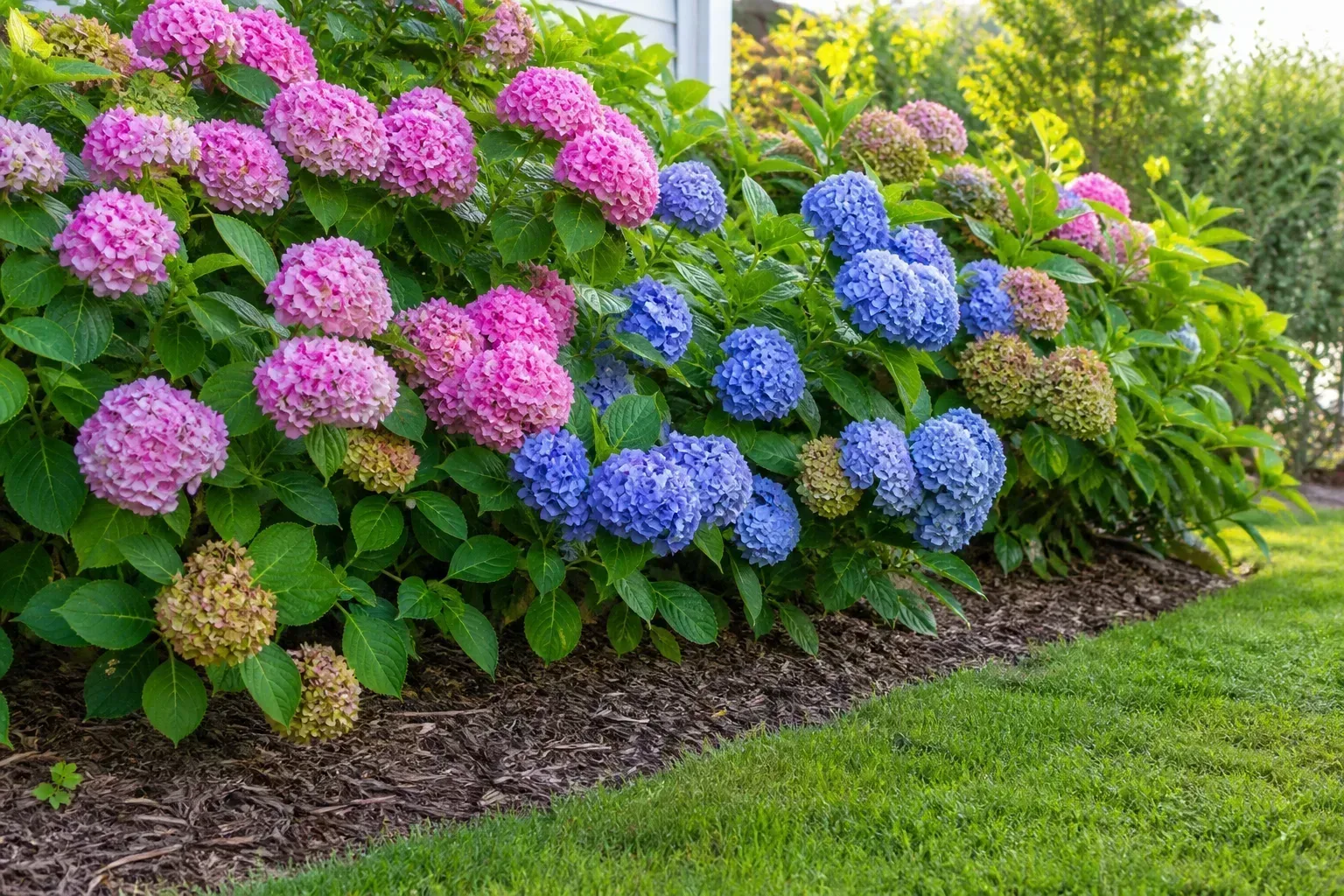
Nothing whispers coastal estate like a long sweep of hydrangeas in bloom. Designers love them because large mopheads and panicles read lush from the street and repeat beautifully along fences and foundations. The trick is choosing the right species for your climate and committing to quantity, not three lonely pots.
Species, Spacing, and Pruning by Type
For reliable mass effect, start with panicle hydrangeas (Hydrangea paniculata)—‘Limelight’, ‘Quick Fire’, and ‘Vanilla Strawberry’ bloom on new wood and tolerate more sun. For blue-and-pink bigleaf drama (H. macrophylla) in Zones 6–9, mass 5 to 11 plants minimum along a 20-foot fence, spacing 3–4 feet on center. Fine Gardening’s hydrangea project guides emphasize grouping by similar bloom time and mature size so the drift peaks together (Fine Gardening). Expect each landscape shrub to reach 4–6 feet tall and wide at maturity—buy with that end size in mind so you are not tempted to cram extras into a narrow bed.
Bigleaf and oakleaf types bloom largely on old wood—light deadheading only. Panicle and smooth hydrangeas bloom on new wood and tolerate late-winter shaping. See our hydrangea bud-building guide and the RHS pruning overview (RHS). Give morning sun, afternoon shade in hot regions, and consistent moisture the first two years. Designer trick: underplant with low evergreen mounds so winter structure remains when blooms fade.
White panicles along a dark fence read especially high-end; random mixed colors in one bed read like a clearance sale. If soil pH shifts bloom color on bigleaf types, test before you commit to a blue theme—nothing undercuts a luxe planting faster than a drift that blooms half pink and half lavender because one end of the bed sits over limestone gravel.
4. Herbaceous Peonies — Spring Drama Worth the Wait
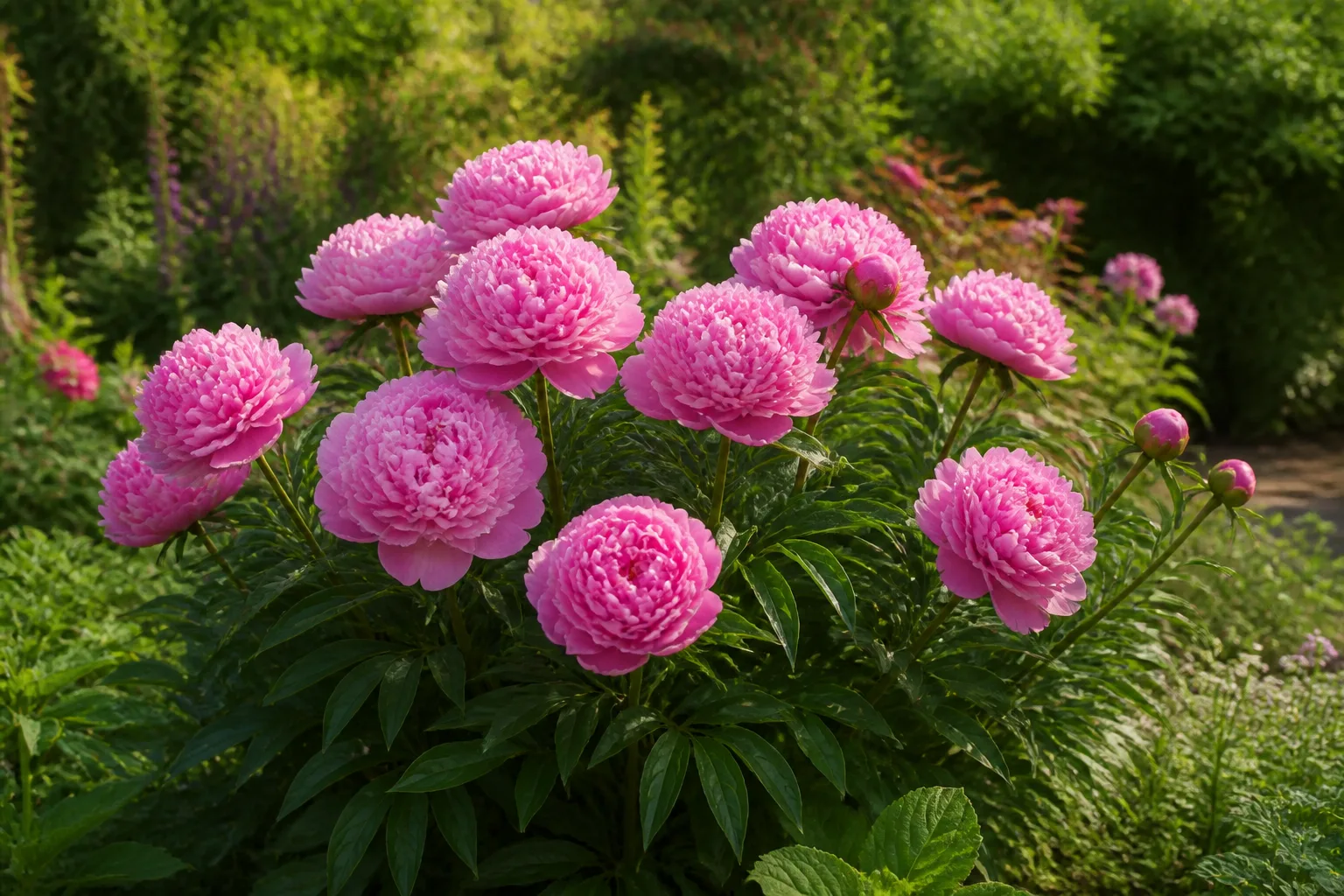
Herbaceous peonies deliver oversized blooms that feel couture for two to three weeks in late spring—exactly the kind of seasonal punch designers use to make a yard memorable. The RHS growing guide calls them long-lived border stars that need full sun, rich soil, and plenty of space (RHS). A single peony in isolation can look lonely; grouped along a walk they read like a deliberate spring festival that neighbors remember long after the petals fall.
Mass peonies along a front walk or flanking a gate in groups of three, five, or seven for odd-number rhythm. White and soft pink doubles read classic; deep reds suit brick and stone. For cottage-garden context, see our grandma gardens comeback guide.
Planting Depth and Long-Term Care
Peonies fail quietly when planted too deep. RHS guidance: cover the pink buds with no more than 1 inch (2.5 cm) of soil—deeper planting reduces flowering for years (RHS). Space about 3 feet apart so air circulates. Plant bare-root divisions in fall where possible; first-year blooms may be modest.
Peonies dislike transplant and resent wet winter soil. Stake large doubles before rain bends stems. Cut foliage to the ground in autumn to reduce peony wilt risk. Interplant with low summer perennials—catmint or compact grasses—so the bed does not look empty after June. Established peonies can outlive the gardener who planted them, which is exactly why they read as an investment rather than a seasonal fill-in.
Order bare-root divisions from reputable specialty growers when you want named doubles with strong stems. Big-box bags of mystery roots often produce weak blooms that flop the first wet May weekend. A row of five matched cultivars along a walk costs less than one impulse tree and delivers more photographable moments in spring.
5. Mature Shade Trees — Buy Size When the Lot Allows
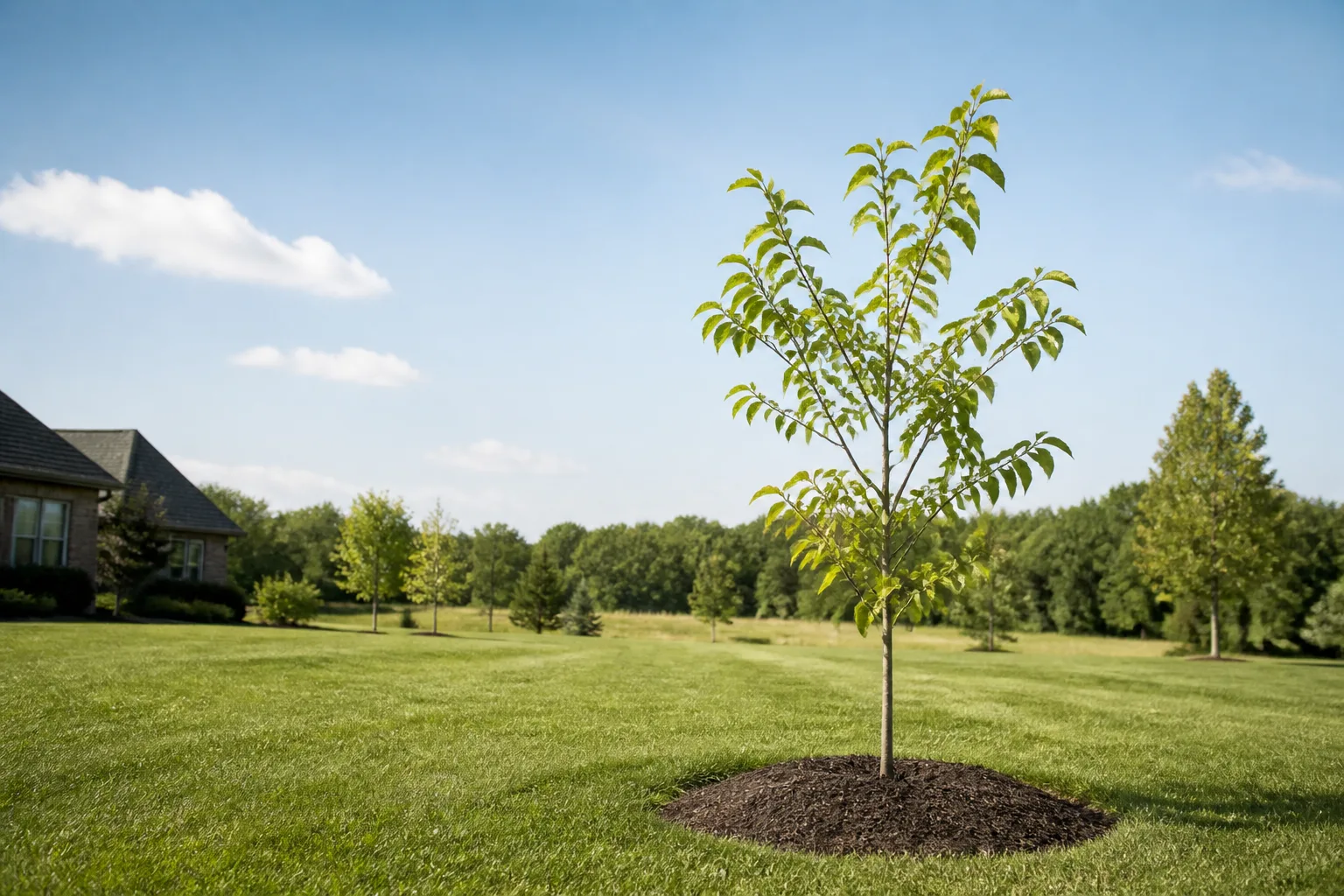
Designers repeat one uncomfortable truth: big plants look expensive because they are. A 2-inch-caliper street tree is a promise; a 10–14 foot specimen with a developed canopy is a finished room outdoors. Shade trees frame the house, cool pavement, and signal permanence buyers trust.
Live oaks and Southern magnolias are classic estate choices in the Southeast. In narrower northern lots, red oak, swamp white oak, or columnar cultivars deliver height without swallowing the property. Site any large tree at least as far from the foundation as its expected mature spread, and stay clear of overhead utilities. If you cannot afford instant size, spend on one signature tree at the entry and mass smaller shrubs elsewhere. Our hickory tree guide walks through long-lived shade-tree siting. Rule of thumb: if the only open space is a 12-foot strip between driveway and porch, a Japanese maple beats an oak that will outgrow the lot in twenty years.
Mature tree planting is where hiring help pays for itself. Root balls that require a tree spade need staking, irrigation bags or soaker lines the first season, and mulch out to the dripline—not a volcano against the trunk. A well-planted specimen that survives year one will look like it has always belonged; a stressed bargain tree that sheds half its canopy in August reads as the opposite of expensive.
6. Espaliered Citrus — Courtyard Polish on a Warm-Wall Budget
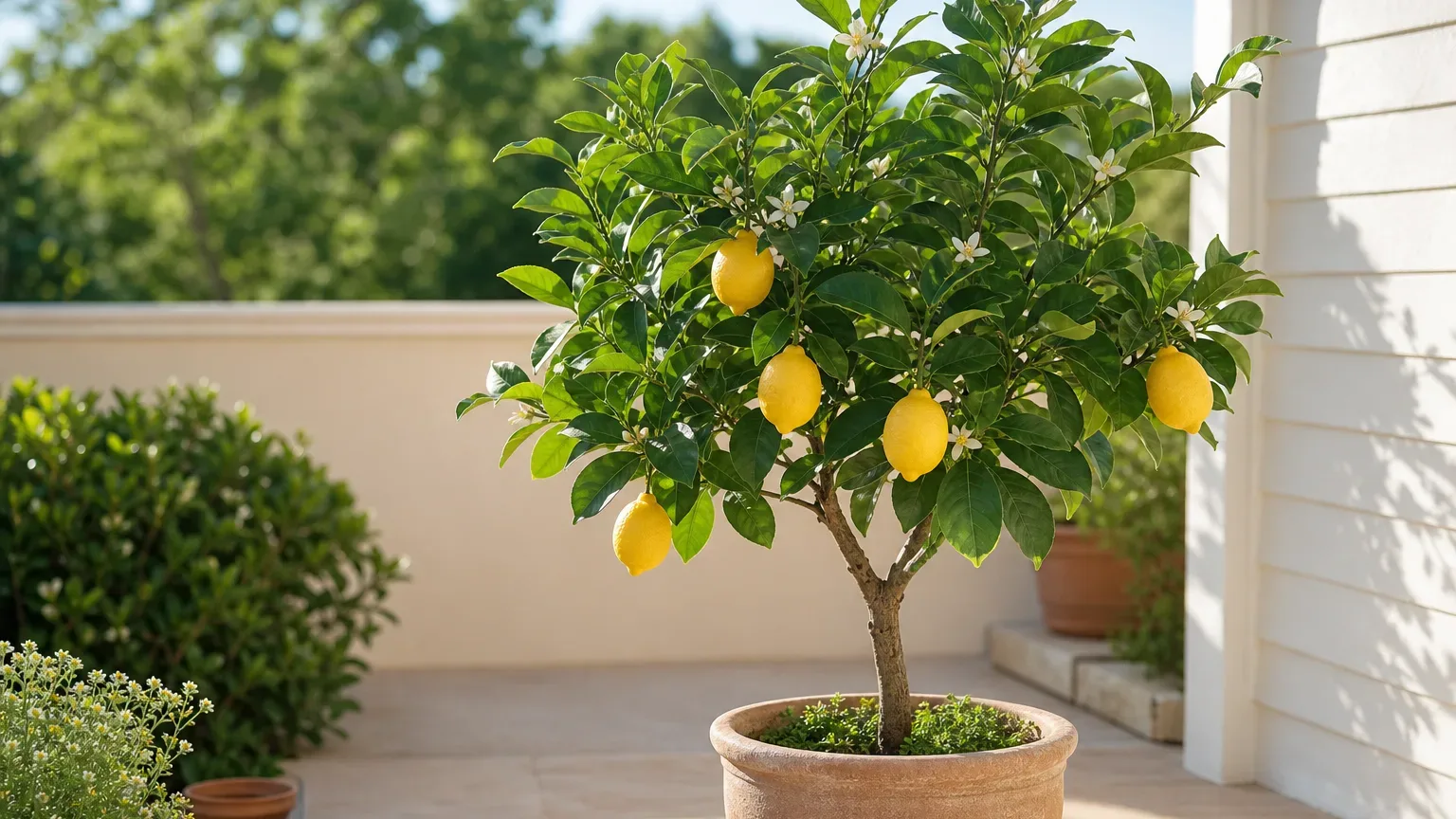
The sixth slot is about trained form against architecture—the European courtyard move of flat fruit trees on a south wall. Espaliered lemon or orange trees turn a blank stucco or brick plane into a designed moment, especially flanking a patio door or garage arch. In USDA Zones 9–11, a well-trained citrus espalier reads bespoke without a six-figure hardscape budget.
Start with a young tree on a sturdy trellis wire grid, 18 to 24 inches off the wall for air circulation. Prune to two or three horizontal tiers the first three years; fruit is secondary to silhouette early on. For general citrus culture and container options, the lemon tree hub covers light, watering, and cold protection basics. South- and west-facing walls with reflected heat are ideal; north walls rarely deliver the ripening sun citrus needs to look intentional rather than leggy.
Cold-Climate Stand-Ins That Still Read Formal
Where citrus cannot survive outdoors, designers fake the same discipline with espaliered apple or pear on a sheltered wall, or switch to columnar evergreens flanking an entry. In dry-sun regions, structural succulents like tree aloe (Aloe spp.) give sculptural height with lower water—related care notes for aloe culture live on our aloe vera page. Formal rosemary hedges in mild climates offer gray-green geometry with kitchen utility (rosemary care).
The lesson is not “plant citrus everywhere.” It is train plants to the architecture so the wall and the plant read as one designed element.
Espalier is a three-year patience project: year one establishes the framework, year two fills horizontal tiers, year three begins to look deliberate from the street. Rush the pruning and you get a lollipop on a grid instead of a flat fruiting wall. In containers, dwarf citrus on casters can flank a sunny patio in Zones 8–9 with winter shelter—useful when you want the look without committing to in-ground hardiness.
Budget Rules That Still Look High-End
You do not need all six plants to elevate curb appeal. Use this sequence:
Year one — structure and one focal point. Install the Japanese maple or espalier frame, plus a boxwood skirt or hedge line if climate allows. This year is about lines and evergreens, not filling every bed with color.
Year two — mass planting. Add the hydrangea drift or peony group in one bed instead of scattering singles. One strong repetition beats three small experiments.
Year three — shade investment. Save for one mature tree if the lot needs scale; otherwise deepen the mass plantings you started in year two.
Repeat one plant in odd numbers, keep lawn edges crisp, and match mulch color to hardscape. Three expensive mistakes to avoid: shearing everything into meatballs, planting trees under power lines, and buying drought-sensitive maples for a baking driveway island.
Low-cost upgrades that still read planned: fresh edging between lawn and bed, consistent mulch depth, and removing one overgrown shrub that blocks windows. Sometimes subtraction plus repetition does more for curb appeal than another trip to the garden center. Photograph your front yard from the curb each season—the wide-angle phone shot reveals clutter that disappears when you stand on the porch.
Conclusion
Expensive-looking yards are built on restraint, repetition, and plants that hold structure through the off-season—not on rare cultivars alone. Japanese maples supply sculptural focus, boxwood (or a blight-smart substitute) frames the architecture, massed hydrangeas and peonies deliver seasonal theater, mature shade trees add permanence, and espaliered form ties walls and walks together. None of these plants work in isolation; they work because they answer a design problem—focal point, frame, repetition, scale, or trained silhouette—with clarity.
Choose the picks that match your zone, your maintenance appetite, and your house style. Install fewer species with more conviction, and the whole property will read planned long before the blooms peak.
Start with a simple site sketch: mark the front door sightline, utility boxes you cannot move, and the sunniest afternoon wall. Place one focal plant on that sketch before you visit a nursery. The cart fills itself once the anchor decision is made—and you are far less likely to come home with six unrelated impulse shrubs that fight each other at the curb.