Late-Summer Hydrangea Care for Bigger Blooms Next Year
Set next year's hydrangea buds now: identify your type, stop feeding on time, mulch, deadhead safely, and protect cold-zone bigleaf shrubs before August ends.
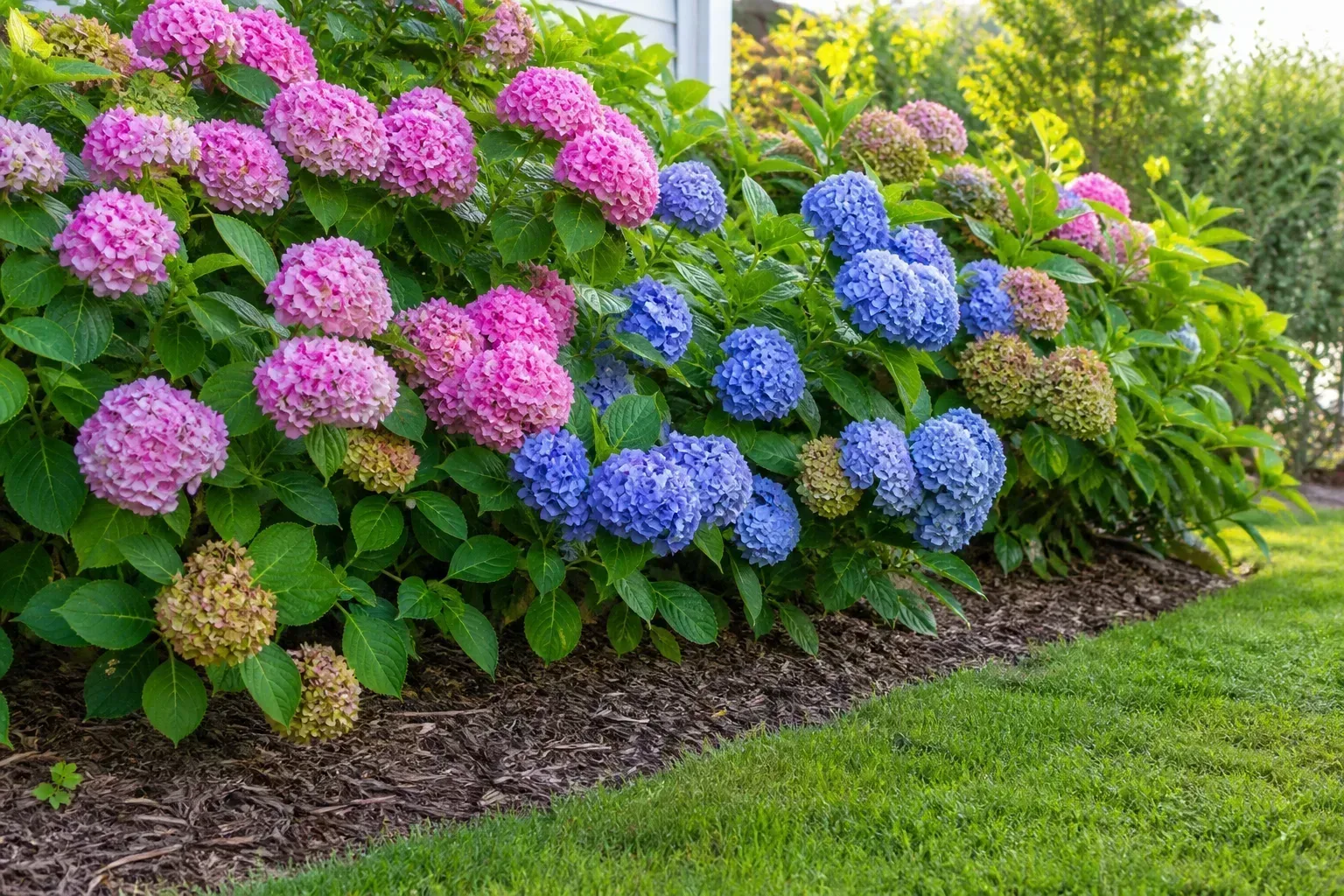
The Direct Answer: Set Next Year’s Buds Before August Ends
The one thing experienced gardeners prioritize in late summer is not a secret product or a dramatic haircut. It is building the conditions that let hydrangeas finish forming next year’s flower buds without stress. That means correct light, even soil moisture, a refreshed mulch layer, type-appropriate deadheading or light shaping, and—only if the plant still needs it—a last measured feeding before you stop stimulating new growth around early to mid-August in most gardens.
If you take nothing else from this page, take the calendar. Old-wood hydrangeas—most mopheads, lacecaps, oakleaf, and mountain types—set many of next summer’s buds on stems that grew this year. Touch them too late or too hard after July and you can remove bud wood. New-wood types such as panicle and smooth hydrangeas bloom on fresh shoots produced next spring, but they still suffer when late nitrogen pushes soft growth that cannot harden off before frost. Pro gardeners match the task to the type, then stop before the shrub reads autumn as a cue to shut down.
Why Late-Summer Care Matters More Than One Magic Trick
Hydrangeas look like they “belong to summer,” but the show you want next June is often decided while this year’s flowers are fading. Bud initiation, stem hardening, and root storage all happen in the weeks after peak bloom. Skip that window—or stress the plant with drought, heat, or a late nitrogen hit—and you get fewer buds, smaller heads, or winter-killed tips that never flower.
How Hydrangeas Form Next Year’s Flower Buds
Mophead and lacecap bigleaf hydrangeas (Hydrangea macrophylla), mountain hydrangeas (H. serrata), and oakleaf hydrangeas (H. quercifolia) flower primarily on old wood: woody stems that carried leaves this season and will carry buds into next year. For many of these plants, bud tissue begins developing at the stem tips during the previous growing season, which is why a careless August or fall prune can delete an entire year’s display.
Panicle hydrangeas (H. paniculata) and smooth hydrangeas (H. arborescens, including ‘Annabelle’) bloom on new wood—shoots that emerge after winter pruning. They still need a healthy, unstressed late season because those shoots draw on stored energy and root vigor. The RHS hydrangea pruning guide treats these groups differently for a reason: the bud you are protecting may be at the tip of an old stem, or it may not exist yet because the plant will make it next spring.
Reblooming cultivars (many Endless Summer-type bigleafs) can flower on both old and new wood. That flexibility helps recovery after a bad winter, but it does not mean you can prune whenever you like. Late cuts still reduce the earliest and often largest flush.
What Heat, Drought, and Late Feeding Do to Bloom Size
Hydrangeas are moisture-sensitive shrubs. When roots dry out repeatedly in July and August, the plant redirects energy from bud development to survival. Leaves flag, edges brown, and flower size next year shrinks. Oregon State Extension emphasizes that heat waves demand shade protection and deep watering for hydrangeas under stress—never a heavy feed right before extreme heat.
Late high-nitrogen fertilizer is equally risky. It pushes tender leaves and stems that will not harden before frost. Old World Garden Farms advises waiting until early spring for the main fertilizer application on healthy shrubs, using compost instead if the soil is thin. The RHS shrubby hydrangea growing guide notes that too much fertilizer encourages soft growth less likely to flower and more vulnerable to frost—exactly the trade-off you are trying to avoid in August.
Identify Your Hydrangea Type Before You Prune or Feed
Every late-summer decision flows from bloom biology. If you do not know your type, default to minimal cuts: remove only clearly spent flower heads above a healthy leaf pair, and do not shorten whole branches until you identify the plant or wait for late-winter/spring guidance.
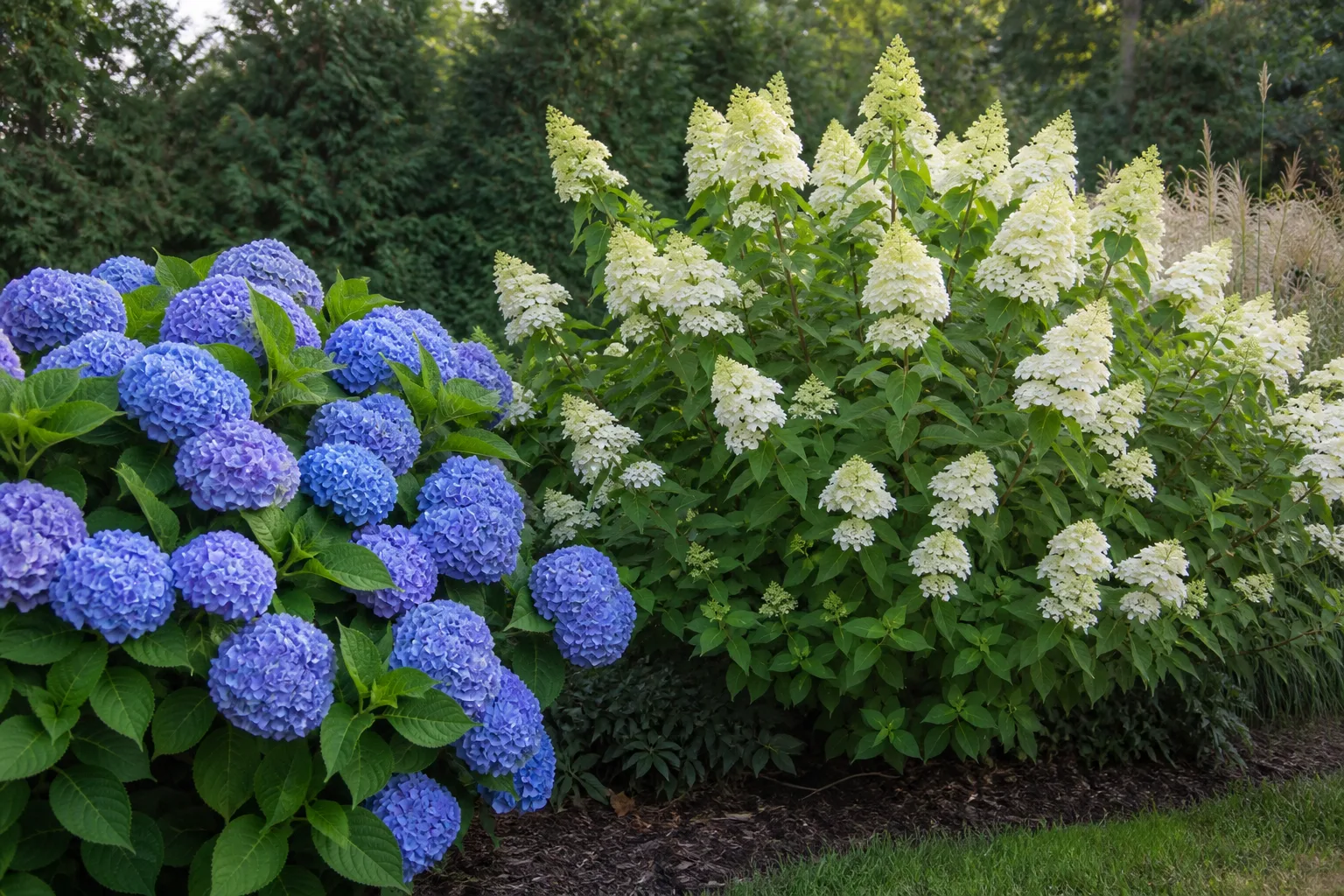
Old-Wood Bloomers: Mophead, Lacecap, Oakleaf, and Mountain
These are the hydrangeas that punish late pruning.
- Mopheads and lacecaps (H. macrophylla, H. serrata): round or flat flower heads; many blue/pink cultivars.
- Oakleaf (H. quercifolia): cone-shaped white panicles and oak-shaped leaves with fall color.
- Mountain hydrangeas (H. serrata): lacecap flowers, often more cold-hardy than bigleaf.
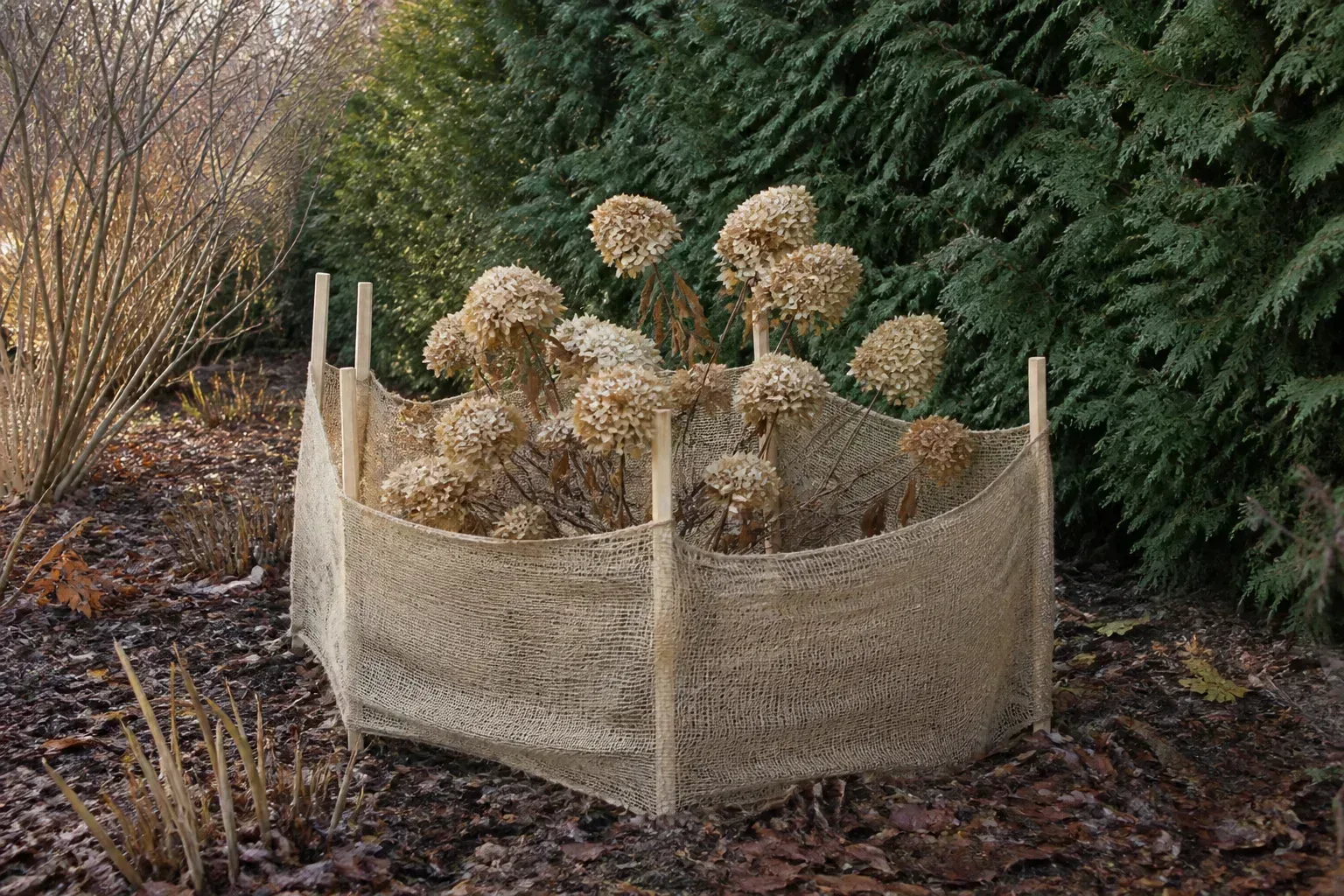
For these, next year’s main buds sit on stems that grew this year. Finish cosmetic deadheading by late July if you deadhead at all. Leave some dried heads over winter if you are in a cold zone—the RHS recommends keeping faded mophead blooms through winter to shield tender buds below, then removing them in early spring back to the first strong bud pair.
New-Wood Bloomers: Panicle and Smooth Hydrangeas
- Panicle types (H. paniculata—Limelight, Pinky Winky, etc.): elongated cone-shaped flowers that age pink.
- Smooth types (H. arborescens—‘Annabelle’, Incrediball): large rounded white heads on flexible stems.
They bloom on new stems produced after you prune in late winter or early spring. After flowers fade in late summer, do not hard-prune them. Your job now is moisture, mulch, and optionally removing spent blooms without cutting back the framework. Save the structural cut for February or March, when the RHS advises cutting last year’s stems to a pair of healthy buds—or lower for larger but fewer panicle heads.
Reblooming Cultivars and Their Different Calendar
Reblooming bigleaf cultivars can produce a second flush on new growth, but they still carry old-wood buds for the earliest and often largest summer display. Deadhead rebloomers earlier in summer if you want another round, and stop snipping stems by mid-August so the plant can set and harden bud wood. Rebloomers are not a license to hedge-trim in September.
The Late-Summer Checklist Pros Run in July and August
Think of this as a shutdown sequence: support roots and buds, tidy lightly, feed only if needed, then stop before the plant commits to tender growth.
Keep Soil Evenly Moist and Refresh Mulch
Hydrangeas prefer consistently moist, well-drained soil. After bloom, roots still grow and store reserves. Water deeply when the top 2–3 inches of soil dry out—not daily sprinkles that keep roots shallow. Morning watering lets foliage dry and reduces leaf-spot risk.
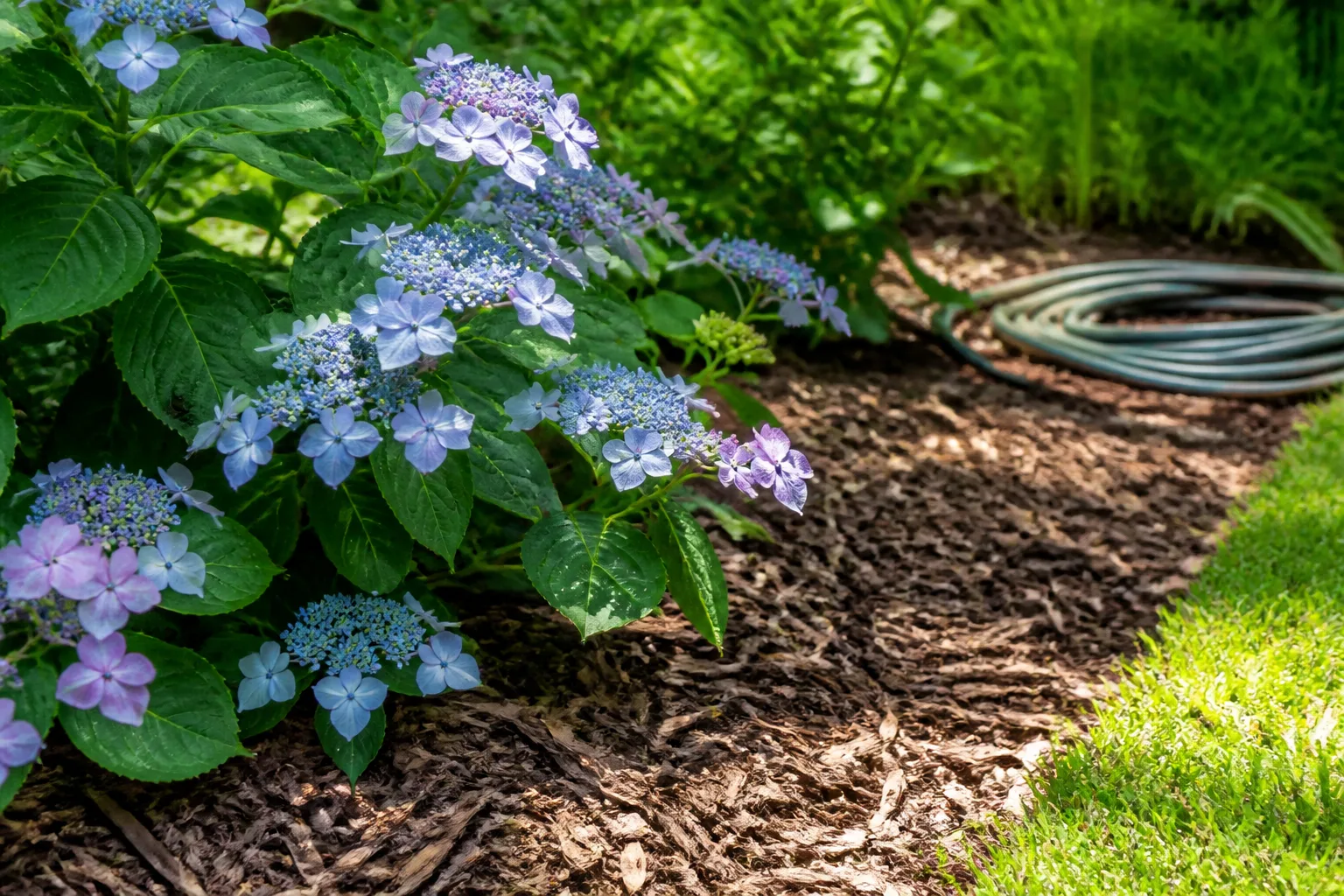
Refresh 2–3 inches of shredded bark, pine fines, compost, or shredded leaves over the root zone, keeping mulch a few inches away from stems to prevent bark rot. Old World Garden Farms and the RHS growing guide both tie mulch to moisture retention and cooler soil, which protects bud development during hot spells.
Deadhead Spent Blooms Without Cutting Off Next Year’s Flowers
Deadheading is optional for plant health but useful for appearance and redirecting energy.
- Sterilize bypass pruners.
- Trace a faded head down to the first healthy pair of leaves below the bloom.
- Cut just above those leaves—never deep into bare stem on old-wood types.
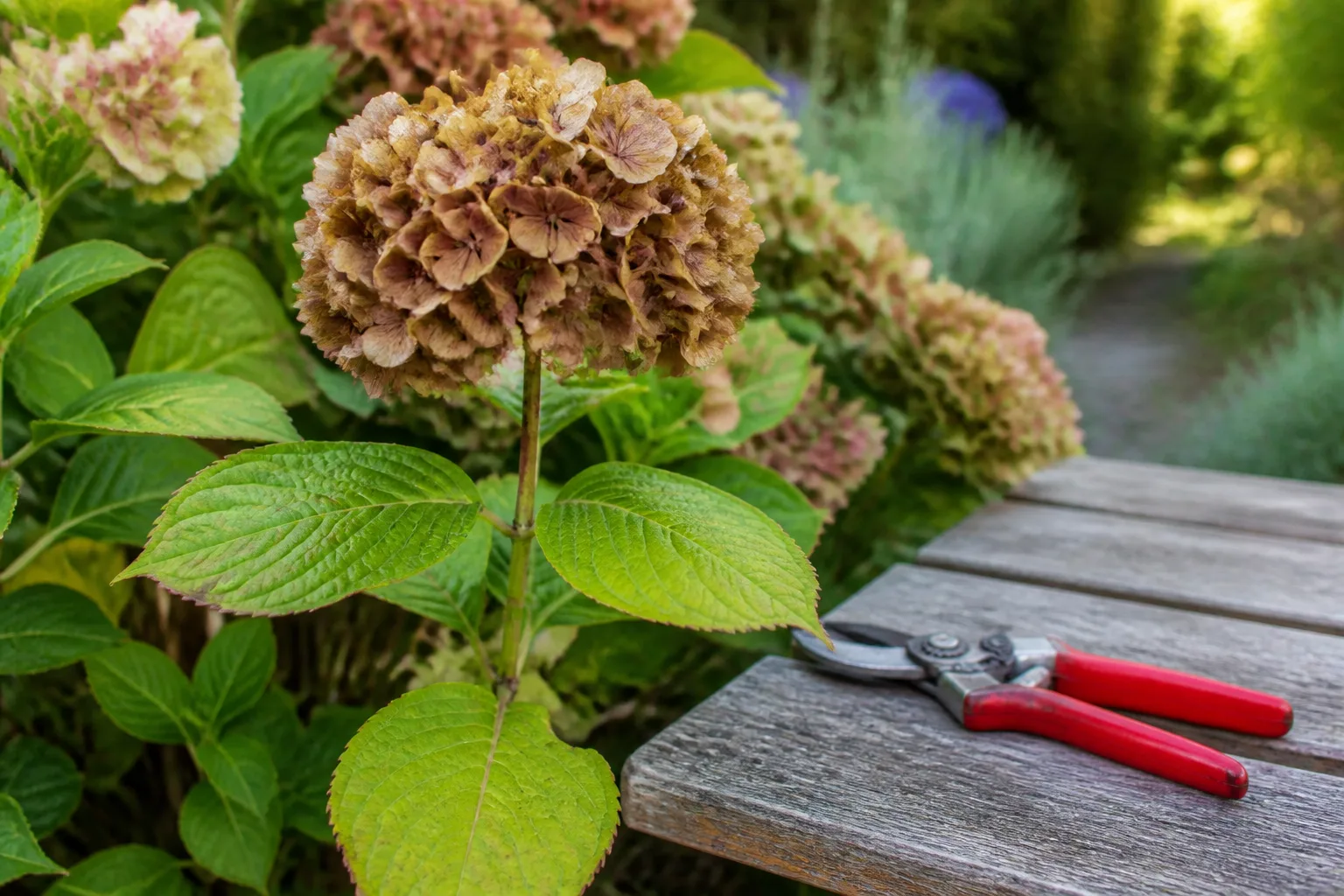
Remove brown or papery flowers while leaving fresh color on the shrub. On old-wood types, finish by late July. On new-wood and reblooming types, you can tidy into early August, then stop. You may leave a few dried heads for winter interest if winters are mild; in cold bigleaf zones, those heads can double as bud insulation.
Deadheading does not guarantee more flowers this year on most non-reblooming types. It keeps the shrub from pouring energy into seed heads and maintains airflow.
Fertilize Only While the Plant Can Use It—Then Stop
Healthy, established hydrangeas often need little beyond compost and mulch. If growth was pale and thin before midsummer, a light balanced feed or side-dress of compost early in the late-summer window can help—never a heavy nitrogen push after August 1–15 in mild climates (sooner in short-season zones).
Use slow-release balanced fertilizer or well-rotted compost worked lightly into the mulch line, then water in. Skip feeding entirely if:
- the plant looks vigorous and green;
- you already fed in spring;
- a heat wave is forecast;
- it is past your August cutoff.
When in doubt, wait until early spring—the safer default for bigger blooms without frost-tender growth.
Protect Bigleaf Hydrangeas From Winter Wind in Cold Zones
In USDA zones 5 and colder, or any exposed site, bigleaf and mountain hydrangeas lose flower buds to drying winds and late frosts even when the plant survives. Pros site them beside fences, evergreen screens, or structures that block winter wind. Where that is impossible, erect a temporary burlap or snow-fence screen after leaves drop— not airtight plastic that cooks the plant on sunny days.
Potted bigleaf hydrangeas can move to a cold but sheltered spot; the RHS suggests a sheltered wall or cold greenhouse and warns that young buds are frost-sensitive. Protection you plan now—correct siting, mulch, and leaving some flower heads—matters as much as what you do in spring.
August Decision Guide by Hydrangea Type
Use this quick matrix at the shrub:
| Type | Deadhead through | Feed through | Prune now? | Priority now |
|---|---|---|---|---|
| Mophead / lacecap (old wood) | Late July | Early August at latest | Light deadhead only | Mulch, water, wind protection |
| Oakleaf (old wood) | Late July | Early August at latest | Light deadhead only | Mulch, water; minimal cut |
| Mountain H. serrata | Late July | Early August at latest | Light deadhead only | Same as bigleaf |
| Panicle H. paniculata | Early August | Early August at latest | No hard prune | Water, mulch; prune in late winter |
| Smooth H. arborescens | Early August | Early August at latest | No hard prune | Water, mulch; prune in late winter |
| Rebloomers | Mid-August | Early August at latest | Snip spent heads only | Earlier deadhead if you want rebloom |
When the calendar hits your stop date, switch to maintenance mode: deep water during drought, keep mulch intact, and hands off the pruners except to remove broken wood.
Test Soil Before You Assume the Plant Needs Iron
Pale leaves send everyone running for iron chelate, but chlorosis on hydrangeas can trace to high pH locking up iron, magnesium deficiency, compaction, or simply too much shade—not a lack of fertilizer. A soil test through your local extension service tells you whether to adjust pH, add magnesium, improve organic matter, or move the plant to brighter morning sun with afternoon shade.
For blue flowers on bigleaf types, acidity and aluminum availability matter; for pink, a higher pH. Color tweaking is a separate project from the late-summer bud-building routine. Do not dump amendments in August without a test—you may stress an already transitioning plant.
Pruning Mistakes That Steal Next Summer’s Display
These errors show up every year in August garden forums:
- Shearing hydrangeas into meatballs after bloom. Formal hedge cuts remove bud wood and force dense outer shell growth with fewer flowers.
- Cutting old-wood types “to the ground” in fall because the leaves yellowed. That is dormancy, not death.
- Removing live stems on panicle types now instead of waiting for late-winter framework pruning.
- Deadheading below the top bud pair on mopheads, accidentally deleting next year’s tip buds.
- Feeding after the cutoff and watching soft shoots get nipped by the first hard frost.
If you already made a big cut, note the type. New-wood hydrangeas may bounce back next year; old-wood types may sit out a bloom cycle or lean on rebloomer secondary wood if the cultivar allows.
Panicle Hydrangeas: Save the Hard Cut for Late Winter
Panicle hydrangeas are the ones you hard-prune in late winter or early spring to keep stems sturdy enough to hold large cones. Remove thin, crossing, and dead wood; cut remaining stems back to strong bud pairs, taking up to one-third of live wood if the shrub is leggy. Lower cuts produce fewer but larger heads; higher framework produces more moderate cones.
That work belongs to February–March, not August. Right now, keep the plant watered and mulched so the root system can fuel those spring shoots. Attempting size control with a late-summer chop removes photosynthesizing leaves the plant needs for storage and exposes buds to unnecessary stress.
Conclusion
Bigger hydrangeas next summer start with quiet late-summer stewardship: know whether yours bloom on old or new wood, keep roots evenly moist, refresh mulch, deadhead only above healthy leaves—and stop feeding and cutting by early to mid-August before the shrub pushes frost-vulnerable growth. Cold-zone gardeners add wind protection and winter head retention for bigleaf types; panicle and smooth hydrangeas wait for their real haircut until late winter.
None of this is glamorous, which is exactly why it works. While the faded blooms still hang on the bush, you are setting the size of next year’s display. Run the checklist once, mark your stop date on the calendar, and let the plant finish the season on its own terms.



