15 Beautiful Species of Maple Trees
Compare 15 maple species by size, zone, fall color, and root behavior—plus which maples to avoid and what to plant instead.
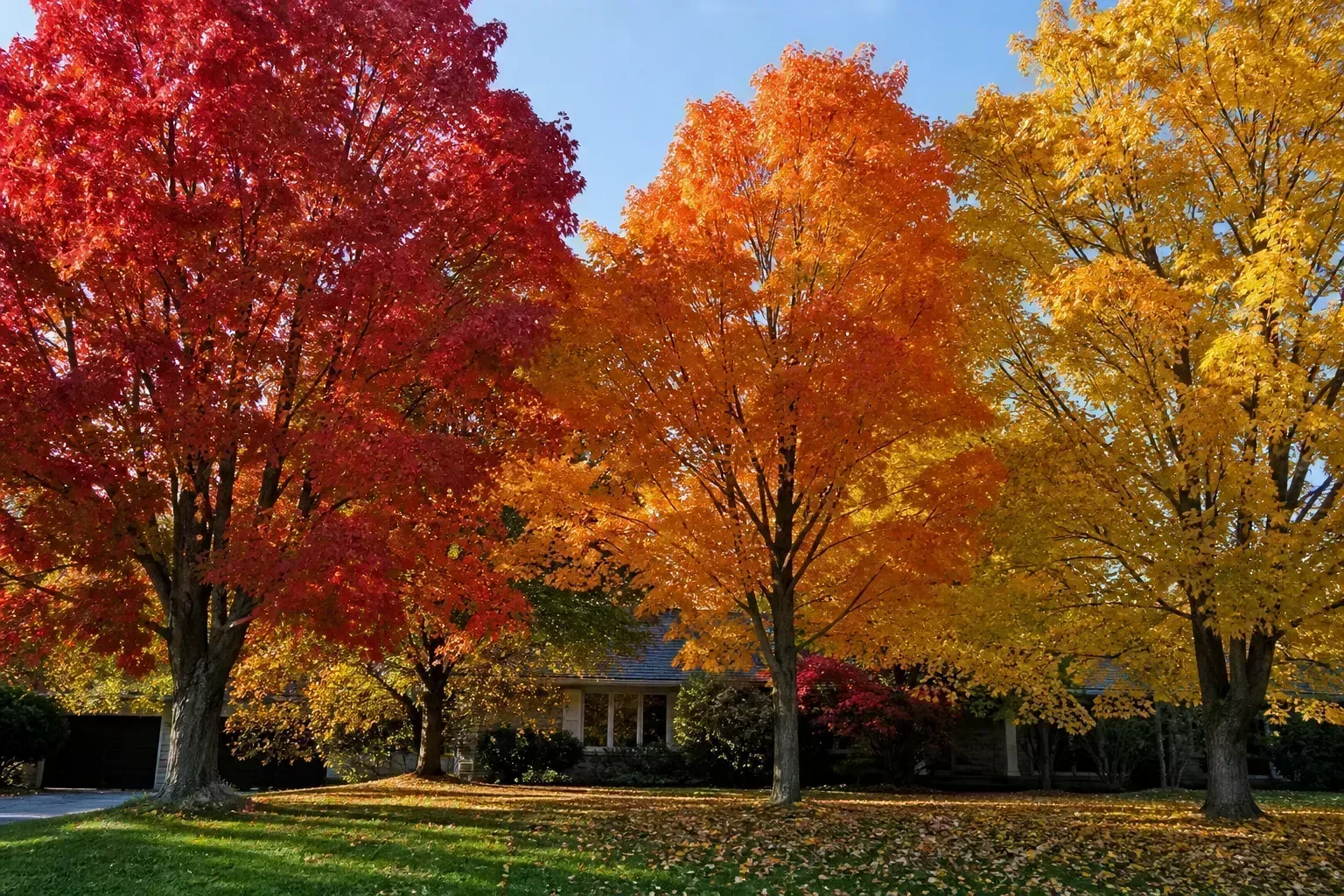
Maples belong to the genus Acer—roughly 130 species worldwide, most deciduous, most famous for hand-shaped leaves and autumn color. The right maple can anchor a front yard for decades; the wrong one cracks sidewalks, shades out your garden, or becomes a weedy headache you fight for twenty years. This guide covers 15 species and cultivars worth knowing, grouped by how gardeners actually use them, with the decision rules thin species lists usually skip: mature spread, root behavior, invasive risk, and what to plant instead when a popular maple is a bad fit.
How to Choose the Right Maple for Your Yard
Before you fall in love with a photo of crimson October leaves, answer three questions: How much space do you truly have? What is your hardiness zone and sun pattern? Do you want a shade tree, a specimen, or a small ornamental? Maples are not interchangeable. A sugar maple that thrives in a rural lawn will struggle next to a salted street, while a Japanese maple that glows in Portland may scorch in Atlanta afternoon sun.
Start with mature size and root clearance
Catalog photos show five-year-old trees. You are buying 40 years of crown spread and root mass. Most maples are shallow-rooted—feeder roots sit in the top 12–18 inches of soil and spread well beyond the drip line. NC State Extension notes that red maple roots can buckle sidewalks when planted too close. Large maples belong at least one mature spread away from the house foundation, driveway, and sewer lines—not tucked into a 10-foot planting strip because the sapling looked cute.
Match zone, sun, and your fall-color priority
Hardiness zone tells you survival; it does not tell you performance. Big leaf maple (Acer macrophyllum) survives in zone 6 but Missouri Botanical Garden warns it struggles in hot, humid southeastern summers and is not recommended south of zone 7. If fall color is your main goal, buy a named cultivar when possible—seedling red maples vary from electric scarlet to muddy greenish-yellow in the same neighborhood.
What All Maples Have in Common
Every maple shares a few traits worth understanding before you pick a species. Leaves are typically opposite on the stem—two leaves per node, not alternating like oaks. Most produce samaras: paired winged seeds often called helicopter seeds that spin to the ground in spring or early summer. Sap runs in late winter; sugar maples are tapped commercially, but several species produce sweet sap in lower concentrations.
Maples are overwhelmingly deciduous, dropping leaves in autumn—though the show ranges from world-class (sugar and red maples) to nearly absent (some sycamore maples). Bark can be ornamental too: paperbark maple peels in cinnamon sheets; snakebark maples stripe green branches with white lines. Finally, most maples are moisture-seeking. Roots hunt water, which is useful on a large lot and disastrous above a septic field or clay pipe you cannot replace.
Quick ID tip: Opposite leaves plus paired samaras usually mean maple. Break a leaf petiole on Norway or sugar maple and you may see milky sap—a handy field mark that separates some Acer species from look-alikes like sweetgum or sycamore, which have alternate leaves and very different fruit.
Small Maples for Tight Lots and Urban Yards
If your usable yard is measured in tens of feet—not acres—start here. These maples stay under 35 feet, tolerate pruning, and fit patio edges, courtyards, and street-tree pits with adequate width.
Amur, Hedge, Tatarian, Paperbark, and Trident Maples
Amur maple (Acer ginnala, sometimes listed as Acer tataricum subsp. ginnala) grows as a large shrub or small tree to about 30 feet, with dense rounded form and reliable red fall color. Cultivars like ‘Embers’ and ‘Flame’ intensify autumn tones. It handles cold (zones 3–8), drought once established, and works as a hedge if you prune it hard. Native to Korea, Japan, Mongolia, and Siberia.
Hedge maple (Acer campestre) is the urban survivor of the group. Missouri Botanical Garden documents tolerance for drought, compacted soil, salt, ozone, and shade—rare in a maple. Mature height is 25–35 feet with yellow fall color. Excellent where Norway maple used to be the default street tree and you want something smaller and less controversial.
Tatarian maple (Acer tataricum) is a close relative of Amur maple, usually 15–20 feet, with three-lobed juvenile leaves maturing to smoother outlines, red samaras, and yellow-to-red fall foliage. Cold hardy (zones 3–8).
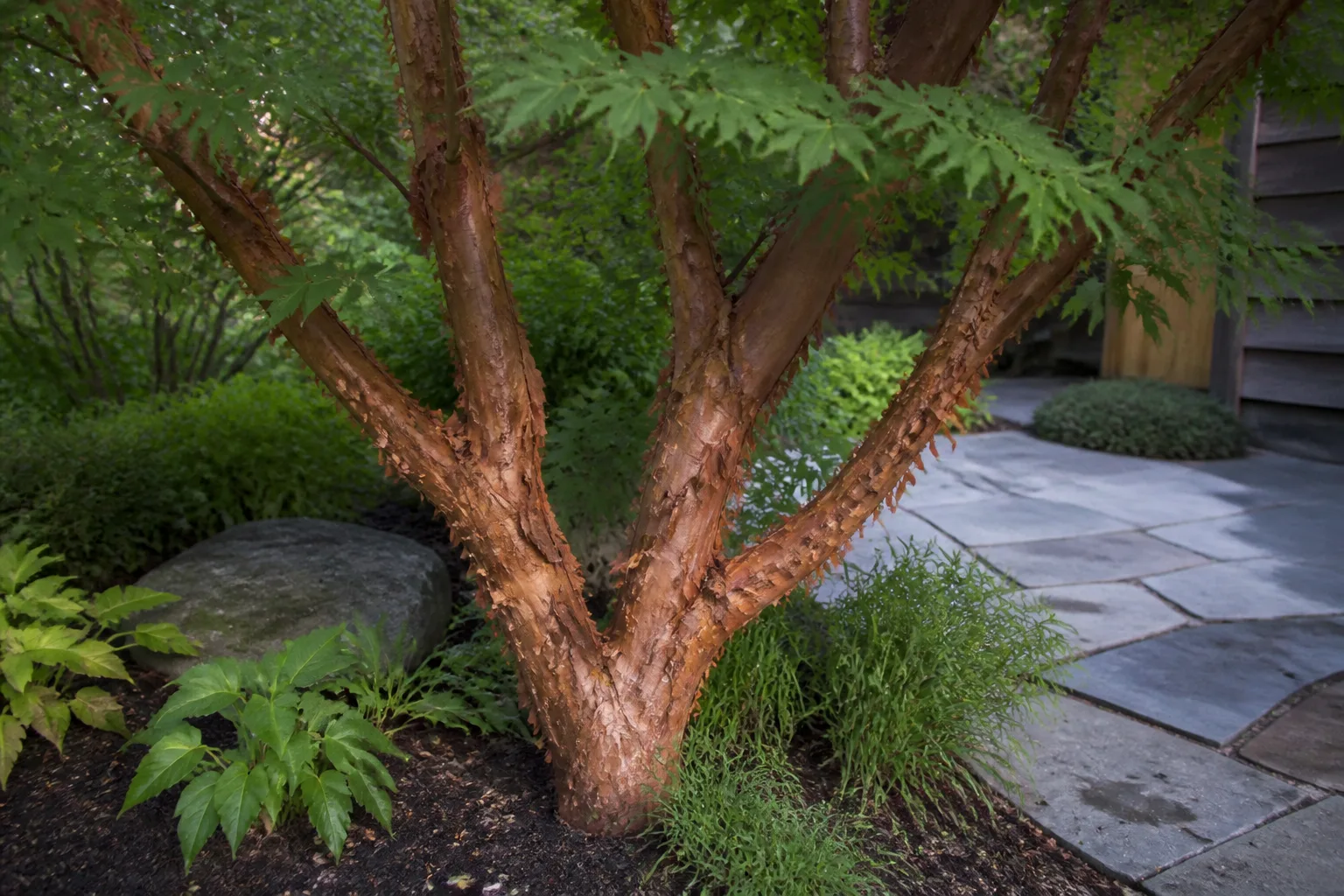
Paperbark maple (Acer griseum) is the bark star: cinnamon to reddish-brown peeling sheets even on young trunks. Rounded habit, 15–30 feet, orange-red fall leaves, zones 4–8. Slow-growing and often hard to find at big-box nurseries, but unmatched as a specimen near a patio where you can see bark in winter.
Trident maple (Acer buergerianum) is a separate Asian species—not a red maple variety, despite what some lists claim. Small tree to 25–35 feet, three-lobed dark green leaves, orange-red fall color, interesting flaking bark with age. Heat-tolerant for a maple (zones 5–9) and popular for bonsai. Give it full sun and good drainage.
| Species | Typical height | Zones | Best for | Fall color | Caution |
|---|---|---|---|---|---|
| Amur maple | 15–30 ft | 3–8 | Hedges, small lots | Red | Can self-seed in some regions |
| Hedge maple | 25–35 ft | 5–8 | Urban stress, salt | Yellow | Slow trunk caliper |
| Tatarian maple | 15–20 ft | 3–8 | Compact accent | Yellow–red | Similar to Amur; check local availability |
| Paperbark maple | 15–30 ft | 4–8 | Patio specimen, winter bark | Orange–red | Slow; may be pricey |
| Trident maple | 25–35 ft | 5–9 | Heat, bonsai, street tree | Orange–red | Needs drainage |
Japanese Maples and Red-Leaf Cultivars
Ornamental maples trade size for year-round beauty—fine-cut leaves, layered branching, and color that holds from spring through fall on the best cultivars.
Japanese Maple and Bloodgood Selections
Japanese maple (Acer palmatum) spans thousands of cultivars from 6-foot laceleaf mounds to 25-foot upright trees. Leaves may be green, red, or variegated; fall color runs yellow through bronze and crimson depending on cultivar and weather. NC State Extension places hardiness at zones 5–9, with caveats: late spring frosts can burn tender new growth in zone 5, and hot afternoon sun causes leaf scorch in the South. Morning sun with afternoon shade is the safe default in warm climates.
Site Japanese maples where you can manage water—consistent moisture, mulch over roots, no lawn competition against the trunk. For seasonal care timing, see our guides on winter pruning and when to fertilize Japanese maples.
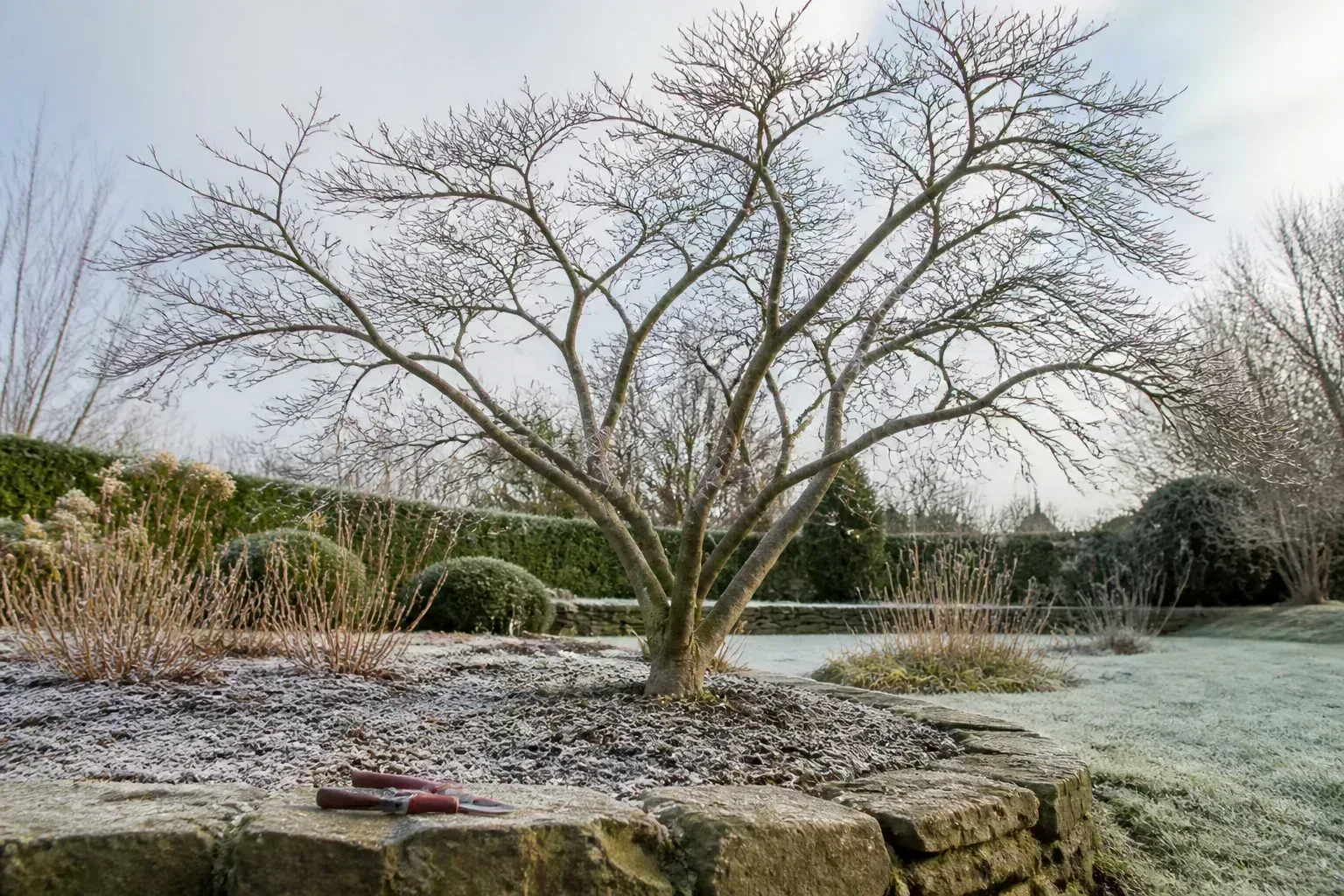
Bloodgood (Acer palmatum ‘Bloodgood’) is the red-leaf workhorse for smaller yards: 15–20 feet, deep burgundy foliage from spring through summer, brighter red in fall, zones 5–8. Plant in fall when the tree is entering dormancy, mulch well, and shelter from harsh winter winds that can desiccate fine branches. Other red-leaf cultivars worth nursery space include ‘Crimson Queen’ (weeping laceleaf) and ‘Emperor I’ (upright, holds color in heat better than some older selections). Counting cultivars, Japanese maple and Bloodgood together cover the ornamental end of the list—choose the form (weeping, upright, dwarf) before you chase a name on a tag.
Large Shade Maples Worth the Space
When you have room—a front lawn, a parkway with buried utilities mapped, a back corner away from the patio—these native and near-native giants deliver serious shade and autumn drama.
Red Maple and Sugar Maple
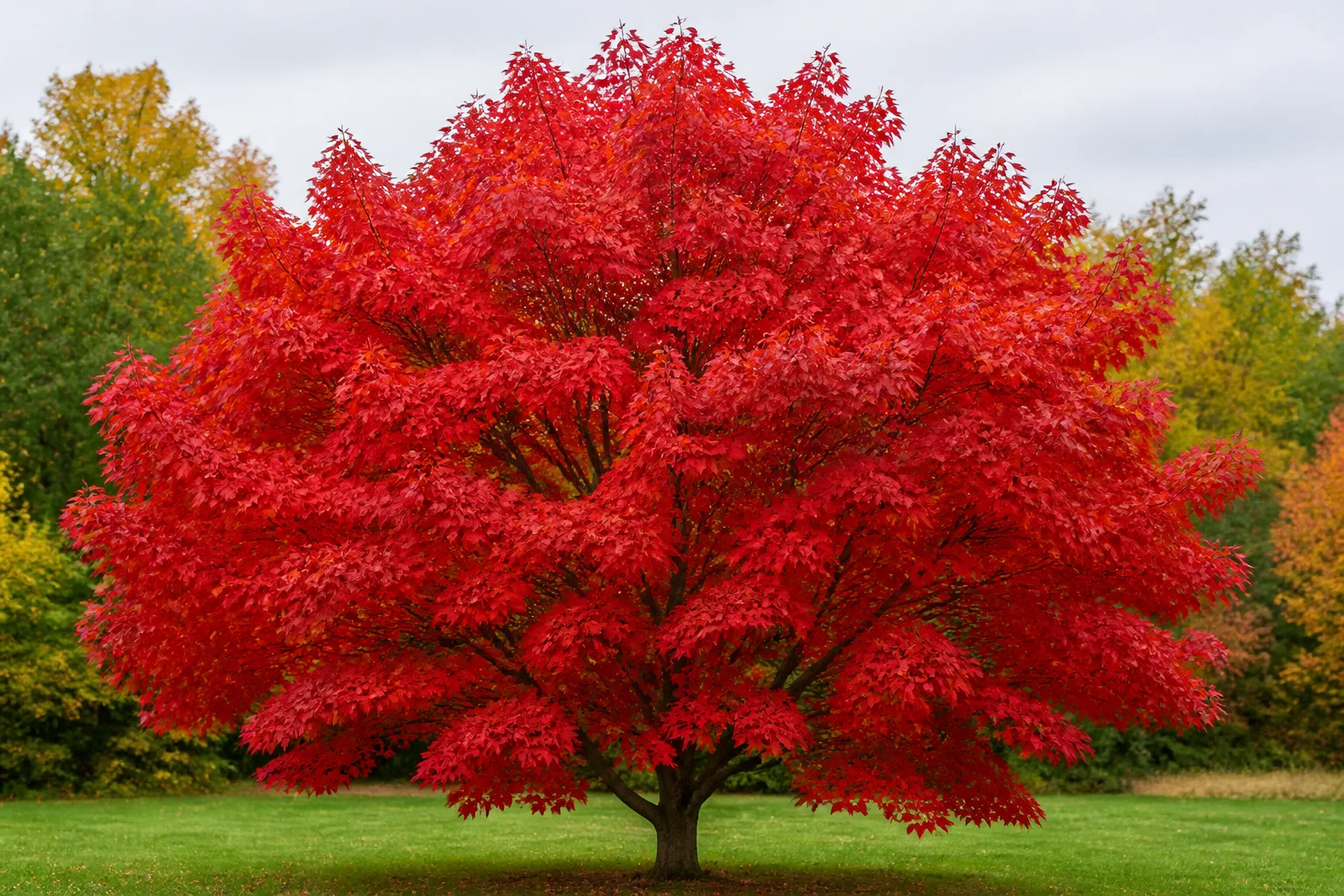
Red maple (Acer rubrum) is the adaptable North American native most gardeners should learn first. NC State Extension describes mature heights of 40–70 feet (occasionally taller), rounded crown, red flowers and samaras in spring, and early fall color that can be spectacular. Zones 3–9. Growth is moderate to fast depending on water and cultivar. Named selections like ‘October Glory’ and ‘Red Sunset’ exist because seedling fall color is unpredictable—if autumn red is non-negotiable, buy the cultivar.
Sugar maple (Acer saccharum) is the classic Northeast shade tree and the commercial syrup species. NC State Extension reports heights of 50–120 feet, brilliant red-orange-yellow fall foliage, and sap sugar concentrations that make syrup production practical—about 32 gallons of sap per gallon of syrup, tapped when the tree is roughly 40 years old. Zones 3–8. Sugar maple tolerates shade better than most large deciduous trees but hates urban stress: compacted soil, road salt, and air pollution cause chronic decline. Plant it in open lawn or woodland edge, not in a tree pit next to traffic. Heat-tolerant cultivars like ‘Bonfire’ and ‘Morton’ exist for southern edges of the range, but none turn a parking-lot island into maple country—you still need soil volume and air quality.
Fast Growers and Western Giants
Speed has a price. These maples fill space quickly but come with structural or regional trade-offs.
Silver maple (Acer saccharinum) grows 50–80+ feet fast on wet soils, with silvery leaf undersides that flash in wind. Missouri Botanical Garden notes weak, brittle branches prone to ice and wind damage, shallow roots that crack pavement, and syrup far inferior to sugar maple despite sweet sap. Zones 3–9. Fine for rural floodplain plantings away from structures; a poor choice for suburban curb strips.
Big leaf maple (Acer macrophyllum) is the Pacific Northwest heavyweight—leaves to 12 inches wide, mature heights 40–75 feet, yellow-orange fall color, and massive shade for large properties. Native from British Columbia to California, rarely far from the coast. Zones 6–7 in most references; not a tree for humid southern summers. Sap can be boiled for syrup but requires far more volume than sugar maple for the same yield. In its native range it is often draped with moss and ferns on shaded trunks—a different aesthetic from the tidy lawn specimens eastern gardeners expect.
Unusual-Leaf Maples—and One to Question
Not every maple looks like the flag on a Canadian backpack. These species reward collectors and confuse beginners—worth knowing so you do not pass up a great small tree or buy a misfit.
Hornbeam maple (Acer carpinifolium) carries elongated, unlobed leaves resembling hornbeam (Carpinus) more than classic maple. Japan native, 15–30 feet, yellow fall color, zones 4–7. Uncommon in nurseries but distinctive in a part-shade garden.
Vine leaf maple (Acer cissifolium) has trifoliate leaves—three leaflets per petiole—like ivy or ash. Small tree 20–30 feet, Japan native, variable fall color, prefers semi-shade (zones 5–8). Similar use to Japanese maple as a layered specimen.
Sycamore maple (Acer pseudoplatanus) is a large European tree (40–60+ feet) with big five-lobed leaves that echo sycamore (Platanus). Tolerates salt and pollution better than sugar maple but offers little fall color—leaves often turn dingy yellow-brown. Less common in American landscapes today; know it mainly for identification and for comparison with more colorful natives.
Norway maple (Acer platanoides) also belongs in the identification bucket even though you should rarely plant it: five-lobed leaves resemble sugar maple, but snapped petioles bleed milky sap and samaras spread at a shallow angle (nearly horizontal) compared with the steeper angle on sugar maple samaras—a classic field ID trick extension offices still teach because old street plantings persist for decades after nurseries stop selling them.
Maples to Reconsider Before You Dig
Some maples are beautiful in a catalog and expensive in maintenance. Norway maple (Acer platanoides) was the mid-century street-tree default: dense shade, easy establishment, maroon-leaved ‘Crimson King’ everywhere. Missouri Botanical Garden now lists it as “Midwest Noxious Weed: Do Not Plant” and links invasive range maps. NC State Extension labels it invasive in several northeastern states, noting shallow roots that prevent underplanting, prolific self-seeding, and competition with native forest trees.
If you want purple summer foliage without the ecological baggage, look at red maple cultivars with reliable maroon spring growth, or a Japanese maple in a size your lot can carry. If you need a tough urban maple, hedge maple or a well-sited red maple cultivar is usually the better long-term bet than Norway maple in the Northeast and upper Midwest.
Silver maple, covered above, belongs in the same caution column for suburban lots because of weak wood and pavement damage—not because it invades woodlands like Norway maple, but because it creates chronic maintenance bills.
Planting Distance and Shallow Root Rules
Use this spacing logic before you dig:
- Measure mature spread, not current pot size. Plant the trunk so the future drip line stays clear of roofs, driveways, and utilities.
- Large maples (red, sugar, silver): allow 40–50 feet between the trunk and permanent paving or foundations when possible; never less than 25 feet from a house wall on typical suburban lots.
- Small maples (Japanese, paperbark, Amur): 10–15 feet from structures is often enough, but keep them out of lawn areas where mower compaction damages surface roots—mulch a wide ring instead.
- Never plant above septic fields, clay sewer lines, or shallow water mains. Maple roots follow moisture and will infiltrate cracks.
- Skip grass under mature maples. Exposed buttress roots make mowing miserable; use mulch, shade-tolerant groundcover, or leave a woodland edge.
If a maple has already lifted your sidewalk, removal and replanting with a smaller species beats repeated grinding and patching every three years.
Conclusion
Fifteen maples sounds like a lot until you sort them by job: small yard (Amur, paperbark, Japanese maple, hedge maple), big shade and fall color (red and sugar maple cultivars), fast rural cover (silver maple—with eyes open), and collectors’ oddities (hornbeam and vine leaf maples). Match mature size to your lot first, then zone and sun, then fall-color expectations—and check local invasive-plant lists before you buy Norway maple or assume any maple is harmless because it is pretty. The best maple is the one that still fits your yard, your pavement, and your region twenty years from now.



