15 Small Evergreen Shrubs for Your Landscape
Fifteen compact evergreen shrubs for borders, slopes, and foundation beds — with honest mature sizes, zone ranges, and which picks to skip near walkways or in invasive-prone regions.
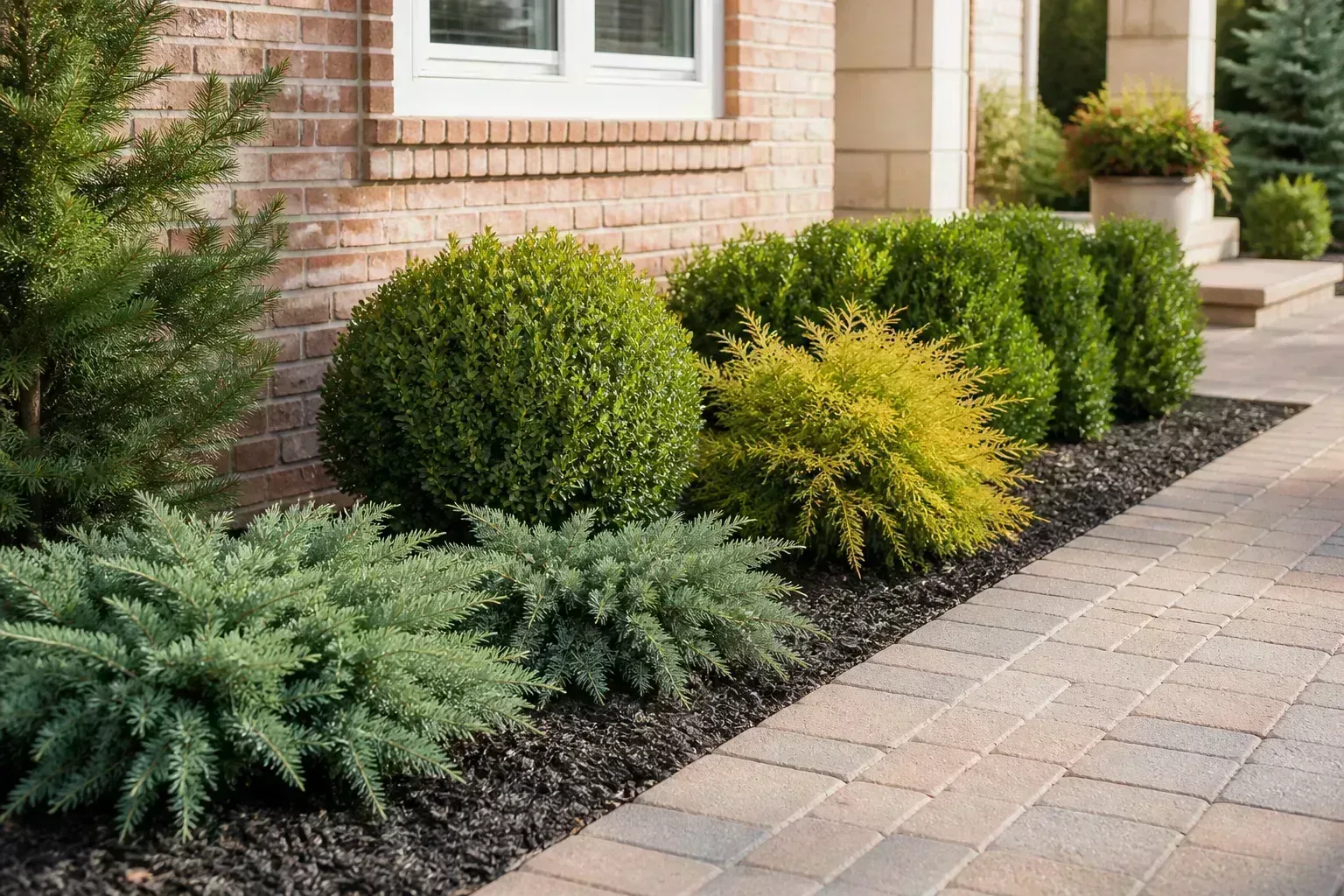
Small evergreen shrubs are the structure that keeps a garden from disappearing in winter. While perennials die back and deciduous trees stand bare, a well-chosen dwarf evergreen holds color, texture, and form through every season. The trick is not finding an evergreen — it is finding one that stays appropriately small for a border, foundation bed, container, or slope without turning into the plant that ate your walkway five years later.
The fifteen shrubs below are proven landscape performers in compact forms. Each entry includes mature size, hardiness, best use, and an honest skip if line so you can rule plants out before you buy — not after they outgrow the bed.
Why small evergreens are worth the bed space
Compact evergreens do work that annuals and perennials cannot. They anchor corners, frame doors, soften hardscape, and give birds cover when everything else is dormant. Needle evergreens bring blue, gold, or deep green texture; broadleaf types add gloss, flowers, or berries; variegated forms brighten shade.
That year-round presence comes with a trade-off: you are committing long-term space. Unlike a pot of pansies, a shrub does not disappear after one season. That is why mature size matters more than first-year appearance — and why the next section on dwarf labels is not optional reading.
The dwarf label trap — read this before you buy
In the nursery trade, dwarf often describes growth rate, not final height. The American Conifer Society classifies dwarf conifers as plants adding roughly one to six inches per year. Slow still adds up. A dwarf Alberta spruce tagged at purchase as a cute two-foot cone can, over two decades, reach 10 to 13 feet tall with a spread of 7 to 10 feet in favorable sites — far beyond what a foundation corner can absorb.
Broadleaf “dwarf” labels are equally slippery. A cultivar dwarf relative to its species may still exceed your bed. Always check three numbers on the tag or breeder sheet: mature height, mature spread, and annual growth rate when available.
How to read a nursery tag without guessing
Measure your available space first — length, width, and clearance from siding, walks, and roof drip lines. Then compare that footprint to the plant’s 10-year size if the tag lists it; if not, assume the upper end of the mature range unless the breeder documents a true miniature form.
Ask whether the plant is a selected cultivar (clonal, predictable) or a seedling (variable). For hedges and symmetry near an entry, cultivars win. For naturalistic drifts on a slope, slight variation may be fine.
Finally, note soil pH and drainage on the same tag pass. Ericaceous shrubs (mountain laurel, azalea, winter heath) fail quietly in alkaline clay; yucca fails loudly in wet winter soil. Matching soil to plant prevents the “it never grew” disappointment that gets blamed on winter hardiness.
Match the shrub to the job
Before scrolling the plant list, decide what job you need filled. The same evergreen can be perfect as a slope groundcover and wrong as a doorway anchor.
| Job | Strong small-evergreen picks | Watch-outs |
|---|---|---|
| Foundation bed (front of house) | Gem Box inkberry, dwarf boxwood, Little Giant arborvitae, skimmia (shade) | Allow mature spread; avoid flammable laurel against siding in fire-prone zones |
| Low hedge or edging | Dwarf English boxwood, inkberry, Compact Japanese holly | Boxwood blight in humid regions; verify holly cultivar height |
| Slope or erosion control | Blue Star juniper, winter heath, Emerald ‘n’ Gold euonymus (only where not invasive) | Euonymus can escape in the Southeast |
| Container or patio pot | Golden Mop cypress, dwarf azalea, skimmia, Moonshadow euonymus | Plan for winter watering and pot size upgrades |
| Dry, sunny trouble spot | Adam’s needle yucca, Blue Star juniper | Yucca leaf tips near paths |
| Woodland edge / partial shade | Minuet mountain laurel, skimmia, inkberry, winter heath | Acidic soil prep for ericaceous types |
Foundation beds, slopes, and containers
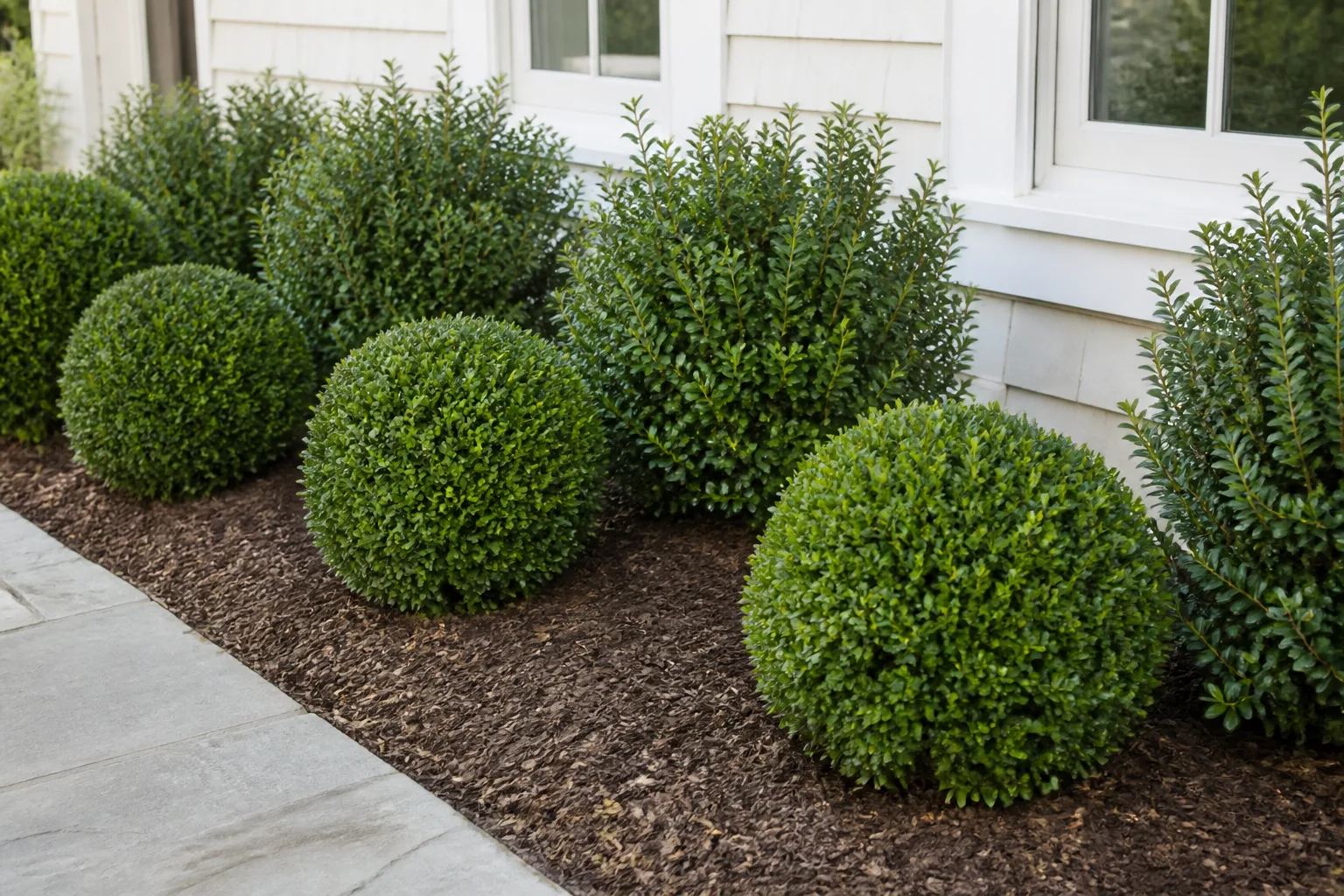
Foundation plantings need shrubs with relatively shallow, non-aggressive roots and predictable width. Boxwood, azalea, compact hollies, and dwarf conifers in amended beds typically stay above the root zone that threatens foundations when sited 18 to 24 inches from the wall — not flush against cladding. Leave air space for maintenance and pest inspection.
Slopes favor spreading junipers, mat-forming heath, and low euonymus where local invasiveness is not a concern. Mass planting with staggered spacing helps roots knit soil faster than single specimens.
Containers extend the range of small evergreens onto patios and balconies. Choose one USDA zone hardier than your exposure if pots sit outdoors all winter, use frost-proof pots with drainage holes, and expect to refresh potting mix every two to three years.
Blue Star juniper (Juniperus squamata ‘Blue Star’)
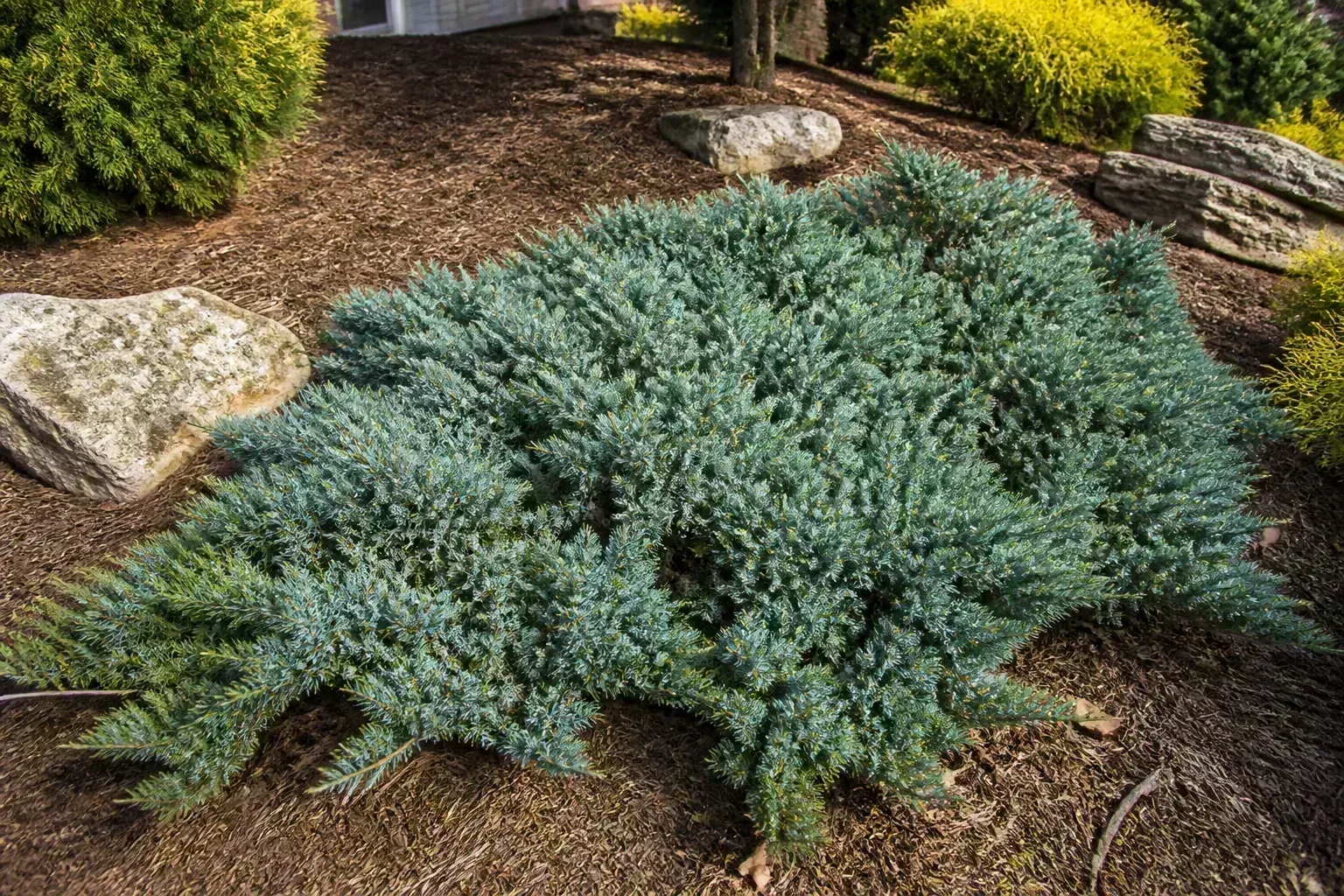
Blue Star juniper is a needle evergreen prized for steely blue-gray foliage that reads well against gold or green broadleaf partners. Needles are short and dense, arranged in tight whorls on a low, spreading plant typically 1 to 3 feet tall and 1 to 4 feet wide in USDA Zones 4–8.
Best use: sunny slope groundcover, rock garden accent, or massed drift where you want blue color without height.
Skip if: you need a vertical accent — Blue Star spreads outward, not up. Also skip wet clay bottoms; junipers want sharp drainage and full sun for the strongest color.
Care notes: little pruning required. Remove dead interior branches in spring if airflow is poor. No serious amendment needed beyond avoiding over-irrigation once established.
Minuet mountain laurel (Kalmia latifolia ‘Minuet’)
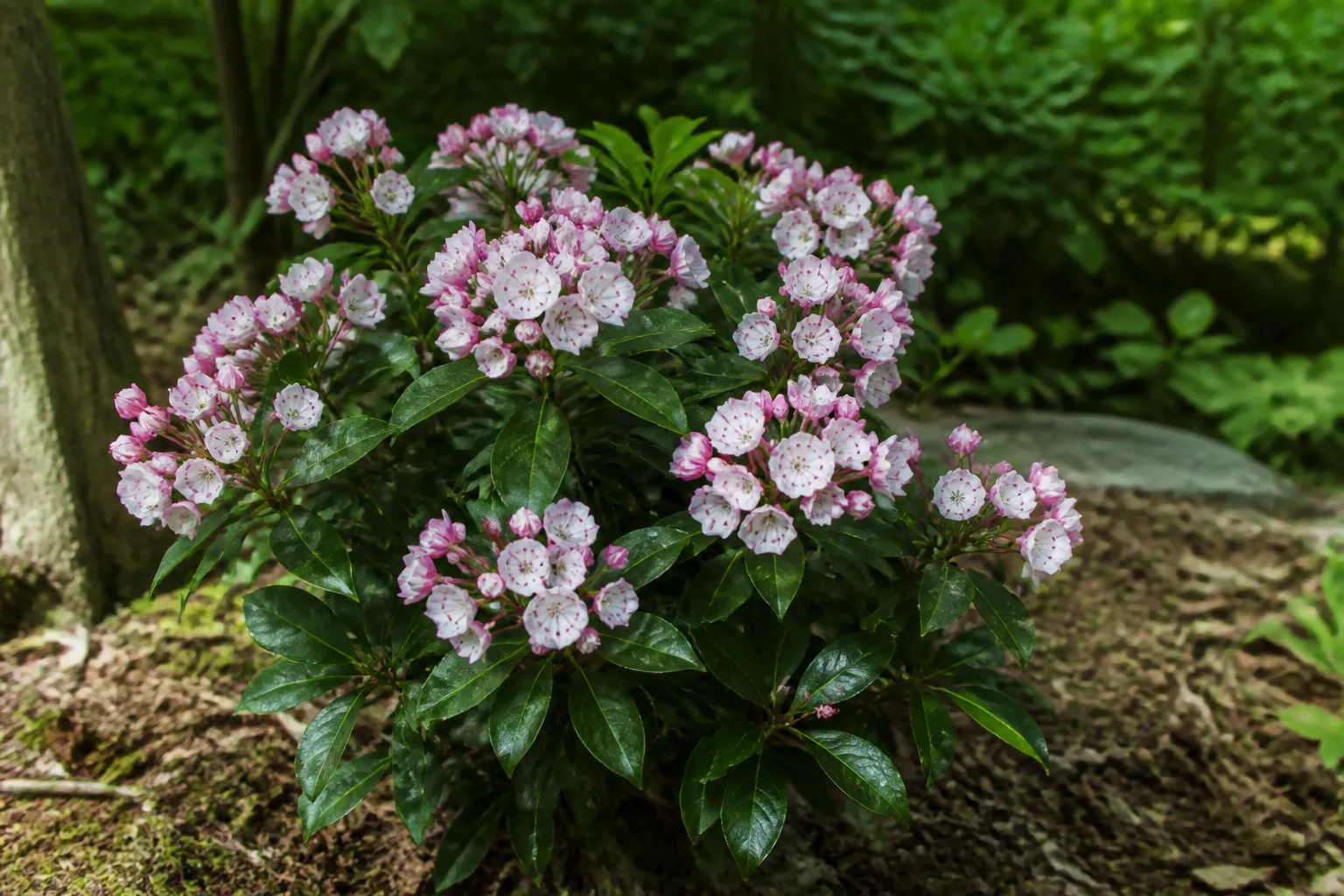
Mountain laurel is a native broadleaf evergreen with showy late-spring flowers. The species can grow 6 to 10 feet or more, but ‘Minuet’ is a true dwarf selection staying roughly 2 to 3 feet tall and wide in USDA Zones 4–9, with white flowers banded in purplish red.
NC State Extension notes mountain laurel prefers cool, moist, acidic, well-drained soil and partial shade — morning sun with afternoon shade is ideal (NC State Extension). It struggles in heavy clay and wet winter feet.
Best use: woodland edge, shaded foundation corner, pollinator-friendly native planting.
Skip if: you have alkaline soil without a long-term acidification plan, or you need a fire-safe plant against a house — mountain laurel carries a high flammability rating in extension databases.
Care notes: prune lightly immediately after flowering to keep a bushy habit. Do not hard-cut into old wood expecting recovery. All parts are toxic if ingested; keep away from grazing pets and curious toddlers.
Golden Mop false cypress (Chamaecyparis pisifera ‘Golden Mop’)
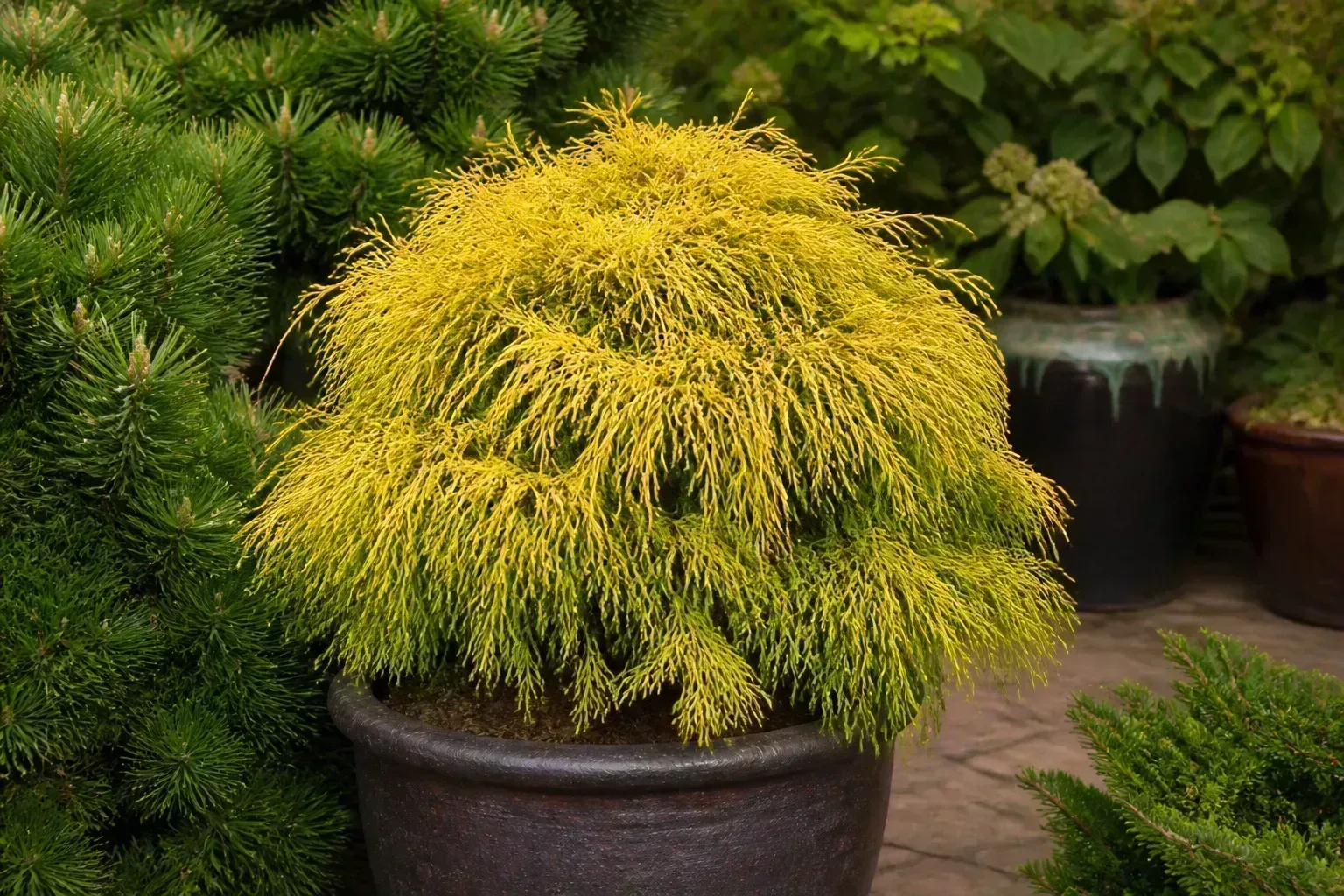
Golden Mop is a thread-leaf conifer with bright golden foliage that holds interest in winter. Growth is slow — often 2 to 5 feet tall and wide over many years in USDA Zones 5–8. The mophead shape usually needs little shearing.
Best use: patio container specimen, gold accent near blue junipers, low hedge in a sunny border.
Skip if: you want fast fill this season; Golden Mop earns its keep slowly. Also skip deep shade — gold fades to green without adequate sun.
Care notes: tolerates full sun to partial shade. Protect from drying winter wind in exposed Zone 5 sites. Prune only to remove dead tips, not to force tight formal shapes.
Dwarf azalea ‘Amoena’ (Rhododendron × obtusum ‘Amoenum’)
This evergreen azalea brings magenta-pink spring flowers on a plant typically 1 to 3 feet tall and 2 to 4 feet wide in USDA Zones 5–8. It tolerates partial or dappled shade, making it useful under high tree canopies and in cottage-style borders.
Best use: woodland garden, partial-shade foundation bed, mixed shrub border with camellias or hydrangeas.
Skip if: soil is alkaline or chronically wet — azaleas need acidic, well-drained conditions. Also skip full baking afternoon sun in hot climates without irrigation.
Care notes: mulch with pine bark or leaf mold; water during dry spells while buds set. Prune right after bloom. Availability varies by region; ask for Satsuki-type dwarfs if ‘Amoenum’ is scarce locally.
Dwarf Alberta spruce (Picea glauca ‘Conica’)
The classic conical dwarf spruce sold at every garden centre is slow-growing but not indefinitely small. Expect 10 to 13 feet height and 7 to 10 feet spread at maturity in USDA Zones 3–6 (sometimes listed to Zone 8 with heat stress). Nursery pots show a 2-foot plant; time shows the rest.
Best use: formal entry specimen in cold climates, winter-interest pot on a patio (with eventual upsizing), anchor flanking a gate in regions with cool summers and low humidity.
Skip if: you need a shrub that stays under 4 feet forever, or you garden in hot, humid summers where spruce often thins and browns. Also skip tight foundation corners.
Care notes: full sun, neutral to slightly acidic well-drained soil. Shearing destroys the natural cone — choose placement instead of heavy pruning. Watch for spider mites during dry heat.
Gem Box inkberry (Ilex glabra ‘Gem Box’)
Inkberry is a native broadleaf holly; most selections reach 5 to 10 feet, but ‘Gem Box’ forms a dense 2 to 3 foot ball in USDA Zones 5–9. Glossy green leaves and a naturally rounded habit make it a strong boxwood alternative where boxwood blight is a concern (NC State Extension).
Best use: low hedge, foundation planting, native wildlife garden — berries feed birds when male and female plants are paired for pollination.
Skip if: you need a razor-straight formal parterre without any clipping; Gem Box is neat but not as tight as old English boxwood without light shearing.
Care notes: tolerates sun to partial shade and moist acidic soils better than many hollies. Minimal pruning. Pair with a male inkberry nearby if you want consistent berry display.
Compact Japanese holly (Ilex crenata ‘Compacta’)
Japanese holly offers box-like evergreen foliage without boxwood’s blight susceptibility in some regions. Read labels carefully: ‘Compacta’ is often listed 6 to 8 feet tall and 6 to 10 feet wide — compact relative to the species, not relative to your mailbox bed.
Best use: medium hedge, mass planting in clay soils, urban landscapes where Japanese holly is already proven.
Skip if: you need a true 2-foot foundation shrub — choose Gem Box inkberry or dwarf boxwood instead.
Care notes: full sun, tolerates clay. Bees visit flowers; plan placement away from high-traffic seating if allergies are a concern. Shear in late winter for formal hedges.
Little Giant arborvitae (Thuja occidentalis ‘Little Giant’)
Little Giant is a globe arborvitae holding bright green feathery foliage through winter, typically 3 to 4 feet tall and wide in USDA Zones 3–8. Unlike towering pyramidal arborvitae, it stays in the shrub layer.
Best use: foundation anchor, low hedge, mixed border evergreen punctuation.
Skip if: deer pressure is extreme in your neighborhood — arborvitae is often on the menu unless protected.
Care notes: full sun to light shade. Avoid planting under roof eaves where ice and salt drip concentrate. Water deeply the first year; established plants tolerate ordinary garden dryness.
Japanese skimmia (Skimmia japonica)
Skimmia is a shade-tolerant broadleaf evergreen with fragrant spring flowers and red berries on female plants when a male pollinator is nearby. Expect 3 to 4 feet height and 4 to 5 feet spread in USDA Zones 6–8.
Best use: north-facing foundation, woodland front border, container in partial shade.
Skip if: you want guaranteed berries from a single plant — you need both sexes (or a self-fertile cultivar where offered). Also skip alkaline soil without amendment.
Care notes: protect from harsh afternoon sun in hot climates. Mulch to keep roots cool. Minimal pruning beyond deadheading spent flower clusters if desired.
Dwarf English boxwood (Buxus sempervirens ‘Suffruticosa’)
Dwarf English boxwood is the classic formal evergreen for low hedges, parterres, and container topiary, usually 2 to 3 feet tall and 2 to 4 feet wide in USDA Zones 5–8. Slow growth rewards patience with dense, small leaves.
NC State Extension lists boxwood as susceptible to boxwood blight, leaf spots, leafminer, and mites (NC State Extension). In blight-prone regions, inkberry or holly substitutes deserve consideration.
Best use: formal hedge, knot garden edging, container specimen in a courtyards.
Skip if: air circulation is poor, irrigation hits foliage nightly, or your region reports active blight — cultural conditions matter as much as cultivar choice.
Care notes: sun to partial shade. Shear lightly in late spring. Shallow roots benefit from mulch; avoid digging around base. Expect regular monitoring in humid climates.
Winter heath (Erica carnea)
Winter heath — also called winter or spring heath — is a low mounding evergreen that blooms in late winter to spring, with flowers lasting months in mild climates. Plants stay 6 to 12 inches tall and spread to about 20 inches wide in USDA Zones 7–9 (some cultivars colder).
Best use: rock garden, slope front edge, path lining, acidic bed groundcover.
Skip if: soil is alkaline or summer heat is extreme without irrigation — heath wants acidic, well-drained conditions and cool root zones.
Care notes: full sun to partial shade. Shear lightly after bloom to prevent bare centers. Pair with conifers and small grasses for winter structure.
Variegated euonymus wintercreepers (Euonymus fortunei cultivars)
Three popular variegated forms — Emerald ‘n’ Gold, Moonshadow, and Emerald Gaiety — share gold-and-green or white-and-green foliage and a spreading mounding habit roughly 1 to 6 feet tall depending on cultivar and support. All are evergreen in mild climates and useful for groundcover, low hedges, or containers.
NC State Extension lists climbing euonymus as invasive in North Carolina and other Southeast and Northeast states, noting it escapes into forests and climbs trees when given support (NC State Extension). Even groundcover forms can spread aggressively where conditions suit them.
Best use: contained beds with edging, pots, or regions where local invasive-plant lists do not restrict E. fortunei.
Skip if: you garden adjacent to woods, meadows, or natural areas — or your state lists wintercreeper as invasive. Also skip if you cannot monitor scale insects, a common euonymus pest.
Care notes: partial shade to sun; brighter variegation with more light. Prune wandering stems. Consider native groundcovers (partridgeberry, wild ginger in shade) where invasiveness is a concern.
Adam’s needle (Yucca filamentosa)
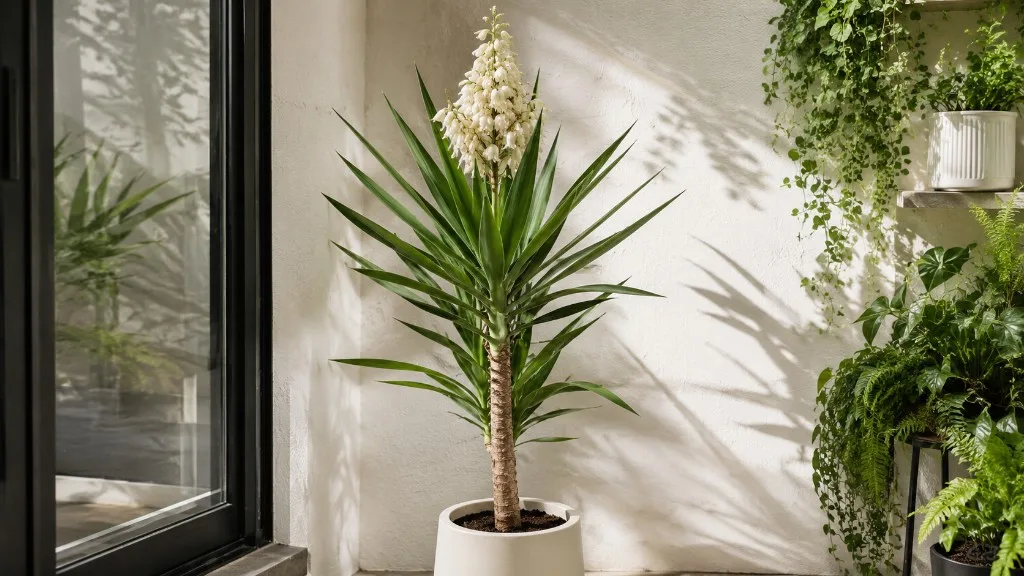
Adam’s needle is a semi-succulent evergreen with sword-like leaves and tall white flower spikes in late spring to early summer. Foliage clumps reach 2 to 3 feet tall and 3 to 4 feet wide in USDA Zones 4–10.
Best use: dry sunny bank, xeric border, heat-reflecting south wall where other evergreens fail.
Skip if: the bed is irrigated lawn margin or a play area — leaf tips are sharp. Also skip heavy clay without amendment and drainage.
Care notes: full sun, excellent drainage. Remove spent flower stalks after bloom. Variegated selections (‘Golden Sword’, ‘Bright Edge’) follow the same culture. Nearly zero pruning otherwise.
Conclusion
The best small evergreen shrub for your landscape is the one whose mature size, soil, and light match the bed you measured — not the cutest pot at the garden centre today. Use needle evergreens for sunny structure and slope cover, broadleaf types for shade and flowers, and yucca where dryness defeats everything else.
Start with your job (hedge, foundation, container, slope), verify the tag’s 10-year dimensions, and rule out regional deal-breakers early: boxwood blight, euonymus invasiveness, mountain laurel flammability, and Alberta spruce heat stress. The fifteen shrubs here cover those decisions on one page so you can plant once and enjoy year-round green without a rescue pruning project later.