Philodendron Birkin Care Guide: Light, Water & Reversion
Philodendron Birkin care: bright filtered light for pinstripes, water when top mix dries, airy soil, and fixes for reversion, scorch, and wet-soil wilt.
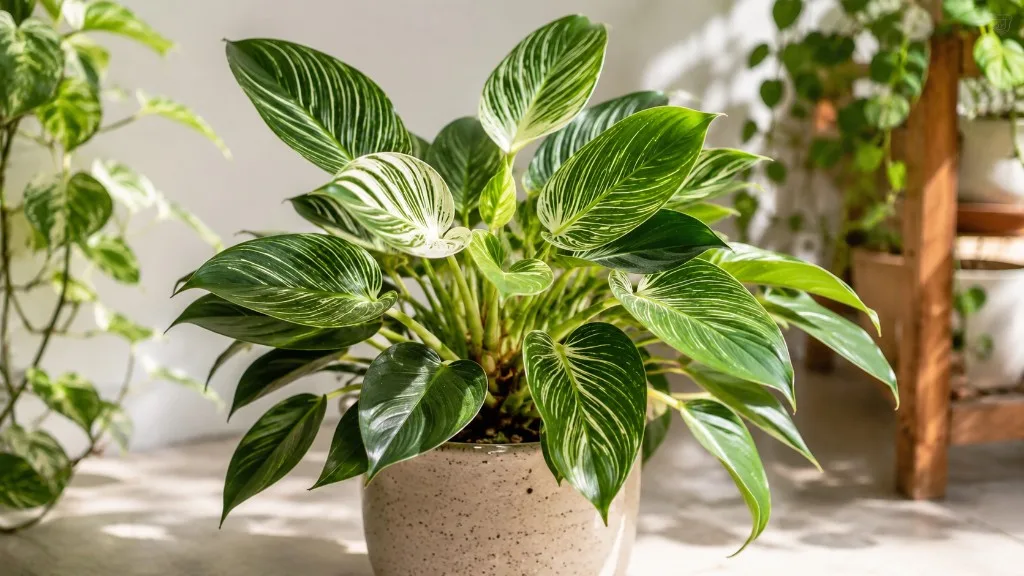
Philodendron Birkin fails in two predictable ways in real homes: the creamy pinstripes fade or vanish on new leaves, or the plant softens and yellows while the pot still feels wet. Both failures track the same biology. Birkin is a compact self-heading aroid with unstable chimeric variegation. The pale tissue that makes it desirable has less chlorophyll, so it needs brighter filtered light than a solid-green philodendron — and that same pale tissue scorches first in hot sun and greens out first in a dim corner.
This guide is the indoor routine we use and teach for keeping stripes crisp: light, check-based watering, an airy mix, humidity, feeding, reversion management, toxicity, and the problems that show up most often. If leaves are yellowing or stripes are fading, jump to the matching symptom section below rather than changing every variable in one weekend.
On LeafyPixels desks we keep several tabletop Birkins in 12–14 cm (about 5–6 inch) pots. Under a bright east window, new leaves usually keep clean striping and the amended mix dries enough to water roughly every 7–10 days in warm weather. The same cultivar moved to a north room for winter lost crisp pinstripes across three successive leaves within about six weeks — recovering only after we returned it to brighter filtered light and watched the next flush. Those observations sit behind the placement and “watch the next two or three leaves” rules in this guide.
Quick Philodendron Birkin Care Snapshot
For a healthy indoor Birkin, place the plant in bright, filtered indirect light, water when the top 3–5 cm (1–2 inches) of mix have dried, use a well-draining aroid-style potting mix in a pot with drainage holes, keep temperatures roughly 18–29°C (65–85°F) with about 50–60% humidity, and fertilize lightly only during active growth. Protect pinstripes from both dim corners and harsh afternoon sun. Keep the plant out of reach of pets and children.
| Care factor | Baseline target | Deeper guide |
|---|---|---|
| Light | Bright filtered / dappled; avoid harsh direct sun | Birkin light guide |
| Water | Top 3–5 cm dry, then soak and drain | Birkin watering guide |
| Soil | Airy mix + perlite + bark; never soggy | Birkin soil guide |
| Feed | Half-strength liquid every 4–6 weeks in growth | Birkin fertilizer guide |
| Support | None — upright self-header, not a climber | Birkin pruning guide |
North Carolina Extension describes Birkin as a slow-growing, dense, erect houseplant that can reach about 6 inches to 3 feet tall and wide indoors, with thick upright stems and pin-striped leaves that become more pronounced as they mature. That size profile is why Birkin belongs on a bright tabletop or shelf, not wrapped around a moss pole.
Healthy Birkin foliage shows dark green blades with creamy pinstripes that usually gain contrast as each leaf hardens.
What Philodendron Birkin Is: Self-Heading Habit and Trade Origin
Philodendron ‘Birkin’ is a cultivated houseplant in the Araceae (arum) family — the same family as monsteras, peace lilies, and pothos. NC State describes it as an evergreen, herbaceous perennial with a dense, erect, self-heading growth habit: new leaves emerge from a central crown rather than from a lengthening vine that needs support. (NC State Extension)
Its origin in trade literature is debated. NC State notes it is believed to be either a spontaneous chimeric mutation of Philodendron ‘Rojo Congo’ or a hybrid involving ‘Congo’ and ‘Imperial Green’ cultivars. For care, the practical takeaway is the same: treat Birkin like a compact self-heading philodendron, not like heartleaf Brasil or a climbing Monstera.
Clemson Extension draws the architectural line for the genus: while many philodendrons vine, self-heading types send leaves from a heavy clump at the base and often need space rather than a totem. University of Connecticut likewise notes that some philodendrons are self-heading and do not require support. A moss pole is almost always wasted hardware on Birkin. What it needs is even light on the crown, a stable pot, and an airy root zone.
Pinstripe Variegation and Why It Is Unstable
The leaves are thick, glossy, and heart-shaped, with creamy white, pale yellow, or light-green pinstripes against dark green. Each leaf is unique, and striping often looks stronger as a leaf hardens. (NC State Extension) That pattern is chimeric: two genetically different cell populations share the same shoot tip. The striped outer tissue can be displaced by faster-growing solid-green (or Rojo Congo–type) tissue, which is why reversion is a real risk even on a well-cared-for plant.
New leaves often emerge lighter and gain contrast as they mature. A single pale new leaf is not automatic reversion. Watch the next two or three leaves. If striping returns, you saw normal immature color. If successive leaves arrive fully green or reddish-green with no pinstripes, you are likely seeing true reversion.
Nursery tags sometimes get this wrong at purchase. If the plant already shows a solid Rojo Congo–type leaf at the crown, you may be buying a plant mid-reversion — not a “young Birkin that just needs more light.” Inspect the newest two leaves before you pay.
Birkin vs Brasil vs Rojo Congo
Buyers confuse these three constantly. Care overlaps on bright indirect light and airy mix, but habit and variegation do not.
| Cultivar / type | Habit | Variegation look | Support needed? |
|---|---|---|---|
| Birkin | Compact self-heading upright | Fine creamy pinstripes on dark green | No moss pole |
| Brasil (P. hederaceum) | Fast trailing / climbing vine | Broad lime-and-green patches | Often yes — it runs |
| Rojo Congo–type | Self-heading, thicker petioles | Solid green to reddish-green; no pinstripes | No |
Brasil is a moving vine for shelves and hanging pots. Birkin is a stationary tabletop specimen. A fully reverted Birkin is closer to Rojo Congo foliage in appearance — still a valid houseplant if you like the form, but it is no longer the pinstripe plant you bought. For vine-style care, see our Philodendron Brasil care guide.
Best Light for Crisp Stripes Without Scorch
Light is the highest-leverage Birkin variable because it controls both structure and stripe expression. NC State recommends bright, filtered (dappled) sunlight, warns that too much sun scorches leaves, and links insufficient light to loss of variegation, leggy growth, and small leaves. (NC State Extension) The Royal Horticultural Society matches the indoor target: bright but indirect light, kept out of harsh summer sun. Clemson HGIC describes most philodendrons as preferring indirect or curtain-filtered sunlight.
Variegated tissue has less chlorophyll. In a dim room, Birkin often responds by producing greener, less striped leaves and longer internodes. In harsh west-window sun, the white stripes bleach and crisp before the green tissue looks fully stressed. The workable band is strong ambient brightness at the leaf surface without prolonged midday beams.
Window Placement and Grow Lights
Start with an east window about two to three feet back, or a south or west window behind a sheer curtain three to five feet from the glass. North windows can work in summer if the plant sits close to the pane, but winter north light often fails the new-growth test — that is exactly the LeafyPixels winter fade case above. Rotate the pot a quarter turn every week or two so the crown does not lean permanently toward the window.
If natural light is weak — interior offices, light wells, deep winter — a full-spectrum LED grow light 12 to 24 inches above the canopy for roughly 12 to 14 hours daily is a practical substitute. Keep fixtures far enough that leaves stay cool to the touch. (University of Minnesota Extension covers supplemental lighting for indoor foliage when daylight is limited.) For placement diagrams and acclimation steps, use the dedicated Birkin light guide.
Low Light Fade vs Sun Scorch
Too little light looks like weaker or missing pinstripes on new leaves, smaller blades, and stretch between nodes. Survival in a dim corner is not success. Dim plants also drink less, so the same watering habit that worked near a window becomes an overwatering trap — often the path into not enough light plus chronic wet mix at once.
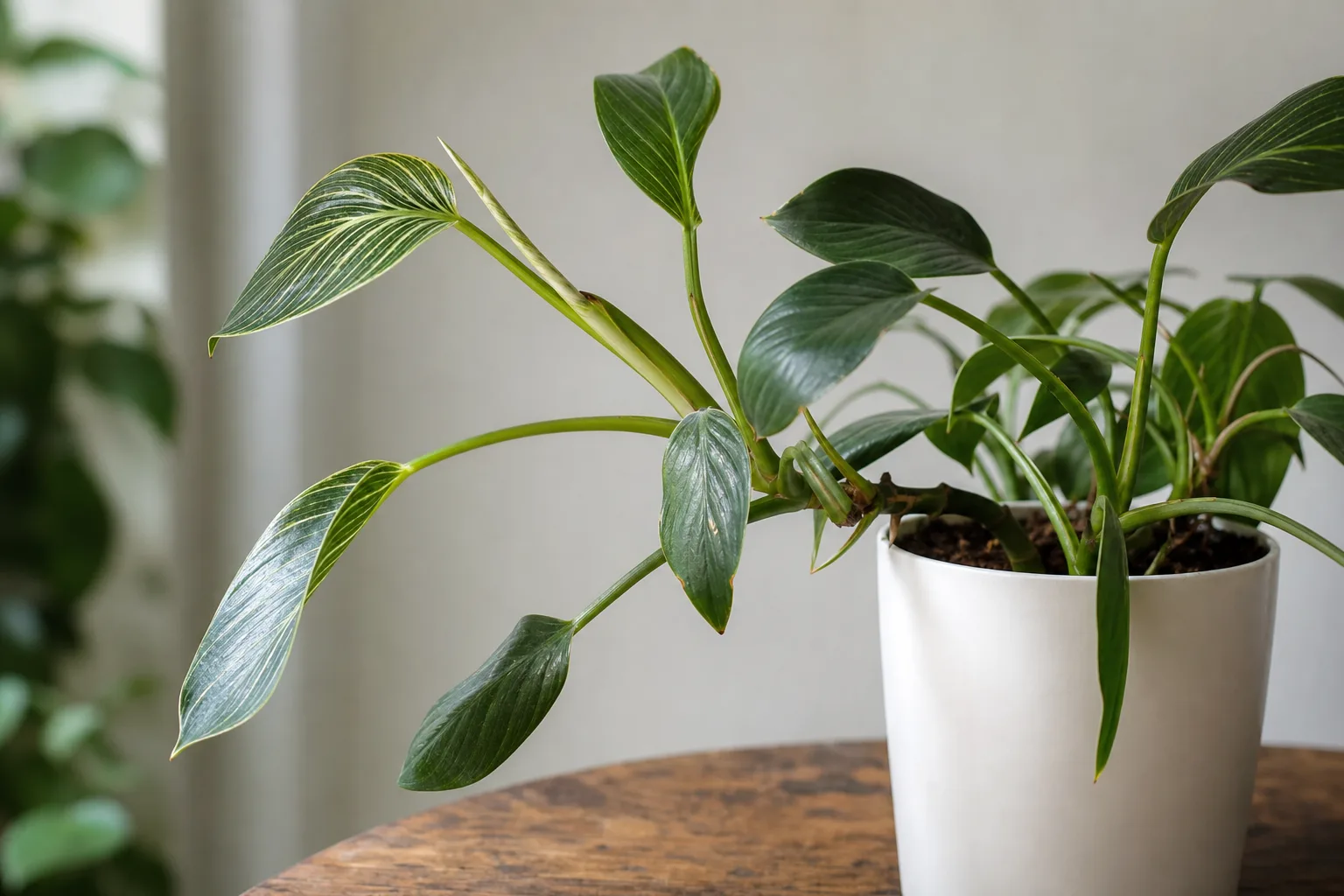
Low light often shows first as weaker pinstripes and longer internodes on new leaves — watch the next flush before you prune.
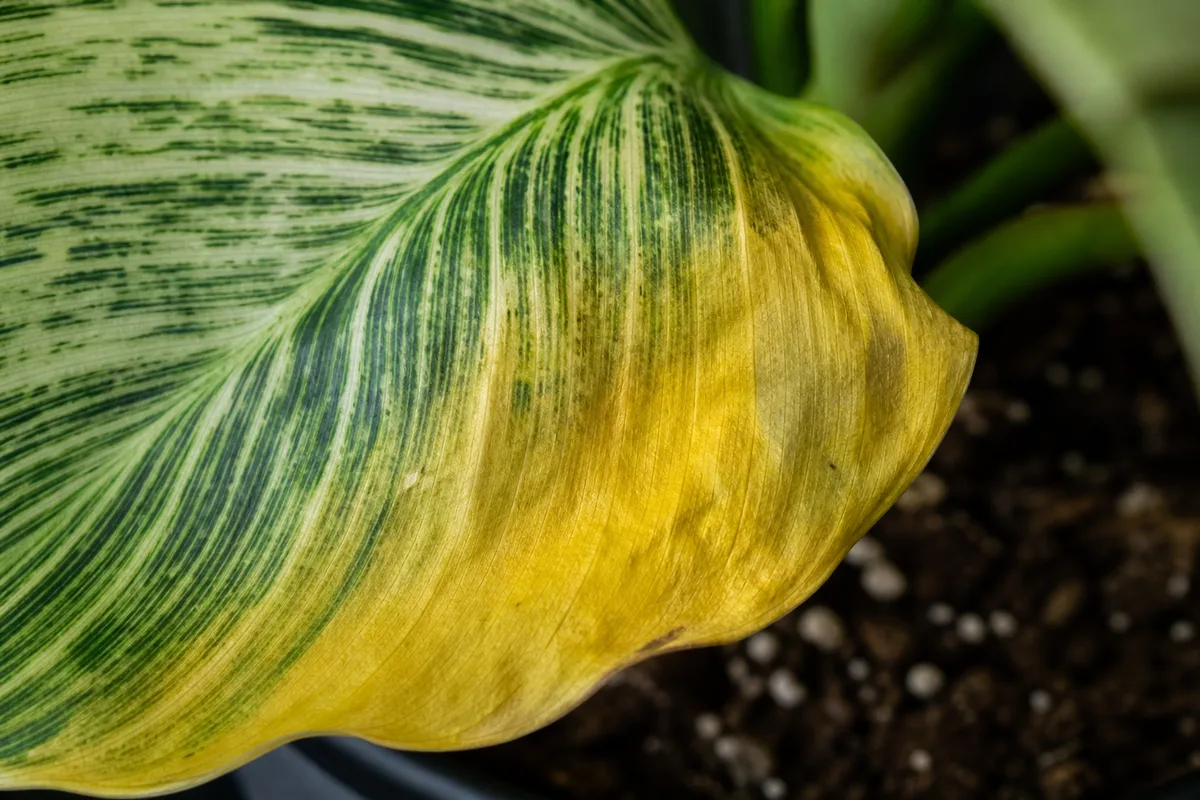
Too much light looks like bleached or tan patches on sun-facing stripes, crisp brown edges on white tissue, or sudden damage after a move. Acclimate over one to two weeks when shifting a nursery plant into a brighter room. Change light first; do not stack fertilizer, pot size, and watering changes in the same week.
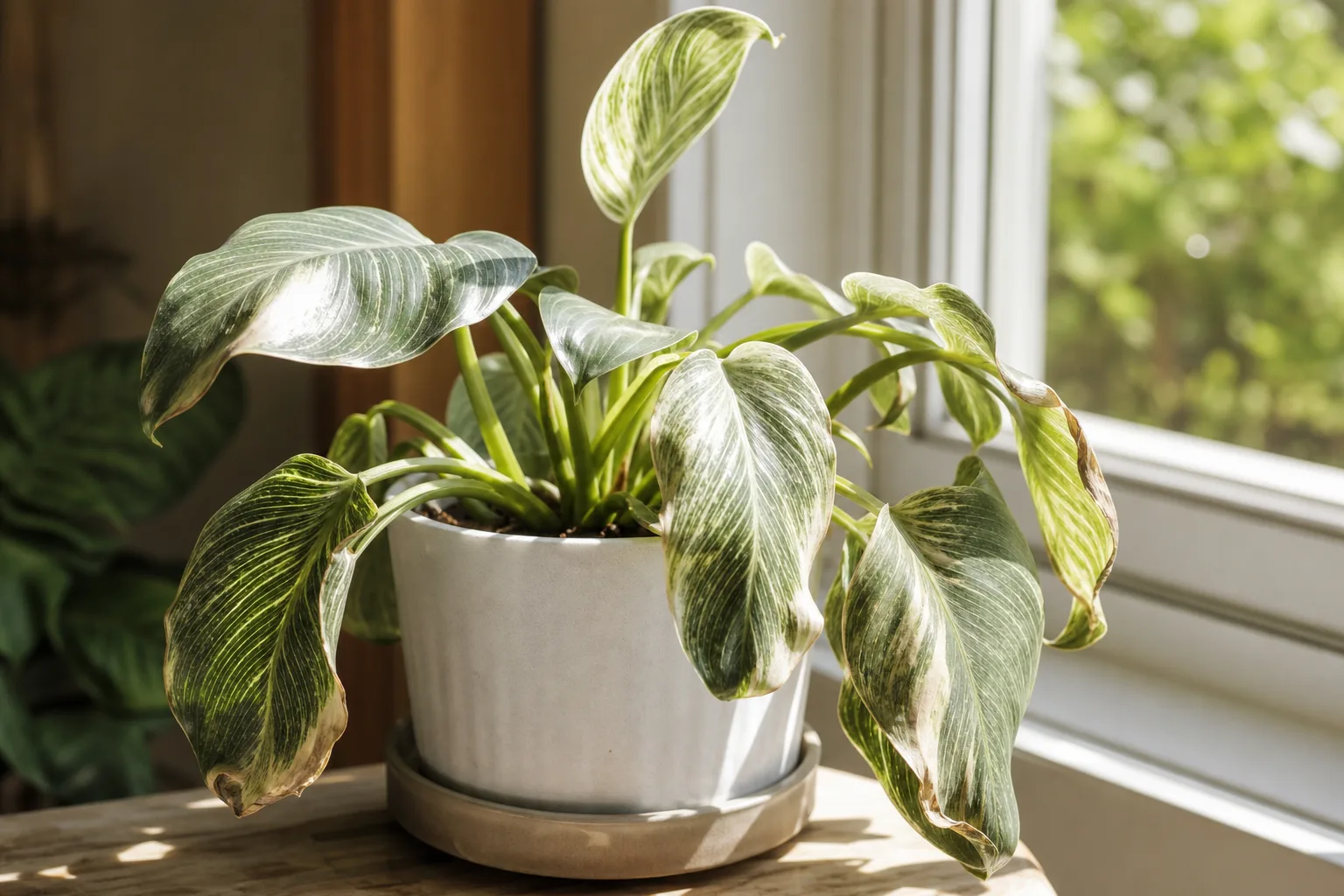
Pale stripes scorch before solid green tissue — tan patches on white sectors usually mean the plant sat in hot direct beams.
Judge light by new growth, not by how bright the room feels to your eyes. Crisp striping, normal leaf size, and short internodes mean the spot is working.
Watering by Check, Not Calendar
Birkin wants moist, well-drained conditions — not a permanently wet peat brick. (NC State Extension) RHS puts the practical rule plainly: let the compost dry out slightly between waterings, and never leave plants standing in water, because saturated mix leads to root rot. (RHS)
The reliable home method is check-based. Insert a finger to the second knuckle or use a wooden chopstick. When the top 3–5 cm feel dry and the pot is lighter, water thoroughly until runoff exits the drainage holes, then empty the saucer within about 30 minutes. In active growth under bright filtered light, that often lands around every 7–10 days; in cooler, dimmer winter conditions, 10–14 days is a common starting range. Treat those numbers as guesses to verify, not commandments.
Water fully when you water. Daily sips keep the crown damp while the center stays unpredictably wet or dry. Birkin roots need a real wet-dry cycle: saturation, drainage, then oxygen returning to pore spaces. Missouri Botanical Garden explains why soggy soil fails at the root level — roots cannot absorb the oxygen they need, then decay and stop supplying the plant even while the pot still feels wet.
UConn’s guidance is the same balance: keep mix consistently moist but not wet, and make sure excess water drains, because sitting in water causes root injury and yellowing leaves. (UConn) If check-based watering still feels fuzzy in general, pair this section with how to water indoor plants the right way.
Seasonal Rhythm and Wet-Soil Wilt
In winter, lean drier. Growth slows, transpiration drops, and a wet pot against a cold window is a root-rot setup. Do not stop watering entirely — verify dryness first, then soak. After repotting, expect slower dry-down for two to four weeks because extra unused mix holds water the roots have not yet colonized.
In our 14 cm plastic pots with the LeafyPixels mix below, dry-down after a thorough soak typically takes about 6–9 days beside an east window in warm weather, and 10–14+ days in a cooler interior spot. If your pot stays heavy past about 10 days in average home conditions, improve light or refresh a dense mix before you keep watering on the old calendar.
Wilting on wet soil is a diagnostic emergency, not a thirst signal. Soft leaves, yellowing, and a sour smell usually mean roots are already failing. Stop watering, confirm drainage, improve light if the plant has been dim, and inspect roots if yellowing spreads — see overwatering and root rot.
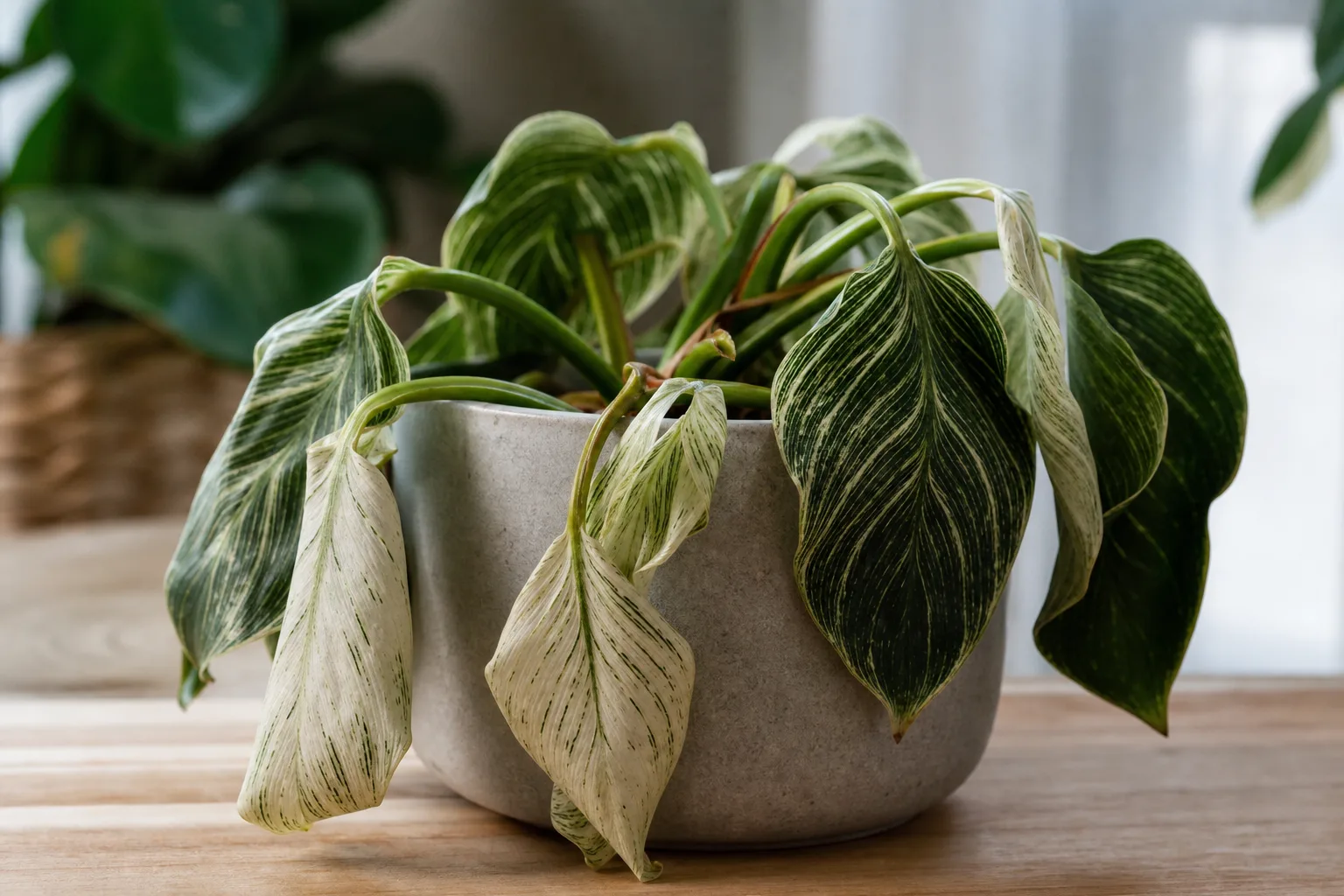
Wilt with a heavy, wet pot is not a request for more water — check roots and drainage before you pour again.
Soil, Pot, and Drainage (LeafyPixels Mix)
As an aroid self-header, Birkin needs a mix that holds some moisture without collapsing into an oxygen-poor paste. NC State lists loam and sand textures with good drainage, moist but not waterlogged, and slightly acidic to neutral pH. (NC State Extension) RHS prefers loose, free-draining compost that is slightly acidic, and warns against oversized pots that keep compost wet too long. (RHS) UConn recommends loose, well-drained, organic-rich mixes such as peat-perlite blends. (UConn)
A practical LeafyPixels recipe we use for tabletop Birkins: standard indoor potting mix plus about 20–25% perlite and about 10% orchid bark, targeting roughly pH 5.5–7.0. This is a site-tested starting blend, not a lab-certified formula — expect the dry-down timing above in similar pots and light. When you water, liquid should enter quickly and exit the drainage holes within seconds, not pool on the surface. Dense retail peat that stays cool and wet at depth for more than about 10 days in average home conditions is a soil problem disguised as a watering problem — fix the mix via the Birkin soil guide rather than only stretching the calendar.
Drainage holes are non-negotiable. Terracotta forgives slight overwatering by drying faster; plastic retains moisture longer and suits growers who underwater. Go up only one pot size at repotting. An oversized pot of unused mix is one of the fastest post-repot routes to rot on a slow root system.
Humidity, Temperature, and Safe Placement
NC State targets 65–85°F (about 18–29°C) and 50–60% humidity, notes Birkin is not frost-tolerant, and flags cold drafts as a problem. Brown leaf tips often signal low humidity. (NC State Extension) RHS says typical room temperatures at least 15°C (59°F) are fine for philodendrons if you avoid hot radiators and cold draughts, and notes they usually tolerate average home humidity even though they prefer moderate humidity. (RHS) Clemson’s ideal day/night band for philodendrons is warm — roughly 75–85°F days and 65–70°F nights. (Clemson HGIC)
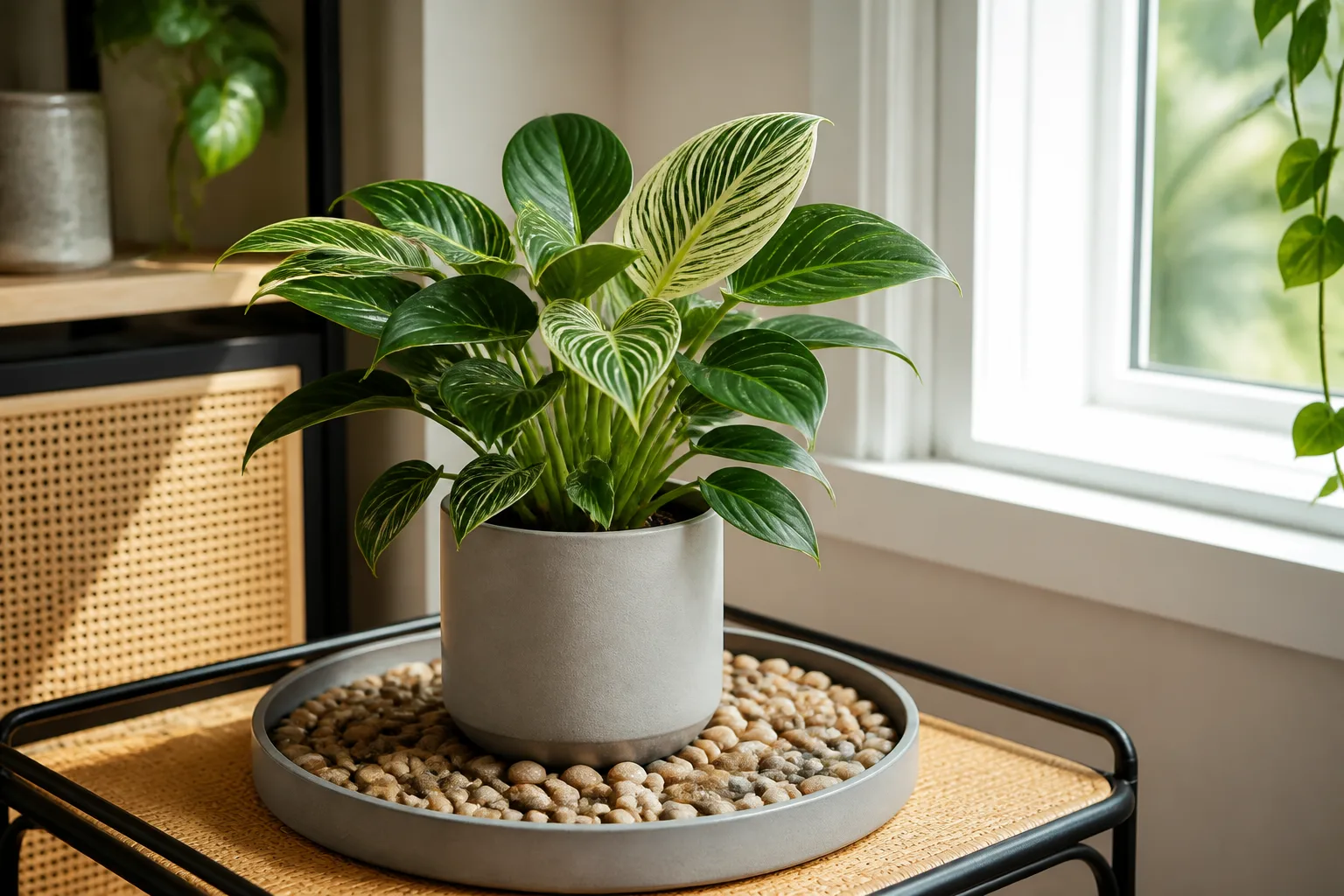
Most heated homes already sit in Birkin’s temperature band. Dry winter air is the harder variable. A pebble tray (pot above water, not in it), plant grouping, or a small humidifier works better than misting rituals that spike humidity for minutes and leave wet foliage overnight. Keep Birkin away from AC vents and icy glass in winter.
Fertilizer, Salt Flush, Repotting, and Propagation
Birkin is not a heavy feeder in the way some large-leaved philodendrons are sold. A workable schedule is every 4–6 weeks from spring through early fall with a balanced liquid houseplant fertilizer at half label strength, applied to already-moist soil. RHS recommends feeding philodendrons during the growing season with a general houseplant fertiliser. (RHS) UConn favors more frequent half-strength feeding over one strong dose, and stresses fertilizing moist soil to avoid root injury. (UConn) Pause feeding in winter, after repotting, and while the plant recovers from pests or root damage. Fertilizer will not force stripes back onto a reverting meristem.
Salt buildup shows as crusty white residue on the mix surface or pot rim, plus crispy brown tips that do not match a dry-air pattern alone. Every two to three months during active feeding, flush the pot with plain room-temperature water until a generous amount exits the drainage holes, then empty the saucer. See fertilizer burn and salt build-up if tips keep browning after you have fixed humidity.
Repot roughly every 1–2 years, or when roots circle drainage holes, water runs straight through a shrunken root ball, or the plant topples. Spring is best. RHS notes philodendrons can often stay in the original container for a couple of years. (RHS) Full technique lives in the Birkin repotting guide.
Propagation is by stem cuttings that include at least one node. (NC State Extension) Root in water, moist sphagnum, or a perlite-heavy mix, then move to soil once roots are a few centimeters long. Chimeric variegation in the cutting is not guaranteed to match the parent. Details: Birkin propagation.
Quarantine After Shipping and Purchase Checks
Do not repot on day one unless the mix is failing or pests are obvious. Quarantine a new Birkin away from your collection for one to two weeks. Check leaf undersides and petiole joints for mealybugs, scale, aphids, and spider mites — the pests NC State and Clemson flag for philodendrons. Learn how fast the pot dries in your room before you change soil, pot size, or fertilizer. Soft crown tissue, sour-smelling mix, or sticky residue are bigger red flags than one cosmetic old-leaf scar.
Managing Variegation Reversion
Reversion is the Birkin care topic shop tags never explain. Because striping depends on unstable chimeric tissue, any Birkin can produce non-variegated leaves, even with excellent care. Low light accelerates greening. Overwatering, root damage, cold stress, and physical damage to the growing tip can also shift which cell line dominates. Sometimes a solid leaf appears after months of perfect striping because meristem cell division is not fully predictable.
Normal variation: stripe width and cream tone differ leaf to leaf, but each new leaf still shows some striping. True reversion: two or more consecutive leaves emerge solid green or reddish-green like Rojo Congo, often with warmer petiole color and no returning pinstripes. Once a tip switches to the non-variegated line, later leaves from that stem usually stay solid unless the meristem randomly re-expresses the mutation — which you cannot count on.
Do not prune every oddly pale immature leaf. Give new leaves time to harden and gain contrast. Prune for reversion only after the pattern of successive solid leaves is clear.
Pruning Reverted Growth
When you identify a reverted stem, prune it back to the last node that produced clearly striped foliage with clean tools. If the whole plant has reverted, you are choosing among growing it as a solid Rojo Congo–type plant, replacing it, or propagating any remaining striped section. There is no guarantee pruning restores pinstripes, but leaving reverted tissue to dominate increases the odds the meristem stays solid. Prevention is partial: bright filtered light, stable watering, prompt removal of reverted shoots, and careful handling of the crown. Manage expectations — Birkin is beautiful and genetically temperamental. Technique detail: Birkin pruning.
Toxicity to Pets and People
Philodendrons are toxic if chewed or eaten. Clemson states that all parts contain calcium oxalate crystals that cause burning and irritation of the mouth, lips, and tongue, plus excessive drooling, vomiting, and difficulty swallowing, and advises keeping plants away from pets and young children. (Clemson HGIC) NC State lists Birkin as a problem for cats, dogs, and children, names calcium oxalate crystals as the toxic principle, and notes contact dermatitis risk from sap. (NC State Extension) The genus is listed as toxic to cats and dogs by the ASPCA. UF/IFAS also flags philodendrons among common poisonous houseplants for pets. RHS notes philodendrons are poisonous and that sap can irritate skin. (RHS)
Practical placement beats panic. Elevate Birkin on a desk or shelf pets cannot reach. If ingestion is suspected, contact your veterinarian and ASPCA Animal Poison Control at (888) 426-4435. Wear gloves when pruning if sap bothers your skin, and wash hands before touching your face or food. For floor-level foliage in pet homes, start with pet-safe houseplants instead of leaving Birkin where cats or dogs chew.
Common Problems with Visual Cues
Most Birkin problems are environmental. Diagnostic order: soil moisture first, then light, then pests, then recent changes (move, repot, heating season). Fix the condition before cosmetic pruning.
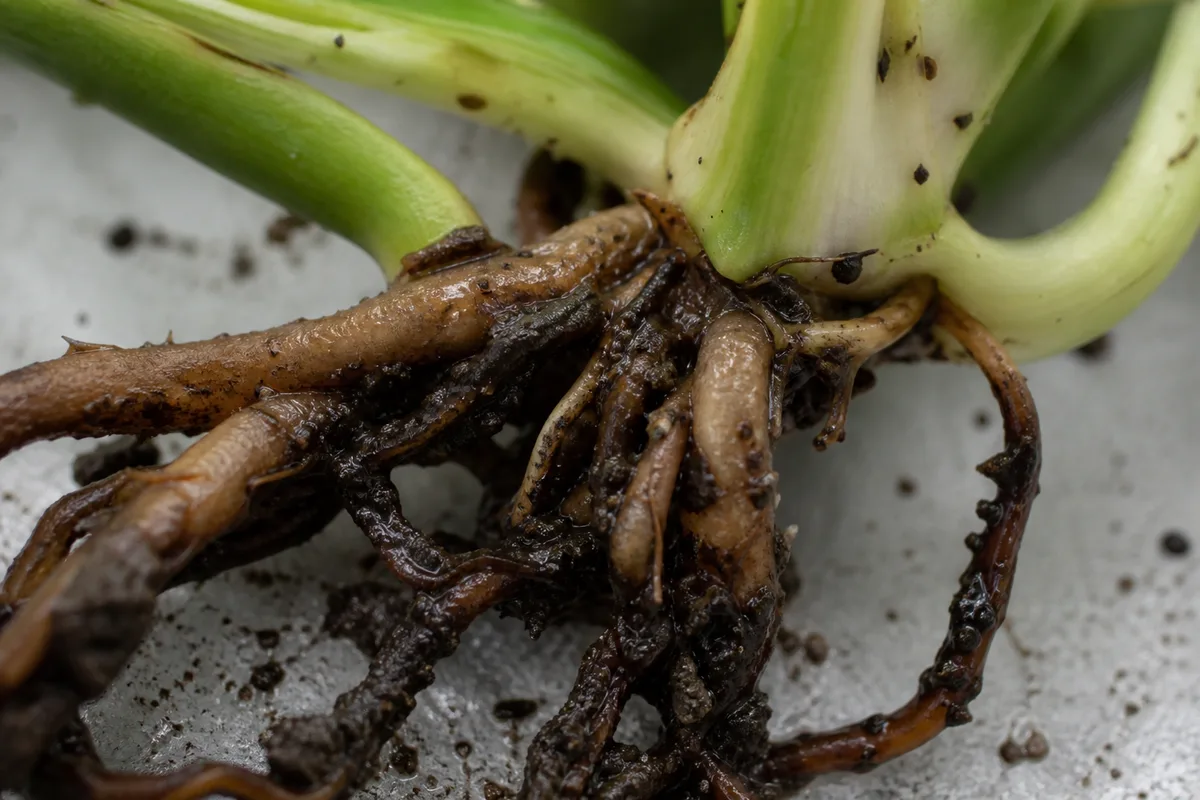
Yellow leaves often mean overwatering, root stress, or natural aging of the oldest leaf. Spreading yellow on soft stems with wet mix points to overwatering or root rot. Uniform dull yellowing on a bone-dry pot suggests underwatering or extreme light stress. See yellow leaves.
Brown tips usually track low humidity, inconsistent watering, salt buildup, or hot dry airflow. Raise humidity toward 50–60%, water on a check rhythm, and flush the pot periodically with plain water.
Fading variegation without full reversion usually means insufficient light. Move to brighter filtered light and watch the next three leaves. If leaves keep arriving solid, treat it as reversion and prune.
Leggy or small new leaves mean the plant is reaching for light even if the room looks bright to you. Shorten the distance to the window or add a grow light; do not compensate with extra water or fertilizer. See leggy growth.
Pests to monitor include spider mites, mealybugs, aphids, and scale. (NC State Extension) (Clemson HGIC) Isolate early, wipe or rinse foliage, and follow with insecticidal soap through a couple of weekly cycles. Sticky residue and fine webbing are early cues — check undersides weekly after shipping.
Root rot presents as wilt on wet soil, mushy black roots, and a sour smell. Unpot, cut away rot, repot in fresh airy mix, and resume careful watering only after the plant stabilizes. Prevention through drainage and check-before-water habits is far easier than rescue.
Related Birkin Topic and Problem Guides
Use this page when you want the full Birkin framework in one read. Use the Philodendron Birkin care hub when one variable needs step-by-step depth.
- Light, watering, soil, fertilizer, repotting, propagation, pruning
- Problems: overwatering, yellow leaves, root rot, not enough light, pale leaves
- Related: how to water indoor plants the right way, Philodendron Brasil care, pet-safe houseplants
Conclusion
Good Philodendron Birkin care is mostly restraint plus good light. Give the plant bright filtered exposure so pinstripes stay crisp, water only after the top mix dries, keep roots in an airy draining pot, and accept that chimeric variegation can revert even when you do everything right. Skip the moss pole, keep the plant elevated away from pets, and use new leaves — not calendar anxiety — as your weekly report card.
When one variable needs depth, open the matching Birkin hub topic or problem guide instead of changing light, water, pot size, and fertilizer in the same weekend.