Philodendron Rojo Congo Care Guide: Self-Heading Growth
Philodendron 'Rojo Congo'
Philodendron Rojo Congo needs medium to bright indirect light, watering when top 3–5 cm dries, and no climbing support. Toxic to pets.
Philodendron Rojo Congo Care Guide: Self-Heading Growth
Start with wateringThe most common care mistake for Philodendron Rojo CongoWatering guide →Philodendron Rojo Congo care essentials
Light
Water
Every 7–10 days in summer - allow top 3–5 cm to dry. Every 10–14 days in winter.
Soil
Standard potting mix + 20–25 % perlite. Well-draining. pH 5.5–6.5.
Humidity
Moderate humidity (50–60 %)
Temperature
18°C to 29°C (65–85°F)
Fertilizer
Feed lightly during active growth.
About Philodendron Rojo Congo
Philodendron Rojo Congo has a upright growth habit.
| Detail | Information |
|---|---|
| Growth habit | Upright |
| Scientific name | Philodendron 'Rojo Congo' |
Philodendron Rojo Congo Care Guide: Self-Heading Growth
Philodendron Rojo Congo is the houseplant people buy for burgundy-red petioles and stems against large glossy green leaves — then wonder why it looks like a plain philodendron six months later in a dim corner. The care itself is not exotic. It is a forgiving self-heading hybrid with ordinary aroid needs for drainage, warmth, and check-first watering. What makes Rojo Congo different is architecture: it grows as an upright rosette, not a vine, and the red colour lives on stems and petioles, not on unstable leaf variegation.
This guide covers what Philodendron ‘Rojo Congo’ actually is, how it differs from Imperial Red and climbing erubescens cultivars like Pink Princess, and the complete indoor routine for light, water, soil, humidity, fertilizer, propagation, and repotting. You will also learn what to inspect before you buy, how to keep red structural colour from fading, and when to open the dedicated Philodendron Rojo Congo light guide or watering guide instead of guessing.
What Philodendron Rojo Congo Actually Is
Philodendron Rojo Congo is a cultivated hybrid sold as Philodendron ‘Rojo Congo’ — a self-heading form in the Philodendron erubescens breeding line developed for interior foliage production in Florida. The parent species, Philodendron erubescens (blushing or red-leaf philodendron), is a climbing tropical perennial in the arum family (Araceae) native to Colombia. In rainforest habitat it scrambles up trees; indoors, cultivars in the erubescens group have been selected for compact, colourful foliage instead of height.
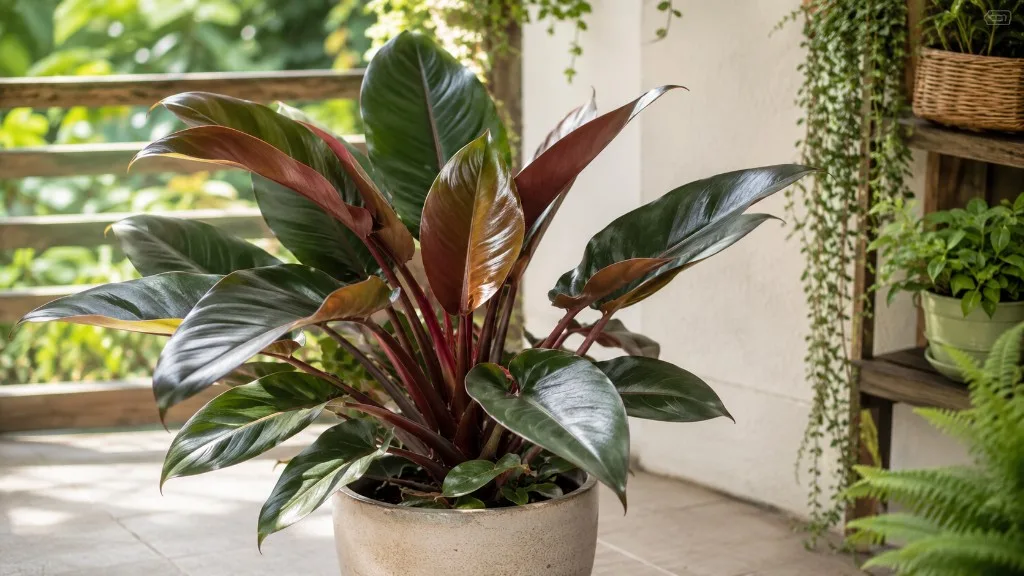
Rojo Congo was bred for upright, non-vining habit with wine-red petioles and stems and large, dark glossy green leaves. Unlike variegated collectors’ plants, the show is structural — the red runs through petioles and nodes, not through pink sectors in the leaf blade. That makes Rojo Congo easier to maintain than Pink Princess for owners who want bold colour without variegation instability, but it also means light still matters: red tones dull toward green-brown when the plant is kept in deep shade.
Philodendron erubescens and the ‘Rojo Congo’ Cultivar
Botanically, Rojo Congo is not a separate species. It is a named hybrid cultivar in the erubescens group alongside Imperial Red, Prince of Orange, and Red Emerald. The NC State Extension profile lists related cultivars including ‘Prince of Orange’ as a non-vining, compact, bushy type with leaves that emerge orange and mature deep green — the same self-heading architecture Rojo Congo inherits, but with red stem colour instead of orange new growth.
Indoor P. erubescens typically reaches about three feet tall and sixteen inches wide in cultivation according to NC State, though individual Rojo Congo specimens in bright light can produce substantially larger leaves over several years. Mature leaves are heart-shaped to oval, glossy, and deep green; petioles stay burgundy-red when light is adequate. Indoor plants rarely flower — the species’ spadix and spathe are decorative in botanical collections, not a home-care goal.
Self-Heading Growth Habit Indoors
Rojo Congo is self-heading — it grows from a central crown as an upright rosette and does not climb. You do not need a moss pole, trellis, or coir stake. In fact, treating it like a vining Pink Princess — searching for nodes to pin up — misses how this plant is meant to sit on a floor or wide tabletop with leaves arching outward.
Give it space for the canopy to spread without crowding walls or shelves. Leaves that scrape drywall bruise and brown; cramped placement also blocks light from reaching the crown, which is where you judge whether stem colour is holding. Rotate the pot a quarter turn weekly so the rosette stays balanced — plant leaning on Philodendron Rojo Congo is almost always uneven light, not weak roots.
How Rojo Congo Differs from Imperial Red and Prince of Orange
The erubescens hybrid line shares warm-temperature preferences, calcium oxalate toxicity, and basic aroid soil needs. Cultivar choice matters because growth habit and colour placement differ.
Rojo Congo vs Imperial Red
Imperial Red (Philodendron ‘Imperial Red’) is the comparison shoppers ask about most. Both are self-heading Florida hybrids with red in the lineage. The practical difference: Imperial Red pushes burgundy-red on new leaves that often fade toward green as they mature, while Rojo Congo keeps darker mature foliage with red structural colour on stems and petioles rather than on the leaf face. If you want the red on the architecture — the petioles you see from across the room — Rojo Congo is the better match. If you want new leaves to emerge red and change as they age, Imperial Red delivers that show.
Both need medium to bright indirect light; neither stays colourful in a dark hallway. Neither is a climber.
Rojo Congo vs Climbing erubescens Cultivars
Pink Princess, Red Emerald, and species-type P. erubescens are climbers — they benefit from moss poles and produce longer internodes when unsupported. Rojo Congo does not. Putting Rojo Congo on a pole will not turn it into a vine; it will simply look awkward with leaves stacked vertically.
Prince of Orange shares the self-heading habit but displays orange-to-copper new growth that matures green, without Rojo Congo’s persistent burgundy petioles. Moonlight and other non-erubescens hybrids sit outside this comparison — different parentage, different care quirks.
Quick Care Summary for Philodendron Rojo Congo
Light: Medium to bright indirect light; stem colour dulls in low light. Water: When the top 3–5 cm of mix feels dry — typically every 7–10 days in active summer growth and every 10–14 days in cooler winter for a standard indoor pot with drainage. Soil: Standard potting mix plus 20–25% perlite; well-draining; pH 5.5–6.5. Humidity: Moderate, around 50–60%. Temperature: 18–29°C (65–85°F); protect from cold drafts below about 15°C (59°F). Fertilizer: Monthly balanced liquid at half strength during active growth; pause in winter and after repotting. Propagation: Division at repotting when multiple crowns are present. Repotting: Every 1–2 years in spring when roots crowd the pot. Support: None — no moss pole. Toxicity: Toxic to pets and humans if chewed — calcium oxalate crystals.
Light and Red Stem Colour
Light is the lever that keeps Rojo Congo looking like Rojo Congo. The RHS philodendron growing guide recommends bright filtered light and warns that direct sun can scorch foliage — advice that applies to this hybrid’s large glossy leaves. NC State notes P. erubescens prefers partial shade and 65–85°F indoors, with protection from cold drafts and direct sun.
Place Rojo Congo where medium to bright indirect light hits the crown so new leaves stay firm and petioles keep their burgundy tone. An east-facing window, or several feet back from filtered south or west glass, is a reliable starting point. Harsh midday sun bleaches leaves; deep shade dulls red petioles toward green-brown before growth slows enough to alarm you.
Best Window Placement and Warning Signs
Judge success on the last two new leaves and the petioles attached to them, not on older foliage produced under different conditions. Too little light: wider internodes, smaller leaves, faded stem colour, slow growth on Philodendron Rojo Congo. Too much light: bleached patches, crispy brown edges, washed-out green leaves. If stems lose red tone but growth is otherwise healthy, increase filtered light before increasing fertilizer — nutrients do not restore pigment in shade.
Full window placement, grow-light specs, and scorch recovery live in the Philodendron Rojo Congo light guide.
Watering Philodendron Rojo Congo
Philodendrons fail indoors more often from overwatering in low light than from drought. Rojo Congo’s self-heading rosette shades the pot rim, so the surface can look dry while the center stays damp — another reason to check depth, not appearance alone.
Water when the top 3–5 cm of potting mix feels dry, roughly every 7–10 days during active summer growth and every 10–14 days in cooler, dimmer winter for a typical indoor container. Clemson HGIC recommends allowing the upper soil to dry between waterings for philodendron indoors. Soak until water runs from drainage holes, then empty the saucer within thirty minutes.
How to Check Dryness Before You Water
Insert a finger to the second knuckle, push a dry bamboo chopstick into the mix for ten seconds, or lift the pot — dry soil is noticeably lighter. Avoid daily dribbles that keep the surface wet without hydrating roots deeply, and avoid calendar watering while the plant sits in a cold, dim room using almost no moisture.
If leaves yellow while the mix stays wet, suspect root rot on Philodendron Rojo Congo before you assume hunger. If leaves droop on very dry mix, the first action is a thorough soak and a schedule check — see drooping leaves on Philodendron Rojo Congo. Step-by-step dry-down workflow: Philodendron Rojo Congo watering guide.
Soil, Pots, and Drainage
Use standard potting mix plus 20–25% perlite for well-draining, slightly acidic conditions — pH 5.5–6.5 matches what most peat-based mixes already provide. NC State lists P. erubescens as preferring moist, well-drained soil rich in organic matter; the indoor translation is airy mix, not heavy straight peat that compacts into a wet brick.
Drainage holes are mandatory. Cachepots without drainage are where Rojo Congo develops chronic root stress. Terracotta dries faster; plastic holds moisture longer — choose based on your watering habits, not aesthetics alone. Repot every one to two years or when roots circle the pot; go up one pot size at a time. An oversized pot holds water the root system cannot use, especially in winter.
Recipe detail, pH notes, and wrong-mix warning signs: Philodendron Rojo Congo soil guide.
Humidity and Temperature Indoors
Rojo Congo prefers moderate humidity around 50–60% and temperatures in the 65–85°F (18–29°C) range NC State recommends for P. erubescens. Average indoor humidity near 50% is often acceptable when light and watering are correct; below that, watch for brown tips on Philodendron Rojo Congo — especially in winter with forced-air heat.
Raise humidity with a small humidifier or grouped plants rather than misting alone — wet foliage in stagnant air invites fungal spotting. Keep the plant away from cold window glass, radiators, and direct AC blasts; philodendron roots lose function in chilled wet mix. Good air circulation in the room matters as much as the humidity percentage on a meter.
Fertilizer During Active Growth
Fertilizer supports leaf size and frequency once light and water are right — it does not create red pigment. Feed monthly in spring and summer with balanced liquid fertilizer diluted to half strength on already-moist soil. Skip feeding in winter, after repotting, during pest recovery, or whenever the plant yellows on wet mix.
Never fertilize a dry root ball; salts burn aroid roots quickly. If white crust builds on the mix surface, flush with plain water and pause feeding for a month. Full NPK guidance and burn recovery: Philodendron Rojo Congo fertilizer guide.
Propagation and Repotting Basics
The reliable home propagation method for self-heading Rojo Congo is division at repotting when the plant has multiple crowns or offset shoots with their own roots. Stem cuttings work on erubescens hybrids, but division is simpler for beginners who already planned a repot.
Repot every 1–2 years in early spring when roots emerge from drainage holes or water runs straight through old mix. Slide the plant out, tease circling roots gently, and move to a pot one size larger with fresh mix. Water lightly after repotting and keep the plant in bright indirect light without direct sun for a week while roots heal. Do not repot on day one after purchase unless the mix is clearly failing or pests are present.
Step-by-step division and post-repot care: Philodendron Rojo Congo propagation guide and Philodendron Rojo Congo repotting guide.
Buying Rojo Congo: What to Inspect
Choose plants with firm burgundy petioles along several nodes — red should run through stems, not appear on one stressed leaf at the tip. Avoid pots with limp petioles, several yellowing base leaves, or sour-smelling wet peat in a dim nursery corner; that combination predicts early root rot.
Confirm the label says Rojo Congo, not Imperial Red — nurseries sometimes conflate self-heading red hybrids. Imperial Red shows burgundy on new leaves; Rojo Congo shows red on petioles and stems with darker mature leaf faces. Active central growth and clean leaf undersides are baseline health checks before you pay floor-plant prices.
Pet Toxicity and Safe Placement
Philodendron Rojo Congo is toxic to cats and dogs. Like other members of Araceae, it contains insoluble calcium oxalate crystals that cause oral irritation, drooling, pawing at the mouth, and difficulty swallowing if chewed. The ASPCA lists philodendron as toxic to pets; severity is generally moderate, but individual reactions vary.
Place Rojo Congo out of reach — elevated shelves, wide planters away from curious dogs, or rooms pets do not access. Floor pots in pet households need safer alternatives. If ingestion is suspected, contact ASPCA Animal Poison Control at 888-426-4435 (US) and your veterinarian promptly. Wear gloves during pruning if sap contact irritates your skin.
Common Problems and Real Fixes
Most Rojo Congo problems trace to moisture in the pot first, then light, then pests, then fertilizer salts. The diagnostic order saves months of random tweaks.
Yellow leaves on Philodendron Rojo Congo on wet mix usually mean overwatering or compacted soil — check roots before you feed. Yellow on very dry mix means underwatering or past root loss. Faded stem colour means increase filtered light, not more water. Brown tips often mean low humidity, salt buildup, or direct sun — flush the pot and review placement. Mealybugs hide in leaf axils; isolate and treat with alcohol swabs plus follow-up soap sprays.
NC State notes P. erubescens is susceptible to spider mites, mealybugs, aphids, and scale, and that overwatering causes root rot while leaf spot can follow overhead watering — water at the soil line, not over the crown. Fix conditions first, then trim damaged leaves.
First Month After Bringing It Home
Do not repot Philodendron Rojo Congo on day one unless the mix is clearly failing or pests are obvious. Quarantine new plants away from your collection for two weeks, learn how fast the pot dries in your light, and keep care boring while the plant adjusts. Moving it between windows, repotting, and feeding all in week one stacks stress that shows up as yellow base leaves — not mysterious bad luck.
Watch the next two leaves after placement. If petioles stay burgundy and leaves emerge firm, your light and water baseline is working. If stems green out or growth stalls, adjust light before anything else.
Conclusion
Philodendron Rojo Congo is a self-heading erubescens hybrid grown for burgundy petioles and stems against large glossy green leaves — not a vine, not a variegation lottery, and not a low-light foliage plant. Give it medium to bright indirect light, check-first watering when the top 3–5 cm dries, well-draining mix with perlite, moderate humidity, warm stable temperatures, and no moss pole. Feed lightly in the growing season, divide at repotting when crowns allow, and inspect stems — not just one pretty leaf — before you buy.
It is easier than Pink Princess because colour sits on structure rather than unstable variegation. It is harder than a pothos if you keep it in a dim corner and water on autopilot. Read the next two leaves, fix light before fertilizer, and use the dedicated cluster guides when one topic needs full depth. That is how Rojo Congo stays red in a real home.
When to use this page vs other Philodendron Rojo Congo guides
- This overview — Start here for identity, self-heading habit, Imperial Red comparison, quick-care summary, buying checks, and pet safety.
- Philodendron Rojo Congo light guide — Window placement, grow lights, and scorch recovery when stem colour or leaf size is the issue.
- Philodendron Rojo Congo watering guide — Dry-down checks, seasonal rhythm, and over- vs underwatering diagnosis.
- Philodendron Rojo Congo soil guide — Mix recipes, drainage, and repot timing tied to root health.
- Philodendron Rojo Congo problems hub — Symptom-first path when you already know something is wrong.
Related Philodendron Rojo Congo guides
- Philodendron Rojo Congo watering
- Philodendron Rojo Congo light
- Philodendron Rojo Congo soil
- Philodendron Rojo Congo fertilizer
- Philodendron Rojo Congo propagation
- Philodendron Rojo Congo repotting
- Philodendron Rojo Congo pruning
- Yellow Leaves on Philodendron Rojo Congo
- Root Rot on Philodendron Rojo Congo
- Brown Tips on Philodendron Rojo Congo
How to care for Philodendron Rojo Congo?
When should you water Philodendron Rojo Congo?
Every 7–10 days in summer - allow top 3–5 cm to dry. Every 10–14 days in winter.
- Check top 2 inches - Every 7–10 days in summer - allow top 3–5 cm to dry.
- Drain excess water - Empty the saucer after watering so the roots are not sitting in standing water.
What soil works best for Philodendron Rojo Congo?
Standard potting mix + 20–25 % perlite. Well-draining. pH 5.5–6.5.
- Well-draining mix - Well-draining.
Grower notes for Philodendron Rojo Congo
Rojo Congo colour note
The show is on the stems and petioles. If red fades toward green-brown, increase filtered light before increasing fertilizer.
Self-heading architecture
Rojo Congo does not climb. Grow it as a floor or tabletop rosette with space for leaves to arch outward without crowding walls.
Buying Rojo Congo
Choose plants with firm burgundy petioles and active central growth. Wet peat in a dim nursery corner is a common source of early root rot.
What matters most with Philodendron Rojo Congo
Philodendron Rojo Congo is easiest to understand by its growth habit. No moss pole — upright self-heading hybrid. In practice: Medium to bright indirect light; colour dulls in low light. Pair with Standard potting mix + 20–25 % perlite. Well-draining. pH 5.5–6.5, and avoid changing water, pot size, and placement all at once.
Best placement in a real home
Place Rojo Congo where medium to bright indirect light hits the crown so new leaves stay firm and stems keep their red tone. Harsh direct sun can bleach leaves; deep shade dulls the red architecture. Every 7–10 days in summer - allow top 3–5 cm to dry. Every 10–14 days in winter. Humidity target: Moderate humidity (50–60 %). Temperature comfort zone: 18°C to 29°C (65–85°F).
Before you buy this plant
Inspect stem colour along several nodes — the red should run through petioles, not appear only on one stressed leaf. Avoid pots with limp petioles or several yellowing base leaves.
First month after bringing it home
Do not repot Philodendron Rojo Congo on day one unless the mix is failing or pests are obvious. Quarantine it, learn dry-down speed, and keep care boring while it adjusts.
Safety note for Philodendron Rojo Congo
Philodendron Rojo Congo is not safe for pets or children who chew plants. Use elevated placement or choose a non-toxic alternative for floor pots.
Is it pet safe?
Philodendron Rojo Congo is toxic to cats and dogs.
Toxic - calcium oxalate crystals.
Watering Philodendron Rojo Congo
Every 7–10 days in summer - allow top 3–5 cm to dry. Every 10–14 days in winter.
Soil & potting for Philodendron Rojo Congo
Standard potting mix + 20–25 % perlite. Well-draining. pH 5.5–6.5.
Humidity & temperature for Philodendron Rojo Congo
Philodendron Rojo Congo prefers moderate humidity (50–60 %), though normal home humidity is usually fine. Keep temperatures around 18°C to 29°C (65–85°F).
| Detail | Information |
|---|---|
| Humidity | Moderate humidity (50–60 %) - normal home humidity is fine. |
| Ideal temperature | 18°C to 29°C (65–85°F) |
Fertilizer & pruning for Philodendron Rojo Congo
Use feed lightly during active growth. for Philodendron Rojo Congo.
| Detail | Information |
|---|---|
| Fertilizer type | Feed lightly during active growth. |