Philodendron Gloriosum Care Guide: Light, Water, Soil
Learn Philodendron gloriosum care: crawler habit, bright indirect light, watering the rhizome tip, chunky soil in a wide shallow pot, and pet safety.
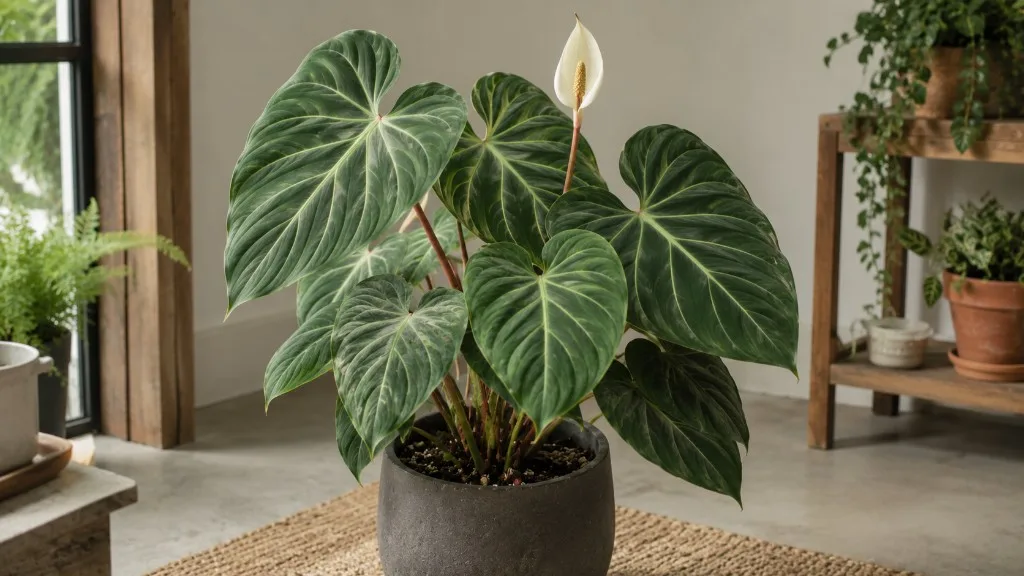
Philodendron gloriosum is the velvet-leaved aroid that punishes one category error faster than almost any other philodendron on the shelf: treating a terrestrial crawler like a climbing vine. Get the habit right — wide shallow pot, rhizome tip above the mix, bright filtered light — and the plant rewards you with oversized heart leaves and pale veins that look painted on. Get it wrong and you get stalled unfurls, soft rhizome tissue, and a moss pole that solves nothing.
This guide covers habit-critical indoor Philodendron gloriosum care: light for vein contrast, watering checks at the growth front, chunky soil geometry, humidity, feeding, repotting and propagation readiness, pet toxicity, and the problems that show up in real homes. It is an overview with the rules that decide whether the next leaf succeeds — not a keyword map of every hub page.
Quick Philodendron Gloriosum Care Snapshot
For a healthy indoor Gloriosum, give bright, filtered indirect light, water when the top 3–5 cm (1–2 inches) of mix feel dry at the leading edge of the rhizome, use a chunky aroid mix in a wide shallow pot with drainage, keep temperatures roughly 18–30°C (65–86°F) with humidity ideally near 60–70%, and fertilize lightly only during active growth. Keep the active rhizome tip on or just above the mix line, and keep the plant out of reach of pets and children.
| Care factor | Baseline target | Deeper guide |
|---|---|---|
| Habit / pot | Wide shallow trough; tip above mix; no moss pole | Soil guide |
| Light | Bright filtered; protect velvet from harsh sun | Light guide |
| Water | Top 3–5 cm dry at leading edge, then soak and drain | Watering guide |
| Soil | Equal parts potting mix, perlite, medium orchid bark | Soil guide |
| Feed | Half-strength liquid monthly in active growth | Fertilizer guide |
Philodendron gloriosum André belongs to the arum family (Araceae). Kew’s Plants of the World Online accepts the name and lists the native range as Colombia in the wet tropical biome, with introduction recorded in Hawaii. USDA GRIN likewise records Colombia as native. Denver Botanic Gardens lists the growth form as prostrate — the horizontal, ground-creeping habit collectors see indoors as a thick rhizome advancing across the mix.
Habit First: Crawler, Not Climber
That prostrate architecture is the care keystone. Most philodendrons sold as houseplants are climbers or self-heading types. RHS notes that philodendrons may be bushy or climbing, and many climbing forms are trained up moss poles. Clemson draws the same genus split: vining types use support, while self-headers send leaves from a heavy basal clump. Gloriosum sits in a third practical lane indoors: a terrestrial crawler whose energy goes into lateral expansion and large understory leaves, not into scrambling for canopy height.
Kew’s species page describes P. gloriosum as a climber in the wet tropical biome. That botanical label does not mean you should force a nursery plant up a pole. In homes, the limiting resource is usually horizontal real estate — open runway for the rhizome — not pole height. If the tip stays firm and above grade, slow leaf production is normal. Impatience (extra fertilizer, buried tips, forced vertical training) drives most failures.
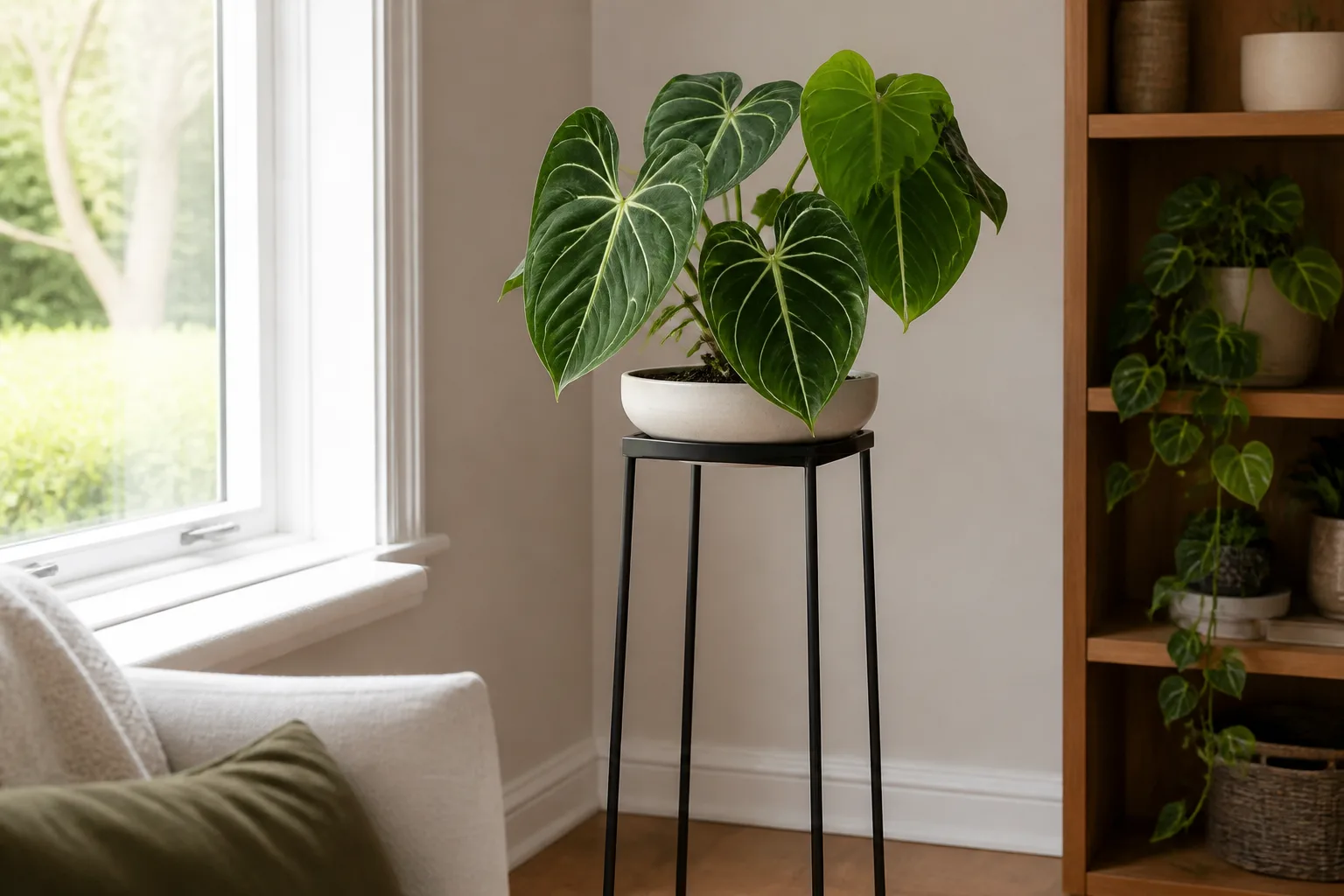
The foliage is thinly herbaceous, heart-shaped, and velvet-textured, with pale midribs and primary veins that read as white or softly pink against deep green. New leaves often show pinkish margins or reddish petiole color that fades as the blade hardens. A new leaf can take weeks to unfurl. Judge the plant by the current growth tip, not by old shipping scars that never heal green.
Why Moss Poles Fail on Gloriosum
Climbing philodendrons produce longer internodes and attach to supports as they reach for filtered light. A moss pole can help those species make larger leaves because the stem travels upward into better exposure. Gloriosum does the opposite. Its rhizome creeps horizontally; aerial roots may emerge to anchor and capture humidity, but the default geometry is lateral.
A moss pole does not give the rhizome somewhere useful to go. Without lateral space, the tip circles into old mix, leaves stack awkwardly, and the stem contacts wet substrate — the exact condition that invites rhizome rot. If you want larger leaves, invest in better light, humidity, and rhizome positioning. If you want a climbing velvet philodendron, choose a species that actually climbs. Gloriosum rewards growers who accept its horizontal personality.
Rhizome Tip Placement and Runway
Orient the rhizome horizontally with the active tip toward open space and on or just above the mix line. Older sections behind the tip can have roots lightly covered, but the leading edge must stay where air reaches it between waterings. If the tip sinks after irrigation, top-dress with coarse bark or perlite rather than packing wet peat over it for “stability.”
Grower evidence (pot geometry): On one indoor Gloriosum moved from a tall 15 cm-diameter nursery cylinder into a 30 × 15 cm shallow trough with the same equal-parts mix (potting mix, perlite, medium orchid bark), the leading 3–5 cm of mix went from staying cool and wet for roughly 16–18 days after a full soak to drying enough to water again in about 10–12 days under the same east-window light and ~55% room humidity. The tip stayed firm above grade after the move; in the tall pot it had sat against persistently damp mix and produced one stalled cataphyll before recovery. That is one plant, one room — not a universal schedule — but it shows why width and tip exposure change dry-down more than calendar watering ever will.
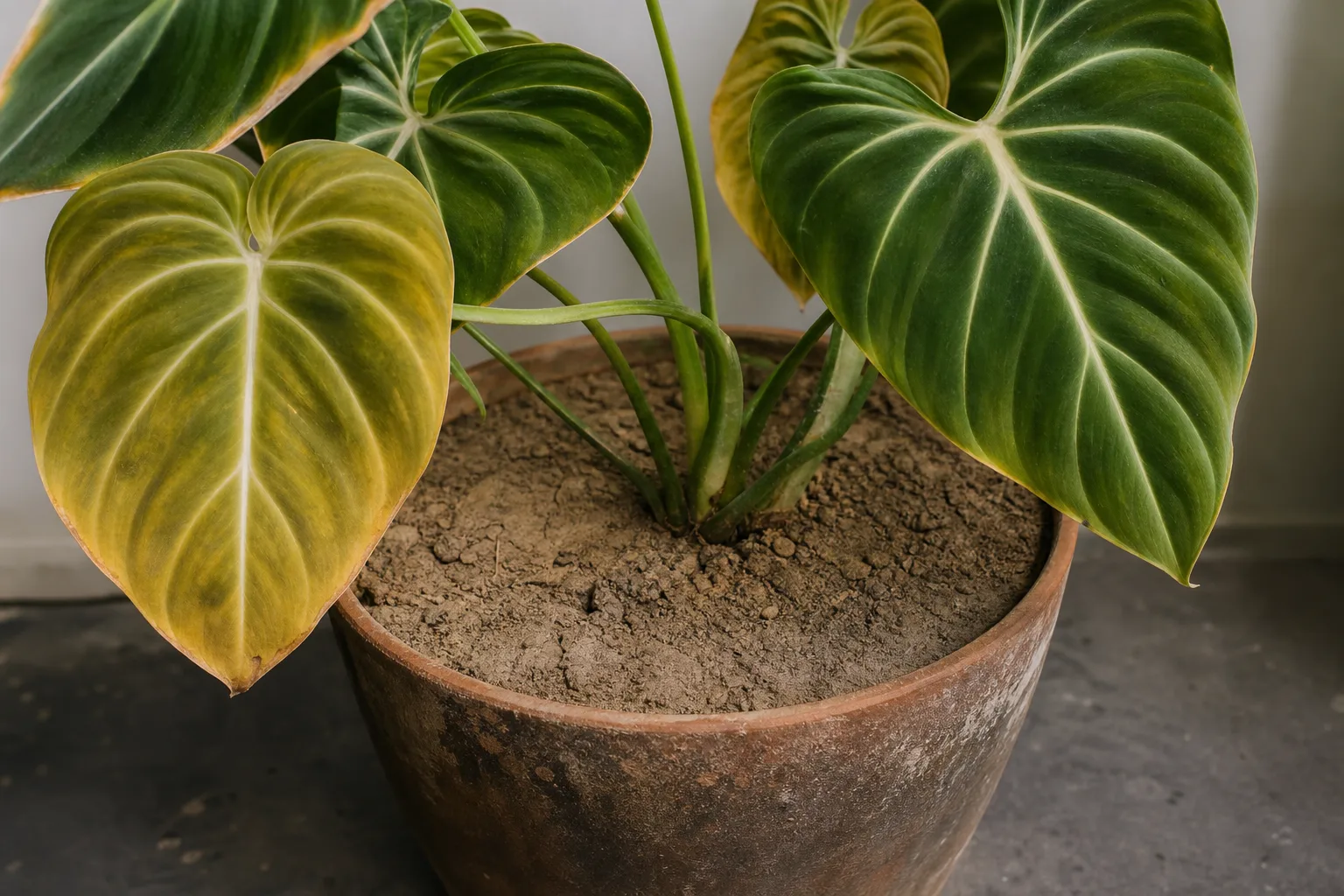
As the plant advances, either top-dress the trailing end lightly or move into a wider pot so the tip never runs out of runway. Do not pack mix around the creeping stem the way you would firm an upright plant into a tall pot. Burying the growth point is the fastest path to stuck cataphylls and soft rot.
Light for Velvet Leaves and Vein Contrast
Gloriosum wants the light quality of Colombian wet-forest understory: bright but filtered, warm, and consistent. RHS philodendron guidance places plants in bright but indirect light and warns that direct summer sun can scorch leaves. NC State Extension likewise recommends bright indirect sunlight and notes that direct sun can scorch foliage. Clemson HGIC adds that most philodendrons prefer indirect or curtain-filtered sunlight.
Vein contrast and leaf size respond to usable light at the newest leaf, not to how bright the room feels to your eyes. A living room that looks fine from the sofa may still leave a low wide pot below the window sill in dim light. Kneel at the pot and look toward the window from the newest leaf’s height. If you cannot see sky brightness or a clear light source from the plant’s perspective, placement is probably too far or too low.
Judge success by the newest blade: firm venation, clean unfurl, and size equal to or larger than the prior leaf. Bleached or crisp brown patches on the velvet upper surface mean too much direct sun. Progressively smaller, paler new leaves and months without emergence mean too little. Full placement tables and acclimation steps live on the Philodendron Gloriosum light guide.
Windows and Grow Lights
East-facing glass is the safest default in many homes: morning sun is gentler on velvet tissue. South and west windows work when the pot sits farther back or behind a sheer curtain so midday beams never sit on the leaf for long. North windows can maintain an established plant in bright rooms but often need a grow light in winter.
When natural light is weak, run a full-spectrum LED for about 12–14 hours on a timer, centered over the active growth tip rather than the oldest leaves at the back of the rhizome. Keep fixtures roughly 30–45 cm above the canopy unless leaf-surface heat tells you to raise the lamp. Acclimate gradually if moving from a dim shelf — advance in small steps over about two weeks and watch the emerging leaf for bleach before pushing closer.
Light also drives watering. A brighter plant transpires faster and dries the mix more predictably. A dim plant keeps wet mix longer around the rhizome, which is why “same calendar, different room” fails so often on crawlers.
Watering a Horizontal Rhizome
Water when the top 3–5 cm of mix feel dry, typically every 10–14 days during active summer growth and less often in winter — but only after a finger, skewer, or pot-weight check confirms dryness. Water thoroughly until runoff exits drainage holes, empty the saucer, and never leave the growth tip sitting against permanently wet, compacted mix. RHS advises waiting until the top of the compost dries before watering and warns against leaving plants standing in water. Clemson likewise says never let plants stand in water, because root rot usually follows poor drainage or overly frequent watering.
Gloriosum watering is rhizome work, not vine work. As the runner advances, the active uptake zone moves forward. Mix behind the tip may compact while the growth front sits in fresher bark, so dryness at the leading edge matters more than surface color at the trailing end. The thick rhizome stores some moisture — a useful buffer for short dry spells — but it cannot rescue weeks of soggy substrate or a buried tip.
Avoid routine misting as a watering or humidity strategy. Droplets mark velvet leaves and the humidity spike lasts minutes. Water the mix directly, keep foliage dry when you irrigate, and raise ambient humidity with a humidifier or grouped plants if air stays dry. If general soil-check watering still feels fuzzy, pair this species guide with how to water indoor plants the right way — then return to the leading-edge check that generic vine advice misses. Procedural moisture checks live on the watering guide.
Overwatering vs Underwatering Diagnostics
Overwatering is the more dangerous failure. Soft rhizome tissue, yellowing newer leaves, a sour smell at the drainage hole, fungus gnats, and a pot that stays heavy for more than a week after a normal soak all point to excess moisture or failed drainage. Missouri Botanical Garden notes that roots in waterlogged soil can die from lack of oxygen, and that overwatering damage is often misread as pest damage. Limp leaves with wet soil usually mean damaged roots cannot take up water — more irrigation makes it worse.
Underwatering shows as limp leaves with a light, dry pot, crispy edges, and soil pulling from the pot walls. A thirsty plant with healthy roots often firms up within a day after a thorough soak. The diagnostic split is moisture first: limp + wet = root or rhizome stress; limp + dry = thirst. When yellowing clusters with wet mix, open the overwatering and root rot pages before adding fertilizer or another drink.
Soil Mix and Wide Shallow Pots
Soil is where Gloriosum diverges hardest from generic philodendron advice. NC State recommends moist, well-drained soil high in organic matter. RHS prefers a loose, free-draining, slightly acidic compost and suggests mixes that stay open rather than waterlogged. UConn likewise favors loose, well-drained, organic-rich mixes for philodendrons. For Gloriosum, translate that into a chunky aroid blend and a wide shallow container.
A practical starting ratio by volume is equal parts indoor potting mix, perlite, and medium orchid bark. The potting mix buffers moisture and nutrients; perlite speeds dry-down; bark keeps pore channels open so the surface rhizome is not sealed against anaerobic peat. Target roughly pH 5.5–7.0 for indoor aroids (RHS often aims slightly acidic for philodendron composts). Straight garden soil, unamended moisture-control peat, or dense “all-purpose” mix alone usually compact within a season and hold stagnant water against the runner.
Pot shape matters as much as recipe. Choose a bulb pan, rectangular trough, or low wide bowl that is wider than it is deep, with at least one drainage hole. A useful heuristic: give the active tip at least 8–12 cm of open runway ahead of it, and prefer width over depth when upsizing. Tall narrow cylinders bury the growth tip under an unnecessary column of wet mix even when diameter looks adequate. Cachepots without drainage trap runoff under the nursery pot — empty them after every soak. Mix recipes and geometry detail live on the soil guide.
Humidity, Temperature, and Airflow
Target 60–70% relative humidity for the best velvet texture and clean unfurling. Many homes sit closer to 40–50%; Gloriosum often tolerates that range but produces smaller leaves, slower emergence, and more brown edge crisping when air stays dry for long periods. NC State notes philodendrons prefer high humidity but can adapt to average home levels, and suggests a humidifier or pebble tray when air is very dry. RHS says philodendrons prefer moderately humid air yet are often happy in typical homes — velvet crawlers lean toward the higher end of that spectrum for leaf quality.
Keep temperatures roughly 18–30°C (65–86°F). NC State’s genus range is about 65–85°F; RHS warns against temperatures below about 15°C (59°F). Protect the plant from cold drafts, AC vents, and hot radiator blasts. Airflow matters as much as humidity: stagnant damp air plus wet foliage favors leaf spots and soft tissue problems. A humidifier is more reliable than misting. For dry-air troubleshooting beyond this species, see the houseplant humidity guide.
Fertilizer During Active Growth
Feed lightly only when the plant is actively producing leaves — typically spring through early fall in most homes, or year-round under strong grow lights. Use a balanced liquid houseplant fertilizer at half label strength about once a month during active growth. RHS recommends feeding during the growing season with a general houseplant fertiliser. Clemson suggests dilute water-soluble fertilizer or a time-release product for philodendrons in good condition. UConn notes philodendrons respond to regular feeding but prefers more frequent half-strength doses over one strong application, and less feed in low light.
Do not fertilize a stressed, newly repotted, or dormant plant. Fertilizer cannot fix low light, buried rhizomes, or soggy mix, and salt buildup shows up as tip burn and surface crust. If you see fertilizer burn symptoms, flush the pot thoroughly with water and pause feeding until new growth looks clean. What success looks like: the next leaf emerges on a firm tip, unfurls without stalling, and matches or exceeds the prior leaf’s size — not a sudden flush of soft, overfed tissue. Dose and burn recovery are covered on the fertilizer guide.
Repotting, Pot Upsizing, and Propagation Readiness
Repot every 1–2 years, or sooner when drainage slows, the mix smells sour, salt crust builds, or the rhizome reaches the pot edge with nowhere to advance. Spring or early active growth is the best window. RHS notes philodendrons can often stay in their original container for a couple of years and that spring is the best time to repot, choosing a pot only a few centimetres larger than the rootball so compost does not stay wet too long — for Gloriosum, “larger” usually means wider, not deeper.
After repotting into fresh chunky mix, water lightly once to settle the substrate, then let the top 3–5 cm dry before the next full soak. Keep the tip above grade and withhold fertilizer until normal growth resumes. Full timing and rhizome handling steps are on the repotting guide.
Propagation readiness checklist (parent plant first): tip firm and above grade; no soft or sour rhizome tissue; at least one healthy node with a leaf (roots preferred); stable light and watering for several weeks; sterile tools and gloves because sap can irritate skin. Propagate by rhizome cuttings with a node, not by treating the plant like a casual water-rooted vine cutting. Cut, let the wound callous briefly, then root horizontally in moist sphagnum or chunky mix under high humidity and bright indirect light. Step-by-step rooting lives on the propagation guide.
Upsize when the rhizome has nowhere forward to run, roots jam drainage holes, or the plant dries unusually fast after watering despite healthy leaves. Slowed growth alone is not enough — low light and cool seasons also slow leaf production. Choose the next width that restores runway ahead of the tip. Avoid jumping to a huge deep planter “for growth.” Excess wet volume around a slow crawler is how root and rhizome rot start after an otherwise careful watering routine.
Common Problems and Quick Fixes
Most Gloriosum problems are environmental: light, moisture at the rhizome, mix structure, humidity, or pests on stressed plants. Diagnose from the roots and tip upward before treating every leaf mark the same way. Clemson notes that too much or too little water plus insects and mites are the main problems indoors, and that root rot usually follows mix that does not drain quickly or overly frequent watering. NC State lists mealybugs, aphids, scale, thrips, and spider mites as pests to monitor, with overwatering causing root rot.
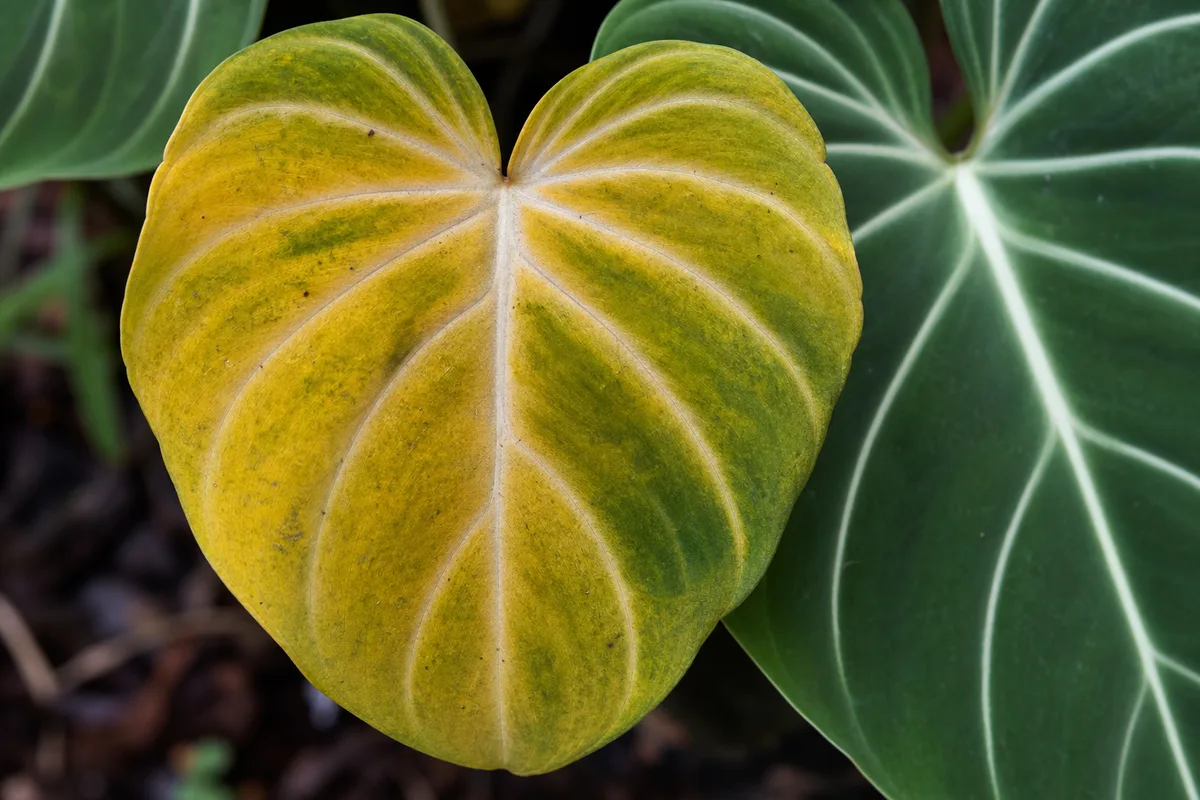
Start with the problems hub when symptoms stack. High-traffic fixes include yellow leaves, brown tips, not enough light, low humidity, spider mites, and mealybugs.
Yellow Leaves, Brown Tips, and Stuck Unfurls
Yellow leaves on a wet pot often mean overwatering or early root stress. One older leaf yellowing at the back of the rhizome can be normal aging. Several yellow leaves with a heavy pot warrant a root and rhizome check. Pale new leaves with long gaps between emergences often mean weak light rather than a fertilizer emergency.
Brown tips and crispy edges commonly follow low humidity, inconsistent watering, fertilizer salts, or mineral stress. Damaged tips will not green again; judge recovery by the next leaf. Raise humidity consistently, flush salts if crust is visible, and correct watering before reaching for specialty products.
Stuck unfurls — a leaf trapped in the cataphyll for weeks — usually mean low humidity, low light, or a wet growth tip, not nutrient deficiency. Fix the environment first. If the tip feels soft or smells foul, treat it as rhizome trouble rather than impatience.
Root Rot and Soft Rhizomes
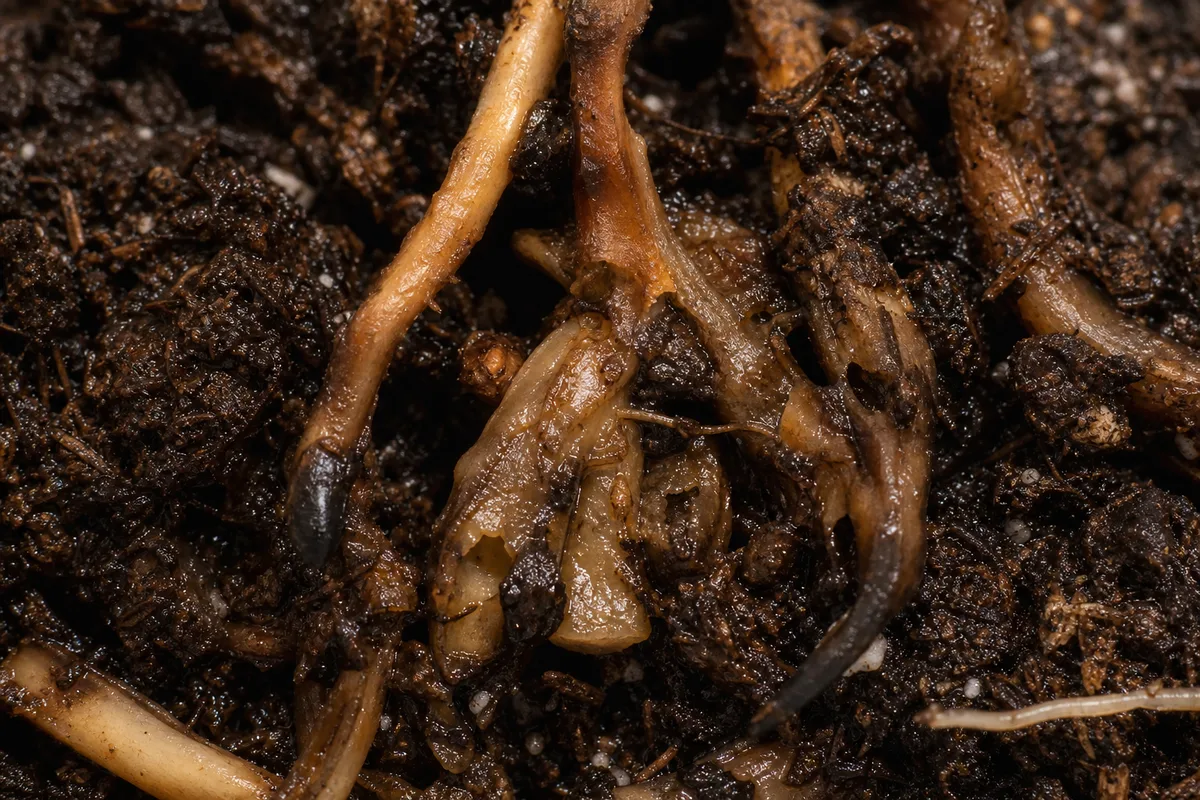
Rhizome and root rot are the serious failures. Warning signs include a mushy runner, blackened tissue at the tip, sour anaerobic smell, collapsing petioles, and yellowing that spreads while the mix stays wet. Stop watering, unpot, trim soft tissue with clean tools, discard sour mix, and repot into fresh chunky blend in a wide shallow pot with the tip above grade. Take a healthy node cutting as insurance if enough firm tissue remains.
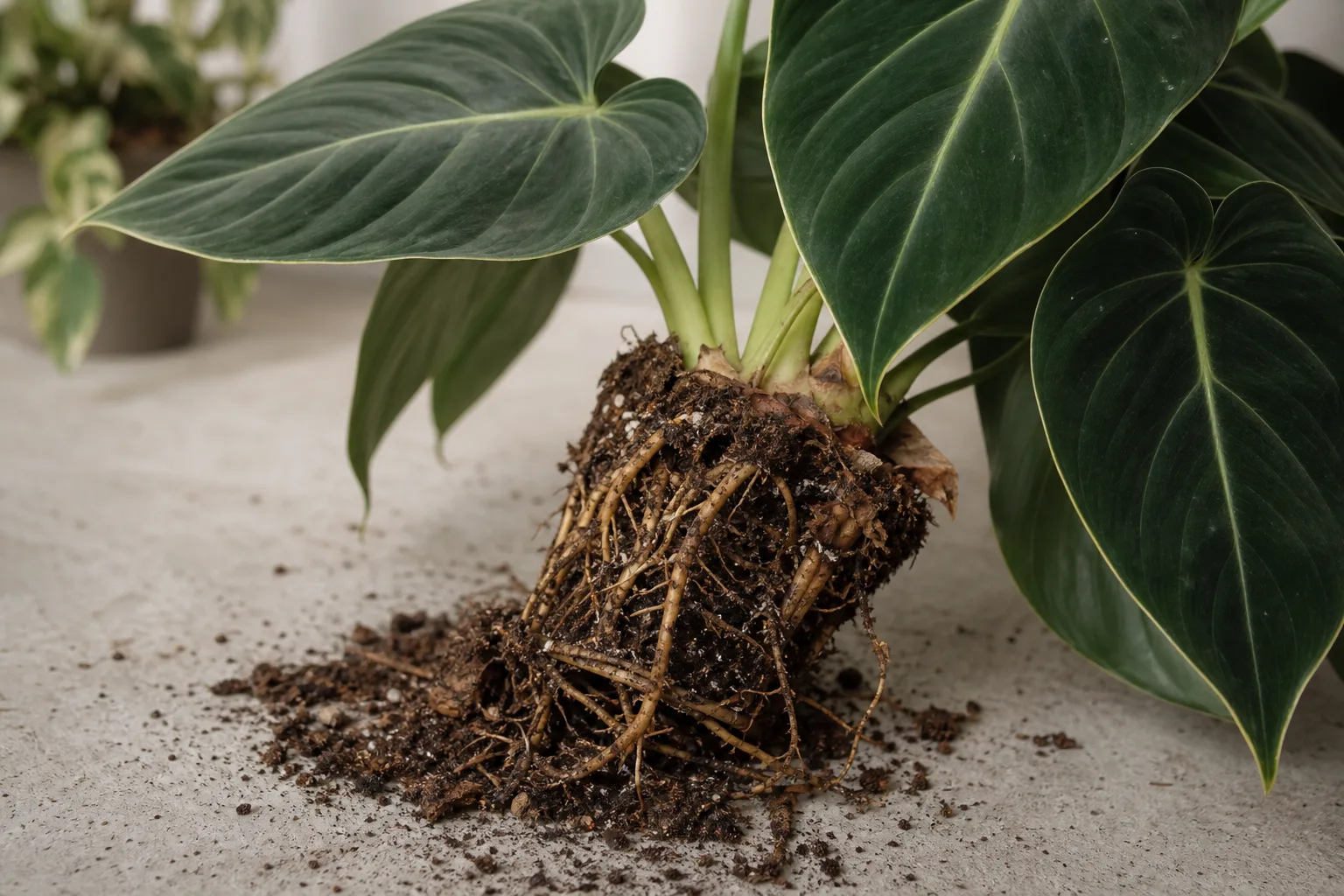
Do not fertilize immediately after heavy tissue loss. Improve light and airflow so the new mix can dry on a sane schedule. Full rescue steps are on the root rot problem page.
Pet Toxicity and Safe Placement
Philodendrons are not pet-safe chewing plants. The ASPCA lists philodendron as toxic to dogs and cats due to calcium oxalate crystals, with clinical signs including oral irritation, intense burning of the mouth, lips, and tongue, excessive drooling, vomiting, and difficulty swallowing (ASPCA variegated philodendron listing). Clemson states that all parts of philodendrons are toxic if eaten and that calcium oxalate causes burning and irritation. NC State lists calcium oxalate crystals as the toxic principle for the genus. Merck Veterinary Manual also groups philodendrons among houseplants toxic to animals via insoluble calcium oxalates. RHS warns that philodendrons are poisonous and that sap can irritate skin, so wear gloves when handling cuttings or pruning and keep plants out of reach of children and pets.
Place Gloriosum on high shelves or in closed rooms if you have chewing pets. Large low troughs on the floor are high-risk in pet households — the same wide pot that helps the rhizome also puts foliage at nose height for cats and dogs. If ingestion is suspected, contact a veterinarian promptly and call ASPCA Animal Poison Control at (888) 426-4435 (a consultation fee may apply). For broader genus toxicity context, see philodendron toxicity.
Where to Go Next on the Gloriosum Hub
When you already know the issue is one variable, open the matching topic page instead of re-reading the whole overview. The Philodendron Gloriosum care hub links dedicated guides on light, watering, soil, fertilizer, repotting, propagation, pruning, and problem pages such as root rot, yellow leaves, and brown tips.
Use this guide when you want the full care picture and the habit rules in one read. Open a topic page when you need procedural depth on a single decision.
Related Guides
- Philodendron Gloriosum care hub — overview, topic pages, and problem index
- Philodendron Gloriosum watering — moisture checks and seasonal intervals
- Philodendron Gloriosum light — windows, grow lights, and vein contrast
- Philodendron Gloriosum soil — chunky mix ratios and wide pots
- How to water indoor plants the right way — soil-check habits that prevent overwatering
- Houseplant humidity guide — when dry air limits velvet growth
- Philodendron toxicity — pet-safety overview for the genus
Conclusion
First 30 days with a new Gloriosum
- Quarantine and leave the plant in its pot unless the mix is failing, pests are obvious, or the tip is already buried in soggy peat.
- Confirm habit setup: wide shallow pot or a clear plan to move into one; rhizome tip above the mix; no moss pole.
- Kneel at the newest leaf and fix light before changing fertilizer.
- Water only when the leading 3–5 cm feel dry; empty saucers; note how many days the trough takes to lighten compared with any tall nursery pot you replaced.
- Watch tip firmness, cataphyll progress, and pet access on low troughs — then open the Philodendron Gloriosum hub only when one symptom needs its own page.
Good Philodendron gloriosum care is habit-first: a terrestrial crawler needs runway, air at the tip, filtered light for velvet contrast, and moisture checks that follow the growth front. Keep those four decisions honest and the rest of the routine stays boring — which is exactly what this plant wants.