Low Humidity on Philodendron Gloriosum: Causes, Checks &
Quick answer
Low humidity on Philodendron Gloriosum shows as brown crispy leaf tips, stuck unfurling, and dull velvet texture below 50% relative humidity. First step: measure with a hygrometer at leaf height and run a humidifier to reach 60–70% near the plant-not occasional misting.
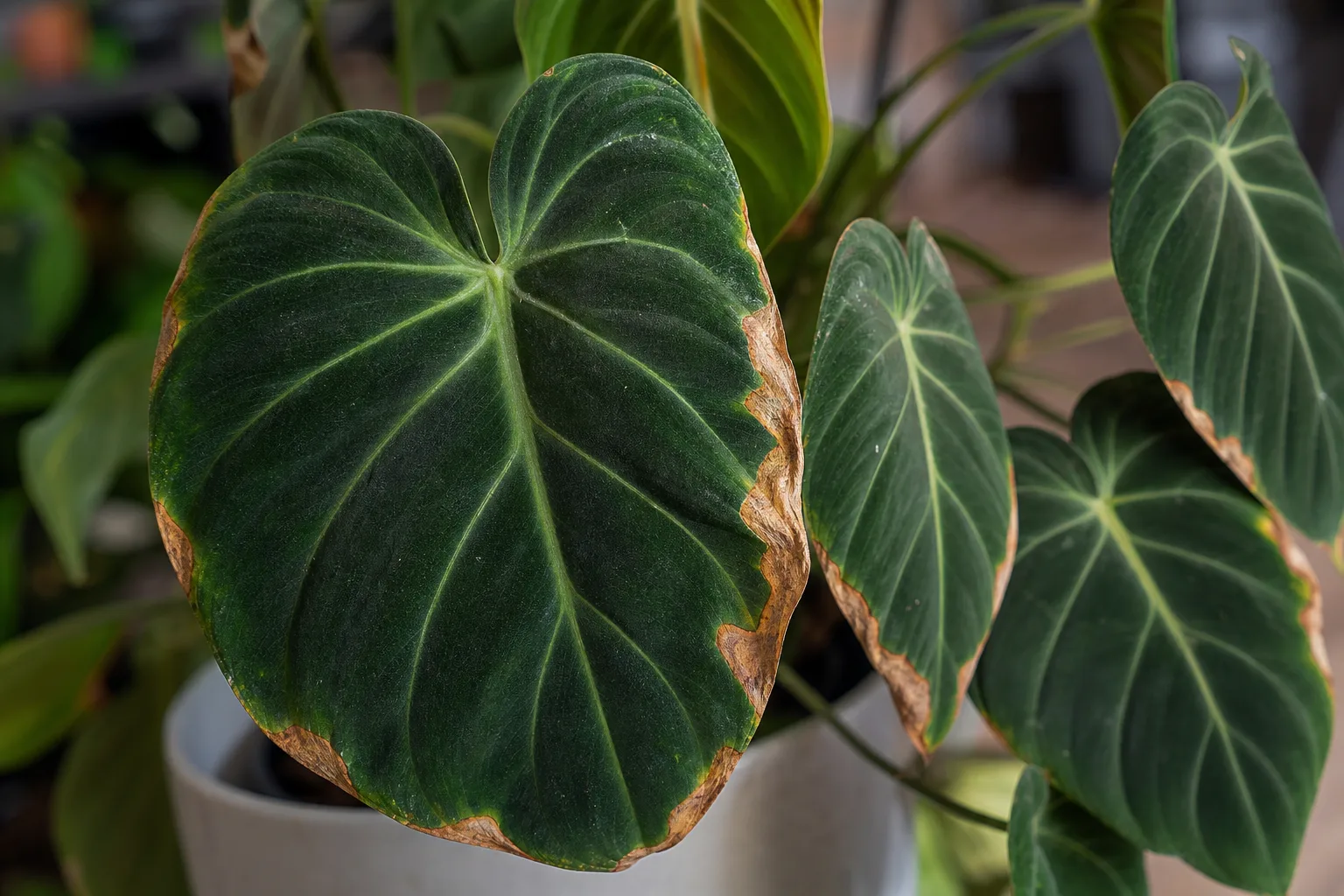
Low Humidity on Philodendron Gloriosum: Causes, Checks & Fixes
This guide covers low humidity on Philodendron Gloriosum. See also the general Low Humidity guide, watering, and light pages for this plant.
Low Humidity on Philodendron Gloriosum: Causes, Checks & Fixes
Quick answer
Low humidity on Philodendron Gloriosum shows as brown crispy leaf tips, stuck cataphyll unfurling, and dull velvet texture when relative humidity at leaf height drops below roughly 50%. This Colombian crawler evolved in humid tropical forest understory where new leaves open in moist air while the rhizome advances across well-drained litter-not in heated living rooms that sit at 25–35% RH all winter.
First step: place a hygrometer at leaf height and run a humidifier until readings hold at 60–70% near the plant. That single action addresses the root cause without the rot risk of watering more often. RHS notes brown tips and crispy leaves as classic low-humidity signs on foliage houseplants; on Gloriosum the same dry air hits harder because velvet blades lose margin moisture faster than glossy philodendron types and because one advancing cataphyll at the rhizome tip makes unfurl failure a growth emergency, not just edge burn.
Use this page when dry air is the lead suspect-low hygrometer readings, winter heating without humidification, stuck unfurling, or dull sheen across multiple leaves with normal soil moisture. Use the brown-tips guide instead when margins are crisp but humidity already reads 60%+ and you need to rule out salt crust, tap-water minerals, or drought cycles.
What low humidity looks like on Philodendron Gloriosum
Dry-air damage on Philodendron Gloriosum overview clusters around velvet tissue and the active growth point, not random spots across the blade. Patterns to recognize:
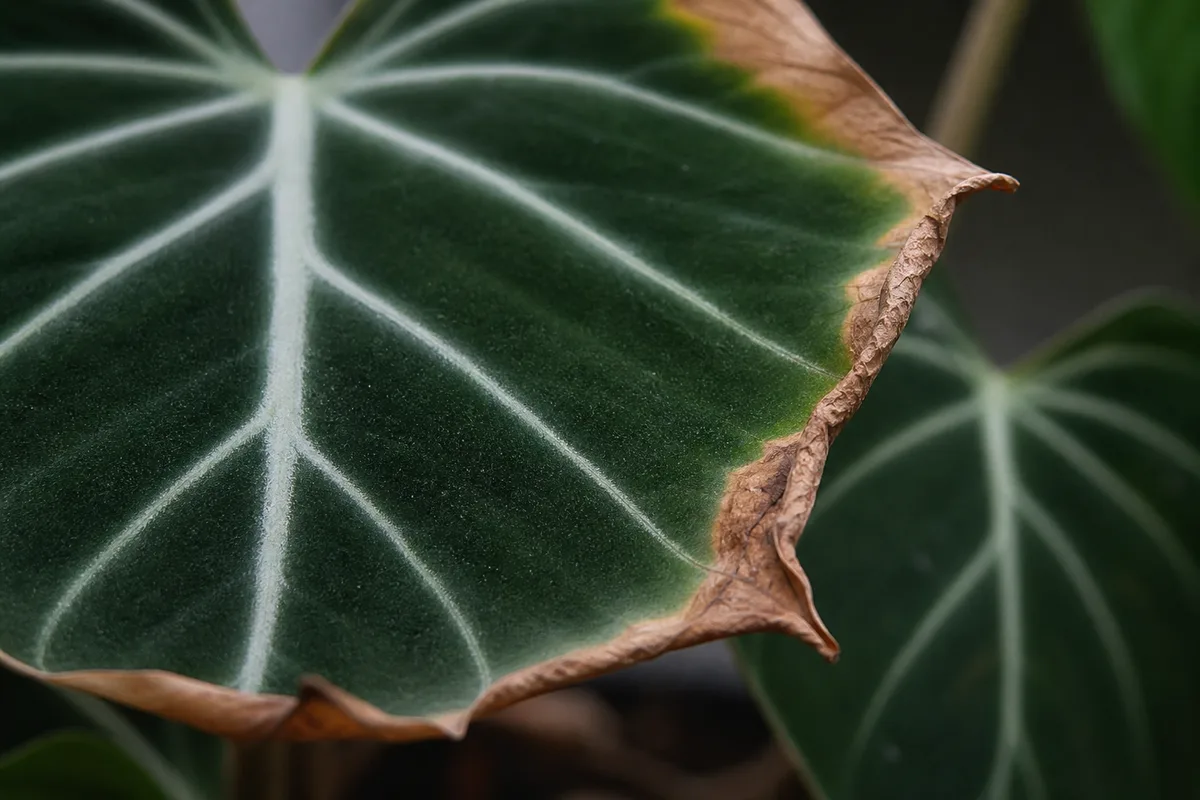
Low Humidity symptoms on Philodendron Gloriosum - compare with healthy tissue on the same plant.
- Crispy tan-to-brown tips and edges on heart-shaped velvet leaves while the central blade stays green
- New leaf stuck, torn, or smaller than the previous as the cataphyll fails to release the expanding blade
- Dull, lackluster velvet sheen-healthy Gloriosum leaves look plush; dry air flattens that texture
- Margins worse on leaves nearest vents, radiators, or sunny window glass even when a room-average reading looks acceptable
- Hygrometer below 50% at foliage height with soil moisture cycling normally on your watering schedule
Humidity stress vs. lookalikes:
| Pattern | More likely low humidity | Check another guide |
|---|---|---|
| Dry papery margins, normal soil moisture, low RH | Yes | Brown tips if salt crust or fluoride suspected |
| Whole leaf wilt, light pot, dry mix throughout | Partial-dry air may compound it | Underwatering |
| Sheath yellows and drops before leaf opens | Yes if RH is low | Bud drop if rhizome tip sits in wet mix |
| Yellowing base leaves, sour soil, heavy pot | No | Overwatering |
| Fine stippling, bronzing, webbing on undersides | Dry air favors mites | Raise humidity and treat pests-humidity alone clears no active infestation |
Iowa State Extension identifies low humidity as the most likely cause of brown leaf tips on sensitive houseplants. On Gloriosum, that margin burn is often the first visible sign-weeks before a stuck cataphyll makes the problem obvious.
Why Philodendron Gloriosum struggles in low humidity
Gloriosum is a slow terrestrial crawler with large velvet leaves and a single advancing growth tip. Three biology facts explain why dry indoor air hits harder here than on Heartleaf Philodendron or many hybrid climbers:
Velvet surface area loses margin moisture fast. The textured upper blade holds less boundary-layer moisture than glossy philodendron foliage. Large heart-shaped leaves transpire heavily at the margins when ambient RH drops-Missouri Botanical Garden notes many houseplants prefer at least 50% humidity, and some tropical aroids need higher levels for best performance.
Unfurling requires ambient moisture. A new leaf expands inside a papery cataphyll at the rhizome tip. Dry air tears that sheath and traps the blade-on a crawler that produces one dramatic leaf at a time, that failure stalls the whole plant visually for weeks.
Winter heating creates the worst microclimates. Central heat can hold living-room RH at 25–35% for months while Gloriosum targets 60–70% for display-quality velvet-the range covered in the Gloriosum overview humidity section. Forced-air vents and radiator shelves create local dry zones; a hygrometer on the floor may read 45% while leaves six inches from a heat register sit at 32%.
Pebble trays and grouping help locally but rarely reach 60–70% in a dry winter room. Illinois Extension recommends humidifiers, pebble trays, and grouping to raise moisture, but notes misting raises humidity only briefly and can increase disease risk on wet foliage-especially problematic on velvet aroids where water spots mark the surface.
The rhizome overwatering trap: owners who see crisp margins often water more, hoping to “hydrate” leaves. Wet mix against a crawling rhizome invites rot without fixing dry air. Soil can stay appropriately moist while leaf margins still crisp-transpiration outpaces what roots can supply when air is too dry.
How to confirm the cause
Work through this order before Philodendron Gloriosum repotting guide, fertilizing, or trimming heavily:
- Hygrometer at leaf height - Place the sensor within 30 cm of the newest foliage, not on the floor. Below 50% strongly supports low humidity as the lead cause on Gloriosum.
- Watering status - Probe the top 3–5 cm per the watering guide. Normal moisture cycling rules out drought-only browning; constant wetness points to overwatering.
- Vent and radiator proximity - Note whether leaves flutter when heat or AC runs. Localized dry zones explain crisp margins despite an acceptable room average.
- Unfurling quality - A stuck, torn, or undersized new leaf implicates humidity during expansion, not just old-tip burn.
- Season timing - Symptoms that appear within weeks of turning on central heat fit dry-air stress better than sudden root failure.
- Pest check - Hold white paper under a leaf and tap the blade. Moving specks plus stippling in dry warmth suggest spider mites, which prefer warm, dry conditions-treat separately from humidity correction.
If humidity reads 60%+ and margins still crisp with white crust on the mix surface, shift to the brown-tips guide for salt and tap-water differentials.
First fix for Philodendron Gloriosum
Run a cool-mist humidifier continuously to hold 60–70% near the plant-not brief misting on velvet leaves.
Position the pot at least 60 cm from heating vents and radiators while keeping bright indirect light per the light guide. A small-to-medium room humidifier running several hours daily-or on a hygrometer-controlled setting-changes the microclimate around a single crawler specimen more reliably than a pebble tray on an open display shelf. RHS recommends grouping plants and pebble trays to increase humidity; use those as supplements, not the main fix when readings stay below 50%.
Make one change at a time. Do not simultaneously repot, fertilize, and relocate-that obscures which adjustment helped.
Step-by-step recovery
After starting humidification and correcting placement:
- Stabilize for one week - Keep light, watering, and temperature steady. Gloriosum recovers slowly; changing multiple variables at once makes diagnosis harder.
- Set humidifier target 60–70% - Monitor at leaf height. In very dry homes, expect the unit to run most of the day through heating season.
- Optional pebble tray - Pot sits above the water line on pebbles, never in standing water. Helps within a few centimeters of the pot; does not replace a humidifier in a 30% RH room.
- Group with other aroids - Shared transpiration raises local humidity a few points. Leave air gaps so foliage does not stay wet against neighbors.
- For stuck unfurling only - Loosely tent with a clear bag for 24–48 hours alongside the humidifier. Monitor for excessive condensation or mold; remove the tent if water pools on leaves. Never pull a stuck cataphyll manually-support humidity and patience instead.
- Trim fully crisp tips after humidity stabilizes if desired; damaged velvet tissue does not re-green.
- Watch the next cataphyll - Clean unfurling and normal leaf size confirm the fix. A firm rhizome tip with no new sheath after eight weeks may need light or root checks beyond humidity alone.
Worked example: A Gloriosum on a radiator shelf read 28% RH at leaf height in November-velvet margins crisped within two weeks despite correct watering. Moving the pot 1.5 m from the radiator, running a humidifier to 65%, and holding the watering rhythm unchanged produced a clean new unfurl six weeks later. Old tips stayed brown; the new blade was full-sized and plush.
Recovery timeline
Stabilization (1–2 weeks): Once RH holds at 60–70% near the foliage, new tip burn should stop. Existing crispy edges will not revert to green.
Next clean leaf (4–8 weeks): Gloriosum is slow. Judge progress by the next cataphyll-smooth unfurling, normal size, and restored velvet sheen. Winter recovery may take the full eight weeks if heating keeps ambient humidity borderline.
Full display appearance (2–3 months): Trim old browned margins gradually as new foliage fills in. A crawler with one or two damaged mature leaves can still look excellent if the newest blade opens cleanly.
Worsening signs: Stuck cataphyll beyond two weeks, mold inside a sealed tent, margins browning despite RH above 55%, or stippling spreading along the rhizome-recheck mites, salt buildup on brown tips, and rhizome firmness.
Lookalike symptoms
- Underwatering - Whole-leaf limp, light pot, dry mix throughout. Deep soak once; edges recover on new growth only. See underwatering.
- Salt or fluoride burn - Crispy tips with white crust on mix surface despite adequate humidity. Flush the pot and pause fertilizer; details on brown tips.
- Bud drop - Terminal cataphyll yellows, shrivels, and detaches before any leaf emerges-often low humidity plus a wet growth point. See bud drop.
- Overwatering - Yellowing lower leaves, sour soil smell, soft rhizome. More watering will not fix crisp margins. See overwatering.
- Spider mites - Fine stippling and webbing on undersides in dry heat; dry indoor air favors outbreaks. Raise humidity and rinse or treat-humidity alone does not clear active mites.
- Too much direct sun - Bleached or scorched patches on the sun-facing blade face, not just margins; relocate even if humidity is fine.
Low humidity vs. brown tips - when to use each guide
These two URLs overlap because dry air causes brown tips-but they answer different reader questions:
| Question | Start here (low humidity) | Use brown-tips guide |
|---|---|---|
| ”What humidity does my Gloriosum need?” | Yes | - |
| ”Why won’t my new leaf unfurl?” | Yes | - |
| ”My hygrometer reads 32%-what now?” | Yes | - |
| ”Tips are brown but humidity is 65%“ | - | Yes-check salt, fluoride, drought |
| ”White crust on soil, brown edges” | - | Yes |
| ”Should I trim the crispy parts?” | Both cover trimming; brown-tips has salt-specific flush steps |
This page is the environmental RH deficit entry point. The brown-tips guide is the margin symptom entry point when several causes could explain the same crisp edge.
What not to do
- Do not overwater to compensate for dry air-that risks rhizome rot without fixing margins. See overwatering if soil stays wet and the rhizome softens.
- Do not heavy-mist velvet faces-water spots mark the surface and stagnant moisture encourages fungal issues. Illinois Extension notes misting provides only short humidity spikes.
- Do not expect a pebble tray alone to hit 60–70% in winter-often insufficient for a crawler on an open shelf.
- Do not pull stuck leaves manually-support humidity and optional loose tenting instead.
- Do not place in a dark bathroom for humidity alone-Gloriosum still needs bright indirect light for recovery.
- Do not seal a humidity tent for days without checking-remove it if condensation pools or leaf tips darken from mold.
How to prevent low humidity damage
- Run a humidifier from first heating season through spring when room RH drops below 40%.
- Keep a hygrometer at leaf height monthly in winter-skin feel is unreliable.
- Position the wide shallow pot away from vents and radiator shelves; crawlers displayed for aesthetics often sit in the driest microclimates.
- Group with other aroids in the same bright corner for shared transpiration.
- Accept that dry homes need mechanical humidification for this species-the 60–70% target in the overview guide is not optional luxury for display-quality velvet.
- Inspect leaf undersides during dry months before mite webbing spreads.
Pet safety while troubleshooting: Philodendron gloriosum contains insoluble calcium oxalate crystals toxic to cats and dogs. Keep tenting, trimmings, and the pot out of reach. Contact your veterinarian if a pet chews plant tissue.
When to worry
Escalate beyond humidifier correction when:
- A cataphyll stays stuck more than two weeks-gentle humidity elevation and patience first; persistent failure may need light or rhizome inspection.
- Mold or tip rot appears inside a sealed tent-remove the tent, improve airflow, and rely on room humidification.
- Multiple leaves crisp within days of heat turning on-relocate immediately and run the humidifier continuously.
- Fine stippling and webbing appear in dry warmth-treat for spider mites, not humidity alone.
- Wilting with wet soil and sour smell-possible rot from overwatering compensation; inspect the rhizome per overwatering.
Low humidity alone rarely kills a firm-rhizomed Gloriosum-but on this slow crawler, weeks of dry air during active growth can leave one damaged cataphyll and months of stalled appearance.
Related Philodendron Gloriosum problems
- Gloriosum overview - species biology, humidity targets, and full care map
- Watering - dry-down checks that pair with humidity correction
- Brown tips - margin burn when salt, fluoride, or drought may be involved
- Bud drop - when the terminal sheath aborts before unfurling
- Underwatering - wilt and dry mix patterns
- Overwatering - the rot trap when owners water more for dry air
When to use this page vs other Philodendron Gloriosum guides
- Philodendron Gloriosum watering guide - Use for routine moisture checks before assuming low humidity is the main issue.
- Philodendron Gloriosum problems hub - Browse all 22 common issues on this species.
- Brown Tips on Philodendron Gloriosum - Different entry point when symptoms overlap with low humidity.